

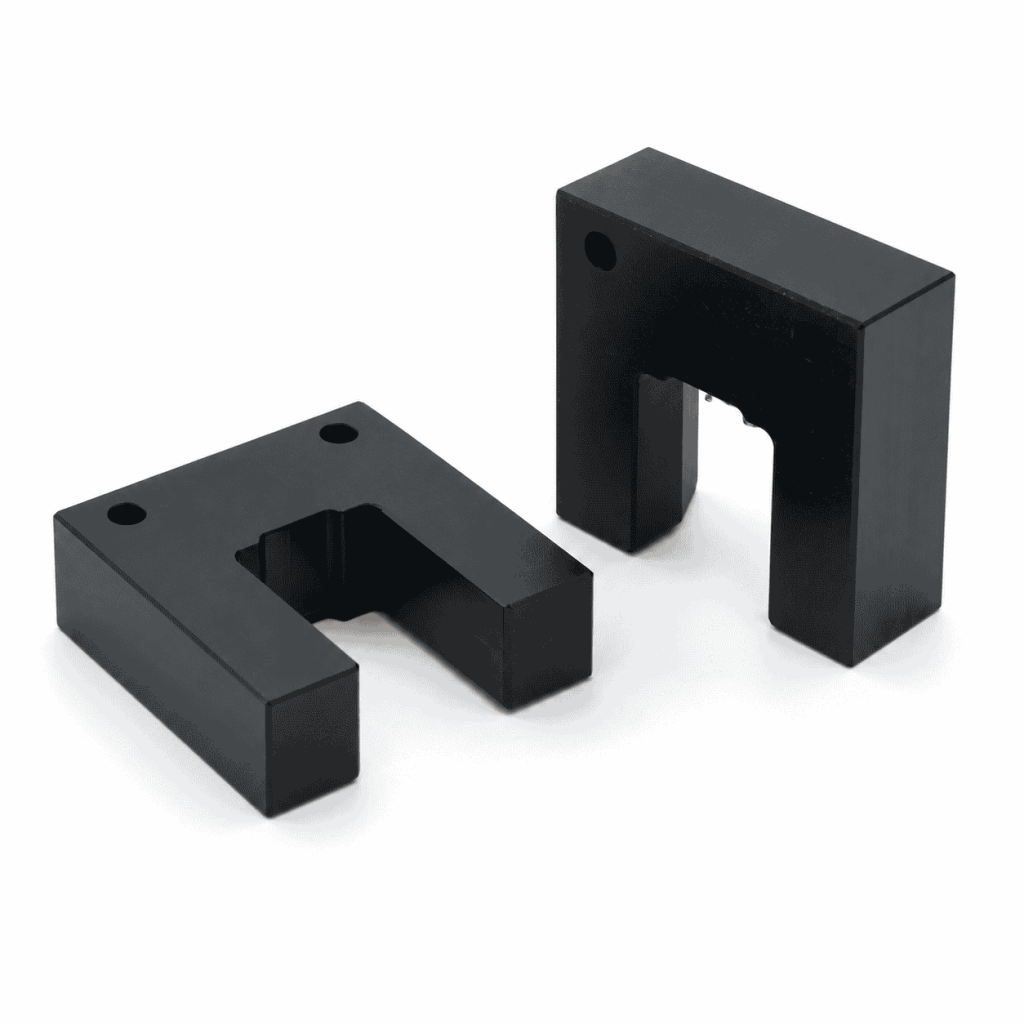
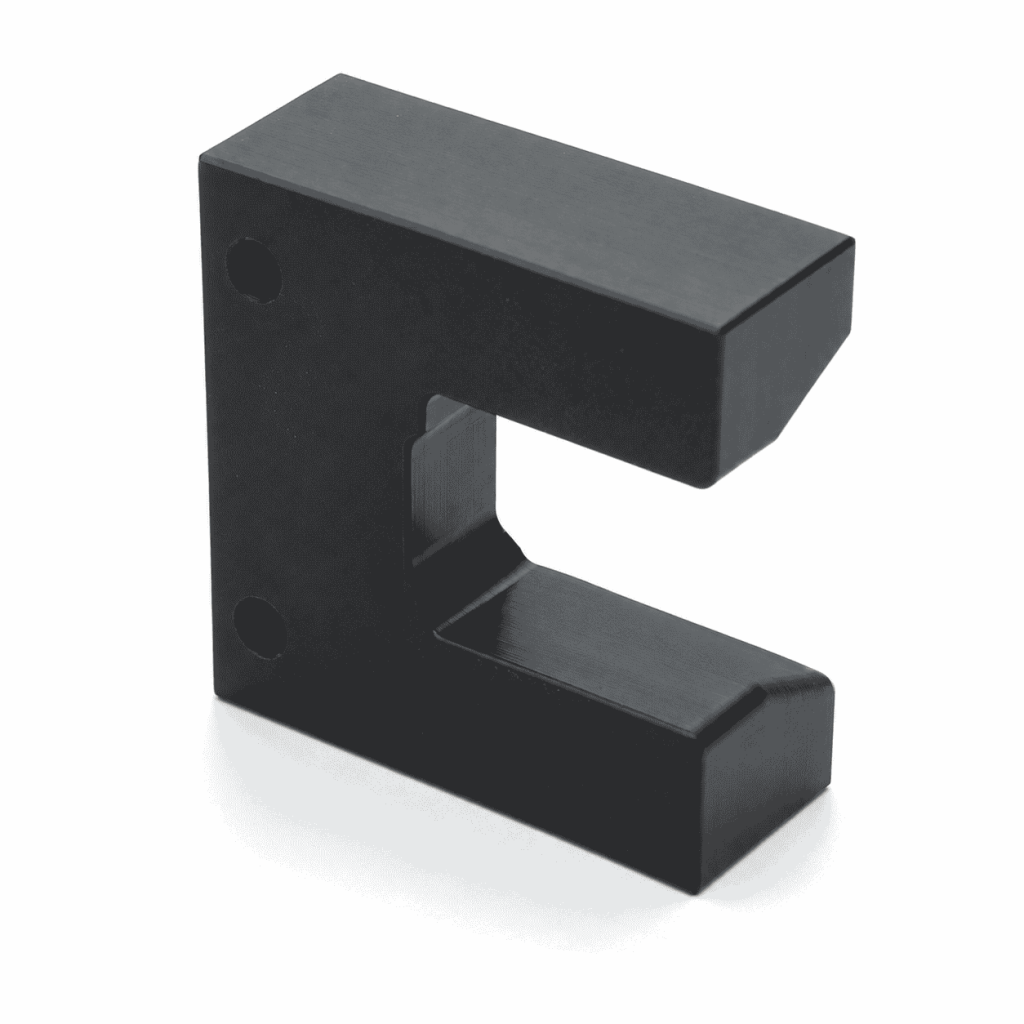
POM Guide Slider for Packaging Machinery is used in pushing, sealing, carton folding, positioning, clamping, and reciprocating mechanisms. It supports moving components, controls their direction of travel, and helps them maintain stable linear motion during repeated packaging cycles.
Packaging equipment often operates continuously and contains many components that start, stop, reverse, or move back and forth at high frequency. If the guiding component has excessive friction, incorrect clearance, or uneven wear, the mechanism may vibrate, jam, deviate from its intended path, or lose positioning accuracy.
POM, also known as polyoxymethylene, is an engineering thermoplastic used for precision components requiring dimensional stability, mechanical strength, wear resistance, and relatively low friction. These properties make it suitable for custom guide sliders used in many medium- and light-load packaging machine mechanisms.
Common Guide Mechanism Problems in Packaging Machinery
Guide sliders in packaging machines may complete thousands of reciprocating movements during a production shift. Traditional metal sliders, metal guide blocks, and unsuitable plastic components can develop several problems during long-term operation.
- High sliding resistance between metal components
- Jerking or stick-slip movement during reciprocating operation
- Frequent lubrication and maintenance requirements
- Dust, paper fragments, and film particles adhering to lubricated surfaces
- Increasing clearance after the slider becomes worn
- Lateral movement or vibration of pushing and positioning mechanisms
- Noticeable impact during frequent starting and stopping
- High operating noise caused by direct metal contact
- Corrosion in humid or frequently cleaned environments
- Heavy guide components increasing the load on cylinders and motors
These problems may affect product feeding, sealing position, carton folding, bag handling, labeling accuracy, and the overall stability of the packaging process. Severe wear or jamming may also cause unexpected machine downtime.
Why Use a POM Guide Slider?
A POM guide slider provides a lightweight alternative to some conventional metal sliding components. Its lower weight reduces the inertia of reciprocating mechanisms and decreases the operating load placed on pneumatic cylinders, motors, connecting rods, and supporting shafts.
POM has a smooth surface and relatively low friction characteristics. Under suitable loads and operating speeds, the slider can move along a metal or plastic guide surface with less resistance. This helps reduce jerking, vibration, and unstable movement in pushing, folding, clamping, and positioning mechanisms.
Reduced friction may also lower lubrication requirements in suitable applications. Using less grease around the guide mechanism can simplify maintenance and reduce the accumulation of dust, paper fibers, packaging-film fragments, and other contaminants.
POM has relatively low moisture absorption compared with many nylon materials. This helps maintain the dimensions of guide grooves, mounting holes, sliding surfaces, and fitted clearances when environmental humidity changes.
Friction, wear, lubrication, and the interaction between moving surfaces are studied within tribology. These factors should be considered when designing a guide slider for long-term reciprocating operation.
POM Guide Slider Applications in Packaging Machinery
1. Pillow Packaging Machine Pushing Mechanism
Pillow packaging machines must feed products into the forming film at a controlled spacing. The product-pushing mechanism frequently performs high-speed reciprocating movement and must remain aligned with the conveyor and film-forming section.
POM guide sliders can be installed on pushing rods, moving brackets, support plates, and sliding platforms. They restrict lateral movement and guide the mechanism along a defined linear path.
Lower sliding resistance helps the pushing mechanism move more smoothly. Stable guidance can reduce product tilting, irregular spacing, stacking, and inaccurate entry into the packaging film.
2. Automatic Cartoning Machine Folding Mechanism
Automatic cartoning machines perform carton opening, product insertion, flap folding, pressing, closing, and discharge operations. Several of these mechanisms use reciprocating plates, rods, and brackets that require accurate guidance.
POM guide sliders can be used on carton pushers, folding plates, flap-closing mechanisms, and moving supports. Their low weight and smooth operation help reduce vibration and noise during repeated machine cycles.
For compact equipment, POM sliders can be machined with stepped surfaces, side grooves, countersunk holes, threaded holes, or special profiles to match the available installation space.
3. Sealing Machine Pressing Mechanism
Automatic sealing machines use pressing plates, heating components, cooling devices, and moving supports to close packages. These components must approach and leave the package along a stable path.
If the guide clearance is excessive or the slider movement is unstable, the pressing plate may tilt or apply uneven pressure. This can cause inconsistent sealing width, incomplete sealing, wrinkles, or uneven compression.
A POM guide slider can support the pressing plate or moving frame and help it maintain smooth linear movement. However, when the slider is installed close to a heating element, the actual operating temperature must be checked before selecting POM.
4. Labeling Machine Positioning Mechanism
Labeling machines require synchronized product conveying, label feeding, positioning, peeling, and pressing operations. Positioning stops and label-pressing mechanisms often move repeatedly along a short linear path.
POM guide sliders can be installed on positioning brackets, pressing plates, and adjustable supports. Their dimensional stability helps maintain the required guide clearance and reduces unwanted movement around the positioning mechanism.
A lightweight slider also reduces the load on pneumatic cylinders and helps the mechanism start and stop more smoothly, supporting consistent label placement.
5. Filling Machine Bottle Positioning System
Filling lines include bottle feeding, separation, positioning, filling, capping, and discharge. Bottle stops, positioning clamps, and divider mechanisms may perform short reciprocating movements throughout the production cycle.
POM guide blocks can support these moving components and reduce direct contact between metal parts. Since POM does not rust like ordinary carbon steel, it can be considered for relatively humid machine areas or equipment that requires regular cleaning.
Stable guide movement helps keep bottles aligned with filling nozzles and reduces bottle tilting, incorrect spacing, and positioning errors.
6. Automatic Bagging Machine Clamping Mechanism
Automatic bagging machines complete bag feeding, opening, clamping, filling, and sealing. Bag clamps, opening frames, and moving supports often travel repeatedly along guide rails.
POM guide sliders can be installed between the moving frame and guide structure to reduce friction and control the direction of movement. Smooth travel helps improve mechanism response and reduces errors in bag-mouth positioning.
Reduced lubrication can also be beneficial in powder, granule, and food packaging equipment where excessive grease may attract contaminants.
7. Packaging Machine Sealing and Cutting Unit
A sealing and cutting mechanism completes downward movement, heat sealing, cutting, and return during every packaging cycle. The cutting frame must remain aligned to apply even pressure across the package.
POM sliders can be used as auxiliary guides for vertical sealing frames and cutter supports. They reduce direct metal contact and help the assembly move along a controlled path.
Stable guidance can reduce cutter misalignment, uneven cuts, inconsistent sealing pressure, and abnormal vibration. The distance from the heating or cutting element must be considered because POM is not intended for unrestricted high-temperature operation.
8. Product Sorting and Positioning Mechanism
Sorting and positioning units align products before filling, wrapping, labeling, or cartoning. Adjustable stops and positioning plates may need to move frequently when product sizes or packaging formats change.
Custom POM sliders can support these adjustment mechanisms while providing low-friction movement. Slots, threaded holes, mounting steps, and positioning surfaces can be machined into the component according to the equipment layout.
Problems Solved by POM Guide Sliders
When correctly designed for the operating conditions, POM guide sliders can help packaging equipment manufacturers and maintenance teams address several common mechanical problems:
- Reduce sliding resistance between moving components
- Minimize jerking and stick-slip movement
- Reduce noise produced by direct metal contact
- Decrease vibration during repeated starts and stops
- Lower the weight and inertia of moving assemblies
- Reduce lubrication requirements in suitable applications
- Limit the accumulation of dust and packaging fragments
- Reduce the risk of corrosion associated with ordinary steel sliders
- Maintain the direction of pushing and positioning mechanisms
- Reduce lateral movement after long-term operation
- Support non-standard grooves, holes, and mounting structures
- Replace discontinued or difficult-to-source machine parts
Common POM Guide Slider Structures
POM guide sliders for packaging machinery are often manufactured according to equipment drawings, original components, or physical samples. Common structures include:
- Rectangular POM guide sliders
- POM sliders with straight guide grooves
- U-groove POM guide blocks
- Stepped POM sliders
- POM sliders with countersunk mounting holes
- POM sliders with threaded holes
- Curved POM guide blocks
- Special-shaped reciprocating sliders
- Long POM wear guide strips
- Left- and right-hand matched guide sliders
- POM sliders with metal inserts
- POM sliders combined with metal support brackets
Before manufacturing, the slider length, width, height, groove dimensions, mounting-hole positions, operating direction, guide-rail structure, and fitted clearance should be confirmed.
If the guide groove is too narrow, the slider may bind after installation or when the operating temperature changes. If the clearance is too large, the moving assembly may vibrate or deviate from its intended path.
The slider should therefore be designed according to both its external shape and the actual assembly conditions.
POM Guide Slider vs. Metal Slider
Metal sliders generally provide high load capacity, rigidity, and temperature resistance. They may be required in heavy-load, high-temperature, or highly rigid guiding mechanisms.
However, metal sliders are heavier and usually require lubrication. Direct metal contact may also generate greater friction, vibration, and operating noise.
POM guide sliders are lighter, quieter, corrosion-resistant, and relatively low-friction. They are suitable for many medium- and light-load mechanisms that move frequently and require a cleaner operating environment.
The two materials are not interchangeable in every application. For mechanisms exposed to heavy loads, high temperatures, severe impact, or significant misalignment, a metal slider or a combined metal support with a replaceable POM wear surface may be more suitable.
POM Guide Slider vs. Nylon Slider
Both POM and nylon are commonly used for packaging machine guide components, but their performance characteristics are different.
POM generally has lower moisture absorption and better dimensional stability. It is often selected for guide grooves, bores, and fitted surfaces that require controlled clearance.
Nylon generally provides greater toughness, impact absorption, and vibration damping. It may be more suitable for components exposed to moderate impact or shock loading.
The final material should be selected according to load, reciprocating speed, environmental humidity, working temperature, impact conditions, guide material, and required dimensional accuracy.
Important Design Considerations
A POM guide slider is not suitable for every packaging machine mechanism. The following conditions should be evaluated before production:
- Static and dynamic loads applied to the slider
- Reciprocating speed and operating frequency
- Working temperature around the installation position
- Guide-rail material and surface finish
- Required sliding clearance
- Possible side loads and misalignment
- Impact during starting and stopping
- Contact with cleaning liquids, oils, or chemicals
- Required dimensional tolerances
- Distance from heating, welding, or sealing components
- Expected operating life
- Applicable food-contact or hygiene requirements
Guide surfaces should be checked for burrs, sharp edges, scratches, and excessive wear. A damaged metal guide can quickly scratch or unevenly wear a new POM slider.
Shaft alignment, guide parallelism, and mounting accuracy should also be inspected when abnormal wear repeatedly occurs.
Custom POM Guide Slider Manufacturing
POM guide sliders for packaging machinery can be manufactured from complete technical drawings, original components, or physical samples.
When the original slider is severely worn, its worn groove dimensions should not be copied directly. The guide-rail dimensions, original operating clearance, installation position, and movement direction should be checked before producing the replacement part.
Useful manufacturing information includes:
- Complete drawing or original sample
- Overall length, width, and height
- Guide-groove dimensions and tolerances
- Mounting-hole diameter and spacing
- Threaded-hole specifications
- Guide-rail material and dimensions
- Reciprocating distance and speed
- Applied load and movement direction
- Operating temperature and humidity
- Required production quantity
- Equipment installation photographs
During batch production, groove width, mounting-hole spacing, thickness, external dimensions, and the consistency of matched left- and right-hand components should be inspected.
Sliders with different sizes, hole positions, or installation directions can also be packaged separately and marked by model number to simplify assembly and future replacement.
Other POM Components Used in Packaging Machinery
In addition to POM guide sliders, packaging machines commonly use other CNC-machined POM components, including:
- POM gears
- POM rollers
- POM bushings
- POM guide wheels
- POM positioning blocks
- POM star wheels
- POM spacer plates
- POM sprockets
- POM bearing supports
- POM conveyor components
- Special-shaped POM transmission parts
Components with different dimensions, guide grooves, mounting holes, stepped surfaces, and special profiles can be produced according to drawings, samples, and actual operating conditions. Small replacement orders and repeat batch production can both be arranged.
Conclusion
POM guide sliders provide a practical guiding solution for suitable moving mechanisms in automatic packaging machinery. Their low weight, dimensional stability, relatively low friction, wear resistance, and corrosion resistance make them useful in pushing, sealing, carton folding, labeling, filling, bagging, and positioning systems.
Reliable operation depends on correct material selection, suitable guide clearance, accurate machining, proper installation, and a clear understanding of the actual load, speed, temperature, and operating environment.
A properly designed POM guide slider can reduce friction, noise, vibration, lubrication requirements, and positioning errors while supporting stable reciprocating movement throughout the packaging process.
Additional background information about automated filling, sealing, labeling, cartoning, and conveying systems is available from the Wikipedia packaging machinery reference.