
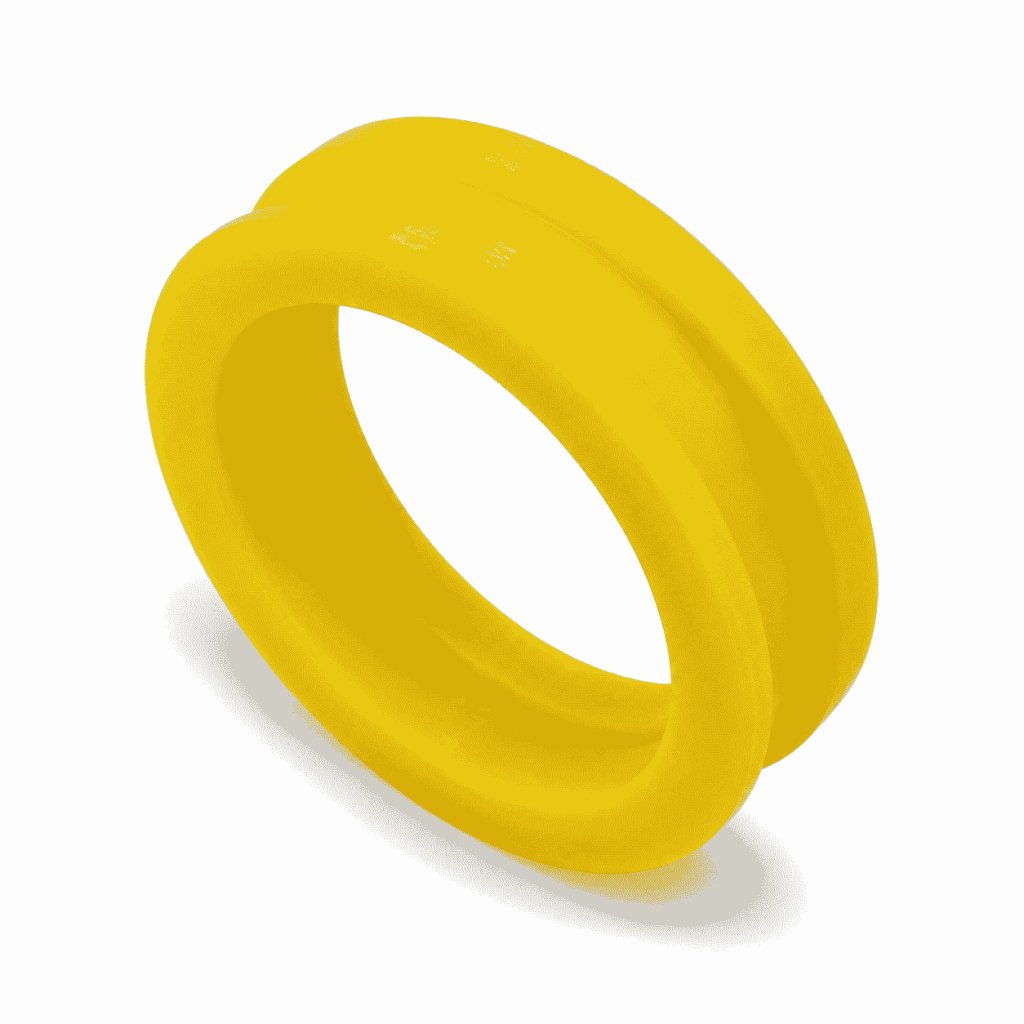
Custom polyurethane wheel lining is used on support wheels, guide rollers, drive wheels and load-bearing rollers in chemical processing equipment. The polyurethane layer is normally bonded or cast around a steel, aluminum or other rigid wheel core, providing a durable contact surface between the wheel and the equipment track, drum or moving component.
Chemical equipment frequently operates under continuous rolling, repeated starting and stopping, impact loading, vibration and humid working conditions. Conventional metal wheels can generate excessive noise and damage the contact surface, while ordinary rubber linings may wear, crack or separate from the wheel core. A properly designed polyurethane wheel lining can reduce these problems and improve equipment operating stability.
Why Chemical Equipment Requires Custom Wheel Linings
Many chemical processing machines contain rotating drums, movable filter plates, conveying platforms, lifting systems and guided frames. The rollers used in these structures must support equipment weight while maintaining accurate movement.
Common operating problems include:
- Metal-to-metal contact creating excessive noise;
- Rapid wear on equipment tracks and rotating drums;
- Wheel slippage during starting or braking;
- Cracking and aging of ordinary rubber linings;
- Uneven wheel wear causing vibration and jumping;
- Insufficient wheel hardness under heavy loads;
- Excessive deformation affecting equipment height and alignment;
- Wheel lining separation from the metal core;
- Guide wheels moving away from the correct track position;
- Standard replacement wheels not matching the original equipment dimensions.
A custom polyurethane wheel lining can be designed according to the original wheel core, operating load, running speed, wheel profile and installation position. This allows the replacement component to fit the actual machine rather than forcing the equipment to use a standard wheel with unsuitable dimensions.
Application in Rotating Chemical Reactors and Mixing Drums
Horizontal reactors, rotary mixing drums and cylindrical chemical processing equipment are often supported by several load-bearing wheels. These wheels carry the weight of the drum and allow the equipment to rotate during mixing, heating, drying or material treatment.
When a metal support wheel runs directly against a metal track, repeated contact can produce vibration, impact noise and surface wear. Small installation errors may also create uneven loading, causing one section of the wheel to wear faster than the others.
Adding a custom polyurethane wheel lining creates an elastic contact layer between the support wheel and the rotating drum. The polyurethane layer can absorb part of the impact generated during equipment startup and shutdown, reducing direct collision between metal components.
The higher friction of the polyurethane surface can also improve traction between the wheel and the drum, reducing slippage during rotation. This is particularly useful in low-speed rotary chemical equipment where stable movement and controlled positioning are required.
Application in Chemical Filtration Equipment
Filter presses, vacuum filters, centrifuges and solid-liquid separation systems often contain movable frames, sliding assemblies, filter plate mechanisms and guide rails. Support and guide rollers help these components open, close or move along a fixed path.
After long-term operation, the original rollers may develop flat spots, surface cracks, edge damage or excessive clearance. These defects can increase operating resistance and cause the movable assembly to shake or deviate from its intended position.
A polyurethane-lined guide wheel provides a combination of wear resistance and elastic contact. It can compensate for minor track irregularities while reducing impact between the wheel and the rail.
When the lining eventually reaches its wear limit, the polyurethane layer or complete wheel assembly can be replaced without replacing the more expensive guide rail or equipment frame.
Application in Chemical Material Conveying Systems
Chemical plants commonly use roller conveyors, rail carts, drum-handling systems and transfer platforms to move raw material containers, reaction vessels, intermediate products and finished chemical packages.
Metal wheels provide high load capacity but can create noise and damage coated floors or guide tracks. Ordinary plastic wheels may crack under repeated impact, while soft rubber wheels may deform excessively under continuous loads.
Custom polyurethane wheel linings can be produced with different hardness levels to balance load capacity, traction and shock absorption. A harder polyurethane compound can support heavier equipment, while a softer compound can provide improved cushioning and noise reduction.
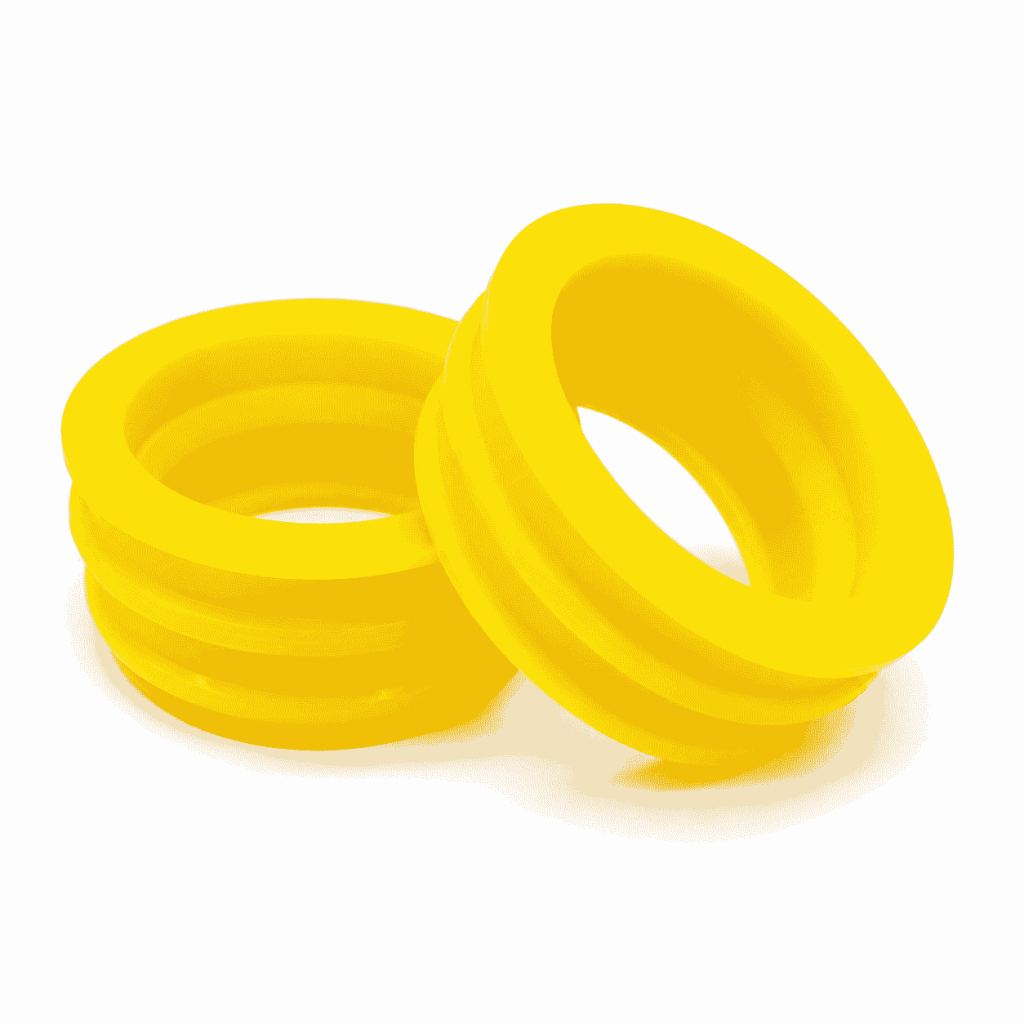
The wheel surface can also be machined into a flat, crowned, concave or grooved profile according to the conveyor structure. This helps maintain stable movement and reduces the possibility of the wheel running away from the guide path.
Application in Chemical Equipment Lifting Systems
Vertical lifting equipment, maintenance platforms, hoists and guided lifting frames are used to move chemical containers, processing assemblies and machine components between different operating levels.
The drive wheels, guide wheels and load-bearing wheels in these systems experience repeated acceleration, braking and direction changes. These operating cycles generate impact and concentrated stress on the wheel surface.
A custom polyurethane wheel lining can absorb part of the impact while maintaining sufficient rigidity to support the equipment. The lining can also provide more stable friction during starting and braking, reducing sudden wheel slippage.
For guided lifting equipment, polyurethane wheels can be manufactured with V-grooves, U-grooves, flanges or stepped surfaces to match the rail structure and control lateral movement.
Application in Chemical Equipment Maintenance Carts
Maintenance carts and movable service platforms are frequently used around reactors, storage tanks, pumps and filtration equipment. These carts may carry tools, replacement components or heavy machine assemblies.
When metal wheels are used, movement across factory floors can create noise, vibration and surface damage. Polyurethane wheel linings provide a more flexible contact surface, helping protect coated concrete floors and reducing vibration transferred to the transported components.
The wheel hardness and lining thickness can be selected according to the total cart load, floor condition and required rolling resistance.
Advantages of Polyurethane Wheel Linings
Polyurethane materials can be formulated to provide a wide range of physical properties. This makes polyurethane suitable for custom industrial components requiring a specific balance of hardness, elasticity and durability.
High Wear Resistance
Support wheels and guide rollers experience continuous friction against tracks, drums and machine frames. Polyurethane elastomers can provide strong abrasion resistance, helping reduce surface loss during repeated rolling.
For additional technical information about polyurethane elastomer performance, refer to the Covestro polyurethane elastomer resource.
Impact and Vibration Absorption
The elastic polyurethane layer can absorb part of the impact generated during equipment startup, stopping and load changes. This reduces direct metal contact and helps lower operating noise.
Adjustable Hardness
Polyurethane wheel linings can be produced in different hardness ranges. The appropriate hardness depends on the operating load, wheel diameter, running speed, contact pressure and required deformation.
A softer lining normally provides more cushioning and traction, while a harder lining provides improved load support and dimensional stability.
Improved Traction
The polyurethane surface can provide better grip than a smooth metal wheel. This helps reduce slippage in drive wheels, pressure rollers and rotary drum support systems.
Protection of Tracks and Equipment Surfaces
Polyurethane prevents direct contact between the metal wheel core and the equipment surface. This can reduce scratches, impact marks and premature wear on tracks, drums and guided machine components.
Multiple Wheel Profiles
Custom polyurethane wheels can be produced with different running surfaces, including:
- Flat wheel surfaces;
- Crowned wheel surfaces;
- Concave wheel surfaces;
- V-groove wheel linings;
- U-groove wheel linings;
- Flanged guide wheels;
- Stepped wheel surfaces;
- Curved contact surfaces;
- Custom irregular wheel profiles.
Chemical Compatibility Considerations
Polyurethane should not automatically be described as resistant to every chemical substance. Its performance depends on the polyurethane formulation, chemical medium, concentration, exposure time and operating temperature.
Some polyurethane grades provide good resistance to oils, greases, water and selected chemicals, while strong solvents, concentrated acids, concentrated alkalis or elevated temperatures may reduce material performance.
A polyurethane material selection guide can provide general reference information, but the final material should be verified against the actual operating medium.
Before production, the following information should be confirmed:
- Name of the chemical medium;
- Chemical concentration;
- Continuous and maximum operating temperature;
- Direct contact or occasional splash exposure;
- Exposure duration;
- Cleaning chemicals used on the equipment;
- Presence of oil, grease, water or solvent;
- Required service life.
When chemical compatibility is uncertain, testing a material sample under actual operating conditions is recommended before batch production.
Parameters Required for Custom Polyurethane Wheel Linings
A polyurethane wheel lining cannot be selected only by its outer diameter. The complete operating condition must be reviewed to determine the correct structure and material.
Important customization parameters include:
- Finished wheel outer diameter;
- Wheel inner diameter or shaft diameter;
- Overall wheel width;
- Polyurethane lining thickness;
- Metal wheel core material;
- Single-wheel operating load;
- Wheel rotation speed;
- Starting and stopping frequency;
- Required polyurethane hardness;
- Operating temperature;
- Chemical exposure conditions;
- Flat, curved or grooved wheel profile;
- Bearing seat dimensions;
- Keyway, mounting hole or positioning structure;
- Required dimensional tolerance;
- Quantity and batch consistency requirements.
When a complete drawing is unavailable, the original wheel or used sample can be measured. The worn condition of the old wheel can also help identify whether the previous lining was too soft, too hard, too thin or poorly bonded.
Metal Wheel Core and Bonding Structure
The metal wheel core provides structural support, while the polyurethane layer provides the running surface. A reliable bond between these two parts is essential.
Before casting, the wheel core normally requires cleaning, surface preparation and bonding treatment. Oil, rust, coating residue and contamination must be removed because they can reduce the bonding strength between the polyurethane and the metal core.
The wheel core can also include mechanical locking structures such as grooves, holes, steps or retaining edges. These structures improve the mechanical connection between the polyurethane layer and the core, particularly in drive wheels or high-torque applications.
Manufacturing Process
The production of a custom polyurethane wheel lining normally includes the following steps:
- Confirm the drawing, sample and operating conditions;
- Inspect or manufacture the metal wheel core;
- Clean and prepare the wheel core surface;
- Apply the required bonding treatment;
- Prepare the mold and polyurethane material;
- Cast or mold the polyurethane around the wheel core;
- Complete curing and post-curing;
- Machine the outer diameter, end faces and wheel grooves;
- Inspect dimensions, hardness and appearance;
- Identify and package products according to specification.
After curing, CNC turning or grinding can be used to achieve the specified outer diameter, wheel width, groove profile and concentricity.
Important Inspection Requirements
Polyurethane-lined wheels used in chemical equipment should be inspected before shipment. Common inspection items include:
- Finished outer diameter;
- Overall wheel width;
- Inner bore and bearing seat dimensions;
- Wheel surface profile;
- Groove width and depth;
- Hardness of the polyurethane layer;
- Concentricity between the wheel core and outer surface;
- Runout of the running surface;
- Surface bubbles, cracks or missing material;
- Bonding condition between polyurethane and metal;
- Consistency between products in the same batch.
For orders containing different sizes, each specification should be inspected, labeled and packaged separately to avoid installation errors.
Common Custom Polyurethane Wheel Products
Polyurethane wheel components commonly used in chemical processing equipment include:
- Reactor support wheel linings;
- Rotary drum support rollers;
- Chemical mixer drive wheels;
- Filter press guide wheels;
- Centrifuge support rollers;
- Chemical conveyor wheels;
- Lift guide rollers;
- Rail cart load wheels;
- Polyurethane pressure rollers;
- Polyurethane traction wheels;
- V-groove polyurethane wheels;
- U-groove polyurethane wheels;
- Flanged polyurethane guide wheels;
- Polyurethane-coated rollers;
- Custom polyurethane-lined metal wheels.
Custom Production for Different Chemical Equipment
Custom polyurethane wheel linings can be manufactured according to technical drawings, original samples or measured equipment dimensions. The wheel diameter, hardness, lining thickness and running surface can be adjusted according to the actual load and movement requirements.
In addition to polyurethane wheel linings, related products include polyurethane guide rollers, polyurethane drive wheels, polyurethane pressure rollers, polyurethane buffer blocks, polyurethane wear plates and custom molded polyurethane components.
Different wheel sizes, hardness levels and groove structures can be produced in the same batch. Products can be inspected and packaged separately according to part number, equipment position or drawing number, helping ensure accurate installation and consistent batch quality.