

Polyethylene road mats were used in this pipeline construction project to create a stable temporary route across farmland and soft, unpaved ground. The system allowed transport vehicles and construction equipment to reach the work area while reducing wheel ruts, soil settlement, and surface damage.
Project Background
The project involved transporting steel pipes, welding equipment, and lifting machinery along a pipeline installation route. Several sections crossed soft soil and farmland without permanent access roads.
After rainfall, the ground became muddy and difficult to cross. The main problems included:
- Transport vehicles slipping or becoming stuck;
- Deep wheel ruts caused by repeated traffic;
- Local ground settlement beneath lifting equipment;
- Reduced vehicle speed and project delays;
- Additional restoration work after using gravel;
- Difficult handling and relocation of heavy steel plates.
Pipeline Construction Application
The pipeline route moved continuously as installation work progressed. Building a permanent road across the entire area would have increased construction time, material use, and land restoration work.
Polyethylene road mats provided a movable access surface that could follow the pipeline installation team. Once one section was completed, the mats were removed and installed farther along the route.

Temporary Roadway Solution
Before installation, workers removed sharp stones, metal debris, and major surface irregularities. The mats were then positioned along the planned vehicle route and connected to form a continuous temporary roadway.
Additional coverage was provided at turning points, pipe unloading areas, and equipment parking positions. This helped keep vehicle tyres and machine support points within the protected surface.
For particularly wet or unstable sections, basic ground levelling or a geotextile layer could be added beneath the mats to improve stability.
Product Features
Raised Anti-Slip Surface
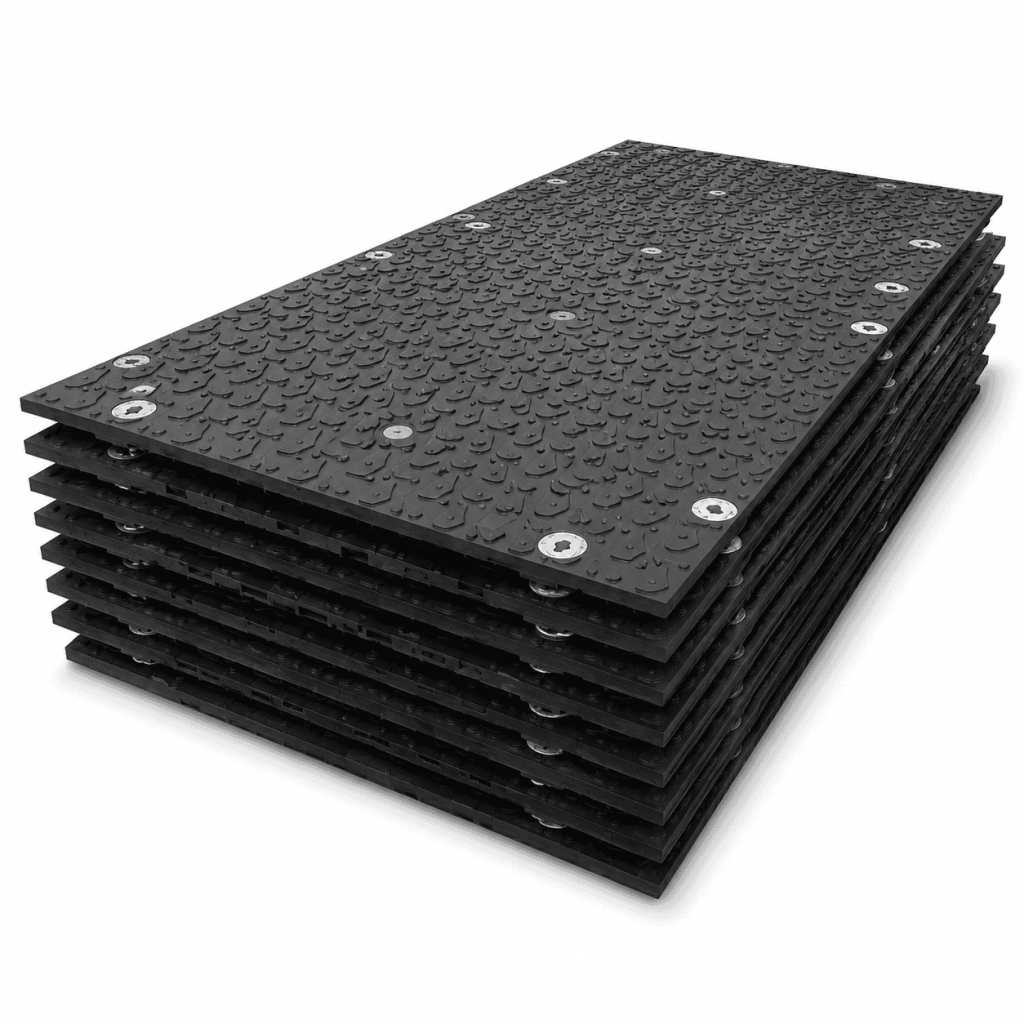
The raised tread pattern increased contact between vehicle tyres and the mat surface, helping improve traction in wet and muddy conditions.
Load Distribution
The mats distributed wheel pressure over a wider surface area, reducing concentrated loads that could otherwise cause deep rutting or local settlement.
Resistance to Outdoor Conditions
Polyethylene has low water absorption and does not rust when exposed to rain, mud, and damp soil, making it suitable for temporary outdoor access routes.
Portable and Reusable Design
Compared with heavy steel plates, polyethylene road mats are easier to transport, position, and relocate. After use, they can be cleaned and prepared for another section or project.
Installation Process
- Plan the route: Determine the required length and width according to vehicle dimensions and turning requirements.
- Prepare the surface: Remove sharp debris and level major holes or raised areas.
- Install the mats: Position the panels along the direction of vehicle travel.
- Reinforce key areas: Increase coverage at turning, unloading, and equipment parking locations.
- Inspect regularly: Check for movement, uneven joints, or local settlement during use.
Project Results
After the temporary roadway was installed, pipe transport vehicles and construction machinery were able to enter the work area more reliably.
The mats reduced direct tyre contact with the soft soil, helping control wheel sinkage, deep ruts, and surface disturbance. They also provided a more stable area for unloading pipes and positioning equipment.
As pipeline installation moved forward, the mats were transferred to the next section. This avoided the need to construct a permanent road along the entire route.
After completion, the panels were removed and the ground required less clearing and restoration than an access road built with loose gravel or permanent materials.
Other Suitable Applications
- Oil and natural gas pipeline installation;
- Municipal water pipeline projects;
- Underground cable and communication work;
- Oilfield and geological exploration access;
- Crane and excavator working platforms;
- Emergency maintenance vehicle routes;
- Temporary access across farmland and wetlands.
Project Conclusion
This pipeline project demonstrated how polyethylene road mats can create a practical temporary access route across muddy and unstable ground. The system improved vehicle access, distributed loads, reduced surface damage, and could be moved as the construction route progressed.
Portable mat systems are also commonly known as access mats and are used to create temporary roads and working surfaces in pipeline, construction, energy, and other industrial projects.
Mat dimensions, thickness, surface tread, connection method, and carrying-hole design can be selected according to vehicle loads, ground conditions, and project requirements.