

A mining company was experiencing frequent material buildup inside its heavy-duty dump trucks. The vehicles were mainly used to transport wet clay, mineral fines, damp sand and other sticky bulk materials.
Even after the truck beds were fully raised, a considerable amount of material remained attached to the steel floors and sidewalls. This increased unloading time, reduced transportation efficiency and required repeated manual cleaning.
Project Background
The dump trucks operated continuously between the mining area, processing plant and material storage yard. Because the transported materials contained moisture and fine particles, they easily adhered to the steel truck beds.
Drivers often had to raise the truck bed several times before most of the load could be discharged. In more serious cases, workers had to remove the remaining material with shovels or other tools.
This cleaning process interrupted normal transportation, increased labor requirements and exposed the steel bed to additional scratching, impact and corrosion.
Problems with the Original Steel Truck Bed
- Wet and sticky materials remained attached to the truck bed.
- The truck required repeated lifting during unloading.
- Manual cleaning increased unloading time and labor costs.
- Remaining material increased the vehicle’s unnecessary carrying weight.
- The steel floor experienced continuous abrasion, impact and corrosion.
- Frequent cleaning created additional operational safety concerns.
UHMWPE Dump Truck Bed Liner Solution
After evaluating the truck bed dimensions, transported materials, loading capacity and unloading conditions, white UHMWPE dump truck bed liner sheets were selected for the project.
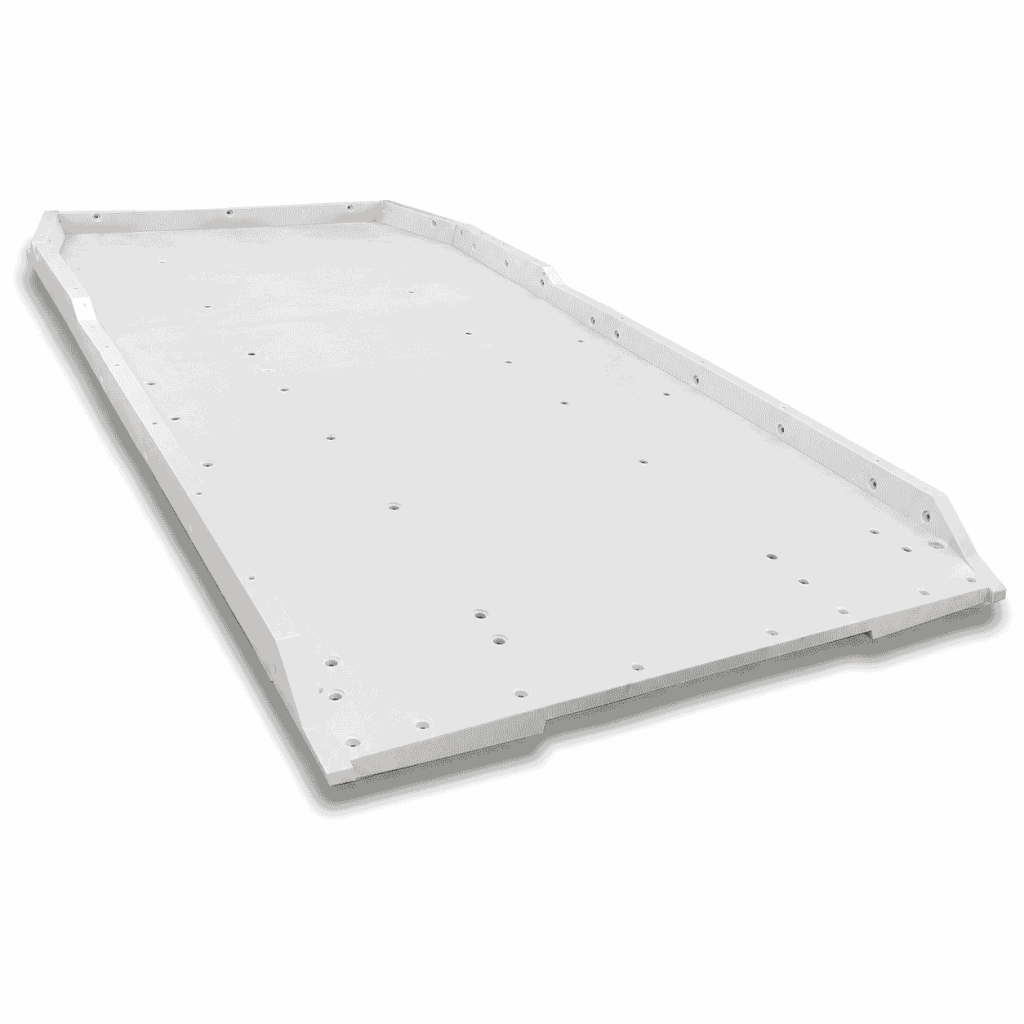
UHMWPE is an engineering plastic known for its low coefficient of friction, abrasion resistance, impact strength and sliding performance. These properties make it suitable for applications involving bulk material flow, friction and wear.
More information about the material is available from Röchling’s UHMWPE technical resource .
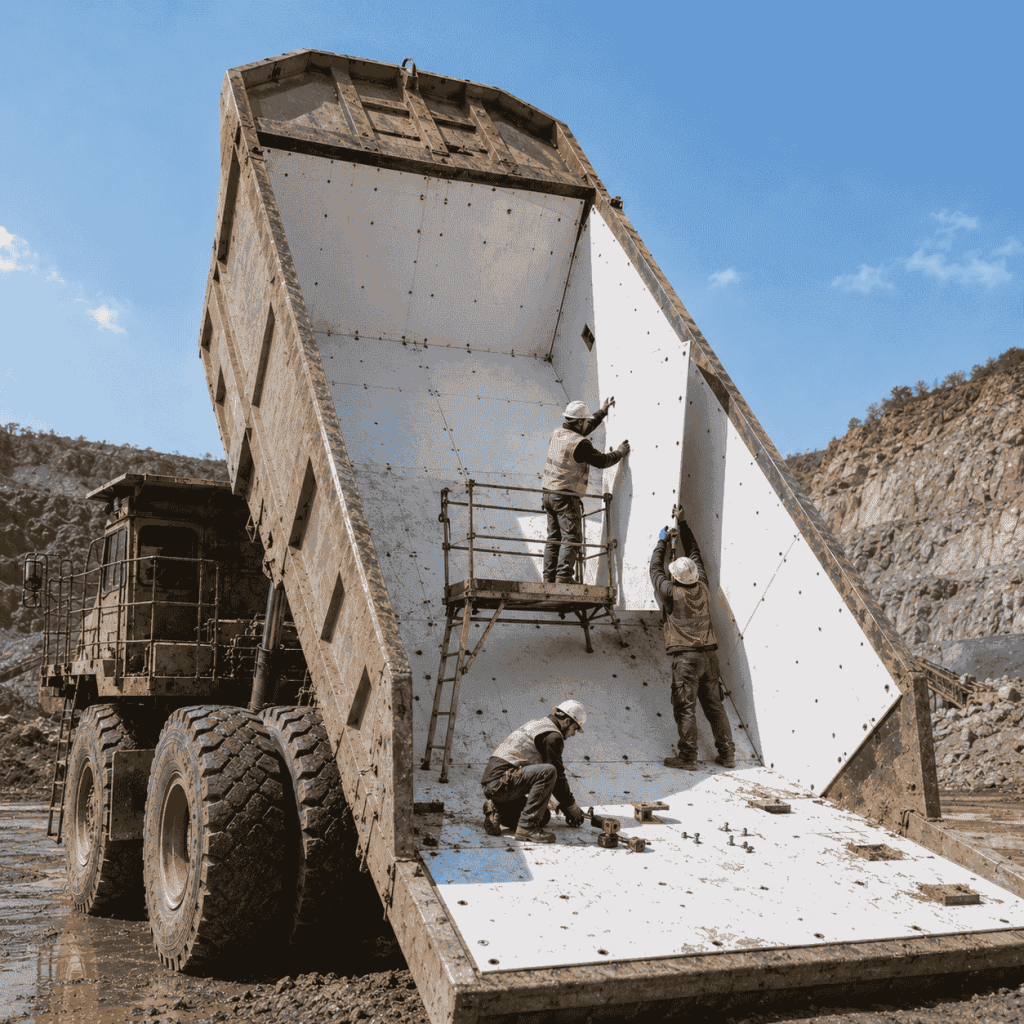
The liner sheets were installed across the main floor and the lower sections of the sidewalls where material buildup was most severe. The panels were cut and drilled according to the internal structure of the truck bed.
Liner Design and Installation
Before production, the truck bed was measured to confirm its internal length, width, sidewall angle, reinforcement positions and discharge structure.
The liner system was then divided into several sections to simplify machining, transportation, installation and future replacement.
The installation process included:
- Inspecting and cleaning the original steel truck bed.
- Measuring the floor, sidewalls and tail discharge area.
- Cutting the UHMWPE sheets according to the required dimensions.
- Drilling countersunk mounting holes in specified positions.
- Installing the panels with suitable mechanical fasteners.
- Allowing appropriate expansion space between adjacent sheets.
- Checking the liner surface, fasteners and tailgate clearance.
Appropriate expansion gaps were retained because plastic sheets may expand and contract as operating temperatures change. The fasteners were positioned below the working surface to reduce direct contact with the transported material.
How the UHMWPE Liner Improved Unloading
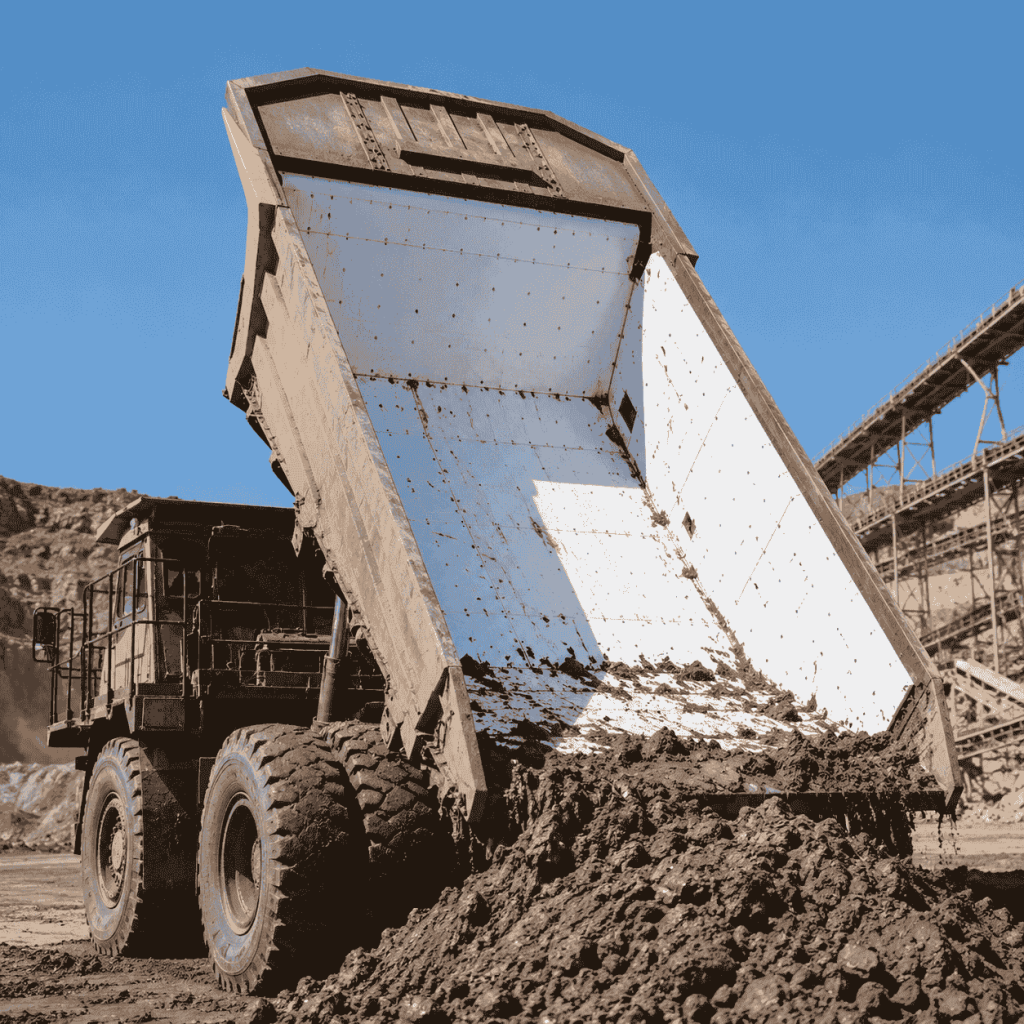
The smooth, low-friction UHMWPE surface reduced adhesion between the wet material and the truck bed. When the truck body was raised, the load could move more easily toward the discharge opening.
The liner also created a protective barrier between the bulk material and the original steel structure. This helped reduce direct abrasion and impact on the steel floor during loading, transportation and unloading.
Project Results
After the lined dump trucks were returned to operation, material discharge became more consistent. Most wet clay and mineral material could slide out with fewer lifting cycles, while the amount of material remaining inside the truck bed was reduced.
The project delivered several practical improvements:
- Smoother discharge of wet and sticky bulk materials.
- Less residual material inside the dump truck body.
- Reduced need for repeated truck-bed lifting.
- Shorter unloading and cleaning times.
- Lower manual cleaning requirements.
- Reduced abrasion and impact on the steel truck bed.
- Improved vehicle availability and transportation efficiency.
- Lower long-term maintenance requirements.
Operational Safety Considerations
Workers should not enter, stand beneath or perform maintenance around an elevated dump truck body unless the vehicle has been properly secured and the required safety procedures have been followed.
Additional guidance on loading and unloading operations can be found in the OSHA loading and unloading guidance .
Dump truck operators and site managers can also review the NIOSH guidance for preventing dump truck-related injuries .
Applications of UHMWPE Dump Truck Liners
UHMWPE truck bed liners can be used in vehicles transporting materials that are abrasive, moist, cohesive or difficult to discharge, including:
- Wet clay and soil
- Coal and coal fines
- Mineral concentrates
- Iron ore and other mined materials
- Sand and aggregate
- Limestone powder
- Sludge and industrial residues
- Agricultural and bulk processing materials
Project Conclusion
The installation of UHMWPE dump truck bed liners provided a practical solution to wet material buildup, incomplete unloading and accelerated steel-bed wear.
By improving material flow and protecting the original truck body, the liner system helped shorten unloading cycles, reduce manual cleaning and improve the operating efficiency of the mining transportation fleet.
UHMWPE liner thickness, panel layout, fastening method and material grade should be selected according to the truck structure, transported material, operating temperature and loading conditions.