
A wastewater treatment plant was experiencing excessive wear, sludge buildup and operating noise in its shaftless screw conveyor. The equipment was mainly used to transport screenings, wet sludge, fibers and other solid waste collected by the wastewater screening system.
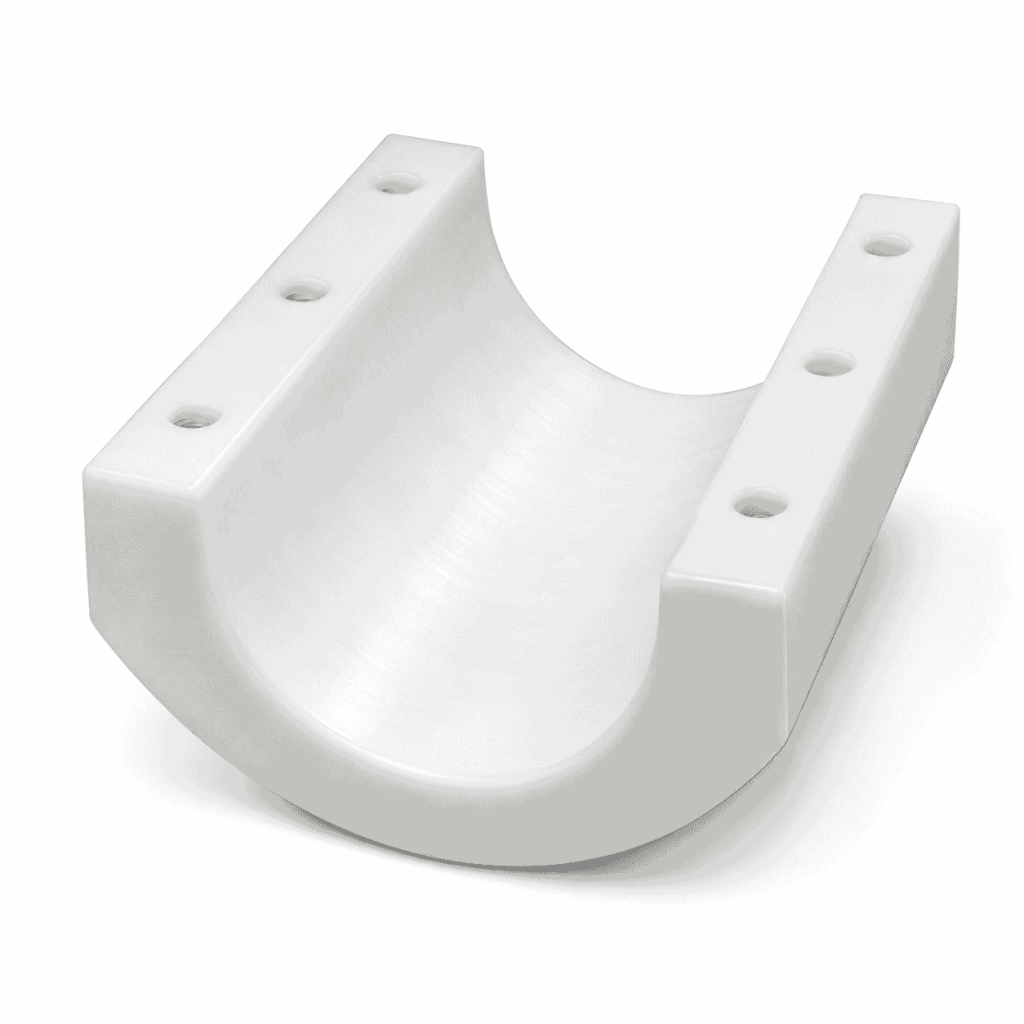
To protect the stainless-steel conveyor trough and improve the movement of wet materials, segmented UHMWPE U-shaped liners for shaftless screw conveyors were installed inside the existing U-shaped trough.
Project Background
The shaftless screw conveyor was installed behind the wastewater screening equipment. Its main function was to transport screenings and sludge to the next dewatering, compacting or collection process.
Because the transported materials contained a large amount of water, fine grit, fibers and suspended solids, they frequently adhered to the inner surface of the conveyor trough.
During operation, the shaftless screw rotated directly against the original metal trough. Continuous contact caused friction, wear and increasing resistance at the bottom of the conveyor.
Screening and solids removal are important parts of preliminary wastewater treatment. Additional information about these processes is available from the U.S. Environmental Protection Agency .
Problems with the Original Conveyor Trough
After long-term operation, the wastewater treatment plant identified several problems with the original shaftless screw conveyor:
- Wet sludge and screenings frequently adhered to the conveyor trough.
- The shaftless screw directly rubbed against the stainless-steel surface.
- The bottom of the metal trough experienced continuous abrasive wear.
- Operating resistance gradually increased as the trough surface deteriorated.
- Metal-to-metal contact produced noticeable operating noise.
- The damp working environment increased the risk of corrosion on metal components.
- Repairing or replacing the complete conveyor trough required significant downtime.
The customer needed a solution that could protect the existing conveyor body without replacing the complete conveying system.
UHMWPE U-Shaped Liner Solution
After checking the internal width, trough radius, screw diameter and operating path of the conveyor, segmented UHMWPE U-shaped liner panels were designed and machined for the project.
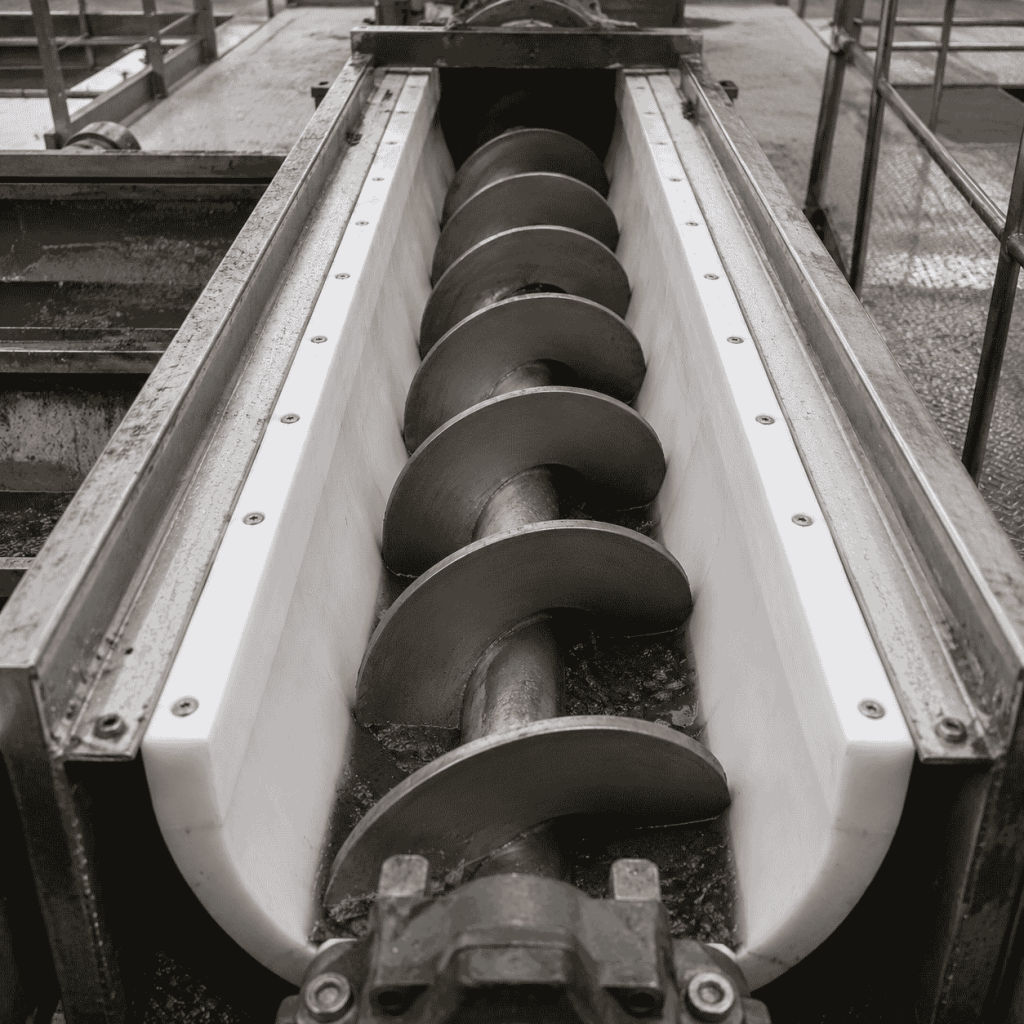
The liners were installed between the shaftless screw and the stainless-steel conveyor trough. After installation, the rotating screw moved along the UHMWPE surface instead of directly contacting the original metal structure.
The U-shaped profile was manufactured to match the curvature of the conveyor trough. This helped the liner fit closely against the existing structure while maintaining the required clearance for screw rotation.
A segmented liner arrangement was selected to simplify installation, inspection and future maintenance. When one section becomes worn, the affected liner can be removed and replaced separately without replacing the entire conveyor trough.
Why UHMWPE Was Selected
UHMWPE is commonly used in applications involving friction, wear and material flow. It offers low friction, strong wear resistance, good impact resistance and low moisture absorption.
More technical information about UHMWPE material properties can be found on the Röchling UHMWPE material page .
Wear Resistance
The shaftless screw continuously slides against the bottom and sides of the conveyor trough. UHMWPE liners provide a replaceable wear surface that reduces direct damage to the stainless-steel conveyor body.
Low Friction
The relatively smooth UHMWPE surface helps reduce sliding resistance between the screw and the trough. This supports more stable rotation and reduces unnecessary friction during material transport.
Self-Lubricating Performance
UHMWPE has useful self-lubricating characteristics and does not normally require frequent external lubrication in this type of sliding application.
Low Moisture Absorption
The material absorbs very little water and does not rust. This makes it suitable for wastewater treatment environments where equipment is continuously exposed to moisture, sludge and wash water.
Impact Resistance
Screenings may contain grit, fibers, plastic fragments and other hard materials. The impact resistance of UHMWPE helps the liner withstand intermittent loading and material movement.
Noise Reduction
Separating the metal screw from the metal trough reduces direct metal-to-metal friction and impact, helping lower mechanical noise during operation.
Liner Design Considerations
Before manufacturing the liners, the following equipment information was confirmed:
- Internal width of the conveyor trough
- Radius and curvature of the U-shaped channel
- Outside diameter of the shaftless screw
- Total conveyor length
- Original mounting-hole positions
- Required operating clearance
- Material type and expected solids content
- Working temperature and cleaning conditions
The liner thickness was selected according to the available clearance, screw structure, expected wear level and operating load.
The liner sections were machined with suitable fixing holes. Fastener heads were positioned below the working surface wherever possible to prevent direct contact with the rotating screw.
Installation Process
The UHMWPE U-shaped liner installation was completed through the following steps:
- The conveyor was stopped, isolated and prepared for maintenance.
- Sludge, screenings and residue were removed from the trough.
- The stainless-steel surface was inspected for wear and deformation.
- The internal dimensions and original fixing positions were confirmed.
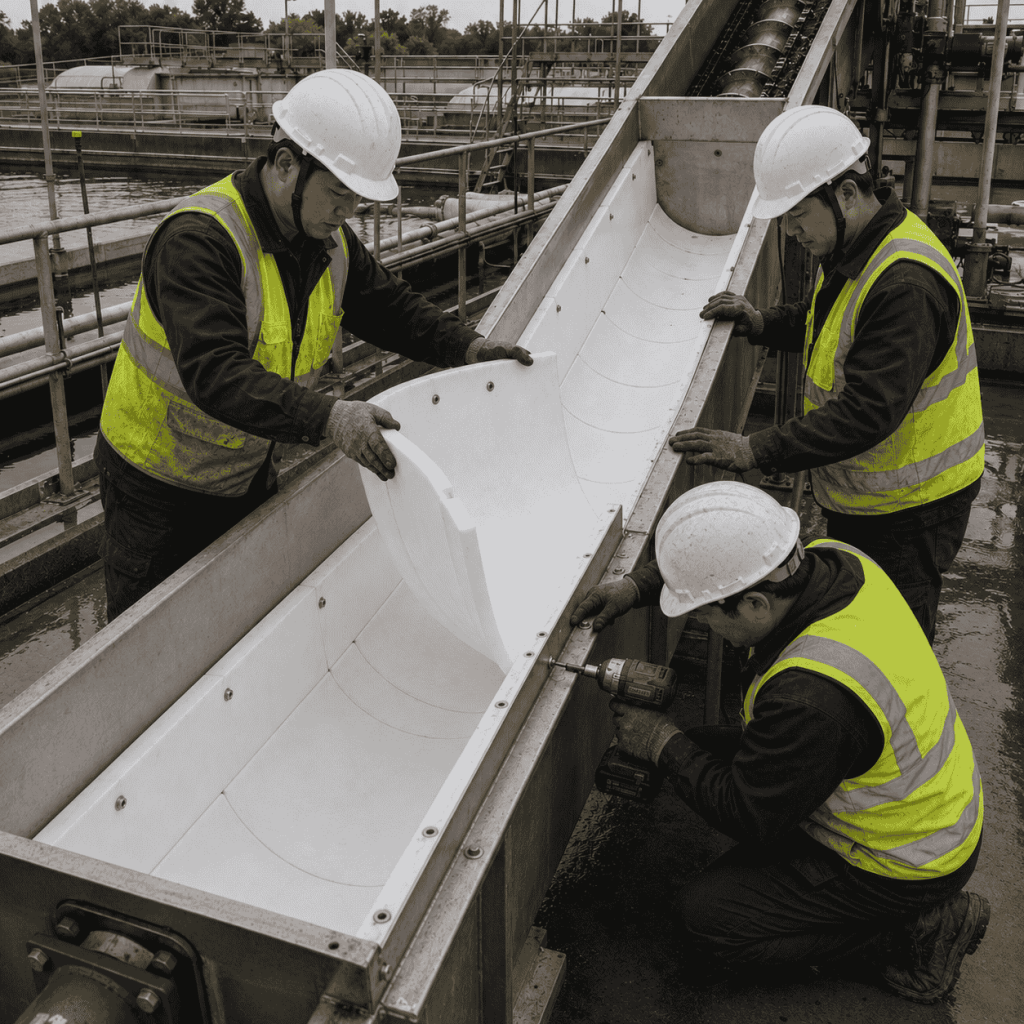
- The segmented UHMWPE liners were placed inside the U-shaped trough.
- Each liner section was aligned with the adjacent panel.
- The liners were secured using appropriate mechanical fasteners.
- Panel joints were checked to prevent raised edges or excessive gaps.
- The shaftless screw was installed and manually checked for clearance.
- The conveyor was tested under empty-load and operating conditions.
Particular attention was given to the joints between liner sections. A smooth transition was maintained to reduce the possibility of fibers or screenings becoming trapped between adjacent panels.
Project Results
After the UHMWPE U-shaped liners were installed, the shaftless screw no longer operated directly against the original stainless-steel trough.
The project provided several practical improvements:
- Reduced direct wear on the stainless-steel conveyor trough
- Lower friction between the shaftless screw and the trough
- Reduced buildup of wet sludge and screenings
- Smoother screw movement during material transport
- Lower metal-to-metal operating noise
- Improved protection in damp and corrosive environments
- Simplified maintenance through segmented liner replacement
- Reduced need to replace the complete conveyor trough
- Shorter maintenance shutdowns when local wear occurs
Maintenance Advantages
One of the main advantages of the segmented liner system is that each section can be inspected and replaced separately.
Wear is usually concentrated in areas where the screw carries the highest load or where abrasive grit settles. Instead of removing the complete conveyor trough, maintenance personnel can replace only the affected liner section.
This structure helps reduce spare-part costs, maintenance time and unnecessary equipment disassembly.
Typical Applications
UHMWPE U-shaped liners can be used in many shaftless screw conveyor systems, including:
- Wastewater treatment plant screening conveyors
- Sludge transportation equipment
- Screenings compactors and conveying systems
- Municipal solid-waste handling equipment
- Paper-mill sludge conveyors
- Food-residue conveying systems
- Industrial wastewater treatment equipment
- Chemical powder and granular-material conveyors
- Biomass and organic-waste handling systems
Project Conclusion
This project used a segmented UHMWPE U-shaped liner for a shaftless screw conveyor to solve problems involving metal-trough wear, sludge adhesion, operating resistance and mechanical noise.
The liner created a low-friction, wear-resistant and moisture-resistant surface between the shaftless screw and the stainless-steel trough. It protected the original conveyor body while also making future maintenance more convenient.
For wastewater treatment plants and other wet-material conveying systems, UHMWPE U-shaped liners provide a practical method of extending trough service life, reducing direct metal wear and improving equipment operation.
The liner dimensions, thickness, panel length, fastening method and operating clearance should be selected according to the conveyor structure, screw diameter, transported material and actual working conditions.