

Project Background
A manufacturer of automotive components used a pallet conveyor system to move workpieces between assembly, inspection, and positioning stations. During long-term operation, the pallets frequently shifted sideways when passing through curved sections. They also experienced vibration, impact, and occasional jamming before entering the positioning station.
The original system used metal guide rails. Because metal has a hard contact surface, repeated friction gradually scratched the bottom of the pallets. At curved sections, direct contact between the pallets and metal rails also produced noticeable noise and vibration. These problems affected positioning accuracy, increased wear, and required frequent equipment adjustment and maintenance.
UHMWPE Guide Rail Solution
Based on the pallet dimensions, bottom structure, turning radius, conveyor speed, and available installation space, we designed and machined two curved UHMWPE guide rails. The inner and outer rails were installed along both sides of the pallet path to provide stable guidance and lateral positioning.
The curved surfaces were machined according to the actual movement path of the pallets. This allowed each pallet to follow the required turning radius smoothly without excessive sideways movement. Transition slopes were added at the entrance and exit of the guide rails to reduce sudden impact when the pallet entered the curved area.
Adjustable mounting holes were also included in the design. During installation, the distance between the two guide rails could be fine-tuned according to the actual operating condition. This prevented excessive clearance from causing pallet deviation while avoiding an overly narrow gap that could create friction or jamming.
Why UHMWPE Was Selected
The guide rails were manufactured from ultra-high-molecular-weight polyethylene . UHMWPE offers excellent wear resistance, impact resistance, self-lubricating performance, low friction, and corrosion resistance.
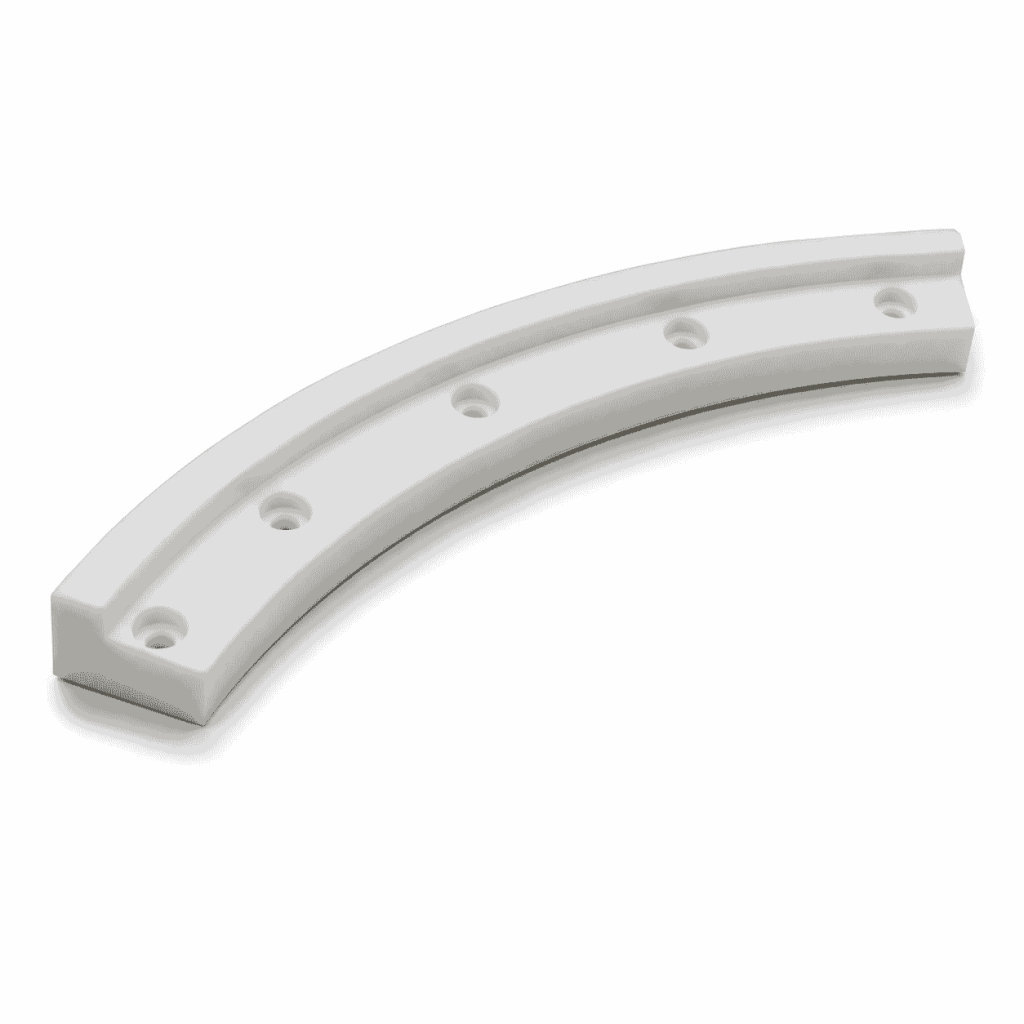
Compared with metal guide rails, UHMWPE produces softer contact with the pallet surface. This helps reduce scratches, vibration, impact noise, and abnormal wear. Its low-friction surface also allows the pallets to move smoothly without frequent lubrication, reducing maintenance work and preventing oil contamination around the assembly line.
For electronics, household appliance, or other automated production environments that are sensitive to static electricity, conductive or antistatic UHMWPE materials can also be selected according to operating requirements.
Installation and Adjustment
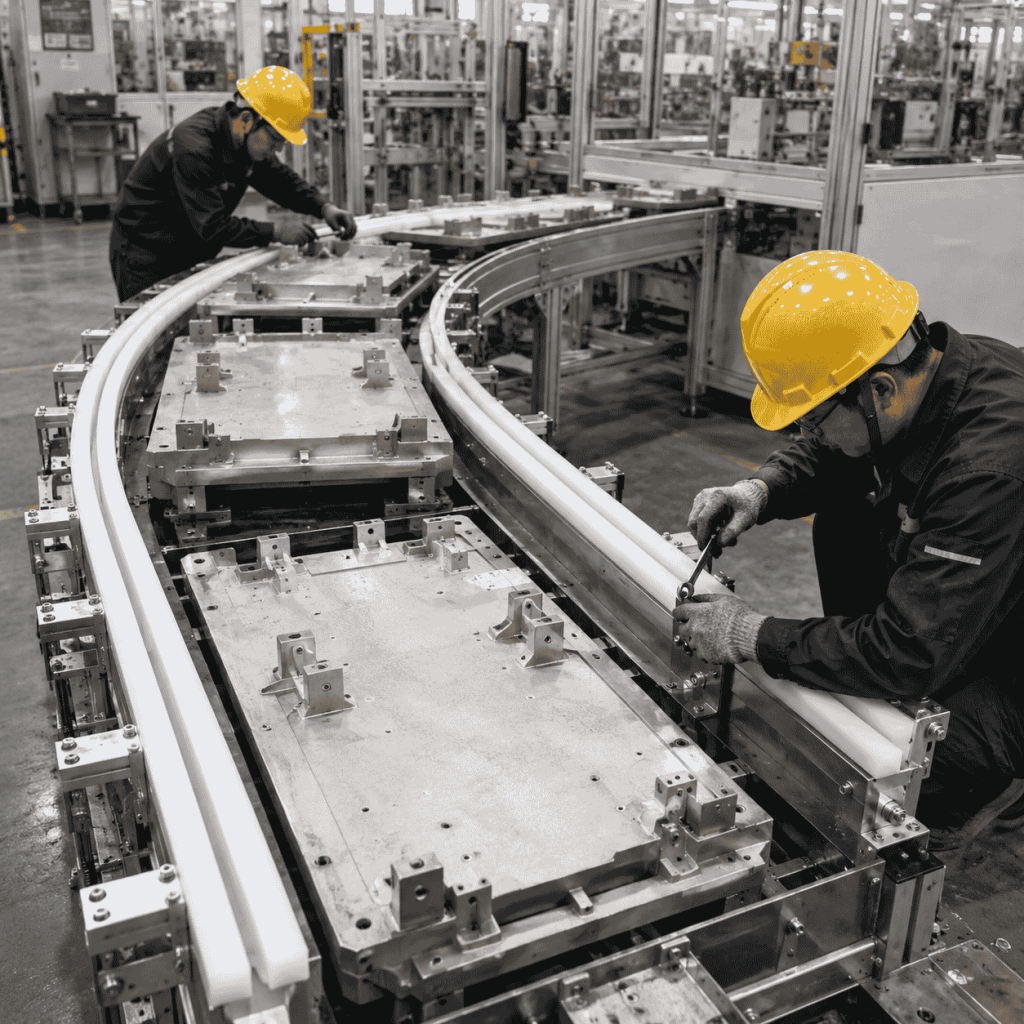
Before installation, the pallet centerline and actual turning path were checked. The two curved guide rails were then fixed on both sides of the conveyor. A low-speed trial run was carried out to observe pallet movement through the curved section.
The rail spacing and installation position were adjusted until the pallets could enter and leave the curved area smoothly. The transition surfaces and edges were also inspected to ensure that no sharp corners could damage the pallet or interfere with normal movement.
Results After the Upgrade
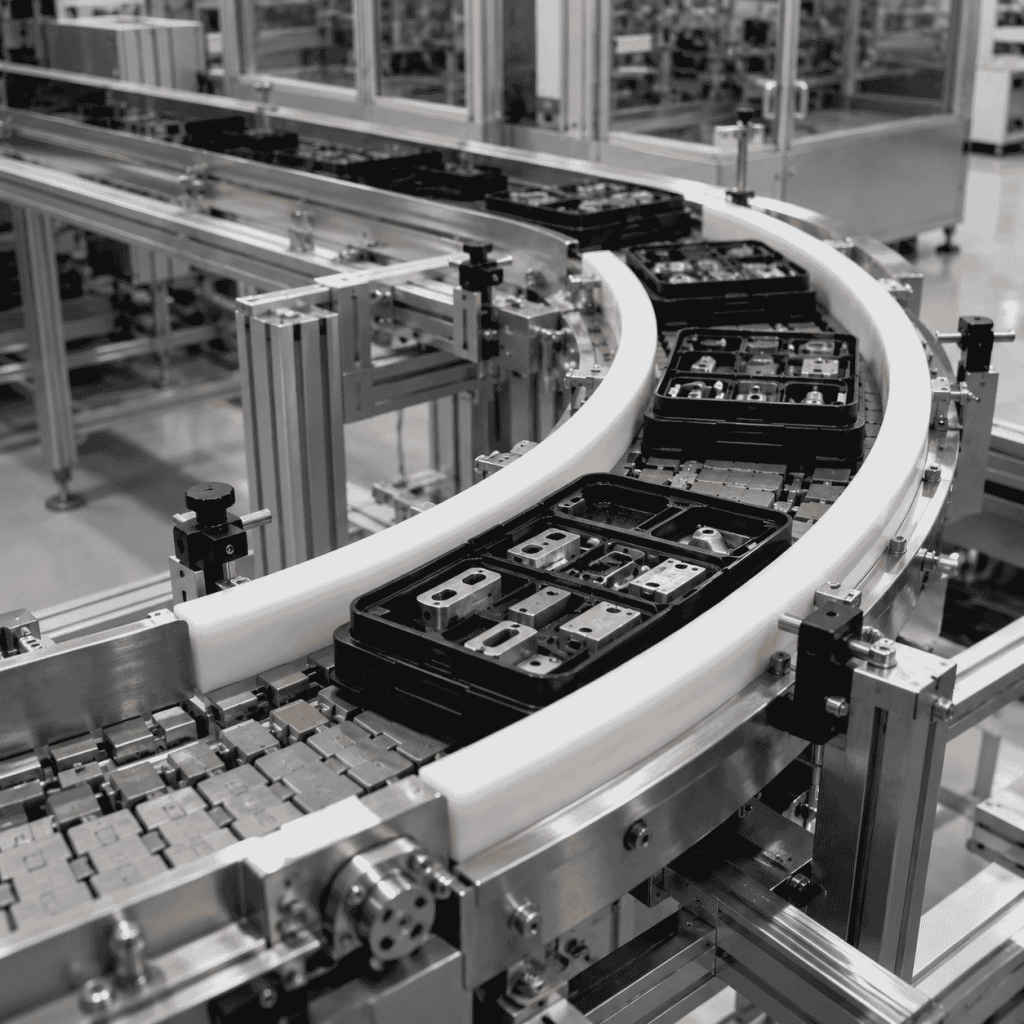
After the UHMWPE curved guide rails were installed, the pallets moved through the turning section more smoothly and consistently. Sideways deviation and jamming were significantly reduced, while scratches on the pallet bottom, operating vibration, and collision noise were also improved.
The pallets entered the assembly and positioning stations with greater stability, helping improve repeat positioning accuracy and the reliability of continuous production. The low-friction UHMWPE surface also reduced lubrication requirements and routine maintenance.
Project Summary
This project used UHMWPE curved guide rails to provide guidance, positioning, and impact reduction for pallets on an automated assembly line. The upgrade effectively addressed pallet deviation, surface scratching, vibration, noise, and unstable positioning.
We can manufacture straight guide rails, curved guide rails, chain guides, wear strips, and other engineering plastic components according to equipment drawings, samples, conveyor speed, operating environment, and actual application requirements. Production schedules can be arranged according to order quantities while maintaining machining quality and on-time delivery.