

A CNC machined nylon pipe locking block is a custom fastening and supporting component used to secure pneumatic tubes, cooling pipes, lubrication lines, hydraulic hoses, cable conduits, and other pipelines inside automation equipment. It keeps pipes in a specified position and helps prevent unwanted movement during repeated machine operation.
Automated machinery frequently operates with rapid starting, stopping, reciprocating motion, and continuous vibration. Without a suitable pipe-fixing structure, tubes and hoses may swing, rub against the machine frame, interfere with moving parts, or transfer excessive force to fittings. A CNC machined nylon pipe locking block provides a practical way to organize and protect these pipelines.
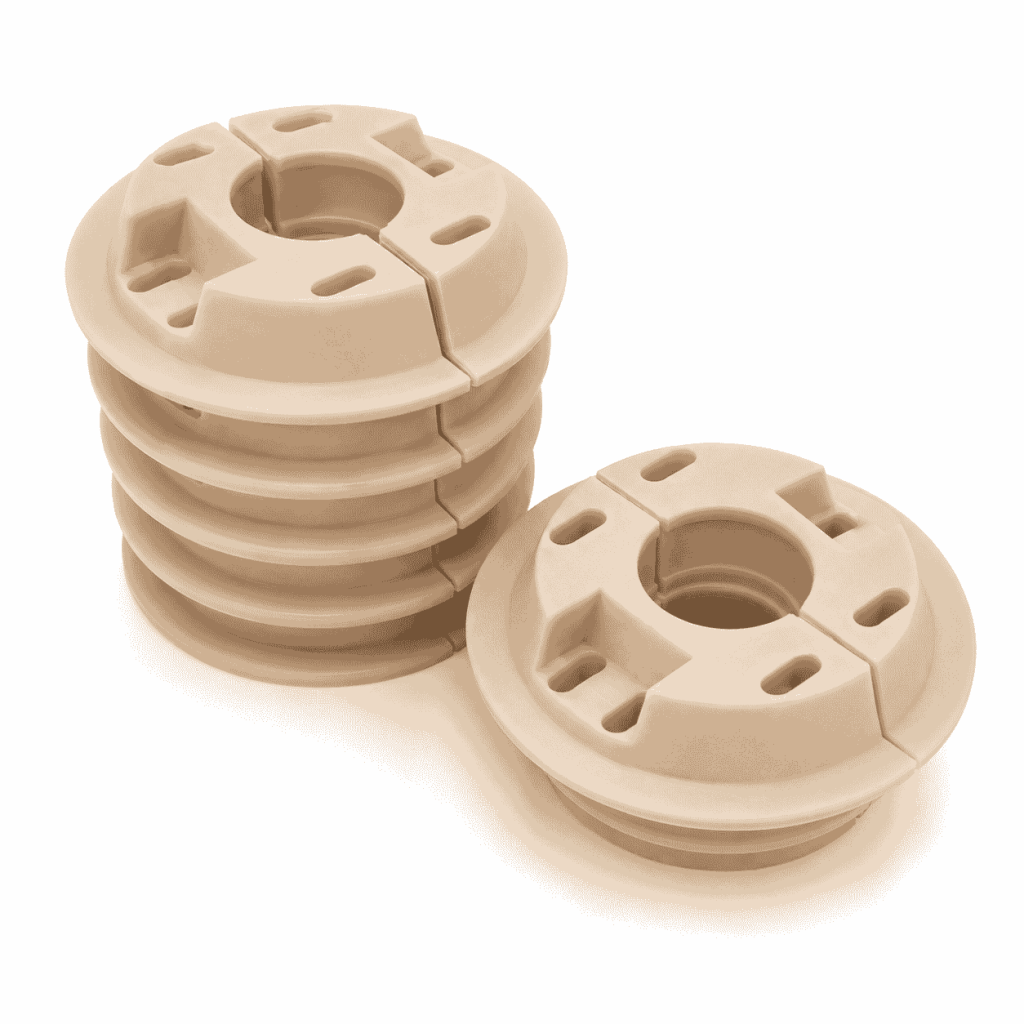
Applications of CNC Machined Nylon Pipe Locking Blocks
CNC machined nylon pipe locking blocks can be used in many types of industrial automation equipment, including:
- Automated assembly machines
- Industrial robots and robotic arms
- Pneumatic feeding equipment
- Automatic inspection systems
- Material-handling machinery
- Automatic welding equipment
- Cooling-fluid circulation systems
- Lubrication and hydraulic systems
- Battery and electronic component production lines
- Automotive component manufacturing equipment
These locking blocks are commonly installed on machine frames, mounting plates, moving beams, robotic end effectors, protective covers, and equipment bases. They can hold a single pipe or organize several tubes at fixed intervals.
More general information about the operation of automated machinery is available in the automation overview.
Pipe Fixing in Pneumatic Automation Systems
Pneumatic systems are widely used in automation equipment to operate cylinders, actuators, valves, grippers, and positioning mechanisms. Compressed-air tubes must be routed correctly so that they do not become stretched, bent, or trapped during machine movement.
A nylon pipe locking block can hold pneumatic tubes near cylinders, solenoid valves, manifolds, and moving modules. By controlling the tube position, the block reduces repeated pulling forces on push-in fittings and helps keep the pneumatic layout orderly.
Background information about compressed-air systems can be found in the pneumatics overview.
Main Functions of a Nylon Pipe Locking Block
1. Securing the Pipeline Position
The internal hole or semicircular groove surrounds the pipe and limits movement in different directions. This prevents the pipe from repeatedly swinging when the machine starts, stops, or changes direction.
2. Organizing Multiple Pipes
Automation equipment may contain several pneumatic tubes, cooling pipes, lubrication lines, and cable conduits. A multi-hole nylon locking block maintains a fixed distance between them and reduces crossing, tangling, and disordered routing.
3. Reducing Surface Wear
When pipes continuously rub against a metal frame, their outer surfaces may become scratched or worn. Nylon separates the pipe from sharp or rigid metal edges and provides a smoother supporting surface.
4. Protecting Pipe Fittings
An unsupported pipe can transfer vibration and pulling force directly to its connector. Fixing the pipeline close to the connection point reduces unnecessary stress on fittings, valves, manifolds, and threaded joints.
5. Reducing Vibration and Noise
Loose tubes may strike the equipment frame during high-frequency operation. A correctly installed nylon locking block limits pipe movement and reduces repeated impact between the pipeline and surrounding metal structures.
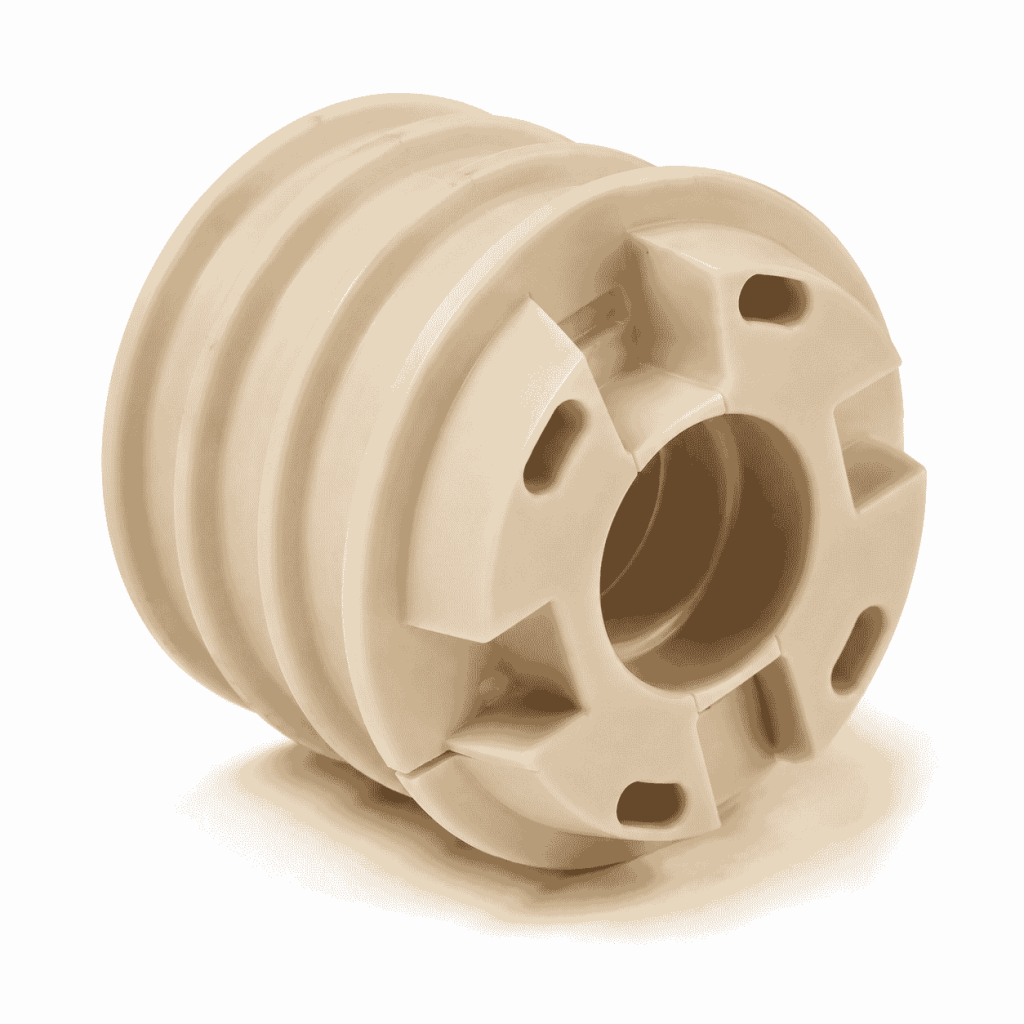
Problems Solved in Automation Equipment
A custom nylon pipe locking block can help address several common equipment problems:
- Pneumatic tubes swinging during rapid machine movement
- Pipes rubbing against the metal equipment frame
- Loose or disorganized pipeline arrangements
- Hoses entering the operating range of guide rails or belts
- Repeated pulling forces acting on pipe fittings
- Noise caused by tubes striking metal components
- Metal pipe clamps scratching flexible tubing
- Standard clamps failing to fit restricted installation spaces
- Multiple pipes becoming crossed or entangled
- Pipeline movement interfering with sensors or actuators
For robotic arms, lifting modules, reciprocating mechanisms, and automatic feeding devices, correct pipeline routing is especially important. The locking block should keep pipes away from ball screws, linear guides, chains, gears, timing belts, and other moving components.
Why Nylon Is Used for Pipe Locking Blocks
Wear Resistance
Nylon provides suitable wear resistance for locations where a tube may experience slight sliding, vibration, or repeated surface contact. This makes it appropriate for supporting pipelines in continuously operating machinery.
Mechanical Strength
Compared with many general-purpose plastics, engineering nylon offers useful strength and toughness. It can withstand assembly pressure from bolts and normal vibration loads generated by automated equipment.
Reduced Risk of Pipe Damage
Nylon is less likely than an unfinished metal clamp to create sharp scratches on plastic tubes, rubber hoses, or cable conduits. A properly machined groove also distributes the clamping force more evenly around the pipe.
Electrical Insulation
Nylon is commonly used in electrical and mechanical components where insulation is useful. In automation equipment, a nylon locking block can separate a cable conduit or pipeline from conductive metal mounting structures.
Corrosion Resistance
Nylon does not rust like ordinary carbon-steel clamps. It can be used in humid production environments or in equipment exposed to water mist and many common industrial fluids, provided that material compatibility is confirmed.
Lower Component Weight
The lower weight of nylon is useful for pipe supports installed on robotic arms, moving beams, and other mobile mechanisms. Reducing unnecessary moving mass can also simplify the design of lightweight automation assemblies.
More information about the material family is available in the nylon material overview.
Advantages of CNC Machining
Pipe diameters, mounting positions, available installation spaces, and machine-frame structures vary between automation systems. Standard commercial clamps may not fit a non-standard piece of equipment. CNC machining allows the locking block to be produced according to the actual pipe dimensions and installation requirements.
Common CNC machined structures include:
- Single-hole pipe locking blocks
- Double-hole pipe fixing blocks
- Multi-hole pipeline arrangement blocks
- Split upper and lower clamping blocks
- Semicircular pipe-groove structures
- Stepped holes for different pipe diameters
- Countersunk bolt mounting holes
- Threaded installation holes
- Locating steps and positioning slots
- Non-standard external profiles
CNC machining can control the pipe-groove diameter, mounting-hole distance, countersink depth, block thickness, external contour, and positioning surface. This allows the completed part to match the original installation position without requiring major changes to the equipment frame.
Split Pipe Locking Block Design
A split locking block consists of an upper section and a lower section. Semicircular grooves in the two sections form complete pipe holes after assembly. Bolts are used to connect the two parts and apply the required clamping force.
This design makes it possible to install or replace a pipe without pulling the entire pipeline through a closed hole. It is suitable for existing equipment, long pipes, connected hoses, and installations where the pipe ends cannot be disconnected easily.
Multi-Hole Nylon Pipe Locking Blocks
A multi-hole locking block is useful when several pipes must be arranged in parallel. Each hole can be machined to the same diameter or to different diameters according to the pipeline layout.
Maintaining a defined distance between the pipes can improve equipment organization and reduce contact between pneumatic tubes, liquid pipes, and cable conduits. Identification marks or pipe numbers may also be added to simplify assembly and maintenance.
Important Design Considerations
A nylon pipe locking block should not be designed only according to the nominal outside diameter of the pipe. Several operating conditions must also be considered:
| Design Factor | Why It Matters |
|---|---|
| Pipe outside diameter | Determines the basic size of the clamping hole or groove |
| Pipe material | Affects allowable clamping pressure and surface protection |
| Required pipe movement | Determines whether the pipe should be fixed or allowed to slide |
| Bolt specification | Affects mounting-hole size and clamping force |
| Equipment vibration | Influences block thickness and mounting strength |
| Working temperature | Affects nylon strength and dimensional stability |
| Fluid exposure | Requires confirmation of chemical compatibility |
| Installation space | Determines the external profile and assembly direction |
Pipe Groove Size and Clamping Pressure
If the pipe groove is too small, excessive clamping force may deform the tube, restrict internal flow, or damage the outer surface. If the groove is too large, the locking block may not prevent movement effectively.
The groove size should therefore be determined according to the actual measured pipe diameter, pipe-wall flexibility, operating pressure, vibration level, and required fixing force. Soft pneumatic tubes require different clamping conditions from rigid metal or engineering-plastic pipes.
Nylon Material Selection
Different nylon grades may be selected according to the equipment conditions. PA6, PA66, and cast nylon can differ in strength, moisture absorption, machining behavior, dimensional stability, and operating temperature.
Because nylon can absorb moisture, dimensional changes should be considered when the locking block requires tight tolerances or is used in a humid environment. For high-precision, high-temperature, chemically aggressive, or continuously wet conditions, the suitability of nylon should be compared with POM, UHMWPE, PTFE, or other engineering plastics.
Custom Manufacturing Requirements
Before manufacturing a CNC machined nylon pipe locking block, the following information should be confirmed:
- Technical drawing or physical sample
- Pipe outside diameter and tolerance
- Number and arrangement of pipe holes
- Mounting-hole dimensions
- Overall block size
- Nylon grade and color
- Required dimensional tolerances
- Operating temperature
- Equipment vibration and movement conditions
- Expected production quantity
Conclusion
A CNC machined nylon pipe locking block is used to secure, arrange, support, and protect pipelines in automation equipment. It helps reduce pipe movement, surface wear, vibration, noise, fitting stress, and interference with moving machine components.
By machining the pipe grooves, mounting holes, positioning steps, and external profile according to the equipment drawing, the locking block can match pneumatic systems, robotic machinery, automated inspection equipment, cooling systems, lubrication systems, and other industrial automation applications.
The final nylon grade and structural design should be selected according to pipe diameter, clamping requirements, temperature, humidity, chemical exposure, machine movement, and installation space.