
PTFE Scraper Blade Applications in Food Processing Machinery

A PTFE Scraper Blade is commonly used in food processing machinery to remove sticky ingredients from rollers, drums, mixing tanks, conveyor surfaces, and equipment walls. During the processing of dough, syrup, chocolate, sauces, fillings, and other viscous materials, product residue can gradually accumulate on machine surfaces and affect processing stability, cleaning efficiency, and material utilization.

PTFE, also known as polytetrafluoroethylene, has low surface adhesion, low sliding friction, good chemical resistance, and low moisture absorption. These characteristics make it suitable for scraper blades and other sliding components used in many types of food machinery. More general information about the material is available from the Polytetrafluoroethylene reference page.

CNC Machined PTFE Scraper Blades with Multiple Mounting Holes
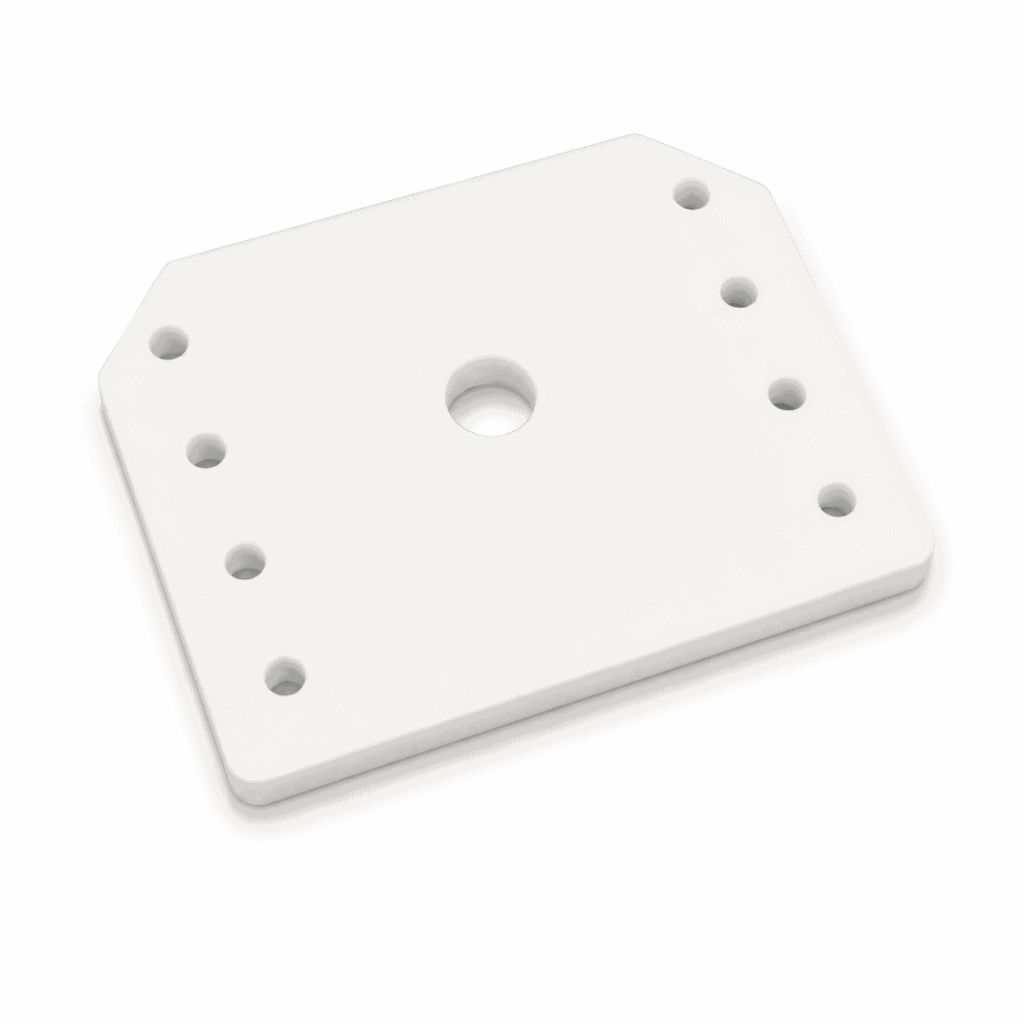
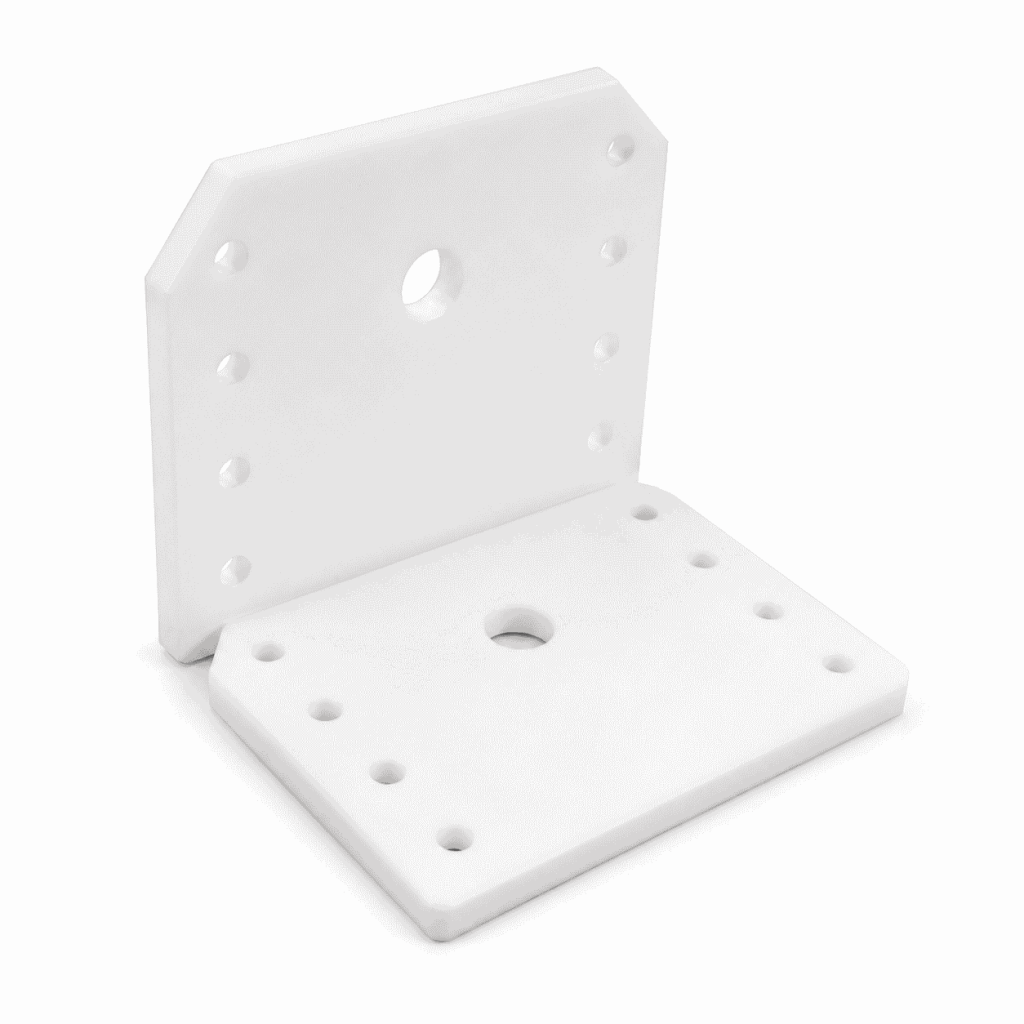
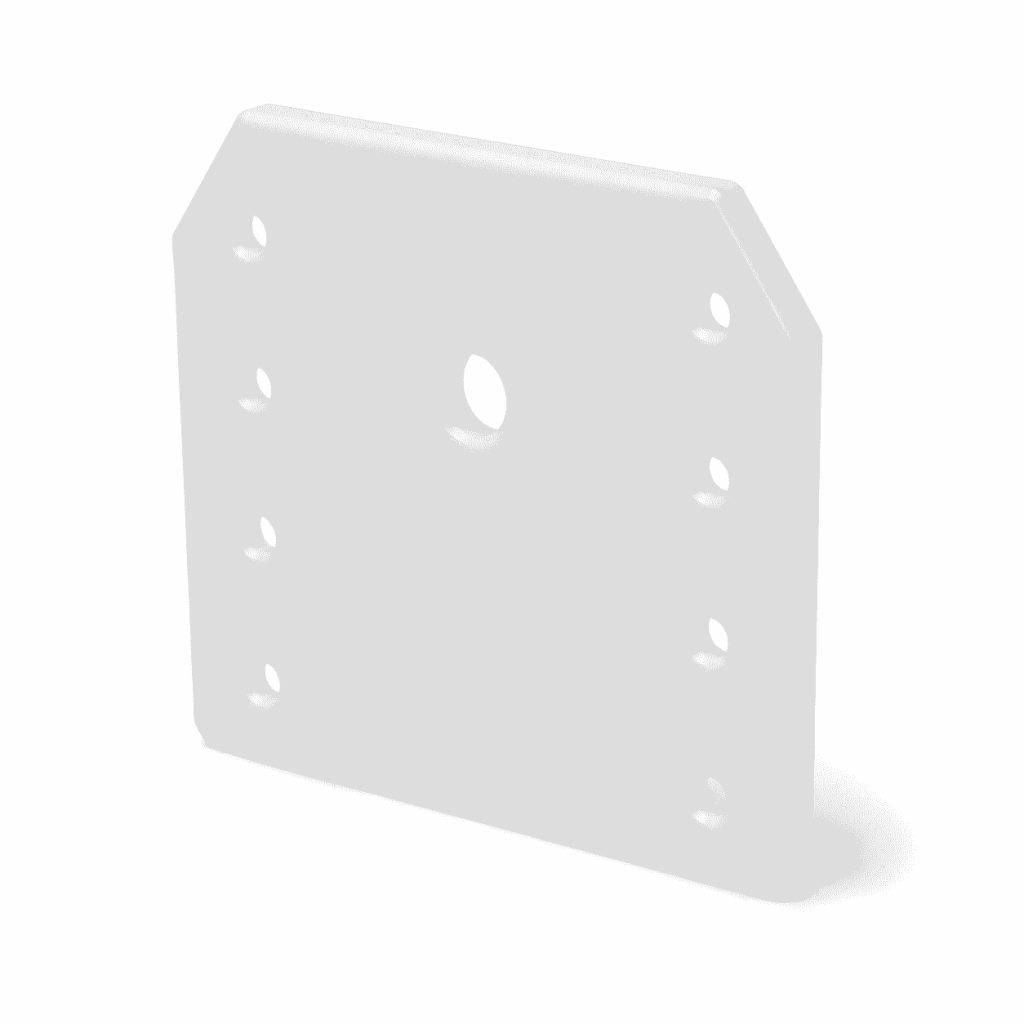
White CNC-machined PTFE scraper blades with precision mounting holes for food processing machinery.

Functions of a PTFE Scraper Blade in Food Machinery

A PTFE scraper blade is not only a cleaning component. It can also help control material movement and maintain stable processing conditions during continuous production.

Its main functions include:

  • Removing sticky food materials from rollers and drums
  • Cleaning residue from mixing tanks and machine walls
  • Reducing the accumulation of syrup, dough, chocolate, and sauces
  • Guiding processed material toward the discharge area
  • Reducing direct metal-to-metal contact
  • Lowering the risk of scratching stainless steel surfaces
  • Improving equipment cleaning and changeover efficiency
  • Reducing raw material loss during production

PTFE Scraper Blade for Dough Mixing Machinery

Dough processing equipment handles materials with high viscosity and strong adhesion. During mixing, kneading, rolling, and forming, dough can stick to the mixing bowl, shaft, roller, or internal wall of the machine.

A PTFE Scraper Blade can be installed near the mixing bowl wall or underneath a processing roller to continuously remove attached dough. The scraped material is returned to the main processing area instead of remaining on the machine surface.

Typical equipment includes:

  • Dough mixers
  • Kneading machines
  • Dough sheeters
  • Noodle production machines
  • Bun and bread forming equipment
  • Dough dividing machines
  • Pastry processing machinery

For this application, the scraper profile should match the shape of the bowl or roller. The mounting angle and contact pressure must also be controlled to achieve effective scraping without creating excessive resistance.

PTFE Scraper Blade for Food Mixing Equipment

Food mixing machines are used to process cream, batter, fillings, seasonings, pastes, and mixed food ingredients. During operation, some material may remain on the tank wall instead of returning to the main mixing area.

A PTFE scraper can be installed on the rotating mixing assembly or fixed near the internal wall. It continuously collects material from the side of the tank and moves it back into the mixing area. This helps reduce dead zones and improves the consistency of the mixing process.

Common applications include:

  • Cream mixing machines
  • Batter mixers
  • Food filling mixers
  • Seasoning blending equipment
  • Paste mixing machinery
  • Powder and liquid mixing systems

PTFE Scraper Blade for Confectionery Machinery

Candy and confectionery production often involves syrup, maltose, gelatin mixtures, soft candy materials, and other sticky ingredients. These materials may adhere to cooking vessels, cooling drums, rollers, and conveying surfaces.

A PTFE Scraper Blade can remove the material before it cools and hardens on the equipment. This helps reduce residue buildup, uneven material thickness, and cleaning time between production batches.

Suitable equipment includes:

  • Sugar syrup cooking machines
  • Soft candy production equipment
  • Hard candy forming machines
  • Candy cooling drums
  • Gelatin mixing equipment
  • Syrup handling machinery

Because confectionery materials may operate at elevated temperatures, the actual working temperature and continuous contact time should be confirmed before selecting the PTFE grade and scraper thickness.

PTFE Scraper Blade for Chocolate Processing Machinery

Chocolate can adhere to processing surfaces during grinding, refining, mixing, tempering, coating, and transferring. Residual chocolate on rollers and tank walls can make cleaning more difficult and may cause cross-contamination between different formulations.

PTFE scraper blades can be installed near chocolate rollers, mixing tanks, tempering units, and coating drums. The scraper edge removes the attached chocolate and guides it back into the processing area or toward the discharge position.

Typical applications include:

  • Chocolate refiners
  • Chocolate tempering machines
  • Chocolate mixing tanks
  • Chocolate coating drums
  • Chocolate grinding equipment
  • Chocolate transfer systems

The scraper edge can be machined as a straight edge, angled edge, or curved profile according to the equipment structure. Correct installation clearance is important because excessive contact pressure can increase wear and drive load.

PTFE Scraper Blade for Sauce and Filling Equipment

Sauces and food fillings often have high viscosity and may contain oil, sugar, salt, acids, spices, or solid particles. Examples include tomato sauce, chili sauce, jam, bean paste, salad dressing, meat fillings, and bakery fillings.

In mixing tanks, jacketed kettles, cooking pans, and filling preparation equipment, a PTFE scraper can continuously remove material from the heated wall. This reduces localized buildup and helps the product return to the main mixing area.

Common equipment includes:

  • Chili sauce mixing machines
  • Jam cooking equipment
  • Food filling preparation machines
  • Jacketed cooking kettles
  • Seasoning sauce processing equipment
  • Bean paste and meat filling mixers

The scraper design should consider product viscosity, particle size, operating temperature, rotation speed, and the distance between the scraper and the equipment wall.

PTFE Scraper Blade for Roller and Drum Equipment

Rollers and drums are widely used in food processing for pressing, cooling, coating, flattening, mixing, and material transfer. Food residue on the roller surface may lead to uneven product thickness, repeated material accumulation, or unstable discharge.

A PTFE scraper blade is normally installed near the discharge side of the roller. As the roller rotates, the scraper removes the attached material and directs it toward the next processing stage.

Typical applications include:

  • Dough sheeter rollers
  • Candy cooling drums
  • Chocolate coating rollers
  • Food flattening equipment
  • Product forming drums
  • Ingredient coating machinery

For curved surfaces, the front edge of the scraper should match the roller diameter and installation angle. Uneven contact can cause incomplete scraping or concentrated wear on one section of the blade.

PTFE Scraper Blade for Heated Food Processing Equipment

Some food processing machines heat the ingredients while mixing, stirring, or concentrating them. Product can stick to the heated wall and gradually form a thick residue layer.

A PTFE scraper installed on the rotating arm can continuously sweep the heated surface. This helps reduce buildup on the wall and keeps more material within the main processing area.

Applications may include:

  • Jam cooking kettles
  • Caramel processing equipment
  • Food paste cooking machines
  • Sauce concentration equipment
  • Filling heating and mixing systems
  • Chocolate melting tanks

Although PTFE has useful temperature resistance, the complete scraper assembly must still be evaluated according to operating temperature, load, mounting structure, blade thickness, and continuous service time.

Why PTFE Is Used for Food Machinery Scraper Blades

Low Surface Adhesion

PTFE has low surface energy, so many sticky food materials are less likely to remain strongly attached to the scraper. This is useful when processing dough, syrup, chocolate, sauces, and fillings.

Low Sliding Friction

The low-friction surface helps reduce resistance when the scraper contacts a roller, drum, tank wall, or moving equipment surface.

Reduced Risk of Surface Damage

Compared with a rigid metal scraper, a properly designed PTFE blade can reduce the risk of scratching stainless steel rollers and processing tanks. Installation pressure must still be controlled.

Resistance to Moisture and Cleaning Media

Food machinery is regularly cleaned with water and approved cleaning agents. PTFE has low moisture absorption and resistance to many chemical substances used in industrial environments.

Easy Cleaning

Because food residue is less likely to adhere strongly to PTFE, the scraper surface is generally easier to clean during equipment maintenance and production changeovers.

Custom Machining Capability

PTFE can be machined into straight, angled, curved, stepped, slotted, drilled, and irregular scraper profiles. This allows the blade to match different food machinery structures.

White CNC Machined PTFE Food Machinery Scraper Plates
Precision-machined PTFE scraper plates designed for mounting in food mixing, conveying and roller equipment.

Common PTFE Scraper Blade Structures

The structure of the scraper blade depends on the equipment, processed material, mounting position, and scraping direction.

Common designs include:

  • Straight rectangular scraper blades
  • Angled-edge scraper blades
  • Curved drum scraper blades
  • Scrapers with countersunk mounting holes
  • Scrapers with adjustable slotted holes
  • Stepped scraper profiles
  • Scrapers with stainless steel backing plates
  • Custom irregular scraper components

Long or thin PTFE blades may deform under load. In these applications, a stainless steel backing plate, shorter unsupported length, additional mounting points, or increased blade thickness may be required.

Information Required for Custom PTFE Scraper Blades

Before manufacturing a PTFE Scraper Blade, the following information should be confirmed:

  • Food processing machine type
  • Type and viscosity of the processed material
  • Normal and maximum operating temperature
  • Scraper length, width, and thickness
  • Required straight, angled, or curved edge
  • Mounting hole diameter and spacing
  • Contact method with the roller or tank wall
  • Continuous or intermittent operating cycle
  • Required dimensional tolerance
  • Need for a metal support plate
  • Food-contact compliance requirements

For food-contact applications, the raw material grade and finished component should meet the applicable requirements of the destination market. In the United States, information concerning perfluorocarbon resins used in food-contact applications can be reviewed in 21 CFR Section 177.1550.

Compliance should be confirmed using the material supplier documentation, production conditions, final application, temperature, food type, and contact duration. The use of PTFE material alone does not automatically confirm that every finished scraper is suitable for all food-contact applications.

Custom PTFE Scraper Blade Manufacturing

Food machinery scraper blades are usually manufactured according to equipment drawings, existing samples, or verified installation dimensions. Important machining features include the overall profile, mounting holes, scraper edge angle, curved radius, thickness, and dimensional tolerances.

Custom machining options can include:

  • CNC milling
  • Profile cutting
  • Drilling and countersinking
  • Slot machining
  • Curved edge machining
  • Stepped surface machining
  • Stainless steel backing plate assembly
  • Small-batch and volume production

In addition to PTFE scraper blades, engineering plastic components commonly used in food processing machinery include:

  • PTFE bushings
  • PTFE wear plates
  • UHMWPE chain guide rails
  • UHMWPE wear strips
  • POM gears
  • Nylon rollers
  • Plastic guide blocks
  • Food machinery spacers
  • Plastic positioning blocks

Conclusion

A PTFE Scraper Blade is widely used in dough processing, confectionery production, chocolate machinery, sauce processing, food mixing equipment, heated kettles, rollers, and drums. It helps remove sticky materials, reduce product residue, protect equipment surfaces, and improve cleaning efficiency.

The final scraper design should be based on the processed material, operating temperature, equipment speed, contact pressure, installation method, and food-contact requirements. Accurate machining and proper installation are essential for stable scraping performance and reliable operation in food processing machinery.

More general information about industrial food production processes is available from the Food Processing reference page.

Picture of Author : Hone xi
Author : Hone xi

Wear-resistant UHMWPE sheets, liners, wear strips, guide rails and CNC machined plastic components for industrial equipment.

Facebook
Twitter
LinkedIn
Pinterest
Products
We Love to Hear From You

Need UHMWPE sheets & custom plastic machined/OEM parts?Send specs & material needs, free quote within 24h.