
UHMWPE Coal Bunker Liner Solves Wet Coal Adhesion and Blockage Problems in a Thermal Power Plant

Project Background

A thermal power plant experienced repeated wet coal adhesion, material bridging and discharge blockage inside its coal bunker. The problem became more serious during rainy periods or when the moisture content of the coal increased.

Wet coal gradually accumulated on the steel bunker walls, especially around the hopper section, transition areas and discharge opening. As the material buildup increased, the effective storage capacity of the bunker decreased and the resistance to coal flow became greater.

Workers frequently had to strike the outer wall of the bunker or stop the conveying system for manual cleaning. These operations increased maintenance requirements, interrupted the continuous coal supply and created additional safety risks.

Main Problems at the Site

After evaluating the bunker structure and operating conditions, several factors were identified as the main causes of the blockage:

  • Wet coal had strong adhesion and easily stuck to the original steel surface.
  • The rough bunker wall created high friction during material discharge.
  • Coal accumulated around corners, transition sections and the outlet.
  • Repeated hammering could damage the bunker wall, welds and supporting structure.
  • Frequent shutdowns for cleaning reduced the efficiency of the coal handling system.

The plant therefore required a solution that could improve material flow without making major structural modifications to the existing bunker.

UHMWPE Coal Bunker Liner Solution

The selected solution was to install a UHMWPE coal bunker liner on the inner surfaces of the hopper, discharge outlet and other areas where wet coal frequently accumulated.

UHMWPE, also known as ultra-high-molecular-weight polyethylene, has a low-friction surface and good self-lubricating properties. These characteristics allow coal to slide more easily along the bunker wall, reducing the possibility of adhesion, bridging and blockage.

The material also provides good wear resistance, impact resistance, corrosion resistance and low water absorption. These properties make it suitable for coal bunkers exposed to abrasive particles, moisture, dust and repeated material impact.

Liner Design and Installation

Before production, the bunker dimensions, hopper angle, discharge opening and high-adhesion areas were measured. The UHMWPE liner panels were then cut and machined according to the actual bunker structure.

Special attention was given to panel joints, fixing holes and transition areas. The liner panels were installed in the direction of material flow to reduce raised edges and steps that could create new accumulation points.

The installation process included:

  • Measuring the straight section, hopper section and discharge outlet.
  • Identifying the main wet coal adhesion and wear areas.
  • Producing UHMWPE liner panels according to the bunker dimensions.
  • Cutting, drilling and finishing the edges of each panel.
  • Installing the panels from the lower section upward.
  • Checking joints, fasteners and the contact between the liner and bunker wall.
  • Conducting an empty-bunker inspection before trial operation.

Thicker liner panels and reinforced fixing methods were used around the discharge opening and other areas exposed to concentrated wear and impact.

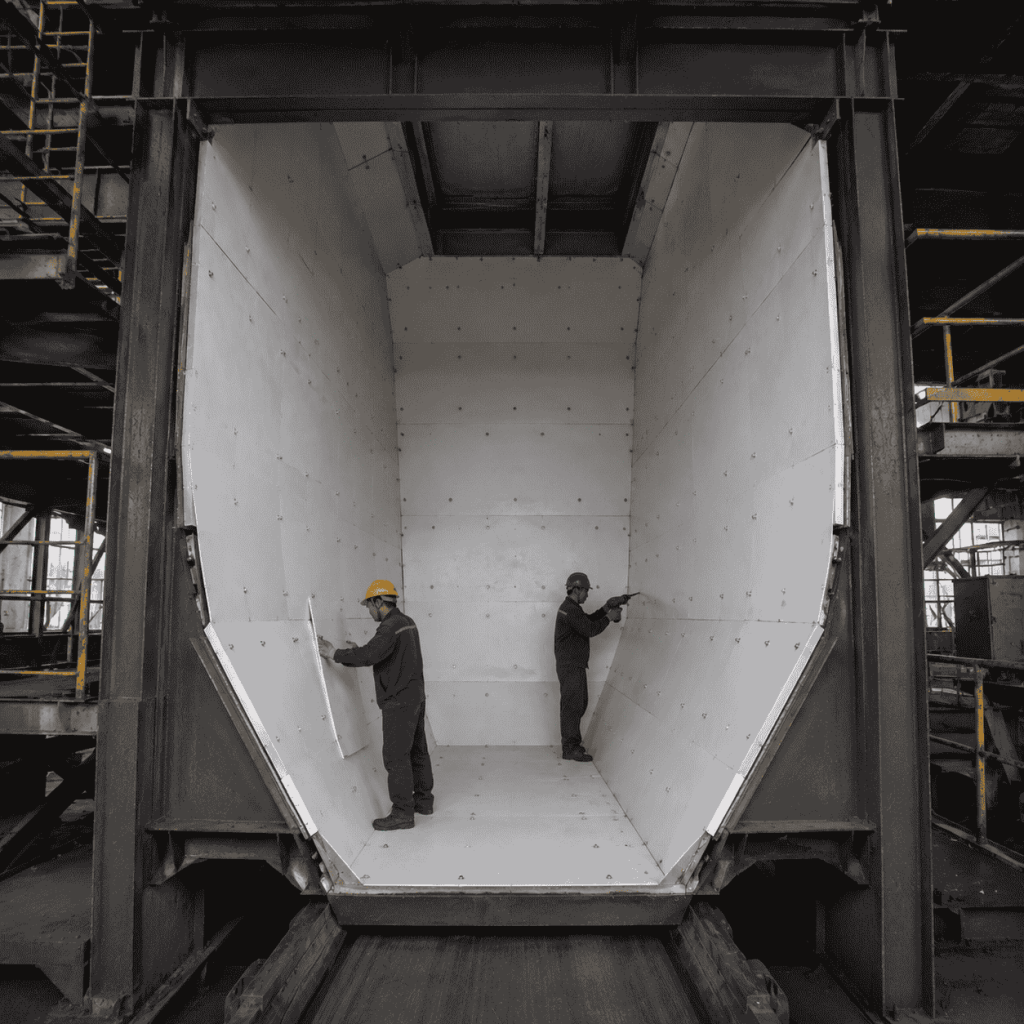
Two Chinese workers wearing work uniforms and safety helmets install white UHMWPE liner panels inside a 3–4-meter-high coal bunker at an industrial facility.
Two workers install and secure UHMWPE liner panels inside a coal bunker to reduce wet coal adhesion, material buildup, bridging, and discharge blockage.

Project Results

After the UHMWPE coal bunker liner was installed, the friction between the coal and the bunker wall was reduced. Wet coal moved more smoothly toward the discharge outlet, and material buildup on the inner wall decreased significantly.

The project delivered the following improvements:

  • Reduced wet coal adhesion and accumulation inside the bunker.
  • Lower frequency of material bridging and discharge blockage.
  • Reduced manual cleaning and bunker hammering requirements.
  • Shorter shutdown periods caused by blocked material.
  • Improved continuity of the coal feeding system.
  • Reduced direct wear and impact on the original steel bunker wall.
  • Lower routine maintenance workload for plant operators.

Application Value

Coal bunker blockage is influenced by several factors, including coal moisture content, bunker geometry, wall roughness, outlet angle and liner installation quality. A properly designed UHMWPE liner system can improve the movement of coal and other bulk materials while protecting the original steel structure.

Similar UHMWPE liner solutions can be used in thermal power plants, coking plants, coal washing plants, mines, cement plants and bulk material handling facilities. They are particularly suitable for bunkers, hoppers, silos and chutes affected by adhesion, bridging, abrasion or frequent manual cleaning.

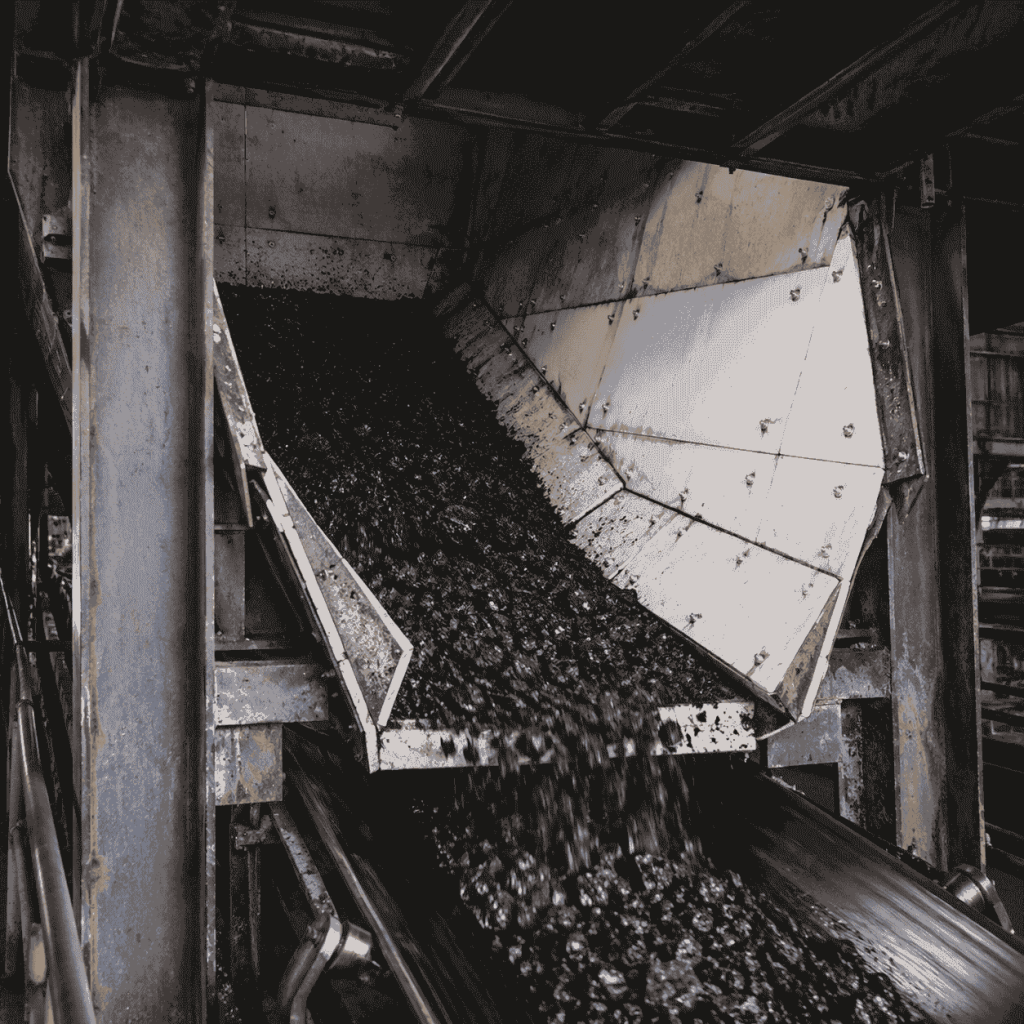
A UHMWPE-lined coal bunker filled with wet black coal inside an industrial coal handling facility.
A coal bunker lined with white UHMWPE panels holds a large volume of wet coal while helping reduce adhesion, buildup, and discharge blockage.

Project Conclusion

The installation of UHMWPE coal bunker liners provided an effective solution to the thermal power plant’s wet coal adhesion and blockage problems. By reducing surface friction and improving material flow, the liner system helped maintain continuous coal discharge and reduced maintenance interruptions.

For future projects, the liner thickness, fixing method and panel layout should be selected according to the bunker structure, coal moisture level, particle size, impact conditions and expected service life. A liner system designed around the actual operating conditions can provide better flow performance and more reliable long-term operation.

Picture of Author : Hone xi
Author : Hone xi

Wear-resistant UHMWPE sheets, liners, wear strips, guide rails and CNC machined plastic components for industrial equipment.

Facebook
Twitter
LinkedIn
Pinterest
Products
We Love to Hear From You

Need UHMWPE sheets & custom plastic machined/OEM parts?Send specs & material needs, free quote within 24h.