
UHMWPE Outrigger Pads for Supporting a Mobile Crane on Muddy Ground

During an industrial equipment installation project, the customer needed to use a mobile crane to lift and position large machinery. The working area was located in a factory expansion zone where the ground mainly consisted of backfilled soil. After several days of continuous rain, the soil moisture level increased significantly, leaving parts of the site soft, muddy and covered with shallow standing water.

Before lifting operations could begin, the crane’s hydraulic outriggers had to be fully extended. These four support points carried the weight of the crane and the changing loads produced while the boom rotated, extended and lifted heavy equipment.

Because the original metal outrigger feet had a limited contact area, placing them directly on wet and soft soil would create high concentrated ground pressure. If one outrigger continued to sink during lifting, the crane body could become uneven, affecting lifting accuracy and overall operating stability.

Problems with the Original Support Method

The customer had previously used timber boards as temporary support materials. Timber is easy to obtain and relatively inexpensive, but it can quickly absorb water in rainy and muddy conditions.

After absorbing moisture, timber boards may swell, crack, bend or lose strength. Repeated loading can also cause internal damage and local breakage, making their actual load-bearing performance difficult to evaluate before each use.

Steel plates were also considered. Although steel offers high strength, the plates are heavy and difficult for workers to move and reposition manually. Their surfaces can become slippery when covered with mud and water, while long-term outdoor storage may cause corrosion.

The customer therefore needed a support material that was moisture-resistant, impact-resistant, relatively lightweight and suitable for repeated use.

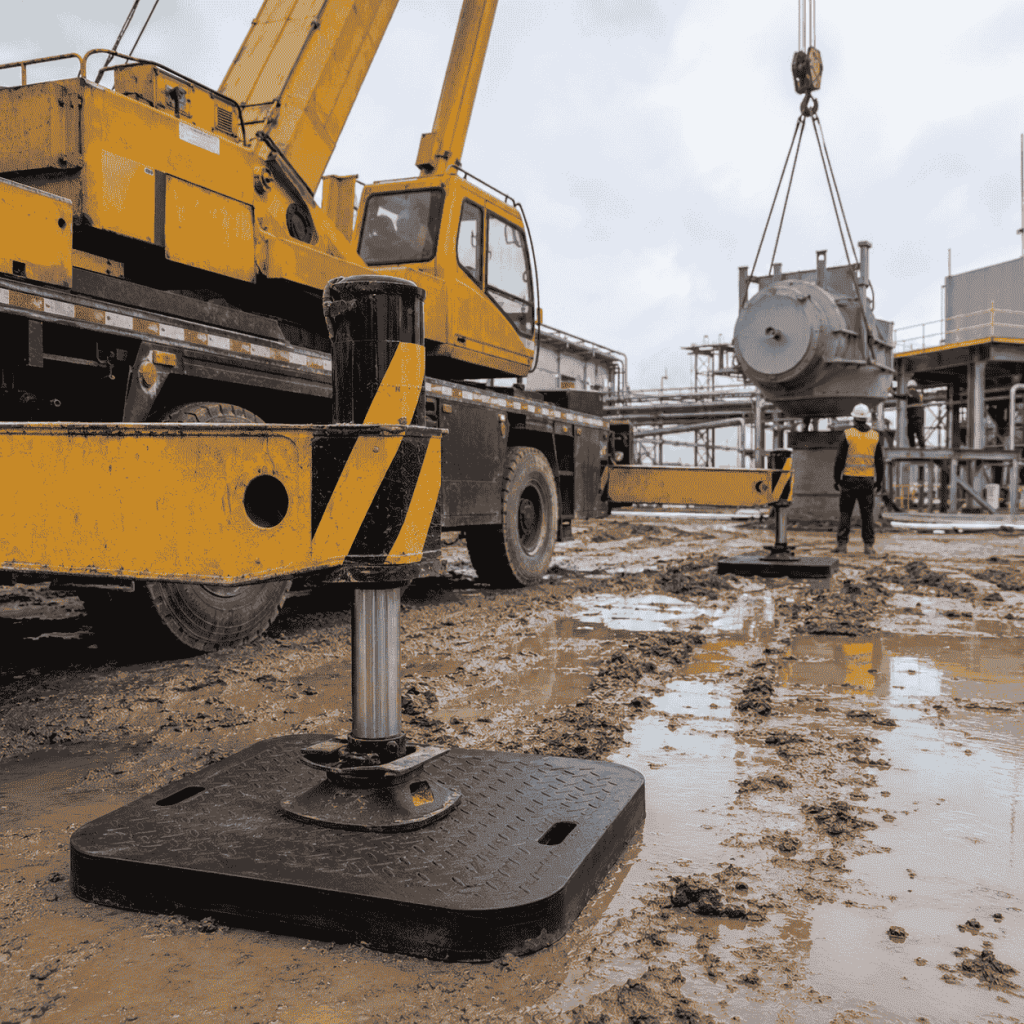
Heavy-duty UHMWPE crane outrigger pad placed beneath a hydraulic support leg on muddy ground
A reusable black UHMWPE pad helps prevent the crane outrigger from sinking during lifting operations on a wet industrial site.

UHMWPE Outrigger Pad Solution

Based on the crane capacity, maximum individual outrigger load, metal foot dimensions and site conditions, thick UHMWPE outrigger pads were selected for the project.

Before placing the pads, workers removed loose stones, steel fragments and sharp debris from each support position. The muddy surface was then levelled as much as possible. Each pad was placed flat on the ground, and the hydraulic outrigger was slowly lowered onto the central area of the pad.

The surface area of each pad was significantly larger than the original metal outrigger foot. This increased contact area distributed the concentrated load across a wider section of ground and reduced the pressure applied per unit area.

Even though the soil remained soft, the pads helped slow further settlement beneath the outriggers. They also reduced the difference in height between the four support points, helping the crane maintain a more balanced working position.

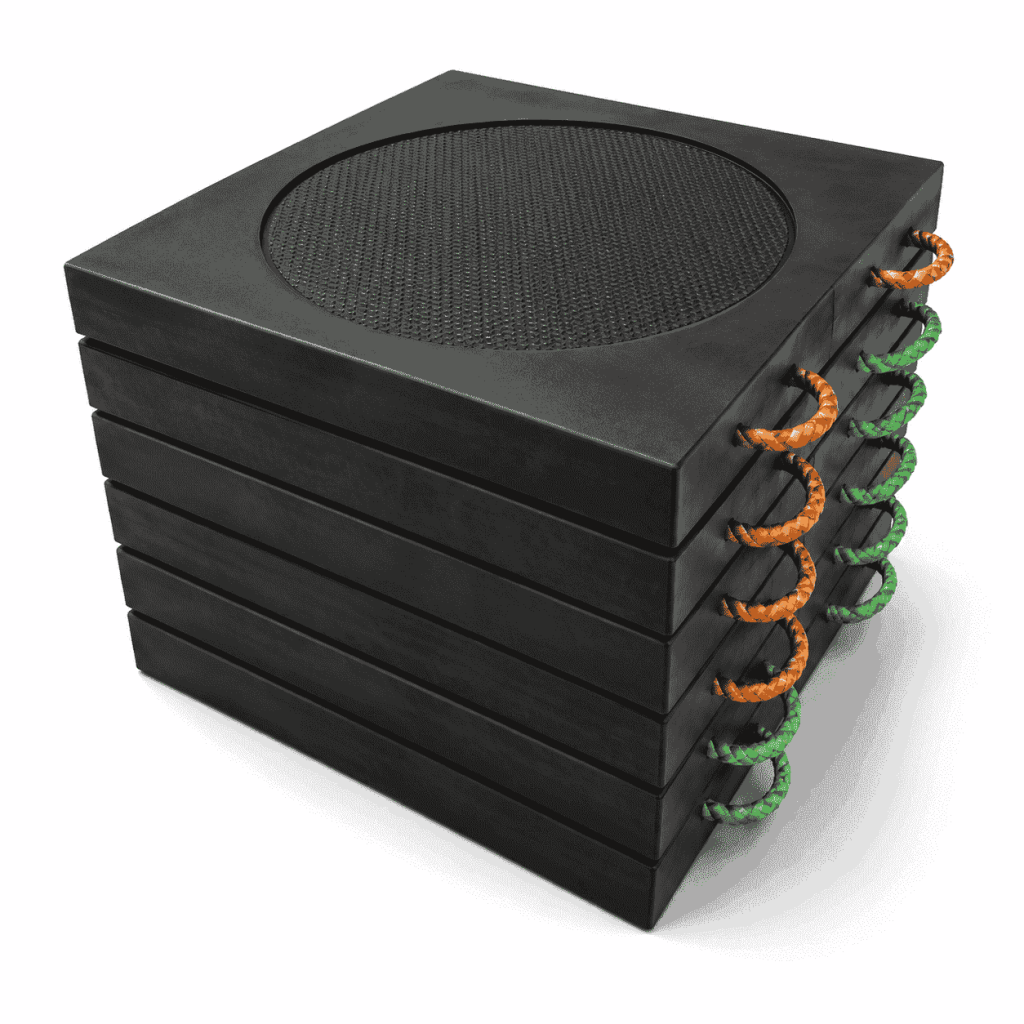
The pads included a central positioning area and carrying holes near the edges. These features made it easier for workers to place, adjust, transport and recover the pads after the lifting operation.

Why UHMWPE Was Selected

Ultra-high-molecular-weight polyethylene offers a useful combination of impact resistance, wear resistance, toughness and low moisture absorption.

Unlike timber, UHMWPE does not readily absorb water, rot or swell when exposed to rain, mud and humid working conditions. The material also has good impact resistance, helping the pads withstand repeated placement, heavy loading and accidental contact during daily site operations.

Compared with steel plates of similar dimensions, UHMWPE pads are lighter and easier to handle. Workers can usually move and position them without relying on cranes or other lifting equipment. The material also does not require anti-corrosion treatment during outdoor use or storage.

On-Site Performance

After all four outriggers were fully deployed, the project team inspected each support point. The pads remained in stable contact with the ground without obvious lifting, shifting or edge loading.

During boom rotation and equipment lifting, outrigger settlement remained under control, and the crane maintained a stable working position. The enlarged support area helped reduce the risk of local ground failure under the hydraulic feet.

After the installation work was completed, small amounts of mud and sand remained on the pad surfaces. The workers cleaned them with water and loaded them back onto the service vehicle for use in future projects.

No obvious cracking, breakage or permanent deformation was found. Compared with disposable timber boards, the UHMWPE pads offered better reusability and reduced the consumption of temporary support materials.

Mobile crane supported by a UHMWPE outrigger pad on muddy ground during an industrial lifting operation
A mobile crane uses a UHMWPE outrigger pad to distribute load and improve stability on a muddy construction site during equipment lifting.

Main Application Advantages

1. Larger ground contact area. The pads distribute concentrated outrigger loads over a wider surface, reducing local ground pressure.

2. Improved support stability. They help control settlement on muddy soil, sand, grass and other low-bearing surfaces.

3. Low moisture absorption. UHMWPE does not easily swell, rot or lose performance after exposure to rain and mud.

4. Easier manual handling. The pads are lighter than steel plates of similar dimensions and are more convenient to move around the site.

5. Reusable construction. Mud and dirt can normally be removed with water, allowing the pads to be used repeatedly.

6. Flexible manufacturing options. Length, width, thickness, carrying-hole position and surface structure can be produced according to different equipment requirements.

Suitable Equipment and Working Conditions

In addition to mobile cranes, UHMWPE outrigger pads can be used beneath concrete pump trucks, truck-mounted cranes, aerial work platforms, fire and rescue vehicles, utility trucks and other equipment fitted with hydraulic outriggers.

They are suitable for temporary support on muddy ground, backfilled soil, grass, sand, gravel and certain paved surfaces where concentrated outrigger loads may cause settlement or surface damage.

More related heavy-equipment support products can be found in our industrial plastic products section.

Project Conclusion

In this project, the UHMWPE outrigger pads increased the contact area between the mobile crane outriggers and the muddy ground. This helped distribute the equipment load, control further settlement and improve support stability during lifting operations.

However, soft soil, wet ground, sand and paved surfaces have different bearing capacities. Outrigger pad selection should not be based only on the crane’s total rated capacity.

The maximum load on each individual outrigger, pad surface area, material thickness, support-foot dimensions and ground-bearing conditions should all be considered. Selecting the correct pad specification is essential for creating a reliable support system and achieving the intended load-distribution effect.

Picture of Author : Hone xi
Author : Hone xi

Wear-resistant UHMWPE sheets, liners, wear strips, guide rails and CNC machined plastic components for industrial equipment.

Facebook
Twitter
LinkedIn
Pinterest
Products
We Love to Hear From You

Need UHMWPE sheets & custom plastic machined/OEM parts?Send specs & material needs, free quote within 24h.