
UHMWPE Side Guide Rails for a Beverage Bottling Conveyor

A beverage manufacturer was experiencing unstable bottle movement, surface scratches and frequent bottle jams on its high-speed filling and packaging line. To improve conveyor stability, UHMWPE side guide rails for a beverage bottling conveyor were installed along the straight sections, curved sections and equipment transfer points.

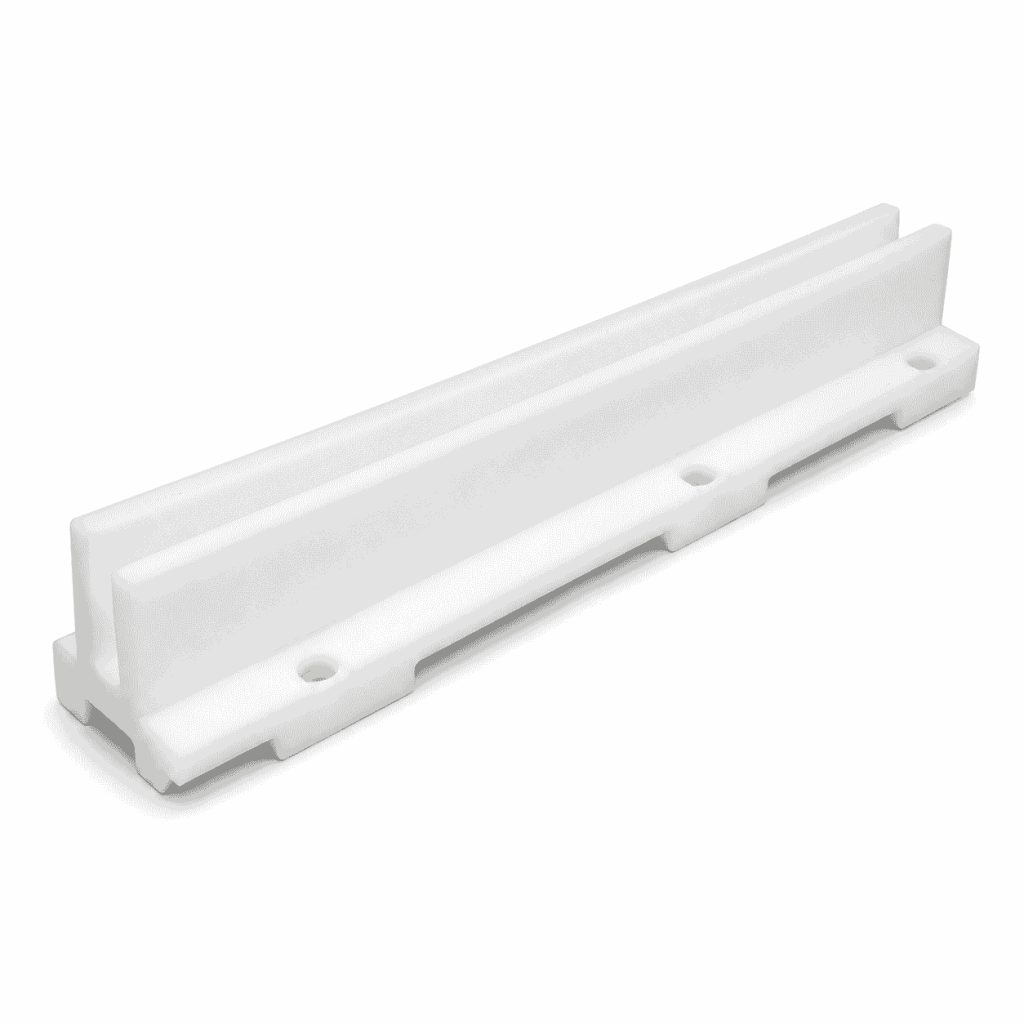
White UHMWPE side guide rail with mounting holes displayed on a clean white background.
A machined UHMWPE side guide rail designed for bottle positioning and guidance on beverage conveyor systems.

The low-friction guide rail system helped keep bottles moving along a controlled path while reducing direct contact with the original metal side guards.

Project Background

The production facility filled and packaged mineral water, juice, carbonated beverages and liquid condiments. After filling, the bottles passed through capping, labeling, inspection, coding and case-packing equipment.

Plastic modular chains and stainless-steel conveyor systems connected the different production processes. Because the line operated continuously at relatively high speed, stable bottle positioning was important for maintaining production efficiency.

The original conveyor used metal side guards to control the movement of the bottles. After extended operation, frequent contact between the containers and the metal surfaces caused bottle vibration, surface scratches, label damage and excessive noise.

Problems with the Original Conveyor Guide System

A site inspection identified several problems affecting the bottling conveyor:

  • Bottles moved from side to side during high-speed conveying.
  • Containers occasionally tilted or fell at transfer points.
  • Metal side guards scratched plastic bottles, labels and printed surfaces.
  • Curved conveyor sections created increased sliding resistance.
  • Incorrect guide spacing caused bottle squeezing and temporary jams.
  • Metal guide components were exposed to water and cleaning chemicals.
  • Metal-to-container contact generated noticeable operating noise.
  • Changing bottle sizes required time-consuming guide adjustments.

The customer needed a guide system that could improve bottle positioning without replacing the complete conveyor structure.

UHMWPE Side Guide Rail Solution

After confirming the conveyor width, bottle dimensions, line speed, turning radius and existing support structure, machined UHMWPE side guide rails were produced for the project.

Straight guide rails were installed on both sides of the conveyor to limit lateral bottle movement. Curved UHMWPE rails were used at turning sections, while transition rails were installed between the filling, capping, labeling and packing machines.

The rails were secured to adjustable stainless-steel brackets. This allowed operators to change the distance between the two guide surfaces according to the diameter of each bottle.

UHMWPE is widely used to address friction, wear and material-flow problems. The material offers low sliding friction, good wear resistance, impact strength and resistance to many chemical media.

Additional material information is available from Röchling’s UHMWPE technical resource .

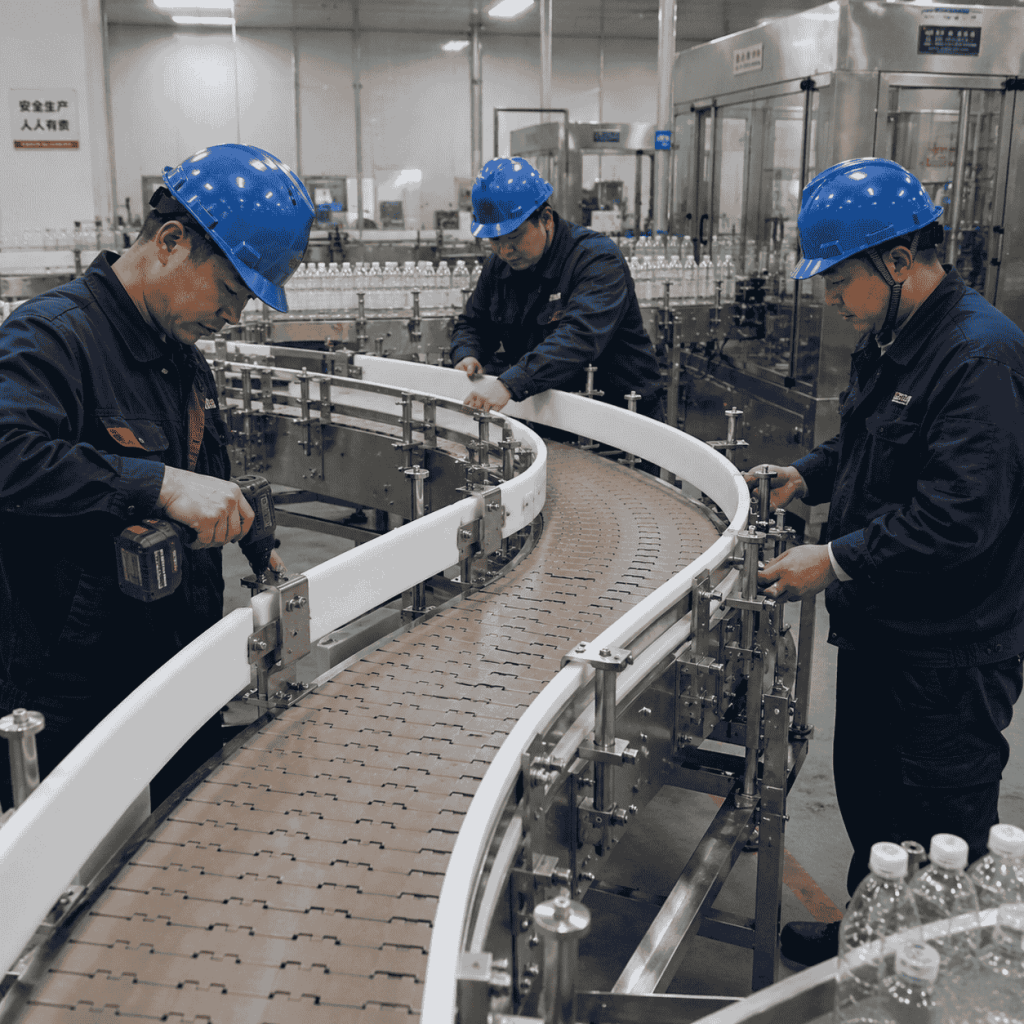
Chinese technicians installing UHMWPE side guide rails on a curved beverage bottling conveyor.
Technicians secure and adjust white UHMWPE side guide rails along a curved beverage conveyor system.

Guide Rail Design

Straight Side Guide Rails

Straight UHMWPE profiles were installed along the main conveyor sections. They kept bottles centered and reduced unnecessary lateral movement before the containers entered the next production machine.

Curved Conveyor Guide Rails

The curved rails were machined according to the conveyor turning radius. Their smooth profile allowed bottles to follow the required route without sudden changes in direction.

Equipment Transition Guides

Short transition rails were installed between adjoining machines. These sections helped guide bottles smoothly into filling, capping, labeling, inspection and case-packing equipment.

Adjustable Guide Rail Assemblies

The guide rails were mounted on adjustable brackets. Operators could change the guide spacing when the production line switched between different bottle diameters and packaging formats.

Why UHMWPE Was Selected

Low Friction

The smooth UHMWPE surface reduced sliding resistance between the bottle and the guide rail. This supported more stable conveying and reduced the risk of containers becoming stuck at curved or transitional positions.

Wear Resistance

Side guide rails experience continuous contact with bottles and containers. UHMWPE provides a replaceable wear surface that can withstand repeated sliding contact during long production cycles.

Protection of Bottles and Labels

Compared with exposed metal guards, the polymer guide surface reduced hard contact with PET bottles, glass bottles, cans and labels. This helped reduce scratches and visible packaging damage.

Impact Resistance

Temporary bottle accumulation can create repeated impact against the guide system. UHMWPE helps absorb part of this impact while maintaining the required guiding position.

Moisture and Chemical Resistance

Beverage production lines are frequently exposed to wash water and cleaning agents. UHMWPE does not rust and has low moisture absorption, making it suitable for wet conveying environments.

Reduced Operating Noise

Replacing direct metal contact with a polymer guide surface helped reduce impact and friction noise as bottles moved through the production line.

Food-Contact Material Considerations

For beverage and food-processing applications, the selected UHMWPE grade should be verified according to the applicable food-contact regulations, intended conditions of use and cleaning requirements.

The U.S. Food and Drug Administration explains that food-contact substances may include packaging components, processing equipment and surfaces that contact food.

More information is available from the FDA food-contact substances resource .

Food-contact compliance should be confirmed for the specific resin grade, color, additives and operating conditions rather than assumed for all UHMWPE materials.

Project Measurement and Manufacturing

Before manufacturing the guide rails, the following production-line information was confirmed:

  • Effective conveyor width
  • Bottle diameter and height
  • Container material and surface condition
  • Conveyor speed
  • Straight and curved conveyor lengths
  • Turning radius
  • Existing bracket positions
  • Required clearance between the bottle and guide rail
  • Cleaning frequency and working environment

The UHMWPE material was then cut, machined, drilled and edge-finished according to the confirmed dimensions. Curved sections were produced to match the actual conveyor path.

Installation Process

  1. The conveyor line was stopped and prepared for maintenance.
  2. Worn metal side guards were removed.
  3. The conveyor frame and support brackets were inspected.
  4. Straight UHMWPE rails were installed along the main conveying sections.
  5. Curved guide rails were aligned with the conveyor turning radius.
  6. Transition rails were installed between adjacent machines.
  7. The distance between the two guide rails was adjusted to the bottle diameter.
  8. All mounting points and fasteners were checked.
  9. Empty and filled bottles were used for trial operation.
  10. Final guide positions were adjusted according to the actual bottle path.

The guide spacing was set to control lateral movement without applying excessive pressure to the bottles. Particular attention was given to conveyor curves and machine transfer points, where containers were more likely to become unstable.

Project Results

After the UHMWPE side guide rails were installed, bottle movement became more stable throughout the conveying process.

The completed project provided the following improvements:

  • Reduced bottle vibration during high-speed conveying
  • Fewer tilted and fallen bottles
  • Reduced bottle and label surface damage
  • Smoother movement through conveyor curves
  • Fewer bottle jams at equipment transfer points
  • Lower contact noise during operation
  • Improved resistance to water and cleaning conditions
  • Easier adjustment for different bottle sizes
  • Convenient replacement of locally worn guide sections

The production line could transport bottles more consistently between the filling, capping, labeling and packaging processes. Interruptions caused by bottle misalignment and guide-related jamming were reduced.

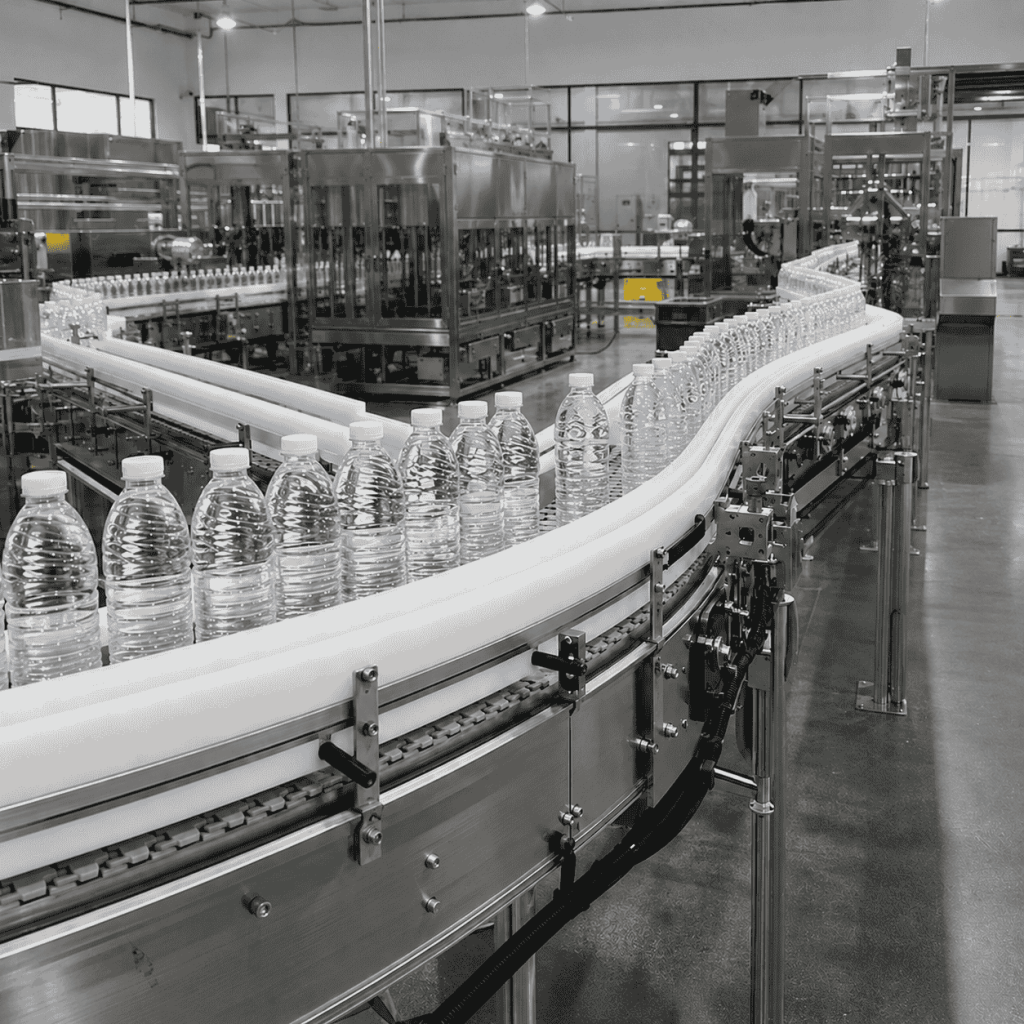
Water bottles moving along a beverage bottling conveyor fitted with white UHMWPE side guide rails.
White UHMWPE guide rails keep bottled water moving smoothly and consistently through the curved conveyor section.

Maintenance Advantages

The UHMWPE guide rails were installed as separate replaceable sections. When local wear occurs, maintenance personnel can remove the affected rail without replacing the complete support system.

The adjustable mounting structure also allows the same conveyor line to handle multiple bottle formats. This helps reduce equipment conversion time when the factory changes products.

Typical Applications

UHMWPE side guide rails can be used in a wide range of conveying and packaging systems, including:

  • Mineral water bottling lines
  • Juice and carbonated beverage production lines
  • Beer bottle and aluminum can conveyors
  • Edible-oil filling lines
  • Condiment and sauce bottling conveyors
  • Dairy-product packaging lines
  • Pharmaceutical bottle conveyors
  • Cosmetic and household chemical packaging equipment
  • Food canning and case-packing systems

Project Conclusion

This project used UHMWPE side guide rails for a beverage bottling conveyor to address bottle instability, surface scratching, excessive friction, operating noise and corrosion of the original metal guide components.

The straight, curved and transitional guide sections provided continuous positioning throughout the production line. Adjustable brackets allowed the rail spacing to be changed for different bottle diameters.

With low friction, wear resistance, impact strength and moisture resistance, UHMWPE guide rails provide a practical solution for beverage, food, pharmaceutical and packaging conveyor systems.

The guide rail profile, material grade, dimensions, mounting structure and operating clearance should be selected according to the conveyor layout, bottle size, production speed and actual working conditions.

Picture of Author : Hone xi
Author : Hone xi

Wear-resistant UHMWPE sheets, liners, wear strips, guide rails and CNC machined plastic components for industrial equipment.

Facebook
Twitter
LinkedIn
Pinterest
Products
We Love to Hear From You

Need UHMWPE sheets & custom plastic machined/OEM parts?Send specs & material needs, free quote within 24h.