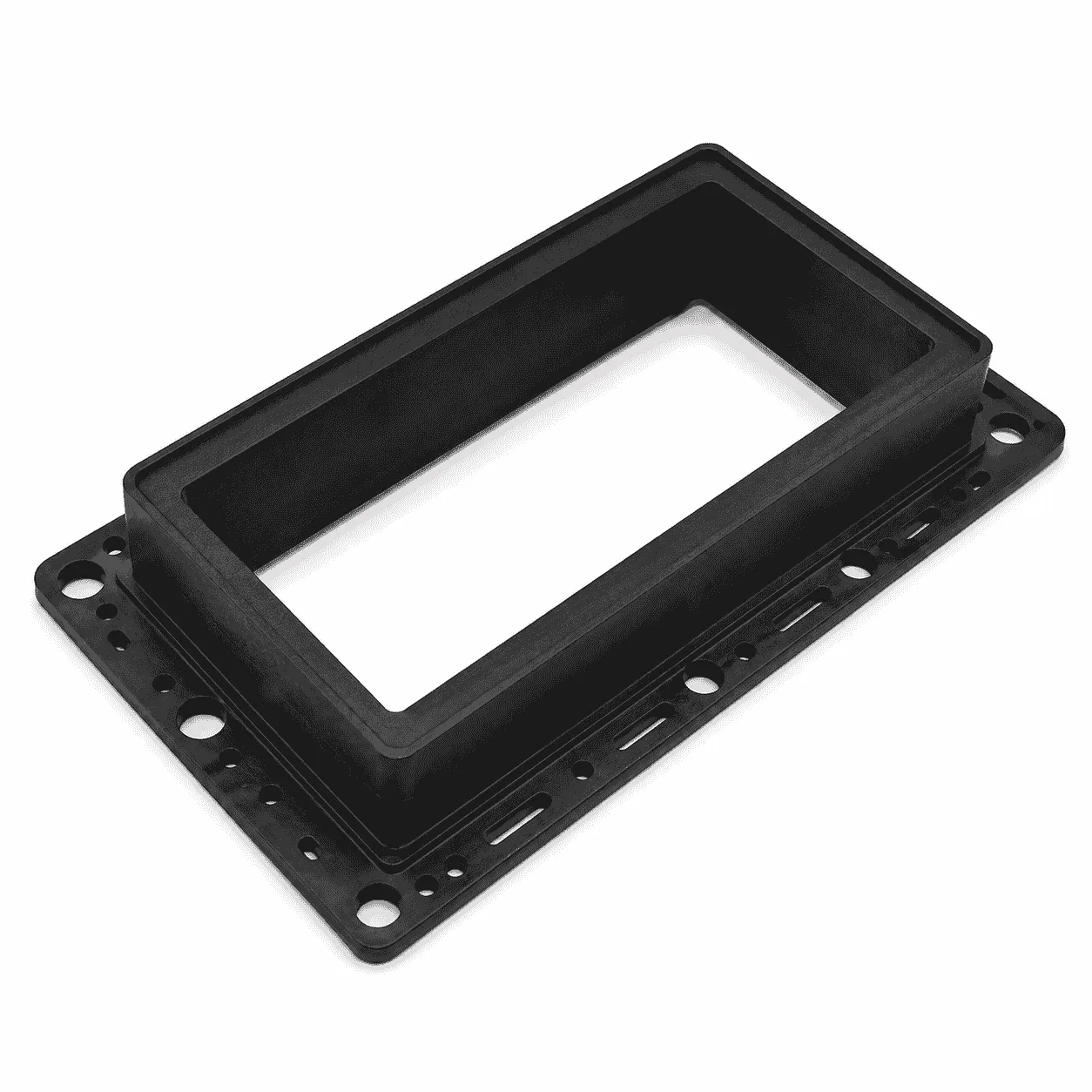
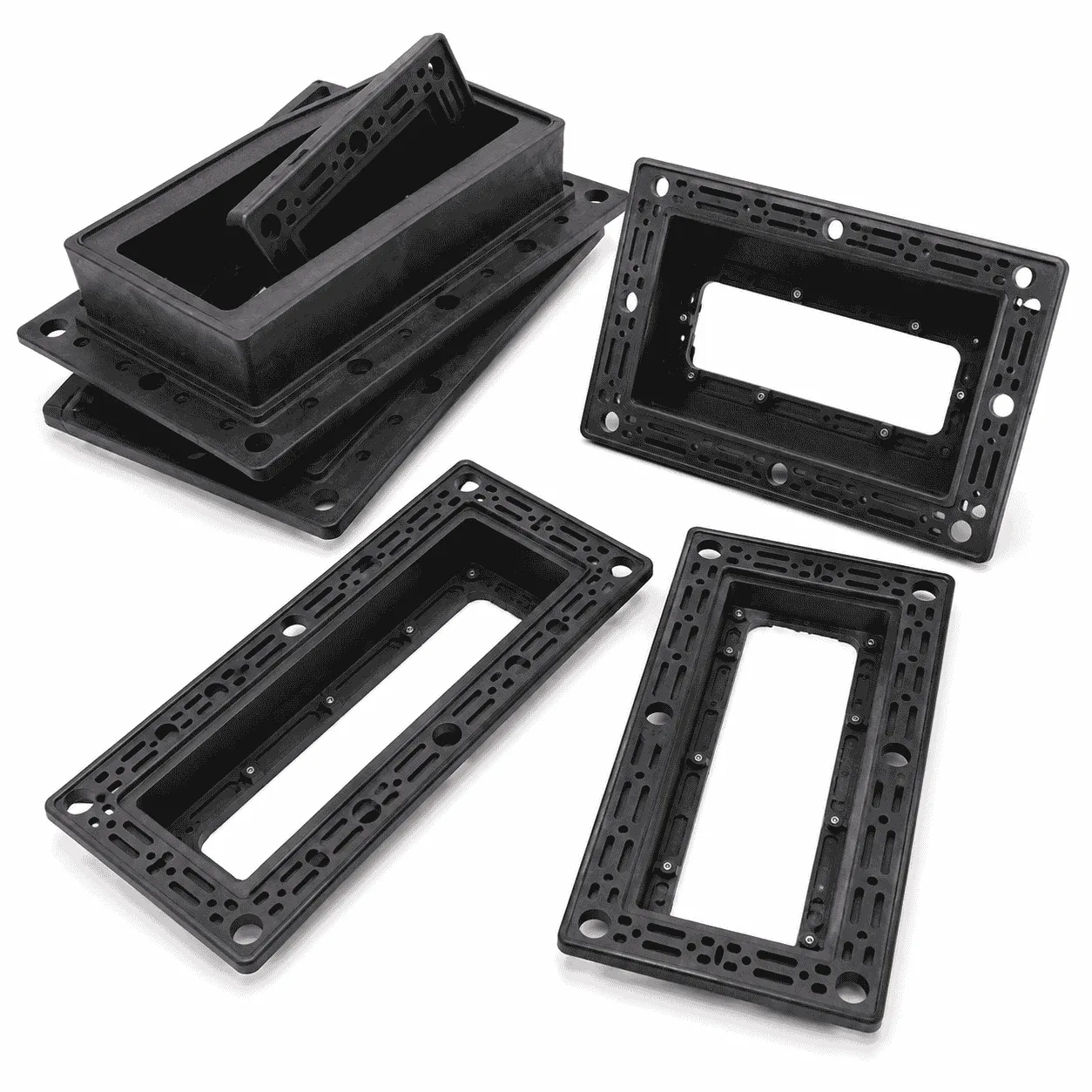
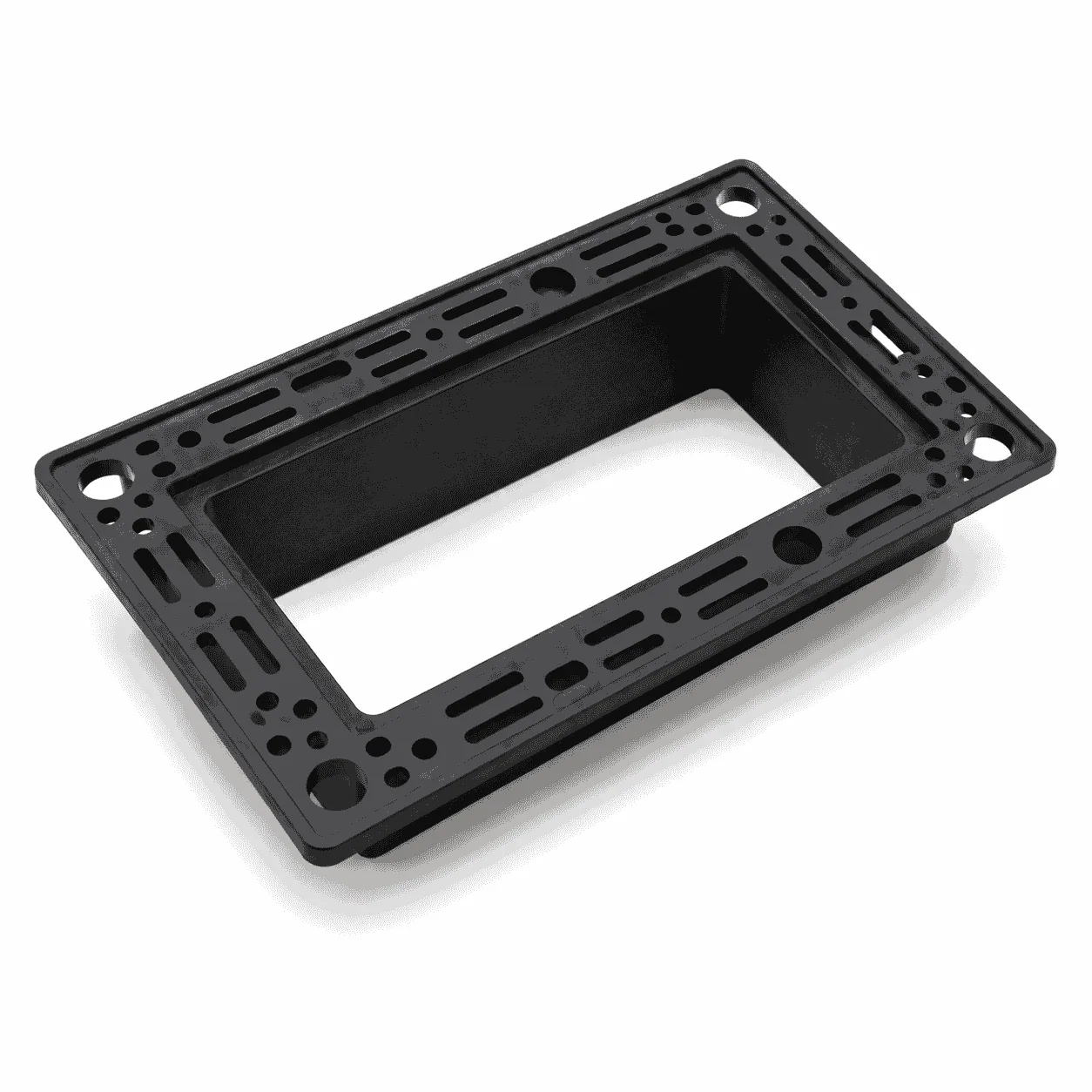
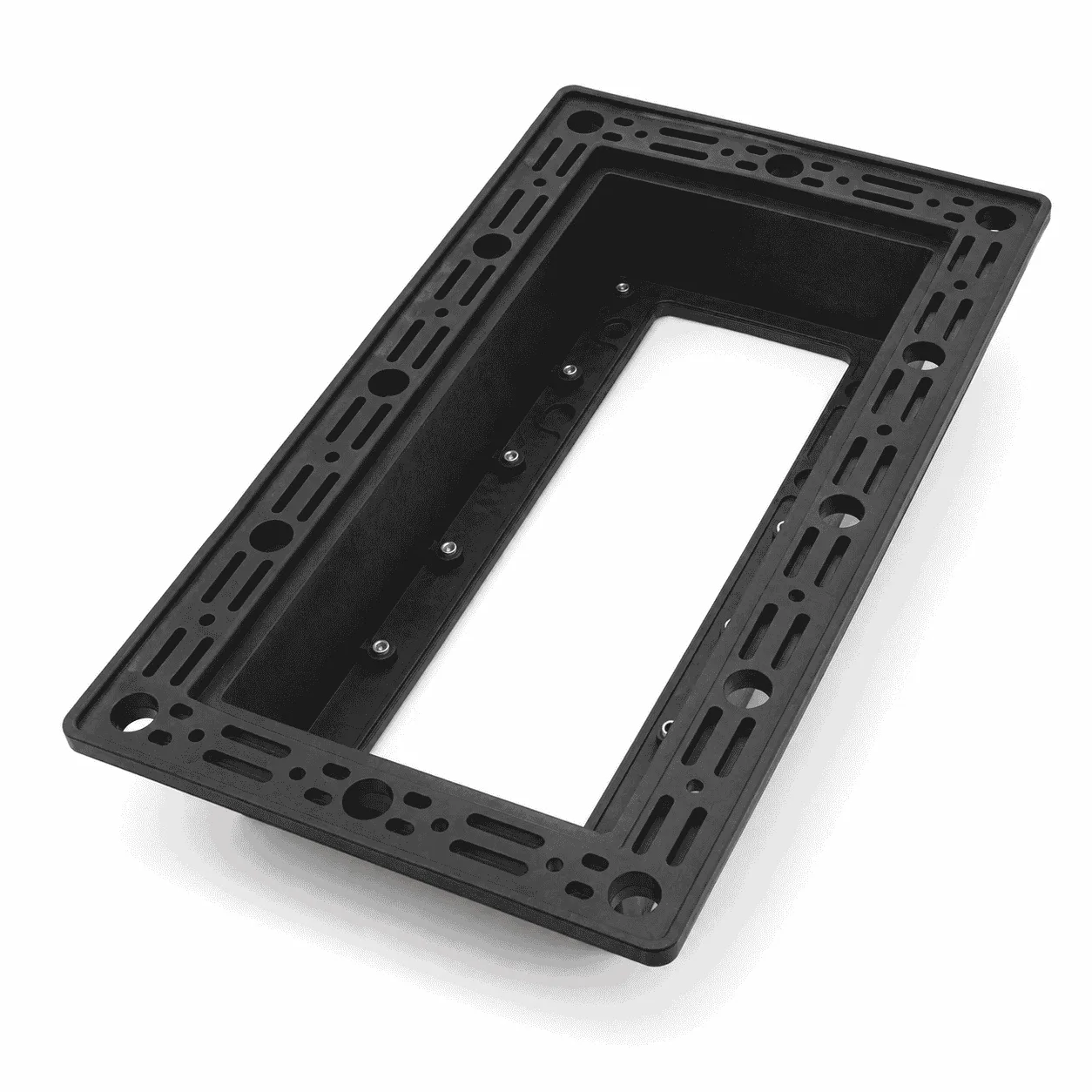
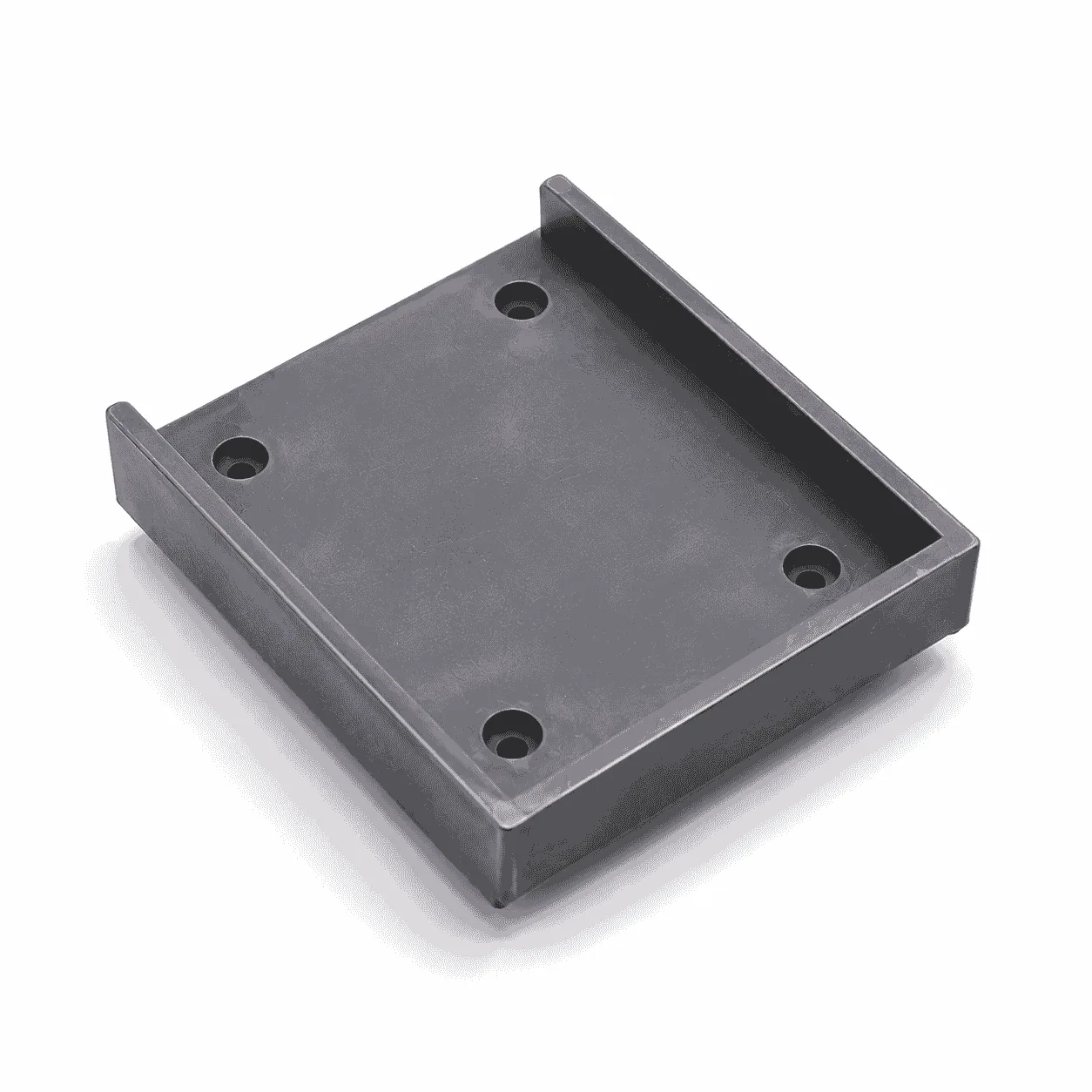
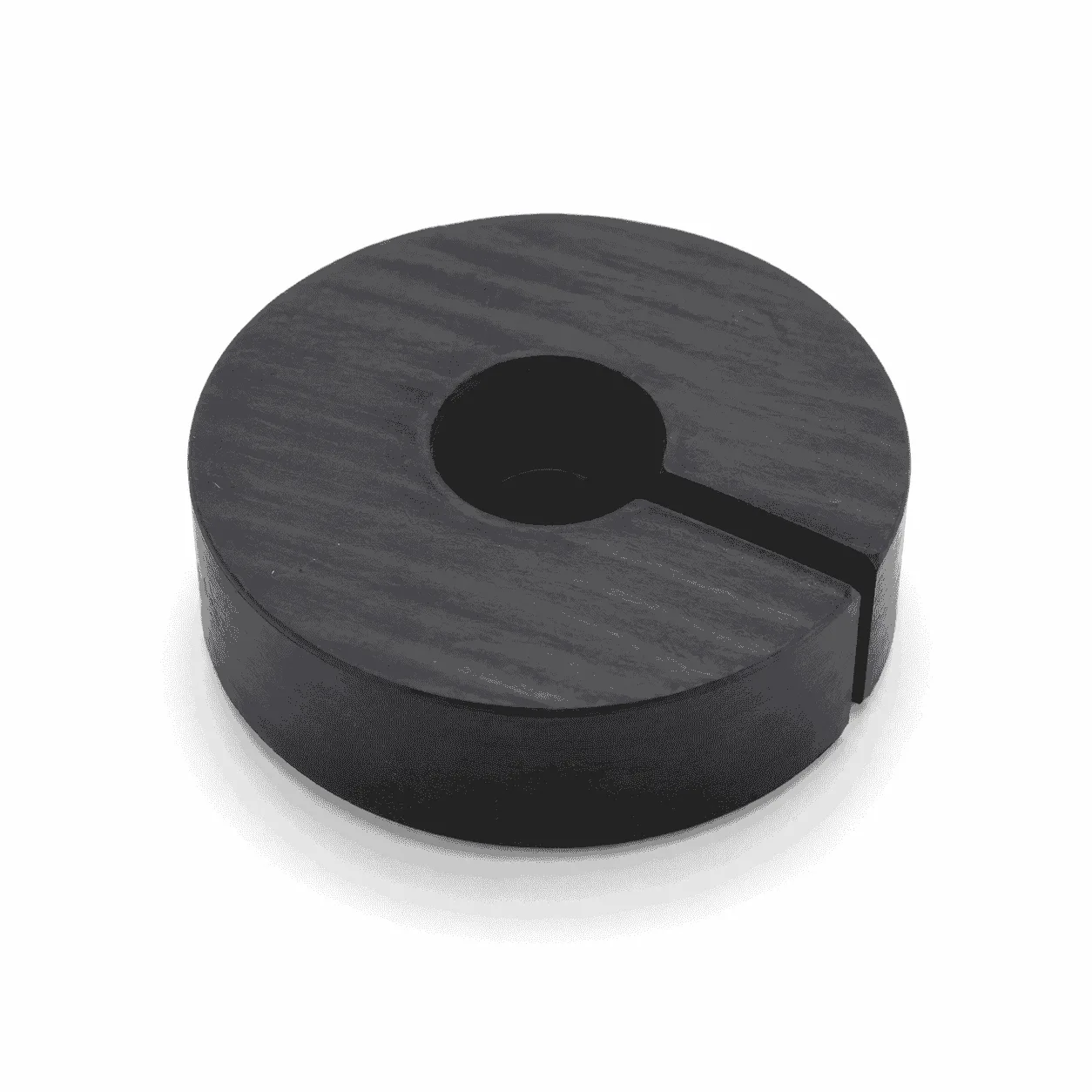
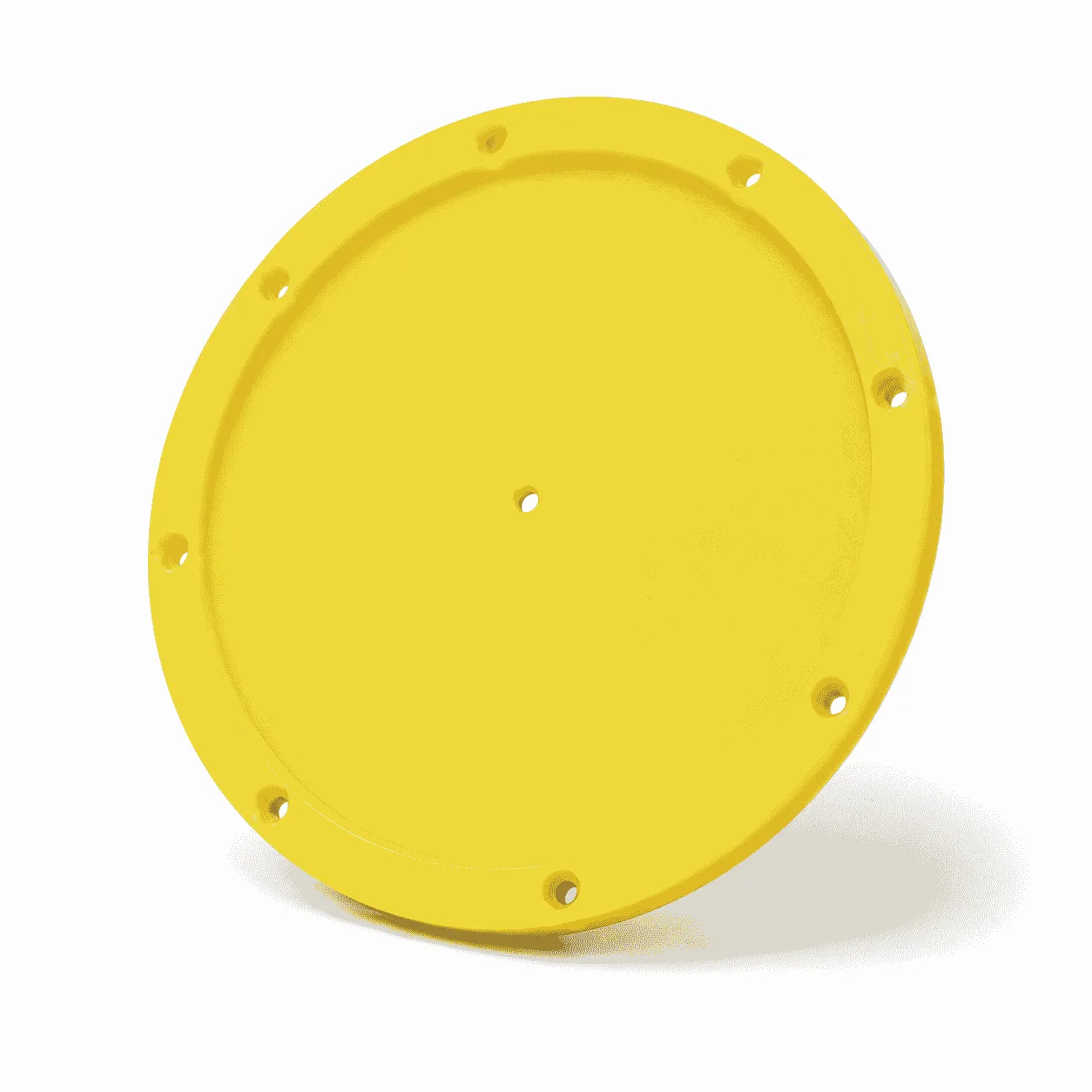
Custom Automotive Plastic Mounting Frame is a customized engineering plastic component used for positioning, supporting and fastening automotive parts, equipment modules and production fixtures. Its external dimensions, central opening, mounting holes, adjustment slots, reinforcing ribs and metal inserts can be manufactured according to drawings, samples and operating requirements.
Custom Automotive Plastic Mounting Frame is a specially manufactured structural component used for positioning, supporting, fastening and separating parts in automotive assemblies and related production equipment. It can be manufactured according to technical drawings, physical samples or confirmed installation dimensions to match specific vehicle components, equipment modules, inspection fixtures and automated assembly systems.
The overall length, width, height, central opening, mounting flange, round holes, elongated slots, recessed channels, reinforcing ribs and metal inserts can all be customized. Depending on the required quantity, dimensions and material, the component may be produced through CNC machining, molding, injection molding or a combination of forming and secondary machining.
A Custom Automotive Plastic Mounting Frame can be designed with a rectangular outer flange and a central opening for installing, locating, supporting or protecting another component. The surrounding mounting surface may include through holes, counterbores, countersinks, adjustment slots and locating holes.
Elongated slots can provide assembly adjustment, compensate for installation tolerances or accommodate matching equipment structures. Round holes may be used for bolts, positioning pins, cable routing, drainage or ventilation, depending on the final product design.
Recessed channels, raised edges and reinforcing ribs can improve positioning, maintain installation clearance or increase local structural rigidity. When repeated disassembly or higher fastening strength is required, threaded metal inserts, bushings or embedded fasteners can also be added.
The insert material, installation method, surrounding wall thickness and tightening torque should be confirmed according to the service load and assembly requirements. This helps reduce thread wear and prevents local cracking or deformation during repeated installation.
Custom Automotive Plastic Mounting Frame products can be used in vehicle component assemblies, automotive production equipment, inspection fixtures, automated assembly lines and supporting industrial machinery.
Depending on the design, the component may function as an automotive module mounting frame, connector mounting plate, wiring support frame, equipment positioning frame, protective spacer, inspection-tool component or replaceable structural insert.
The product may also be installed in equipment used for loading, transferring, assembling, positioning or inspecting automotive components. Its final function should be determined according to the installation position, force direction, operating temperature, fastening method and surrounding environment.
Related application information is available on our
Automation Equipment
and
Industrial Machinery
pages.
The material for a Custom Automotive Plastic Mounting Frame should be selected according to the required rigidity, impact resistance, dimensional stability, operating temperature, chemical exposure and installation method. Product color alone cannot identify the exact polymer grade or performance.
Material selection should not be based only on the product name or appearance. Requirements such as flame resistance, electrical properties, ultraviolet exposure, oil contact, long-term temperature and mechanical load must be specified separately.
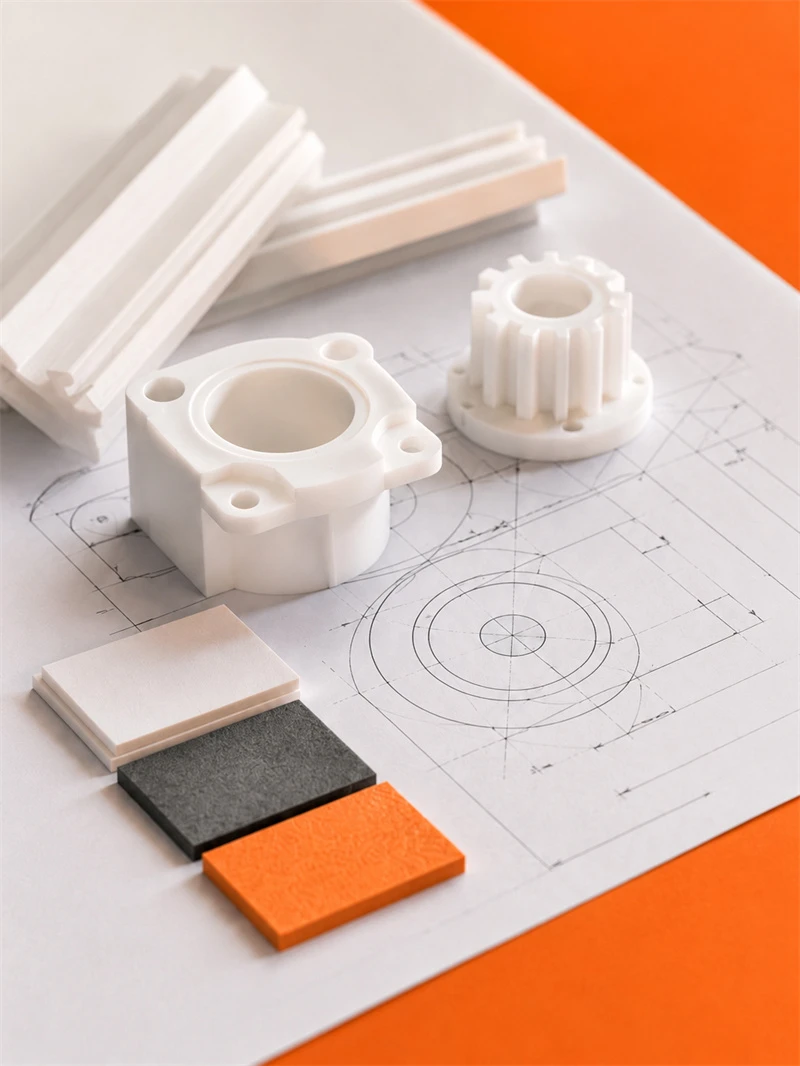
For prototypes, replacement components and small-to-medium production quantities, the Custom Automotive Plastic Mounting Frame can be machined from engineering plastic sheets, blocks or molded blanks. Typical manufacturing processes include cutting, milling, drilling, boring, slotting, counterboring, tapping, chamfering and metal insert installation.
For higher-volume projects with a stable product design, molded or injection-molded production may be evaluated. Critical mounting holes, fitting surfaces and insert positions can be finish-machined after molding when tighter assembly requirements are needed.
Our
CNC Plastic Machining
service supports custom components manufactured from drawings, samples and confirmed equipment dimensions.
For projects suitable for molded batch production, additional information is available on our
Plastic Injection Molding
page.
The mounting-hole structure should be selected according to the bolts, positioning pins and installation tools used in the equipment. Available options include straight through holes, counterbored holes, countersunk holes, threaded holes and holes fitted with metal inserts.
Elongated adjustment slots can provide a limited range of installation adjustment and help compensate for minor differences between the mounting frame and the corresponding equipment structure. The slot length, width, edge distance and load direction should be confirmed before production.
For components subjected to repeated assembly, the area surrounding the fastening holes may require increased wall thickness, reinforcing ribs or metal inserts to reduce deformation and local wear.
Important inspection items include overall length, width, height, central opening dimensions, flange thickness, hole diameter, slot dimensions, hole spacing, flatness, parallelism and locating-surface position.
For products containing metal inserts, the insert position, thread specification, perpendicularity and fastening condition should also be checked. Batch products should maintain consistent hole positions and external dimensions to reduce alignment problems during equipment assembly.
Sharp edges and machining burrs should be removed where necessary. Protective packaging should be selected according to the size and structure of the component to reduce deformation, collision and surface damage during transportation.
The operating temperature, mechanical load, vibration, oil exposure, cleaning chemicals, outdoor conditions and required service life should be confirmed before choosing the material for a Custom Automotive Plastic Mounting Frame.
Different engineering plastics do not provide identical resistance to heat, moisture, fuels, lubricants, solvents, acids or alkalis. A material suitable for an assembly fixture may not necessarily be suitable for direct installation inside a vehicle or near a heat source.
When flame-retardant, antistatic, conductive or electrically insulating performance is required, the corresponding material grade and test standard should be specified before production.
Engineering plastics are polymer materials commonly selected for mechanical components requiring combinations of strength, rigidity, wear resistance, chemical stability and machinability. General information is available from
Wikipedia’s Engineering Plastic overview.
For general background information about vehicle manufacturing and automotive component production, refer to
Wikipedia’s Automotive Industry overview.
Please provide the overall dimensions, central opening size, mounting-hole diameter, slot dimensions, hole spacing, material, quantity and dimensional tolerance. The operating load, temperature, chemical contact, installation method and required flame or electrical properties should also be confirmed.
A complete technical drawing or physical sample is recommended for a Custom Automotive Plastic Mounting Frame with multiple slots, recessed channels, reinforcing ribs, metal inserts or strict fitting requirements.
Check drawings for full specifications and confirm materials according to service conditions to prevent product defects.
Inspect all key processing steps and fully verify dimensions, holes, grooves and fitting surfaces.
Deburr, chamfer and clean products for easy installation. Ensure uniform quality among batch products.
Choose appropriate packaging solutions based on product features to protect goods from collision, deformation and mixing during transit.
Unlike metal parts, engineering plastic components still require strict control over dimensions, holes, edges, surface, materials and assembly performance for equipment use.
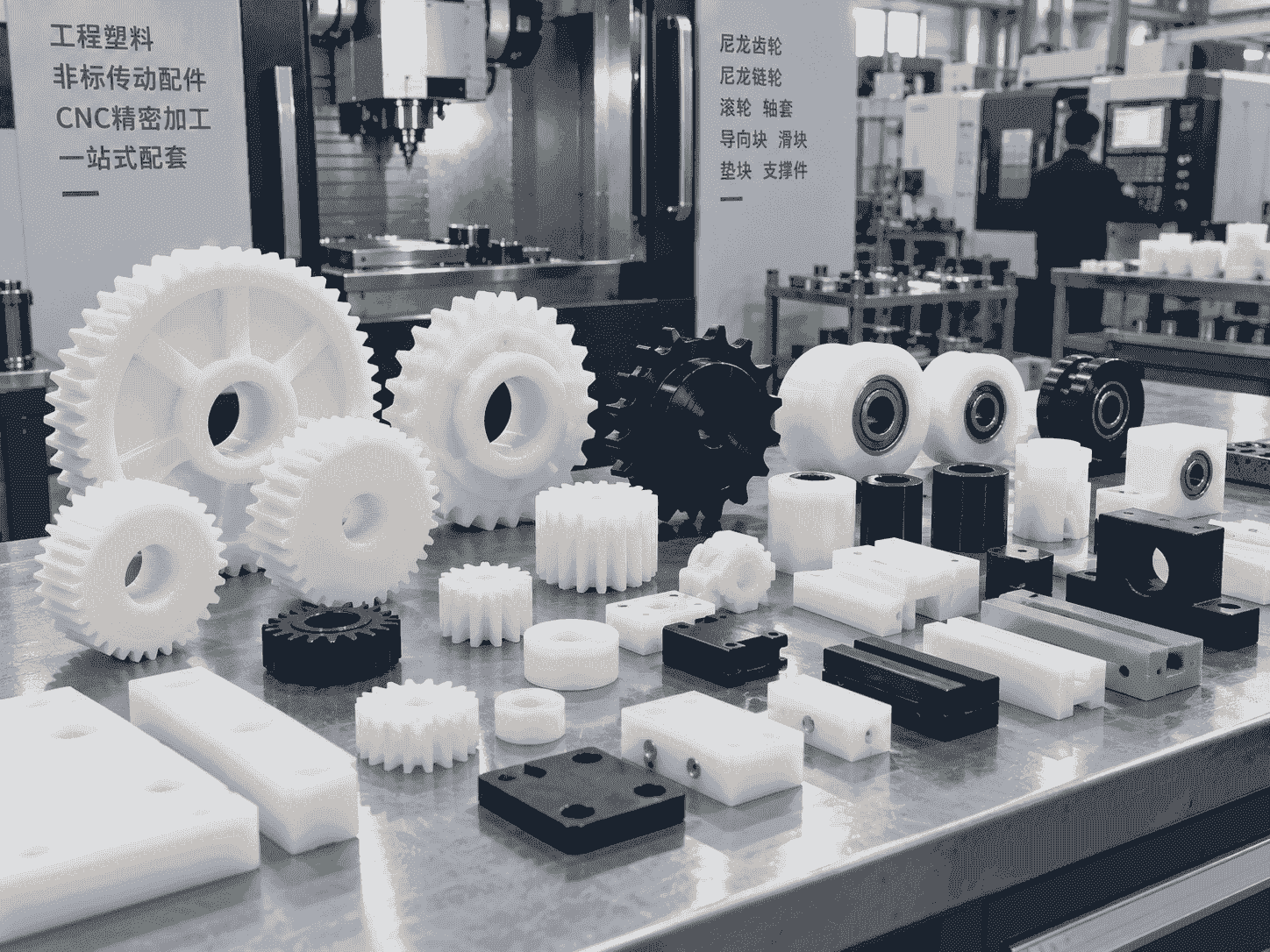
Engineering plastic parts suit friction, guide, support, buffer, anti-corrosion and insulation areas. We supply UHMWPE, POM, PA, PP/PE components for conveyor, food, mining, machinery, chemical and cable systems, with custom OEM service available.
Stay updated with our latest industry insights, company updates and featured articles.

Engineering plastics are increasingly used in industrial machinery, automated production lines, conveyor systems, packaging equipment, and food-processing machines. Materials such as nylon, UHMWPE, POM, and

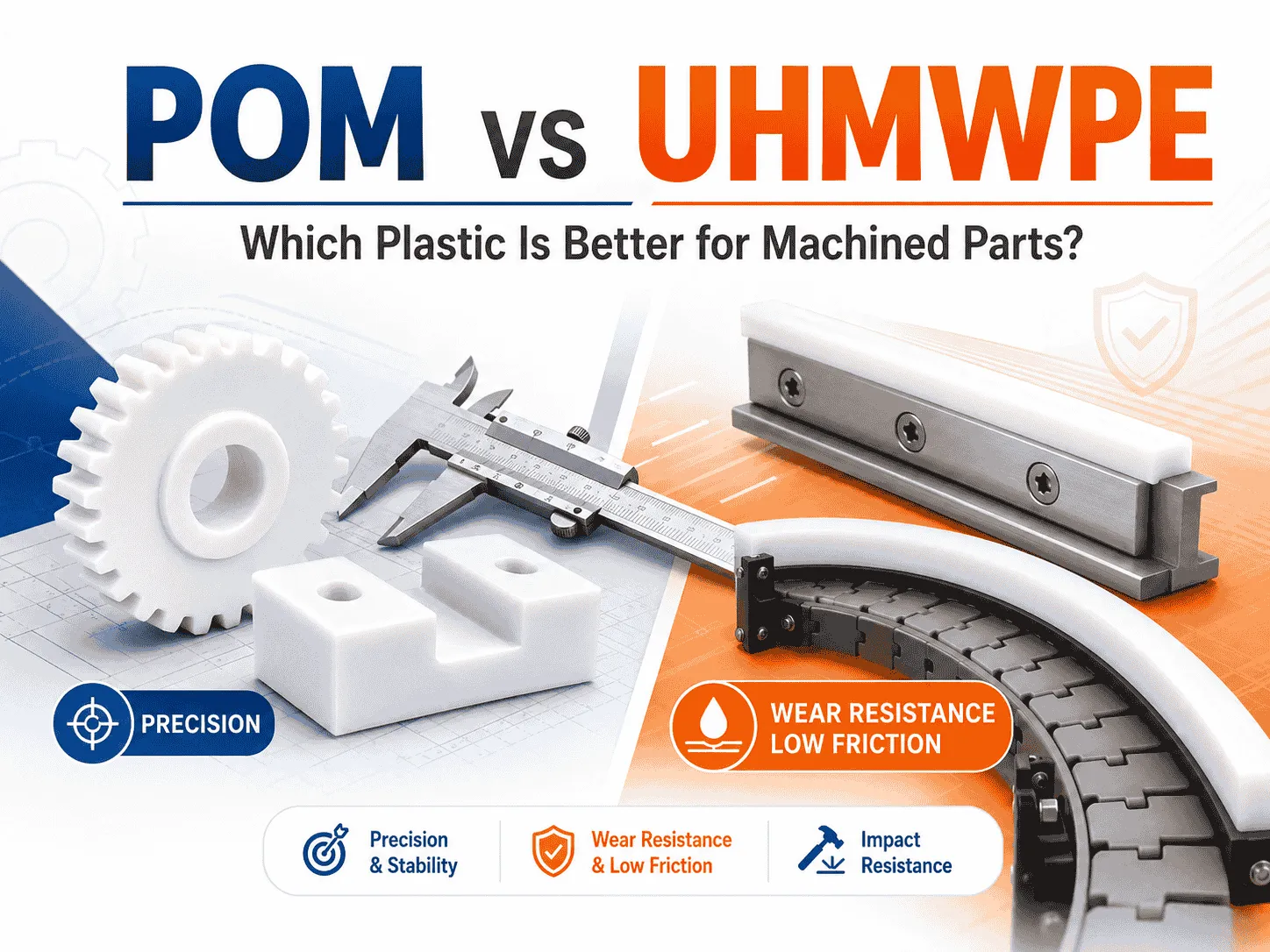
Both are lightweight, corrosion-resistant, wear-resistant, and suitable for CNC machining. However, they perform very differently

Wear is a common cause of failure in conveyor systems, packaging machinery, automated equipment, mining

CNC machining is widely used to produce plastic prototypes, low-volume parts, replacement components, jigs, fixtures,

Both are lightweight, corrosion-resistant, wear-resistant, and suitable for CNC machining. However, they perform very differently

Wear is a common cause of failure in conveyor systems, packaging machinery, automated equipment, mining

CNC machining is widely used to produce plastic prototypes, low-volume parts, replacement components, jigs, fixtures,
Need UHMWPE sheets & custom plastic machined/OEM parts?Send specs & material needs, free quote within 24h.