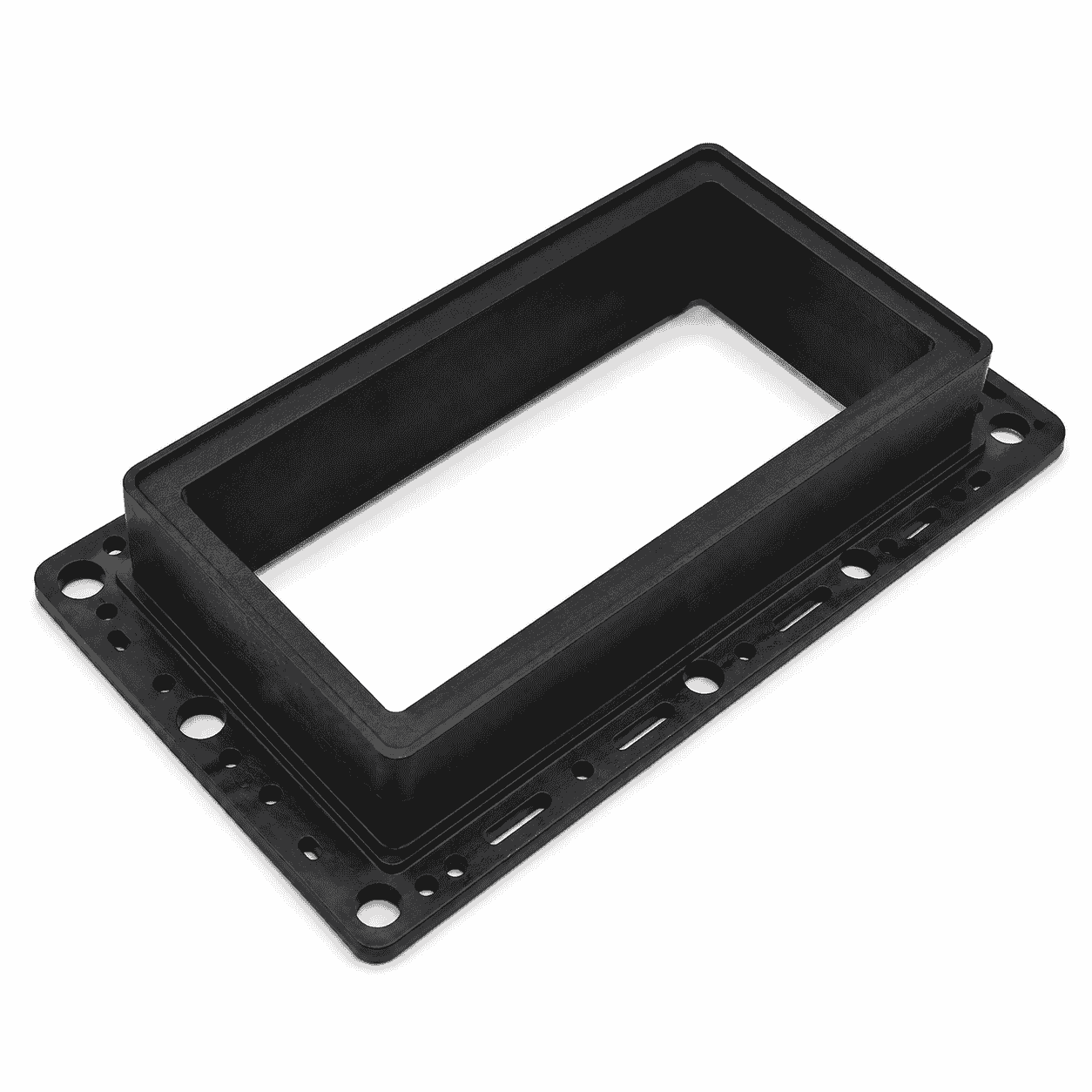
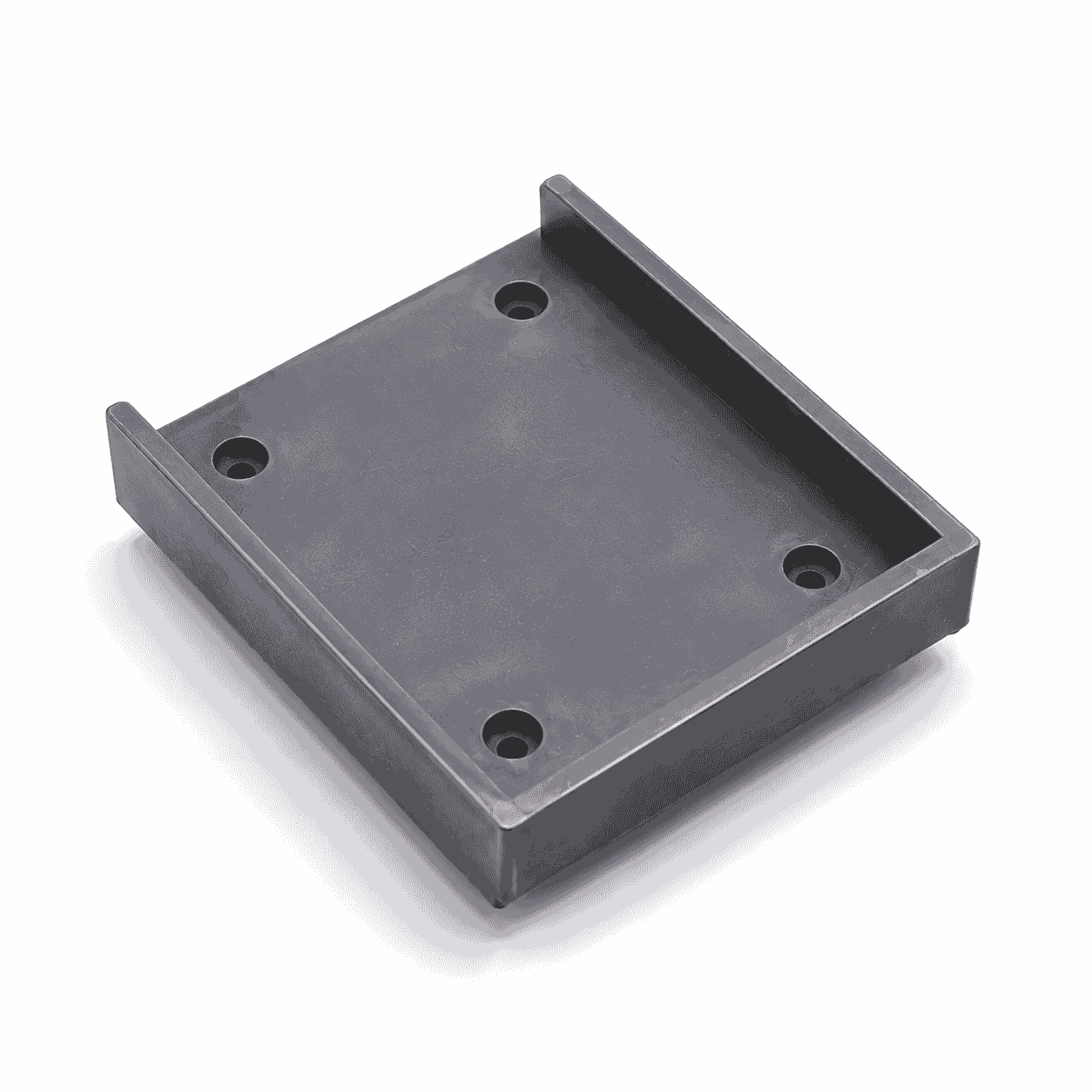
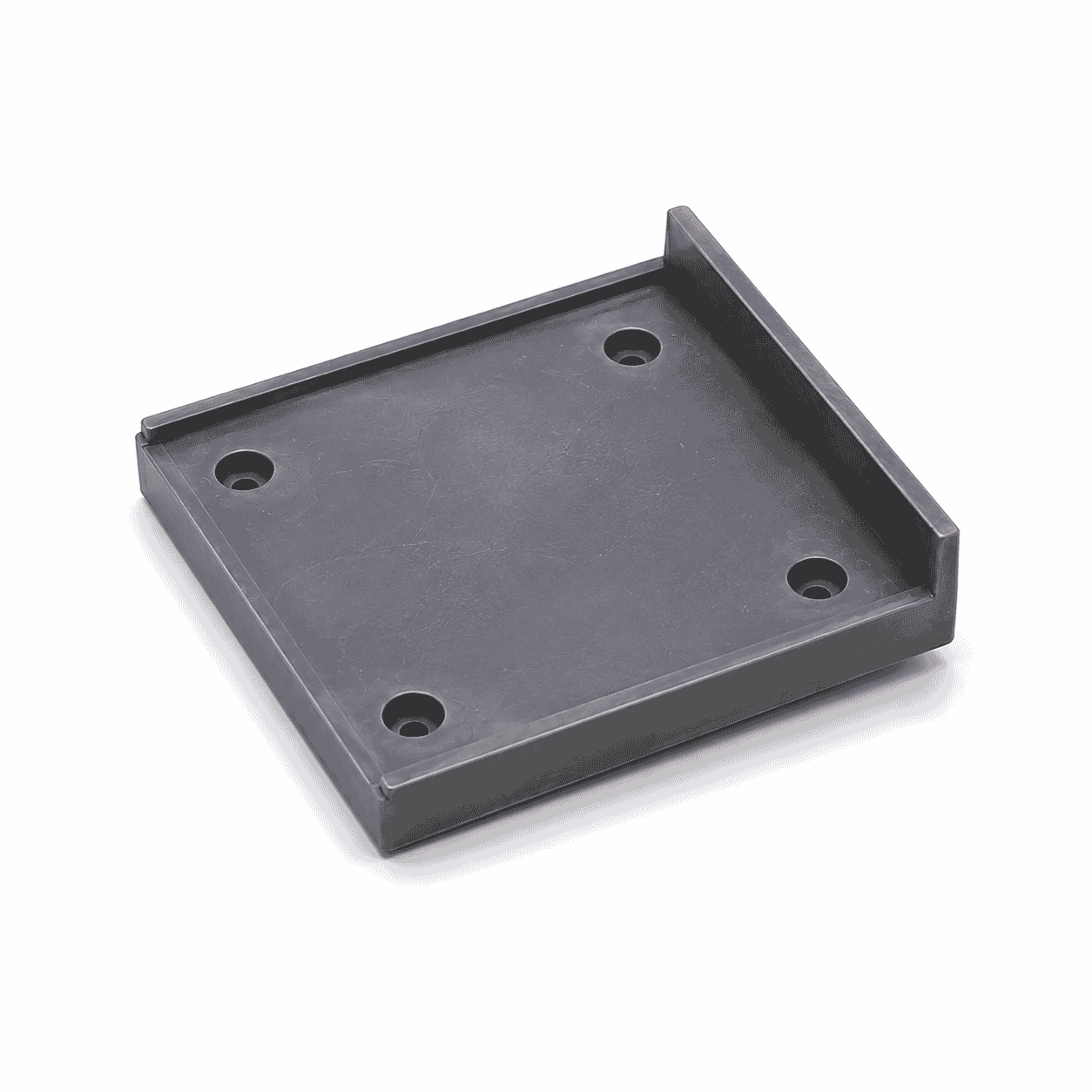
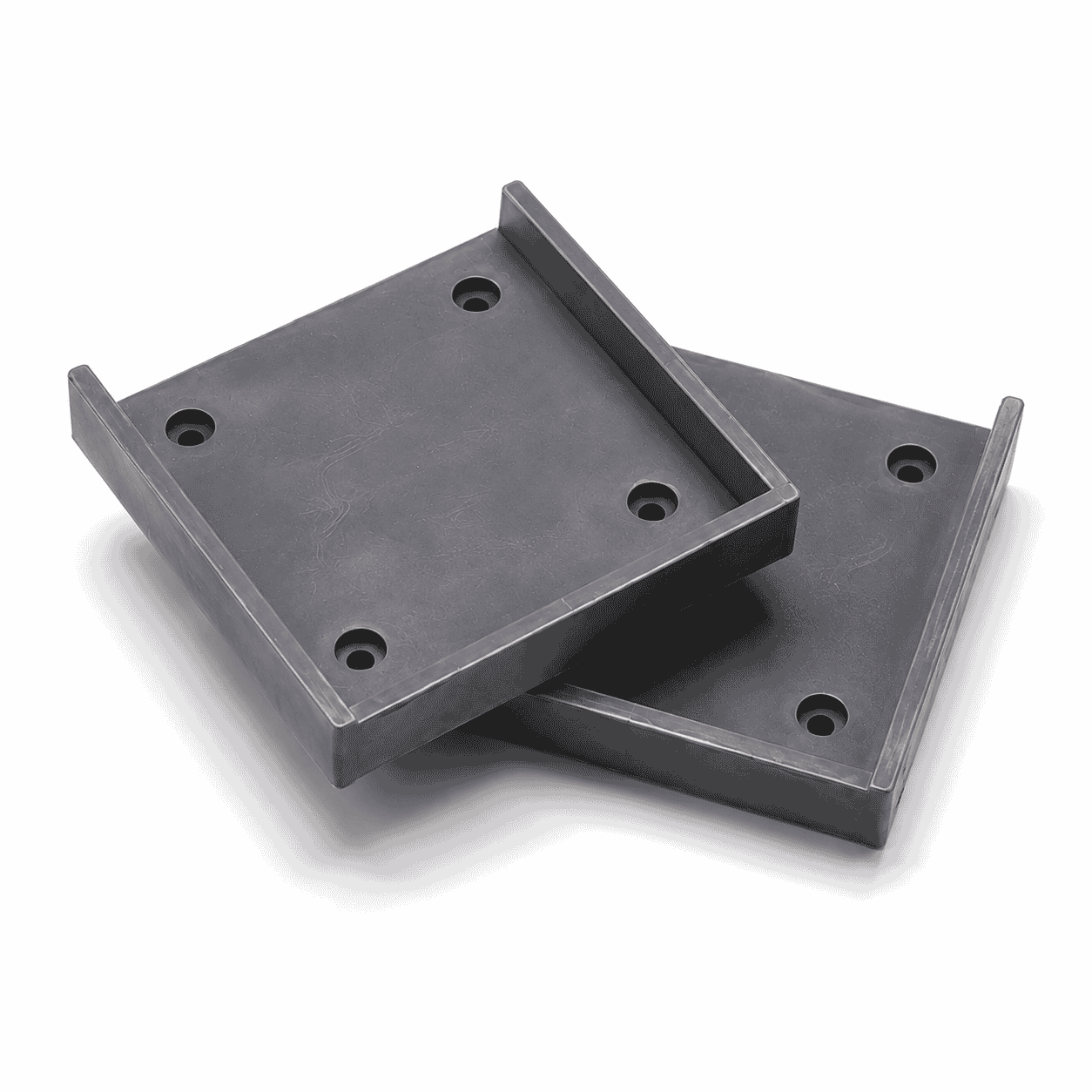
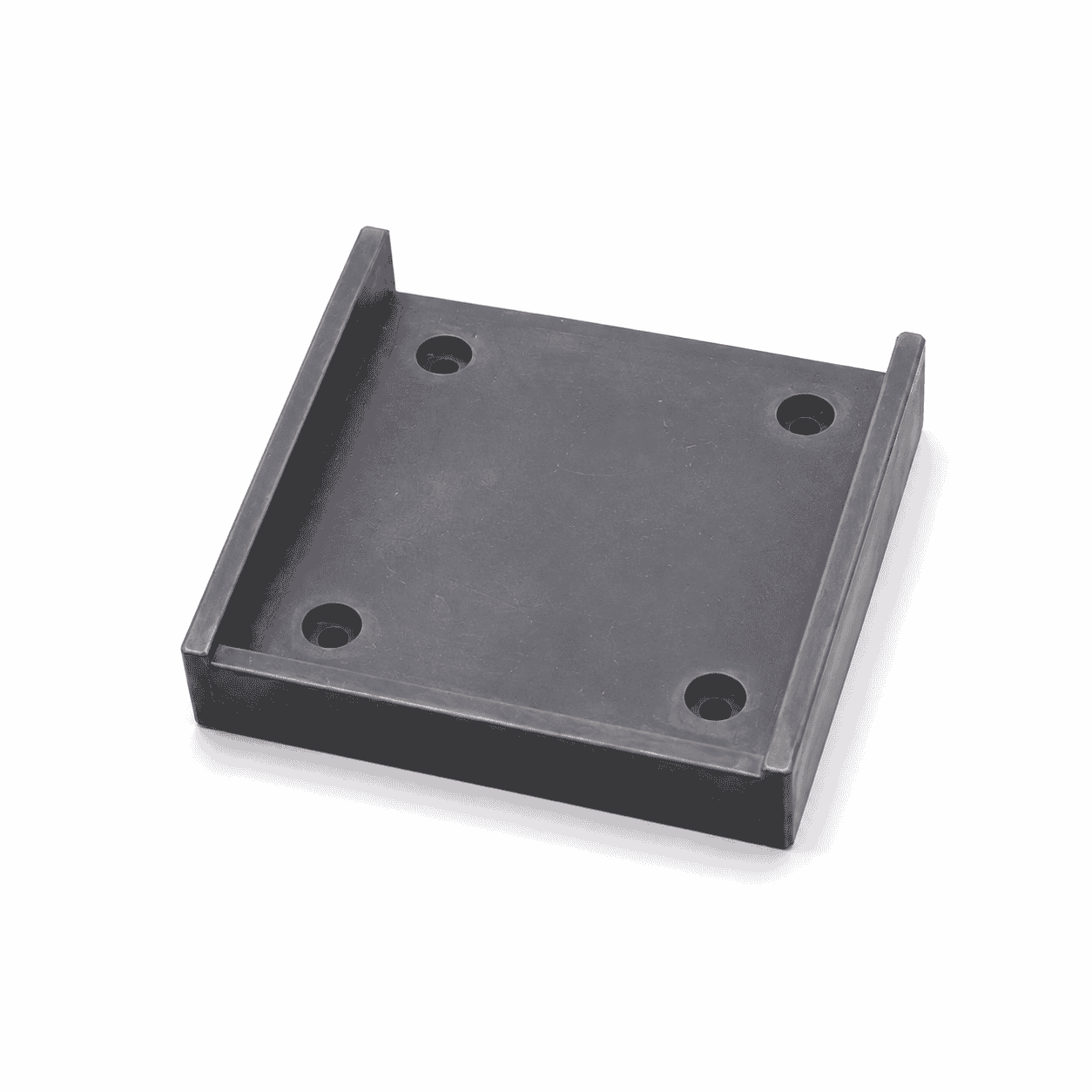
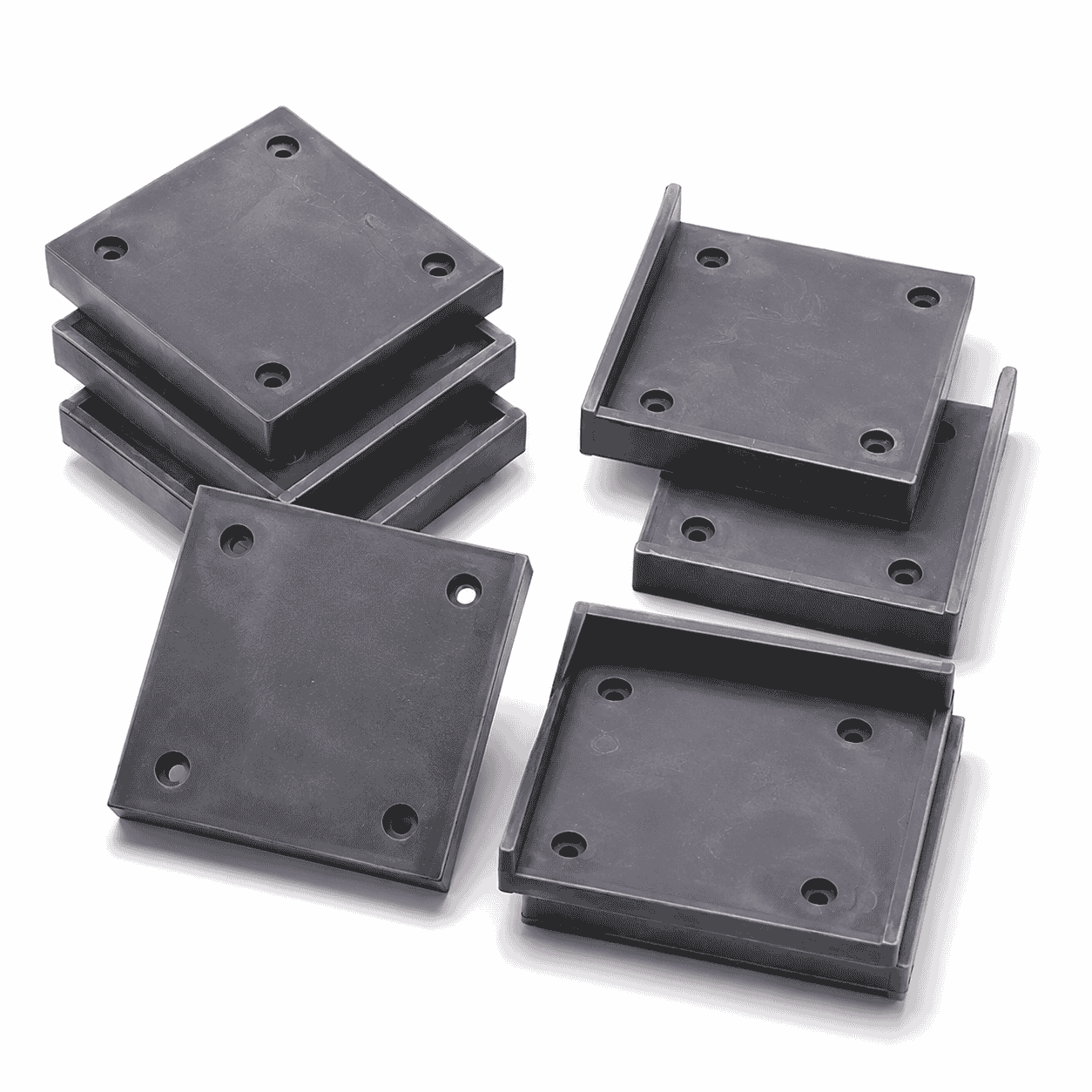
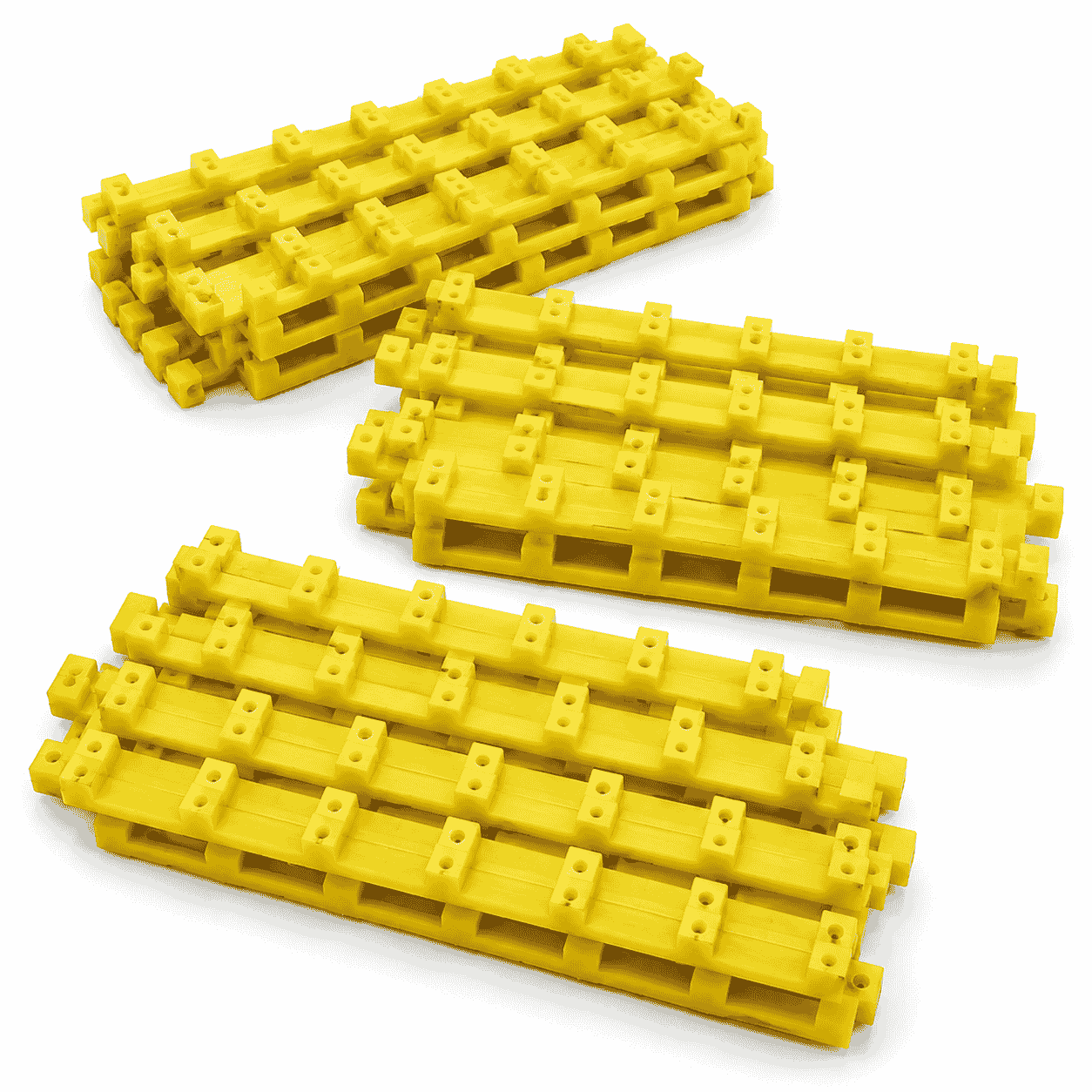
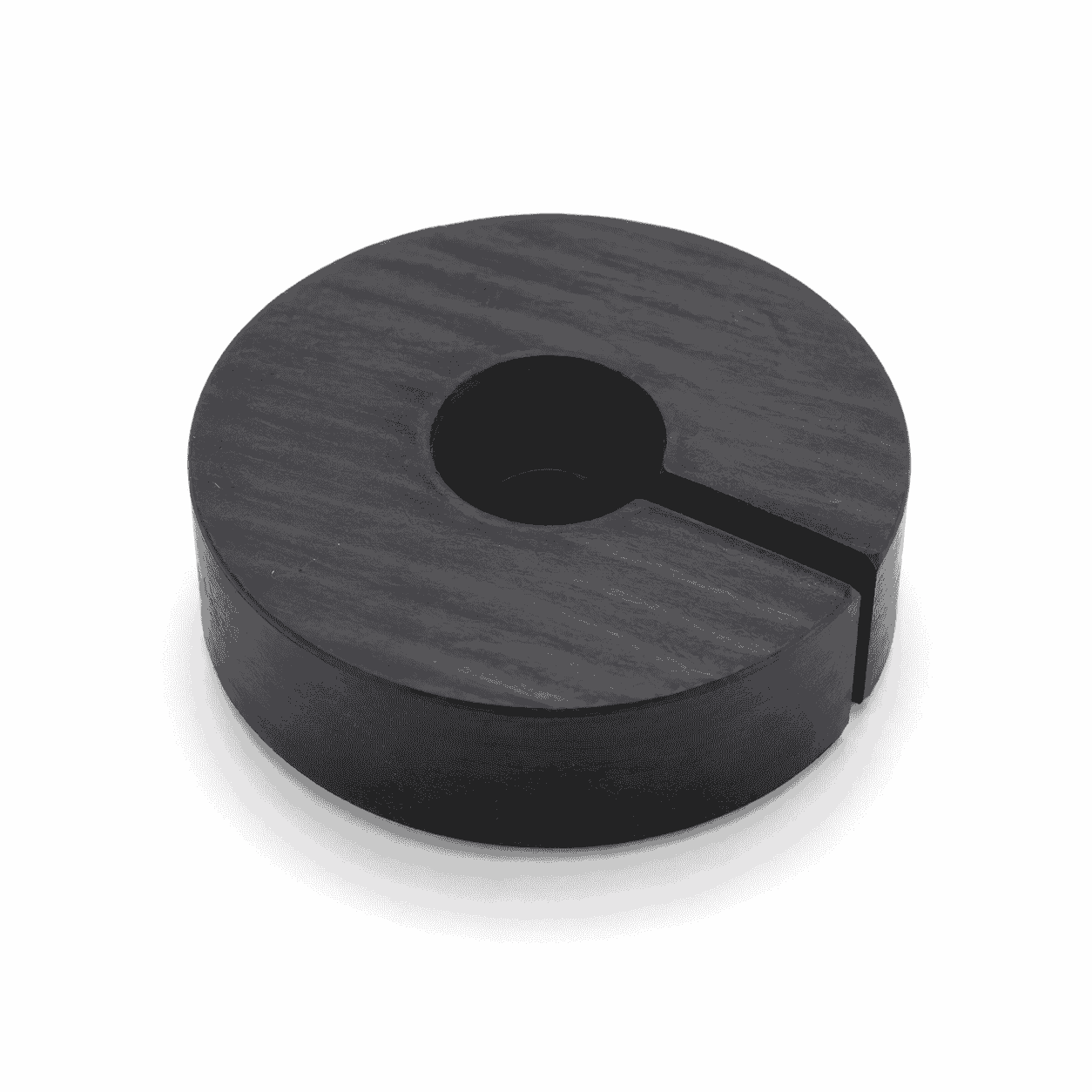
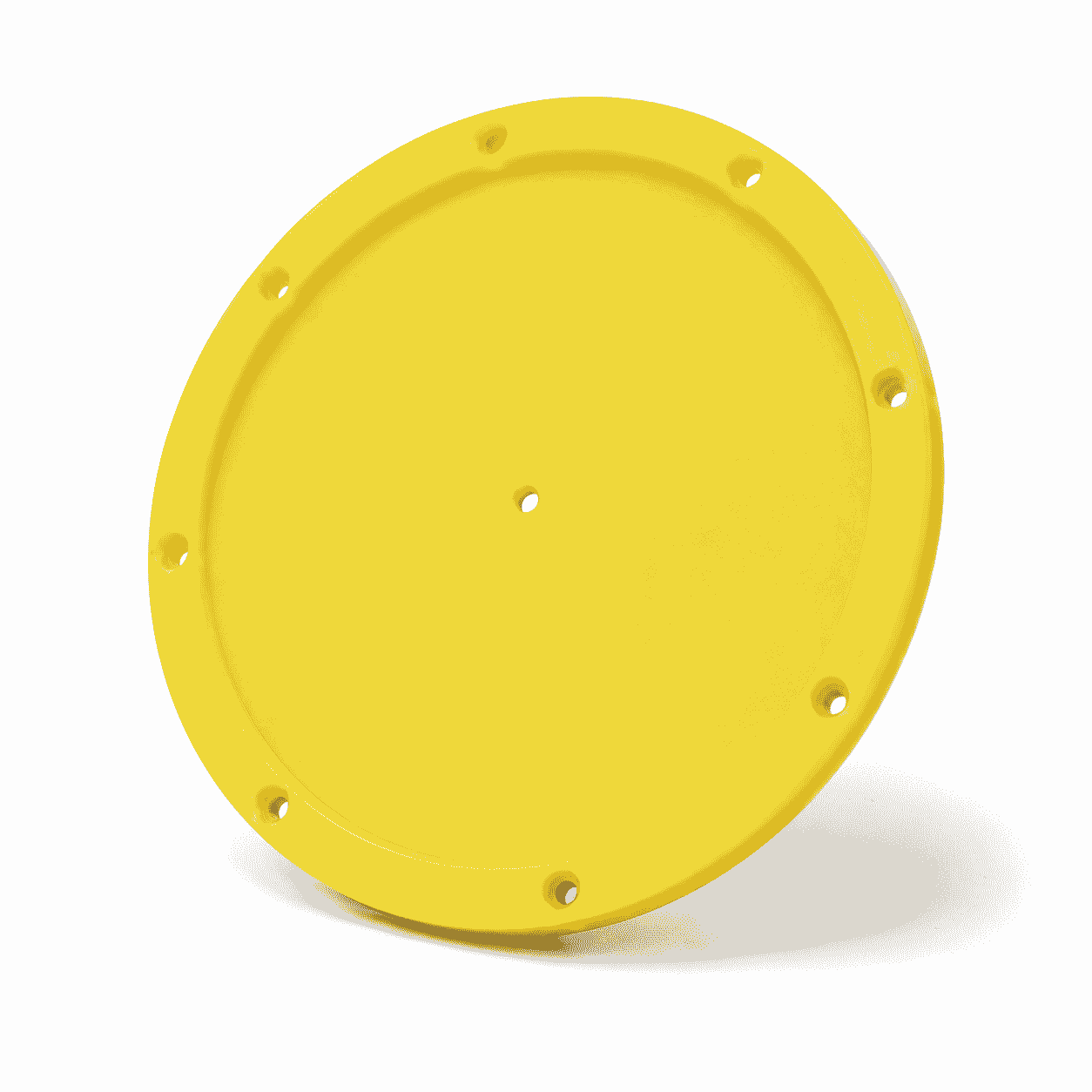
Custom Industrial Mounting Pad is a specially manufactured support, positioning and fastening component used in industrial machinery and equipment assemblies. It can be installed between equipment parts, frames, brackets, bases or moving components to maintain the required position, distribute contact loads and prevent direct contact between mating structures.
The outside dimensions, overall thickness, raised edges, locating ribs, mounting holes, counterbores, recessed areas and assembly clearances can be manufactured according to customer drawings, physical samples or equipment installation dimensions. Different materials can be selected according to the required load, wear resistance, rigidity, impact resistance, friction performance and working environment.
Custom Industrial Mounting Pad Structure
A Custom Industrial Mounting Pad may be designed as a square, rectangular, stepped or irregular component. Raised edges and locating ribs can help position the mating part and limit lateral movement, while mounting holes allow the pad to be securely connected to the equipment frame or support structure.
The mounting holes can be produced as straight through holes, counterbored holes, countersunk holes, threaded holes or holes fitted with metal inserts. Hole diameter, spacing, edge distance and installation direction should be confirmed according to the bolts, fasteners and assembly method used in the equipment.
The pad may also include internal recesses, raised walls, locating shoulders, slots or reinforced sections. These structures can be incorporated to match existing equipment, maintain assembly clearance or provide additional support at specific load-bearing positions.
7 Benefits of Custom Industrial Mounting Pad
- Stable component positioning: Raised edges, locating ribs and mounting holes help maintain the required installation position.
- Load distribution: The pad increases the contact area between components and helps reduce concentrated pressure on the equipment structure.
- Protection of mating surfaces: It separates directly contacting components and helps reduce scratches, indentation and localized wear.
- Replaceable component design: The mounting pad can be replaced separately after wear or damage, helping protect larger and more expensive equipment parts.
- Flexible structural customization: Dimensions, holes, steps, flanges, recesses and locating structures can be manufactured according to the drawing.
- Multiple material options: Material selection can be adjusted according to load, friction, corrosion, impact and temperature requirements.
- Suitable for batch production: CNC machining and molded production methods can support consistent dimensions and hole positions across batch orders.
Material Options for Custom Industrial Mounting Pad
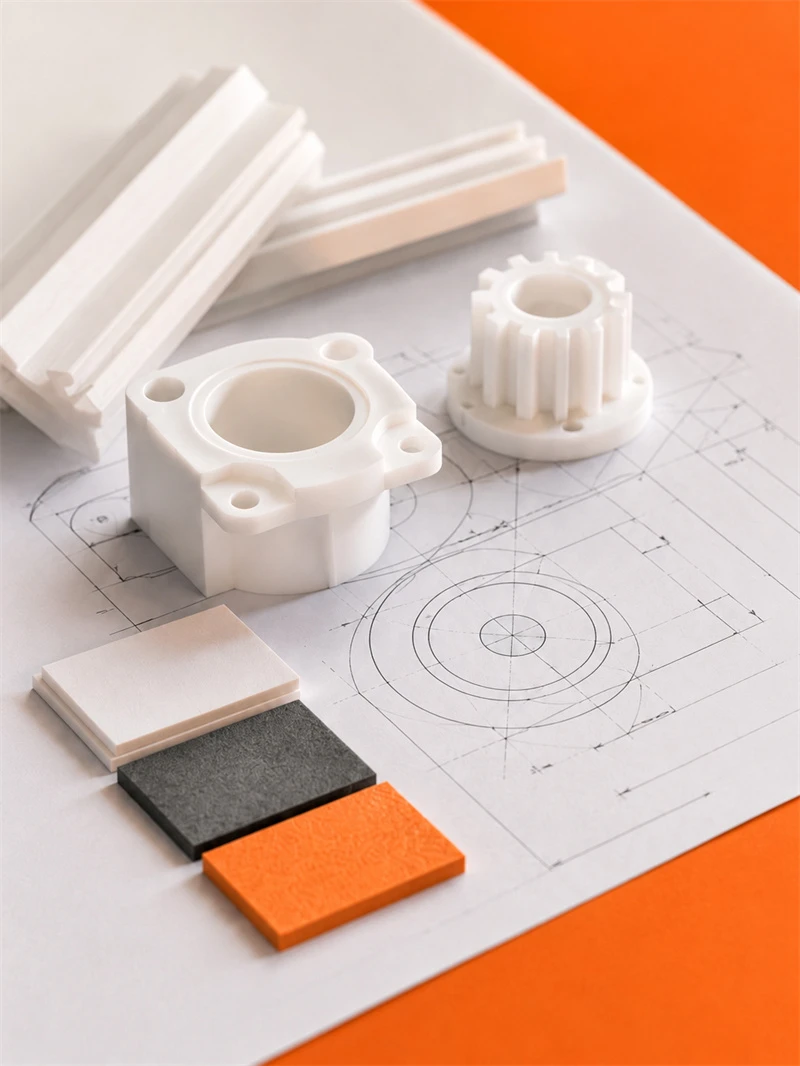
The material should be selected according to the actual function of the component. Different materials provide different combinations of rigidity, wear resistance, elasticity and environmental resistance.
- UHMWPE: Suitable for low-friction contact, wear protection, impact resistance and applications requiring low moisture absorption.
- Nylon: Suitable for structural support, wear-resistant positioning and components requiring good mechanical strength.
- POM: Suitable for mounting components requiring rigidity, dimensional accuracy and stable machined surfaces.
- PP: Suitable for lightweight support parts and certain applications involving chemical exposure.
- Polyurethane: Suitable for applications requiring elastic cushioning, impact absorption and protective contact.
- Rubber: Suitable for anti-slip, cushioning and vibration-isolation applications when the load and deformation requirements allow.
Material color alone cannot be used to determine the exact material grade or performance. The material specification should be confirmed from the technical drawing, original sample, service environment or required mechanical properties.
Applications of Custom Industrial Mounting Pad
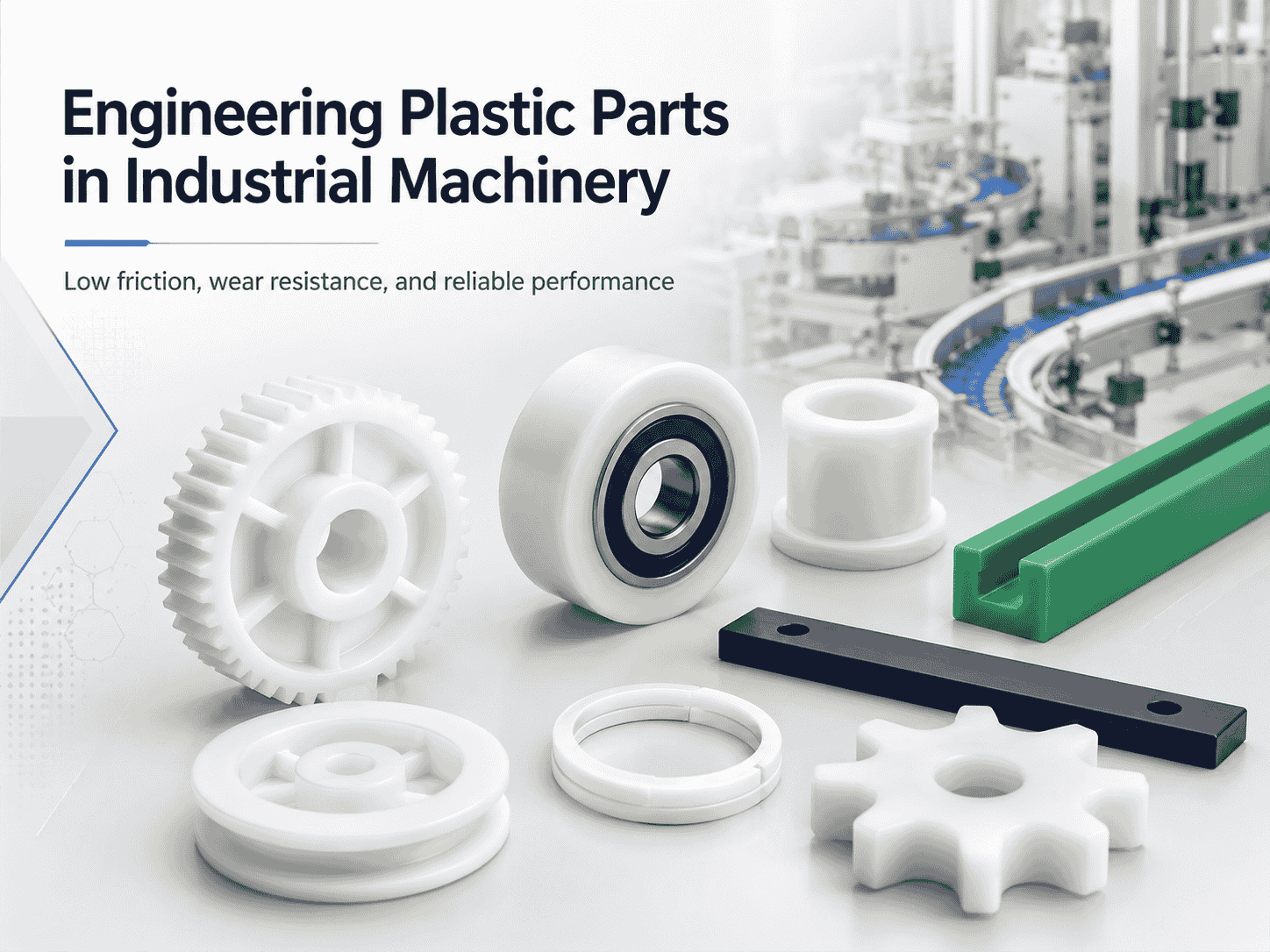
Custom Industrial Mounting Pad products can be used in automated production lines, conveyor equipment, packaging machinery, lifting equipment, fixtures, machine bases, material-handling systems and general industrial machinery.
Depending on the structure and material, the product may function as an equipment mounting pad, positioning block, support block, spacing pad, protective liner, buffer pad, limiting block or replaceable wear component.
Typical installation positions include equipment bases, guide assemblies, brackets, frames, clamping devices, moving mechanisms and structural connection points. The final function should be confirmed according to the equipment design, force direction, installation position and operating conditions.
Related application information is available on our
Conveyor Systems
and
Industrial Machinery
pages.
Custom Industrial Mounting Pad Manufacturing
Production can be arranged according to complete technical drawings, physical samples or confirmed installation dimensions. Depending on the material, quantity and structural requirements, the mounting pad can be manufactured by CNC machining, molding or a combination of molding and finish machining.
Common machining processes include cutting, milling, drilling, boring, counterboring, countersinking, slotting, tapping, chamfering and surface finishing. For molded products, critical mounting holes and fitting surfaces can be machined after molding to obtain the required assembly dimensions.
Our
CNC Plastic Machining
service supports custom production of mounting pads, support blocks, wear pads, guide blocks, spacers and other industrial components from drawings or samples.
Dimensional and Assembly Control
The outside length, width, thickness, hole diameter, hole spacing, edge distance, recessed depth and raised-edge height should be checked before production. Products installed in matching frames or brackets may also require control of flatness, parallelism and fitting clearance.
For batch orders, the mounting-hole position and overall dimensions should remain consistent to reduce problems during assembly. Edges should be deburred or chamfered where necessary to prevent interference and improve installation efficiency.
Operating Environment Considerations
The equipment load, operating temperature, impact frequency, contact medium, outdoor exposure and required service life should be confirmed before material selection. Different engineering plastics and elastomers do not provide identical resistance to oils, solvents, acids, alkalis, moisture or high temperatures.
A rigid engineering plastic is generally more suitable when dimensional stability and structural positioning are the main requirements. An elastomer material may be more appropriate when cushioning, anti-slip contact or impact absorption is required.
Material Reference
Engineering plastics are commonly used for mechanical components because different grades can provide combinations of mechanical strength, wear resistance, rigidity, chemical stability and machinability. General information is available from
Wikipedia’s Engineering Plastic overview.
For broader information about polymer materials, processing and engineering applications, refer to
Wikipedia’s Polymer Engineering overview.
Information Required for Quotation
Please provide the overall length, width, thickness, hole diameter, hole quantity, hole spacing, raised-edge dimensions, recessed depth, material, quantity and dimensional tolerance. The operating load, temperature, contact medium and installation method should also be provided when material selection assistance is required.
A complete technical drawing or physical sample is recommended for products with stepped structures, raised side walls, multiple mounting holes, internal recesses or special fitting requirements.