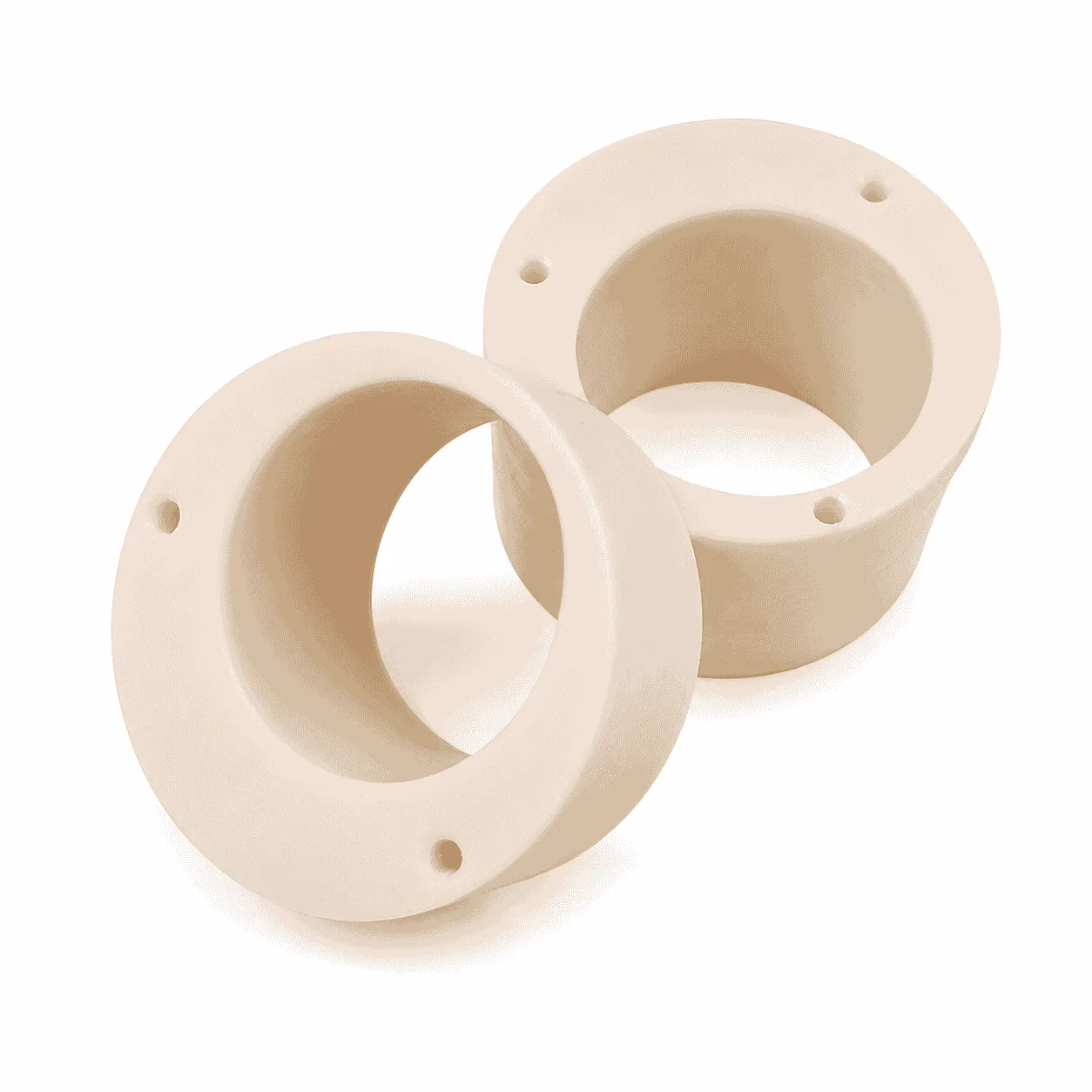
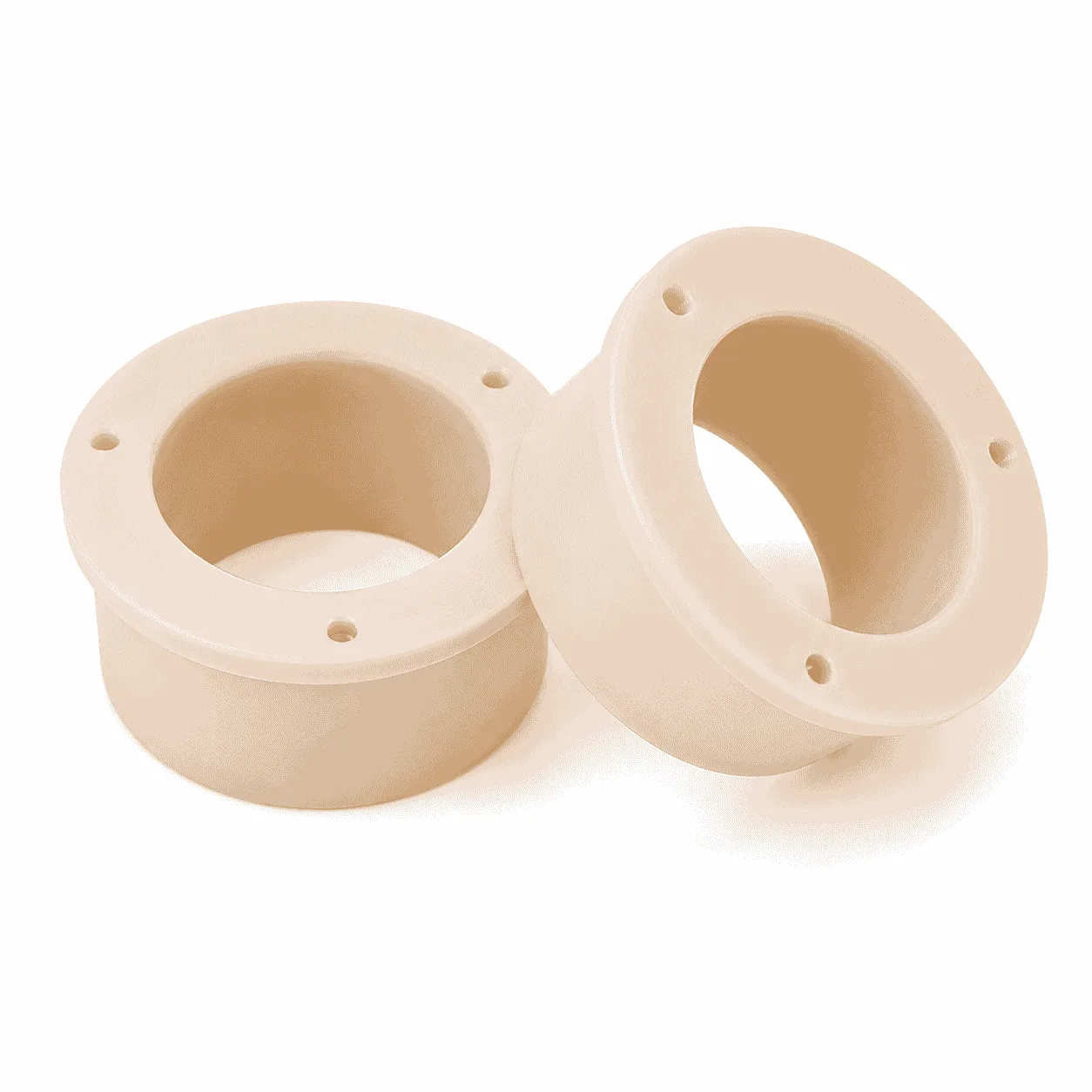
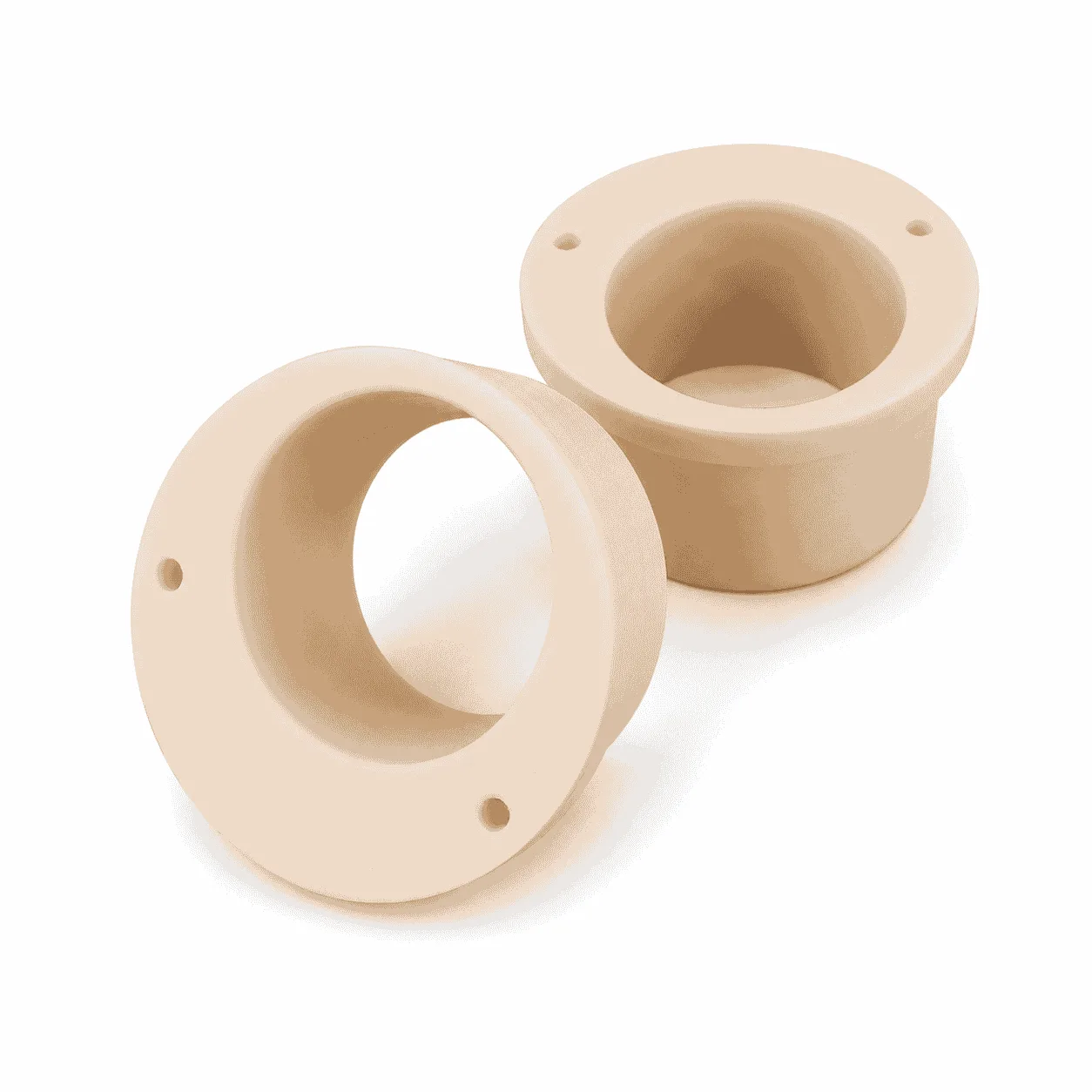
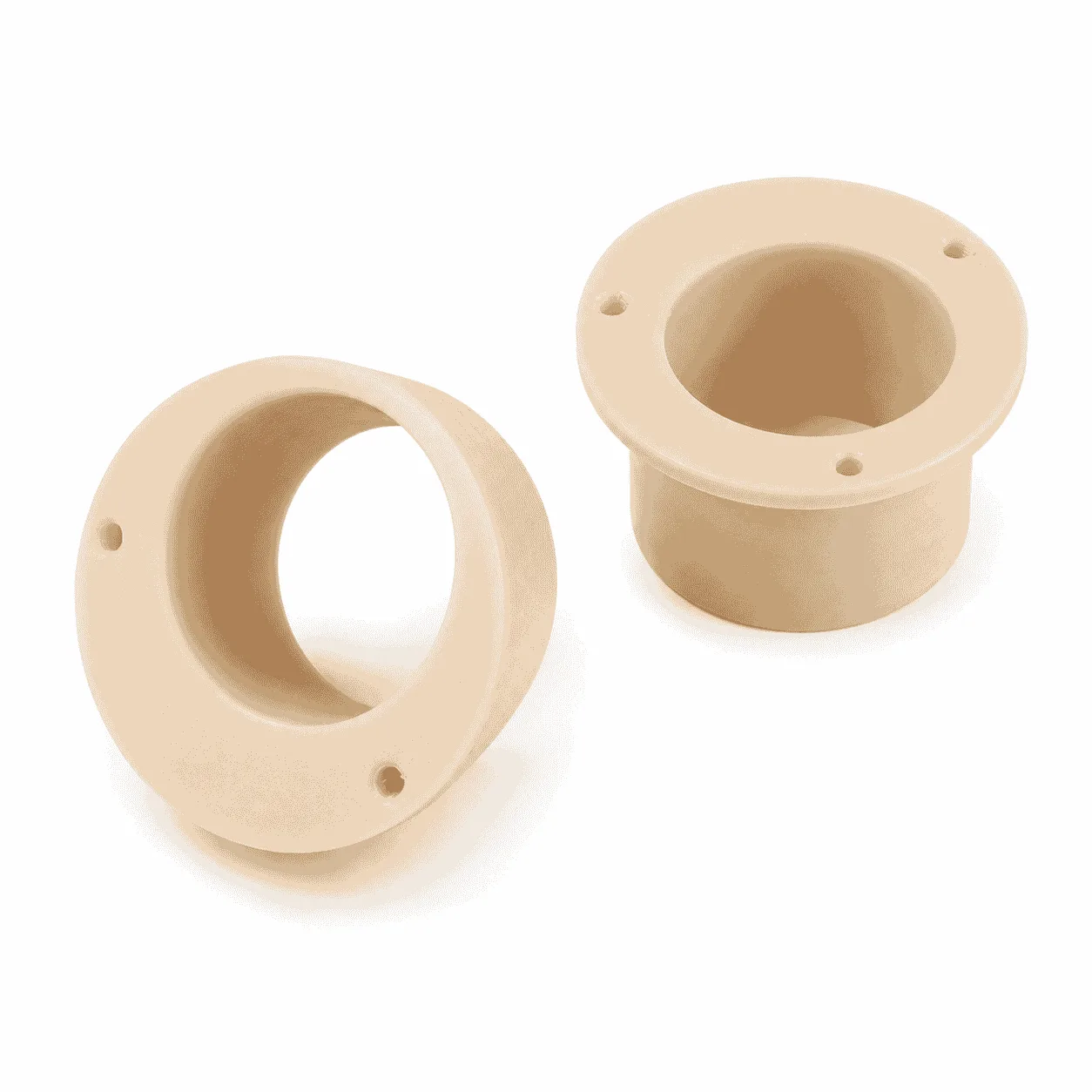
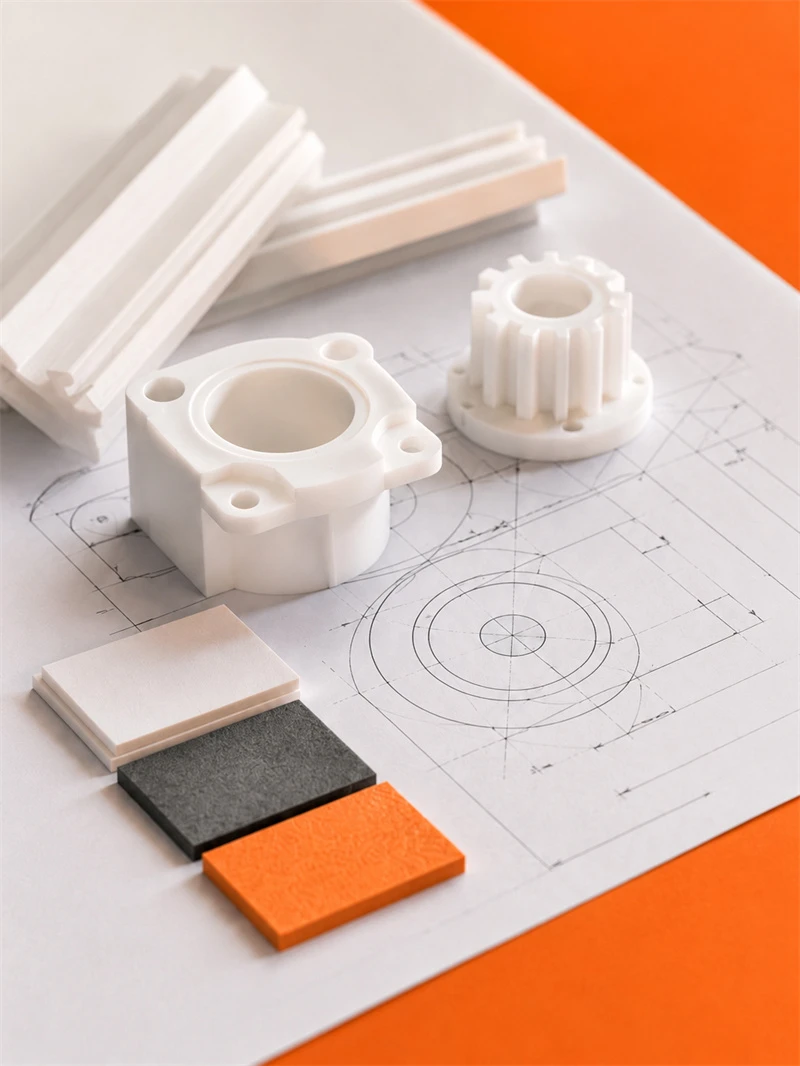
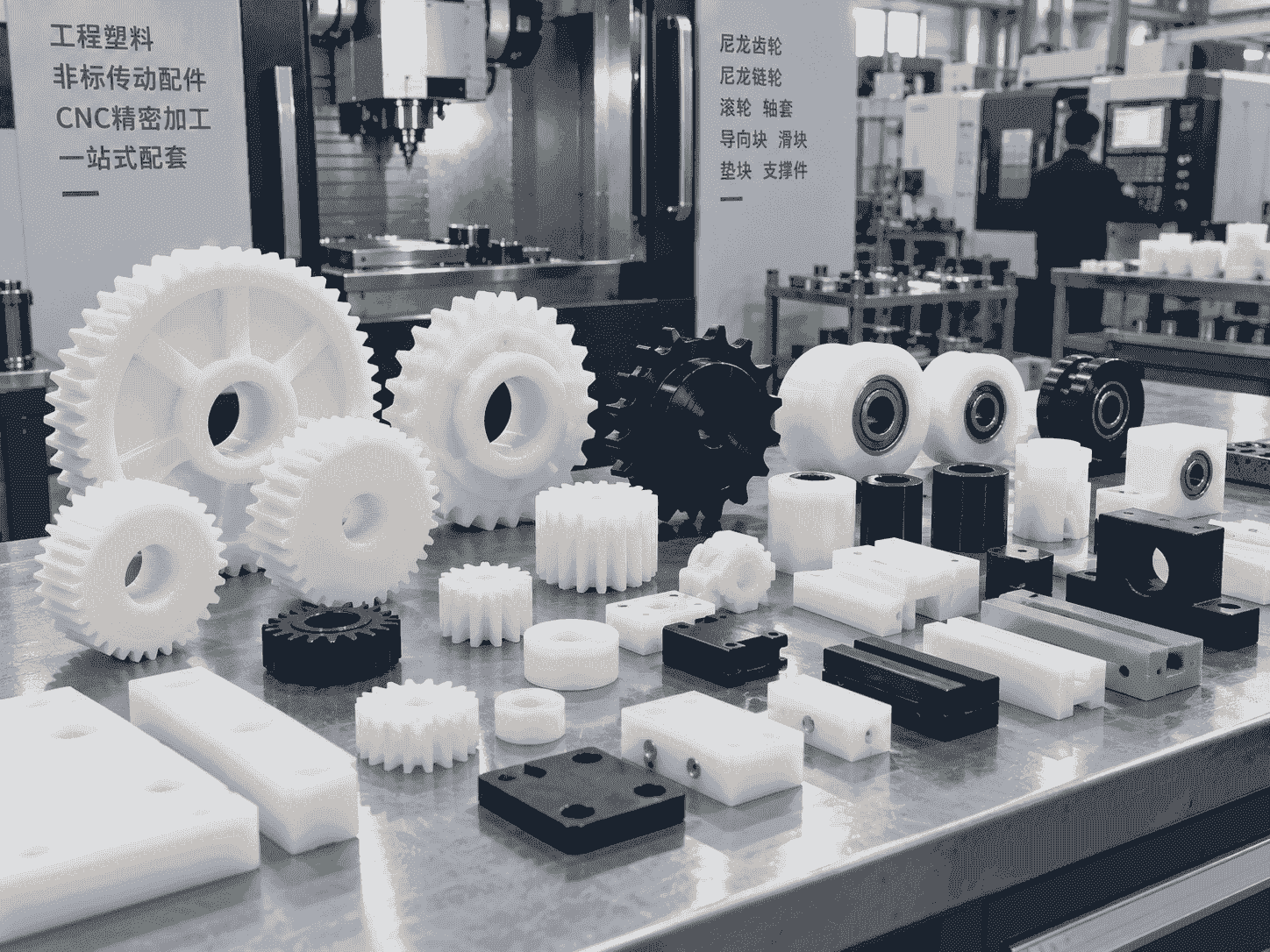
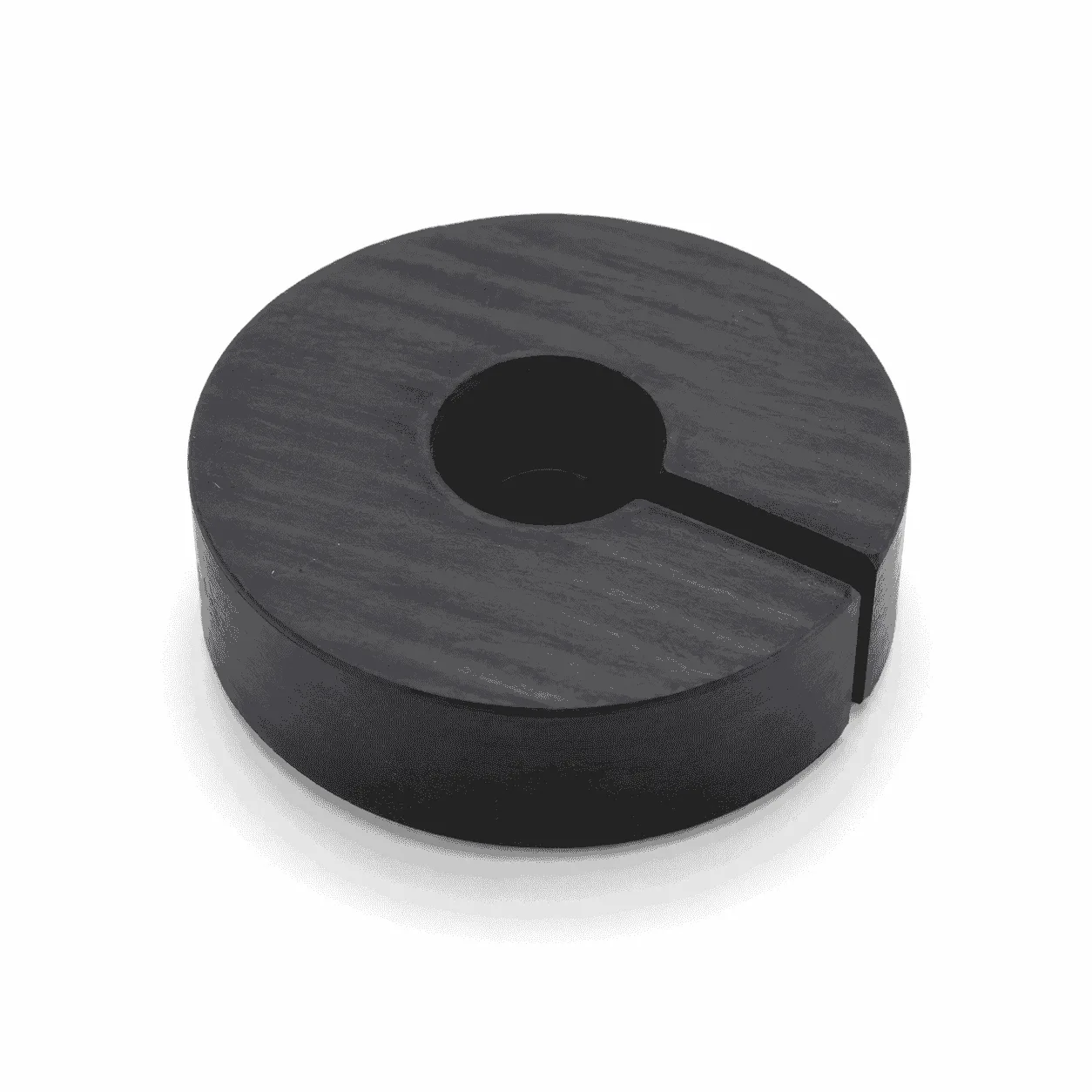
CNC尼龙偏心轮是一种采用PA6、PA66或MC尼龙材料,通过CNC车削、铣削、钻孔、镗孔和轮廓加工制造的机械传动零件。其轴孔中心与外圆几何中心之间设置一定偏心距离,当偏心轮围绕安装轴旋转时,外圆工作面与接触部件之间的距离会产生周期性变化。
利用这种结构,可以将驱动轴的旋转运动转换为推杆、滑块、压板、摆臂或其他执行部件的往复移动和周期性摆动。偏心轮也可用于调节设备间隙、改变压紧位置、辅助张紧或控制部件行程。
产品可根据二维图纸、三维模型、实物样品或设备安装数据生产。偏心轮外径、轮宽、偏心距、轴孔尺寸、键槽、轮毂、固定孔和工作面轮廓,均可结合设备转速、受力方向和运动行程进行加工。
CNC尼龙偏心轮的主要作用
偏心轮工作时,安装轴的旋转中心不会经过轮体外圆的几何中心。随着轮体旋转,外圆工作面会周期性靠近或离开与其接触的零件,从而形成规律的位移变化。
- 将旋转运动转换为往复直线运动;
- 推动滑块、压板、推杆或摆臂周期性移动;
- 调节机械部件之间的安装间隙;
- 辅助输送带、链条或其他传动件进行张紧;
- 控制设备的压紧、松开和间歇动作;
- 配合传感器或限位结构控制部件位置;
- 减少部分金属接触位置产生的摩擦和噪声;
- 作为磨损后便于拆卸和更换的传动零件。
偏心距与运动行程
偏心距是偏心轮的重要结构参数,通常指轴孔中心与轮体外圆几何中心之间的距离。偏心距会影响执行部件的位移范围、接触压力和运行状态。
偏心距过小,可能无法达到设备要求的推动或调节行程;偏心距过大,则可能增加冲击、驱动阻力和接触部件承受的载荷。因此,偏心距应根据设备原始结构、执行部件行程和驱动功率确定。
用于往复推动时,还需要结合接触件位置、弹簧回位方式、摆臂长度和设备安装角度确认实际行程。不能只根据偏心轮外径判断其运动范围。
尼龙材料的性能特点
尼龙是一类常用于制造齿轮、链轮、滚轮、轴套和机械传动件的工程塑料。有关该材料的基础信息,可以参考百度百科尼龙词条。
耐磨性能较好
偏心轮外圆工作面会与推杆、滚轮、滑块或压板反复接触。尼龙具有较好的耐磨性能,在载荷、转速和接触方式合理的情况下,可以减少工作面的摩擦磨损。
具有一定机械强度
PA6、PA66和MC尼龙具有一定的刚性与承载能力,可用于承受周期性压力、径向载荷和部分冲击。具体材料牌号及轮体尺寸,应根据偏心距、驱动扭矩、接触压力和运行频率确定。
抗冲击和韧性较好
设备启停或偏心轮推动执行部件时,工作面可能承受间歇冲击。尼龙具有一定韧性,可以吸收部分冲击能量,降低轮缘和轴孔附近出现脆裂的可能性。
有助于吸振降噪
采用尼龙工作面代替部分金属接触面,可以减少硬性碰撞和振动传递。在安装间隙、运行速度和接触压力合理的情况下,有助于降低设备运行异响。
有助于保护接触部件
尼龙表面硬度通常低于常用金属材料,可以在偏心轮与推杆、滑块或压板之间形成相对柔和的接触面,减少精加工表面出现划伤和硬性磨损的风险。
重量较轻且不易生锈
与相同体积的金属偏心轮相比,尼龙零件重量更轻,有利于降低旋转部件的部分惯性负担,也便于安装和维护。尼龙本体不会像普通碳钢一样因潮湿环境产生锈蚀。
需要了解尼龙原材料规格,可以查看站内的尼龙棒产品页面。
可加工的结构形式
不同设备的驱动轴、运动行程和安装空间不同,偏心轮通常需要根据实际装配关系加工。
- 整体式圆盘偏心轮;
- 带轮毂或加厚中心结构;
- 单偏心或多偏心组合结构;
- 圆柱形、台阶形及异形外轮廓;
- 圆孔、方孔、六角孔及其他异形轴孔;
- 键槽、销孔和紧定螺钉孔;
- 轴承安装位和轴套配合位;
- 尼龙轮体与金属轴套组合结构;
- 尼龙轮体与金属轮毂组合结构;
- 分体式、对开式及螺栓连接结构;
- 端面减重槽和加强台阶;
- 零位、旋转方向及安装角度标记。
对于需要传递较大扭矩、频繁正反转或轴孔位置受力集中的产品,可以采用金属轴套或金属轮毂增强结构。金属部件用于提高连接位置的强度,尼龙外圆则承担接触、推动和减振作用。
偏心轮与接触件的配合
偏心轮可以直接与推杆、滑块或摆臂接触,也可以通过轴承滚轮、从动轮或滚针结构传递运动。不同接触方式会影响摩擦阻力、磨损速度和设备运行噪声。
采用滑动接触时,需要控制工作面粗糙度、接触压力和润滑条件;采用滚动接触时,需要确认从动轮宽度、轴承状态和两者中心位置,避免局部偏载。
偏心轮的工作面不应长期只在边缘区域受力。如果接触位置过窄或安装角度偏差较大,容易造成轮体偏磨、执行部件卡顿和运动行程变化。
CNC加工工艺
尼龙偏心轮可根据尺寸和结构采用CNC车床、加工中心、四轴设备及专用偏心工装加工。常见流程包括材料下料、基准面加工、外圆粗加工、偏心孔定位、中心孔加工、轮廓精加工、键槽加工、钻孔、攻丝、倒角、去除毛刺和尺寸检验。
加工时需要建立统一的定位基准,准确控制外圆中心、轴孔中心及两者之间的偏心距离。对于带键槽、固定孔或零位标记的产品,还需要控制这些结构与偏心方向之间的角度关系。
尼龙具有一定吸水性和热胀冷缩特性,加工过程中需要合理控制装夹压力、刀具锋利度和切削温度。装夹力过大可能造成轴孔和外圆变形,影响偏心距及装配尺寸。
对于尺寸较大、轮毂较厚或结构不对称的产品,可以先完成粗加工并保留适当余量,待材料状态稳定后再进行精加工。
相关设备及加工能力可以查看站内的CNC塑料加工服务页面。
常见应用设备
CNC尼龙偏心轮适用于需要周期性推动、间歇动作、张紧调节和位置转换的机械结构,常见应用包括:
- 自动化装配生产线;
- 包装、封口和贴标机械;
- 输送设备张紧机构;
- 往复送料和推料装置;
- 机械夹具和工装治具;
- 印刷、纺织和轻工设备;
- 分拣、检测和定位机构;
- 农业机械及物料处理设备;
- 机械门体和开合装置;
- 需要将旋转运动转换为摆动或往复运动的位置。
尼龙偏心轮更适合中低速、轻载或中等载荷的机械结构。对于高速、高温、高扭矩及连续重载设备,应重新评估材料刚性、轴孔强度、工作面温升和长期变形情况。
加工前需要确认的参数
为了保证产品能够正确安装并实现预定运动,生产前建议提供以下资料:
- 完整的二维图纸或三维模型;
- 轮体外径、轮宽和总厚度;
- 轴孔中心与外圆中心之间的偏心距;
- 轴孔形状、孔径及配合公差;
- 轮毂、台阶和端面结构尺寸;
- 键槽、销孔和固定孔位置;
- 键槽与偏心方向之间的角度关系;
- 设备转速、旋转方向和启停频率;
- 执行部件所需行程及回位方式;
- 工作面承受的压力和冲击情况;
- 工作温度、湿度及接触介质;
- 是否需要金属轴套、轮毂或其他嵌件。
实物样品测绘注意事项
没有原始图纸时,可以根据旧偏心轮进行测量和建模。但长期运行后的样品可能已经出现外圆磨损、轴孔扩大、键槽变形及工作面偏磨,直接复制旧件尺寸可能影响新产品的运动行程。
进行实物测绘时,建议同时提供安装轴、接触件及设备原始行程。偏心距不能只通过磨损后的外圆尺寸估算,还需要结合轴孔中心、未磨损区域和设备装配关系进行确认。
如果产品带有键槽、销孔或零位标记,应记录其与偏心最高点、最低点之间的角度关系,避免新产品安装后运动方向发生变化。
质量检验内容
加工完成后,需要根据图纸检查轮体外径、轮宽、偏心距、轴孔、轮毂、台阶、键槽和固定孔位置。对于配合要求较高的产品,还应检查端面状态、轴孔圆度及偏心方向。
偏心距可以通过专用量具、坐标测量或回转检测方式确认。带有金属轴套和轮毂的产品,还需要检查嵌件位置、防转结构及装配牢固程度。
同时应检查产品表面是否存在明显裂纹、缺口和毛刺,工作面及孔口是否完成合理倒角。批量生产前可以先完成首件加工,通过尺寸检验和设备试装确认后,再进行后续生产。
安装与维护建议
安装前应清理驱动轴、键槽、推杆和相邻部件,检查金属表面是否存在毛刺、锈蚀和明显变形。偏心轮应按照标记方向安装,避免最高点、最低点或工作零位发生错误。
安装完成后,应先手动或低速转动偏心轮,检查执行部件行程是否符合要求,并确认工作面没有卡顿、干涉和异常偏磨。
设备使用过程中,应定期检查外圆工作面、轴孔、键槽及固定结构。如果出现运动行程变化、冲击增大、轮体晃动或运行异响,应及时检查产品磨损和安装状态。
选材与结构注意事项
尼龙具有耐磨、抗冲击和吸振降噪等特点,但不同牌号的刚性、吸水率、耐温性和尺寸稳定性存在差异。材料选择需要结合偏心距、轮体尺寸、转速、接触压力和连续运行时间确定。
当偏心距较大、轮体较薄或轴孔受力集中时,应适当增加轮毂厚度和中心连接强度。对于频繁启停、正反转或传递较大扭矩的结构,建议采用金属轴套或金属轮毂增强。
常见问题
可以根据旧偏心轮加工吗?
可以根据实物样品进行测绘,但需要先判断外圆、轴孔和键槽的磨损程度。建议同时提供安装轴、接触件和设备所需行程,以便恢复正确的偏心距。
偏心距可以按照设备行程确定吗?
可以结合执行部件行程、接触方式、回位结构和安装角度确定偏心距,但需要综合考虑运动机构的几何关系,不能只按照单一行程数值直接确定。
内部可以增加金属轴套吗?
可以根据扭矩和拆装要求增加金属轴套、金属轮毂或其他嵌件。组合结构需要设置可靠的防转和轴向固定方式。
可以加工键槽和紧定螺钉孔吗?
可以根据安装轴结构加工键槽、销孔、紧定螺钉孔和定位孔。加工前需要明确这些结构与偏心方向之间的角度关系。
尼龙偏心轮是否需要润滑?
是否需要润滑应根据接触方式、压力、转速和连续运行时间确定。采用滑动接触且摩擦发热明显时,应按照设备要求设置润滑方式。
是否适合小批量加工?
CNC加工不需要单独制造注塑模具,适合设备维修替换、样品验证、小批量生产和多种偏心距规格加工。
产品加工说明
CNC尼龙偏心轮适用于自动化设备、包装机械和输送装置中的往复推动、摆动转换、张紧调节及间隙控制位置。产品可根据设备图纸、实物样品和实际运行工况,对尼龙牌号、外径、偏心距、轴孔、键槽及金属嵌件结构进行确认,并按照最终技术要求完成加工和检验。