CNC Machined POM Gear

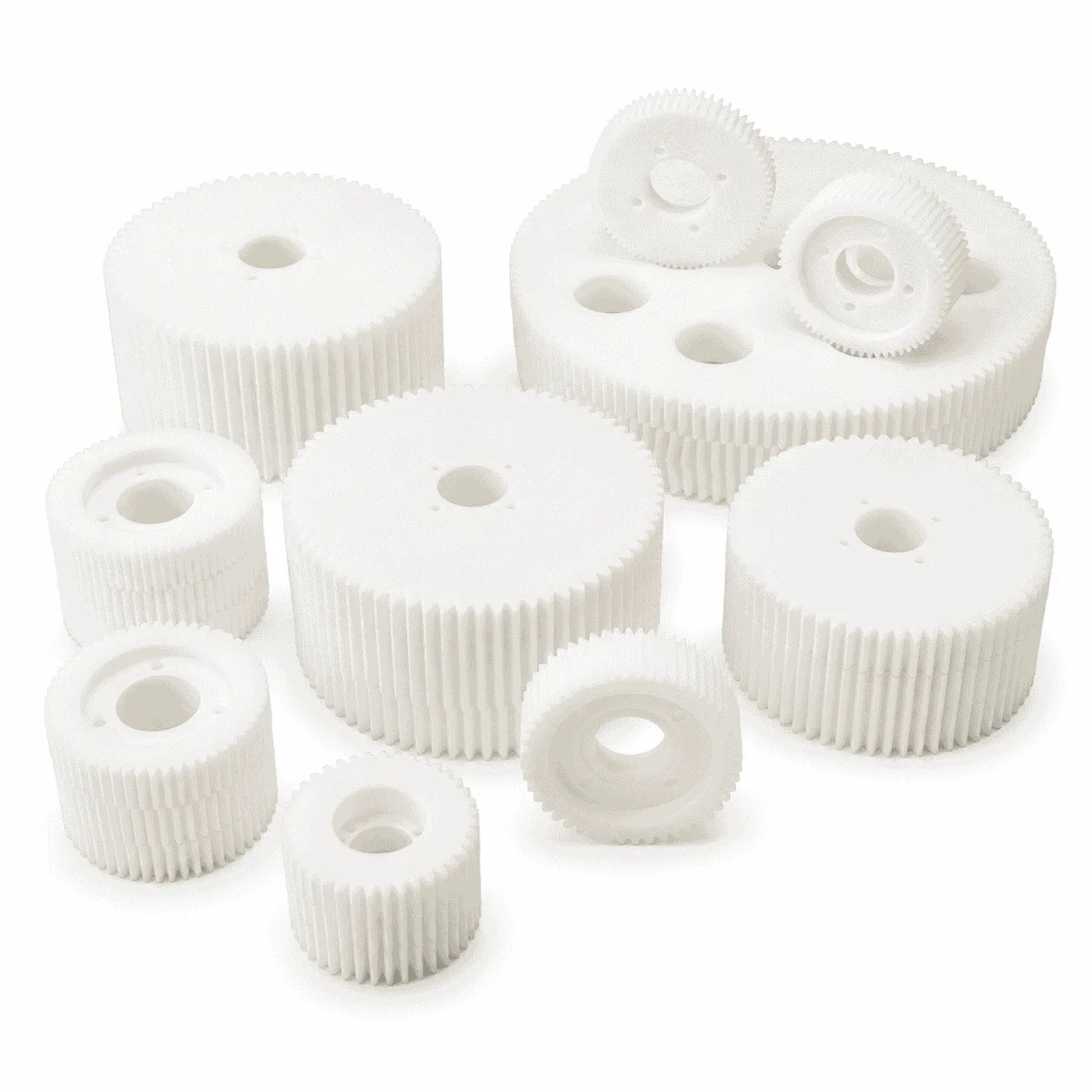
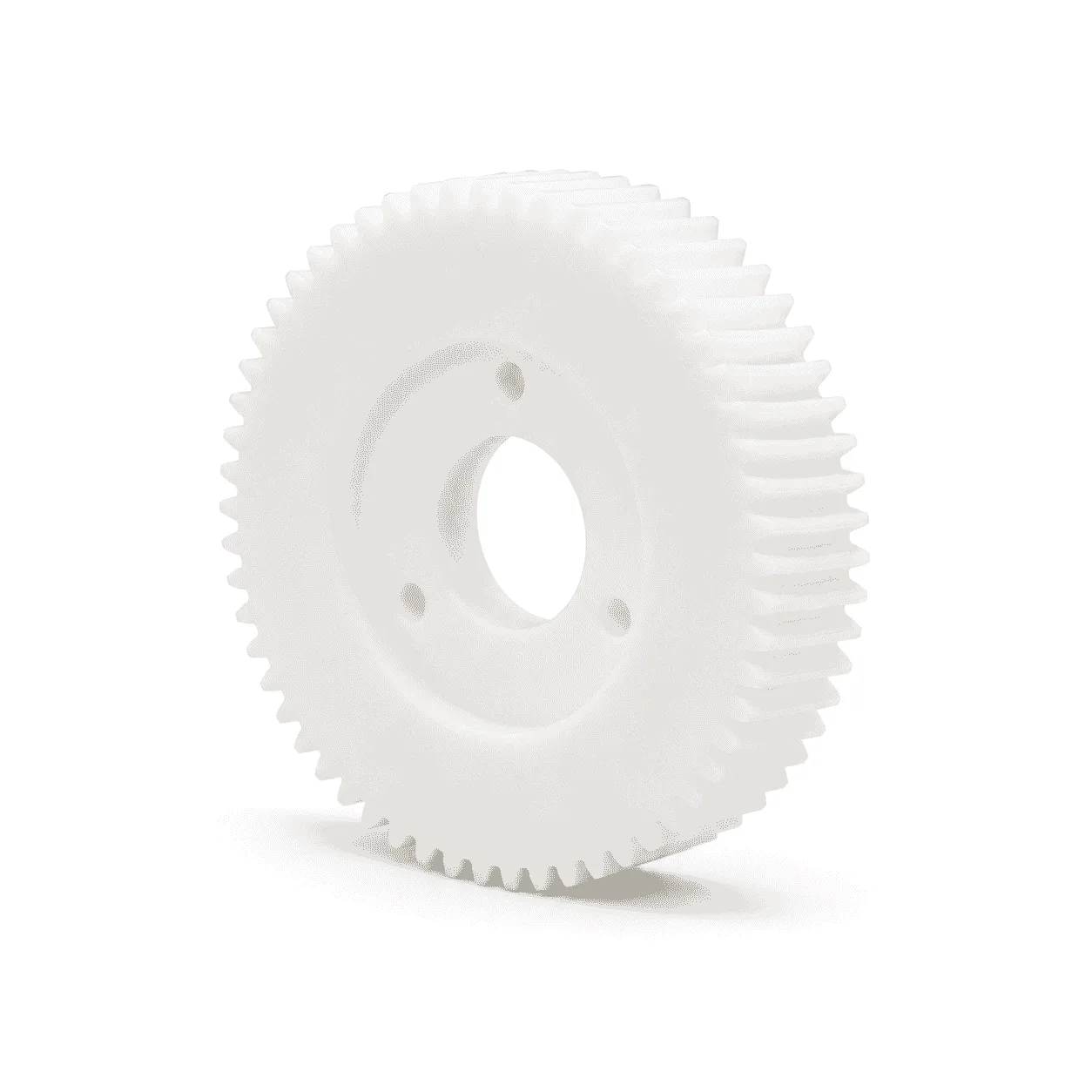
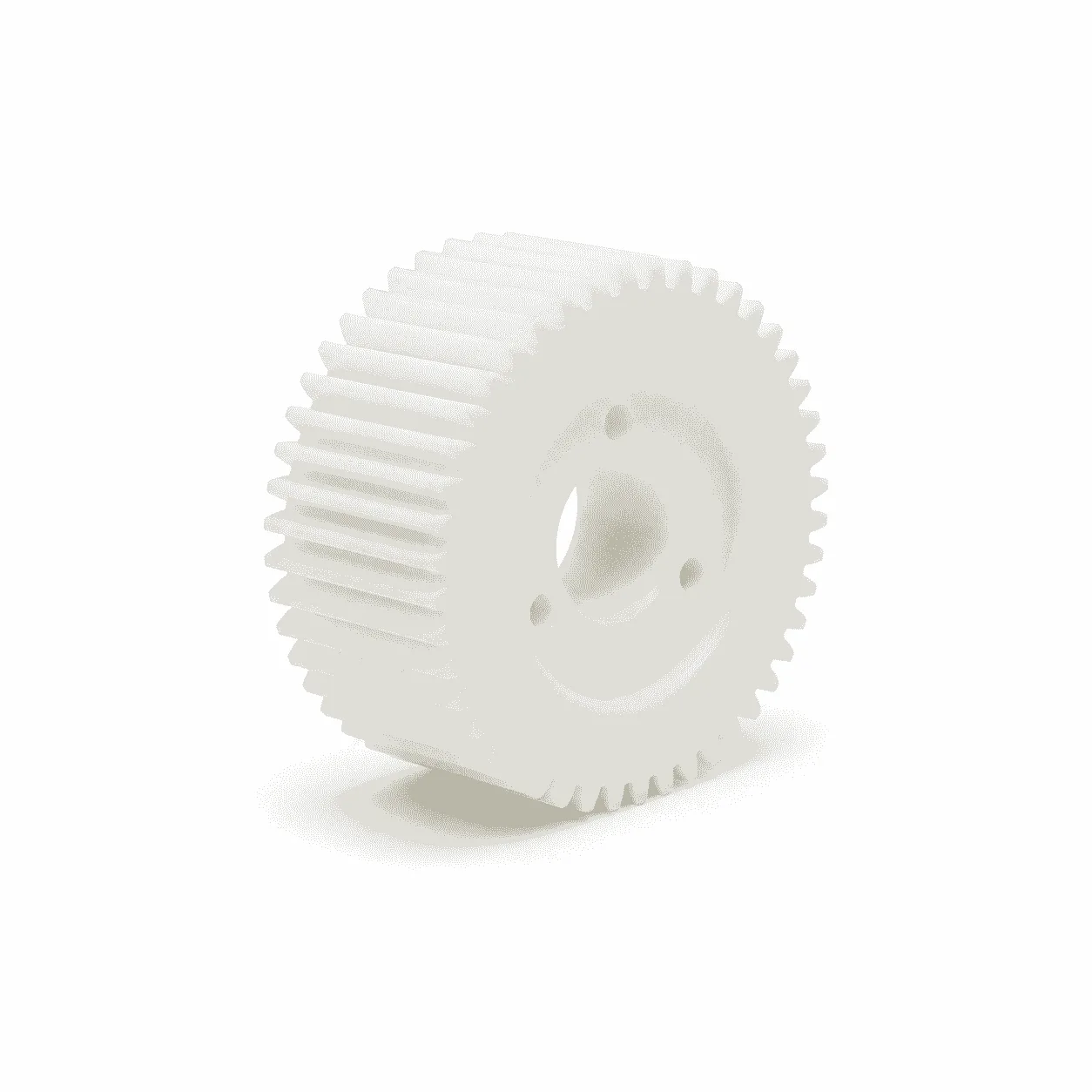
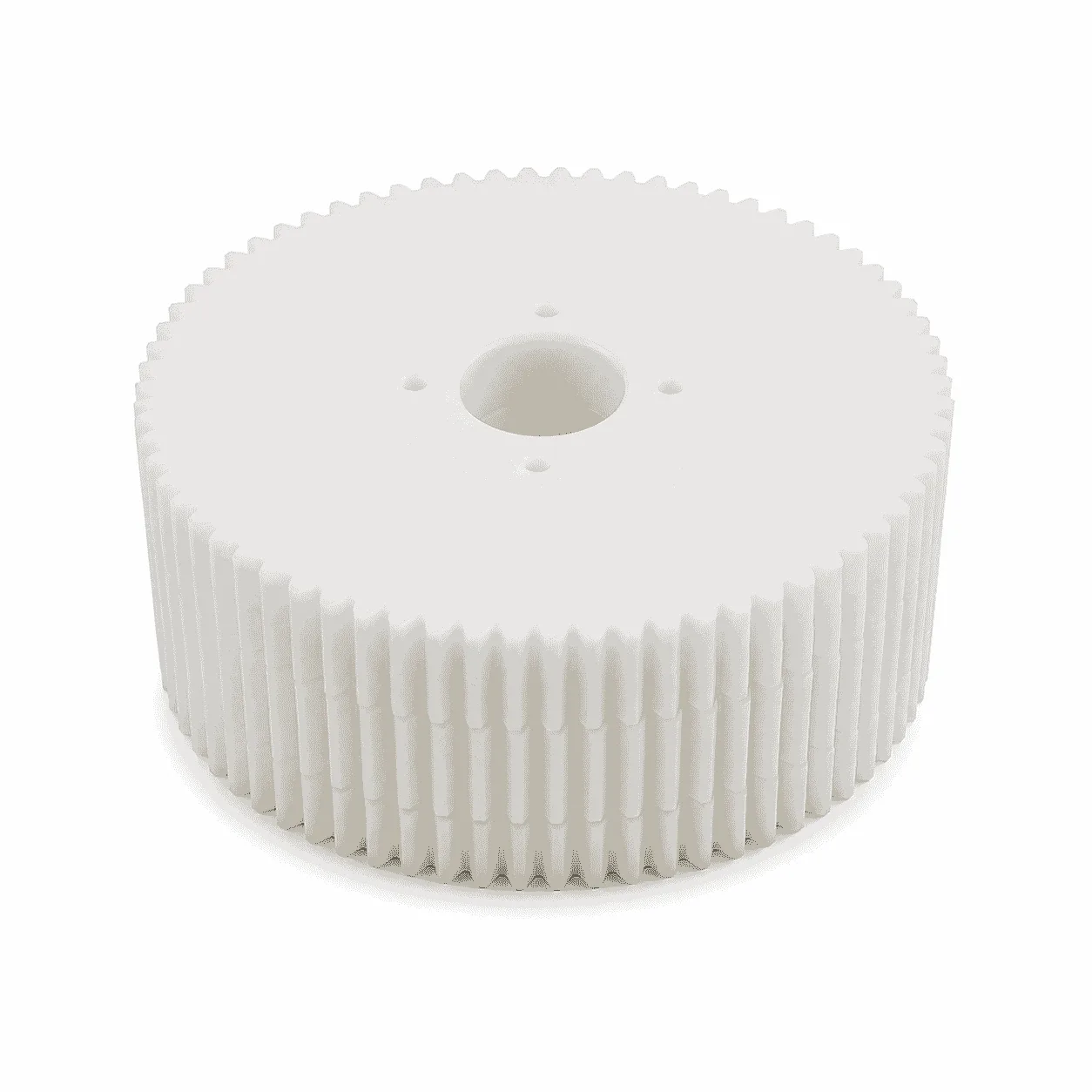
CNC Machined POM Gear is a custom acetal transmission component used for rotational motion, speed adjustment, torque conversion, positioning and mechanical synchronization in automation and industrial machinery.

Available in POM-C, POM-H and modified POM grades, with custom modules, tooth quantities, pressure angles, bores, hubs, keyways, mounting holes and compound gear structures manufactured according to drawings or physical samples.

category Brand:
Share :

Description

Product Description

CNC Machined POM Gear for Industrial Transmission Systems

CNC Machined POM Gear is a custom engineering plastic transmission component used to transfer rotational motion, torque and positioning movement between shafts in automation equipment and industrial machinery.

POM, also known as polyoxymethylene or acetal, provides a useful combination of rigidity, dimensional stability, low friction, wear resistance and machinability. These characteristics make it suitable for many moderate-load gear systems requiring reduced noise, lower component weight and protection of mating parts.

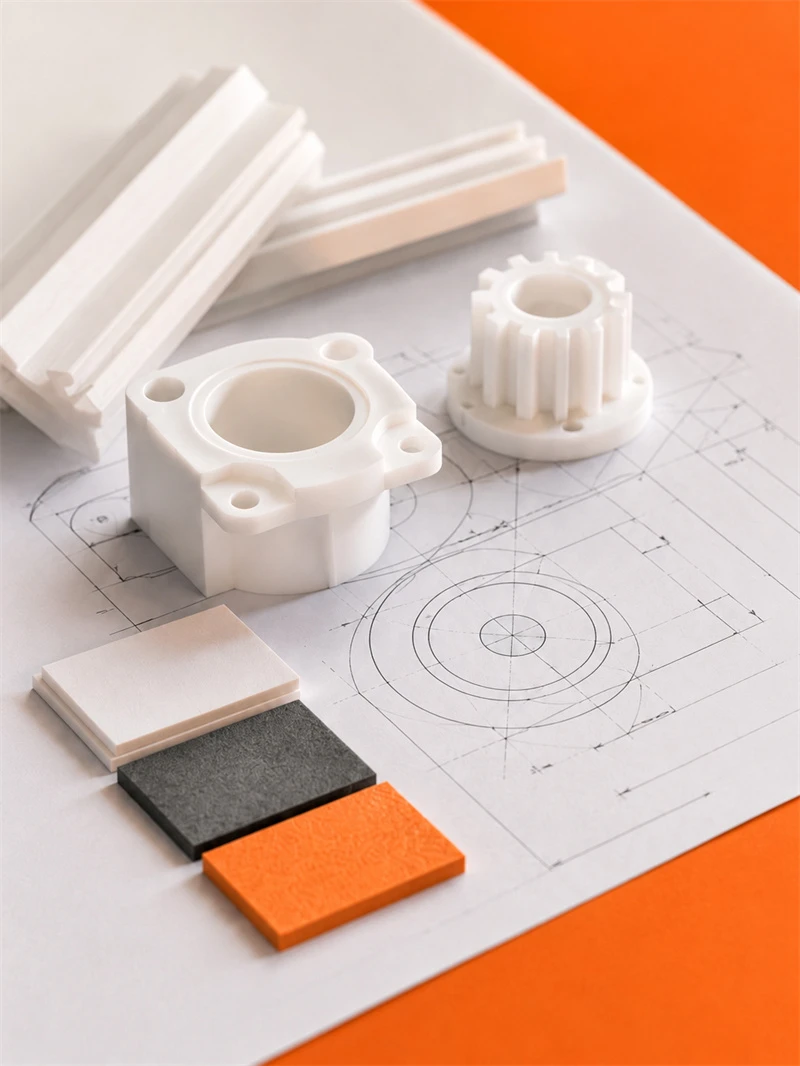
The gear module, number of teeth, pressure angle, outside diameter, pitch diameter, face width, central bore, hub, keyway and mounting holes can be manufactured according to technical drawings, physical samples and actual equipment operating conditions.

What Is a CNC Machined POM Gear?

A gear is a rotating machine component with teeth that mesh with another toothed component to transmit motion and mechanical power.

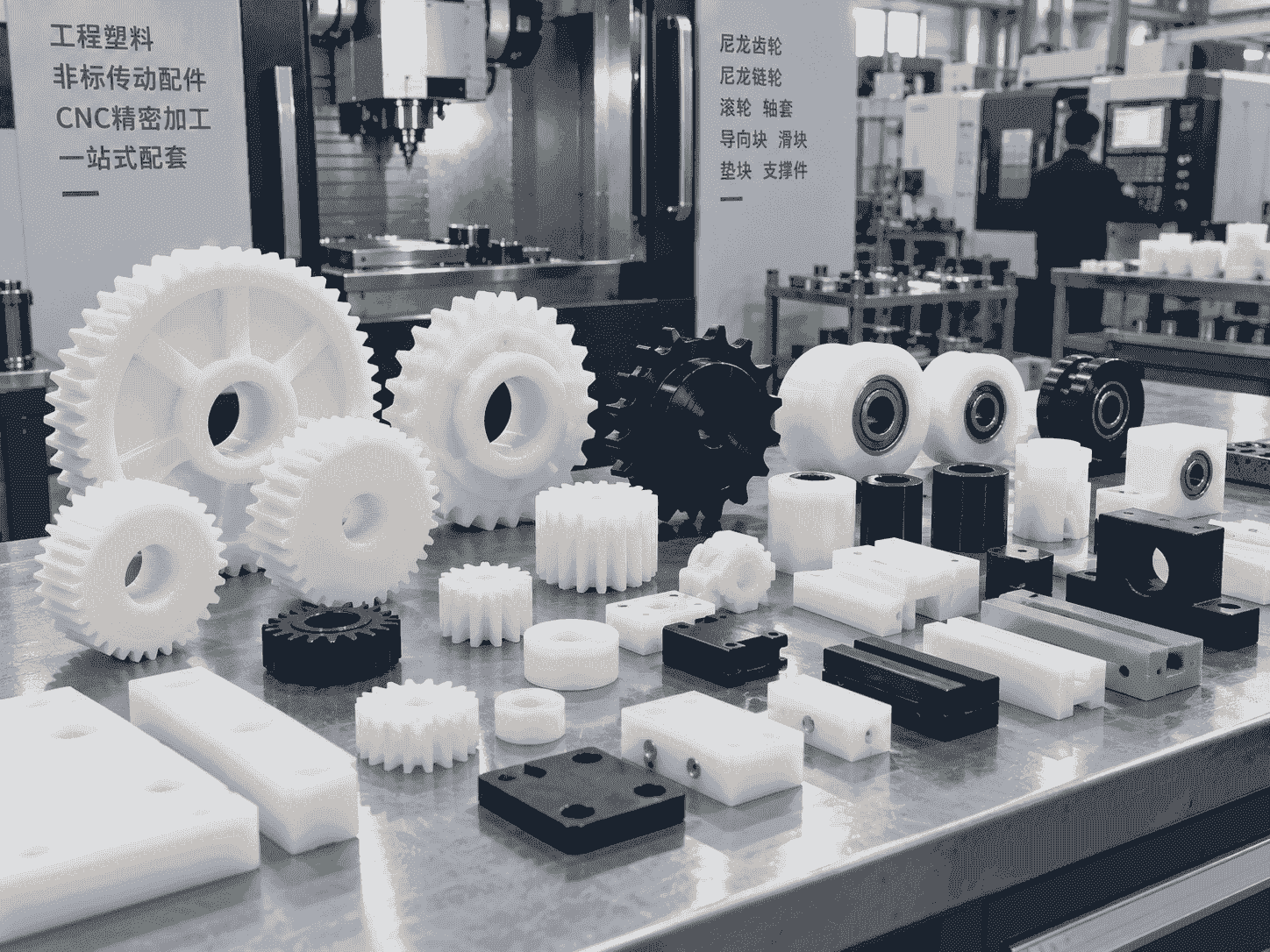
A CNC Machined POM Gear performs the same basic transmission function as a conventional metal gear but uses POM engineering plastic as the main material. It can be produced from POM sheet, plate, rod or tube blanks through CNC turning, milling, gear cutting, drilling, boring and finishing processes.

Unlike a standard molded gear, a CNC machined gear can be manufactured in small quantities or according to non-standard dimensions without developing a dedicated injection mold. This makes it suitable for equipment maintenance, prototype development, special machinery and replacement components.

Common Types of CNC Machined POM Gears

CNC Machined POM Gear components can be manufactured in different forms according to the transmission direction, operating speed, available space and mating structure.

  • POM spur gear: Uses straight teeth parallel to the shaft axis and is suitable for parallel-shaft transmission.
  • POM helical gear: Uses angled teeth for more gradual tooth engagement and selected low-noise transmission systems.
  • POM internal gear: Contains teeth on the inner circumference and is used in planetary or compact drive structures.
  • POM bevel gear: Transfers motion between intersecting shafts, depending on the designed tooth geometry.
  • POM rack and pinion: Converts rotary movement into linear movement or converts linear movement into rotation.
  • POM worm wheel: Works with a corresponding worm shaft for selected reduction and positioning mechanisms.
  • POM compound gear: Combines two or more gear sections with different diameters or tooth quantities.
  • POM timing pulley: Uses a toothed belt profile rather than a conventional involute gear profile.

The gear type must be matched to the corresponding mating component. Spur gears, helical gears, worm wheels and timing pulleys are not interchangeable even when their outside diameters are similar.

Main Functions of a CNC Machined POM Gear

Rotational Motion Transmission

The teeth of the POM gear engage with another gear to transmit rotary movement from a driving shaft to a driven shaft.

Speed Adjustment

Using gears with different tooth quantities changes the rotational-speed ratio between the input and output shafts. The actual ratio depends on the tooth numbers of the mating gears.

Torque Conversion

A gear pair can increase output torque while reducing rotational speed, or increase speed while reducing available torque. Gear dimensions and material strength must be matched to the required working load.

Rotation Direction Change

External gears rotating in direct contact normally turn in opposite directions. Additional intermediate gears can be used to modify the final direction of rotation.

Positioning and Indexing

POM gears can be used in intermittent movement, indexing mechanisms and positioning assemblies where repeatable angular movement is required.

Motion Synchronization

Matched gears can synchronize shafts, rollers, feeding components or mechanical stations within automated equipment.

Replaceable Wear Protection

A POM gear can act as a replaceable transmission component that helps reduce direct wear on more expensive shafts, motors or metal gear assemblies.

Why Use POM for Mechanical Gears?

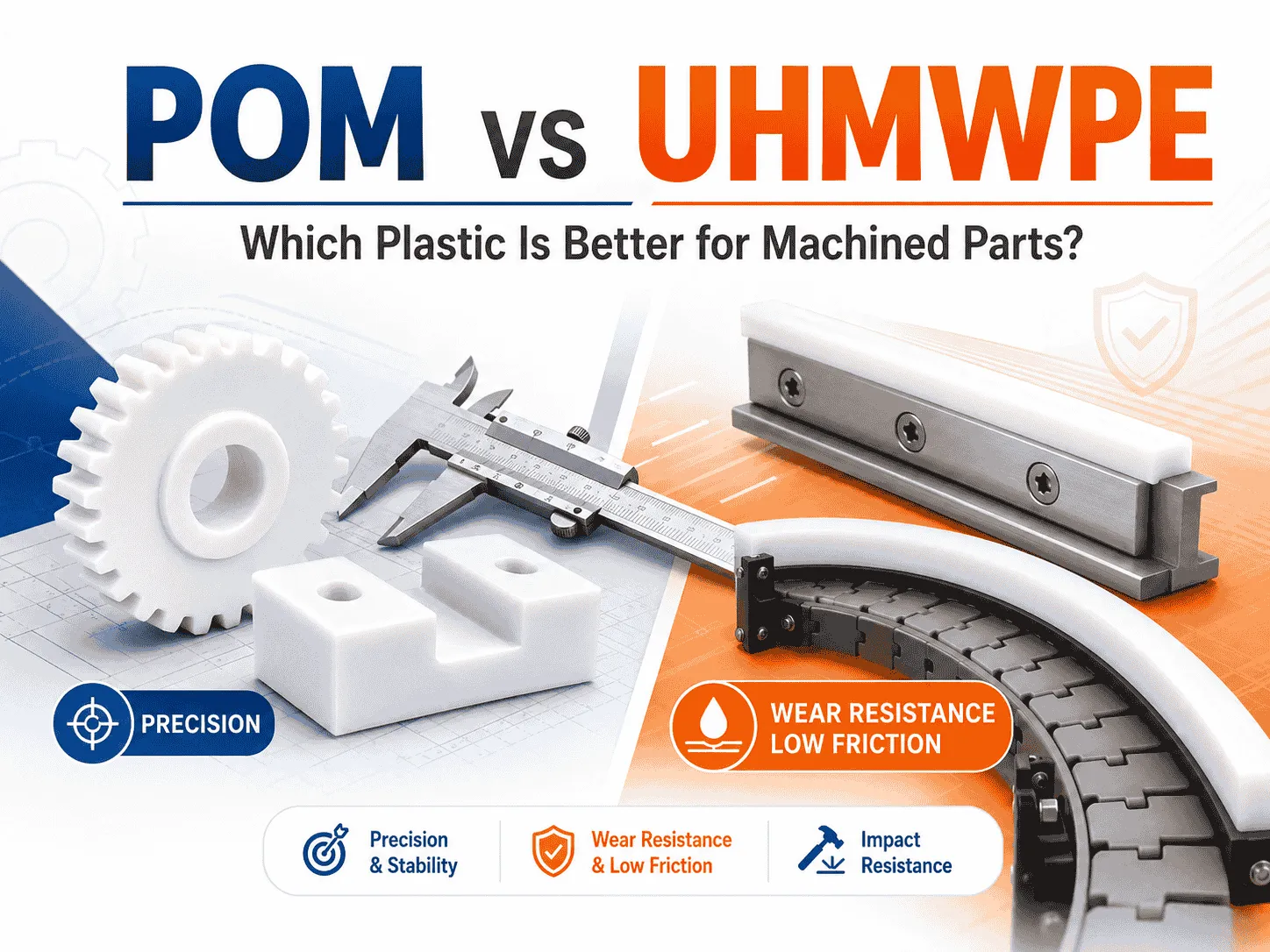
POM is an engineering thermoplastic used for precision components requiring stiffness, low friction and dimensional stability. General material information is available from Wikipedia’s explanation of polyoxymethylene.

Available POM material products can be found in our Polyoxymethylene POM Acetal Sheet category.

Good Dimensional Stability

POM maintains relatively stable dimensions under normal industrial conditions. This helps maintain tooth profile, bore size, center distance and meshing clearance in properly designed transmission systems.

High Rigidity

POM offers higher rigidity than many softer general-purpose plastics. The gear teeth can maintain their intended profile under suitable mechanical loads.

Low-Friction Tooth Contact

The material provides useful sliding performance against many plastic and metal mating surfaces. This can help reduce tooth-contact resistance in suitable applications.

Wear Resistance

POM is suitable for repeated sliding and rolling contact. Actual gear life depends on transmitted torque, rotational speed, tooth geometry, lubrication, alignment and operating temperature.

Reduced Operating Noise

POM gear teeth produce less harsh contact noise than many metal-to-metal gear combinations. This makes the material useful in equipment where noise reduction is important.

Lower Rotating Weight

POM gears are lighter than comparable solid steel gears. Reduced rotating mass can make installation easier and may reduce inertia in selected mechanisms.

Corrosion Resistance

POM does not rust like ordinary carbon steel and can be used in many general industrial environments involving humidity and routine equipment contamination.

Accurate CNC Machining

POM can be machined into gear teeth, hubs, bores, keyways, mounting holes, counterbores and compound profiles. This is useful for non-standard gears and replacement parts.

Electrical Insulation

Standard unfilled POM is electrically insulating and can help isolate mechanical components in selected electrical or automation equipment.

POM-C and POM-H Gear Material Options

POM-C Copolymer Gear

POM-C is commonly selected for general industrial gears because it offers balanced dimensional stability, machinability and resistance to many routine industrial environments.

Typical uses include automation gears, conveyor adjustment gears, instrument gears, feeding-machine gears and replacement transmission components.

POM-H Homopolymer Gear

POM-H can be considered where higher stiffness, strength or fatigue performance is required. The final choice should also consider component thickness, operating temperature, impact and chemical exposure.

The material type cannot be identified solely by whether the gear is white, black, blue or another color. The exact polymer grade should be confirmed through production specifications or material documentation.

Benefits of CNC Machined POM Gears

  • Lower transmission noise: Plastic tooth engagement reduces harsh metal contact.
  • Reduced component weight: Large gears are easier to carry, install and replace.
  • Good machining accuracy: Tooth profiles, bores and mounting structures can be produced according to drawings.
  • Wear-resistant operation: POM is suitable for repeated tooth engagement under properly designed loads.
  • Corrosion resistance: The gear does not rust like ordinary steel.
  • Reduced mating-part damage: POM can provide a less aggressive contact surface than hardened metal.
  • Flexible custom production: Non-standard gears can be manufactured without dedicated injection molds.

Problems Solved by POM Gears

A correctly designed CNC Machined POM Gear can help address common transmission-system problems, including:

  • High noise from metal-to-metal tooth engagement
  • Corrosion of ordinary steel gears in humid environments
  • Excessive weight of large metal transmission components
  • Surface damage to mating gears and shafts
  • Difficulty obtaining discontinued replacement gears
  • High tooling cost for small-quantity molded gears
  • Frequent lubrication requirements in selected low-load mechanisms
  • Electrical conductivity between mechanical assemblies
  • Need for custom bores, hubs, keyways or mounting holes
  • Long maintenance downtime caused by unavailable spare parts

The actual improvement depends on gear design, transmitted load, center distance, rotational speed, operating temperature and installation accuracy.

Typical Applications

CNC Machined POM Gear components can be used in different types of automation equipment and industrial machinery.

Typical applications include:

  • Automated assembly equipment
  • Packaging and filling machines
  • Conveyor adjustment mechanisms
  • Printing and paper-processing machinery
  • Food-processing equipment using compliant material grades
  • Textile machinery
  • Sorting and feeding systems
  • Robotic positioning assemblies
  • Instrument and meter mechanisms
  • Electrical equipment drive components
  • Medical and laboratory equipment
  • Sliding-door transmission mechanisms
  • Pump and valve adjustment systems
  • Machine-tool auxiliary equipment
  • Replacement gears for discontinued machinery

The exact application should be confirmed according to transmitted torque, rotational speed, duty cycle and mating-gear material.

Custom Gear Design Options

Each CNC Machined POM Gear can be manufactured according to the required transmission ratio, shaft structure and installation conditions.

Available custom options include:

  • Gear module or diametral pitch
  • Number of teeth
  • Pressure angle
  • Outside diameter
  • Pitch diameter
  • Root diameter
  • Gear face width
  • Spur or helical tooth form
  • Helix angle and direction
  • Central bore diameter
  • Straight bore, stepped bore or tapered bore
  • Keyway and spline structures
  • Hub diameter and hub length
  • Mounting holes and locating holes
  • Single gear or compound gear construction
  • Metal hub or threaded insert
  • Black, natural white or other colors
  • Part-number and rotation-direction markings

Important Gear Parameters

The following parameters should be confirmed before machining a CNC Machined POM Gear:

  • Module: Determines the basic tooth size in a metric gear system.
  • Number of teeth: Affects gear diameter and transmission ratio.
  • Pressure angle: Must match the mating gear for proper tooth engagement.
  • Center distance: Controls the installation relationship between two meshing gears.
  • Backlash: Provides operating clearance between mating tooth surfaces.
  • Face width: Influences tooth-contact area and load distribution.
  • Bore tolerance: Determines the fit between the gear and shaft.
  • Runout: Affects rotational stability and tooth engagement.
  • Tooth direction: Must be confirmed for helical and worm-related components.

A gear should not be reproduced using only the outside diameter. Tooth count, module, pressure angle and mating-gear information are also required.

CNC Machining Capabilities

Our CNC Plastic Machining</a service supports POM gears manufactured according to 2D drawings, 3D models and physical samples.

General information about programmed machine-tool operation is available from Wikipedia’s explanation of computer numerical control.

Available machining operations include:

  • Blank cutting and material preparation
  • CNC turning of gear blanks and hubs
  • Outside-diameter and face machining
  • Spur-gear tooth machining
  • Helical-tooth machining for suitable designs
  • Central bore drilling and boring
  • Stepped bore machining
  • Keyway and spline machining
  • Mounting-hole and locating-hole machining
  • Counterbore and countersink machining
  • Edge chamfering and tooth deburring
  • Metal hub and insert installation
  • Part numbering and batch identification
  • Prototype and repeat-batch production

Machining Considerations

POM is suitable for precision machining, but gear blanks still require suitable clamping, cutting parameters and dimensional inspection.

Important machining considerations include:

  • Using sharp cutting tools
  • Providing sufficient support for large-diameter blanks
  • Avoiding excessive clamping force
  • Controlling heat during continuous machining
  • Maintaining consistent tooth-cutting datums
  • Controlling bore-to-tooth concentricity
  • Preventing burrs at tooth edges
  • Avoiding excessive variation in wall thickness
  • Allowing dimensional stabilization before final inspection when required

Large gears, thin gear webs and wide differences between the hub and rim thickness may require additional machining steps to reduce deformation.

Production from Physical Samples

When the original technical drawing is unavailable, a replacement CNC Machined POM Gear can be produced from an existing physical sample.

A worn gear should not be copied directly without checking the original tooth geometry. Reverse-engineering inspection should include:

  • Number of teeth
  • Gear module or diametral pitch
  • Pressure angle
  • Original outside and root diameters
  • Tooth thickness before wear
  • Face width
  • Central bore and hub dimensions
  • Keyway size and position
  • Tooth wear direction
  • Mating-gear dimensions
  • Required center distance and backlash

Providing both the original gear and its mating gear can improve tooth-profile verification and reduce installation problems.

Quality Inspection

Important inspection items for a CNC Machined POM Gear include:

  • Outside diameter
  • Root and pitch-related dimensions
  • Number of teeth
  • Gear module and pressure angle
  • Tooth thickness and spacing
  • Gear face width
  • Central bore diameter
  • Hub dimensions
  • Keyway width and depth
  • Bore-to-tooth concentricity
  • Axial and radial runout
  • Mounting-hole position
  • Tooth-edge burr condition
  • Batch dimensional consistency

Where possible, completed gears should be checked with the corresponding mating gear, inspection gauge or gear-measuring equipment before delivery.

Installation Recommendations

  • Confirm the gear number and installation position.
  • Clean the shaft, bore and mating gear before assembly.
  • Check that the module and pressure angle match the mating gear.
  • Align the gear correctly with the shaft and keyway.
  • Avoid striking the POM gear directly with a metal hammer.
  • Use suitable washers, hubs or inserts to distribute fastening pressure.
  • Confirm the center distance and operating backlash.
  • Rotate the mechanism manually before powered operation.
  • Begin testing at a low speed and low load.
  • Check for abnormal noise, vibration, heat and uneven tooth contact.
  • Inspect the gear regularly for wear, cracks and loose fasteners.

Operating Limitations

The load capacity of a CNC Machined POM Gear cannot be determined from the material name or outside diameter alone. It is influenced by tooth module, face width, transmitted torque, speed, temperature, lubrication, duty cycle and impact load.

POM gears are normally better suited to moderate loads and controlled operating temperatures than to extremely high torque, severe shock or continuously elevated temperatures.

Strong acids, oxidizing chemicals, high-temperature steam and unsuitable cleaning agents should be evaluated before selecting POM for the application.

High-speed or heavily loaded gears may require a metal hub, wider tooth face, larger module, additional shaft support or another gear material.

Food-Contact Considerations

The white appearance of a POM gear does not prove that it is food-contact compliant. Suitability depends on the exact resin grade, additives, manufacturing records and required compliance documentation.

For gears used in food, beverage or pharmaceutical equipment, the following information should be confirmed:

  • Whether contact is direct or indirect
  • Type of product or food
  • Operating and cleaning temperature
  • Cleaning and sterilization method
  • Compatibility with cleaning chemicals
  • Target country or market
  • Required material declarations and test reports

Product Summary

CNC Machined POM Gear is a custom engineering plastic transmission component used to transfer rotational motion, adjust speed, convert torque and synchronize mechanical movement.

POM-C, POM-H and modified acetal materials can be selected according to the required stiffness, wear resistance, dimensional stability, operating load and environmental conditions.

Gear module, tooth quantity, pressure angle, outside diameter, face width, central bore, hub, keyway, mounting holes and compound structures can be manufactured according to drawings, physical samples and actual equipment requirements.

Quality Control

Quality Control and Delivery Standards

Drawing & Material Check

Check drawings for full specifications and confirm materials according to service conditions to prevent product defects.

Machining Quality Control

Inspect all key processing steps and fully verify dimensions, holes, grooves and fitting surfaces.

Finishing & Batch Control

Deburr, chamfer and clean products for easy installation. Ensure uniform quality among batch products.

Packaging & Delivery

Choose appropriate packaging solutions based on product features to protect goods from collision, deformation and mixing during transit.

Processing Quality Control of Engineering Plastics Parts

Unlike metal parts, engineering plastic components still require strict control over dimensions, holes, edges, surface, materials and assembly performance for equipment use.

application

Applications for Engineering Plastic Parts

Engineering plastic parts suit friction, guide, support, buffer, anti-corrosion and insulation areas. We supply UHMWPE, POM, PA, PP/PE components for conveyor, food, mining, machinery, chemical and cable systems, with custom OEM service available.

Our Blog

Latest News & Knowledge

Stay updated with our latest industry insights, company updates and featured articles.

We Love to Hear From You

Need UHMWPE sheets & custom plastic machined/OEM parts?Send specs & material needs, free quote within 24h.