Heavy Duty HDPE Oilfield Rig Mats
Heavy Duty HDPE Oilfield Rig Mats are designed to create stable temporary access routes over mud, sand, soft soil, grass, gravel, and other difficult ground conditions. Manufactured from durable high-density polyethylene, these mats provide a practical solution for oilfields, pipeline projects, energy operations, equipment access routes, logistics areas, and temporary industrial roads.
The mats help spread vehicle and equipment loads across a wider surface area, reducing direct pressure on soft ground and helping maintain a more reliable travel route. They can be used for trucks, service vehicles, lifting equipment, pipeline support machinery, and other heavy equipment that needs temporary access across unstable terrain.
Compared with traditional steel road plates, HDPE mats are easier to transport, place, remove, stack, and reuse. They do not rust and have low water absorption, making them particularly suitable for wet, muddy, and outdoor operating conditions.
Typical Sizes of Heavy Duty HDPE Oilfield Rig Mats
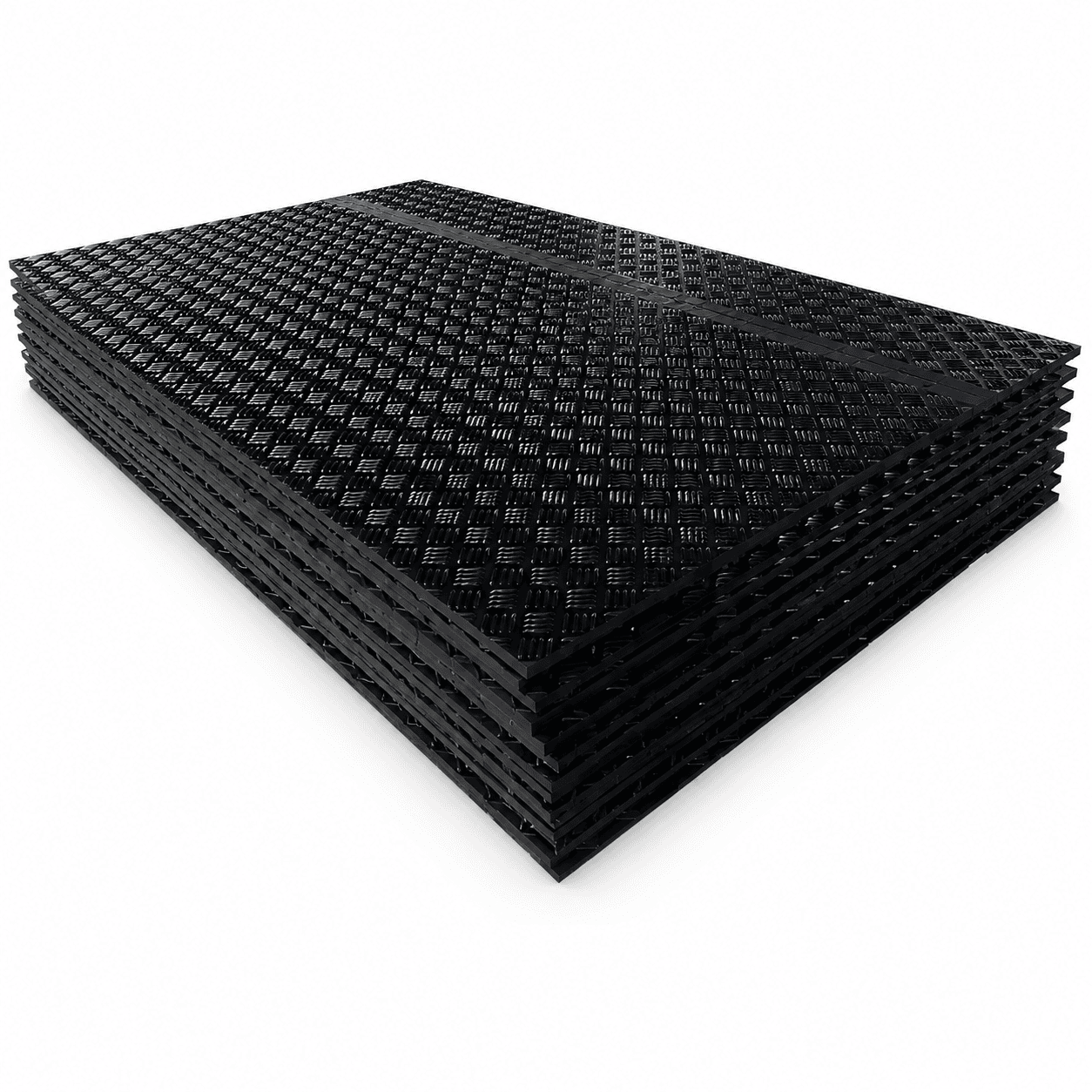
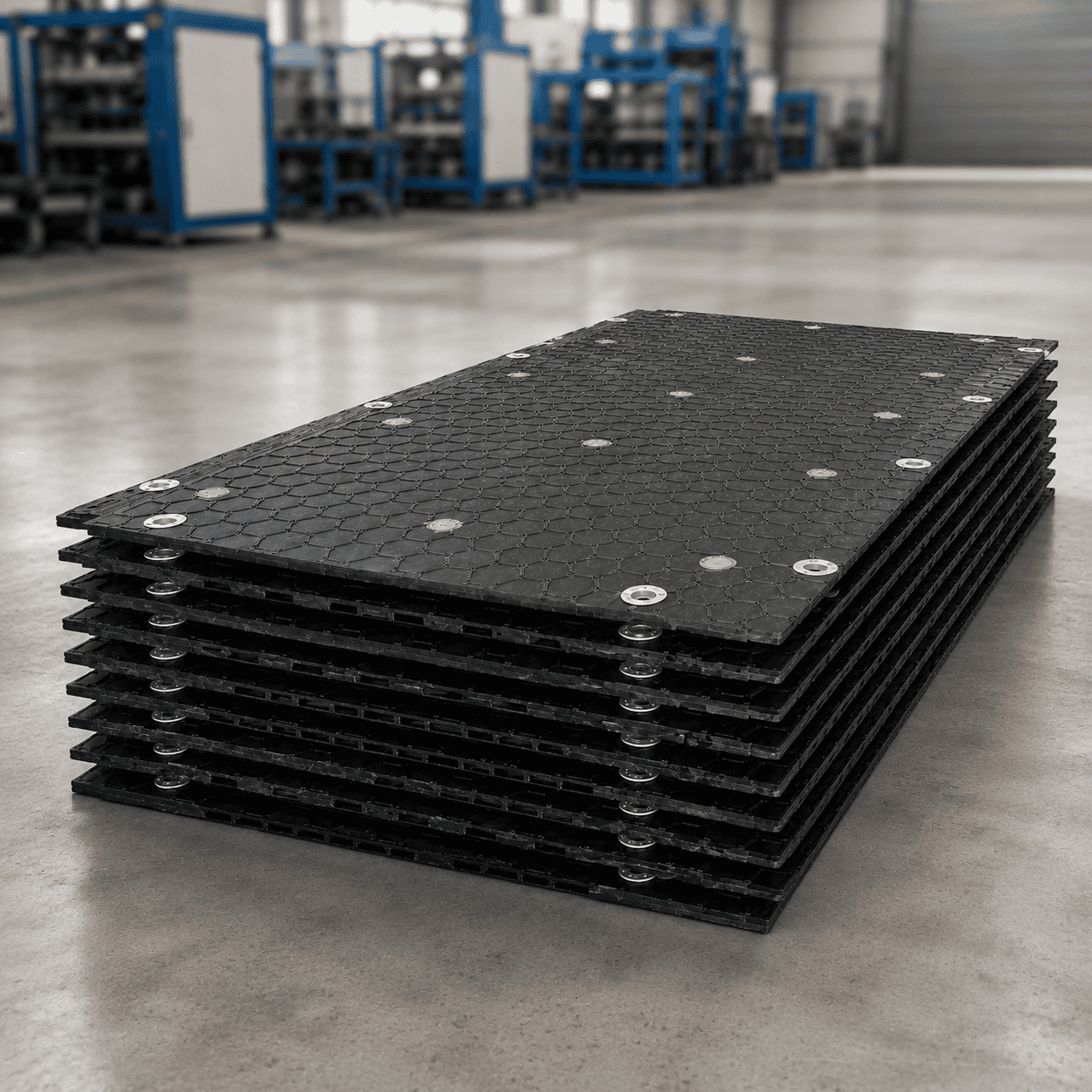
A commonly supplied size for Heavy Duty HDPE Oilfield Rig Mats is approximately 2440 × 1220 mm (8 × 4 ft). Common thickness options include 12.7 mm, 15 mm, and 20 mm. The correct thickness should be selected according to vehicle type, axle load, ground conditions, traffic frequency, and project requirements.
Typical specifications include:
- Standard size: 2440 × 1220 mm
- Common thickness: 12.7 mm, 15 mm, or 20 mm
- Typical weight: approximately 38–55 kg per mat depending on thickness
- Material: High Density Polyethylene (HDPE)
- Standard color: Black
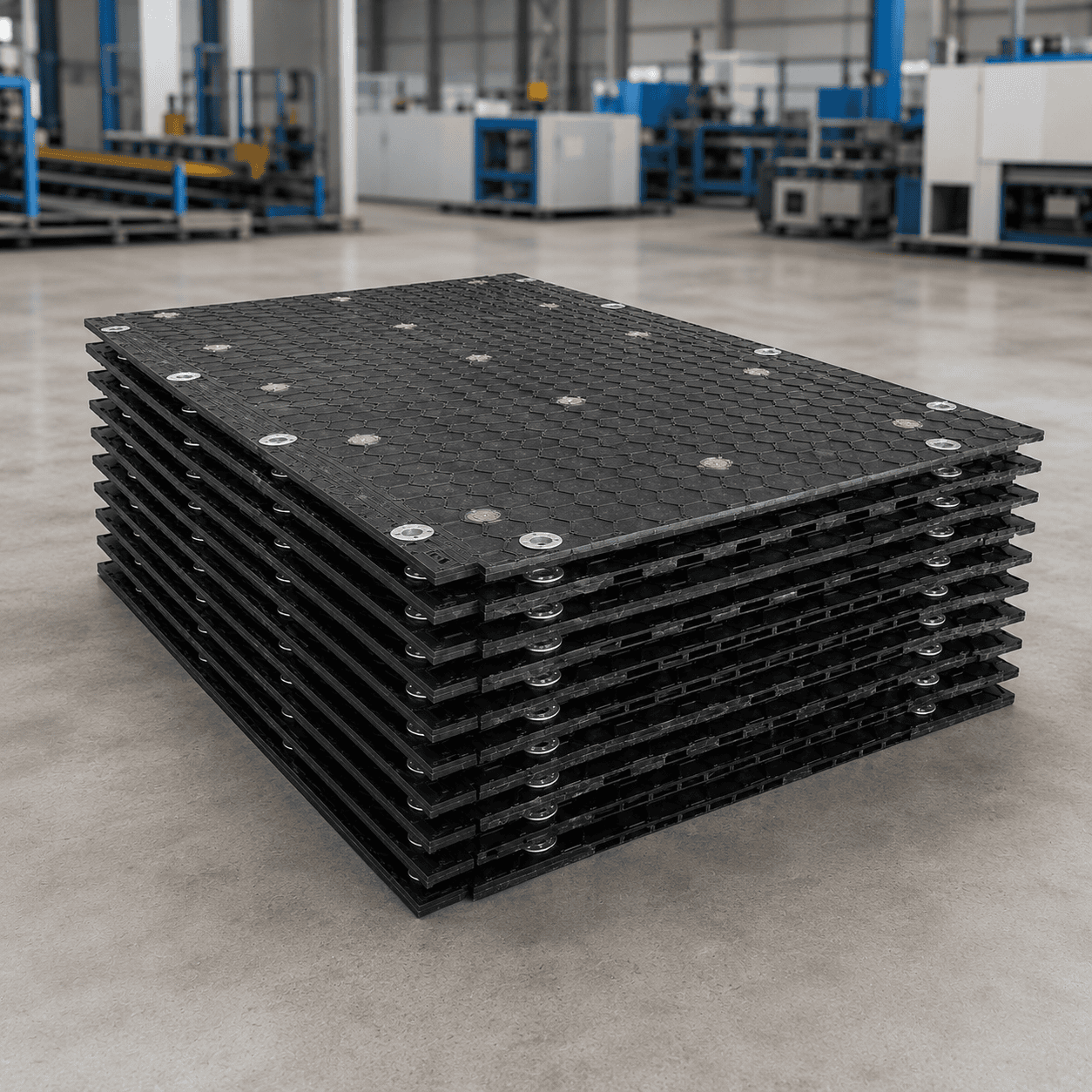
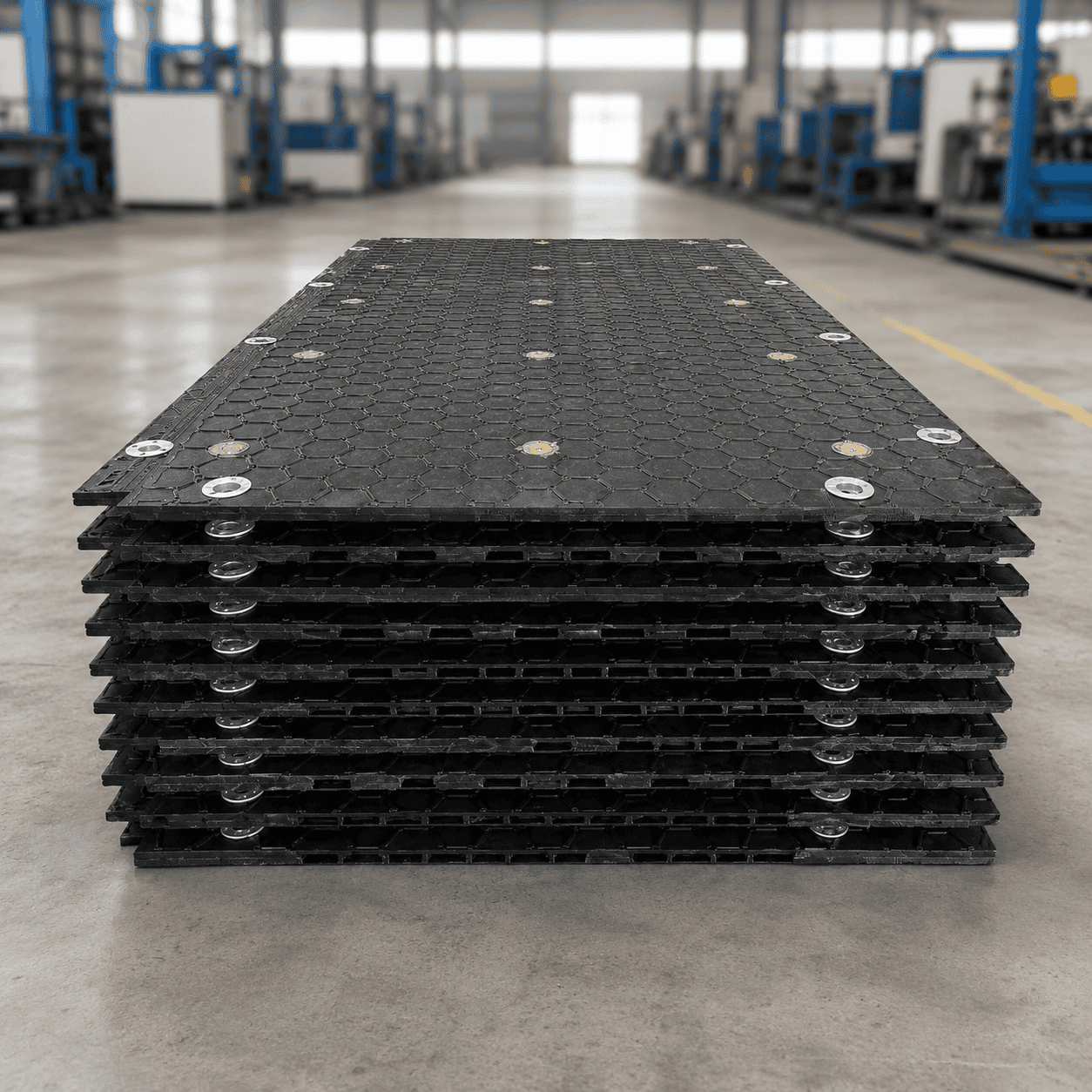
- Surface: Raised anti-slip traction pattern
- Connection method: Metal or engineered plastic connectors
- Typical operating temperature: approximately -40°C to +80°C depending on material formulation
Other dimensions and structural configurations may be available for specific access systems. Final mat size, thickness, weight, connector arrangement, and installation method should be selected according to actual project conditions.
Durable HDPE Material for Demanding Access Conditions
The HDPE material used for these mats provides a useful combination of toughness, impact resistance, wear resistance, corrosion resistance, and low water absorption. These characteristics make Heavy Duty HDPE Oilfield Rig Mats suitable for repeated outdoor use where access surfaces may be exposed to water, mud, changing weather, and frequent vehicle traffic.
Unlike steel plates, HDPE does not rust. Unlike traditional timber mats, it does not absorb large amounts of moisture. The material can also tolerate minor ground movement while maintaining a stable access surface when the mats are correctly installed.
For additional information about the basic properties of the material, you can read this external resource about polyethylene material information.
Anti-Slip Surface for Vehicle Traction
The upper surface features a raised traction pattern designed to improve contact between tires and the mat. This structure is particularly useful when vehicles travel across wet soil, mud, sand, grass, or other surfaces where wheel slip may become a problem.
The textured surface helps provide a more reliable route for industrial traffic. Depending on the product design, both sides of the mat may use different traction patterns to improve tire grip and ground contact.
Proper mat installation remains important. The supporting ground should be inspected before installation, and severe holes, sharp objects, or large unsupported gaps should be treated before heavy vehicles begin using the temporary route.
Connected Temporary Road System
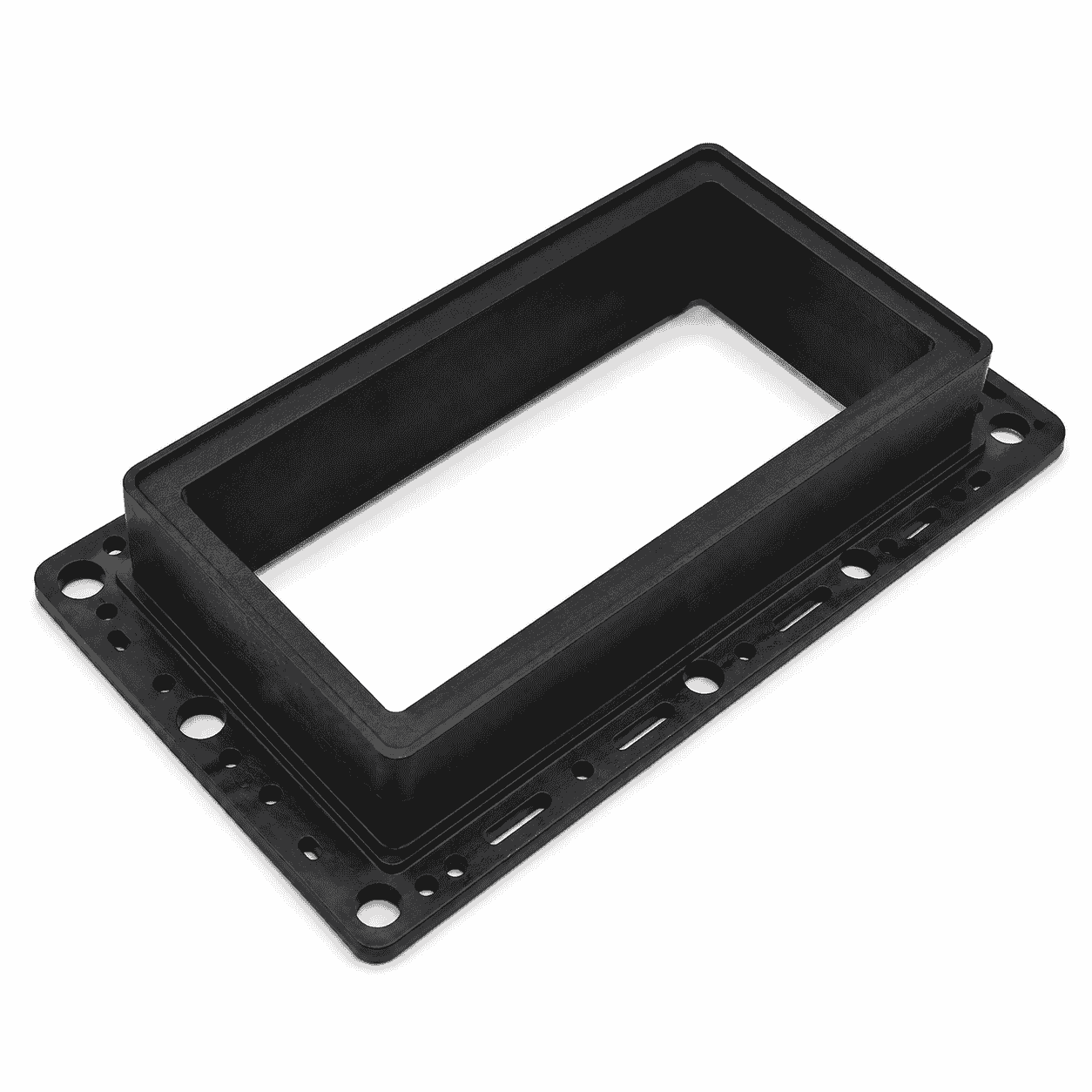
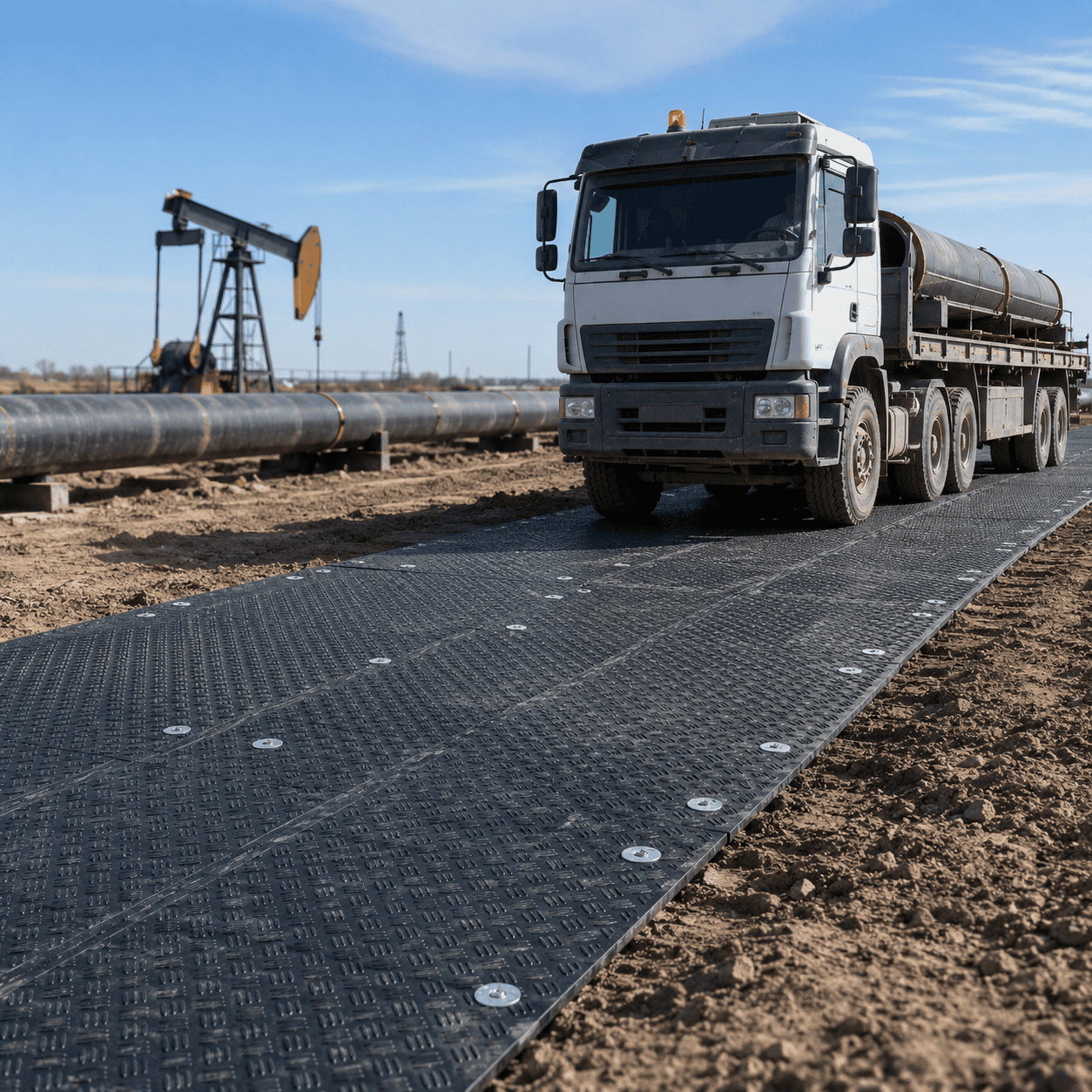
Individual mats can be connected to create longer temporary roads, equipment access lanes, parking areas, working platforms, and material handling routes. Connector holes positioned around the mat edges allow adjoining sections to be joined into a larger modular system.
This modular structure allows Heavy Duty HDPE Oilfield Rig Mats to be arranged according to the actual width and length of the required access route. The mats may be installed as a single vehicle lane, wider temporary roadway, equipment operating area, or staging platform.
Suitable connectors help maintain alignment between adjacent mats and reduce unwanted movement during repeated traffic. Connector selection should match the mat design and expected operating conditions.
Applications for Oilfields and Pipeline Projects
These heavy-duty mats are widely used where temporary vehicle access is required across difficult terrain. Typical applications include:
- Oilfield vehicle access routes
- Pipeline installation and maintenance access
- Rig and drilling support areas
- Temporary equipment roads
- Heavy vehicle access over soft ground
- Energy and utility projects
- Remote industrial operating areas
- Equipment staging and storage zones
- Temporary parking areas
- Muddy and waterlogged ground protection
- Grass and sensitive surface protection
- Logistics and material handling routes
For pipeline operations, the mats can form continuous access routes along challenging terrain, allowing service vehicles and support equipment to move more efficiently while reducing direct damage to the underlying ground.
You can also view our wider range of ground protection mats for temporary roads, heavy equipment access, grass protection, and industrial applications.
Reusable Temporary Access Solution
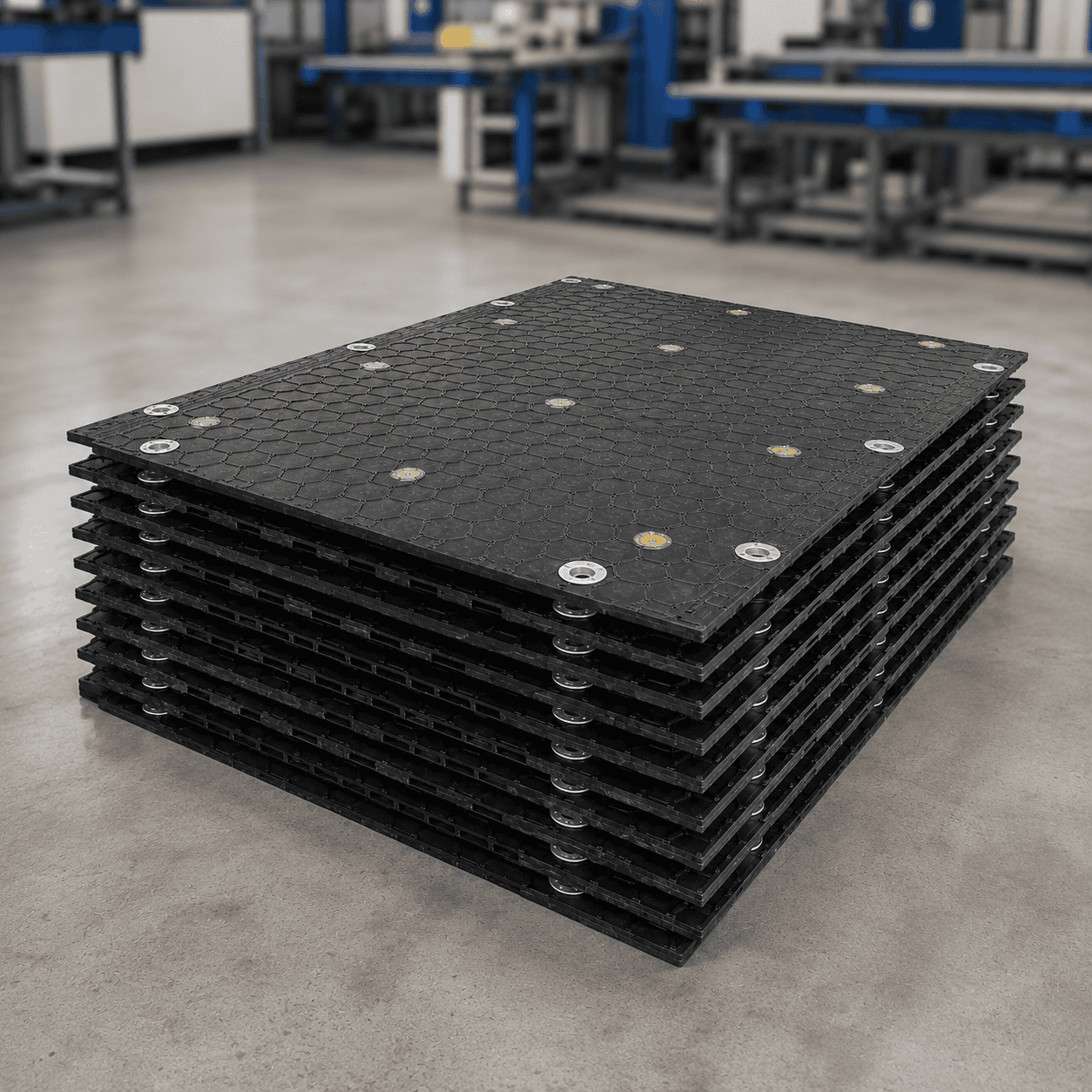
One major advantage of Heavy Duty HDPE Oilfield Rig Mats is their ability to be reused across multiple projects. After a temporary route is no longer required, the mats can be disconnected, cleaned, inspected, stacked, transported, and installed again at another location.
The rectangular structure allows efficient stacking and storage. Compared with very heavy steel plates, HDPE access mats can simplify transportation and installation, especially for projects that regularly move temporary access systems between different operating areas.
Routine inspection should include the mat surface, edges, connector holes, and connecting components. Damaged components should be replaced before the mats are installed again for demanding vehicle access.
Load Performance and Ground Conditions
The actual performance of a temporary access mat system depends on several factors. These include mat dimensions, thickness, HDPE grade, vehicle axle load, tire contact area, soil strength, ground preparation, traffic frequency, and installation method.
For this reason, maximum load capacity should not be judged only by total vehicle weight. A correctly supported mat can perform very differently from the same mat placed across deep holes, unsupported edges, or extremely weak ground.
For demanding oilfield and pipeline applications, the expected vehicle type, axle pressure, operating route, and ground conditions should be evaluated before choosing the final mat specification.
7 Amazing Powerful Benefits
- Durable HDPE construction for demanding outdoor use
- Raised anti-slip surface for improved vehicle traction
- Suitable for mud, sand, grass, gravel, and soft soil
- Corrosion resistant and does not rust like steel
- Low water absorption for wet operating environments
- Reusable modular structure for repeated projects
- Easier handling and storage than heavy steel road plates
Why Choose Heavy Duty HDPE Oilfield Rig Mats?
Heavy Duty HDPE Oilfield Rig Mats provide a reliable method for creating temporary roads and equipment access areas across difficult ground. Their durable HDPE structure, anti-slip traction pattern, reusable design, and modular connection system make them suitable for oilfields, pipeline operations, energy projects, heavy vehicle routes, and other industrial access applications.
Different projects require different specifications. Mat dimensions, thickness, surface structure, connection method, and layout should always be selected according to actual terrain, vehicle type, expected axle load, and operating conditions.