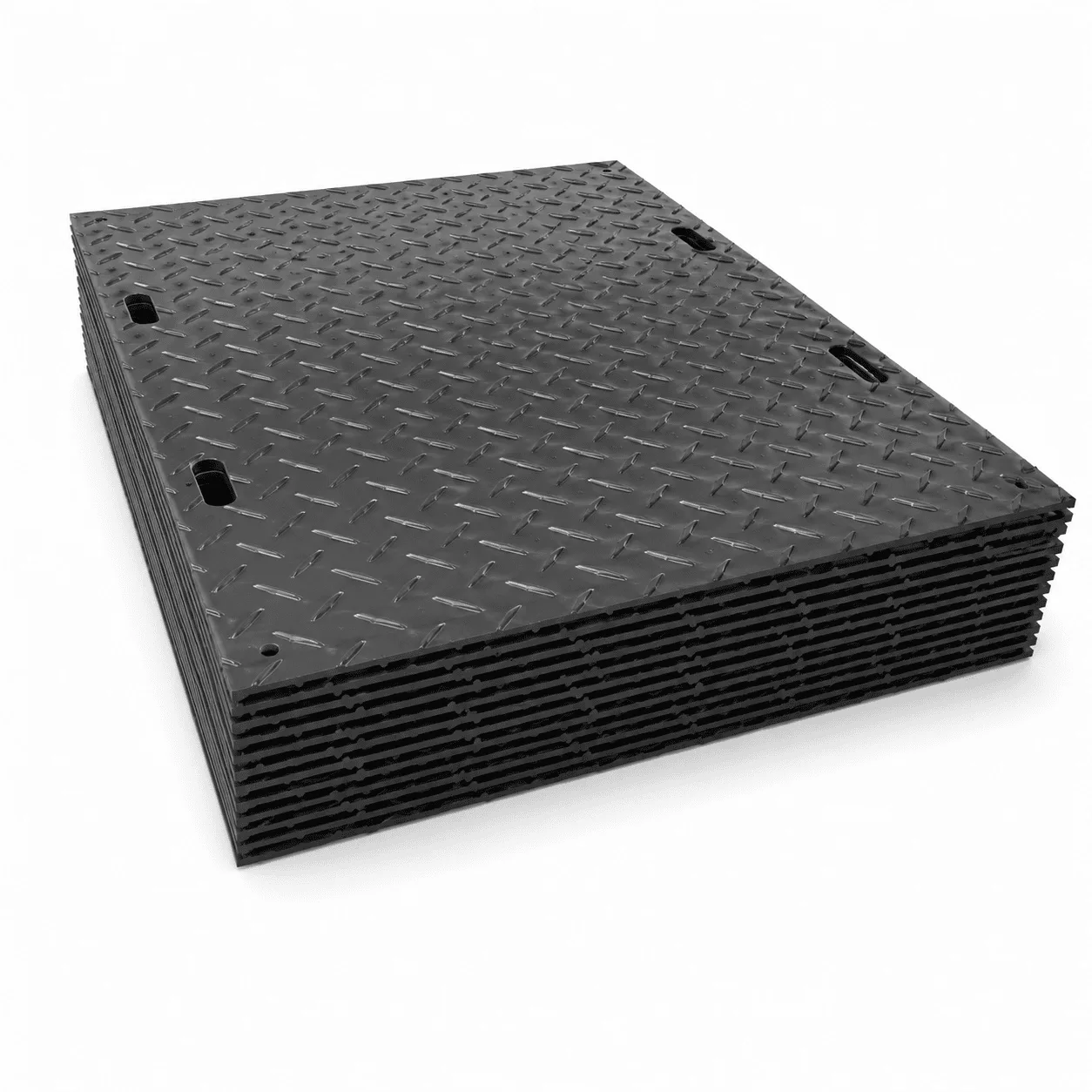
Low Temperature HDPE Ground Protection Mats are reusable plastic panels designed for temporary pedestrian and vehicle access across snow, wet ground, grass, mud, soft soil, and other outdoor surfaces.
Common nominal sizes include 8 ft × 4 ft, approximately 2440 × 1220 mm, and 8 ft × 3 ft, approximately 2440 × 915 mm. Available reference thicknesses include 3/8 inch, approximately 9.5 mm, and 1/2 inch, equivalent to 12.7 mm.
The HDPE construction provides low moisture absorption, selectable raised anti-slip surfaces, integrated hand holes, and reusable performance for low-temperature access, outdoor events, landscaping, sports field maintenance, emergency routes, and temporary roadways.
Low Temperature HDPE Ground Protection Mats are reusable plastic panels designed to create temporary pedestrian and vehicle access routes across snow-covered ground, wet surfaces, grass, mud, soft soil, landscaped areas, and other demanding outdoor environments. Manufactured from durable high-density polyethylene, these mats combine low moisture absorption, practical impact resistance, controlled flexibility, and raised anti-slip surface patterns.
Common nominal panel sizes include 8 ft × 4 ft and 8 ft × 3 ft. In metric dimensions, these formats are approximately 2440 × 1220 mm and 2440 × 915 mm. Reference thickness options include 3/8 inch, approximately 9.5 mm, and 1/2 inch, equivalent to 12.7 mm.
Different raised anti-slip patterns can be selected according to the required traction, traffic type, supporting ground, and outdoor conditions. The textured surface provides a more defined contact area for vehicle tires and footwear than a completely smooth plastic sheet.
These panels are particularly suitable for temporary access applications involving seasonal low temperatures, wet ground, snow, freezing weather, and changing ground conditions. Exact minimum and maximum service temperatures depend on the selected HDPE grade, material formulation, panel thickness, operating load, installation method, and duration of exposure.
The following specifications are based on the product information shown:
The 8 ft × 4 ft format provides approximately 2.97 square metres of gross panel coverage. Its broad working area makes it suitable for temporary vehicle routes, outdoor events, grass protection, maintenance paths, equipment access, and temporary working surfaces.
The narrower 8 ft × 3 ft format may be preferred where route width is limited or where easier individual panel handling and positioning are important.
The correct panel size and thickness should be selected according to vehicle type, axle load, tire or track contact area, supporting ground, traffic frequency, route width, turning movement, and installation duration.
Low Temperature HDPE Ground Protection Mats are manufactured from high-density polyethylene, a durable plastic material widely used for industrial and outdoor applications.
HDPE provides several practical characteristics:
Low-temperature outdoor environments can expose temporary access materials to water, snow, ice, mud, and repeated changes between freezing and thawing conditions. HDPE does not absorb large quantities of water like plywood and does not rust like conventional steel road plates.
This makes the material suitable for repeated outdoor access applications, provided that the correct HDPE grade, panel thickness, supporting ground, and traffic conditions are considered.
Exact low-temperature performance should always be confirmed according to the selected resin grade and final product specification because different HDPE formulations can provide different impact resistance and flexibility characteristics.
Explore our HDPE products and ground protection solutions for additional temporary access mats and industrial plastic products.
The upper surface of Low Temperature HDPE Ground Protection Mats features a raised traction pattern designed to provide additional contact for vehicle tires and footwear.
The textured surface is useful for temporary access routes across:
Different raised surface patterns can be selected according to the intended traffic and operating environment.
A more pronounced surface pattern may provide different traction characteristics compared with a lower-profile design. Selection should consider vehicle type, footwear, surface contamination, route slope, weather, and expected traffic frequency.
Actual traction can still be affected by ice buildup, compacted snow, mud, oil, steep slopes, tire condition, and vehicle speed. The panel surface should therefore be inspected and cleaned when required.
The nominal 8 ft × 4 ft panel is one of the most common formats for temporary ground protection.
This format can be installed in sequence to create temporary access roads or pedestrian paths. Additional panels can be arranged side by side when greater route width or a larger protected working surface is required.
The 8 × 4 ft format can be considered for:
The nominal 8 ft × 3 ft format provides a narrower alternative:
This narrower panel may be useful where:
The final panel width should be selected according to traffic width, tire position, safety margin, route length, and supporting ground conditions.
Low Temperature HDPE Ground Protection Mats are available with common reference thicknesses of:
The approximately 9.5 mm option provides a relatively lighter panel profile for temporary surface protection where portability and rapid installation are important.
The 12.7 mm option provides a thicker panel structure and may be considered for more demanding access applications, subject to vehicle loading and supporting ground conditions.
Panel thickness should not be selected only according to total vehicle weight. Important factors also include axle load, tire contact pressure, track contact area, ground strength, traffic frequency, turning movement, braking forces, and duration of use.
The HDPE construction is suitable for temporary access applications involving snow, wet ground, seasonal cold conditions, and outdoor exposure when the correct material grade is selected.
Two common nominal panel widths provide options for standard temporary routes and narrower access paths.
Reference thicknesses of 3/8 inch and 1/2 inch allow the panel configuration to be matched more closely to different temporary access requirements.
Different textured surface designs can be selected according to vehicle, pedestrian, ground, and traction requirements.
HDPE does not absorb large quantities of water like plywood, making it suitable for repeated outdoor use in wet and snowy environments.
The panels can be removed, cleaned, inspected, transported, stored, and installed again depending on their condition.
Built-in hand holes support panel positioning, installation, removal, organization, and storage.
Low Temperature HDPE Ground Protection Mats can create temporary access routes across surfaces affected by snow, moisture, freezing temperatures, and seasonal changes.
Typical applications may require temporary routes for:
Supporting ground can change significantly as temperatures rise and fall. Frozen ground may become much softer during thawing, while snow and ice accumulation can reduce surface traction.
Temporary access routes should therefore be inspected regularly when weather and ground conditions change.
The panels can create temporary access routes while reducing direct vehicle and pedestrian contact with grass surfaces.
Multiple panels can form temporary protected surfaces for outdoor activities, equipment movement, and maintenance work.
The mats can provide temporary access for equipment, personnel, and service operations across grass or sensitive outdoor areas.
Temporary access panels can be used for pedestrian paths, service vehicles, equipment movement, and logistics operations.
Suitable panel layouts may provide temporary access where normal routes are affected by soft ground or seasonal weather conditions.
The mats can help protect grass and landscaped areas during temporary maintenance and equipment access.
Temporary routes can reduce direct traffic over sensitive surfaces where permanent paved roads are unnecessary.
The panels can provide temporary access for personnel, tools, vehicles, and equipment.
Multiple mats can be installed to create temporary vehicle routes or protected parking surfaces when the correct panel specification and supporting ground conditions are selected.
Low Temperature HDPE Ground Protection Mats create a temporary separation layer between traffic and the original surface.
This can help reduce direct contact from:
Repeated traffic directly across grass or soft soil can create rutting, soil compaction, surface wear, and additional restoration requirements.
Ground protection mats help distribute movement across a broader area, although final performance still depends on the selected panel, supporting ground, and actual traffic conditions.
Outdoor surfaces can change significantly during repeated freezing and thawing cycles.
Ground that appears firm while frozen may become much softer as temperatures rise. This change can affect:
For this reason, temporary access routes should be inspected when major temperature changes occur.
If the supporting ground becomes soft, additional attention should be given to panel position, ground support, turning areas, and repeated traffic.
The performance of Low Temperature HDPE Ground Protection Mats depends significantly on the supporting surface beneath each panel.
Before installation:
Sharp objects can create concentrated pressure beneath a panel. Large unsupported areas may reduce effective load distribution.
Better support across the full panel surface generally improves stability and overall product performance.
Position the first panel according to the planned direction of traffic.
Install additional mats in sequence until the required route length has been reached.
Where a wider route or working surface is required, place additional panels side by side according to the planned layout.
Before allowing traffic onto the completed route, inspect:
The installation should also be checked during use, particularly after repeated traffic, snowfall, thawing, or major changes in supporting ground conditions.
Temporary ground protection performance cannot be evaluated only by total vehicle weight.
Important factors include:
For demanding applications, Low Temperature HDPE Ground Protection Mats should be selected according to the complete operating environment rather than only total vehicle weight.
A vehicle moving slowly in a straight line across stable ground creates different forces from the same vehicle turning sharply on soft or thawing ground.
After outdoor use, excessive mud, snow, ice, and other debris should be removed where necessary.
Common cleaning methods may include:
Before reuse, inspect each panel for:
The mats should be stacked on a stable supporting surface and stored in an organized manner.
Low Temperature HDPE Ground Protection Mats combine durable HDPE construction, practical 8 ft × 4 ft and 8 ft × 3 ft sizes, 3/8 inch and 1/2 inch thickness options, raised anti-slip surface patterns, integrated hand holes, low moisture absorption, and reusable outdoor performance.
The mats can be used for temporary access involving low-temperature weather, snow, wet ground, grass, soft soil, outdoor events, sports field maintenance, landscaping, emergency routes, utilities, and temporary roadways.
Compared with temporary plywood, HDPE panels do not absorb water, rot, or splinter in the same way. Compared with conventional steel plates, the plastic material does not rust.
The different panel dimensions and surface patterns allow the mat system to be selected according to route width, traffic requirements, supporting ground, and handling needs.
For general information about recognized material and performance testing methods, refer to ASTM International.
With correct product selection, suitable ground preparation, appropriate installation, regular inspection, and proper handling, Low Temperature HDPE Ground Protection Mats provide a reusable solution for temporary access in cold and demanding outdoor environments.
Check drawings for full specifications and confirm materials according to service conditions to prevent product defects.
Inspect all key processing steps and fully verify dimensions, holes, grooves and fitting surfaces.
Deburr, chamfer and clean products for easy installation. Ensure uniform quality among batch products.
Choose appropriate packaging solutions based on product features to protect goods from collision, deformation and mixing during transit.
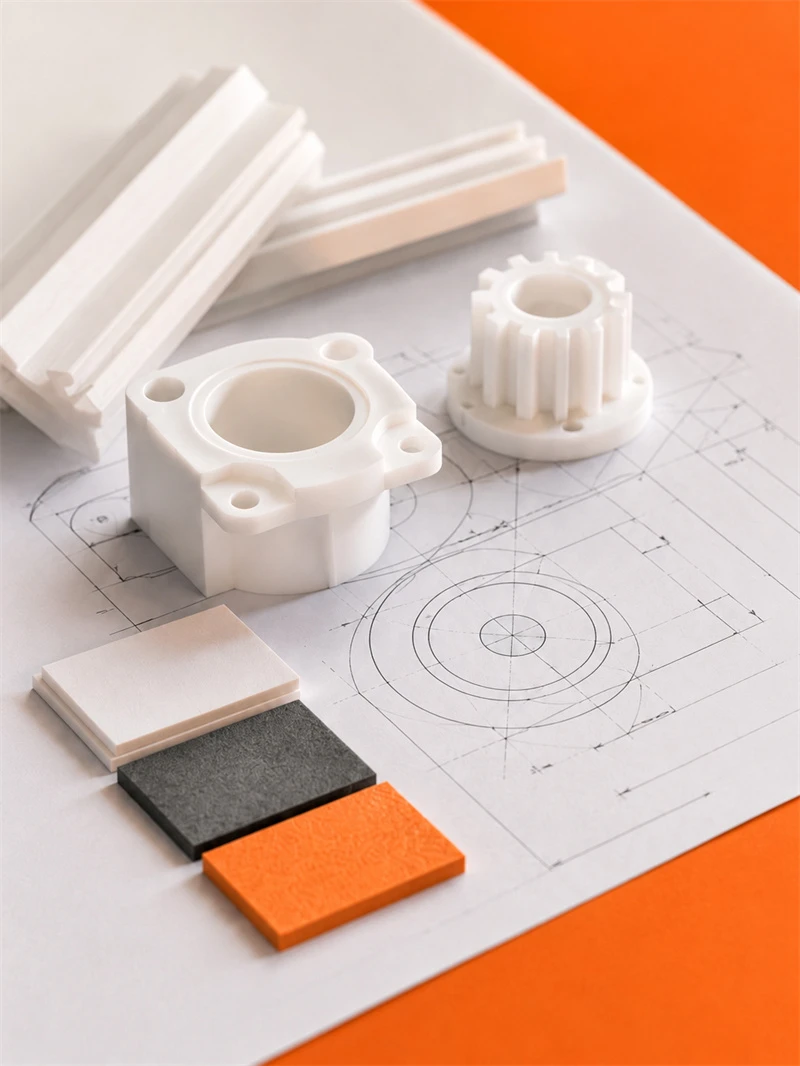
Unlike metal parts, engineering plastic components still require strict control over dimensions, holes, edges, surface, materials and assembly performance for equipment use.
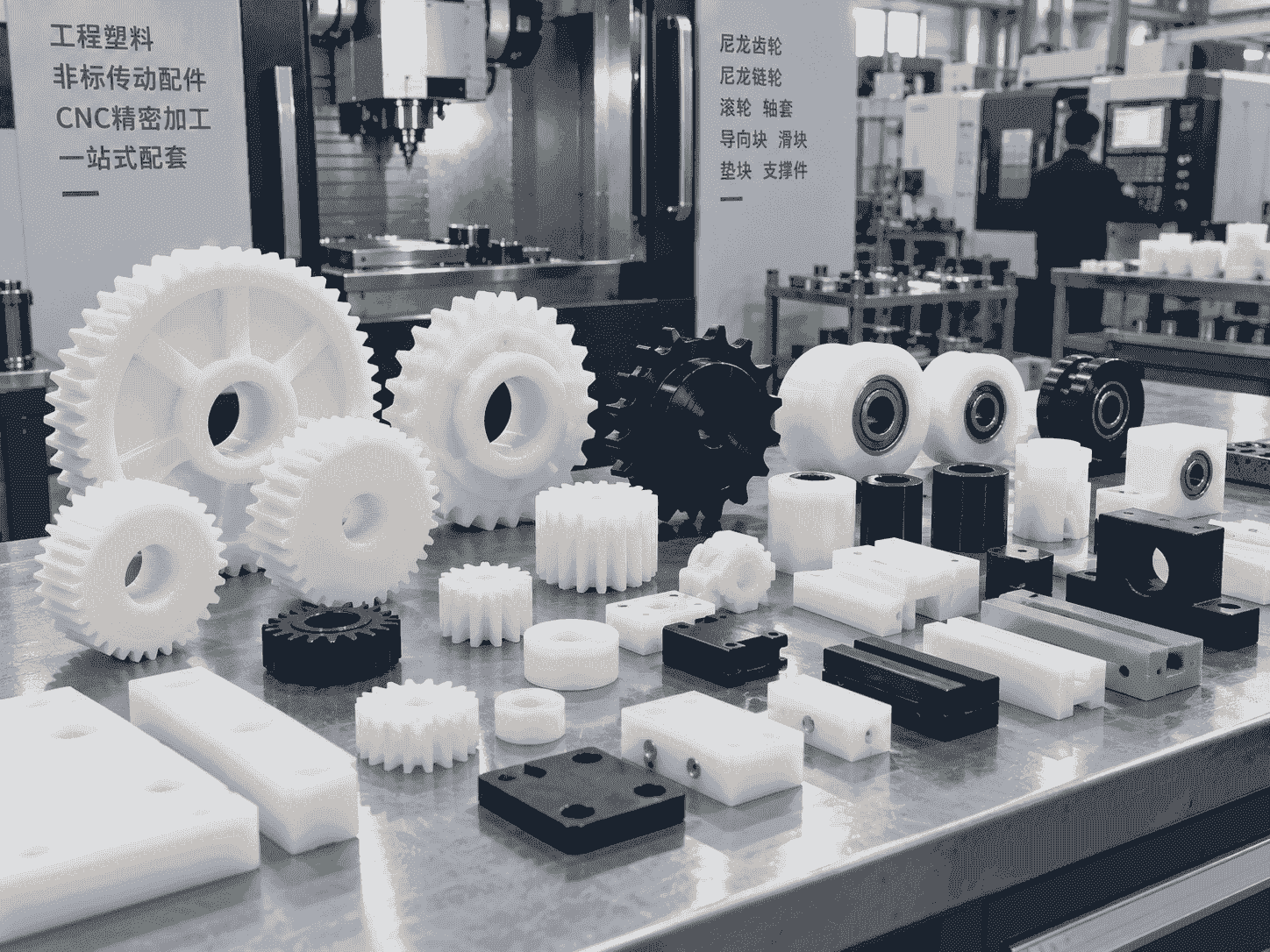
Engineering plastic parts suit friction, guide, support, buffer, anti-corrosion and insulation areas. We supply UHMWPE, POM, PA, PP/PE components for conveyor, food, mining, machinery, chemical and cable systems, with custom OEM service available.
Stay updated with our latest industry insights, company updates and featured articles.

Engineering plastics are increasingly used in industrial machinery, automated production lines, conveyor systems, packaging equipment, and food-processing machines. Materials such as nylon, UHMWPE, POM, and

Both are lightweight, corrosion-resistant, wear-resistant, and suitable for CNC machining. However, they perform very differently

Wear is a common cause of failure in conveyor systems, packaging machinery, automated equipment, mining

CNC machining is widely used to produce plastic prototypes, low-volume parts, replacement components, jigs, fixtures,

Both are lightweight, corrosion-resistant, wear-resistant, and suitable for CNC machining. However, they perform very differently

Wear is a common cause of failure in conveyor systems, packaging machinery, automated equipment, mining

CNC machining is widely used to produce plastic prototypes, low-volume parts, replacement components, jigs, fixtures,
Need UHMWPE sheets & custom plastic machined/OEM parts?Send specs & material needs, free quote within 24h.