PP Hockey Shooting Pad is a portable off-ice training surface designed for shooting, passing, stickhandling and puck-control exercises. The smooth polypropylene surface allows a hockey puck to move more consistently than it does on concrete, asphalt and other rough floors.
Common size options include approximately 1520 × 768 × 5 mm, 1500 × 750 × 5 mm, 1200 × 600 × 5 mm and 1220 × 1016 × 5 mm. Rounded corners, finished edges and optional carrying-handle designs make the pad convenient for home practice, hockey clubs, schools and training centers.
The pad should be placed on a clean, rigid and level supporting floor. It is designed for stick-and-puck exercises and should not be used as a skating panel unless the complete structure has been separately tested for that purpose.
PP Hockey Shooting Pad is a portable polypropylene training surface designed for ice hockey shooting, passing, stickhandling and puck-control exercises away from a refrigerated ice rink. Its smooth surface allows the puck to travel more consistently than it normally would on concrete, asphalt, rough wood or other abrasive training floors.
The pad creates a dedicated practice area in garages, basements, hockey academies, schools, sports clubs and suitable outdoor locations. Players can use it to repeat wrist shots, snap shots, backhand shots, passing movements, puck reception and hand-speed drills without placing the stick blade directly on rough pavement.
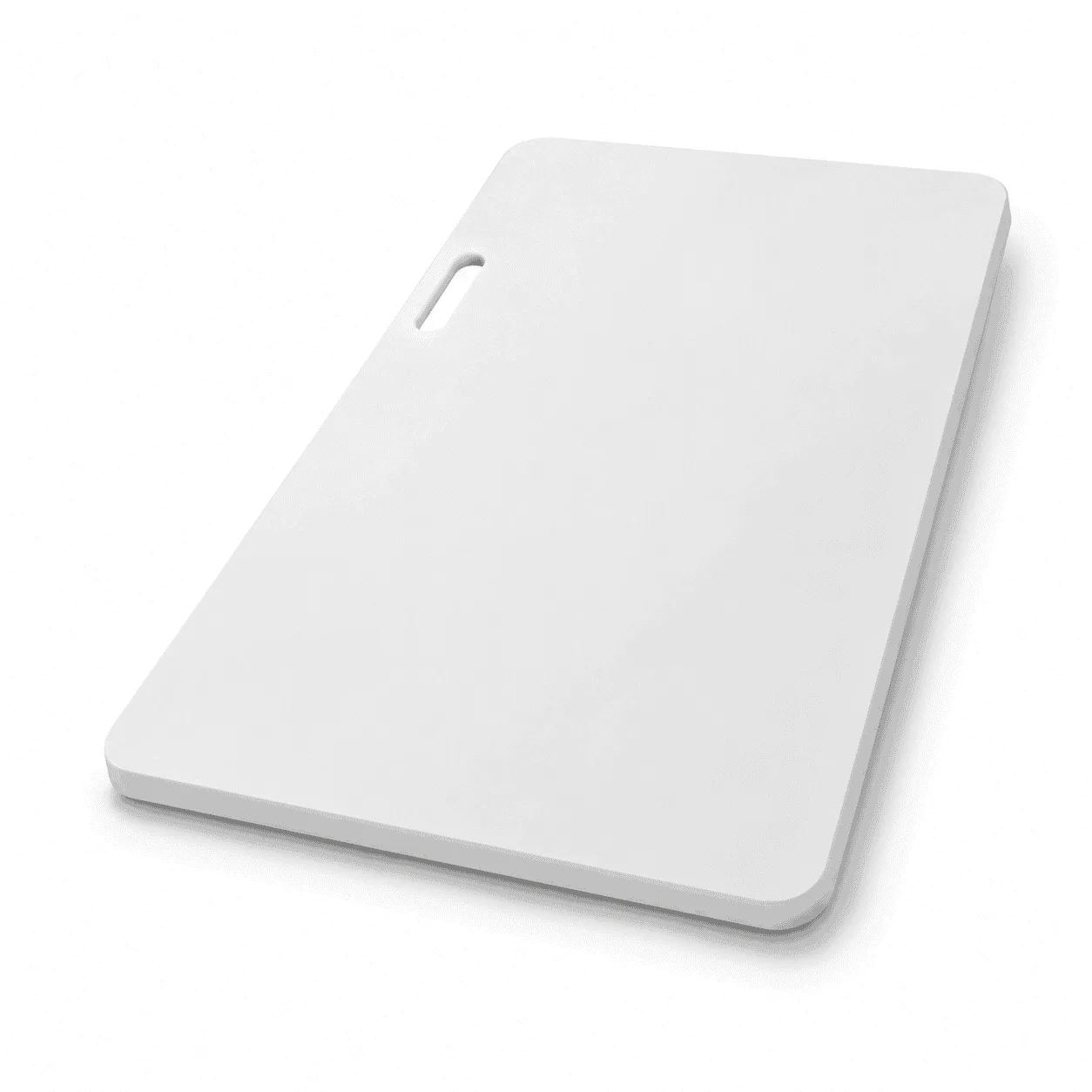
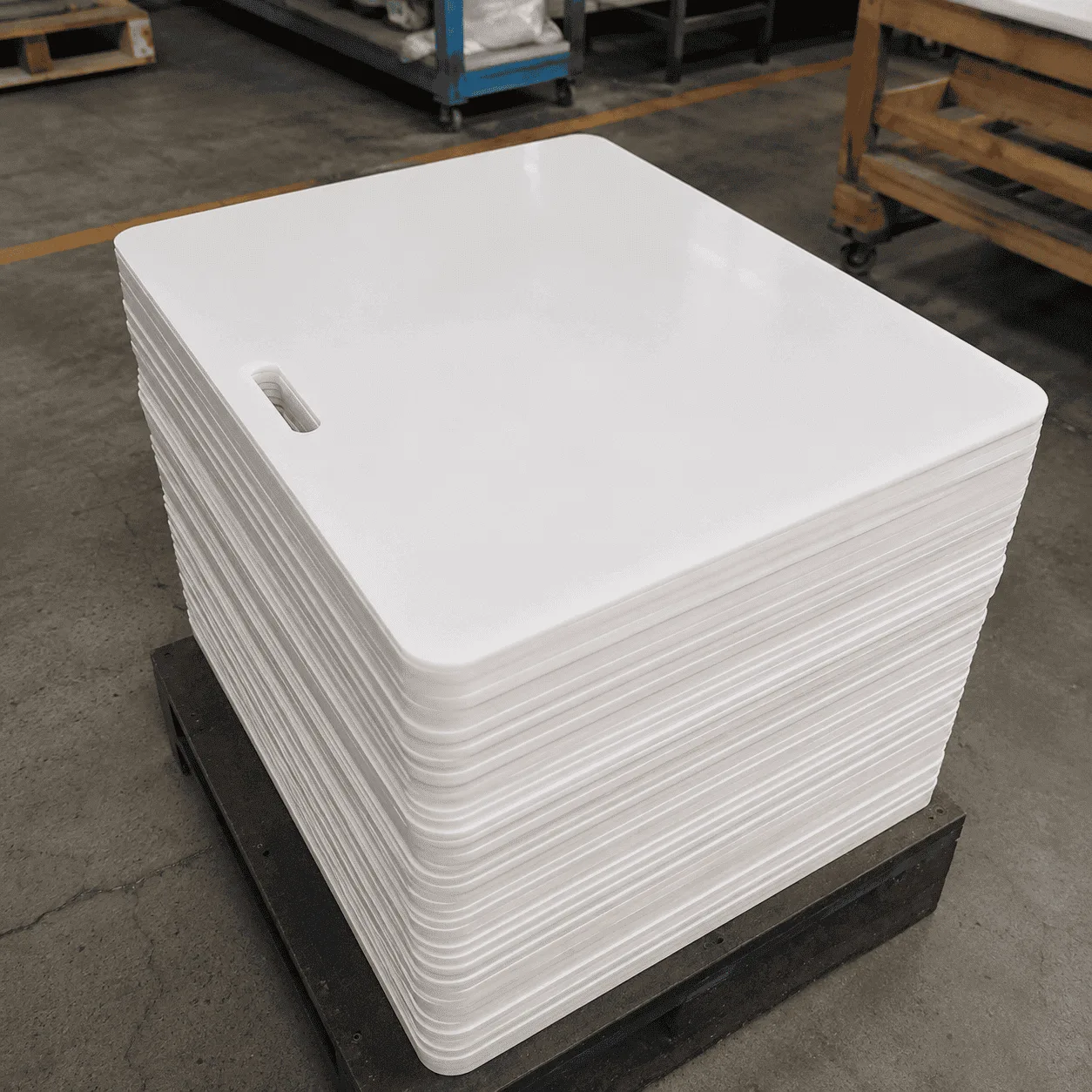
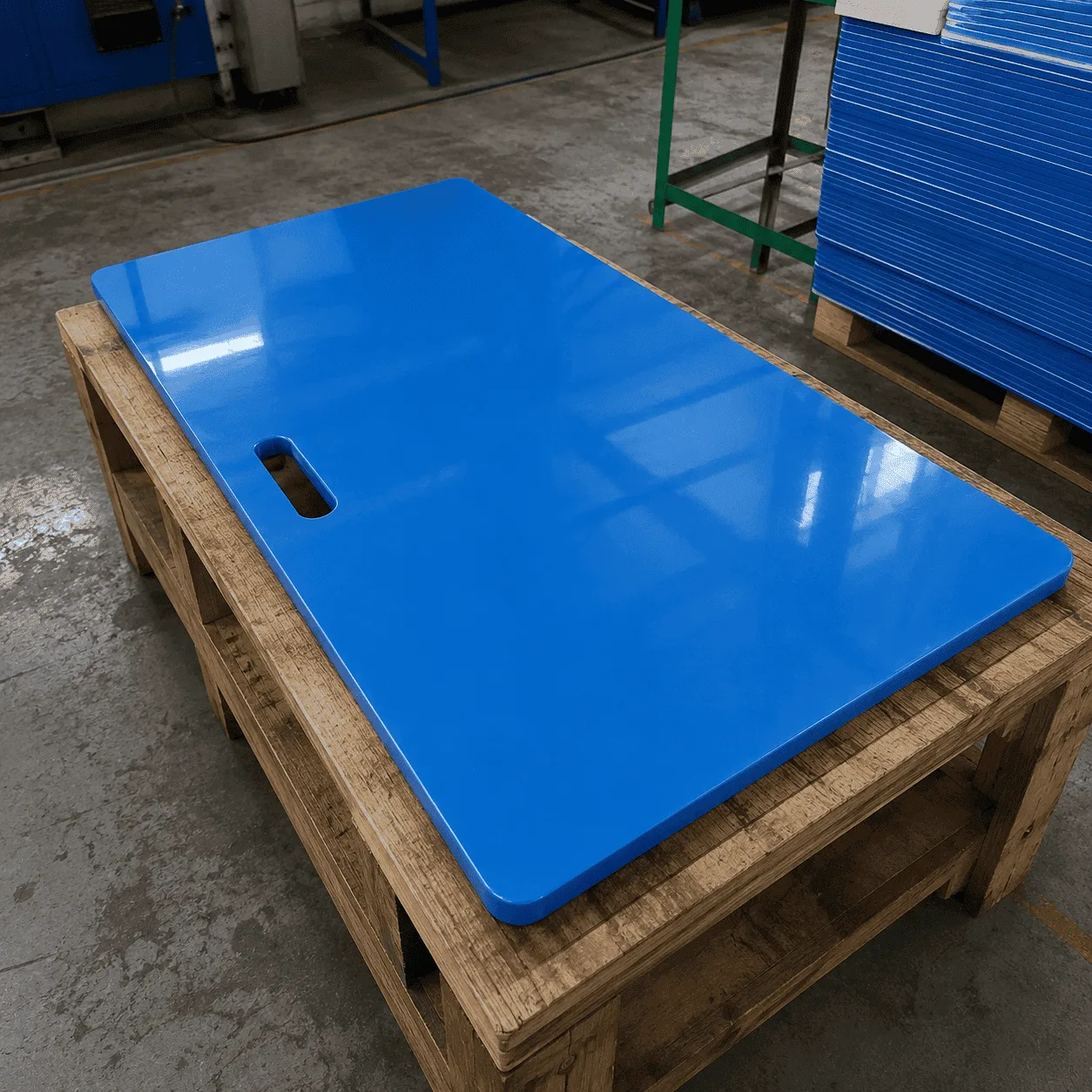
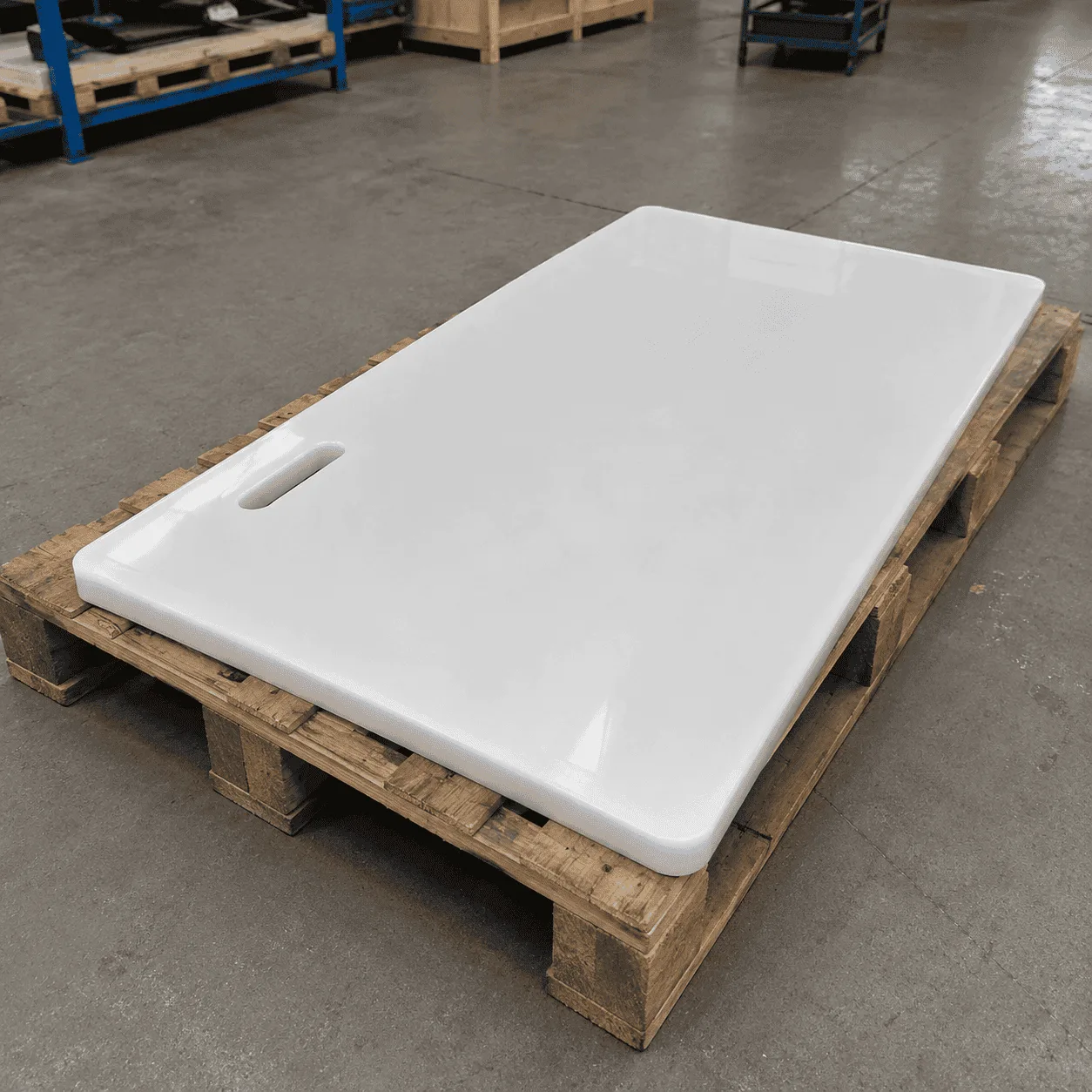
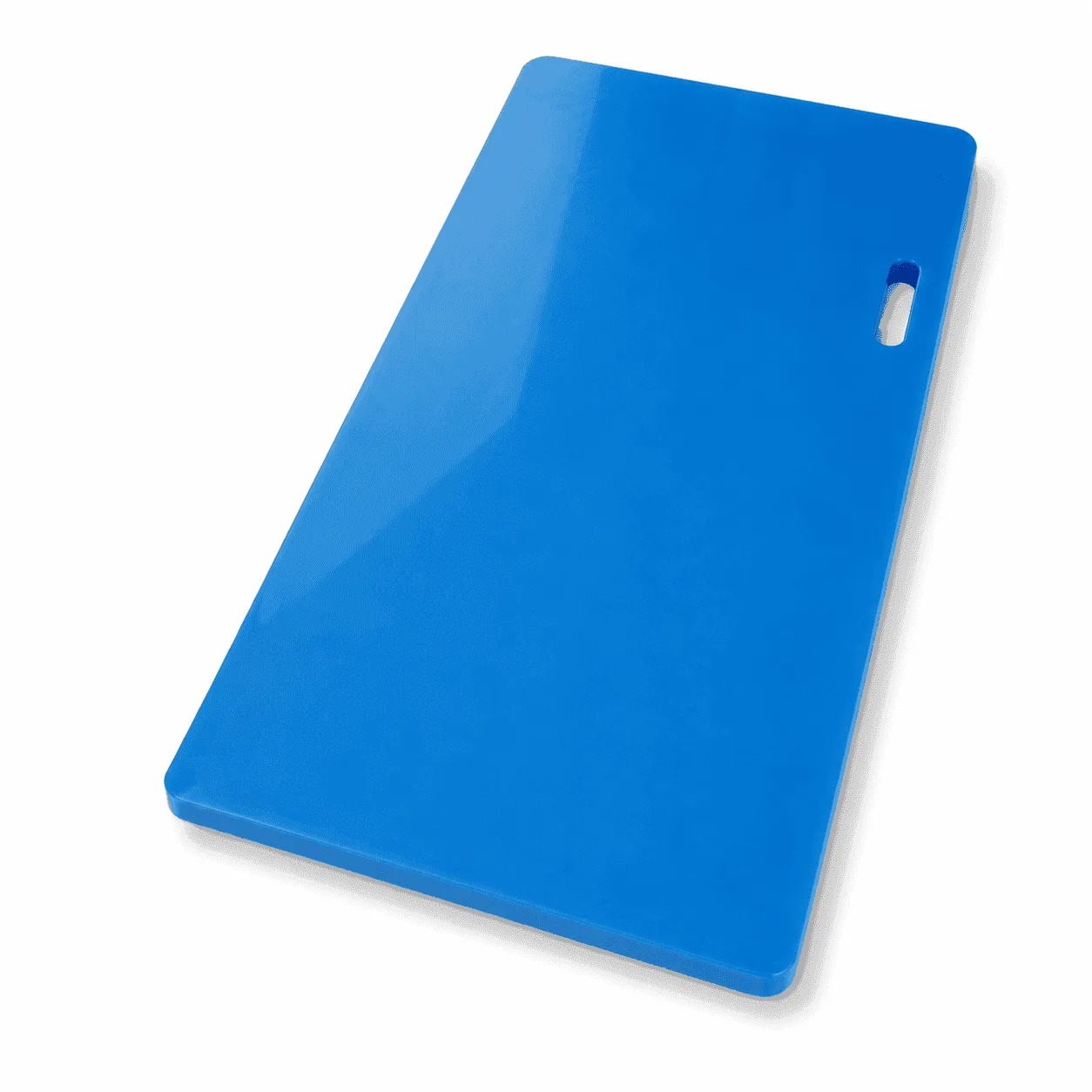
The product shown is manufactured from a smooth white polypropylene sheet with rounded corners and finished edges. Depending on the required design, the pad can also include beveled edges, a carrying opening, printed markings or compatible mounting positions for a puck rebounder.
Ice hockey is a team sport in which players use sticks to pass and shoot a puck toward the opposing goal. For general information about the sport and its equipment, visit the Ice Hockey overview on Wikipedia. More information about PP material is available from the Polypropylene overview on Wikipedia.
A PP Hockey Shooting Pad is a flat plastic training board used to create a smoother off-ice surface for hockey sticks and pucks. It is placed on a clean and level supporting floor before shooting, passing or stickhandling practice begins.
The surface reduces direct contact between the hockey stick and abrasive ground. This can help limit unnecessary wear on stick tape and the lower edge of the stick blade during repeated home or club training.
The product is intended primarily for puck and stick exercises. It is not the same as a full synthetic ice rink panel and should not automatically be used with metal-bladed ice skates. A skating floor requires greater structural support, accurately machined connections and separate material-performance testing.
The PP Hockey Shooting Pad can be produced in several practical sizes. The following dimensions are based on the original product information and are suitable as reference specifications for a WordPress product page.
| Product Name | Portable PP Hockey Shooting Pad |
| Primary Material | Polypropylene sheet |
| Large Size Option | Approximately 1520 × 768 × 5 mm |
| Standard Size Option | Approximately 1500 × 750 × 5 mm |
| Compact Size Option | Approximately 1200 × 600 × 5 mm |
| Wide Size Option | Approximately 1220 × 1016 × 5 mm |
| Common Thickness | Approximately 5 mm |
| Optional Thickness Range | Approximately 3–10 mm, depending on rigidity requirements |
| Standard Color | White or natural translucent white |
| Optional Colors | Blue, black, red, yellow or project-specific colors |
| Surface Finish | Smooth machined or sheet-finished surface |
| Corner Design | Rounded corners |
| Edge Design | Smooth, rounded or beveled edges |
| Optional Feature | Carrying handle, rebounder positions or printed markings |
| Primary Applications | Shooting, passing, stickhandling and puck-control practice |
| Suitable Environment | Indoor and properly prepared outdoor training areas |
The specifications above are practical reference options rather than fixed dimensions for every application. Final length, width, thickness, edge structure and handle position should be confirmed according to the player’s age, available training area and storage requirements.
A 5 mm pad is relatively lightweight and convenient to move, but it requires a rigid and particularly flat supporting floor. Increased thickness can improve rigidity while also increasing the total weight of the product.
Polypropylene is a thermoplastic material in the polyolefin family. It provides relatively low density, practical stiffness, chemical resistance and good processing performance.
Compared with softer polyethylene grades, PP normally provides a firmer sheet surface. This can be useful for lightweight training pads that need to remain reasonably flat when placed on a prepared supporting floor.
The final puck movement depends on the selected PP grade, surface finish and sheet-production method. A sample should be evaluated with the intended hockey puck before a large production order is confirmed.
PP can become less impact-tolerant at low temperatures than selected polyethylene grades. Material selection should therefore consider the expected operating temperature and whether the pad will mainly be used indoors or outdoors.
The upper surface of the PP Hockey Shooting Pad is finished to provide consistent contact with the hockey puck. A clean surface helps the puck travel across the pad without repeatedly catching on rough floor texture.
The pad does not reproduce every characteristic of refrigerated ice. Puck speed may vary according to surface finish, temperature, cleanliness, puck material and the amount of wear on the panel.
Dust, sand, oil and water should be removed before each training session. Small hard particles can scratch the surface and affect puck movement.
The pad can be positioned in front of a hockey goal, shooting net or target sheet. Players can then practise wrist shots, snap shots, backhand shots and release-speed exercises.
A consistent supporting surface allows the player to repeat similar hand and stick movements during a structured training session. Different shooting positions can be used to develop placement, timing and accuracy.
The area behind and around the goal should provide suitable protection. Hard shooting practice should only be carried out where the goal, backstop and surrounding environment can safely contain missed shots.
A PP Hockey Shooting Pad can be used for forehand-to-backhand movements, toe drags, lateral puck control, hand-speed drills and puck-protection exercises.
Training cones and compatible stickhandling obstacles can be positioned on the pad. These accessories should have smooth bases without sharp screws or exposed metal edges.
The larger 1520 × 768 mm model provides more room for wide puck movements, while the 1200 × 600 mm version is easier to use in compact home-training spaces.
The pad can support forehand passing, backhand passing and puck-reception drills. Two players can pass across the surface, or one player can combine the pad with a compatible passing rebounder.
The smoother surface reduces interruptions caused by rough flooring and allows players to focus on pass direction, stick position, receiving angle and release speed.
A rebounder should remain stable during use. Its mounting brackets and supporting components should not scratch or deform the polypropylene surface.
Rounded corners remove sharp points from the perimeter and create a cleaner product appearance. The corner radius can be selected according to the pad dimensions and required production method.
Beveled edges reduce the transition between the supporting floor and the top surface. This helps the puck move onto the pad without striking a high vertical edge.
All machined edges should be deburred and inspected before use. Deep cuts, cracks or sharp damaged areas should be repaired or removed from service.
A carrying opening can be machined near one side of the panel to make transportation and storage more convenient.
The inner edge of the handle should be rounded to provide a comfortable grip. Enough material should remain around the opening to maintain the strength of the panel.
Large or thick pads may still require two-person handling. The product should be lifted rather than dragged across concrete or other abrasive ground.
The shooting pad can be combined with a compatible puck rebounder for individual passing practice. A rebounder returns the puck toward the player after it strikes the elastic or mechanical return component.
Mounting holes or positioning features can be included according to the rebounder structure. Hole positions should be confirmed before the pad is cut or machined.
The rebounder should not cause excessive bending of a thin pad. Additional backing or a thicker panel may be required where concentrated loads are applied.
The PP Hockey Shooting Pad is suitable for garages, basements, hockey academies, schools, sports clubs and indoor training rooms.
The supporting floor should be rigid, clean and level. Stones, screws, metal fragments and other sharp debris should be removed before the pad is placed.
A suitable non-slip underlay can be added when the pad moves during shooting. The underlay should remain flat and should not create raised or unsupported areas beneath the sheet.
The pad can be used on a smooth driveway, sports floor or another properly prepared outdoor platform. Gravel, highly uneven asphalt, loose soil and soft grass are not suitable supporting surfaces.
Outdoor use requires more frequent cleaning because sand, dust, leaves and moisture may affect puck movement and damage the visible surface.
A UV-stabilized PP grade can be considered where prolonged sunlight exposure is expected. Storing the pad indoors after training can help limit unnecessary weather exposure and deformation.
A flat supporting floor is especially important for a thin polypropylene shooting pad. Uneven support may cause the panel to flex, rock or develop raised edges during use.
Suitable supporting surfaces may include:
Large gaps, protruding fasteners and sharp floor damage should be corrected before the pad is installed.
The pad is intended for stick-and-puck exercises. Players should not wear metal-bladed skates or jump on the panel unless the complete structure has been specifically designed and tested for that activity.
The surface can be cleaned with water, a soft cloth and a suitable neutral cleaning product. Strong solvents, metal scrapers and highly abrasive tools should be avoided.
Routine inspection should include:
Loose dirt should be removed before every practice session. A cracked or sharply damaged pad should be repaired or replaced before continued use.
The pad should preferably be stored flat on an even supporting surface. Long-term storage against a wall may cause a thin PP sheet to bend.
Heavy objects should not be placed on an unsupported pad. The product should also be kept away from excessive heat, sharp tools and contaminated surfaces.
When several pads are stacked, the supporting surface should remain clean and level. Protective film or soft separators can be used to reduce scratching during transportation.
The PP Hockey Shooting Pad can be manufactured from polypropylene sheet using cutting, routing and CNC machining processes.
Production operations may include:
Important inspection items include overall length, width, thickness, surface flatness, edge finish, corner radius and handle position. The visible surface should be checked for deep scratches, contamination and processing damage.
When selecting a PP Hockey Shooting Pad, consider the available training space, intended exercises, player age, required portability, supporting floor and storage conditions.
The 1200 × 600 mm pad is suitable for compact stickhandling and basic shooting drills. The 1500 × 750 mm and 1520 × 768 mm versions provide more room for passing and wider puck movements.
The 1220 × 1016 mm option provides a wider training area and can be useful for side-to-side stickhandling exercises. A thicker panel can be selected where increased rigidity is more important than minimum weight.
Learn more about our PP sheets, HDPE panels, UHMWPE materials and engineering-plastic processing capabilities on the Honsee engineering plastic manufacturer website.
The PP Hockey Shooting Pad provides a portable, reusable and easy-to-maintain surface for shooting, passing, stickhandling and puck-control practice at home, in schools and in hockey training facilities.
Check drawings for full specifications and confirm materials according to service conditions to prevent product defects.
Inspect all key processing steps and fully verify dimensions, holes, grooves and fitting surfaces.
Deburr, chamfer and clean products for easy installation. Ensure uniform quality among batch products.
Choose appropriate packaging solutions based on product features to protect goods from collision, deformation and mixing during transit.
Unlike metal parts, engineering plastic components still require strict control over dimensions, holes, edges, surface, materials and assembly performance for equipment use.
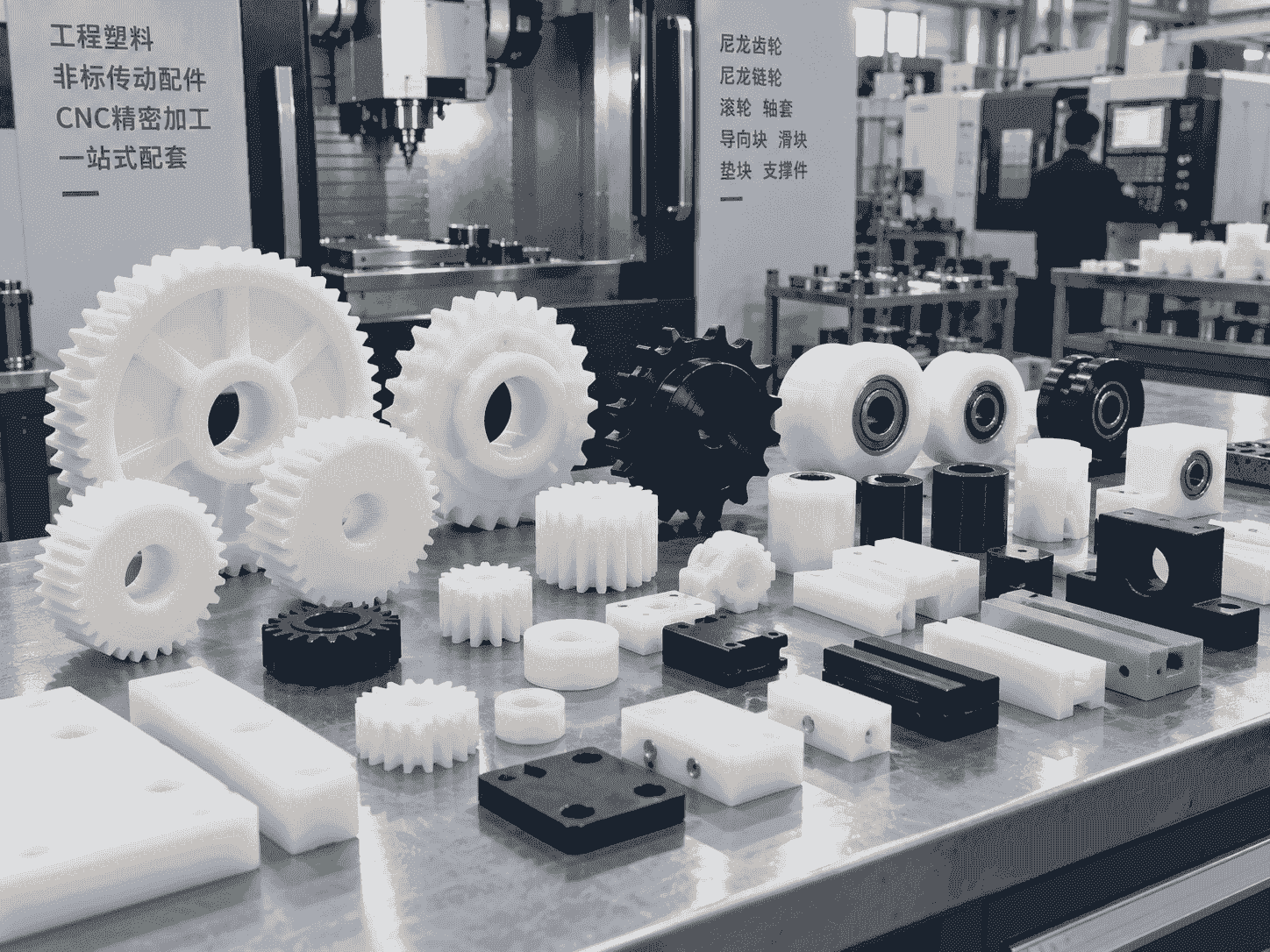
Engineering plastic parts suit friction, guide, support, buffer, anti-corrosion and insulation areas. We supply UHMWPE, POM, PA, PP/PE components for conveyor, food, mining, machinery, chemical and cable systems, with custom OEM service available.
Stay updated with our latest industry insights, company updates and featured articles.

Engineering plastics are increasingly used in industrial machinery, automated production lines, conveyor systems, packaging equipment, and food-processing machines. Materials such as nylon, UHMWPE, POM, and

Both are lightweight, corrosion-resistant, wear-resistant, and suitable for CNC machining. However, they perform very differently

Wear is a common cause of failure in conveyor systems, packaging machinery, automated equipment, mining

CNC machining is widely used to produce plastic prototypes, low-volume parts, replacement components, jigs, fixtures,

Both are lightweight, corrosion-resistant, wear-resistant, and suitable for CNC machining. However, they perform very differently

Wear is a common cause of failure in conveyor systems, packaging machinery, automated equipment, mining

CNC machining is widely used to produce plastic prototypes, low-volume parts, replacement components, jigs, fixtures,
Need UHMWPE sheets & custom plastic machined/OEM parts?Send specs & material needs, free quote within 24h.