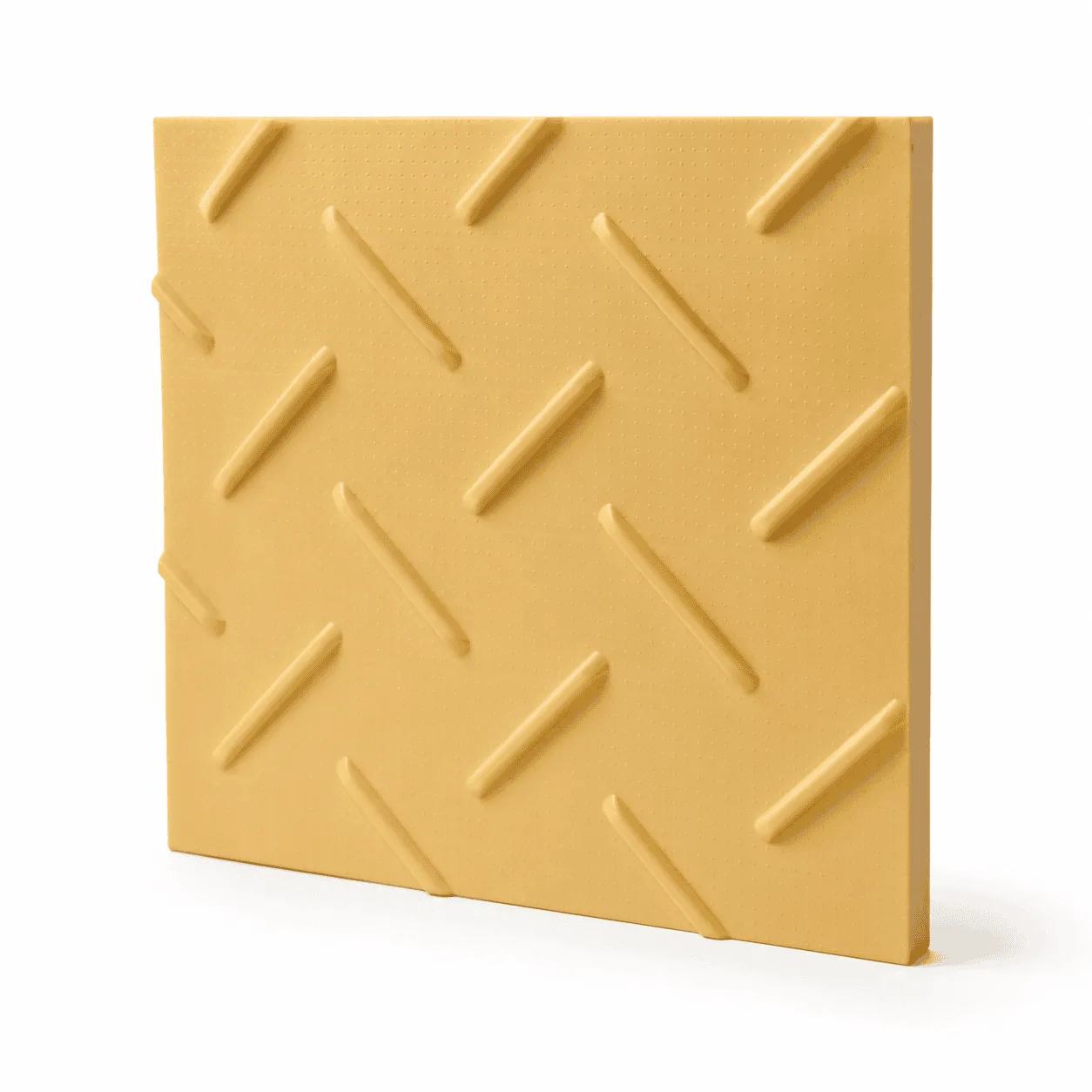
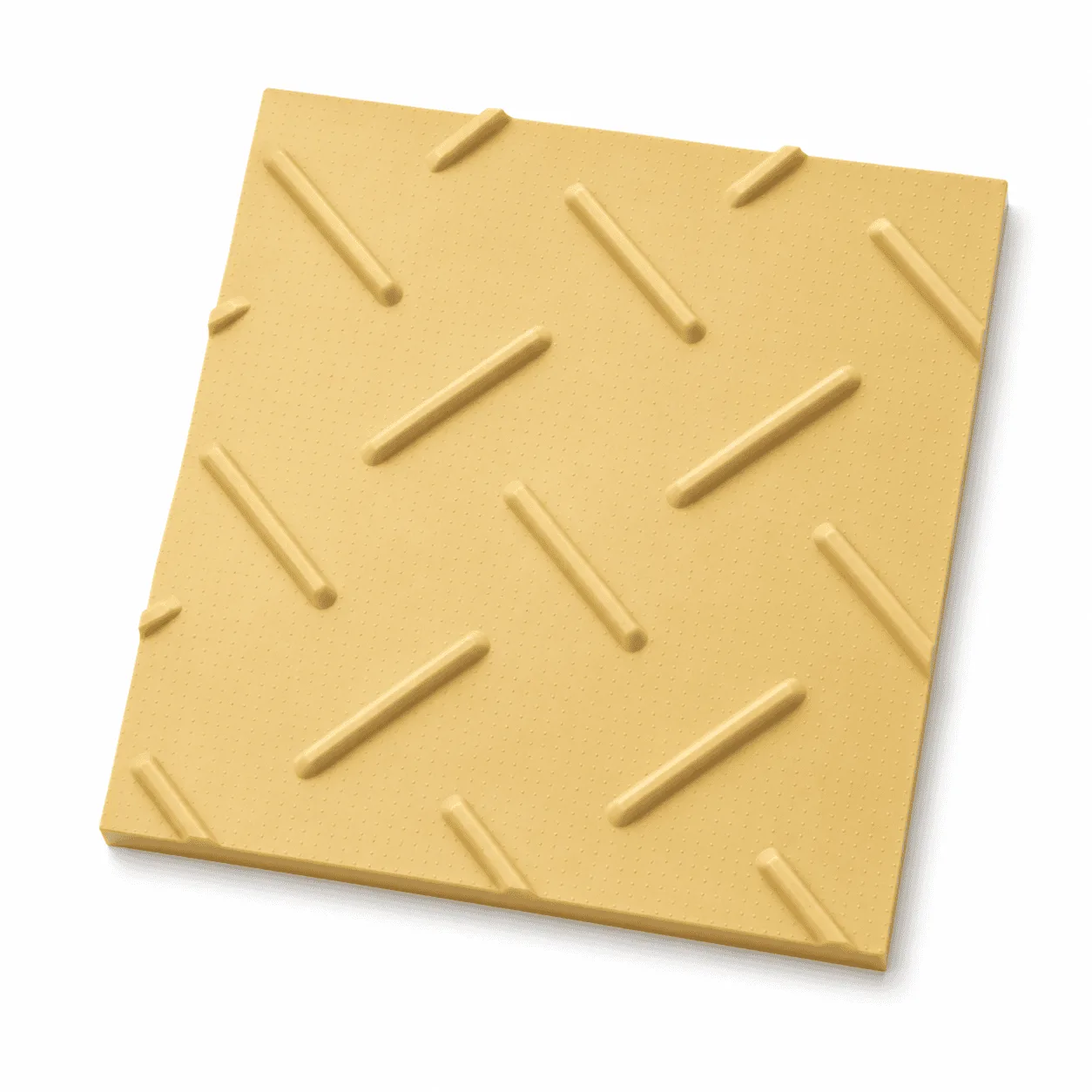
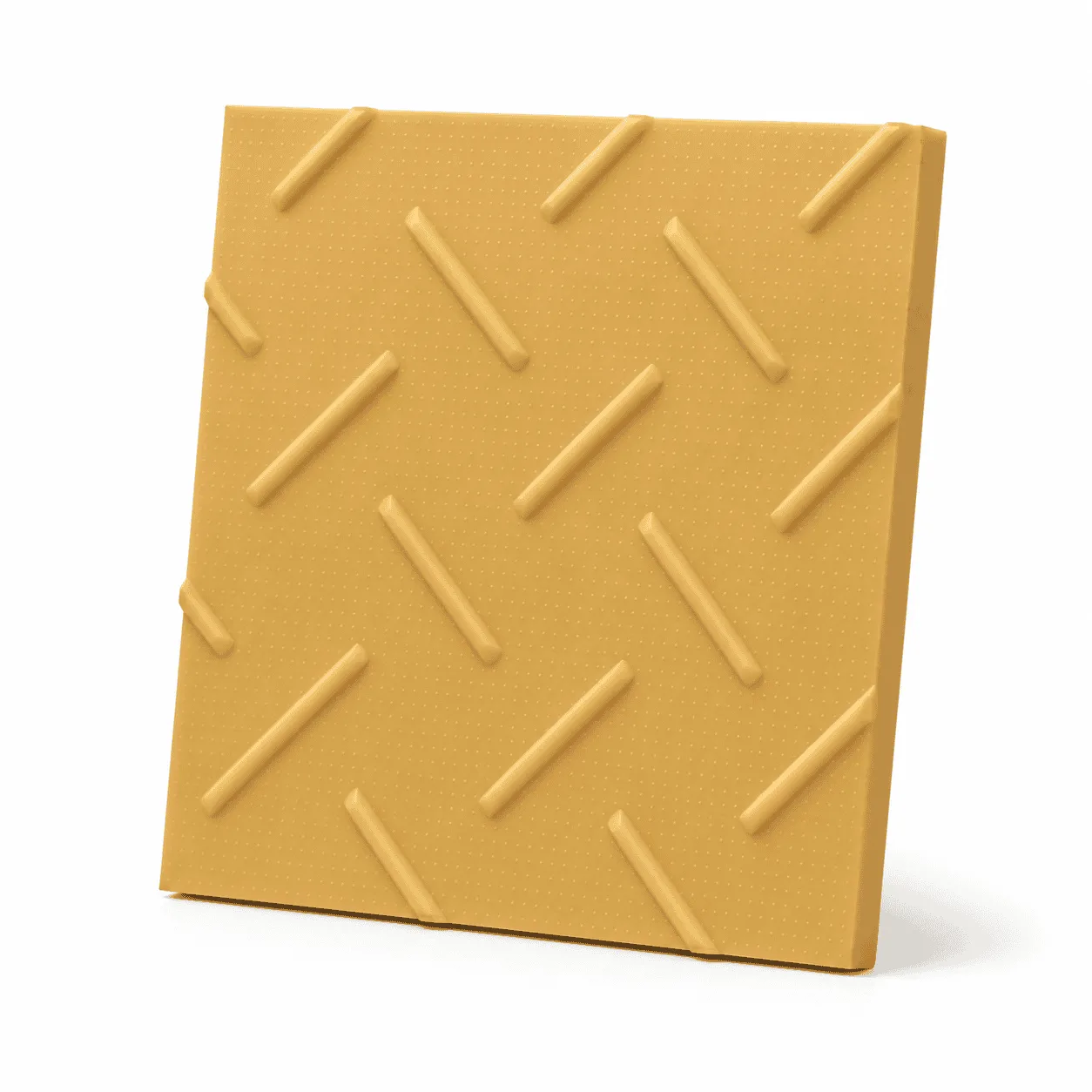
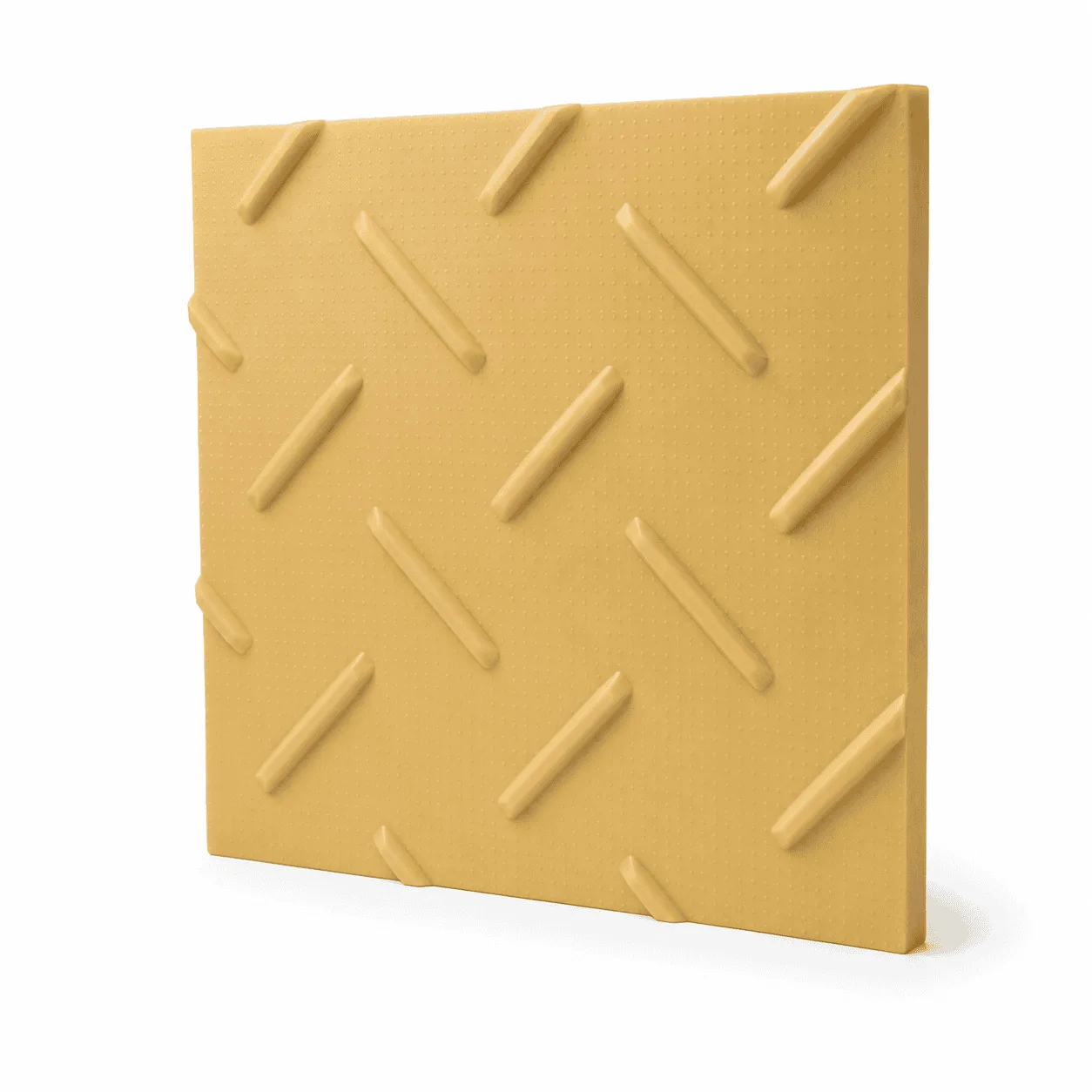
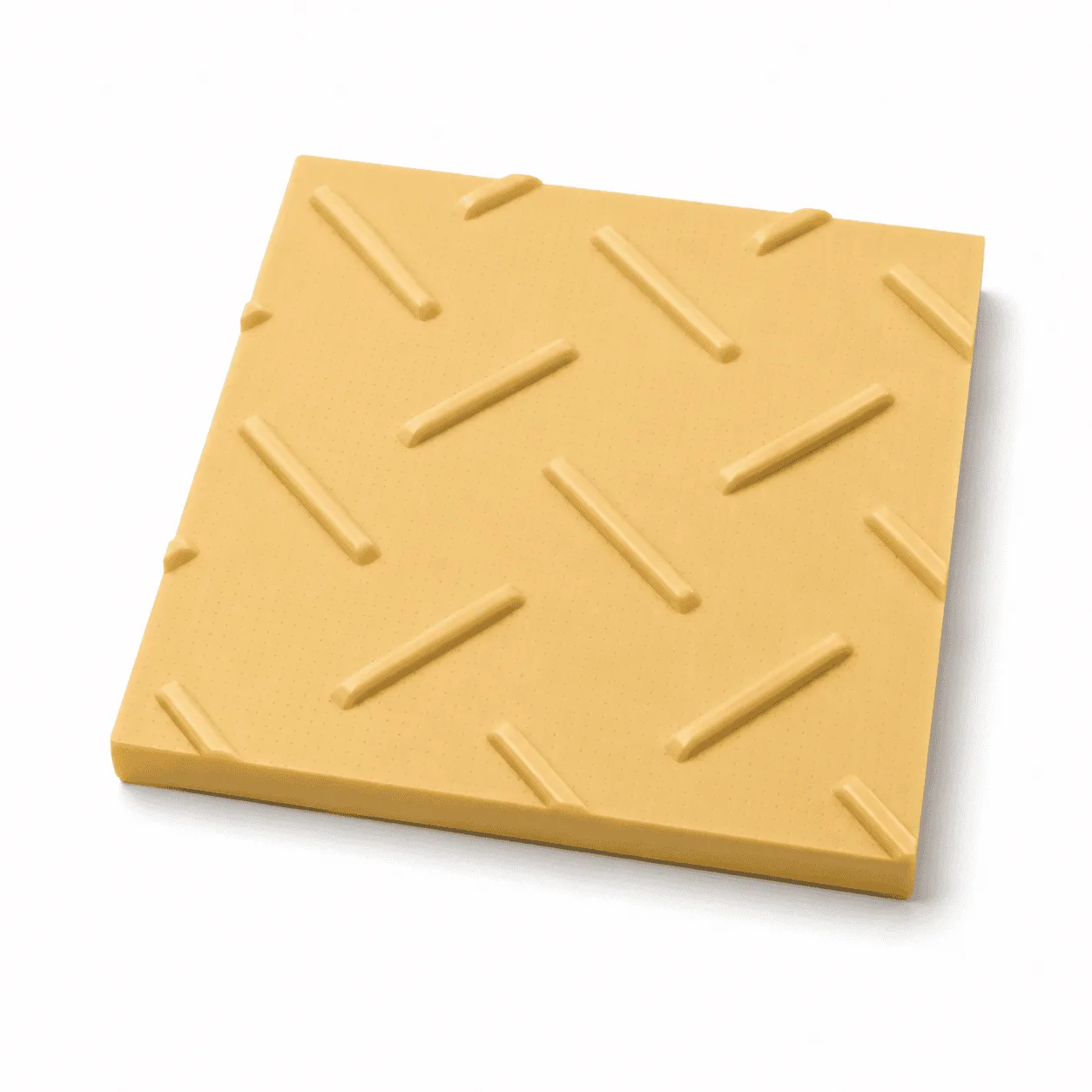
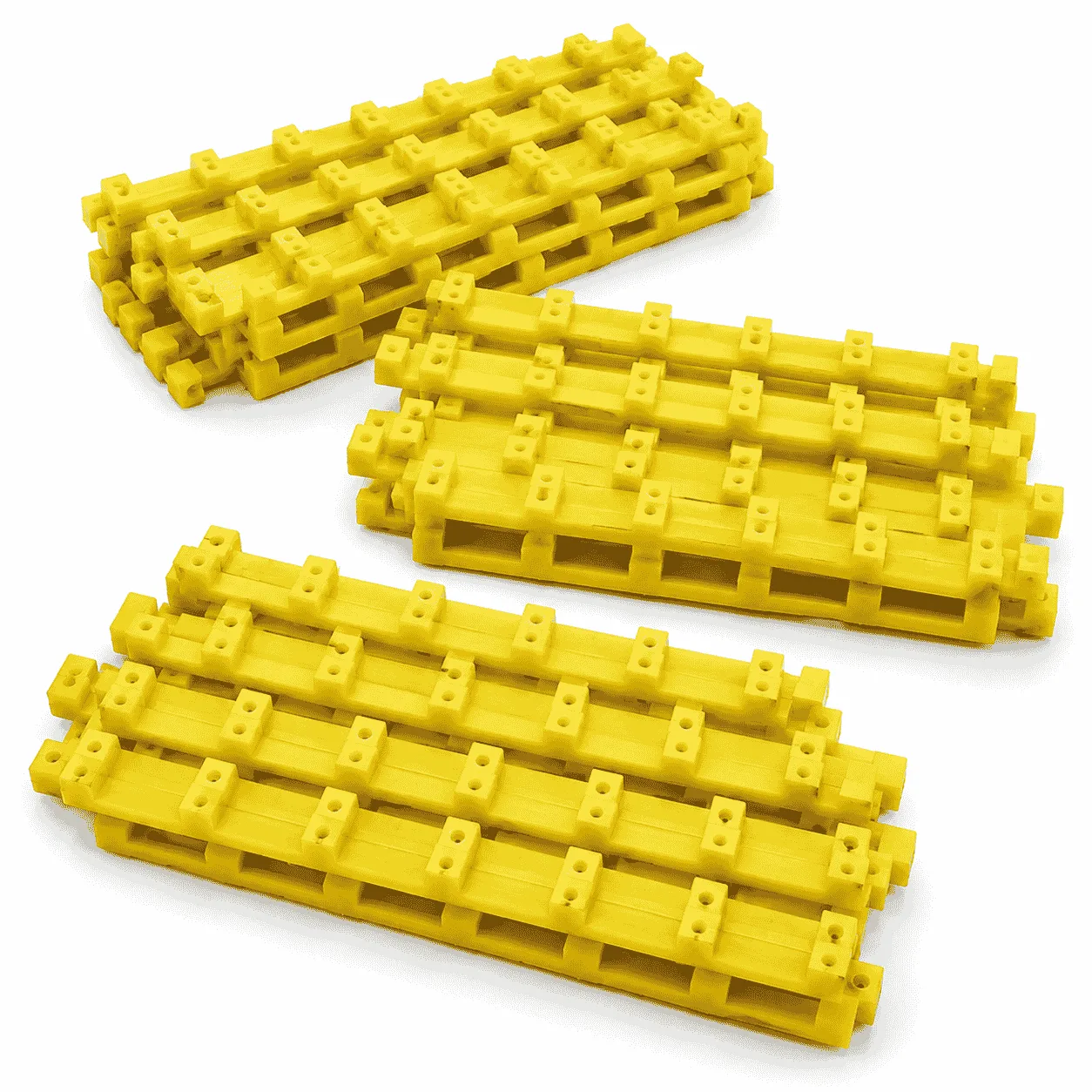
Yellow Polyethylene Ground Protection Mats are durable reusable plastic panels designed for temporary roads, vehicle access and soft ground protection. Their bright yellow color provides strong visibility, while the textured surface helps improve tire traction. Made from tough polyethylene material, these mats offer good impact resistance, wear resistance, low water absorption and easy handling for mud, grass, sand, temporary parking, equipment transport and outdoor access routes.
Yellow Polyethylene Ground Protection Mats are durable reusable plastic panels designed to create temporary roads and vehicle access routes while helping protect the original ground surface. Their bright yellow appearance makes them easy to identify in outdoor areas, equipment routes and temporary access zones.
Made from tough polyethylene engineering plastic, these mats combine impact resistance, wear resistance, low water absorption and lightweight handling. They can be placed over mud, grass, sand, soft soil and other temporary access surfaces to create a more stable travel path for vehicles and equipment.
Compared with traditional steel plates, polyethylene ground mats are lighter, easier to move and do not rust. The panels can be installed when temporary access is needed and removed after the project or activity is complete.
The surface normally includes a raised traction pattern. This textured structure helps provide additional contact points between vehicle tires and the mat surface. Depending on the mat design, the pattern may include round ribs, cross patterns, diamond textures or other raised structures.
The bright yellow color also improves visual recognition. It is useful in areas where temporary routes, parking zones or equipment access paths need to be clearly visible.
Customers looking for related products can also visit our Ground Protection Mats, HDPE Ground Protection Mats and UHMWPE Sheet pages.
Yellow Polyethylene Ground Protection Mats are reusable plastic panels placed directly over the ground to create temporary surfaces for vehicles, machinery and equipment.
The main purpose of the mats is to reduce direct contact between tires and soft ground.
They can be used over:
The panels can be laid individually or connected together to form temporary roads of different lengths and widths.
The final performance depends on several factors, including mat thickness, material grade, vehicle weight, ground condition and installation method.
The bright yellow color is one of the most distinctive features of these ground protection mats.
Compared with dark-colored panels, yellow mats are easier to notice in many outdoor environments.
This can be useful for:
The color helps make temporary routes easier to identify, especially in large outdoor spaces.
Polyethylene material provides useful toughness and impact resistance.
Temporary access routes may experience repeated tire movement, uneven ground and equipment pressure. A tough plastic panel can absorb selected impact and flex under suitable operating conditions.
This makes polyethylene a practical material for temporary road and ground protection products.
Repeated vehicle movement can create continuous friction on the surface of a temporary road mat.
Polyethylene provides good wear resistance for many outdoor access applications.
Service life depends on:
When the mats remain in suitable condition, they can be removed and used again.
Plastic ground protection mats are much lighter than many traditional steel plates.
Lower weight makes the panels easier to:
This can be especially useful for temporary access projects that require repeated installation and removal.
Polyethylene does not rust like steel.
This makes the mats suitable for outdoor environments involving:
The panels do not require the same rust prevention treatment commonly needed for metal plates.
Polyethylene absorbs very little moisture.
This allows the mats to perform in many wet and humid outdoor environments.
Low water absorption is especially useful for muddy ground, wet grass and temporary access areas exposed to rain.
One of the important advantages of plastic ground protection mats is reusability.
After use, the panels can be:
This makes them practical for businesses and equipment operators that frequently need temporary vehicle access.
Repeated vehicle movement can damage soft ground, grass and other outdoor surfaces.
The mats create a protective layer between tires and the original surface.
They can help reduce:
Many designs include a raised anti-slip pattern.
The surface texture creates additional contact points for vehicle tires and equipment.
Common patterns include:
The most suitable surface structure depends on tire type, ground condition and application requirements.
Temporary road applications are one of the main uses of these mats.
Multiple panels can be placed in a continuous line to create access routes for vehicles and equipment.
Typical applications include:
The road width can be increased by placing several panels side by side.
Muddy ground can make vehicle movement difficult.
Yellow polyethylene mats can be placed over selected muddy areas to create a more stable temporary travel surface.
The final result depends on:
Very soft ground may require additional preparation before installation.
Grass can be damaged by repeated vehicle traffic.
Temporary ground mats can be placed above grass for:
After the temporary activity is complete, the panels can be removed.
Loose sand can reduce traction and make vehicle movement difficult.
Plastic road mats can help create a temporary route over selected sandy surfaces.
The mat layout should be selected according to vehicle weight and ground stability.
The panels can also be arranged to create temporary parking surfaces.
Typical applications include:
Industrial equipment often needs temporary access across outdoor or soft ground areas.
The mats can be used for:
Yellow ground protection mats can also be used in selected logistics and storage environments.
Possible applications include:
Outdoor events often need temporary access without permanently changing the original ground.
The yellow color also makes vehicle and equipment routes easier to identify.
Common uses include:
The surface pattern is an important part of the product design.
A raised texture can help improve contact between vehicle tires and the plastic panel.
When selecting a surface pattern, consider:
Some mats may also use different textures on opposite sides for different ground and tire contact requirements.
Multiple ground protection mats can be connected together to create longer and wider temporary routes.
Depending on the product design, connection methods may include:
Before installation, the ground should be checked for large stones, sharp objects and deep holes.
Proper ground preparation can help the mats lie more evenly.
Yellow Polyethylene Ground Protection Mats can be supplied in different sizes and thicknesses.
The suitable specification depends on:
Larger mats can cover more ground quickly, while smaller panels may be easier to move and store.
Mud, grass, sand and soft soil may require different installation layouts.
Heavier vehicles may require thicker panels and more stable ground preparation.
Frequently used routes may require a different installation plan from areas used only occasionally.
The correct thickness depends on load, ground stability and application requirements.
The surface texture should match the vehicle tire and operating environment.
Yellow mats are useful where access routes need to be visually clear and easy to identify.
Plastic temporary road mats can offer several practical advantages compared with steel plates in selected applications.
These include:
However, plastic panels do not replace steel in every situation.
Extreme loads, unstable ground and specialized vehicle requirements should always be evaluated.
These panels are designed for temporary access and repeated use.
After use, the recommended process includes:
Proper handling and storage can help maintain the product condition for future applications.
For general information about polyethylene materials, you can read the Polyethylene overview on Wikipedia.
You can also review the Polyethylene material reference from Encyclopaedia Britannica.
These are standard external links without a nofollow attribute, so they can be treated as DoFollow links by search engines.
These temporary road panels provide a practical combination of:
They are suitable for temporary roads, muddy ground, grass, sand, equipment access, temporary parking, outdoor events and material transport routes.
They are commonly used for temporary roads, vehicle access routes, grass protection, muddy ground, equipment transport and temporary parking.
The bright yellow color provides high visibility and makes temporary access routes easier to identify.
Yes. The panels can be removed, cleaned, inspected and reused when they remain in suitable condition.
Yes. Temporary grass protection is one of the common applications.
Yes. They can help create temporary vehicle access over selected muddy and soft ground conditions.
Yes. Plastic panels are generally much lighter than traditional steel road plates.
No. Polyethylene mats do not rust like steel.
Yes. Different standard sizes and thicknesses can be selected according to vehicle and application requirements.
Yellow Polyethylene Ground Protection Mats are durable reusable plastic panels designed for temporary roads, vehicle access and soft ground protection.
The bright yellow color provides clear visibility, while the polyethylene material offers impact resistance, wear resistance, low water absorption and lightweight handling.
The mats can be used over mud, grass, sand, soft soil and other temporary access surfaces.
Common applications include temporary roads, equipment transport routes, parking areas, outdoor events, warehouse loading zones and material handling areas.
Different standard sizes, thicknesses, surface patterns and connection options can be selected according to ground conditions and vehicle requirements.
For related products, you can also visit our Ground Protection Mats, HDPE Ground Protection Mats and UHMWPE Sheet pages.
Check drawings for full specifications and confirm materials according to service conditions to prevent product defects.
Inspect all key processing steps and fully verify dimensions, holes, grooves and fitting surfaces.
Deburr, chamfer and clean products for easy installation. Ensure uniform quality among batch products.
Choose appropriate packaging solutions based on product features to protect goods from collision, deformation and mixing during transit.
Unlike metal parts, engineering plastic components still require strict control over dimensions, holes, edges, surface, materials and assembly performance for equipment use.
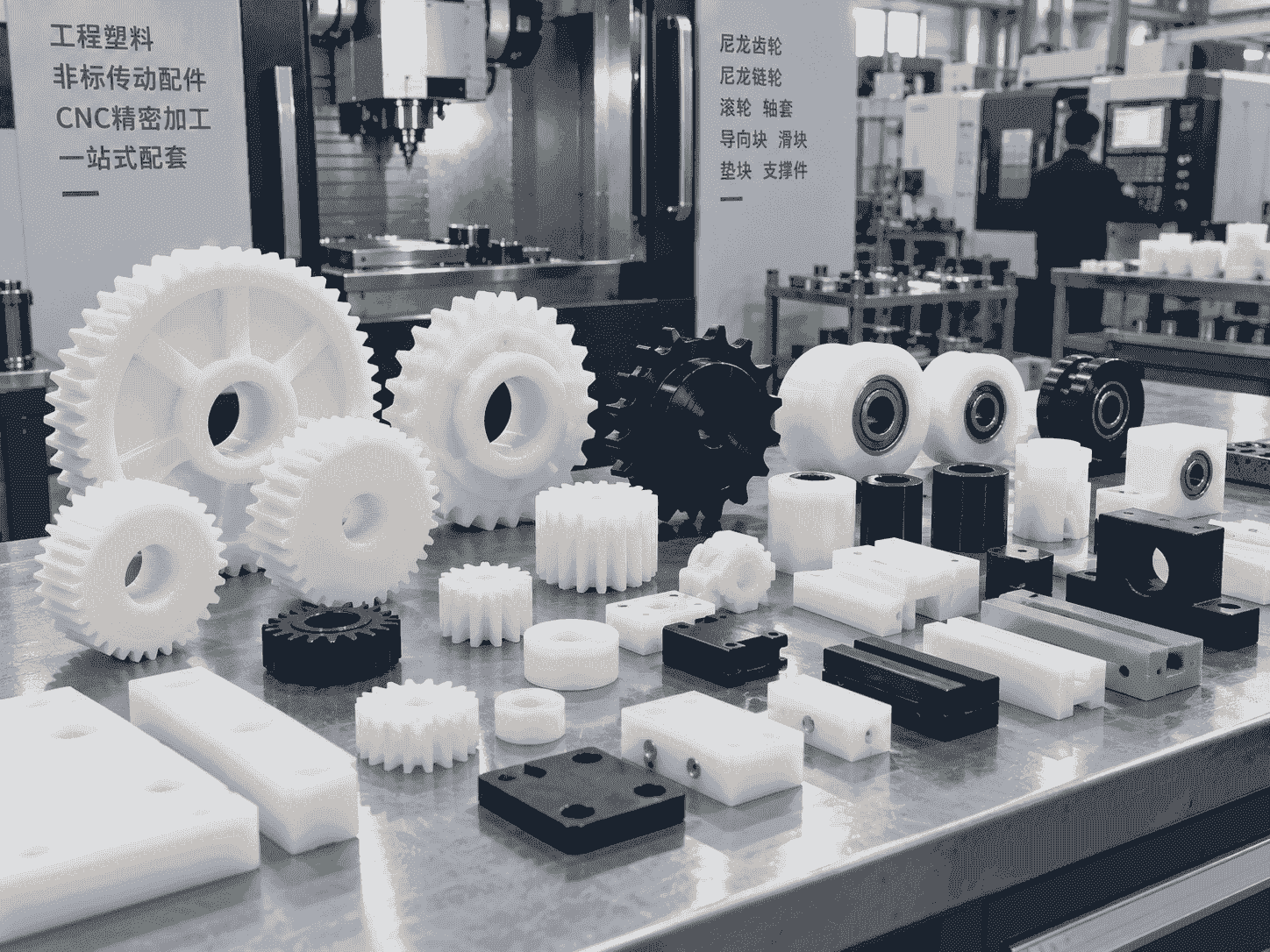
Engineering plastic parts suit friction, guide, support, buffer, anti-corrosion and insulation areas. We supply UHMWPE, POM, PA, PP/PE components for conveyor, food, mining, machinery, chemical and cable systems, with custom OEM service available.
Stay updated with our latest industry insights, company updates and featured articles.

Engineering plastics are increasingly used in industrial machinery, automated production lines, conveyor systems, packaging equipment, and food-processing machines. Materials such as nylon, UHMWPE, POM, and

Both are lightweight, corrosion-resistant, wear-resistant, and suitable for CNC machining. However, they perform very differently

Wear is a common cause of failure in conveyor systems, packaging machinery, automated equipment, mining

CNC machining is widely used to produce plastic prototypes, low-volume parts, replacement components, jigs, fixtures,

Both are lightweight, corrosion-resistant, wear-resistant, and suitable for CNC machining. However, they perform very differently

Wear is a common cause of failure in conveyor systems, packaging machinery, automated equipment, mining

CNC machining is widely used to produce plastic prototypes, low-volume parts, replacement components, jigs, fixtures,
Need UHMWPE sheets & custom plastic machined/OEM parts?Send specs & material needs, free quote within 24h.