Heavy Duty Ground Protection Mats for Temporary Access Roads
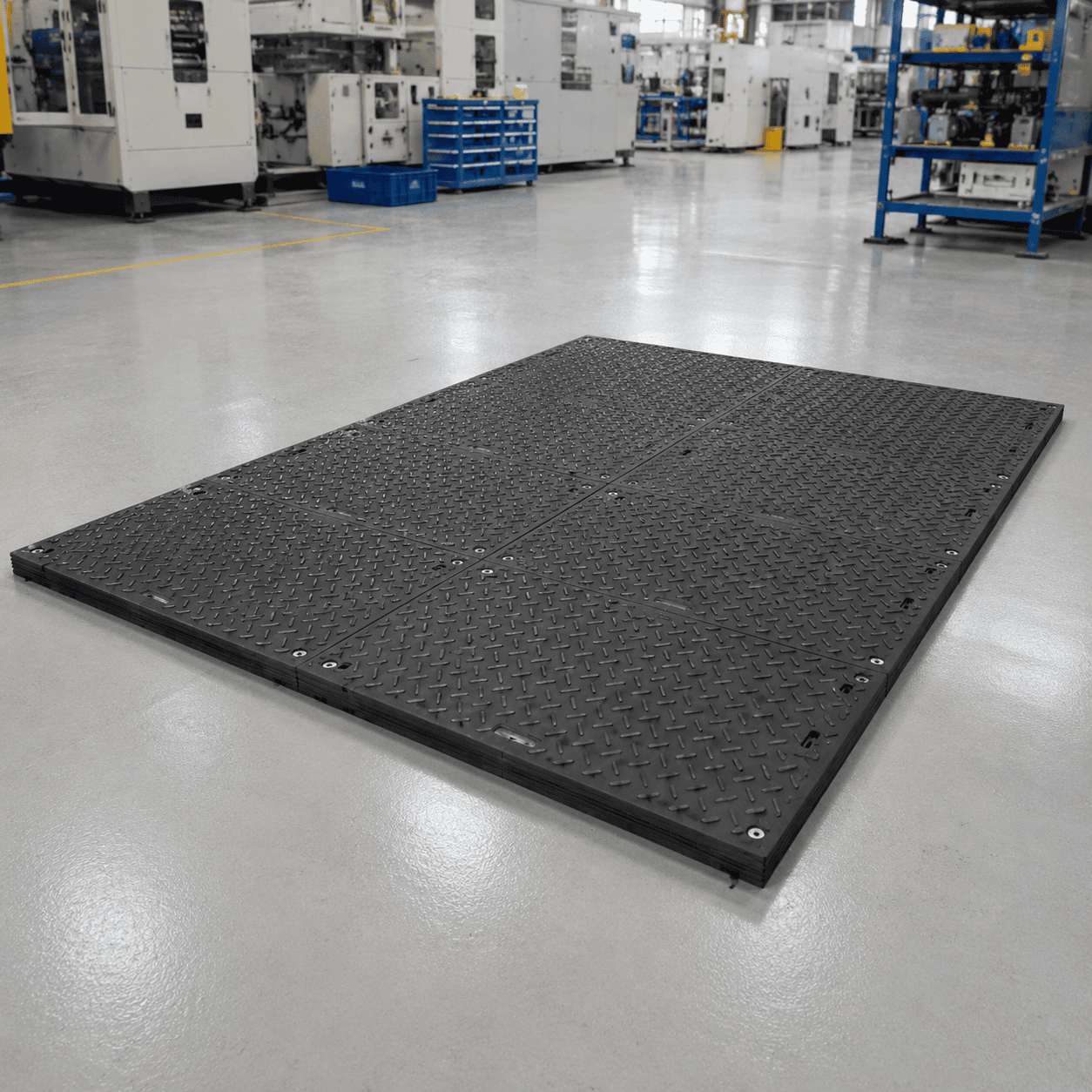
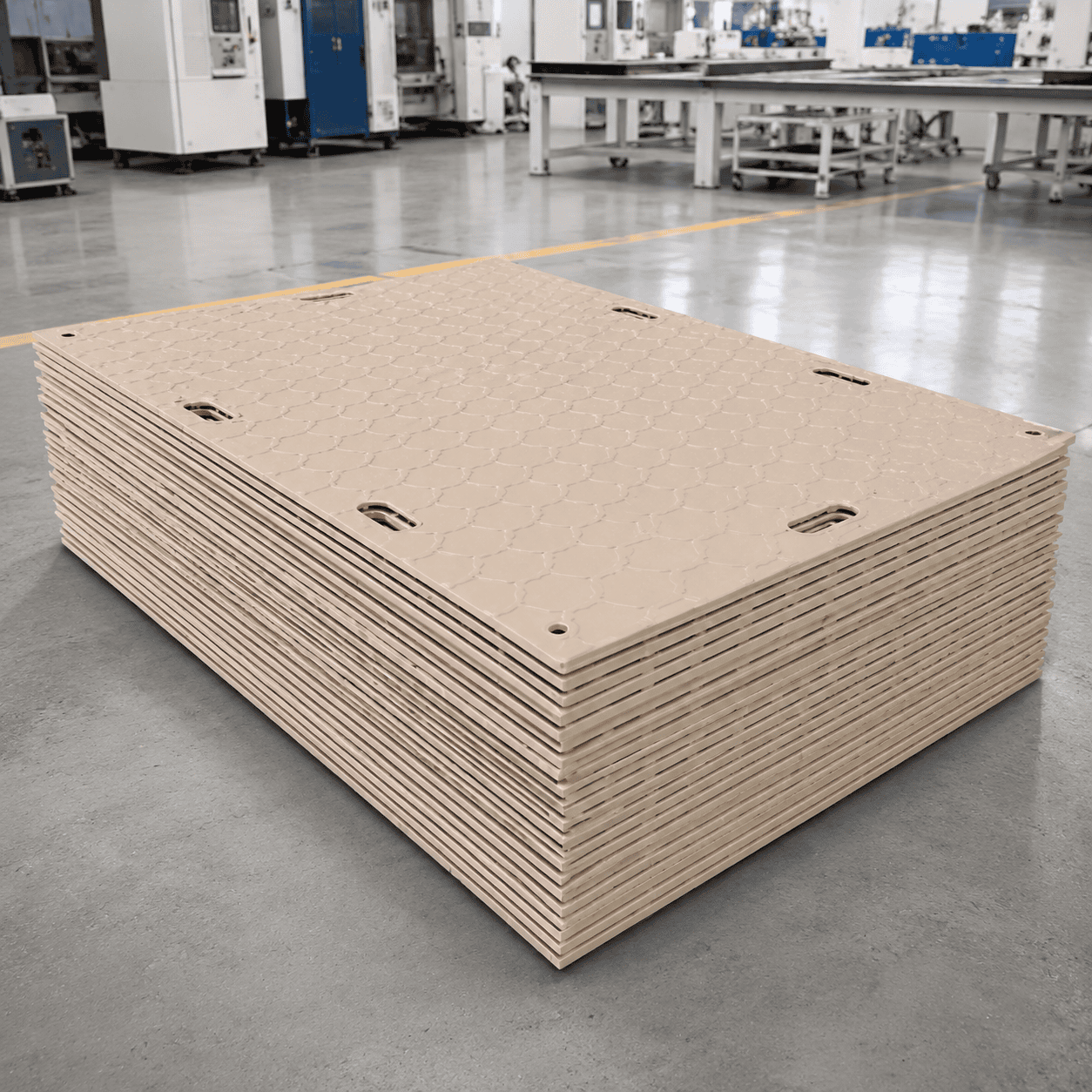
Heavy Duty Ground Protection Mats are designed to create stable temporary access routes across mud, grass, sand, gravel, and other soft or sensitive surfaces. Made from durable high molecular weight polyethylene, these large-format mats help distribute vehicle loads over a wider area and reduce direct damage to the ground. They are commonly used for temporary roadways, heavy equipment access, industrial transport routes, forestry access, outdoor logistics, and large event traffic management.
Compared with steel plates and timber mats, Heavy Duty Ground Protection Mats offer a practical combination of impact resistance, low water absorption, corrosion resistance, and repeated-use capability. The polyethylene construction does not rust like steel and does not rot or splinter like wood. This makes the mats suitable for wet, muddy, and demanding outdoor environments where temporary vehicle access is required.
Typical Size of Heavy Duty Ground Protection Mats
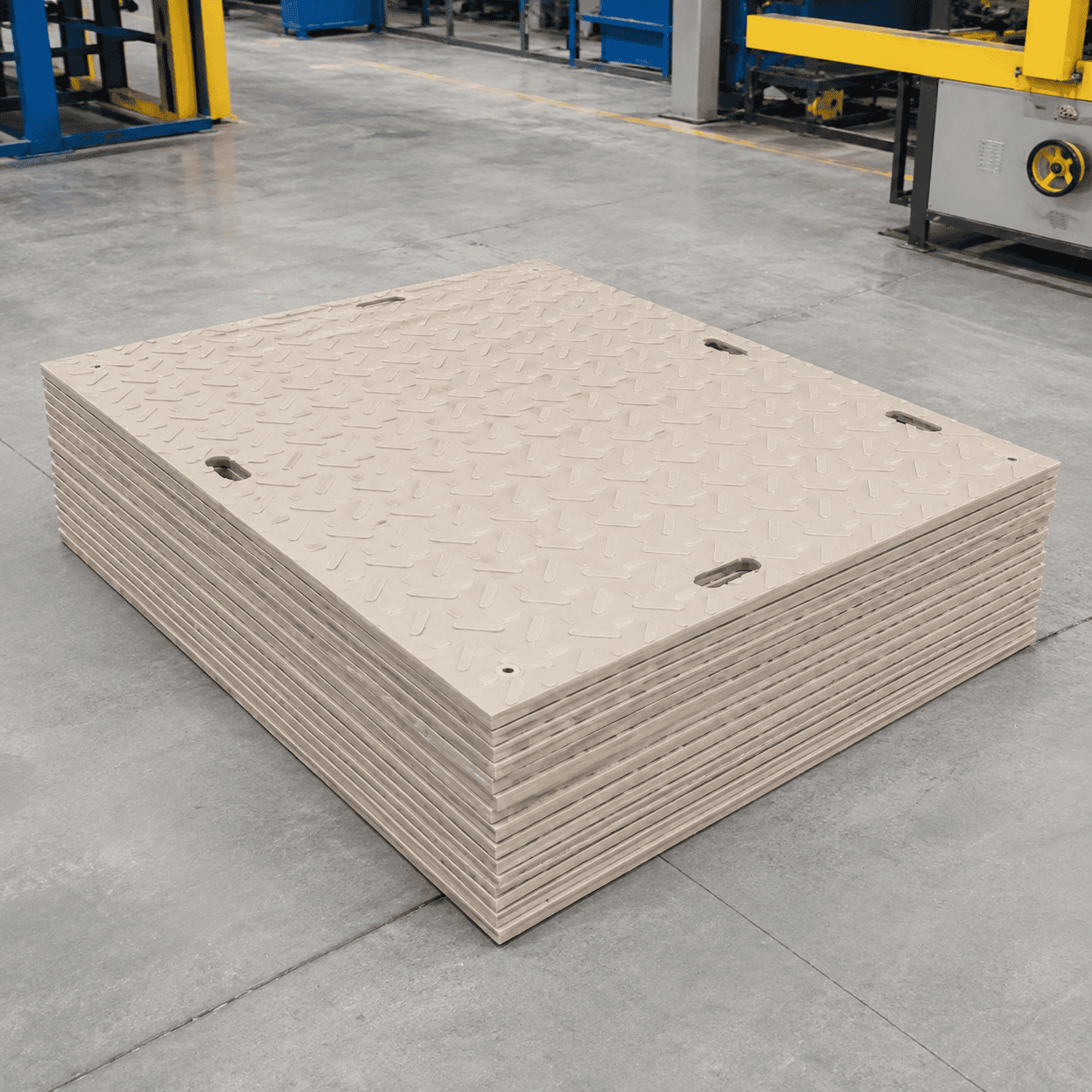
A commonly used heavy-duty specification for this type of mat is approximately 4000 × 2000 × 50 mm. This large format provides a nominal surface coverage of about 8 m² per mat before allowing for installation gaps, joints, connection hardware, or overlap.
A polyethylene mat of this size may weigh around 340 kg per panel. The actual weight can vary according to the exact material grade, internal structure, surface pattern, edge design, manufacturing process, and dimensional tolerance.
- Typical length: 4000 mm
- Typical width: 2000 mm
- Typical thickness: 50 mm
- Nominal surface area: Approximately 8 m²
- Approximate weight: Around 340 kg per mat
- Material: High molecular weight polyethylene
- Surface: Heavy-duty anti-slip traction pattern
- Typical use: Temporary access roads and heavy vehicle routes
Under suitable ground and installation conditions, Heavy Duty Ground Protection Mats of this class may be used for vehicles with a gross operating weight of up to approximately 150 tonnes. Actual performance depends on the bearing capacity of the ground, vehicle type, wheel or track contact area, traffic frequency, turning movements, installation method, and mat layout.
For extremely soft, water-saturated, or unstable ground, additional preparation or supporting layers may be required. Vehicle weight alone should not be used as the only factor when selecting a ground protection system.
Heavy Duty Ground Protection Mats for Heavy Vehicle Access
The large dimensions of Heavy Duty Ground Protection Mats help spread wheel and track loads over a broader area. This can reduce deep rutting, sinking, and direct surface damage when trucks, tracked machinery, transport vehicles, or other heavy equipment need to cross unstable ground.
The typical 50 mm thickness provides a strong temporary roadway surface for demanding access conditions. At the same time, polyethylene offers toughness and impact resistance, allowing the mats to withstand repeated vehicle movement and dynamic loading.
The exact service life depends on traffic intensity, vehicle type, ground conditions, installation quality, storage, and handling. Correct installation and suitable ground preparation can significantly improve the performance of the temporary roadway system.
Anti-Slip Surface Design
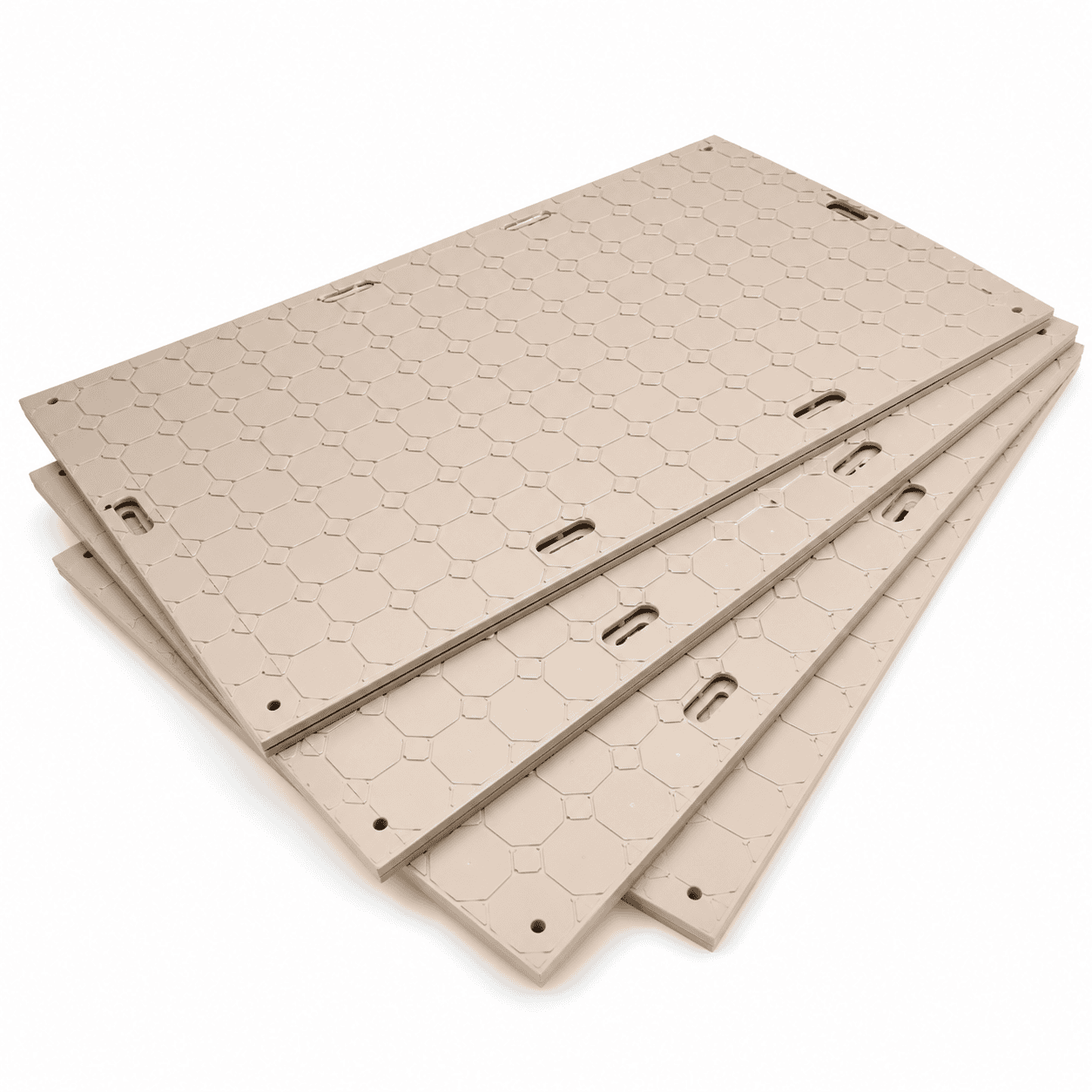
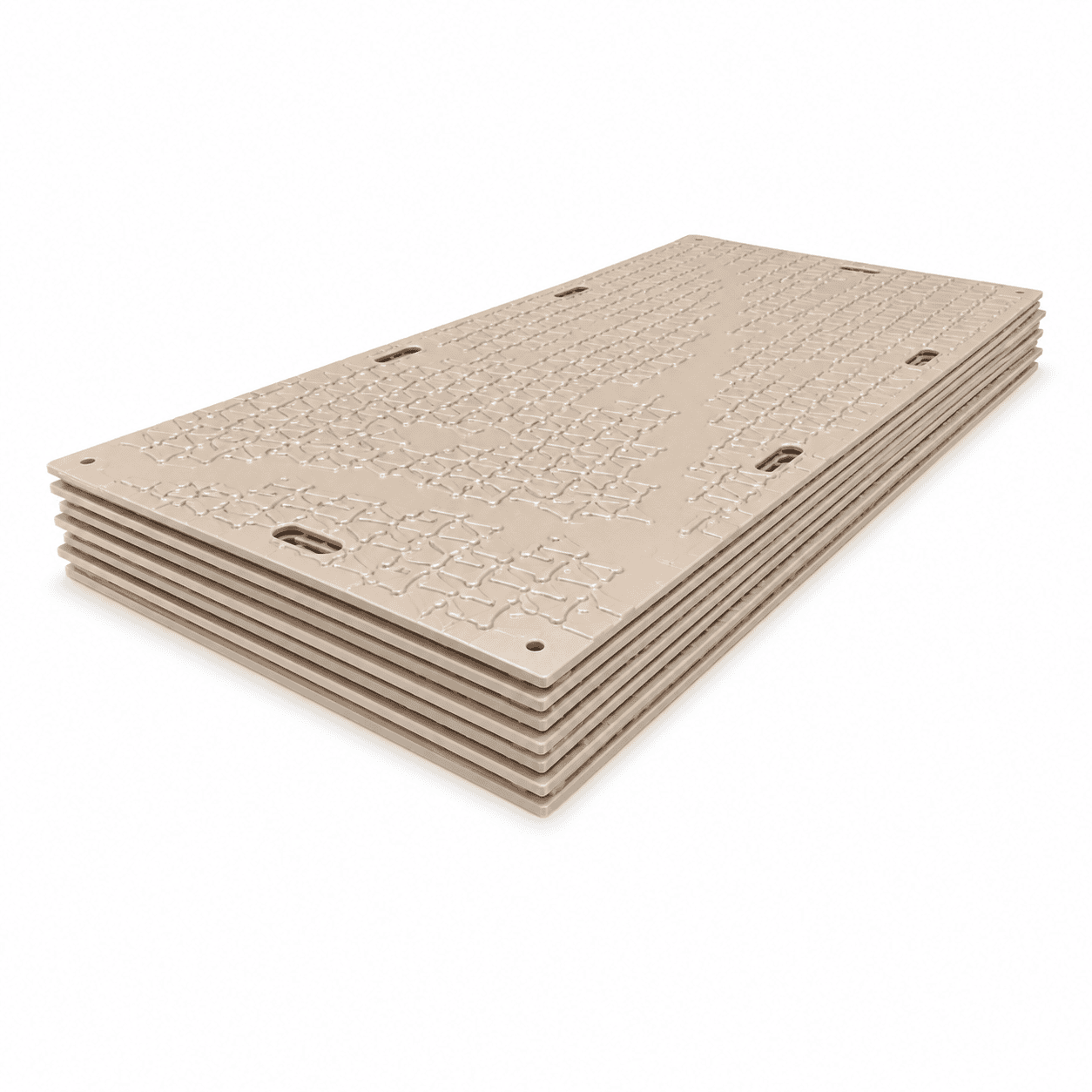
Heavy Duty Ground Protection Mats normally use a raised traction pattern to improve contact between vehicle tyres or tracks and the mat surface. Depending on the product design, the surface may feature raised blocks, chevron-style patterns, micro-texture, or a combination of heavy-duty traction structures.
This textured surface is especially useful in wet, dusty, sandy, or muddy environments where a completely smooth plastic panel would provide less grip. The raised pattern helps vehicles maintain better contact with the temporary roadway during straight-line movement.
Some mat designs use different patterns on the upper and lower surfaces. One side can provide enhanced vehicle traction, while the reverse side can improve contact with the underlying ground. The exact surface structure should be selected according to the intended application.
Why Choose Polyethylene Ground Protection Mats?
Traditional temporary road systems often rely on steel plates, timber mats, or other heavy materials. These solutions can work effectively, but each has limitations. Steel plates are extremely heavy and may develop corrosion. Timber can absorb moisture, crack, rot, or splinter after repeated outdoor exposure.
In comparison, Heavy Duty Ground Protection Mats made from polyethylene provide low water absorption, resistance to rust, good impact performance, and reduced maintenance requirements. The material does not require painting or conventional anti-corrosion treatment for normal outdoor use.
Polyethylene also provides useful resistance to many commonly encountered chemicals and environmental conditions. For general information about the material, you can read more about polyethylene material.
This makes polyethylene mats especially suitable for temporary access routes that may be exposed to rain, mud, moisture, outdoor storage, and repeated installation.
Typical Applications of Heavy Duty Ground Protection Mats
Heavy Duty Ground Protection Mats can be used for a wide range of temporary access and ground protection requirements, including:
- Temporary access roads for trucks and heavy vehicles
- Soft ground vehicle routes
- Muddy and wet access areas
- Temporary industrial transport lanes
- Heavy equipment movement routes
- Grass and landscape protection
- Temporary parking and vehicle staging areas
- Outdoor logistics and loading routes
- Sand and loose soil access roads
- Forestry and remote-area access
- Large event and exhibition traffic routes
- Temporary vehicle circulation roads
The large 4000 × 2000 mm format is especially useful for wide temporary routes because each panel provides approximately 8 m² of nominal ground coverage. Fewer panels may be required compared with smaller ground protection boards when covering long or wide access routes.
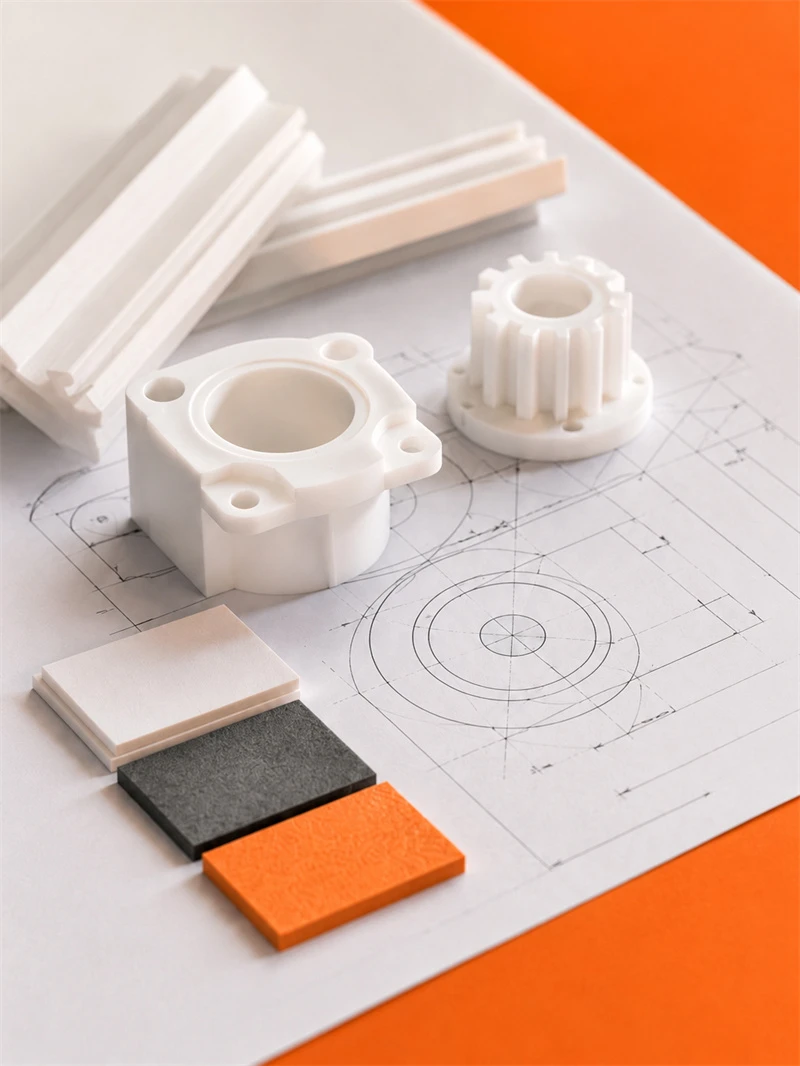
For more information about related materials and manufacturing capabilities, visit our UHMWPE and polyethylene material solutions.
Fast Installation and Reusable Construction
A modular temporary roadway system can be installed for a specific project, removed after use, cleaned, transported, and laid again at another location. The reusable construction of Heavy Duty Ground Protection Mats makes them suitable for projects where temporary access routes are frequently moved or rebuilt.
The large 4000 × 2000 mm format reduces the number of individual panels required over long access routes. Depending on the application, the mats can be positioned edge to edge or connected using suitable joining hardware.
Connections are particularly useful on uneven ground, sloped routes, or areas with frequent vehicle traffic because they can help maintain a more continuous roadway surface and reduce unwanted movement between adjacent panels.
Before installation, the route should be checked for deep holes, sharp objects, severe level changes, and areas with insufficient ground support. Very weak ground may require levelling, drainage improvement, geotextile, aggregate, or another supporting layer before the mats are installed.
Outdoor Durability and Low Maintenance
Heavy Duty Ground Protection Mats are suitable for repeated outdoor use because polyethylene does not absorb water in the same way as timber and does not corrode like untreated metal. The mats can be cleaned after use to remove mud, sand, and other surface contamination before storage or transport.
The material also offers good resistance to impact and repeated handling. This is important because temporary road mats are often installed, removed, transported, stacked, and reused in different locations.
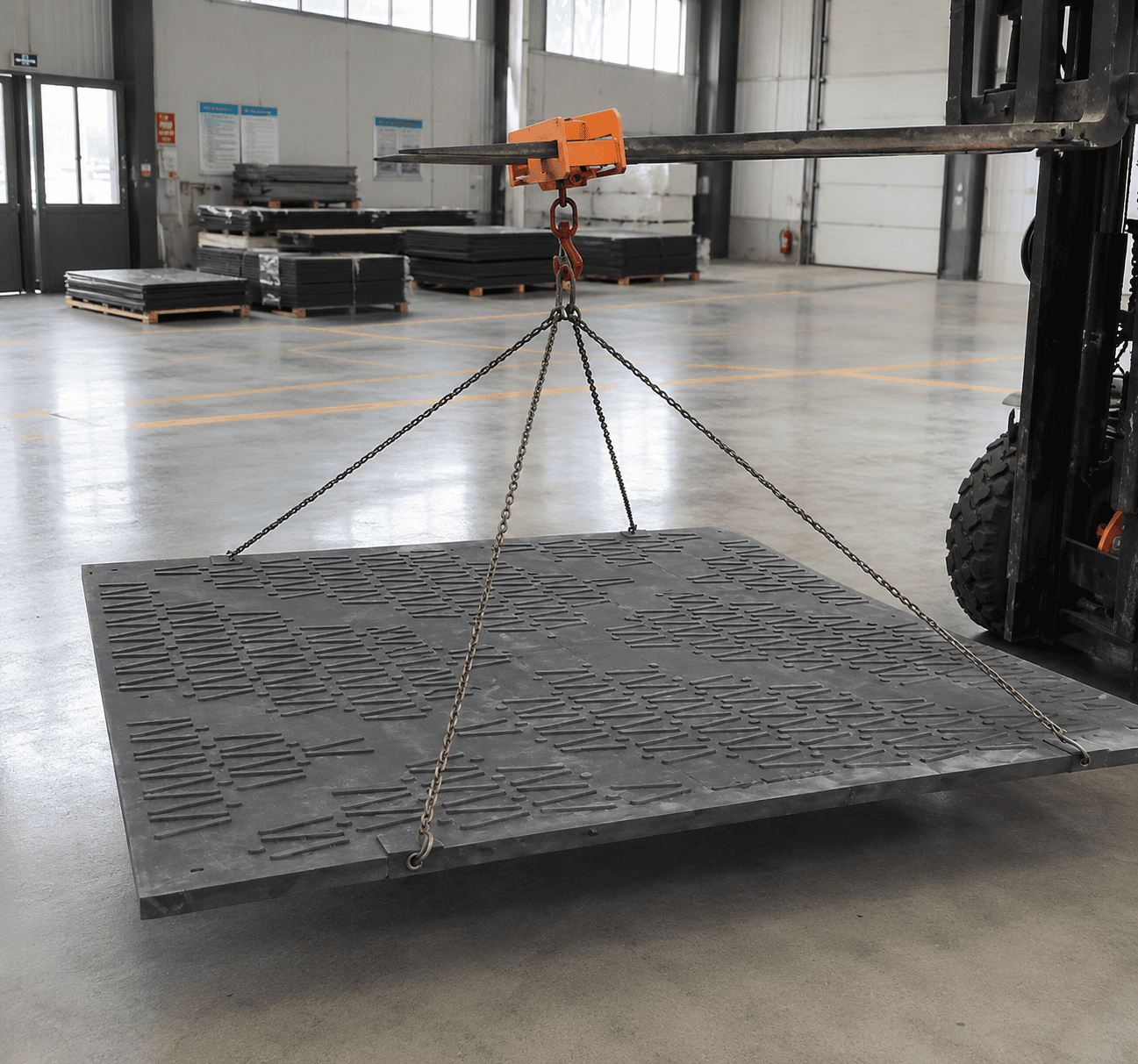
For a longer service life, the mats should be lifted and moved using suitable equipment, protected from uncontrolled sharp impacts, and stored on stable ground. Connection points, edges, and surface patterns should also be checked before reuse, especially after demanding heavy vehicle applications.
How to Select the Correct Heavy Duty Ground Protection Mats
Choosing Heavy Duty Ground Protection Mats should not be based only on vehicle weight. The correct specification depends on the complete operating conditions, including soil type, moisture level, vehicle weight, wheel pressure, tracked or wheeled configuration, turning frequency, daily traffic volume, route length, slope, and expected service period.
For example, a 4000 × 2000 × 50 mm mat may be suitable for a demanding temporary access route, but the final installation should still be evaluated according to the actual ground bearing capacity.
A firm gravel surface and saturated soft soil can produce very different results even when the same vehicle and mat are used. For this reason, the ground condition, panel thickness, mat arrangement, connection system, and vehicle operating pattern should be considered together.
7 Powerful Benefits of Heavy Duty Ground Protection Mats
- Creates stable temporary access routes
- Helps protect soft and sensitive ground
- Provides a raised anti-slip traction surface
- Does not rust like conventional steel plates
- Does not rot or splinter like timber mats
- Can be removed and reused for different projects
- Suitable for demanding heavy vehicle access conditions
Conclusion
Heavy Duty Ground Protection Mats provide a durable solution for temporary roads and heavy vehicle access across unstable or sensitive ground. A typical heavy-duty panel measures approximately 4000 × 2000 × 50 mm, covers about 8 m², and weighs around 340 kg.
With an anti-slip traction surface, impact-resistant polyethylene construction, low water absorption, and reusable design, these mats are suitable for demanding temporary access applications on mud, grass, sand, gravel, and other soft surfaces.
For the best result, the mat size, vehicle load, ground condition, connection method, and installation plan should be considered together. Proper selection and installation help Heavy Duty Ground Protection Mats create a more stable, durable, and efficient temporary access route.