Heavy Duty Interlocking Ground Mats for Temporary Roadways
Heavy Duty Interlocking Ground Mats are designed to create temporary access routes across mud, grass, soft soil, gravel, and other unstable ground conditions. The large-format panels provide a practical surface for vehicle movement while helping protect the original ground from deep rutting, repeated tyre pressure, and surface damage.
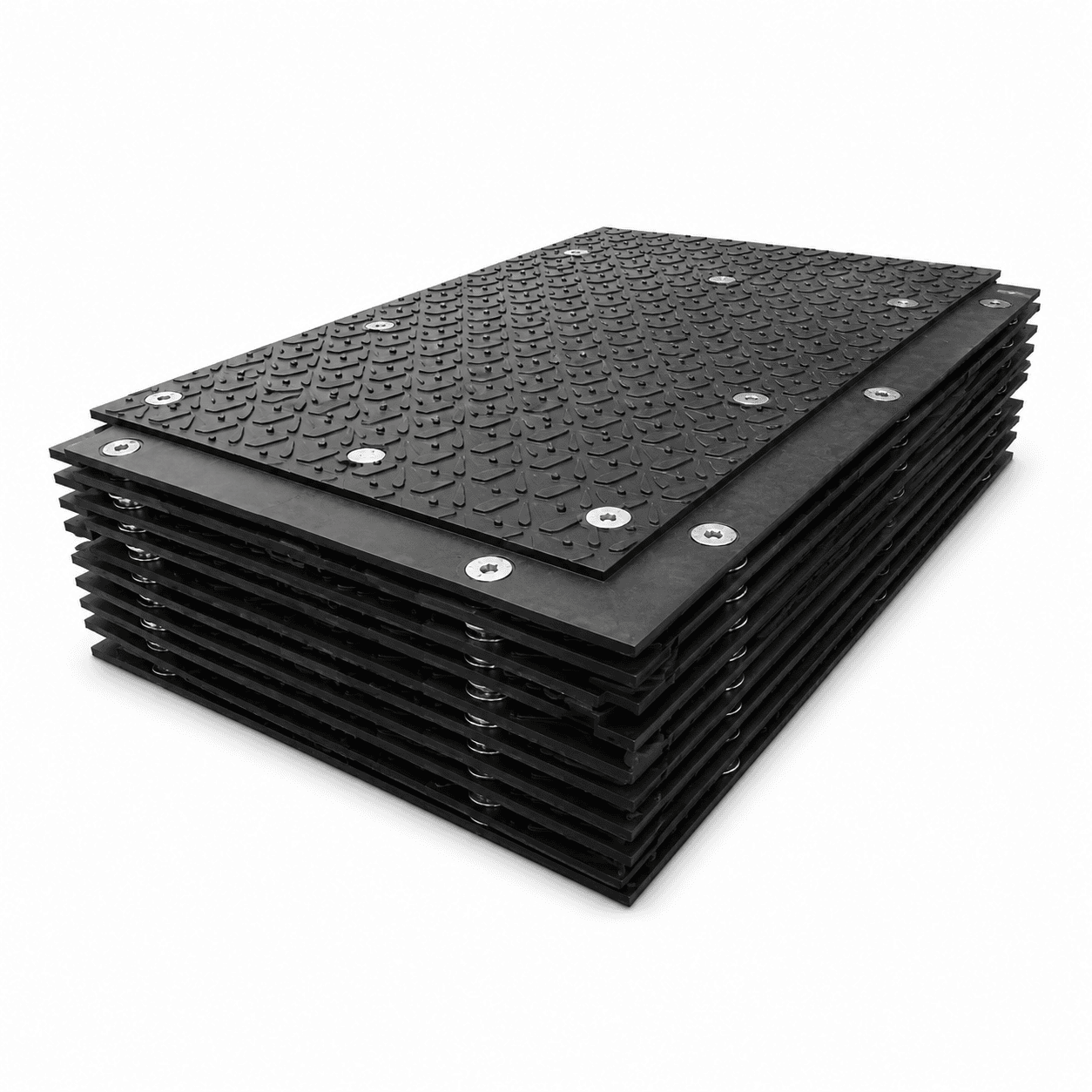
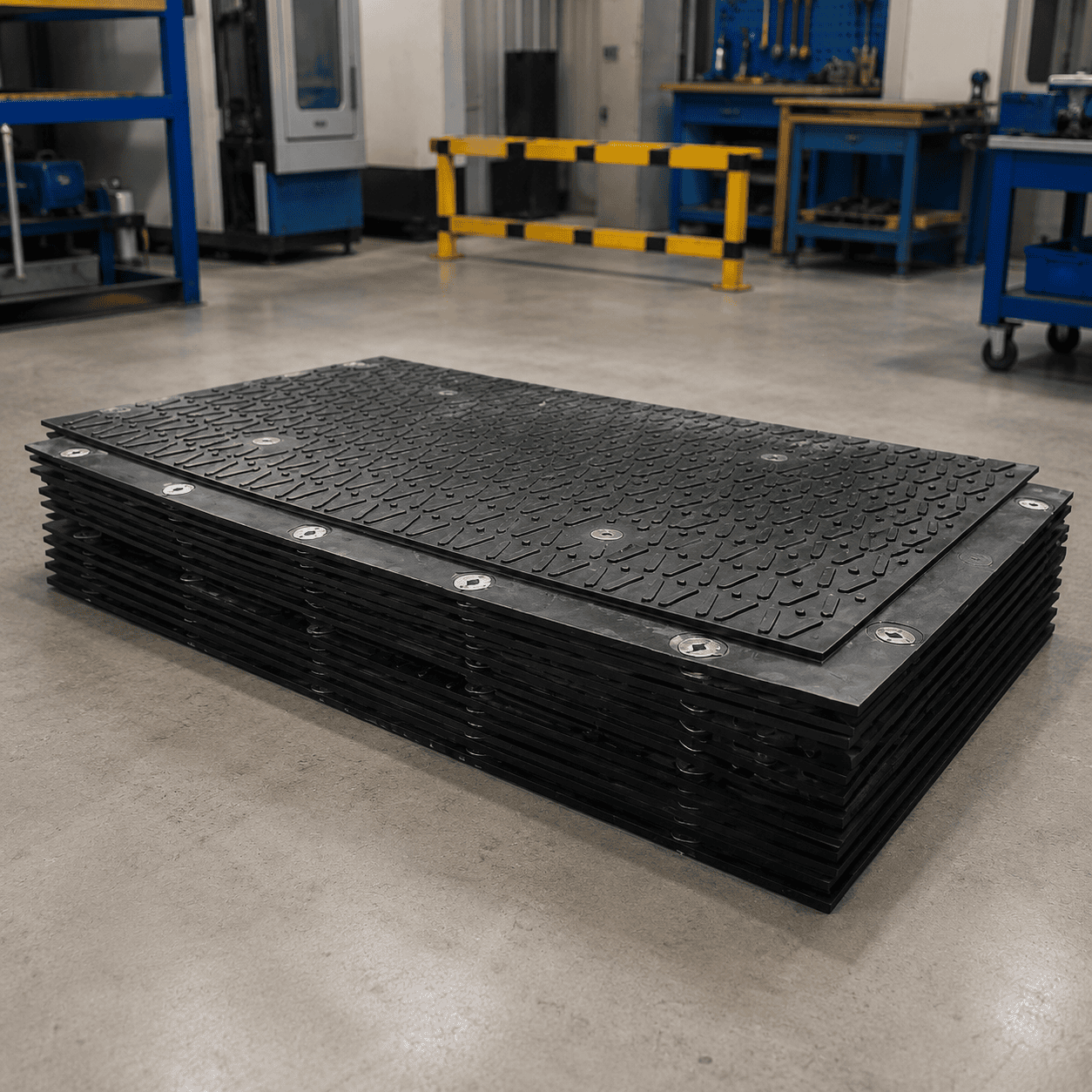
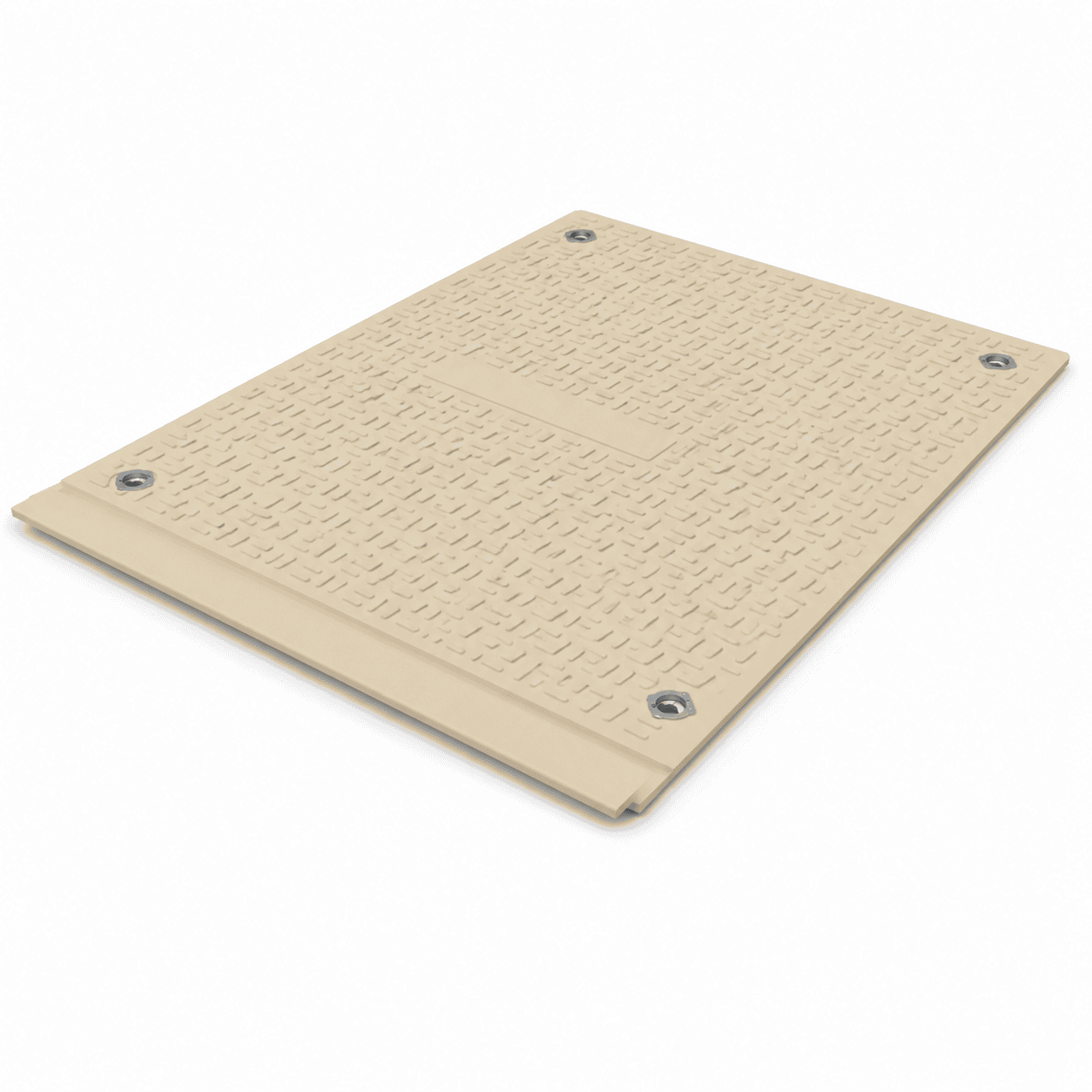
The key feature of these mats is the special interlocking overlap structure. Unlike ordinary temporary road mats that simply meet edge to edge, the overlapping joint design helps cover the connection area between adjacent panels. This reduces open gaps and can help limit mud, dirt, and soft soil from rising through the joints during repeated vehicle traffic.
Heavy Duty Interlocking Ground Mats are suitable for temporary roadways, outdoor logistics areas, industrial access routes, equipment movement, grass protection, temporary parking areas, and other applications where removable ground protection is required.
Typical Sizes of Heavy Duty Interlocking Ground Mats
This product is available in several large-format sizes for different temporary roadway layouts. Typical dimensions shown for this type of mat include:
- 3050 × 2150 mm
- 3000 × 2500 mm
- 4000 × 2000 mm
- Typical thickness: 38–40 mm
The 3050 × 2150 mm panel provides a nominal area of approximately 6.56 m². A 3000 × 2500 mm panel provides approximately 7.5 m², while the 4000 × 2000 mm version provides approximately 8 m² of nominal surface area.
Actual installed coverage may be slightly different because the overlapping joint areas form part of the connection system. The final effective roadway width also depends on the installation direction, mat arrangement, and site layout.
The typical thickness of 38–40 mm provides a substantial panel structure for demanding temporary access applications. The correct size should be selected according to ground conditions, route width, vehicle configuration, traffic frequency, and installation requirements.
Special Interlocking Overlap Joint Design
The main advantage of Heavy Duty Interlocking Ground Mats is their special overlap connection structure. Standard flat panels may leave visible gaps where two mats meet. In muddy or wet conditions, these gaps can allow soil, water, and debris to move upward onto the temporary road surface.
The overlap design helps cover the connection line between neighboring panels. This creates a more continuous surface and reduces direct exposure of the ground underneath the joint.
This design is particularly useful on muddy ground, soft soil, and outdoor routes exposed to repeated vehicle movement. When the panels are installed and aligned correctly, the overlap structure can help create a cleaner and more stable temporary access surface.
The connection areas should be positioned according to the intended installation direction. Correct alignment is important because the overlap structure must work together across the entire roadway.
Textured Surface for Vehicle Traction
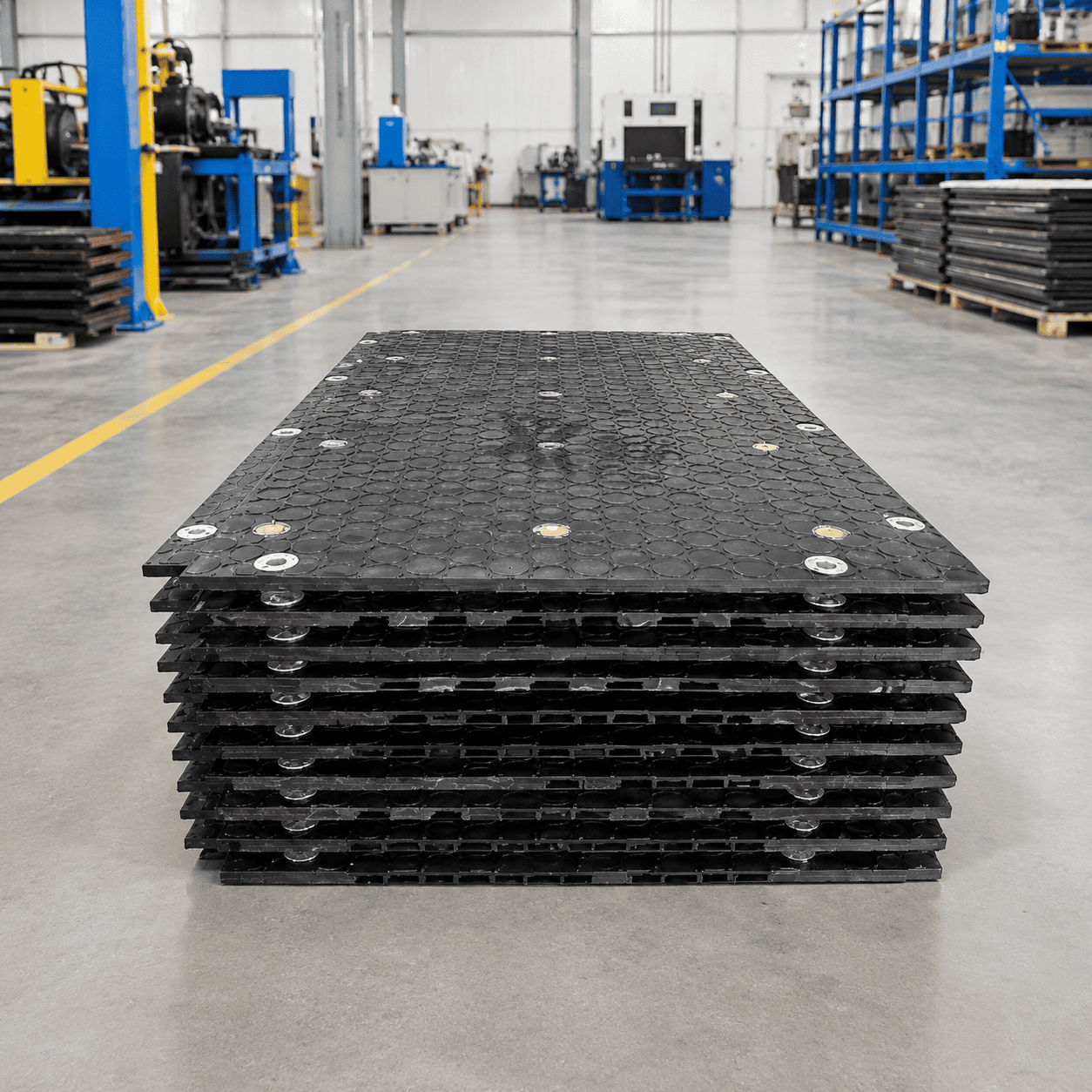
Heavy Duty Interlocking Ground Mats use a raised textured surface to improve contact between the panel and vehicle tyres or tracks. The product shown features a heavy-duty geometric traction pattern across the working surface.
A textured surface is more suitable for outdoor vehicle access than a completely smooth plastic sheet. Rain, dust, mud, and loose material can reduce traction, so the raised pattern helps provide a more practical driving surface.
The exact surface pattern may vary according to product design and production specification. Different patterns can be selected to balance vehicle traction, cleaning requirements, and ground contact performance.
Durable Polyethylene Construction
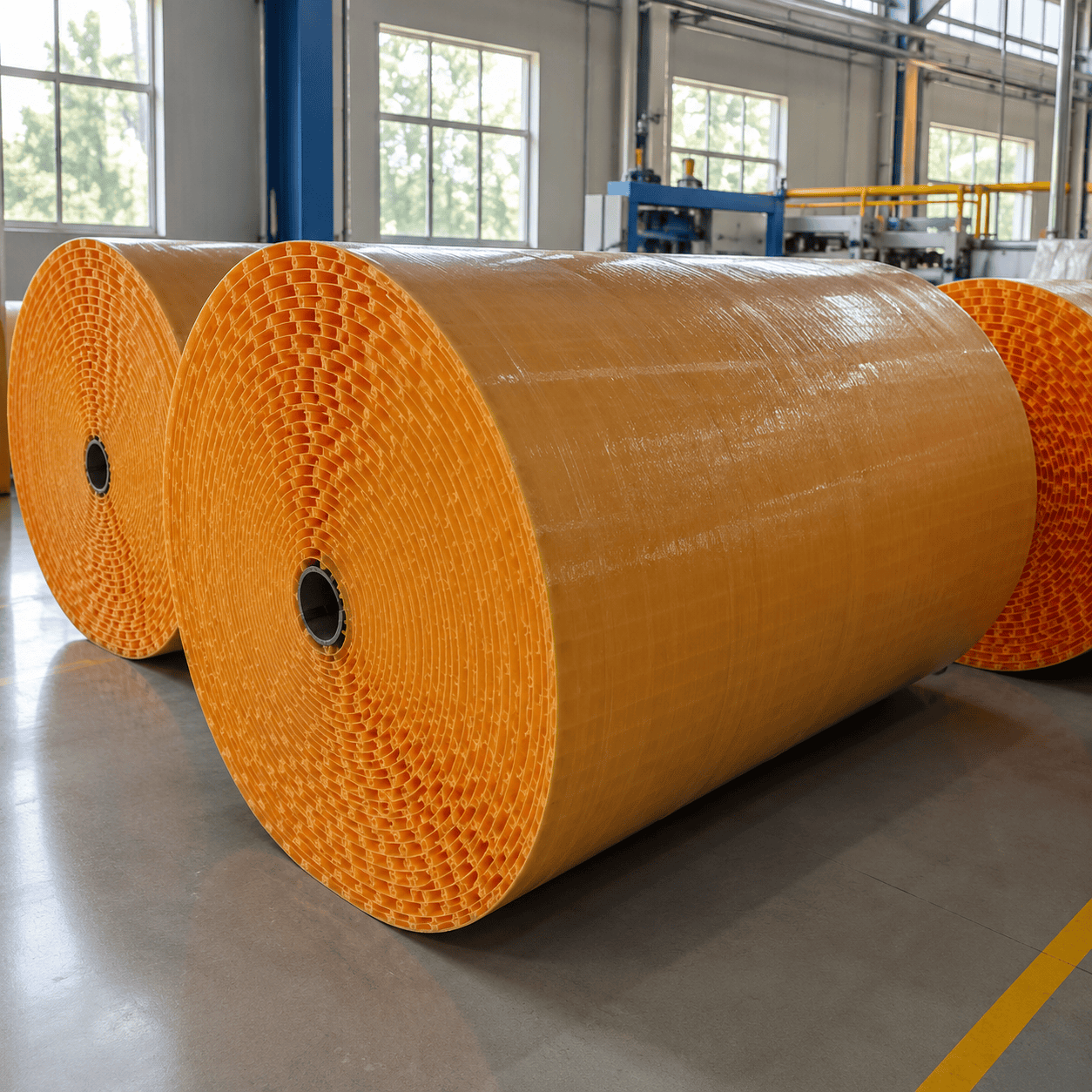
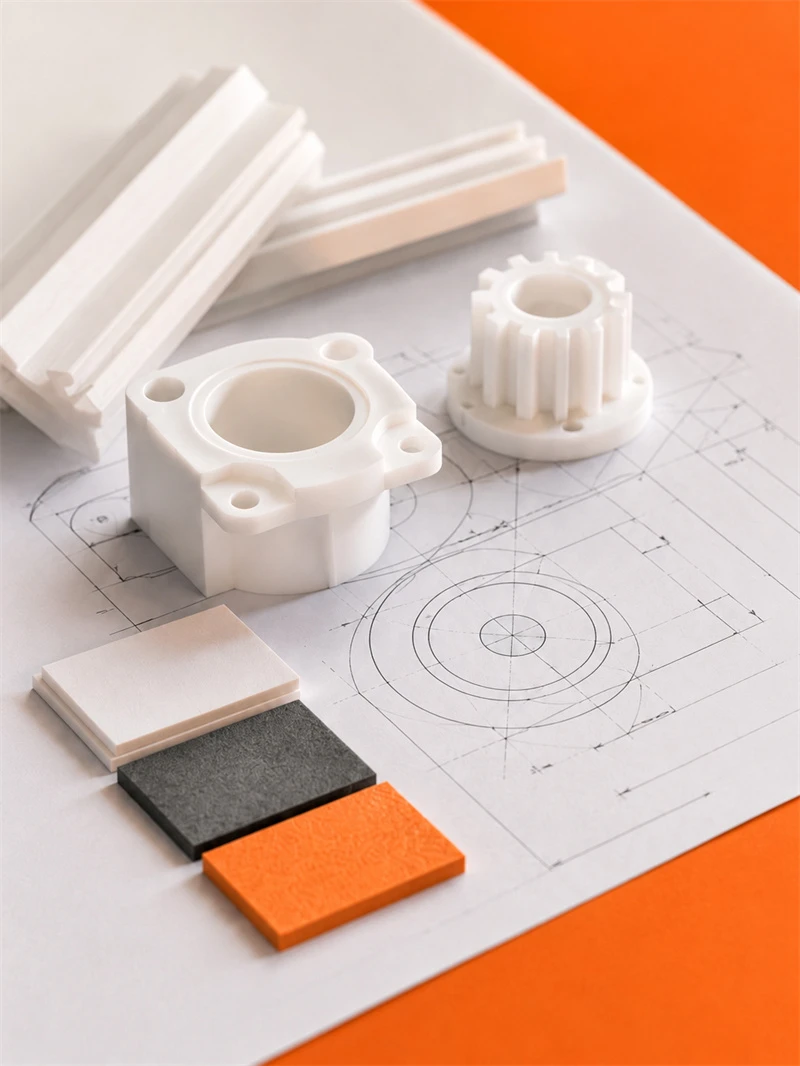
These mats are manufactured from heavy-duty polyethylene material suitable for repeated outdoor use. Polyethylene provides low water absorption, good impact resistance, and excellent resistance to corrosion.
Unlike untreated steel panels, Heavy Duty Interlocking Ground Mats do not rust during normal outdoor use. Unlike timber mats, polyethylene does not rot or splinter after repeated exposure to moisture.
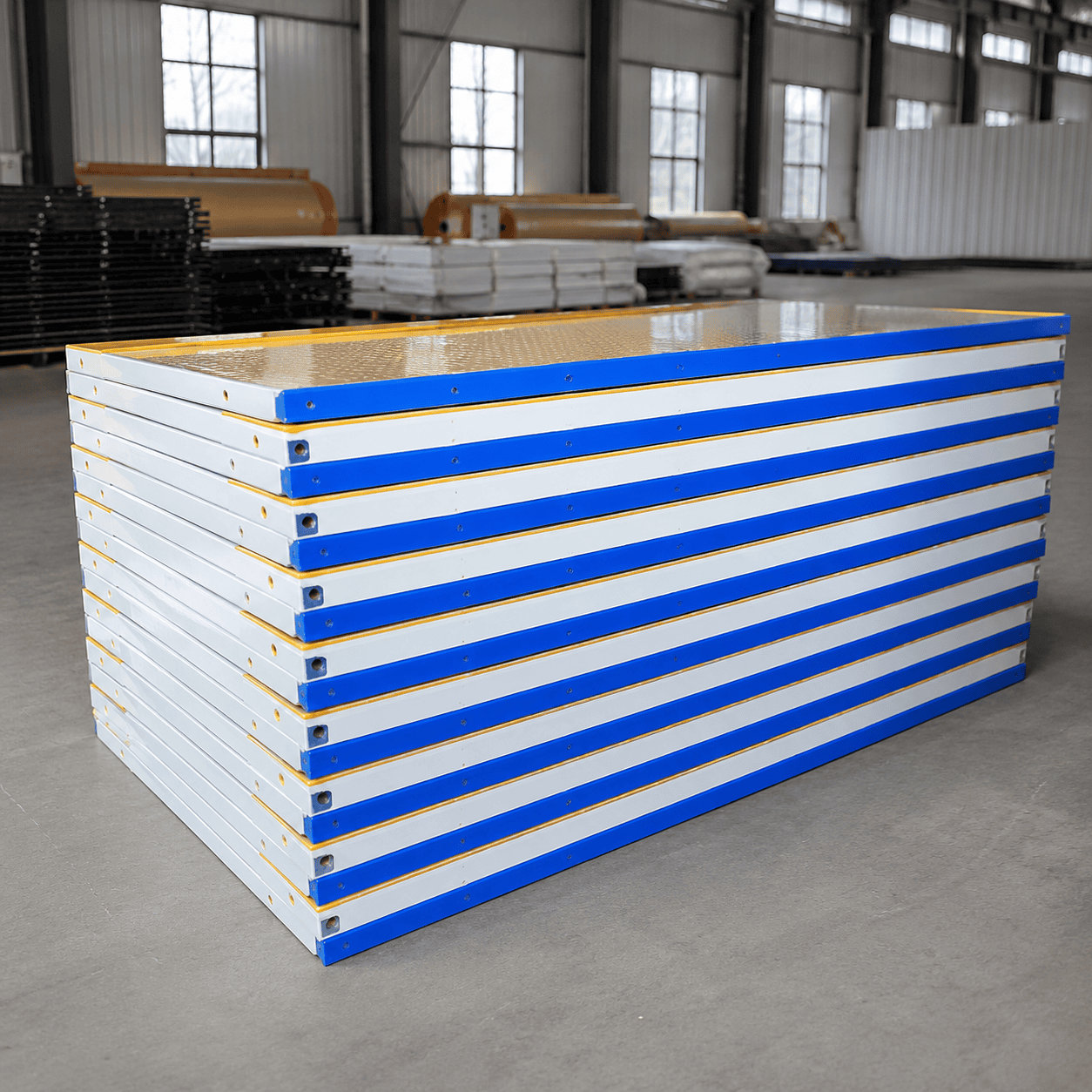
The material is also suitable for repeated installation, removal, cleaning, transport, and storage. This is important for temporary roadway systems that may need to be moved between different locations.
For general information about the material used in polyethylene products, visit this external resource about polyethylene material and properties.
Applications of Heavy Duty Interlocking Ground Mats
Heavy Duty Interlocking Ground Mats can be used in a wide range of temporary access and ground protection applications, including:
- Temporary access roads
- Muddy vehicle routes
- Soft ground protection
- Industrial transport lanes
- Outdoor logistics areas
- Heavy equipment access routes
- Grass and landscape protection
- Temporary parking areas
- Event vehicle access
- Forestry routes
- Equipment transportation areas
- Temporary working platforms
The large panel dimensions allow substantial areas to be covered with fewer individual pieces than smaller ground protection boards. This can be useful when building longer or wider temporary routes.
For more information about polyethylene materials and other ground protection products, visit our polyethylene material and ground protection solutions.
Temporary Access Across Mud and Soft Ground
Soft ground can quickly become difficult to cross after rain or repeated vehicle movement. Tyres may create deep ruts, while continuous traffic can damage the original surface and make the access route increasingly unstable.
Heavy Duty Interlocking Ground Mats create a physical separation between vehicle tyres and the underlying ground. The large panel area helps distribute contact over a broader surface.
The overlapping joint design is especially useful in these conditions because it helps reduce exposed connection gaps. This can limit the amount of mud and loose soil that moves upward through the joints.
However, mat performance always depends on actual site conditions. Extremely soft, saturated, or unstable ground may require preparation before installation. This can include drainage improvement, levelling, aggregate, geotextile, or another supporting layer.
Reusable Temporary Roadway System
One major advantage of Heavy Duty Interlocking Ground Mats is their reusable construction. Once a temporary access route is no longer required, the panels can be removed, cleaned, transported, and installed at another location.
This makes them suitable for businesses and projects that regularly require temporary access routes or ground protection in different areas.
Before each new installation, the mats should be checked for edge damage, excessive deformation, damaged overlap areas, or other visible wear. Correct handling and suitable storage conditions can help maintain the connection structure and extend the service life of the panels.
How to Select the Correct Mat Size
Selecting the correct Heavy Duty Interlocking Ground Mats should be based on the actual working environment rather than simply choosing the largest available panel.
Important factors include:
- Required temporary roadway width
- Vehicle dimensions
- Wheeled or tracked equipment
- Ground bearing conditions
- Moisture and drainage
- Traffic frequency
- Turning movements
- Installation space
- Handling and transport conditions
A 4000 × 2000 mm mat may be suitable for long temporary access routes, while a 3000 × 2500 mm or 3050 × 2150 mm panel may be more practical for different roadway widths and site layouts.
The 38–40 mm thickness is commonly used for this heavy-duty mat structure, but the final performance depends on the complete system, including the ground condition, panel arrangement, overlap direction, and traffic pattern.
7 Amazing Powerful Benefits of Heavy Duty Interlocking Ground Mats
- Overlap joints help reduce open gaps between adjacent panels
- Helps limit mud and dirt rising through connection areas
- Available in several large practical dimensions
- Typical heavy-duty thickness of 38–40 mm
- Textured surface supports outdoor vehicle movement
- Polyethylene construction resists moisture, rot, and corrosion
- Panels can be removed and reused for different projects
Installation Considerations
Before installing Heavy Duty Interlocking Ground Mats, the route should be checked for deep holes, sharp objects, severe level differences, and areas of standing water.
The underlying surface should be as stable and even as reasonably possible. On extremely weak ground, additional preparation may be needed before the panels are installed.
The overlap direction should remain consistent along the temporary roadway. Adjacent mats should be aligned correctly so that the joint design can create a continuous surface.
Vehicle turning, sudden braking, and concentrated loads can affect temporary roadway performance. These operating conditions should be considered when planning the mat layout.
Conclusion
Heavy Duty Interlocking Ground Mats provide a practical solution for temporary access routes across mud, grass, soft soil, gravel, and other unstable surfaces.
The special overlapping joint design helps reduce open gaps between neighboring panels and limits mud or dirt rising through the connection areas. Typical product sizes include 3050 × 2150 mm, 3000 × 2500 mm, and 4000 × 2000 mm, with a typical thickness of approximately 38–40 mm.
With large panel dimensions, a textured traction surface, durable polyethylene construction, and reusable design, these mats are suitable for temporary roadways, industrial access routes, equipment movement, outdoor logistics, grass protection, and other ground protection applications.
Explore more ground protection and polyethylene product solutions for temporary access roads, industrial routes, and outdoor surface protection applications.