Wetland Access Mats
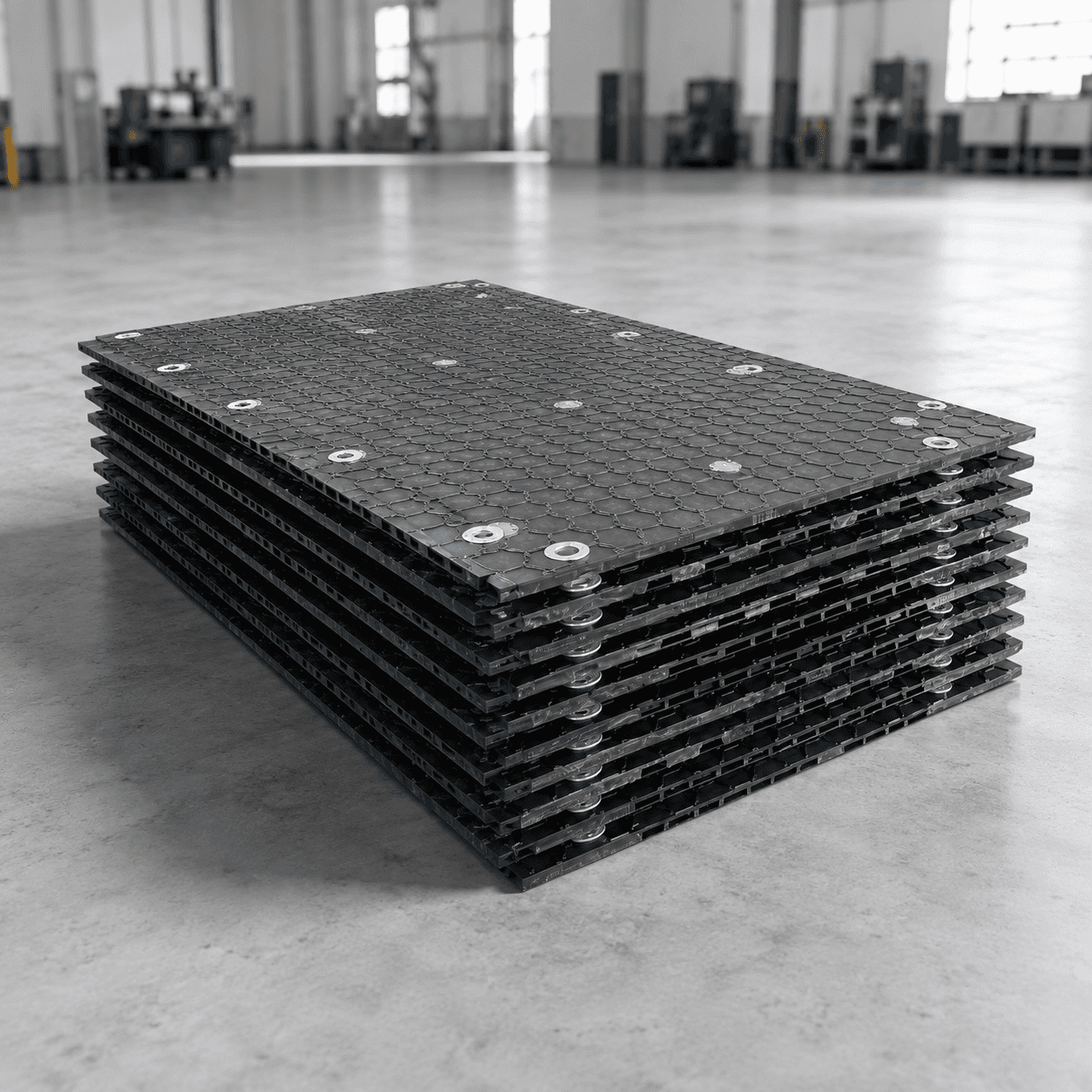
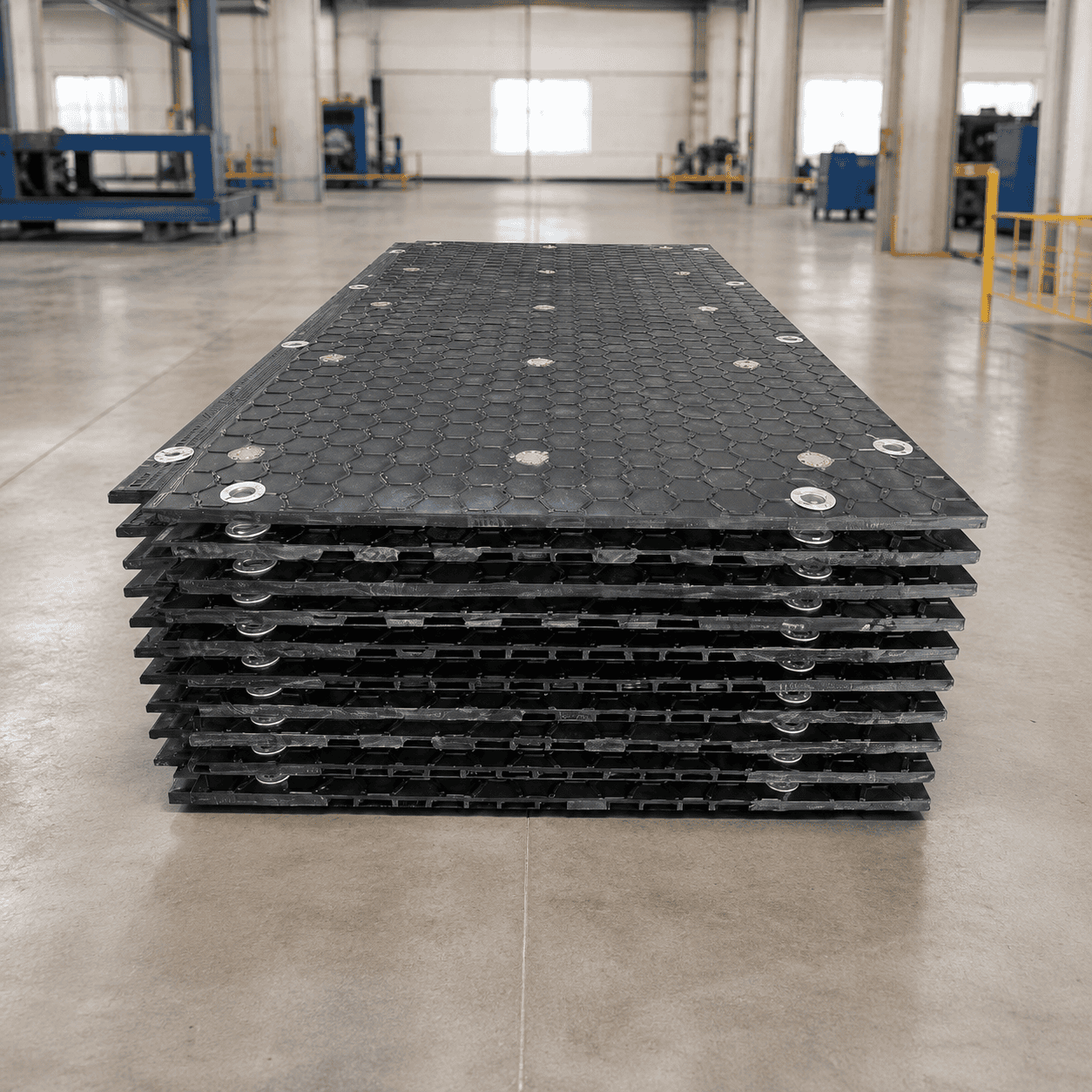
Wetland Access Mats are large-format temporary access panels designed to create stable roads and working surfaces over wetlands, marshes, mud, soft soil, clay, sand, and other challenging terrain. Manufactured from durable HDPE material, these heavy-duty mats provide temporary access for vehicles, equipment, and industrial operations where permanent road construction may be impractical.
The large panel structure helps distribute vehicle and equipment loads across a wider surface area. This can reduce concentrated pressure on weak ground, limit deep rutting, and create a more continuous travel route across unstable terrain.
Multiple panels can be connected to form temporary roads, equipment access lanes, working platforms, parking surfaces, material staging areas, and wider operating zones. Their reusable modular design is particularly suitable for projects where temporary access systems need to be installed, removed, transported, and used again at another location.
Typical Sizes of Wetland Access Mats
Unlike standard 8 × 4 ft portable ground protection panels, Wetland Access Mats are commonly supplied in larger formats for demanding access conditions. Large dimensions provide greater surface coverage and help create continuous routes over marshy and soft terrain.
Typical reference specifications include:
- Popular size: approximately 3000 × 2500 × 38 mm
- Large-format option: approximately 4500 × 2000 × 38 mm
- Common thickness: approximately 38 mm
- Material: High Density Polyethylene (HDPE)
- Common color: Black
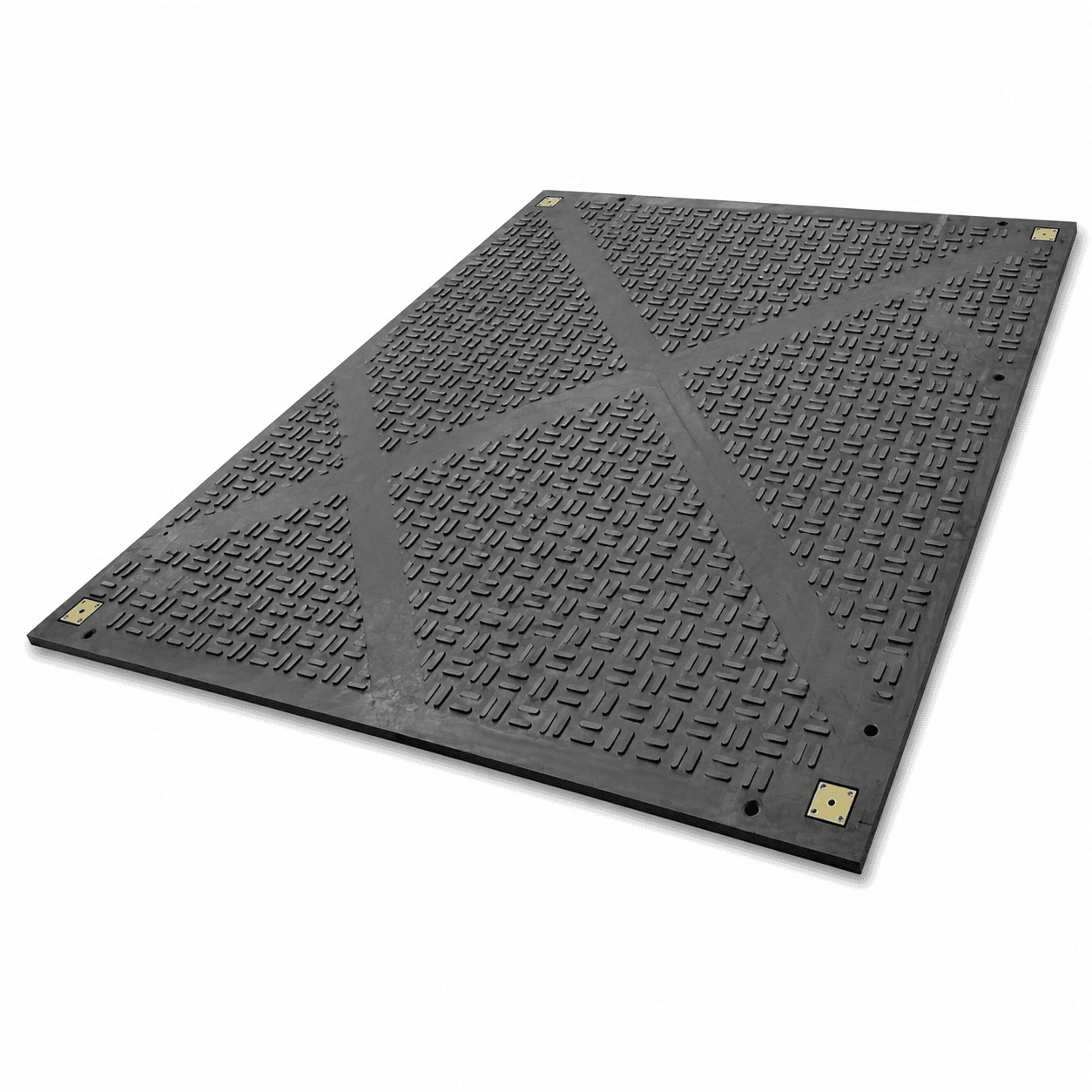
- Surface: Raised anti-slip traction pattern
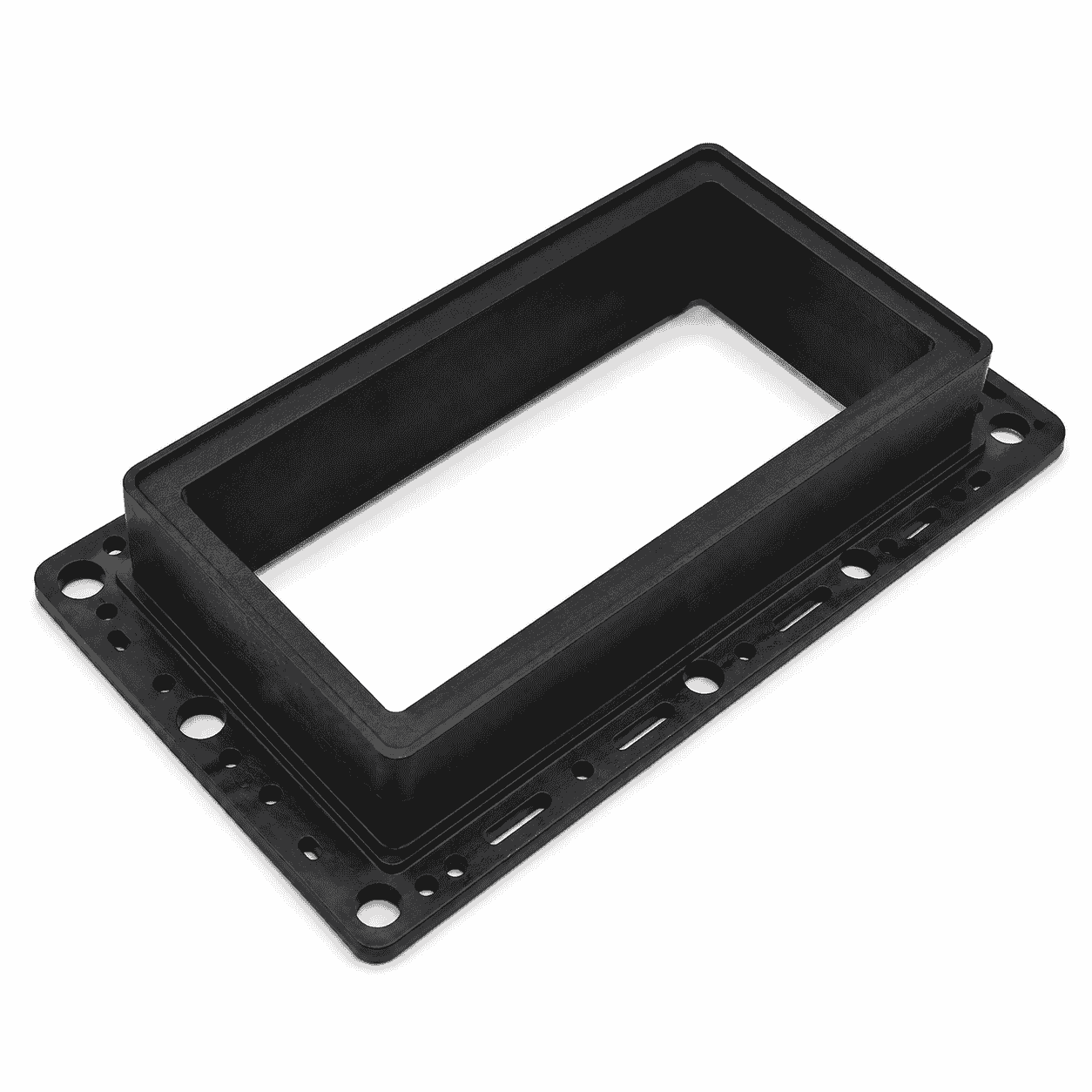
- Connection: Mechanical or engineered locking connectors
- Main application: Wetland, marsh, mud, and soft-ground access
Other dimensions and structural configurations may be selected according to the required roadway width, vehicle type, equipment size, handling method, terrain conditions, and project requirements.
The final mat dimensions, thickness, connection system, and installation layout should be selected according to axle load, tire or track pressure, soil strength, moisture level, traffic frequency, and the condition of the supporting ground.
Designed for Wetlands and Soft Ground
The main purpose of Wetland Access Mats is to provide a temporary travel surface in areas where normal vehicle movement may be difficult or may cause serious ground disturbance.
Typical terrain includes:
- Wetlands
- Marshy ground
- Soft soil
- Deep mud
- Clay surfaces
- Loose sand
- Waterlogged ground
- Sensitive natural surfaces
In these conditions, repeated vehicle movement can quickly create deep ruts and unstable travel routes. Connected HDPE mats help define a continuous access path and distribute traffic over a broader area.
This makes the system suitable for temporary projects where constructing a permanent gravel, concrete, or paved road would be unnecessary, expensive, or difficult.
Large-Format Panels for Temporary Roads
The large dimensions of these panels allow each mat to cover more ground than a standard portable access board. This can reduce the total number of individual panels required for long temporary routes.
The mats can be arranged to create:
- Single-lane temporary access roads
- Two-way equipment routes
- Heavy vehicle approach roads
- Temporary equipment platforms
- Vehicle turning areas
- Material storage surfaces
- Maintenance work areas
- Temporary parking zones
The temporary route can be extended by adding more panels in the required direction. Additional rows can also be installed to create a wider operating surface for equipment, vehicles, and material handling.
Anti-Slip Surface for Improved Traction
The panel surface features a raised traction pattern designed to improve contact with vehicle tires and equipment tracks. This is especially important in wet, muddy, or marshy environments where completely smooth surfaces may provide insufficient grip.
The raised tread structure helps create a more reliable travel surface for vehicles moving along the temporary route. It also provides a defined contact surface where mud, moisture, and loose ground may otherwise reduce traction.
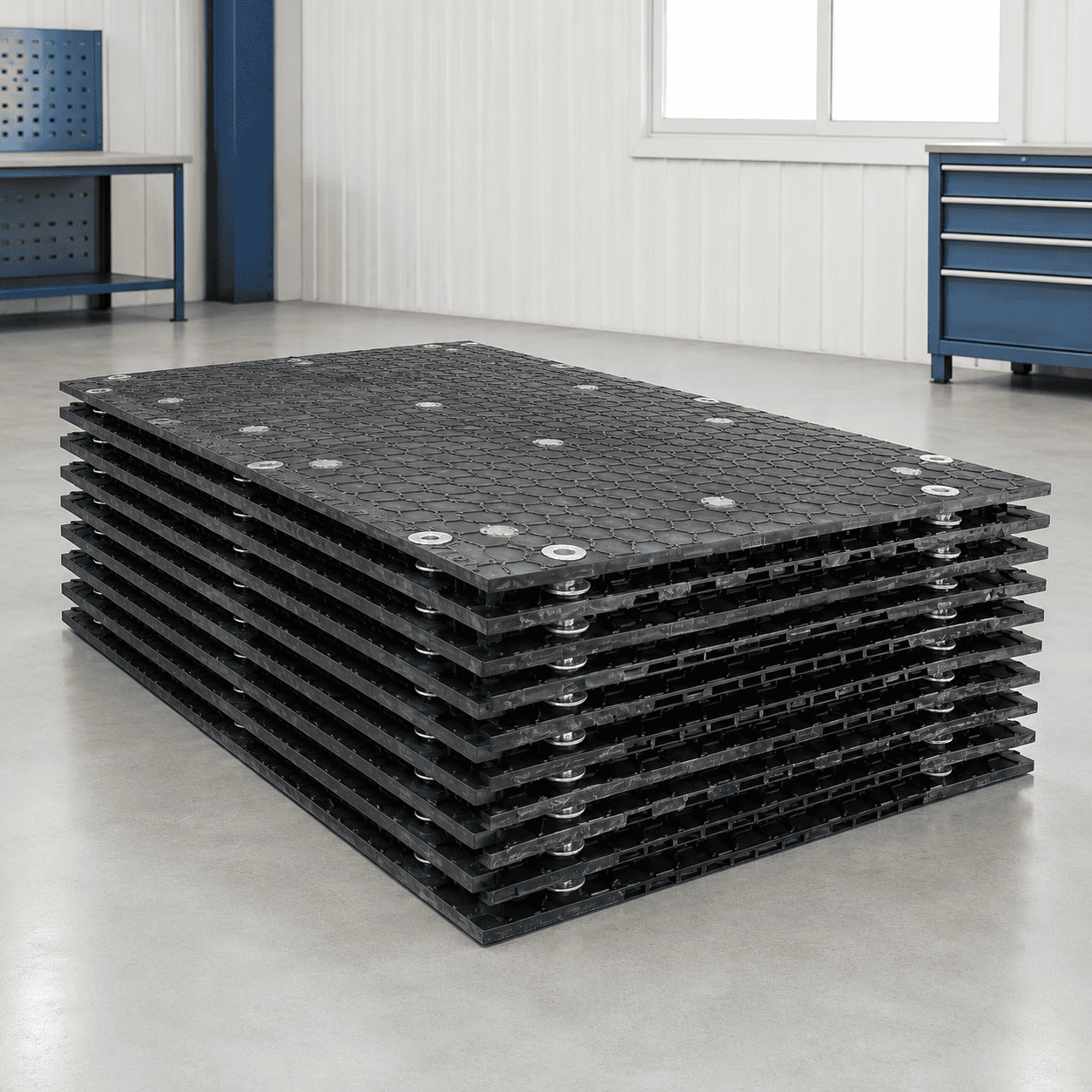
Depending on the product structure, the reverse side may also include patterned features designed to improve interaction with the supporting ground.
Correct installation remains essential. Deep holes, sharp objects, unsupported edges, severe ground depressions, and major changes in level should be evaluated before repeated heavy traffic begins.
Durable HDPE Material for Outdoor Conditions
High-density polyethylene provides a useful combination of toughness, impact resistance, moisture resistance, corrosion resistance, and low water absorption.
These characteristics make Wetland Access Mats suitable for outdoor projects where temporary roadways may be repeatedly exposed to rain, mud, standing water, soil, and changing weather conditions.
Unlike steel road plates, HDPE does not rust. Compared with many traditional timber access systems, the material has lower water absorption and can be cleaned more easily after use in muddy and wet environments.
The plastic construction also makes the mats suitable for repeated installation and removal when the surfaces, edges, and connection points are properly inspected and maintained.
For general information about the base material, you can read more about polyethylene material properties.
Connected Modular Access System
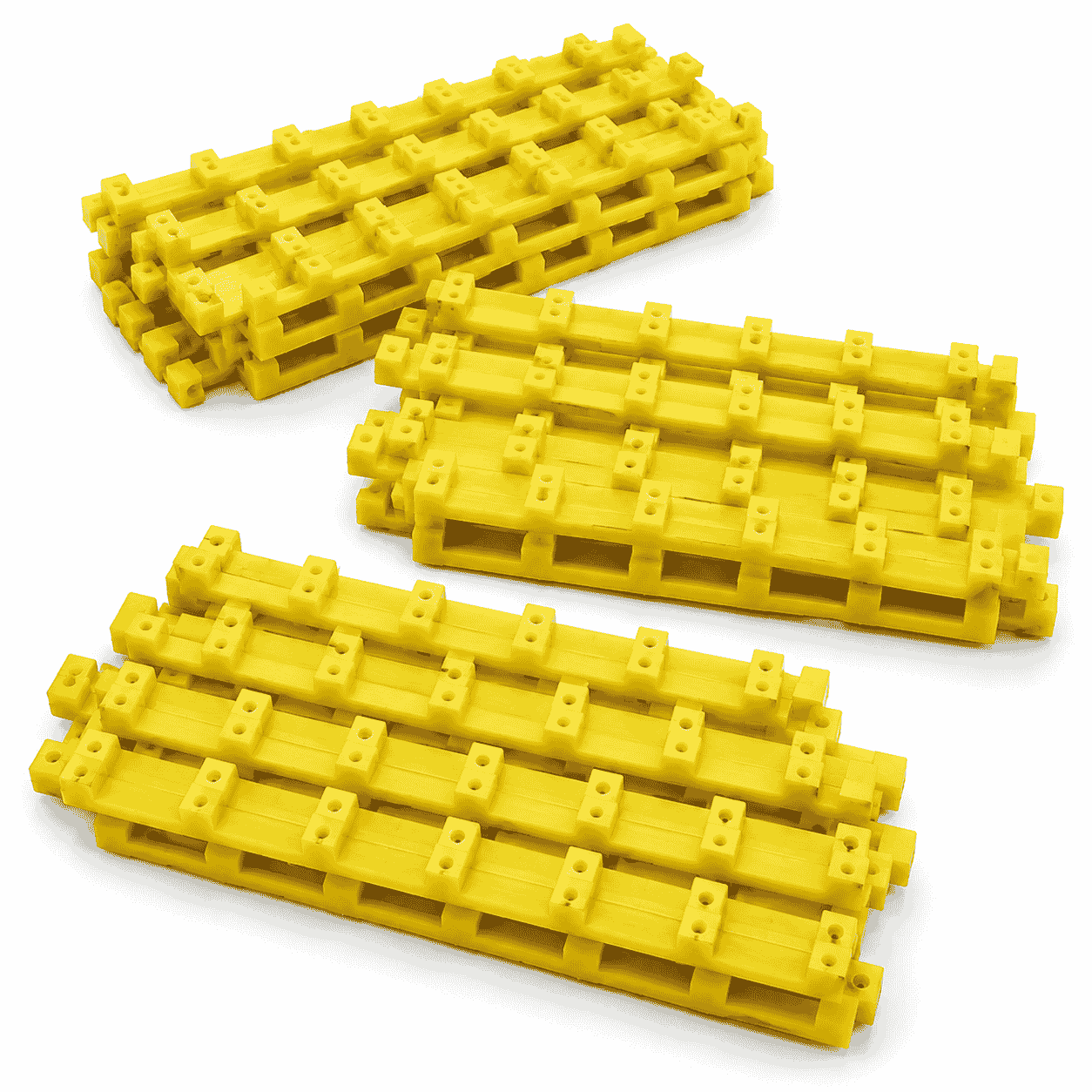
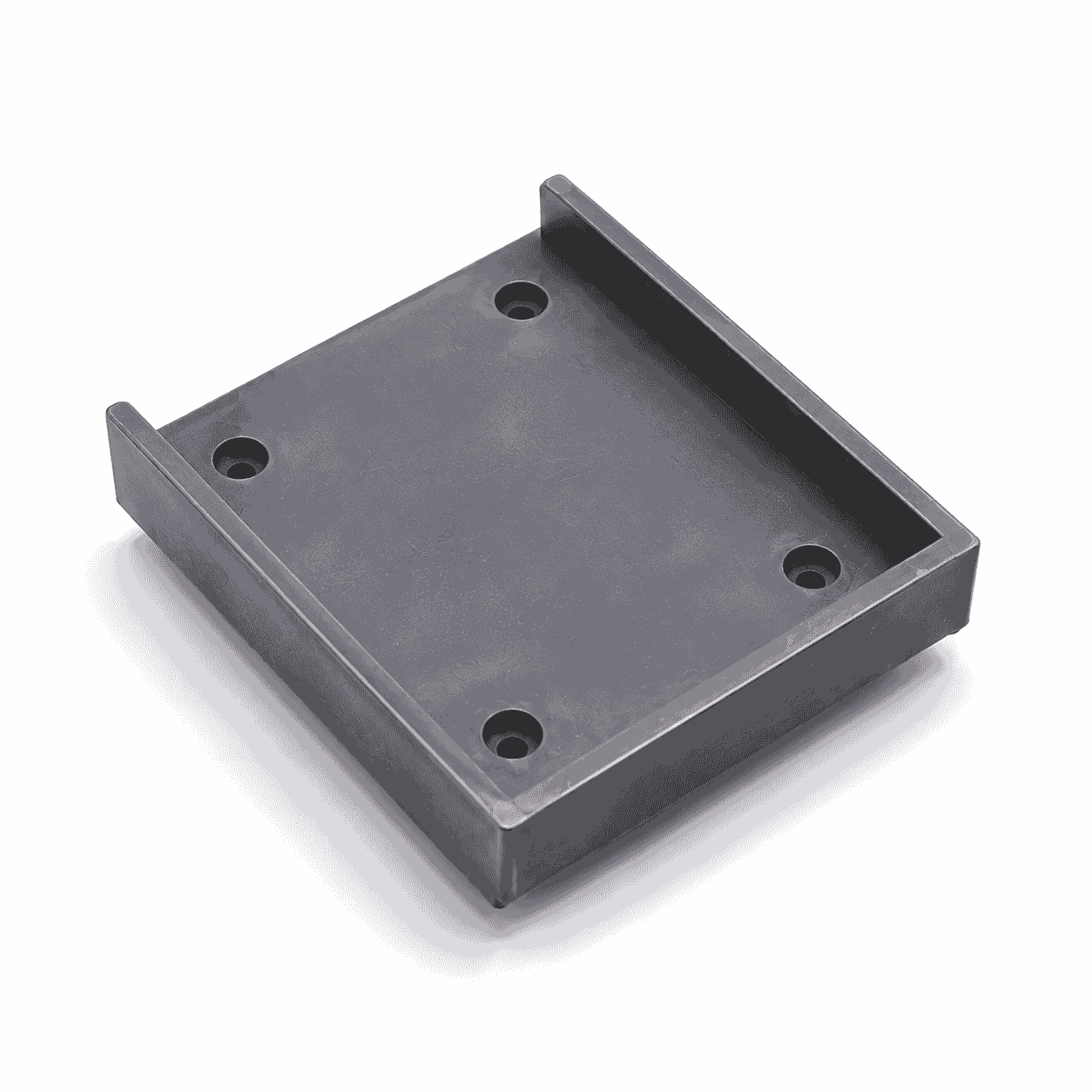
Individual panels can be joined using suitable mechanical or engineered connectors. The connected structure helps maintain the alignment of adjacent mats and creates a more continuous temporary surface.
A modular connection system provides several practical advantages:
- The roadway length can be extended as required
- Additional rows can create wider working platforms
- Individual sections can be inspected separately
- The complete route can be removed after the project
- The mats can be transported to another location
- The temporary access system can be used repeatedly
Connector quantity and arrangement should be selected according to traffic direction, vehicle turning, braking forces, terrain conditions, and the final installation layout.
Applications of Wetland Access Mats
Wetland Access Mats can be used in industries where temporary access is required over weak, wet, muddy, or sensitive ground.
Typical applications include:
- Wetland temporary access roads
- Marsh and swamp access
- Oil and gas projects
- Pipeline installation routes
- Energy and utility operations
- Power transmission projects
- Renewable energy projects
- Remote equipment access
- Infrastructure maintenance
- Heavy equipment routes
- Temporary industrial roads
- Equipment staging areas
- Material storage zones
- Emergency access routes
- Soft-ground working platforms
For pipeline and utility projects, the mats can form continuous temporary routes along areas where vehicles and equipment require repeated access.
For wetland and marsh applications, the modular roadway helps keep traffic within a defined route rather than allowing vehicles to move repeatedly across a wider area.
Suitable for Heavy Vehicles and Equipment
These large-format HDPE mats can be used for heavy vehicle and equipment access when the product specification, installation method, and supporting ground conditions are appropriate.
Actual performance should not be determined by total vehicle weight alone. The complete relationship between the vehicle, mat system, connection method, and supporting terrain must be considered.
Important factors include:
- Vehicle axle load
- Tire or track contact pressure
- Mat dimensions and thickness
- HDPE material grade
- Ground bearing strength
- Soil moisture content
- Depth of soft ground
- Ground preparation
- Connector arrangement
- Traffic frequency
- Vehicle turning and braking forces
A mat installed on firm, evenly supported soil may perform differently from the same mat installed over deep mud, unsupported voids, trenches, or severely unstable terrain.
For demanding heavy-equipment applications, the complete project conditions should be reviewed before the final product specifications and installation layout are confirmed.
Helps Reduce Rutting and Vehicle Sinking
Repeated traffic over wetlands, marshes, and soft soil can create deep ruts and increase the risk of vehicles becoming stuck.
Wetland Access Mats help distribute wheel or track loads across a wider area and provide a defined temporary travel surface.
When correctly installed, the connected system can help:
- Reduce direct tire contact with soft ground
- Limit repeated rut formation
- Create a more consistent vehicle route
- Improve temporary access across wet terrain
- Protect surrounding sensitive surfaces
- Support temporary project operations
The actual results depend on the strength and condition of the supporting ground. Extremely weak or deep soft ground may require additional preparation, reinforcement, or project-specific engineering review.
Reusable Temporary Road Solution
One important advantage of Wetland Access Mats is their reusable modular structure.
After the temporary road is no longer required, the panels can be:
- Disconnected
- Lifted from the ground
- Cleaned
- Inspected
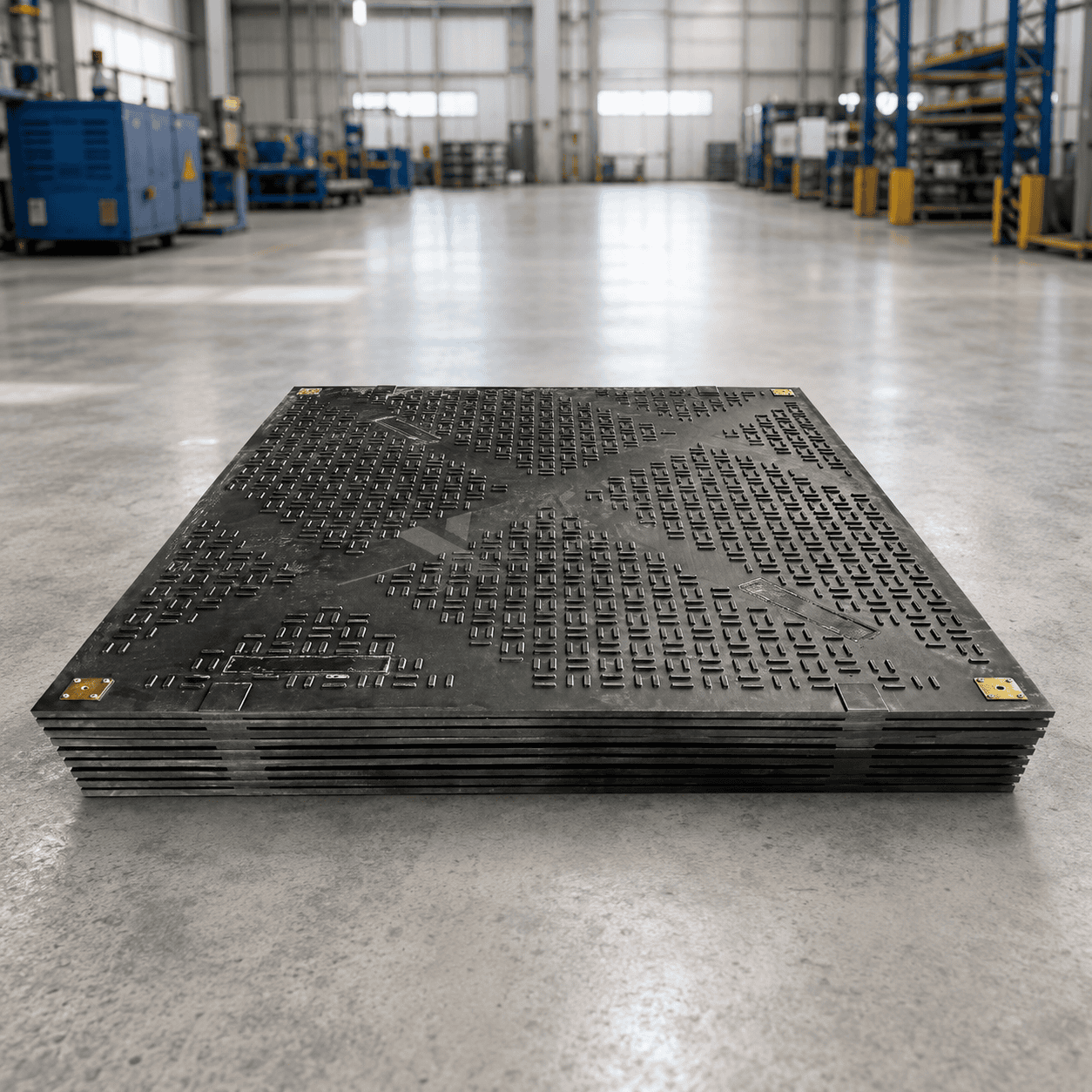
- Stacked
- Transported
- Installed at another location
This reusable structure is suitable for companies that regularly require temporary access routes for infrastructure, pipeline, energy, utility, equipment, and remote industrial projects.
Regular inspection should include the traction surface, panel edges, connection points, connectors, and any signs of severe deformation or damage.
Ground Protection for Sensitive Areas
In wetland and environmentally sensitive areas, uncontrolled vehicle movement can disturb a much wider area than the actual access route.
By installing a defined mat roadway, vehicles can follow a designated travel path. This helps concentrate traffic within the temporary access corridor and reduces unnecessary vehicle movement across surrounding surfaces.
The mats should still be installed and operated according to applicable site requirements, environmental rules, and project-specific access plans.
Temporary Roadways and Working Platforms
These mats are not limited to narrow vehicle roads. Their large modular format can also be arranged to create broader temporary working surfaces.
Typical configurations include:
- Long wetland access routes
- Wide equipment operating areas
- Temporary maintenance platforms
- Vehicle turning zones
- Equipment parking surfaces
- Material staging areas
The final configuration can be adjusted by changing the number, position, and direction of connected panels.
You can also view our complete range of ground protection mats for temporary roads, heavy equipment access, soft-ground protection, and industrial applications.
7 Amazing Powerful Benefits of Wetland Access Mats
- Large-format structure for wetland and soft-ground access
- Raised anti-slip traction surface for improved vehicle grip
- Durable HDPE material with low water absorption
- Connected modular system for temporary road construction
- Reusable design for multiple projects and locations
- Helps reduce rutting and direct disturbance to soft ground
- Suitable for heavy vehicles, equipment, and industrial access
Why Choose Wetland Access Mats?
Wetland Access Mats provide a practical temporary access solution for wetlands, marshes, mud, clay, soft soil, and other difficult ground conditions. Their large panel dimensions, anti-slip surface, durable HDPE construction, modular connection system, and reusable design make them suitable for heavy vehicle routes, pipeline projects, energy operations, utility maintenance, and remote industrial access.
Typical reference sizes include approximately 3000 × 2500 × 38 mm and 4500 × 2000 × 38 mm. Final mat dimensions, thickness, connection method, and installation layout should always be selected according to the actual terrain, vehicle type, axle load, traffic frequency, and project operating requirements.