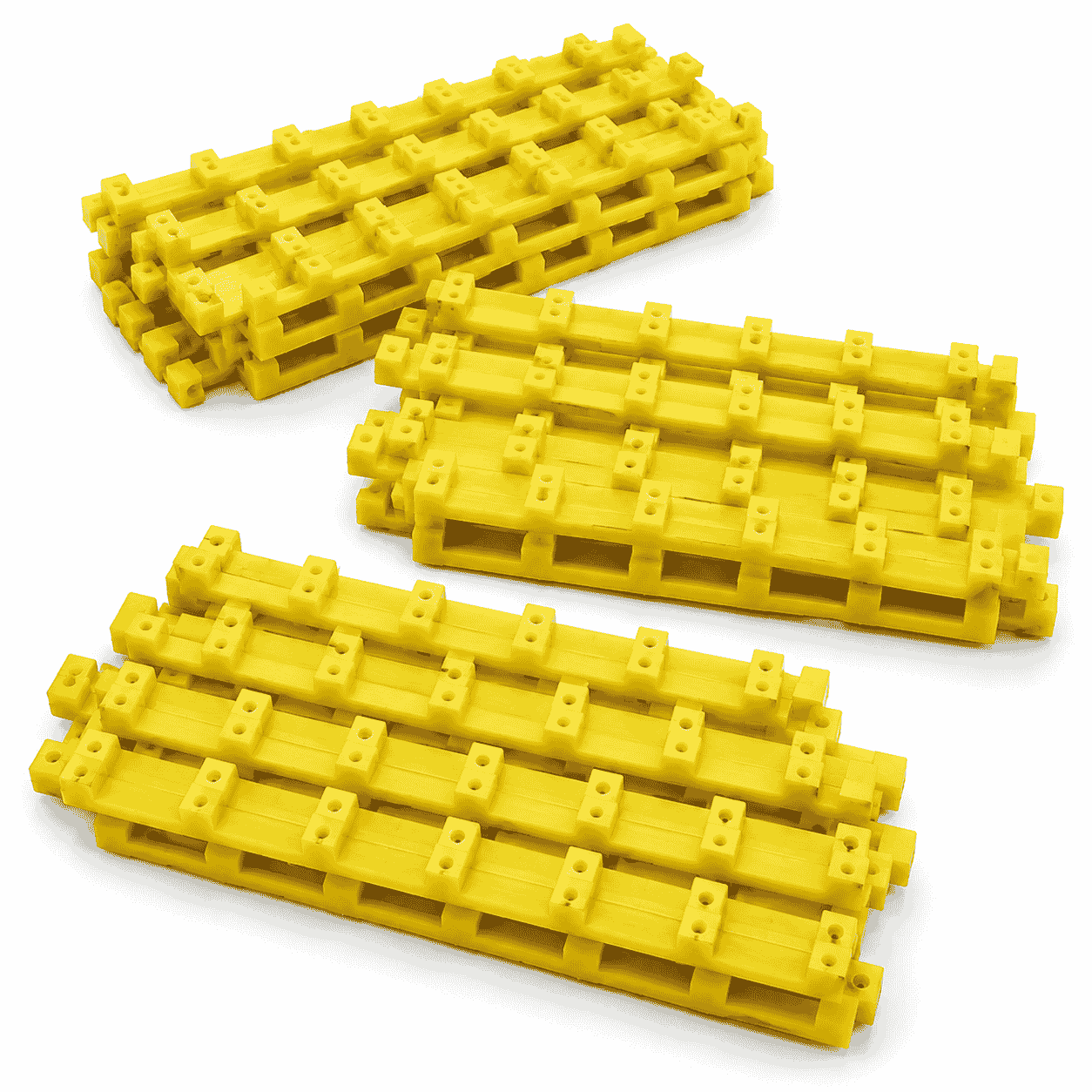


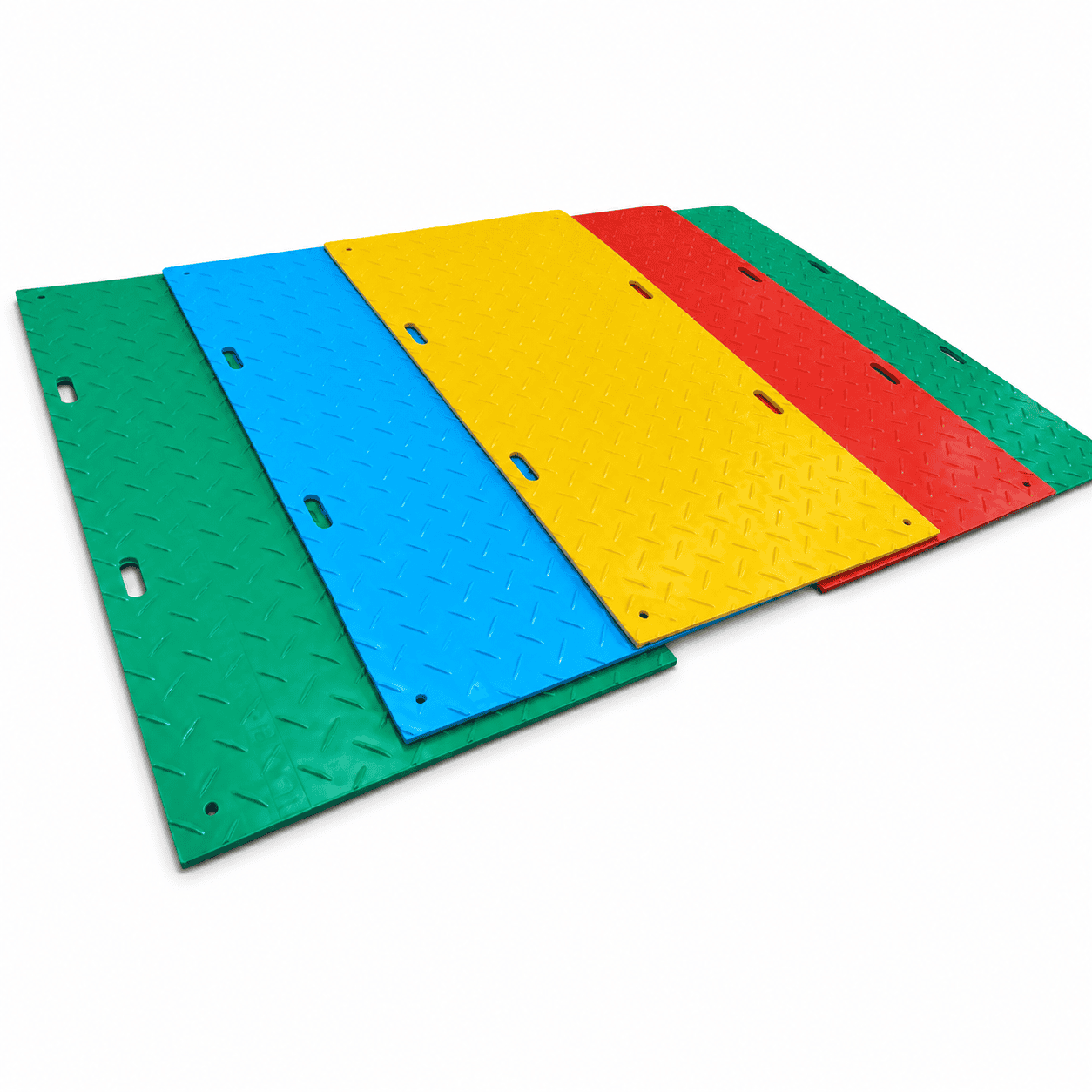
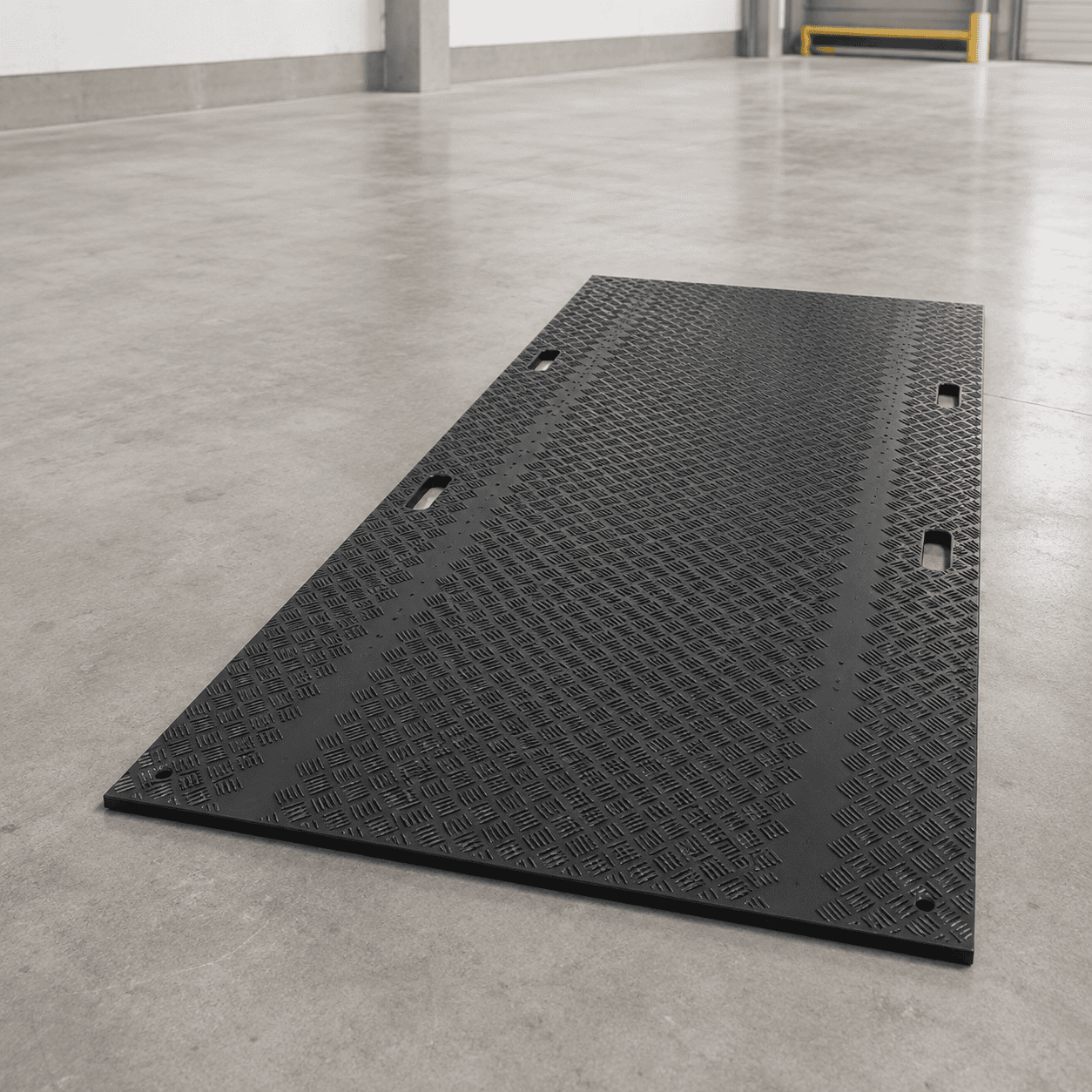
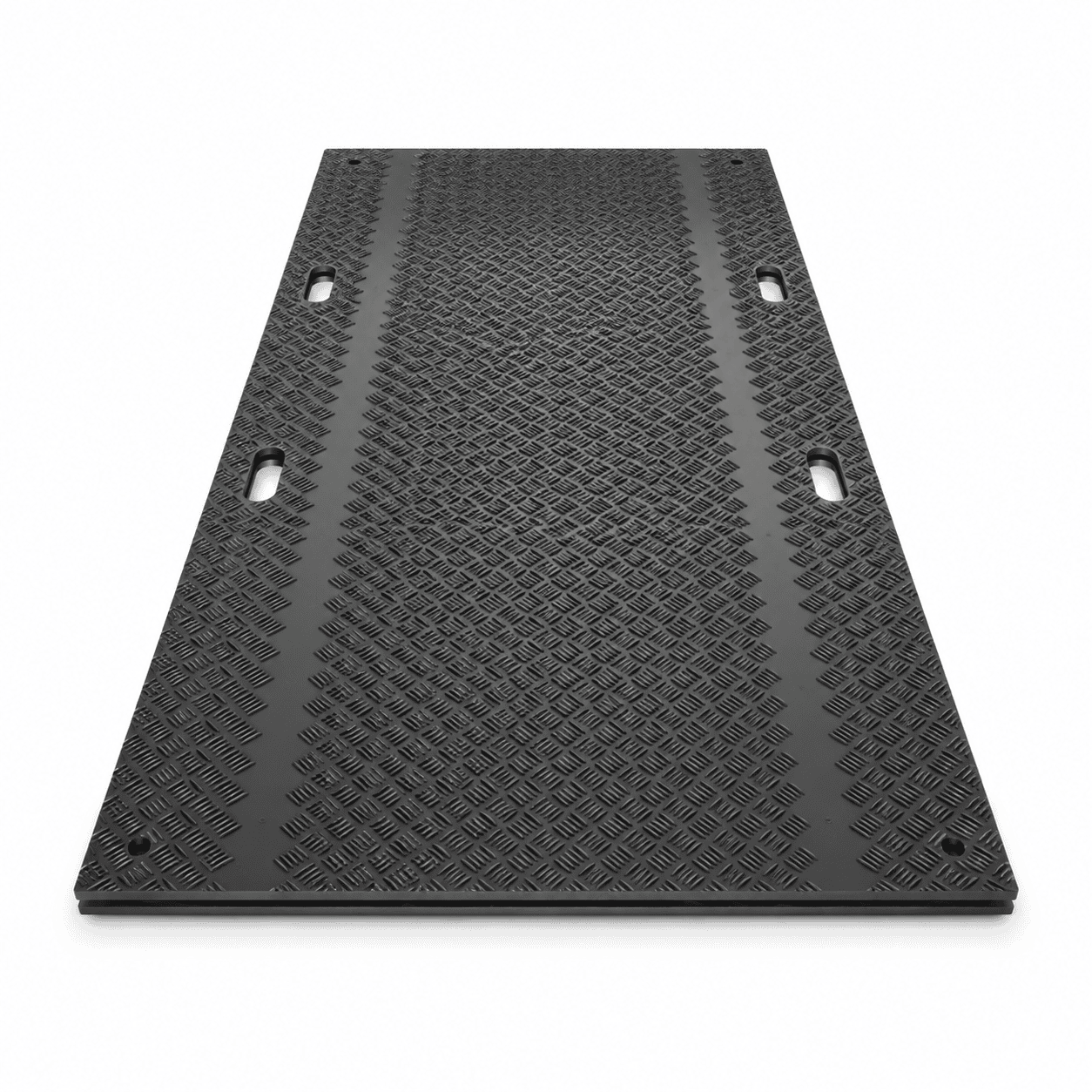
HDPE Event Track Mats are reusable polyethylene panels designed for temporary roadways, outdoor pathways, vehicle trackways, grass protection, and soft-ground access. Common sizes include 2440 × 1100 mm, 2440 × 1220 mm, 2000 × 1000 mm, and 2440 × 610 mm, with typical thicknesses from 12.7 mm to 20 mm. Available in black, green, blue, yellow, red, and other colors, the mats feature raised traction surfaces and flexible layouts for vehicles, outdoor activities, landscaping, utility access, and temporary operations.
HDPE Event Track Mats are reusable polyethylene panels designed to create temporary roadways, outdoor event pathways, vehicle trackways, equipment access routes, and protective surfaces over grass, mud, sand, gravel, soft soil, and other difficult ground conditions. Manufactured from high-density polyethylene, these panels combine a durable structure, raised traction surface, multiple color options, and flexible installation layouts.
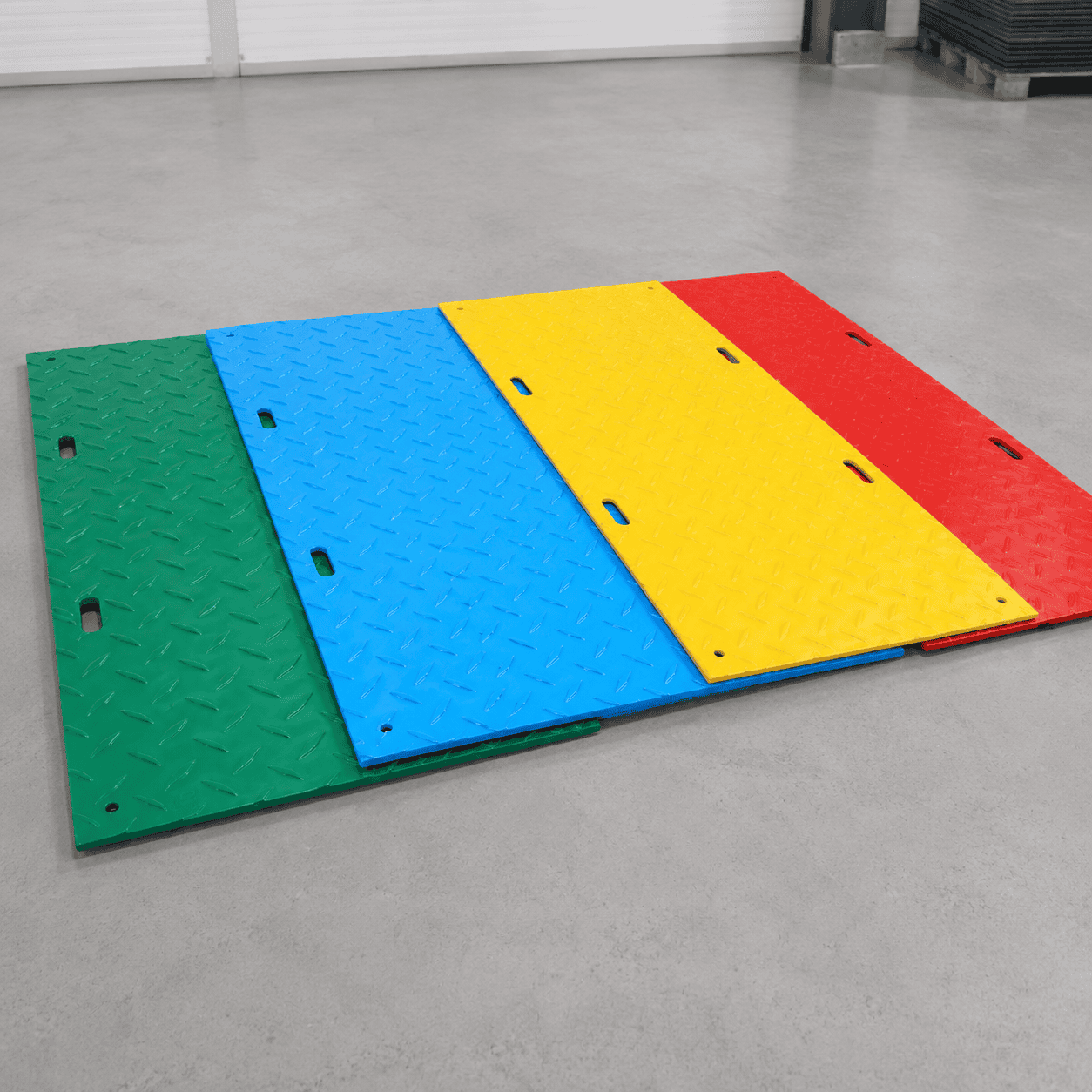
Unlike temporary access products designed only for black industrial roadways, these mats are also available in bright colors such as red, yellow, blue, and green. The different colors can help separate pedestrian routes, vehicle lanes, service areas, equipment zones, entrances, exits, and other functional sections of an outdoor site.
The panels can be installed as a continuous temporary roadway, positioned as two parallel wheel tracks, connected to form wider access surfaces, or arranged to create color-coded pathways for events and temporary outdoor operations.
HDPE Event Track Mats are commonly available in several practical dimensions. Different panel widths allow the system to be used for complete temporary roads, narrow vehicle trackways, event pathways, and smaller temporary access areas.
Typical reference specifications include:
| Panel Size | Approximate Imperial Size | Typical Thickness | Typical Application |
|---|---|---|---|
| 2440 × 1100 mm | Approximately 8 × 3.6 ft | 12.7–20 mm | Vehicle trackways and temporary access |
| 2440 × 1220 mm | Approximately 8 × 4 ft | 12.7–20 mm | Full-width temporary roadways |
| 2000 × 1000 mm | Approximately 6.5 × 3.3 ft | 12.7–20 mm | Compact access routes and event pathways |
| 2440 × 610 mm | Approximately 8 × 2 ft | 12.7–20 mm | Parallel wheel tracks and narrow routes |
Common thickness options include approximately 12.7 mm, 15 mm, 18 mm, and 20 mm. The appropriate thickness should be selected according to vehicle type, axle load, tire contact pressure, supporting ground strength, pedestrian requirements, traffic frequency, and installation conditions.
Actual panel weight can vary according to dimensions, thickness, HDPE formulation, traction pattern, handling holes, and edge structure.
One of the most visible features of HDPE Event Track Mats is the availability of multiple colors.
Typical color options include:
Black and dark green are commonly suitable for industrial access, landscaping, and outdoor ground protection. Brighter colors can be useful where route identification and visual organization are important.
Different colors may be used to identify:
Color-coded surfaces can make large temporary layouts easier to understand and help separate different types of traffic.
The modular structure allows the same panel system to serve different temporary access requirements.
For vehicle access, the panels can create:
For outdoor activities, the panels can create:
The final surface layout should be selected according to expected pedestrian traffic, vehicle use, supporting ground conditions, weather, and installation duration.
High-density polyethylene provides a practical combination of toughness, moisture resistance, low water absorption, impact resistance, and corrosion resistance.
These characteristics make HDPE Event Track Mats suitable for temporary outdoor installations where panels may be exposed to:
Unlike conventional steel roadway plates, HDPE does not rust. Compared with many traditional timber boards, the material has low water absorption and can be cleaned after use on muddy or wet surfaces.
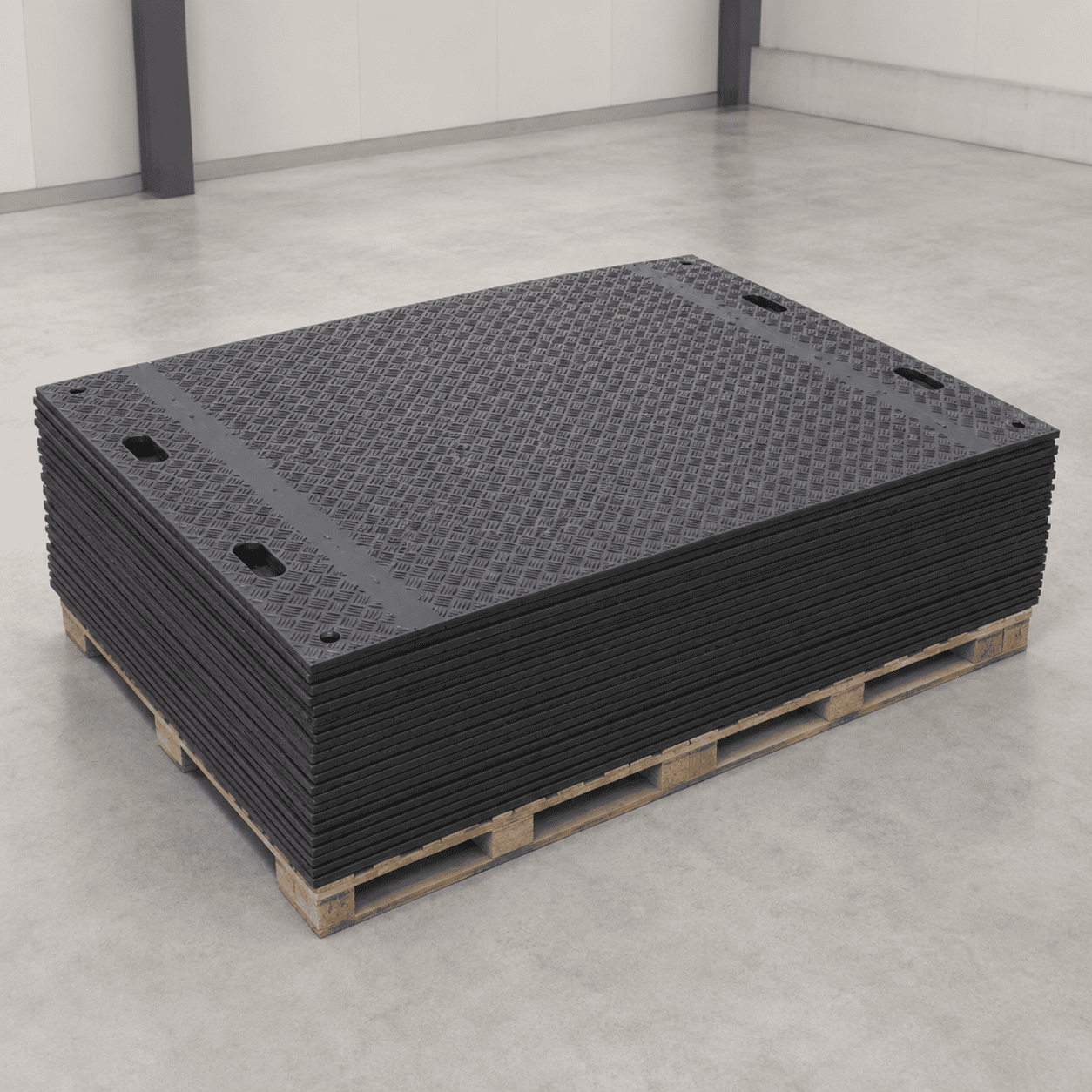
The panels can also be stacked and transported after use, allowing them to be moved between different temporary roadway and outdoor activity projects.
For general information about the base material, you can read more about high-density polyethylene material properties.
The panels feature a raised traction pattern designed to provide more tire and foot contact than a completely smooth plastic sheet.
The textured surface can be useful over:
Different surface structures can be selected according to the intended traffic. More pronounced tread patterns are generally suitable for vehicle access, while lower-profile surfaces may be considered where pedestrian movement is more important.
The final tread configuration should be selected according to vehicle type, tire design, pedestrian traffic, expected weather, and supporting ground conditions.
HDPE Event Track Mats can be supplied with different traction patterns according to the required application.
Typical surface options may include:
Some mats may use raised structures on both sides. Other versions may use a vehicle traction surface on the upper side and a different pattern on the reverse side.
The correct combination depends on the supporting ground, expected traffic, installation layout, and operating environment.
For general vehicle access, the panels can be installed continuously across the complete route width.
A full-width roadway can provide:
The commonly used 2440 × 1220 mm panel format is suitable for building modular temporary roads.
Additional panels can be installed in the direction of travel to increase roadway length or positioned side by side to create a wider operating surface.
For selected straight access routes, narrower panels can be installed as two parallel wheel tracks.
The approximately 2440 × 610 mm format can be used where a narrow trackway arrangement is more suitable than complete surface coverage.
Parallel vehicle tracks may be useful for:
The distance between the two tracks should match the actual vehicle width and wheel position. Turning areas may require additional mats to provide a wider surface.
Colored panels provide an additional option where both ground protection and visual route organization are required.
HDPE Event Track Mats can be considered for:
For these applications, the surface structure, color, connection method, and installation layout should be selected according to pedestrian volume, vehicle traffic, ground moisture, and expected installation duration.
Areas with frequent pedestrian traffic should be inspected regularly to confirm that adjoining panels remain aligned and connection components remain correctly positioned.
Temporary vehicle movement and large outdoor activities can place repeated pressure on lawns and grass surfaces.
The panel system creates a defined route and helps reduce uncontrolled movement across surrounding areas.
The panels can help:
The actual level of ground protection depends on soil moisture, grass condition, vehicle pressure, pedestrian volume, installation duration, and weather.
Extremely wet or unstable surfaces may require additional preparation or a heavier temporary access system.
Repeated traffic over mud or weak soil can quickly create deep ruts and unstable travel conditions.
HDPE Event Track Mats provide a defined temporary surface and help reduce repeated direct contact between vehicle tires and exposed ground.
Before installation, the route should be inspected for:
Very deep mud or severely unstable terrain may require additional preparation or a different structural access system.
Individual panels can be linked using suitable mechanical or engineered connection components.
A connected system can help:
Connector quantity and position should be selected according to panel size, route direction, vehicle turning, braking forces, pedestrian movement, and traffic frequency.
Connection components should be checked before installation and during longer temporary projects.
The mats can provide temporary access for different types of vehicles when the selected panel specification and supporting ground conditions are appropriate.
Possible applications include:
Actual performance should not be determined only by total vehicle weight.
Important factors include:
A mat installed over firm and evenly supported ground can perform differently from the same panel placed over deep mud, unsupported edges, large holes, or severe depressions.
For demanding vehicle applications, complete operating conditions should be reviewed before the final panel thickness, road width, and connection layout are selected.
HDPE Event Track Mats can be used for a wide range of temporary access and outdoor surface applications.
Typical applications include:
The modular panel structure allows the temporary surface to be lengthened, shortened, widened, color-coded, or removed according to project requirements.
A major advantage of HDPE Event Track Mats is their reusable panel structure.
After a temporary roadway or outdoor project is completed, the panels can be:
This makes the system suitable for organizations that regularly require temporary access roads, outdoor pathways, equipment routes, or ground protection surfaces.
The regular rectangular format also allows efficient stacking during storage and transportation.
Selected mat designs may include integrated hand holes or handling positions to assist with installation and removal.
Handling methods should match actual panel size, thickness, and weight.
Before moving a mat, check:
During storage, panels should be stacked on a stable and reasonably level supporting surface.
Colored panels can also be organized by route function or project requirement to simplify preparation for future installations.
Routine inspection helps maintain reliable performance when panels are repeatedly moved between projects.
Check:
Damaged panels or connection components should be evaluated before they return to demanding vehicle or pedestrian applications.
Cleaning after muddy use also makes visual inspection easier and can reduce unwanted soil transfer between different locations.
You can also view our complete range of ground protection mats for temporary roads, vehicle access, outdoor pathways, grass protection, equipment routes, and industrial applications.
HDPE Event Track Mats provide a flexible solution for temporary roadways, vehicle trackways, outdoor pathways, grass protection, parking areas, and equipment access. Their durable polyethylene construction, multiple color options, raised traction surface, reusable design, and flexible installation layouts make them suitable for both vehicle and pedestrian access requirements.
Typical reference sizes include approximately 2440 × 1100 mm, 2440 × 1220 mm, 2000 × 1000 mm, and 2440 × 610 mm, with common thicknesses from approximately 12.7 mm to 20 mm. Final panel dimensions, thickness, color, surface pattern, connector system, and installation layout should always be selected according to actual vehicle type, pedestrian use, supporting ground, traffic frequency, weather, and project operating conditions.
Check drawings for full specifications and confirm materials according to service conditions to prevent product defects.
Inspect all key processing steps and fully verify dimensions, holes, grooves and fitting surfaces.
Deburr, chamfer and clean products for easy installation. Ensure uniform quality among batch products.
Choose appropriate packaging solutions based on product features to protect goods from collision, deformation and mixing during transit.
Unlike metal parts, engineering plastic components still require strict control over dimensions, holes, edges, surface, materials and assembly performance for equipment use.
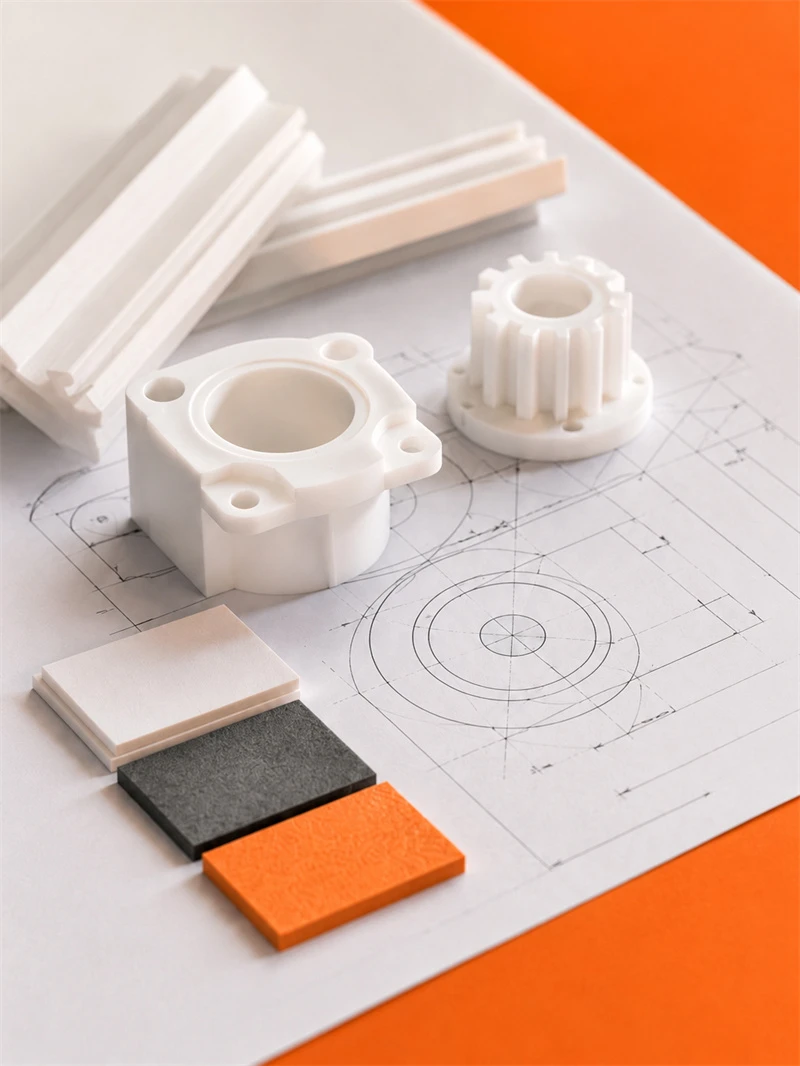
Engineering plastic parts suit friction, guide, support, buffer, anti-corrosion and insulation areas. We supply UHMWPE, POM, PA, PP/PE components for conveyor, food, mining, machinery, chemical and cable systems, with custom OEM service available.
Stay updated with our latest industry insights, company updates and featured articles.
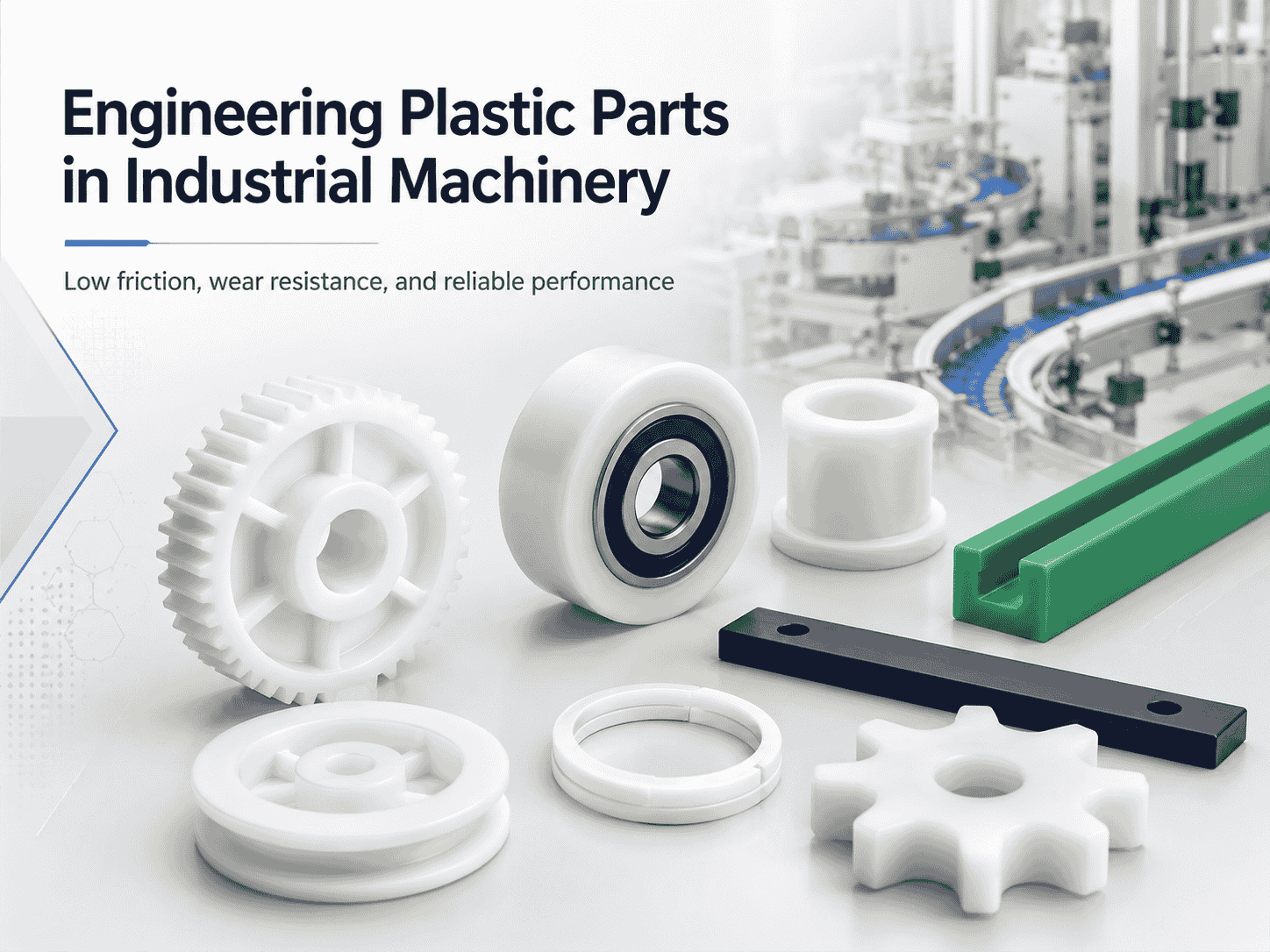
Engineering plastics are increasingly used in industrial machinery, automated production lines, conveyor systems, packaging equipment, and food-processing machines. Materials such as nylon, UHMWPE, POM, and
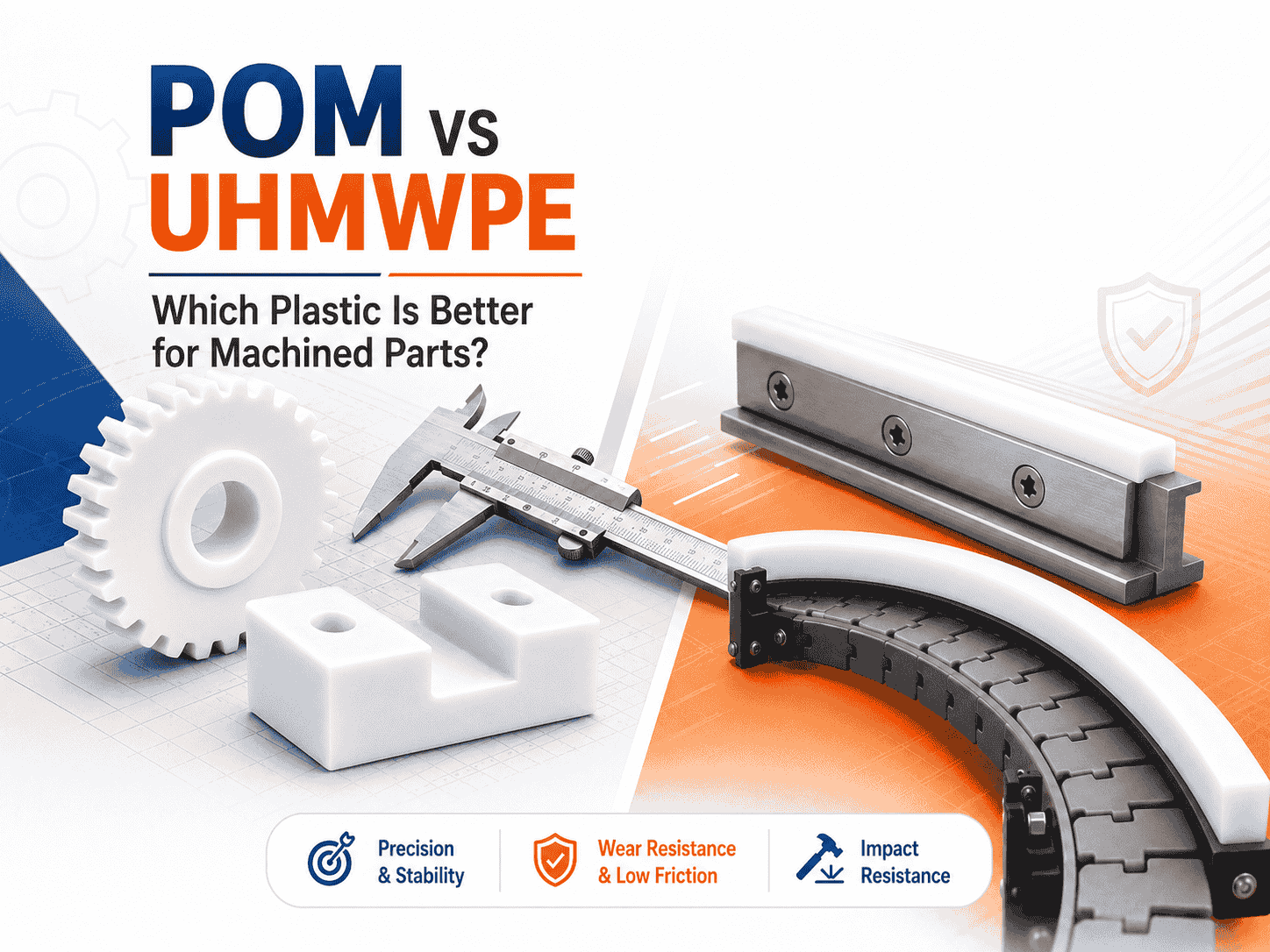
Both are lightweight, corrosion-resistant, wear-resistant, and suitable for CNC machining. However, they perform very differently
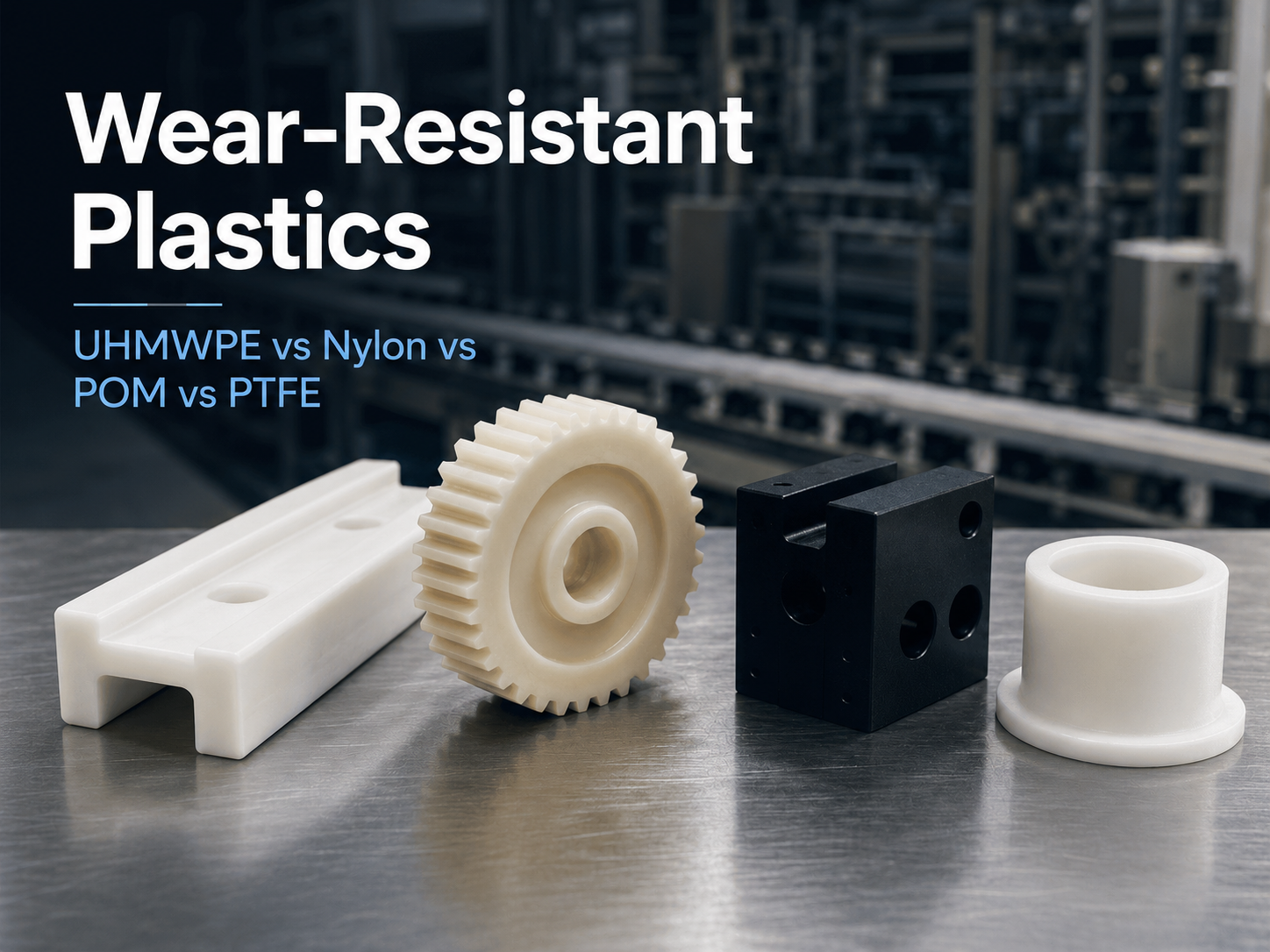
Wear is a common cause of failure in conveyor systems, packaging machinery, automated equipment, mining
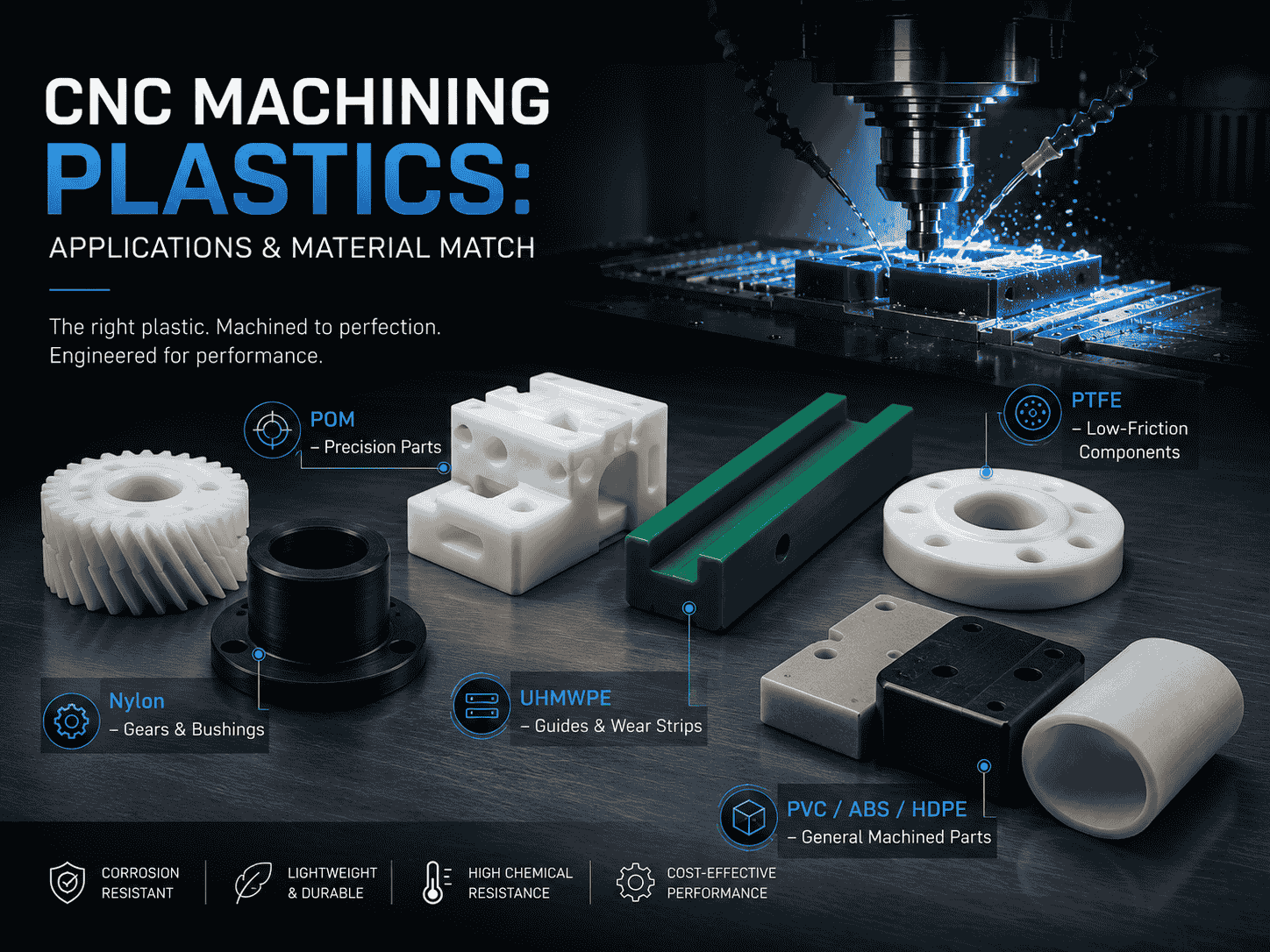
CNC machining is widely used to produce plastic prototypes, low-volume parts, replacement components, jigs, fixtures,
Both are lightweight, corrosion-resistant, wear-resistant, and suitable for CNC machining. However, they perform very differently
Wear is a common cause of failure in conveyor systems, packaging machinery, automated equipment, mining
CNC machining is widely used to produce plastic prototypes, low-volume parts, replacement components, jigs, fixtures,
Need UHMWPE sheets & custom plastic machined/OEM parts?Send specs & material needs, free quote within 24h.