

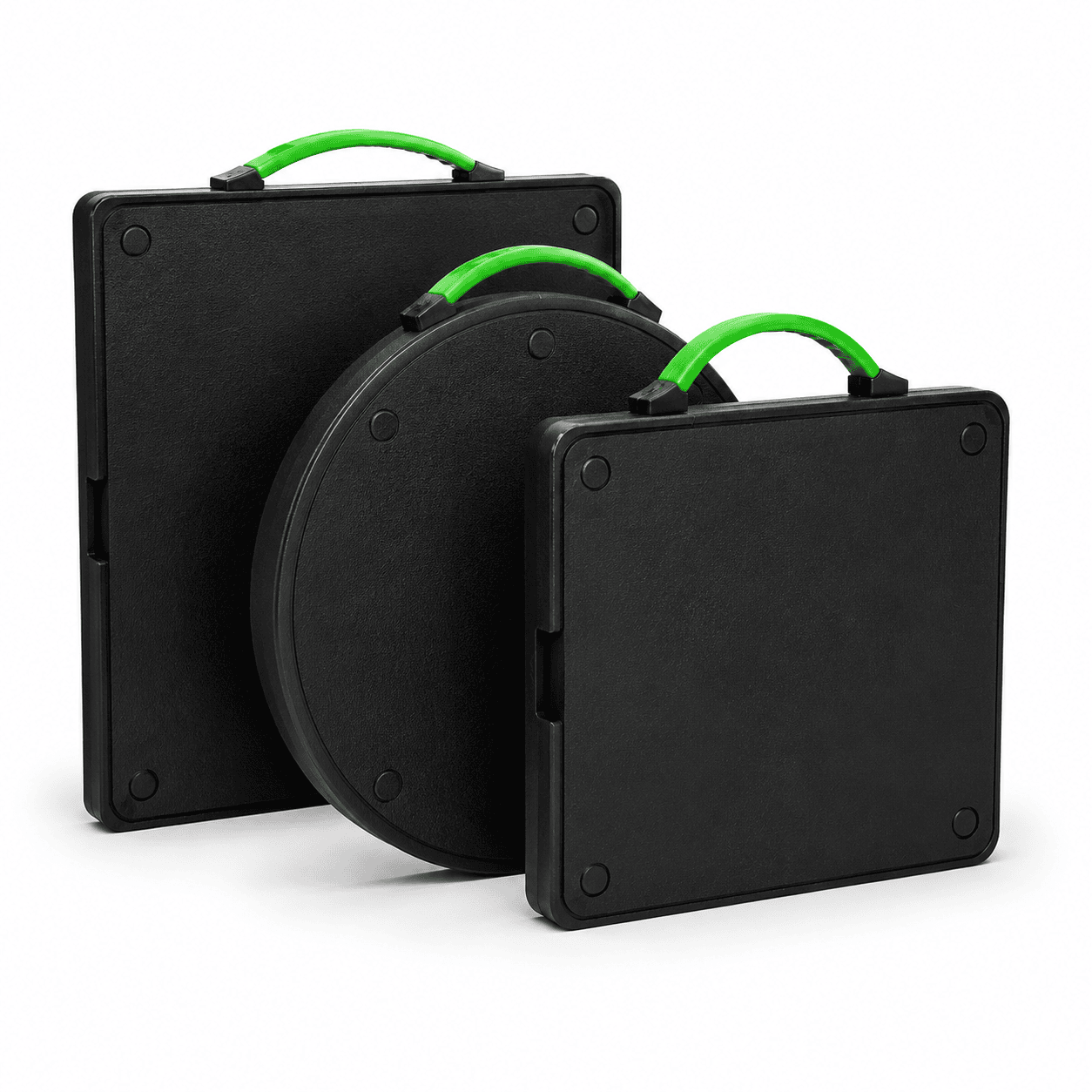
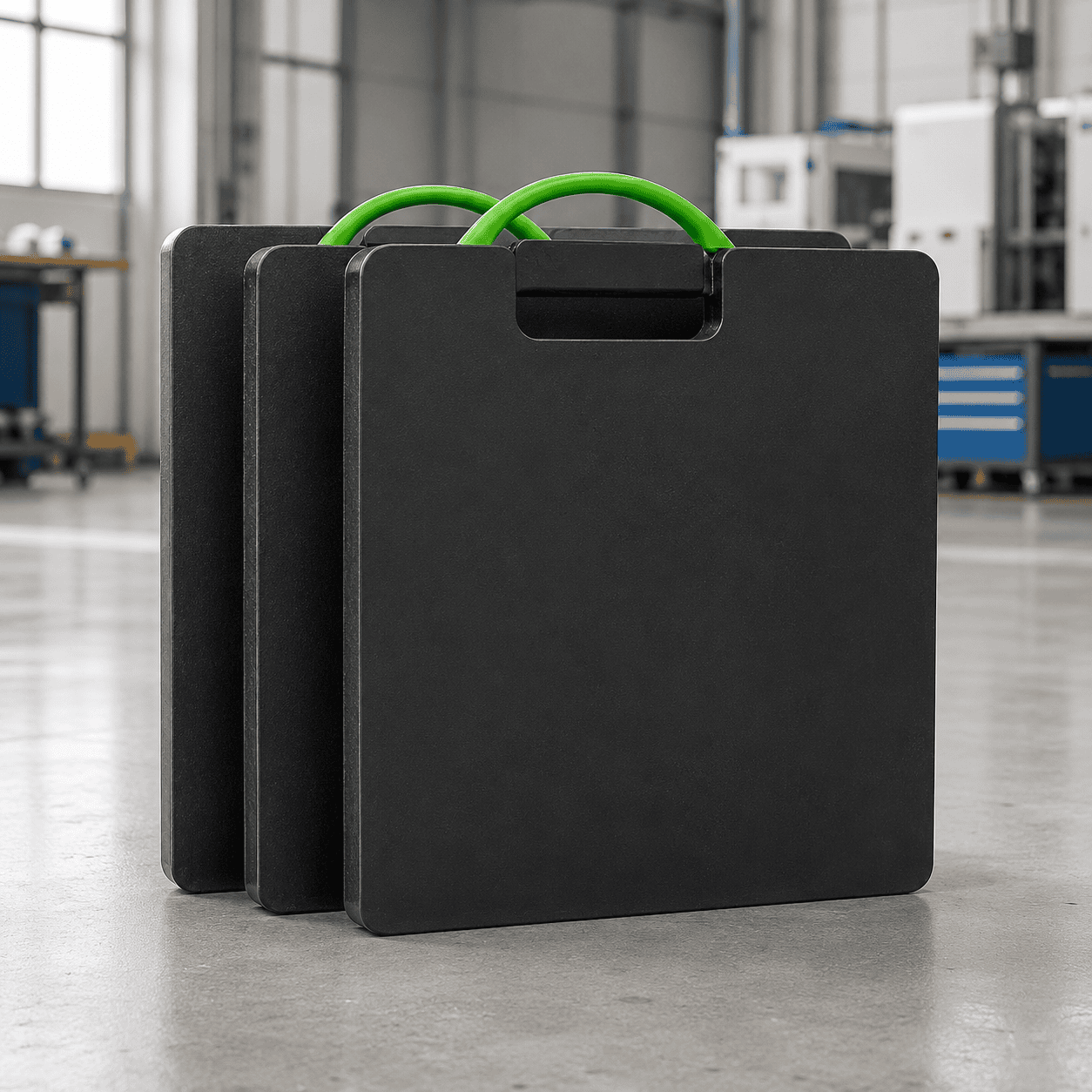
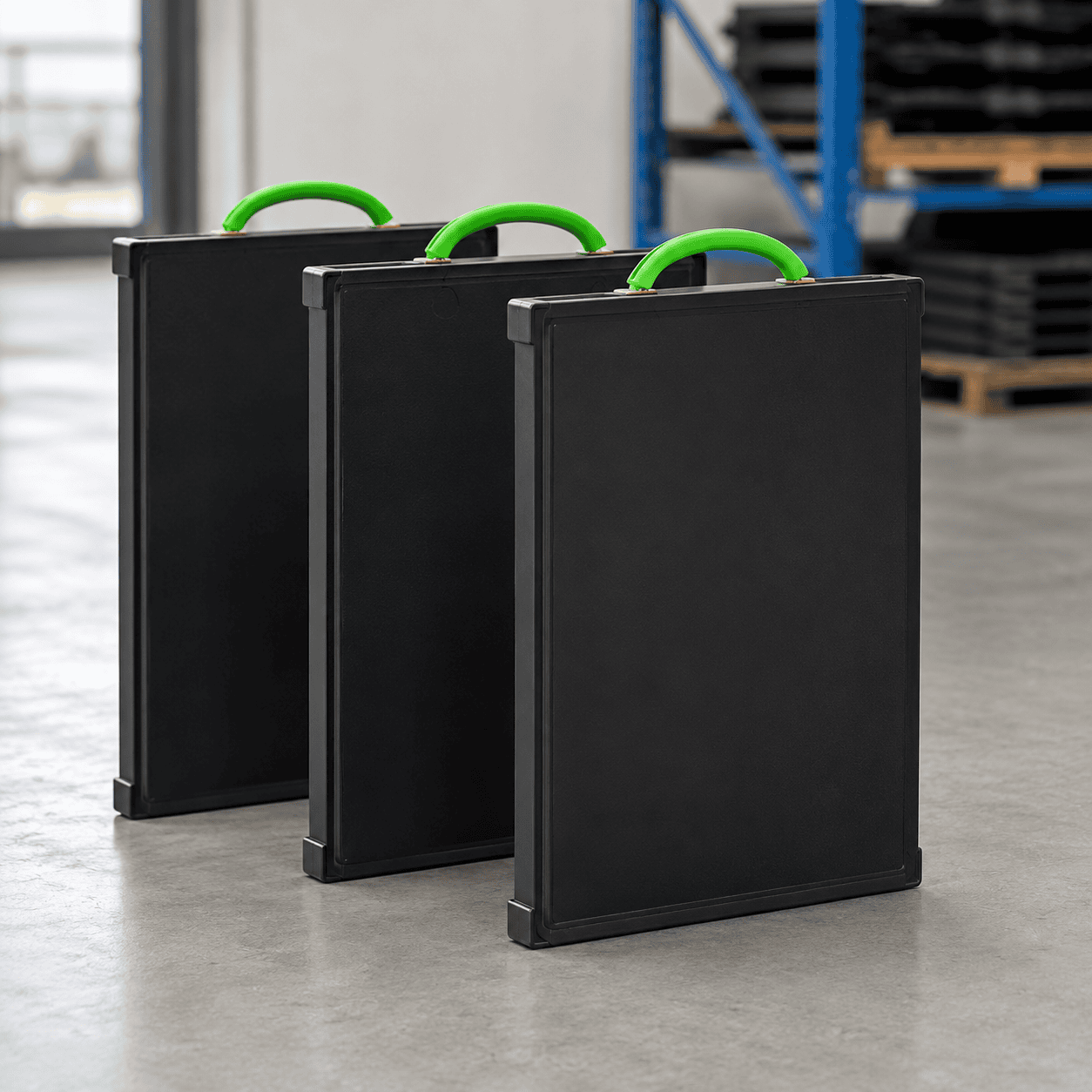
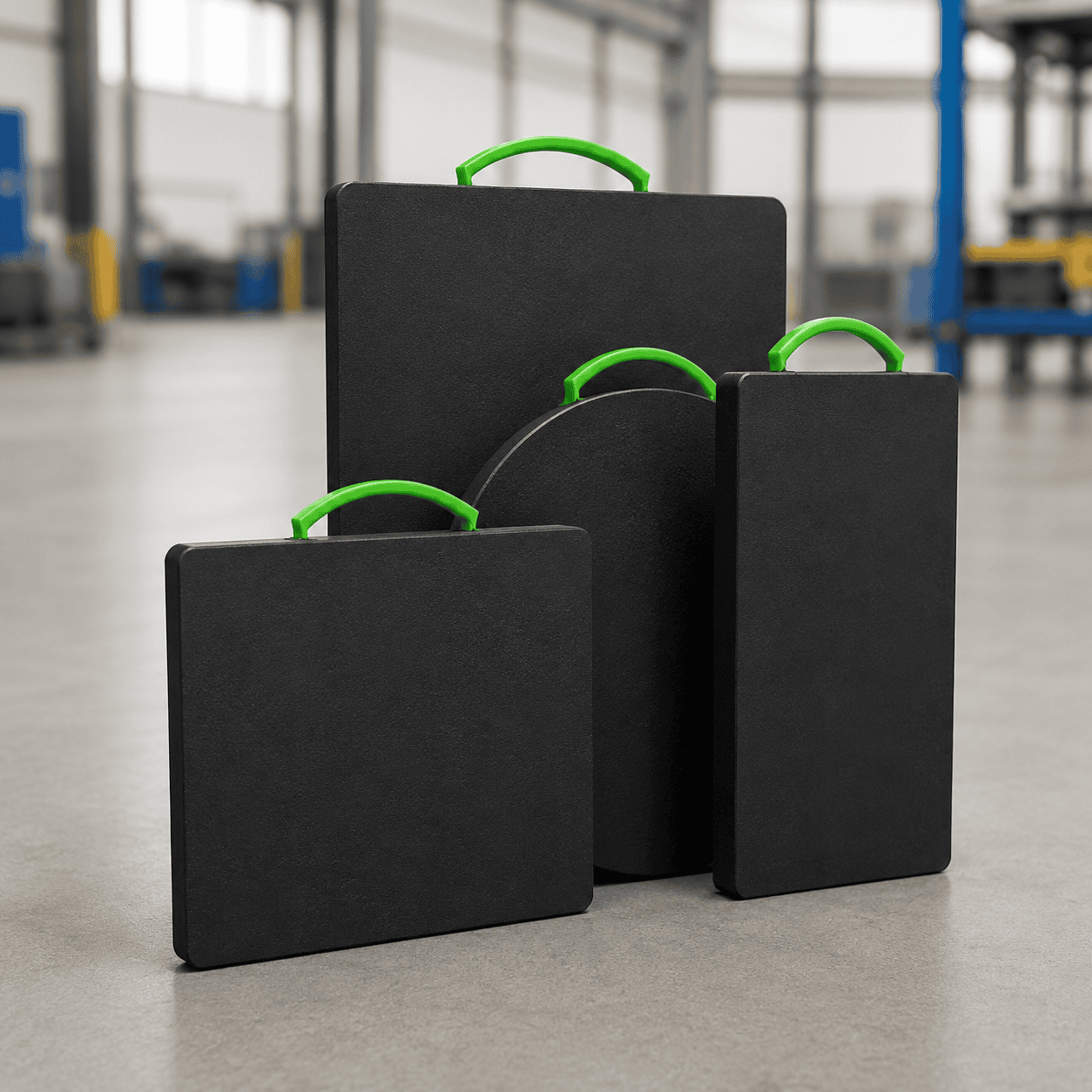
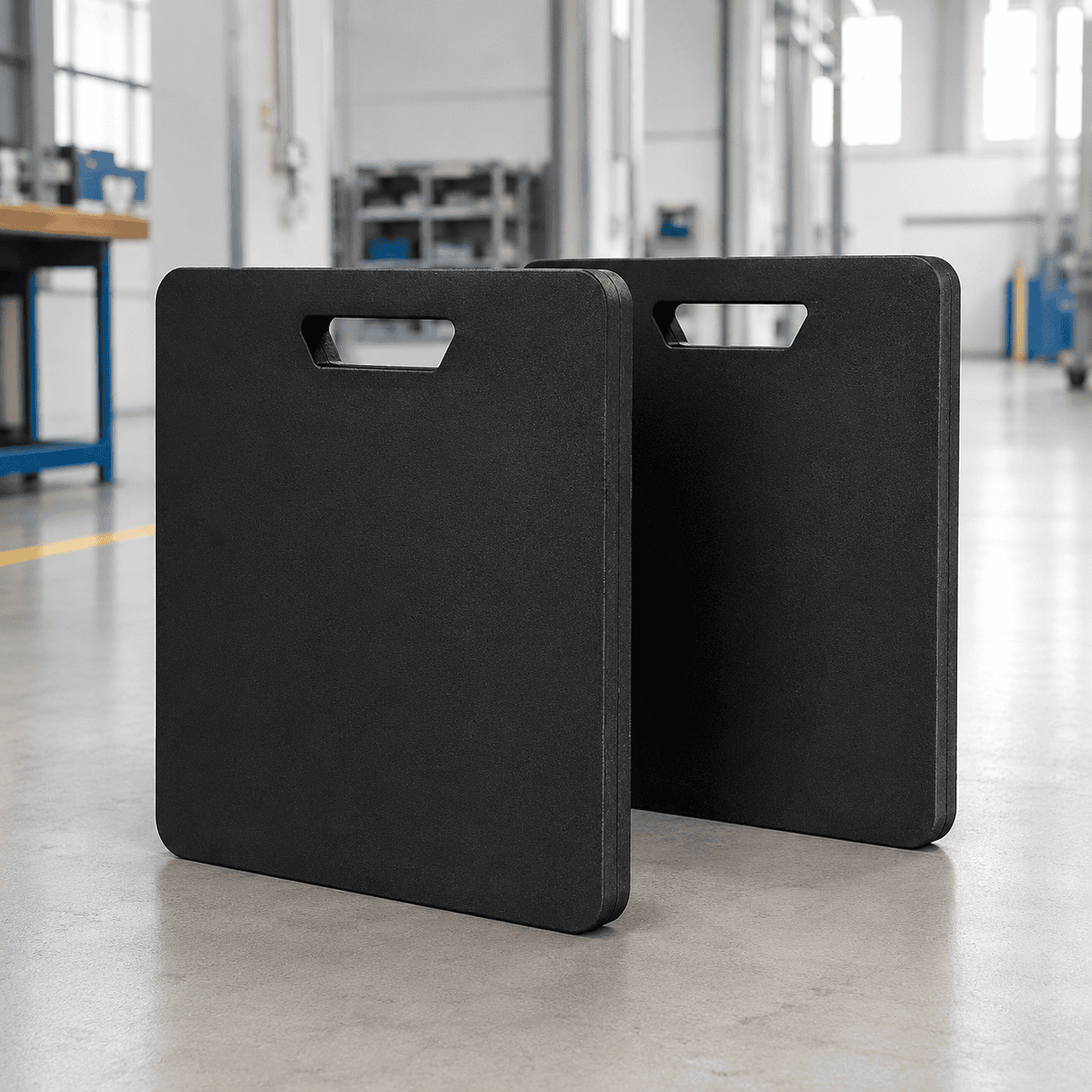
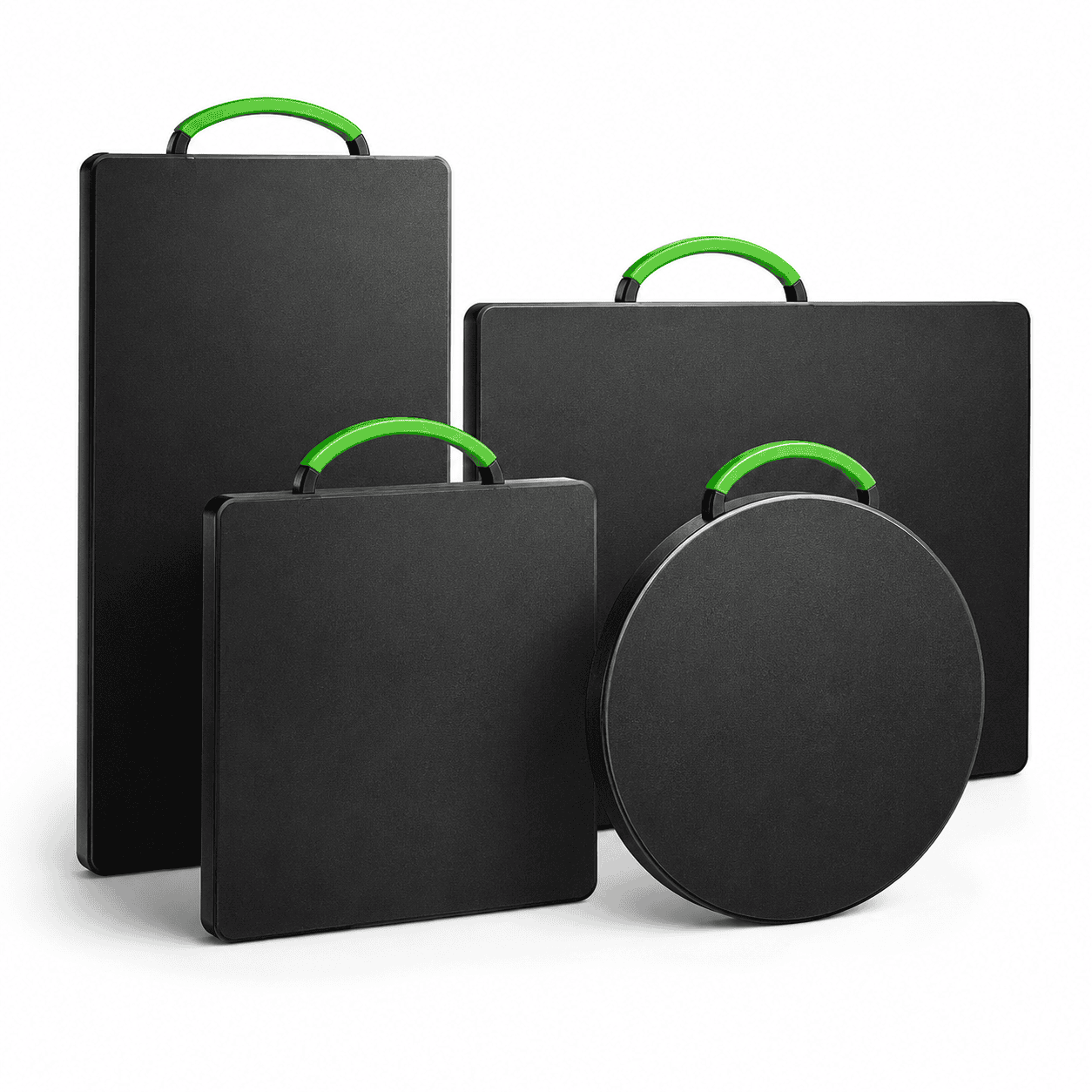
Anti Slip Outrigger Pads are durable UHMWPE support panels featuring rough working surfaces, square structures and integrated carrying hand holes. Typical sizes include 400 × 400 × 40 mm, 500 × 500 × 40–60 mm, 600 × 600 × 40–60 mm, 800 × 800 × 40–60 mm and 1000 × 1000 × 40–80 mm. The reusable pads are suitable for mobile cranes, concrete pumps, boom trucks and other outrigger-equipped machinery.
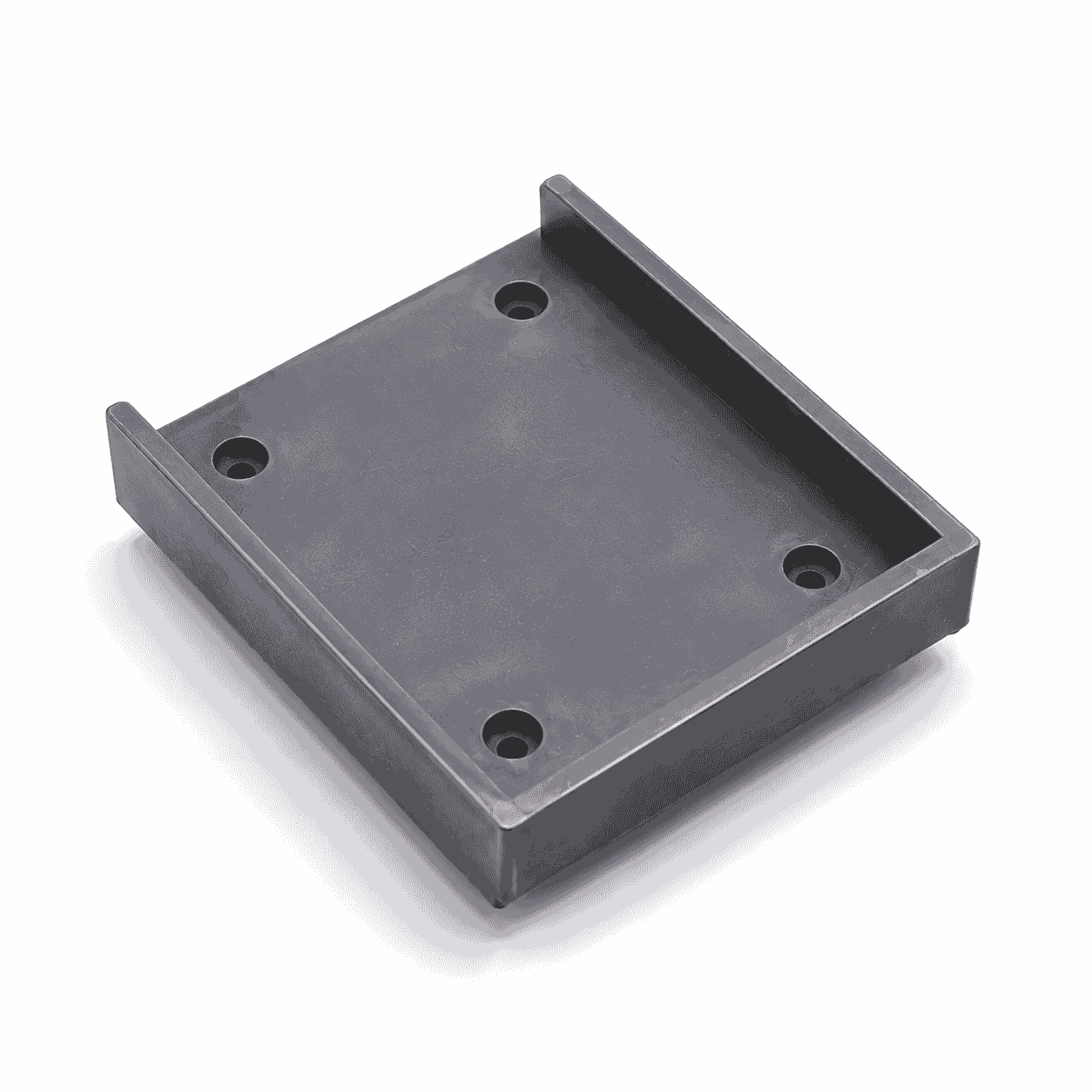
Anti Slip Outrigger Pads are heavy-duty UHMWPE support panels designed to increase the effective contact area beneath crane outriggers, concrete pump stabilizers, boom truck support legs, aerial work equipment, utility vehicles, and other outrigger-equipped machinery. The product shown features a simple square structure, rough textured working surface, rounded corners, and an integrated rectangular hand hole.
Unlike completely smooth plastic support plates, these pads use a rough working surface designed to provide additional surface interaction during equipment setup. The solid square structure creates a practical ground-support footprint, while the integrated hand hole provides a convenient gripping position for handling, positioning, removal, transportation, and storage.
The black pads shown are designed for repeated industrial use. Multiple pad sizes and thicknesses allow the support system to be selected according to the individual outrigger reaction, stabilizer foot dimensions, ground condition, required support area, handling method, and equipment configuration.
Unlike temporary roadway mats, which are installed continuously to create access routes, outrigger pads are positioned directly beneath individual equipment stabilizers. Their primary function is to increase the effective support area between the equipment foot and the supporting surface.
Anti Slip Outrigger Pads are available in a wide range of square dimensions and thicknesses. The reference product family shown includes compact pads for smaller equipment as well as large support panels for demanding machinery applications.
Typical practical sizes include:
| Reference Size | Typical Thickness | Approx. Solid Pad Weight | Typical Application |
|---|---|---|---|
| 400 × 400 mm | 40 mm | Approximately 6 kg | Small stabilizers and compact equipment |
| 500 × 500 mm | 40–60 mm | Approximately 9–14 kg | Utility vehicles and lighter equipment |
| 600 × 600 mm | 40–60 mm | Approximately 13–20 kg | General crane and machinery outriggers |
| 800 × 800 mm | 40–60 mm | Approximately 24–36 kg | Medium heavy equipment support |
| 1000 × 1000 mm | 40–80 mm | Approximately 37–74 kg | Large stabilizer support areas |
| 1200 × 1200 mm | 40–100 mm | Approximately 54–134 kg | Heavy equipment and larger outriggers |
| 1500 × 1500 mm | 100 mm | Approximately 209 kg | Large equipment support platforms |
| 1800 × 1800 mm | 100 mm | Approximately 301 kg | Heavy machinery support applications |
| 2000 × 1000 mm | 100 mm | Approximately 186 kg | Rectangular heavy equipment support |
| 3000 × 2000 mm | 100 mm | Approximately 558 kg | Large industrial support applications |
The approximate weights above are reference values for solid UHMWPE panels. Actual finished product weight can vary according to exact material density, dimensional tolerance, carrying holes, machined edges, surface texture, recessed areas, and other structural features.
Common thickness options include approximately 40 mm, 50 mm, 60 mm, 80 mm, and 100 mm. Smaller sizes may also use thinner specifications where the actual equipment and support conditions are appropriate.
The following size combinations provide practical reference options for different equipment support requirements:
| Pad Size | Available Reference Thicknesses |
|---|---|
| 400 × 400 mm | 40 mm |
| 500 × 500 mm | 40 mm, 50 mm, 60 mm |
| 600 × 600 mm | 40 mm, 50 mm, 60 mm |
| 800 × 800 mm | 40 mm, 50 mm, 60 mm |
| 1000 × 1000 mm | 40 mm, 50 mm, 60 mm, 80 mm |
| 1200 × 1200 mm | 40 mm, 60 mm, 80 mm, 100 mm |
| 1500 × 1500 mm | 100 mm |
| 1800 × 1800 mm | 100 mm |
| 2000 × 1000 mm | 100 mm |
| 3000 × 2000 mm | 100 mm |
This wide specification range allows the support pad dimensions to be matched more closely to different stabilizer feet, required bearing areas, equipment categories, and handling conditions.
The largest outside dimension should not automatically be selected for every machine. The final pad size and thickness need to suit the actual maximum outrigger reaction, ground bearing condition, pad stiffness, storage arrangement, and operating procedure.
| Specification | Typical Reference |
|---|---|
| Product type | Rough surface equipment outrigger support pad |
| Primary material | UHMWPE |
| Main shape | Square |
| Reference color | Black |
| Upper surface | Rough anti-slip texture |
| Handling feature | Integrated rectangular hand hole |
| Common thicknesses | 40 mm, 50 mm, 60 mm, 80 mm and 100 mm |
| Installation | Individual pad beneath each stabilizer or outrigger |
| Main applications | Cranes, pump trucks, boom trucks and heavy machinery |
Final dimensions, thickness, material structure, surface finish, and handling features should be selected according to the actual equipment and operating conditions.
The most visible feature of Anti Slip Outrigger Pads is the rough textured working surface.
Instead of using a completely smooth plastic face, the pad surface has a fine industrial texture. This provides a different contact condition between the pad, equipment support foot, and surrounding working environment.
The rough surface can help provide:
The surface texture does not replace correct pad sizing, equipment positioning, stable ground, or proper inspection.
Large stones, metal parts, timber fragments, or other hard objects should not remain trapped between the pad and supporting ground because they can create concentrated contact points.
Different equipment applications can require different surface structures.
A smooth pad provides a relatively flat working surface, while a rough pad adds surface texture.
The rough design may be preferred where:
A smoother product may be selected for different equipment contact conditions or where another surface structure is required.
The correct choice depends on the complete stabilizer foot, pad, ground, and operating environment.
The rectangular hand hole is another important feature of the product shown.
Instead of using an external rope or metal handle, the carrying position is integrated directly into the body of the support pad.
This structure can help when the pad needs to be:
The integrated opening eliminates the need for an external handle component on this specific product design.
Before handling, the hand hole and surrounding material should be visually checked for cracks, deep cuts, severe deformation, or other visible damage.
The square structure provides a practical combination of support area, handling, stacking, transportation, and storage.
Square pads can be:
The product shown also uses rounded outside corners, which create a cleaner edge structure than sharp square corners.
Smaller square pads are generally easier to handle but provide less geometric support area.
Larger pads provide a broader footprint but require greater consideration for component weight, transportation, storage, lifting method, and equipment support conditions.
An equipment stabilizer transfers a concentrated reaction through a relatively small original support foot.
Anti Slip Outrigger Pads increase the effective contact area between the stabilizer system and the supporting surface.
The relationship between force and area means that increasing the effective support area can reduce concentrated pressure on the supporting surface, provided that the complete pad has suitable material properties and structural stiffness.
The effectiveness of the support arrangement depends on:
A large outside dimension alone should not be treated as a universal capacity guarantee.
The correct size should not be selected only according to the total vehicle weight or rated lifting capacity of a crane.
Different outriggers on the same machine can experience different reaction forces according to the operating configuration.
Important selection factors include:
A practical starting point is to determine the pad area required to reduce the equipment reaction to a pressure appropriate for the supporting surface.
After the required area has been determined, the material, thickness, strength, stiffness, and construction of the pad should also be reviewed.
For additional professional information, see this external resource about outrigger pad sizing guidance.
Product reference tables sometimes show one load-capacity value beside each pad dimension.
However, actual support performance depends on more than the outside size of the pad.
The same pad can behave differently when used:
For this reason, the dimensions in this product page are presented as practical size references rather than unconditional safe working load guarantees.
Final selection should consider the actual machine, maximum stabilizer reaction, supporting ground, pad material, thickness, and complete setup arrangement.
Two pads with identical outside dimensions can perform differently if their thicknesses or material structures are different.
Important factors include:
A pad that is too flexible for an application may not spread the applied force over the complete intended area.
This is why product selection should consider both the outside dimensions and the thickness.
The main material used for Anti Slip Outrigger Pads is ultra-high-molecular-weight polyethylene.
The material provides a practical combination of:
These characteristics make the pads suitable for equipment support products that are repeatedly transported, positioned, loaded, removed, cleaned, inspected, and stored.
Unlike steel support plates, UHMWPE does not rust.
Compared with conventional timber supports, manufactured plastic pads have low water absorption and do not rely on natural wood grain, knots, or changing moisture content.
Outrigger pads are frequently moved between vehicle storage areas and equipment support positions.
During repeated operation, they may experience:
The wear-resistant characteristics of UHMWPE make it suitable for repeated support applications when the product is correctly selected and regularly inspected.
The rough surface, hand hole, edges, and lower support face should still be checked before demanding equipment use.
Anti Slip Outrigger Pads can be used with many types of machinery that rely on outriggers or stabilizers during operation.
Typical applications include:
The correct pad dimensions and thickness should always be matched to the actual equipment and operating conditions.
Mobile cranes use outriggers to create a wider operating base during lifting operations.
The reaction acting through each individual outrigger can change according to:
When selecting support pads for a mobile crane, consider:
The same crane may require different support considerations when operating on concrete, asphalt, gravel, compacted soil, or softer surfaces.
Concrete pump trucks also rely on stabilizers to create a wider operating base.
Anti Slip Outrigger Pads may be used beneath pump truck support legs when the selected dimensions, material, thickness, and complete equipment setup are appropriate.
Important factors include:
Each stabilizer location should be evaluated according to its actual support condition.
Boom trucks and utility vehicles often use stabilizers during lifting, aerial access, maintenance, and material handling operations.
Typical equipment includes:
The required support pad should be selected according to actual stabilizer reactions and ground conditions rather than the vehicle category alone.
Compacted soil can vary according to moisture, previous excavation, fill material, and compaction quality.
Before equipment setup, inspect for:
The complete effective area of the pad should receive suitable support underneath.
A larger pad cannot automatically make unsuitable ground safe.
Prepared gravel surfaces are common around industrial equipment and temporary operating areas.
Before placing the pad, check:
Large stones or hard objects directly beneath the pad can create concentrated support points and should be removed before loading.
Asphalt performance can vary according to temperature, pavement thickness, underlying structure, and existing damage.
Consider:
A correctly selected pad increases the effective support area, but the underlying pavement still needs to be appropriate for the equipment operation.
Concrete surfaces should also be evaluated before equipment setup.
Inspect for:
The visible upper surface does not always reveal the complete supporting condition below the equipment.
The wide dimensional range allows the same product family to cover many support requirements.
Compact sizes such as approximately 400 × 400 × 40 mm and 500 × 500 × 40–60 mm provide practical options for smaller stabilizers.
Mid-range formats such as approximately 600 × 600 × 40–60 mm and 800 × 800 × 40–60 mm are suitable reference sizes for general equipment support.
Larger formats such as approximately 1000 × 1000 × 40–80 mm and 1200 × 1200 × 40–100 mm provide broader geometric support areas.
Large rectangular or square panels can also be considered for specialized heavy-equipment support systems.
A major advantage of Anti Slip Outrigger Pads is their reusable structure.
After equipment operation is completed, the pads can be:
The simple square shape makes complete pad sets easier to organize during transportation and storage.
Reusable equipment support pads should be inspected before demanding applications.
Check:
A damaged pad should be evaluated before returning to heavy equipment support service.
The supporting ground should also be inspected each time the equipment is repositioned.
Mud, sand, gravel, oil, and other debris can remain on the rough working surface after outdoor operations.
Cleaning can help:
Large debris on or beneath the support pad should be removed before equipment loading.
The regular square shape and integrated hand hole make the pads practical for organized storage and transportation.
During storage:
Handling procedures should always match the actual pad dimensions and weight.
Large-format products may require suitable mechanical handling methods because product weight increases significantly with panel dimensions and thickness.
You can also view our complete range of crane outrigger pads for mobile cranes, concrete pumps, boom trucks, lifting equipment, stabilizer systems, cribbing support, and related heavy machinery applications.
Anti Slip Outrigger Pads provide a practical ground-support solution for mobile cranes, truck-mounted cranes, concrete pump trucks, boom trucks, utility vehicles, and other outrigger-equipped machinery. Their durable UHMWPE construction, rough working surface, square structure, integrated carrying hand hole, wide dimensional range, and reusable design make them suitable for many equipment support applications.
Typical reference specifications include approximately 400 × 400 × 40 mm, 500 × 500 × 40–60 mm, 600 × 600 × 40–60 mm, 800 × 800 × 40–60 mm, 1000 × 1000 × 40–80 mm, and 1200 × 1200 × 40–100 mm.
Larger project reference formats can include approximately 1500 × 1500 × 100 mm, 1800 × 1800 × 100 mm, 2000 × 1000 × 100 mm, and 3000 × 2000 × 100 mm.
Final pad dimensions, thickness, material grade, effective support area, surface structure, and handling arrangement should always be selected according to the maximum individual outrigger reaction, original stabilizer foot size, supporting ground condition, and actual operating requirements.
Check drawings for full specifications and confirm materials according to service conditions to prevent product defects.
Inspect all key processing steps and fully verify dimensions, holes, grooves and fitting surfaces.
Deburr, chamfer and clean products for easy installation. Ensure uniform quality among batch products.
Choose appropriate packaging solutions based on product features to protect goods from collision, deformation and mixing during transit.
Unlike metal parts, engineering plastic components still require strict control over dimensions, holes, edges, surface, materials and assembly performance for equipment use.
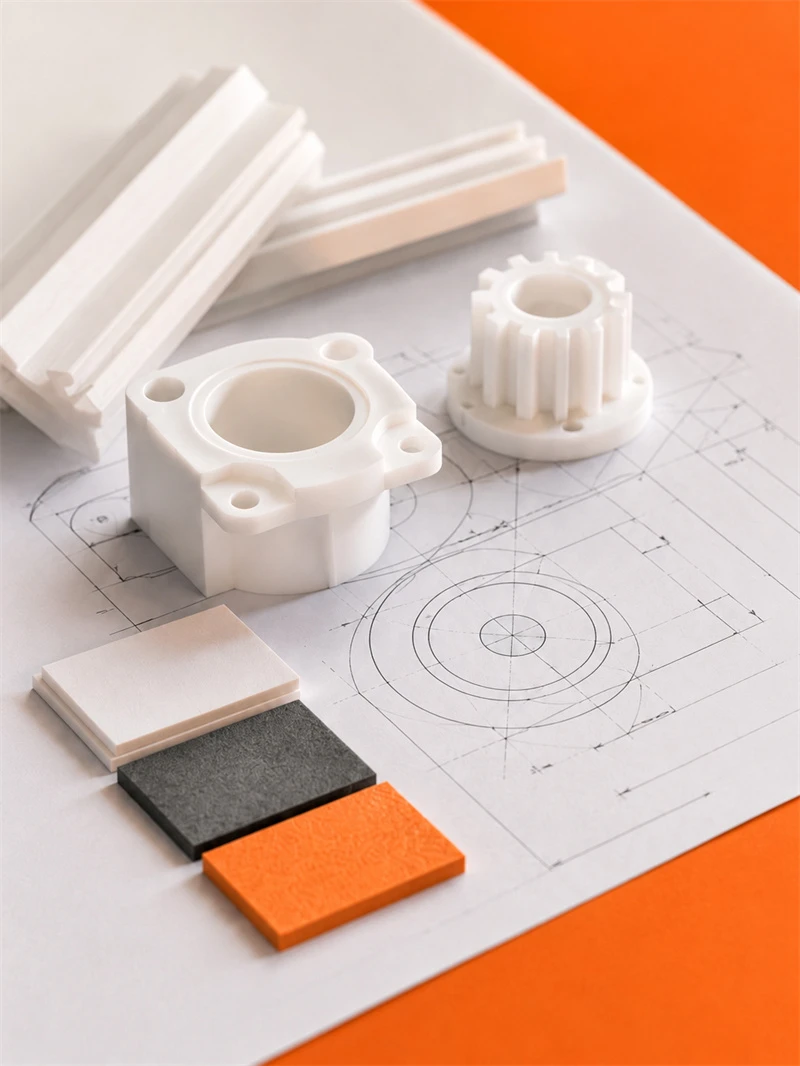
Engineering plastic parts suit friction, guide, support, buffer, anti-corrosion and insulation areas. We supply UHMWPE, POM, PA, PP/PE components for conveyor, food, mining, machinery, chemical and cable systems, with custom OEM service available.
Stay updated with our latest industry insights, company updates and featured articles.
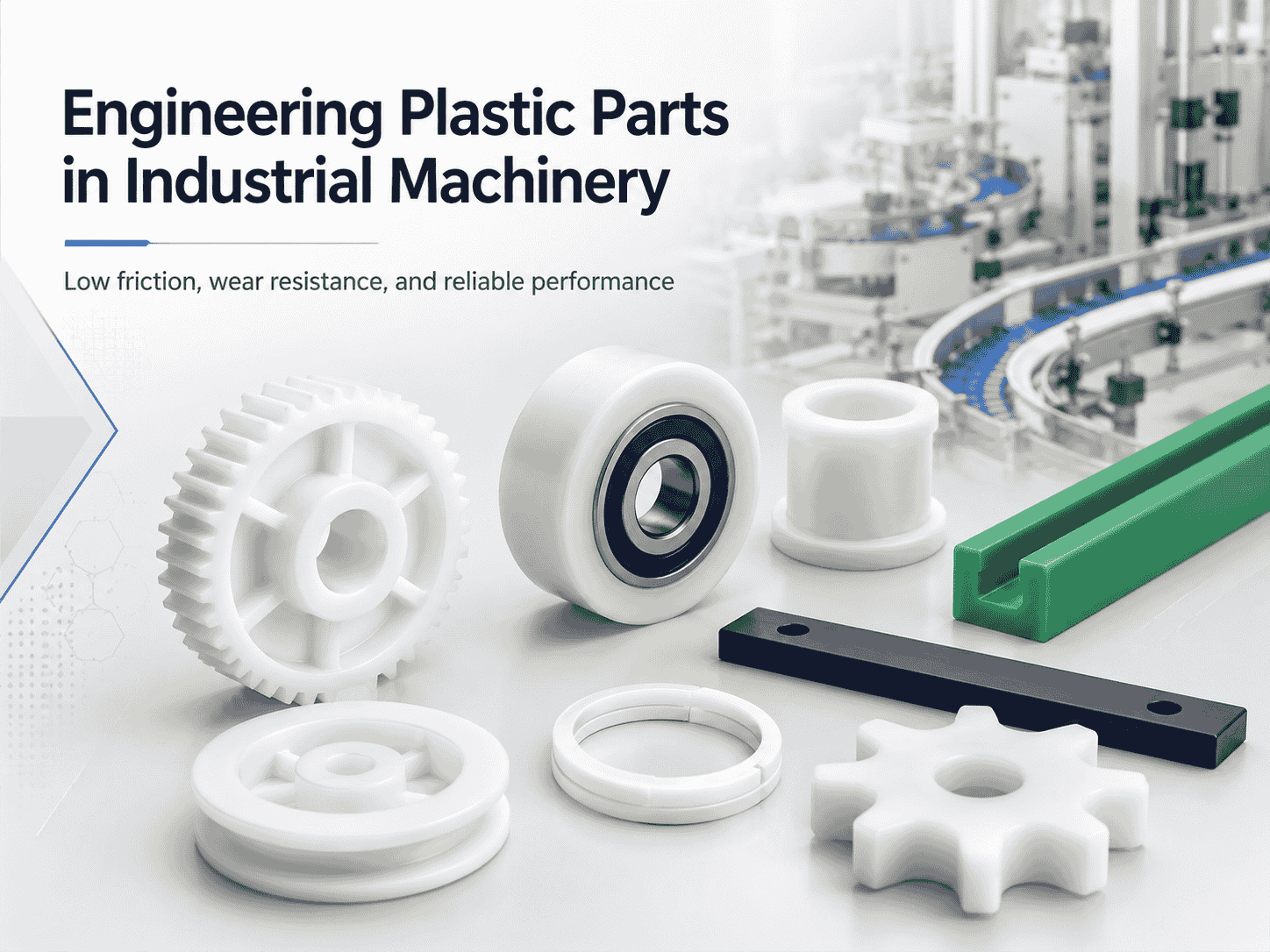
Engineering plastics are increasingly used in industrial machinery, automated production lines, conveyor systems, packaging equipment, and food-processing machines. Materials such as nylon, UHMWPE, POM, and
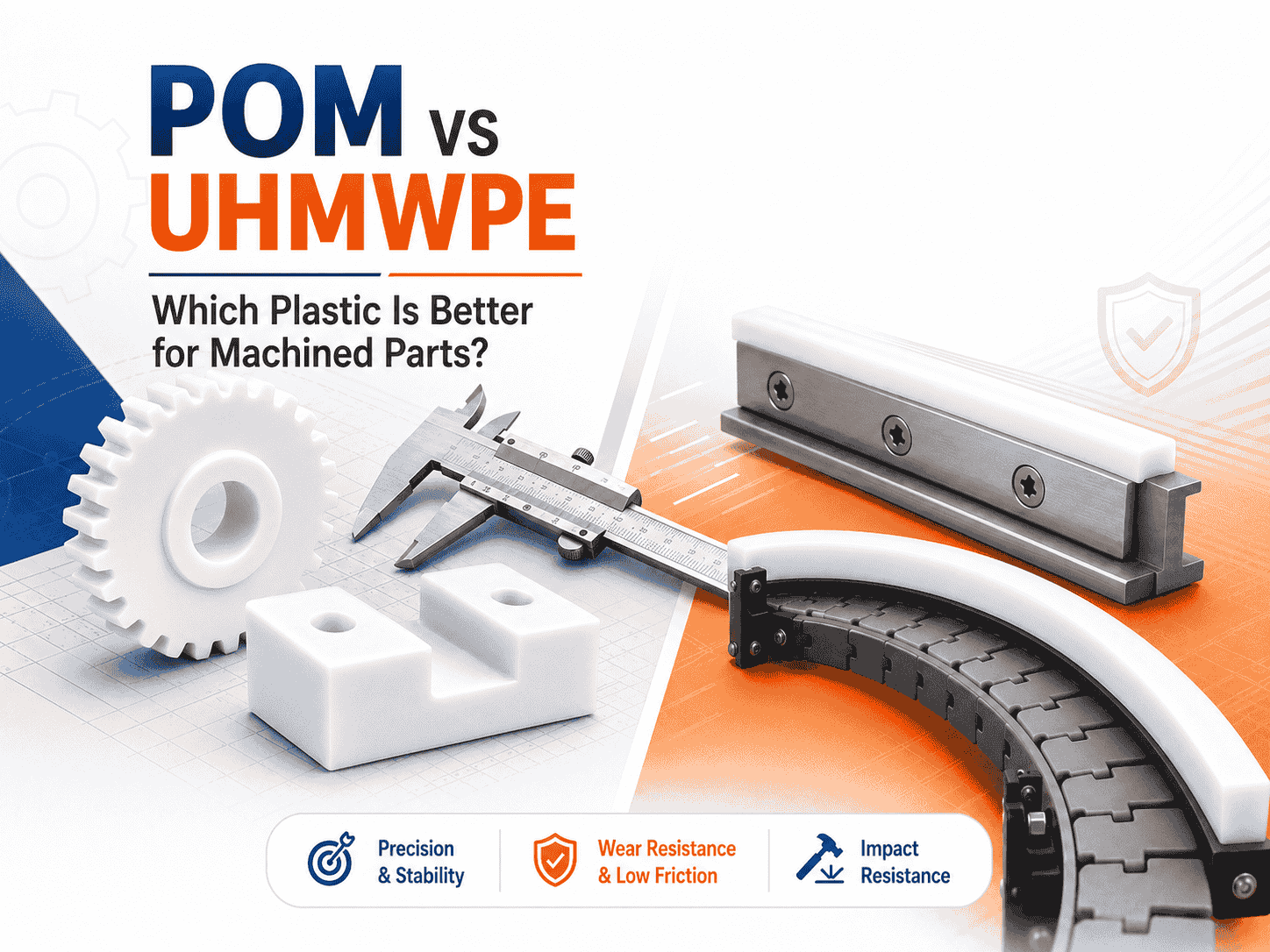
Both are lightweight, corrosion-resistant, wear-resistant, and suitable for CNC machining. However, they perform very differently
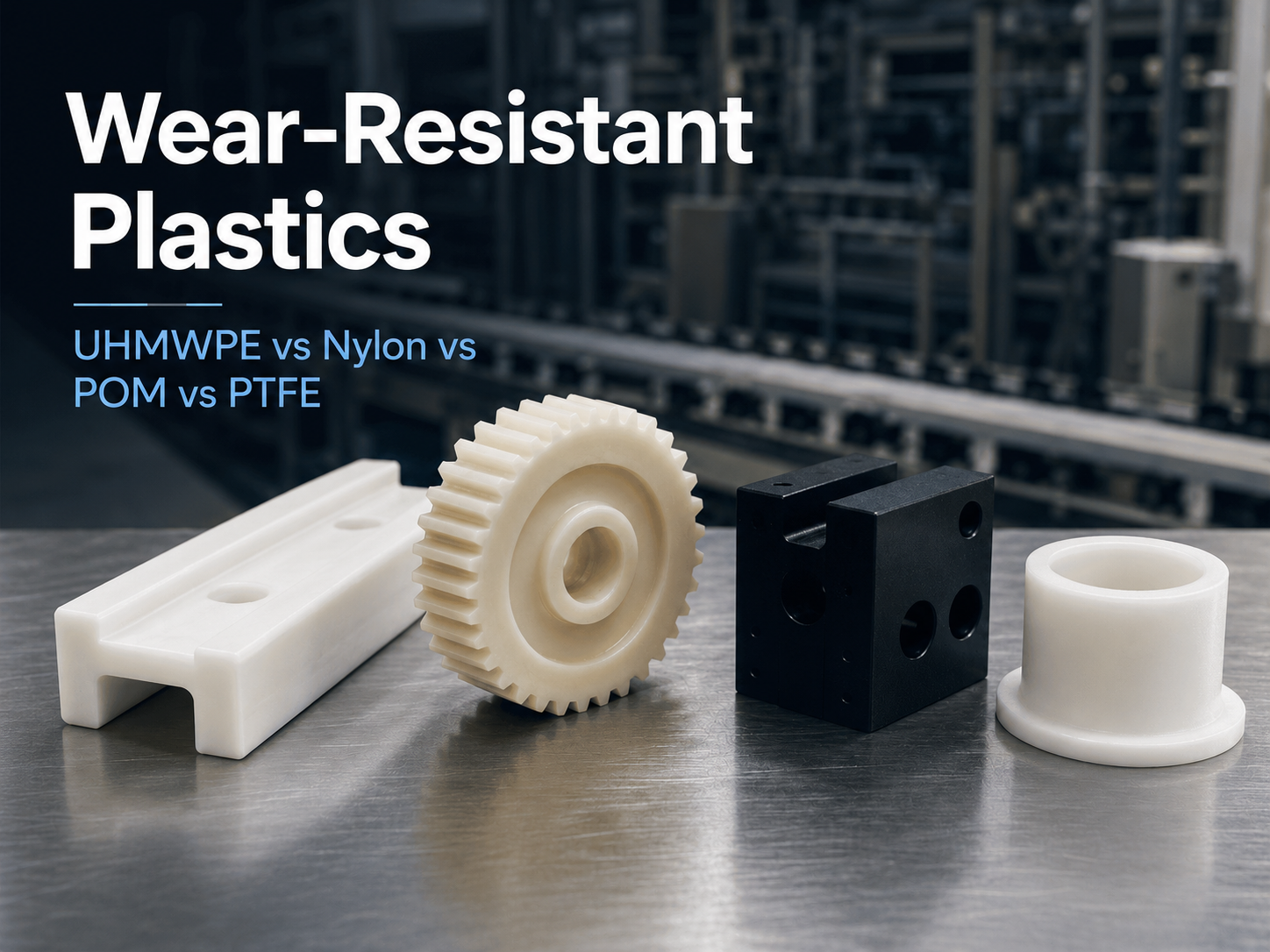
Wear is a common cause of failure in conveyor systems, packaging machinery, automated equipment, mining
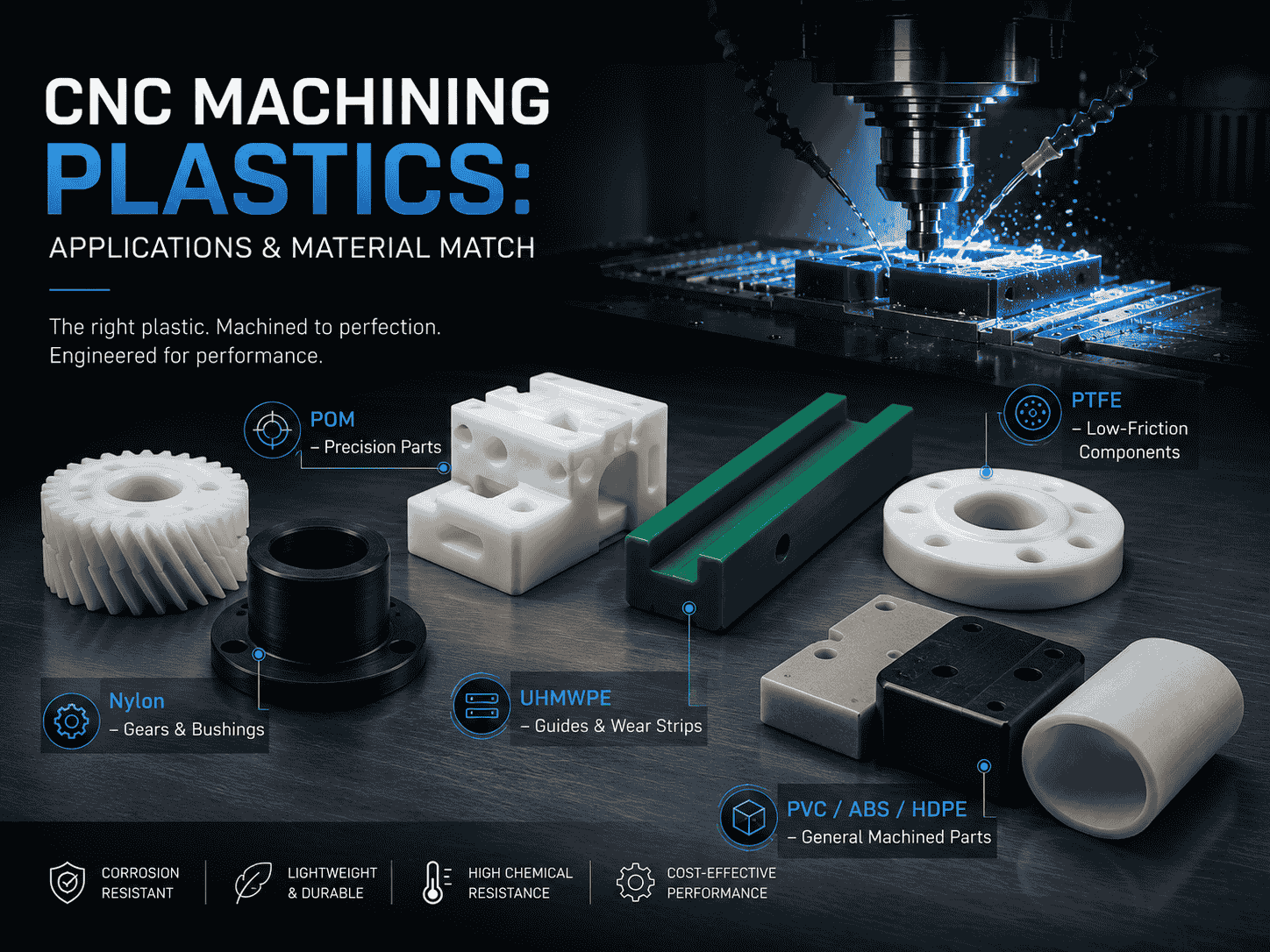
CNC machining is widely used to produce plastic prototypes, low-volume parts, replacement components, jigs, fixtures,
Both are lightweight, corrosion-resistant, wear-resistant, and suitable for CNC machining. However, they perform very differently
Wear is a common cause of failure in conveyor systems, packaging machinery, automated equipment, mining
CNC machining is widely used to produce plastic prototypes, low-volume parts, replacement components, jigs, fixtures,
Need UHMWPE sheets & custom plastic machined/OEM parts?Send specs & material needs, free quote within 24h.