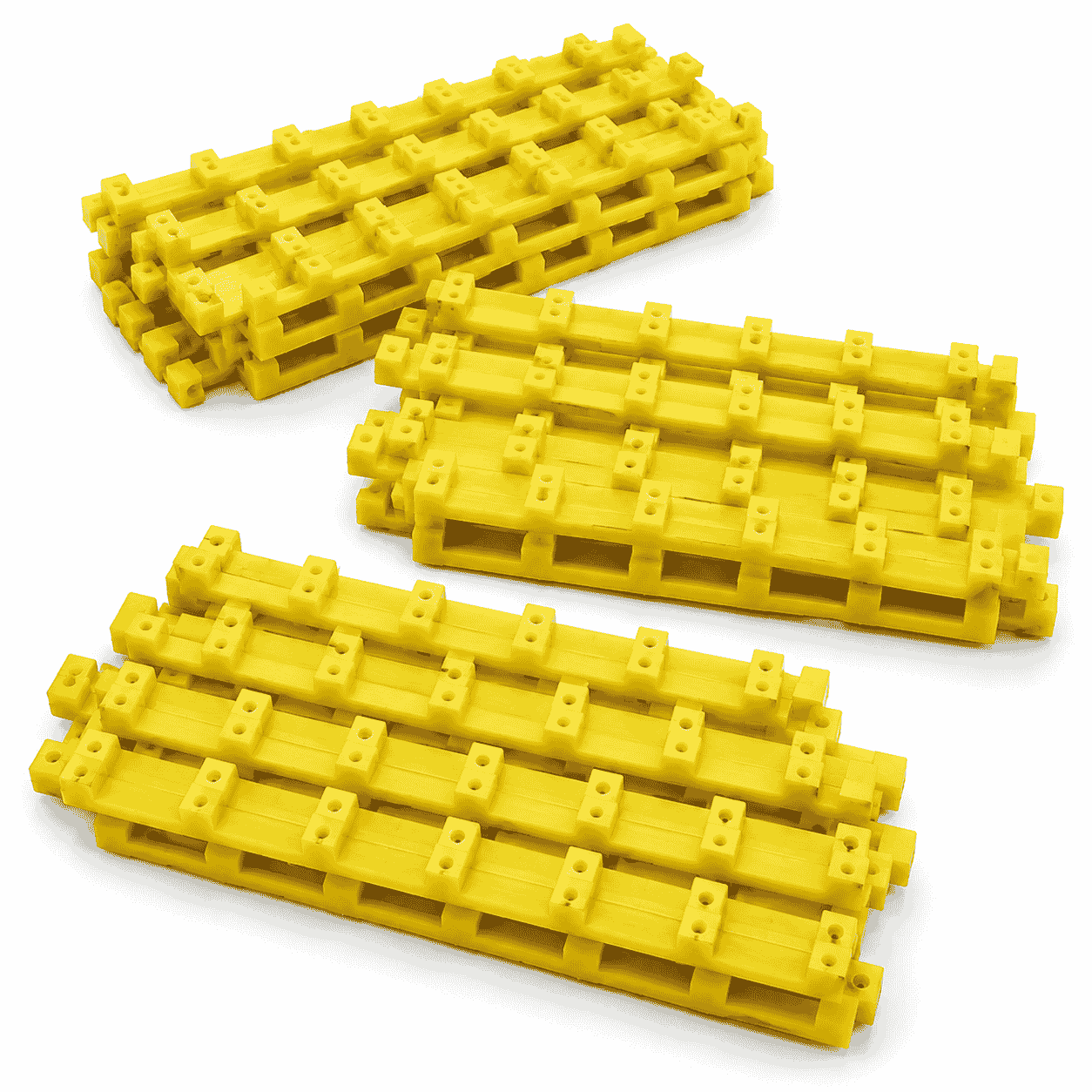


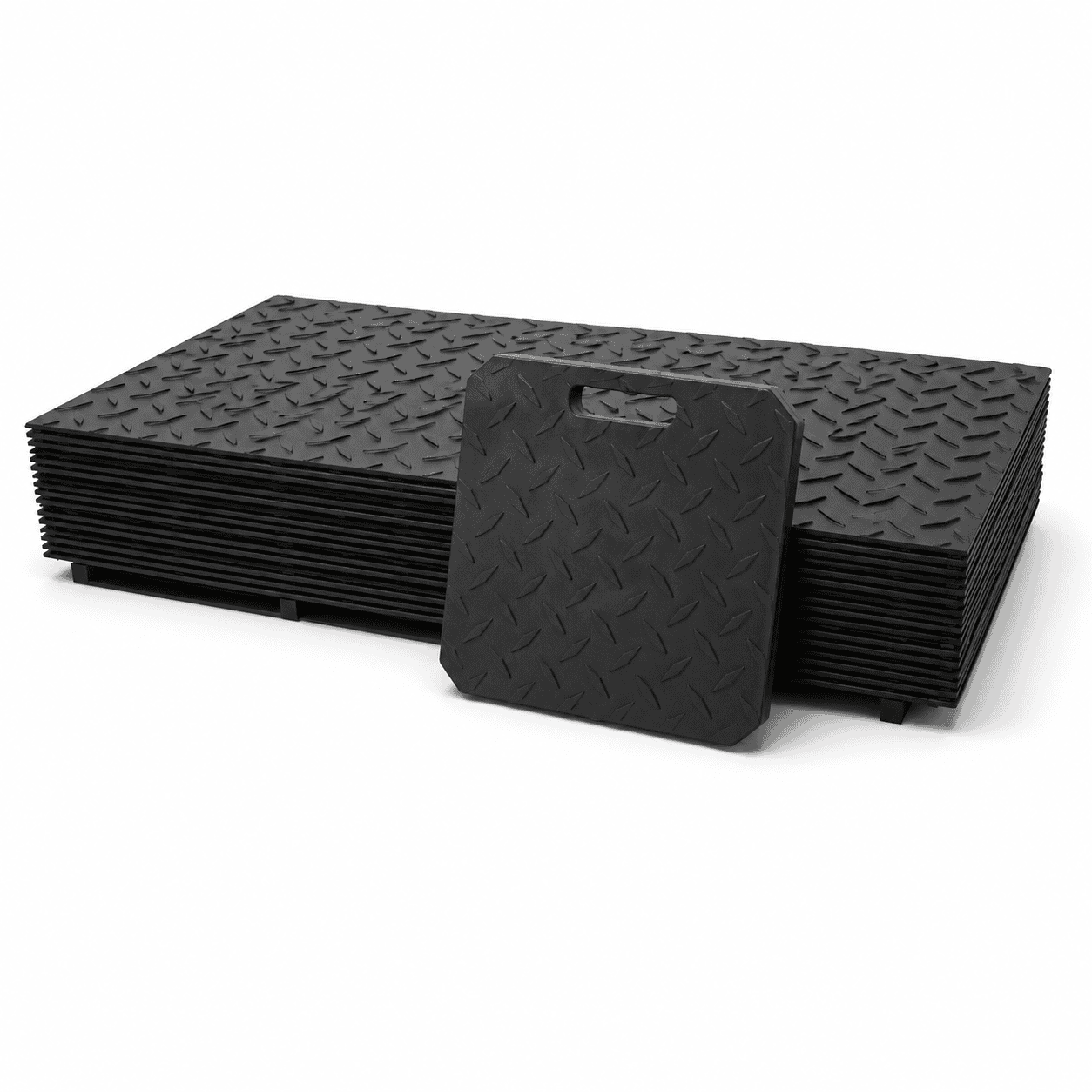
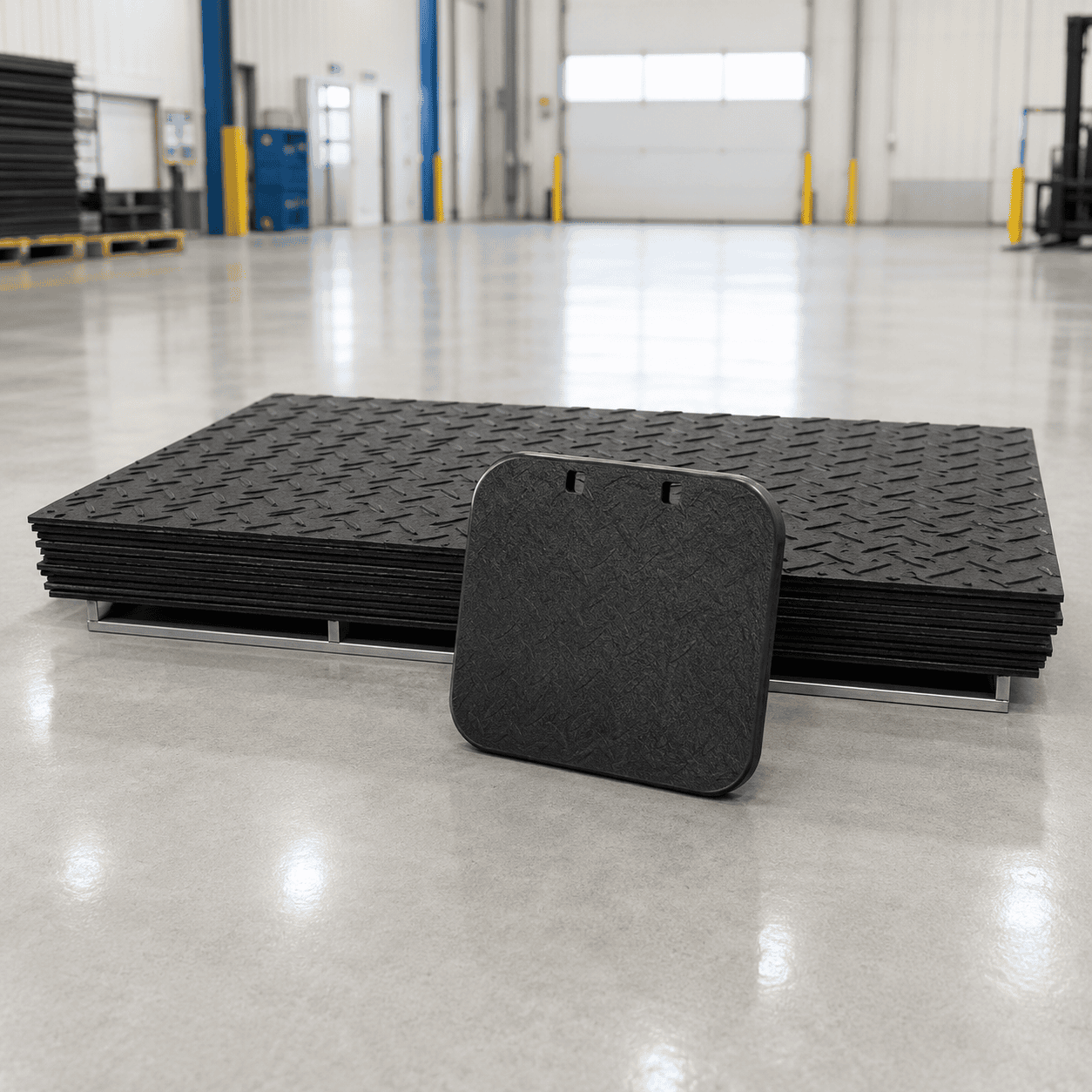
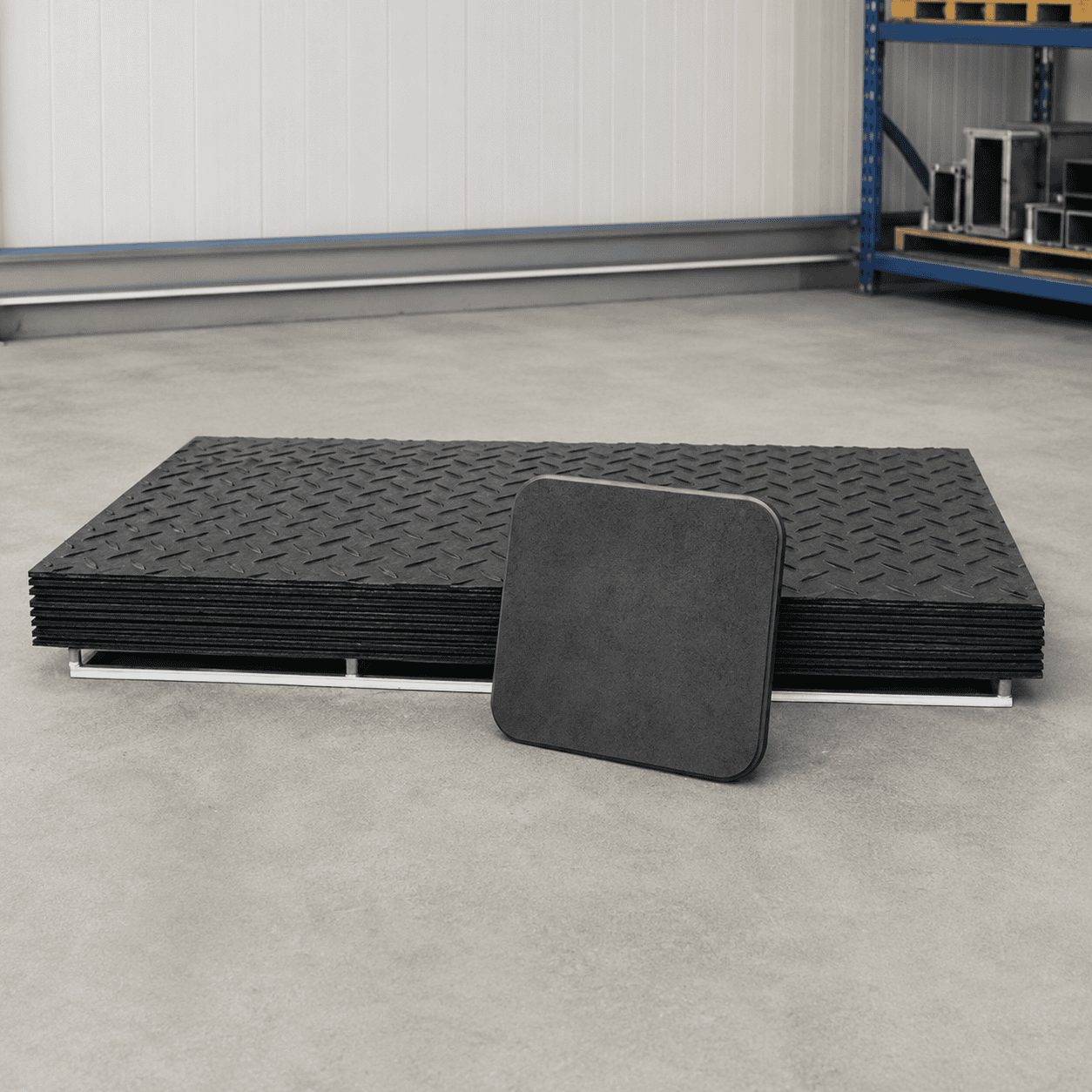
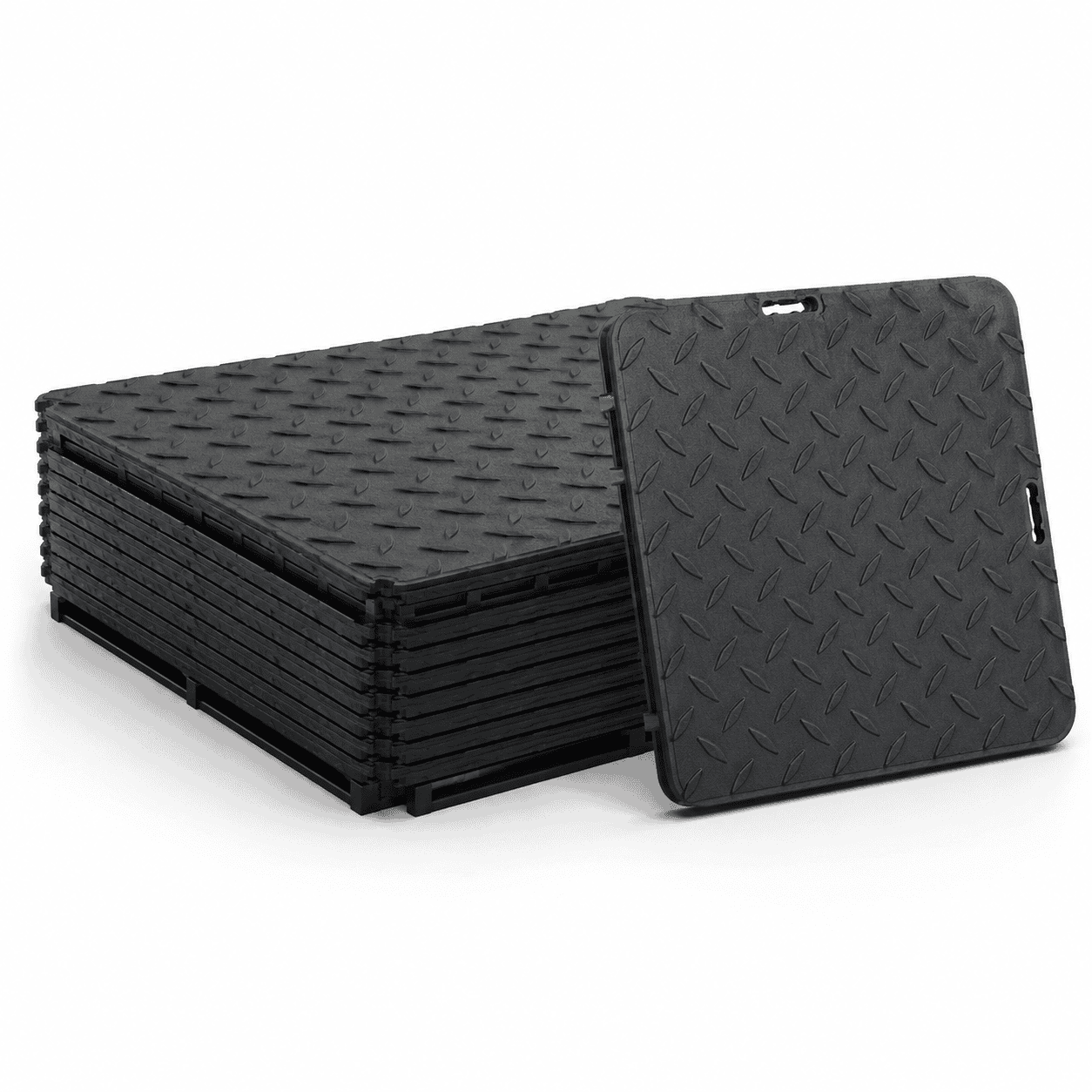
Polyethylene Ground Access Mats are reusable HDPE or UHMWPE panels designed for temporary vehicle access over mud, sand, grass, soft soil and uneven ground. Portable trackway sizes include 2400 × 1100 mm, 2400 × 610 mm and 2900 × 1100 mm with 12–20 mm thicknesses, while heavy-duty panels are available in larger formats with approximately 30–100 mm thickness options.
Polyethylene Ground Access Mats are reusable HDPE or UHMWPE panels designed to create temporary vehicle access and protect the underlying surface over mud, sand, grass, soft soil, uneven ground, and other difficult terrain.
The product range includes both thinner portable trackway panels and thicker heavy-duty access mats. This allows the dimensions, thickness, material, surface pattern, and panel format to be selected according to the type of vehicle, supporting ground, required access route, transportation method, and operating conditions.
Unlike permanent concrete or asphalt roads, polyethylene access mats can be positioned when temporary access is required, connected into a working route, removed after use, cleaned, inspected, and used again at another location.
The reference product information includes HDPE and UHMWPE material options, light trackway panels from approximately 12 mm to 20 mm thick, and larger heavy-duty panels from approximately 30 mm to 100 mm thick.
The wider product range can therefore be used for pedestrian routes, light vehicle tracks, temporary equipment access, industrial yards, landscaping operations, utility maintenance, drilling support areas, outdoor events, and other temporary ground access applications.
Polyethylene Ground Access Mats are available in several different dimensional groups. The supplied reference specification includes both thinner portable road mat formats and larger heavy-duty access panel formats.
The thinner reference series includes the following dimensions:
| Reference Panel Size | Available Thicknesses | Typical Use |
|---|---|---|
| 2400 × 1100 mm | 12, 15, 18 or 20 mm | General temporary vehicle access and ground protection |
| 2400 × 610 mm | 12, 15, 18 or 20 mm | Narrow wheel tracks and compact access routes |
| 2900 × 1100 mm | 12, 15, 18 or 20 mm | Longer temporary vehicle trackways |
| 1200 × 1100 mm | 12, 15, 18 or 20 mm | Compact access sections and smaller working areas |
The approximately 2400 × 1100 mm format is a practical general-purpose size for temporary vehicle access. Depending on the selected thickness and surface structure, these panels can be used to form parallel wheel tracks or a wider continuous route.
The approximately 2400 × 610 mm format is narrower and can be practical where two individual vehicle wheel tracks are preferred instead of covering the complete route width.
The approximately 2900 × 1100 mm panel provides a longer access section, reducing the number of individual panels required along some temporary routes.
The approximately 1200 × 1100 mm size provides a more compact panel for smaller working zones, short access areas, turning sections, and locations where handling space is limited.
The thicker reference series includes larger panels for demanding temporary access applications:
| Reference Panel Size | Reference Thickness Range | Typical Application |
|---|---|---|
| 2500 × 1300 mm | 30–100 mm | Heavy equipment access and temporary support routes |
| 2300 × 1200 mm | 30–100 mm | General heavy-duty ground access |
| 3000 × 1200 mm | 30–60 mm | Long vehicle access panels |
| 3000 × 1500 mm | 30–100 mm | Wide heavy equipment access routes |
| 2000 × 1000 mm | 30–100 mm | Compact heavy-duty support sections |
| 4500 × 2000 mm | 30–100 mm | Large-format project-specific access systems |
The approximately 2000 × 1000 mm format provides a compact heavy-duty option for equipment access areas where larger panels are difficult to position.
The approximately 2300 × 1200 mm and 2500 × 1300 mm sizes provide practical intermediate formats for heavy vehicles and mobile equipment.
The approximately 3000 × 1200 mm and 3000 × 1500 mm formats provide longer access sections and can reduce the number of individual joints along a route.
The approximately 4500 × 2000 mm format is a substantial large-panel product. Not every thickness between 30 mm and 100 mm will be practical for every material grade or project. Large-format panels require specific review of finished weight, transportation, lifting method, equipment loads, connection system, supporting ground, and manufacturing method.
Final dimensions and thickness should therefore be confirmed according to the actual application rather than selecting the largest available panel automatically.
| Specification | Typical Reference |
|---|---|
| Product type | Temporary ground access and protection mat |
| Material options | HDPE or UHMWPE |
| Portable panel thickness | 12, 15, 18 and 20 mm |
| Heavy-duty panel thickness | Approximately 30–100 mm depending on panel size |
| Reference surface cleat height | Approximately 7 mm |
| Reference colors | Black and dark green |
| Other colors | Available for selected product requirements |
| Surface options | Traction cleats, patterned surfaces or project-specific structures |
| Installation | Individual panels, parallel tracks or continuous access routes |
| Main applications | Temporary roads, vehicle access and ground protection |
Final material, panel dimensions, thickness, surface pattern, connector arrangement, color, and installation layout should always be selected according to the actual vehicle, equipment, ground condition, and operating requirements.
The Polyethylene Ground Access Mats range can be divided into two main structural groups.
Panels approximately 12–20 mm thick are generally easier to transport, position, remove, and store.
Typical reference dimensions include:
These formats are practical where temporary access and surface protection are required without building a large elevated support platform.
Possible uses include:
Panels approximately 30–100 mm thick form a different product group.
The thicker structure may be selected for applications requiring:
Thicker panels are also substantially heavier. Handling and installation methods should therefore match the actual panel dimensions and finished weight.
The supplied product specification shows a reference cleat height of approximately 7 mm.
Raised surface cleats can create a defined traction pattern across the working side of the mat.
A traction surface can help provide:
The approximately 7 mm figure should be treated as the reference cleat height for this product information rather than a universal value for every access mat.
Actual pattern height can vary according to:
Polyethylene Ground Access Mats can be installed in different layouts according to the vehicle route and operating space.
Two narrow lines of panels can be installed beneath the expected tire paths.
This arrangement can be practical for:
The approximately 2400 × 610 mm format is particularly suitable for consideration as an individual track panel.
Panels can also be positioned side by side to create a broader temporary route.
This layout can be useful where:
The final layout should consider the actual vehicle width, traffic direction, turning areas, supporting ground, and panel connection method.
One material option for Polyethylene Ground Access Mats is high-density polyethylene, commonly abbreviated as HDPE.
HDPE is widely used for industrial products requiring a practical combination of strength and relatively low density.
For a general material explanation, see the Wikipedia article about high-density polyethylene.
Practical HDPE characteristics for temporary access mats include:
HDPE can be a practical option for many general ground protection and temporary vehicle access applications.
The exact material grade, manufacturing process, panel thickness, surface structure, and reinforcing design can affect the performance of the finished mat.
Another material option for Polyethylene Ground Access Mats is ultra-high-molecular-weight polyethylene, commonly abbreviated as UHMWPE.
UHMWPE is a polyethylene material with extremely long molecular chains and is known for toughness, high impact strength, very low moisture absorption, low friction, and high abrasion resistance.
For a general material explanation, see the Wikipedia article about ultra-high-molecular-weight polyethylene.
Practical UHMWPE characteristics include:
UHMWPE can be considered for demanding access applications involving repeated impact, abrasion, wet conditions, and frequent panel reuse.
Material resistance should not be interpreted as universal resistance to every chemical or every operating temperature.
| Selection Factor | HDPE | UHMWPE |
|---|---|---|
| General temporary access | Practical option | Practical option |
| Repeated abrasion | Suitable for many applications | Often selected for more demanding wear conditions |
| Repeated impact | Suitable for general applications | Often preferred for demanding impact conditions |
| Moisture exposure | Moisture-resistant | Very low moisture absorption |
| Panel handling | Depends on dimensions and thickness | Depends on dimensions and thickness |
| Final selection | Based on actual operating requirements | Based on actual operating requirements |
The material name alone does not determine the performance of a complete ground access system.
Important factors also include:
Polyethylene Ground Access Mats are designed for temporary access over surfaces where direct vehicle traffic may cause rutting, sinking, surface damage, or loss of access.
Typical surfaces include:
The panels create a defined route between the vehicle tires and the underlying ground.
The effectiveness of the complete route depends on the ground condition, panel structure, vehicle load, installation layout, connection system, and traffic pattern.
An access mat cannot automatically make every unstable or severely weak surface suitable for vehicle traffic.
Temporary access mats can help create routes where permanent paving is unnecessary or impractical.
Typical uses include:
After the operation is completed, the mats can be removed instead of leaving a permanent road structure.
Polyethylene Ground Access Mats can be considered for a wide range of temporary access and ground protection requirements.
Typical applications include:
The correct material, panel thickness, dimensions, and installation layout should always be selected according to the actual application.
Direct vehicle traffic can damage grass and landscaped surfaces.
Temporary access panels can be used to create defined routes for:
Ground conditions should still be inspected before vehicle traffic begins.
Very soft, saturated, or deeply rutted ground may require additional preparation or a different panel structure.
Utility maintenance teams often require temporary access to areas without permanent roads.
Possible uses include access for:
Portable polyethylene panels can be removed and transferred to another route after the work is completed.
Temporary access panels can also be considered where maintenance vehicles need to cross sensitive turf.
Possible applications include:
The correct surface pattern and installation method should consider both vehicle requirements and the need to protect the underlying surface.
Thicker access mat formats may be considered for selected drilling and industrial environments.
Important factors include:
Large-format heavy-duty panels should be evaluated as a complete temporary access system rather than as individual plastic sheets.
Before installing Polyethylene Ground Access Mats, inspect the intended route.
Check for:
Large obstacles can create concentrated support points beneath the panels.
Severe depressions and voids can leave parts of the mat unsupported.
Basic route preparation can improve panel contact and create a more consistent access surface.
Temporary access panels may use different connection methods according to the product structure.
Possible systems include:
The connector system should match the actual panel design.
Incorrect connectors or excessive gaps can affect route alignment.
Connection points should be inspected before repeated vehicle use.
Vehicle operation can affect the complete temporary route.
Consider:
Slow and controlled vehicle movement can reduce unnecessary movement and disturbance of the installed mat system.
Access routes should be checked during repeated use, especially after heavy traffic or changing weather conditions.
A major advantage of Polyethylene Ground Access Mats is their reusable construction.
After the temporary route is no longer required, the panels can be:
The actual service life depends on material grade, vehicle traffic, panel thickness, ground conditions, handling, cleaning, storage, and maintenance.
Reusable access mats should be inspected before installation.
Check:
A damaged panel should be evaluated before returning to demanding vehicle-access service.
Mud, sand, grass, gravel, oil, and other residues can remain on the panels after use.
Cleaning can help:
Cleaning methods should match the material and type of contamination.
Different panel sizes require different handling methods.
Thinner portable mats may be suitable for manual or team handling depending on their actual dimensions and weight.
Large-format heavy-duty panels may require suitable lifting or mechanical handling equipment.
During storage:
You can also view our complete range of ground protection mats for temporary vehicle access, soft-ground protection, industrial routes, landscaping, events, utilities, and heavy equipment applications.
Polyethylene Ground Access Mats provide a flexible temporary access solution for vehicles and equipment operating over mud, sand, grass, soft soil, uneven surfaces, and other difficult ground conditions.
The product range combines HDPE and UHMWPE material options with portable 12–20 mm trackway panels and larger 30–100 mm heavy-duty access mats.
Portable reference dimensions include approximately 2400 × 1100 mm, 2400 × 610 mm, 2900 × 1100 mm, and 1200 × 1100 mm.
Heavy-duty reference formats include approximately 2500 × 1300 mm, 2300 × 1200 mm, 3000 × 1200 mm, 3000 × 1500 mm, 2000 × 1000 mm, and large project-specific panels up to approximately 4500 × 2000 mm.
The reference specification also includes approximately 7 mm traction cleats and common black or dark green colors.
Final material, dimensions, thickness, surface pattern, connector system, color, installation layout, and handling method should always be selected according to the actual vehicle type, traffic frequency, equipment requirements, supporting ground, and operating conditions.
Check drawings for full specifications and confirm materials according to service conditions to prevent product defects.
Inspect all key processing steps and fully verify dimensions, holes, grooves and fitting surfaces.
Deburr, chamfer and clean products for easy installation. Ensure uniform quality among batch products.
Choose appropriate packaging solutions based on product features to protect goods from collision, deformation and mixing during transit.
Unlike metal parts, engineering plastic components still require strict control over dimensions, holes, edges, surface, materials and assembly performance for equipment use.
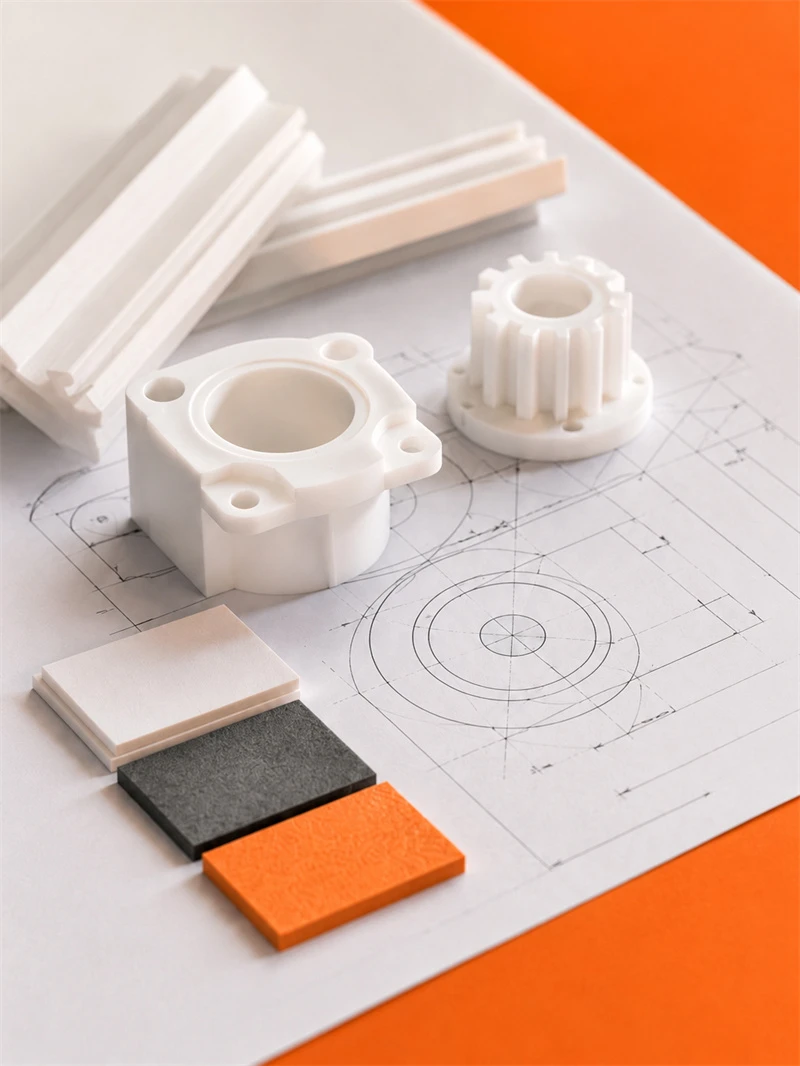
Engineering plastic parts suit friction, guide, support, buffer, anti-corrosion and insulation areas. We supply UHMWPE, POM, PA, PP/PE components for conveyor, food, mining, machinery, chemical and cable systems, with custom OEM service available.
Stay updated with our latest industry insights, company updates and featured articles.
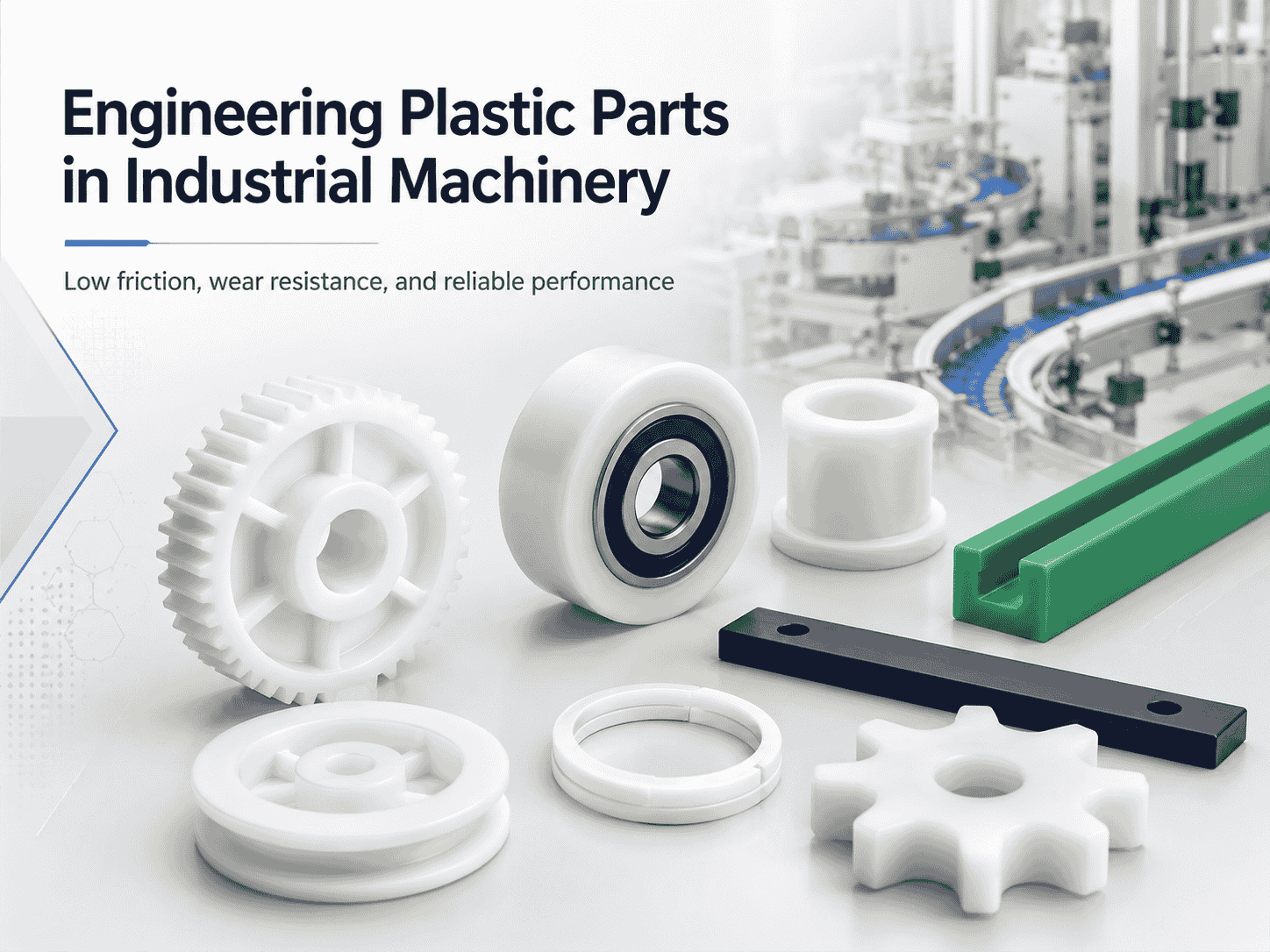
Engineering plastics are increasingly used in industrial machinery, automated production lines, conveyor systems, packaging equipment, and food-processing machines. Materials such as nylon, UHMWPE, POM, and
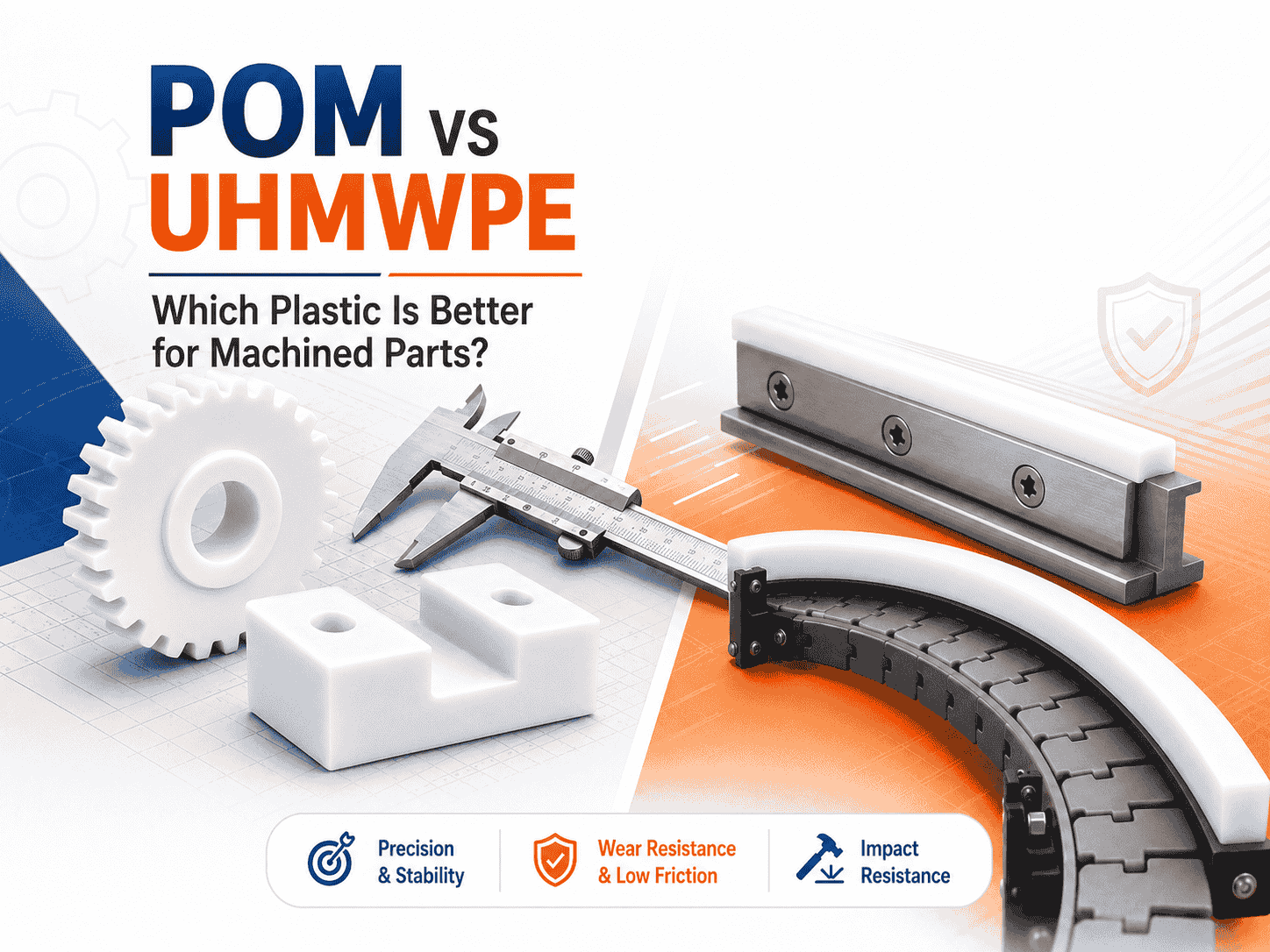
Both are lightweight, corrosion-resistant, wear-resistant, and suitable for CNC machining. However, they perform very differently
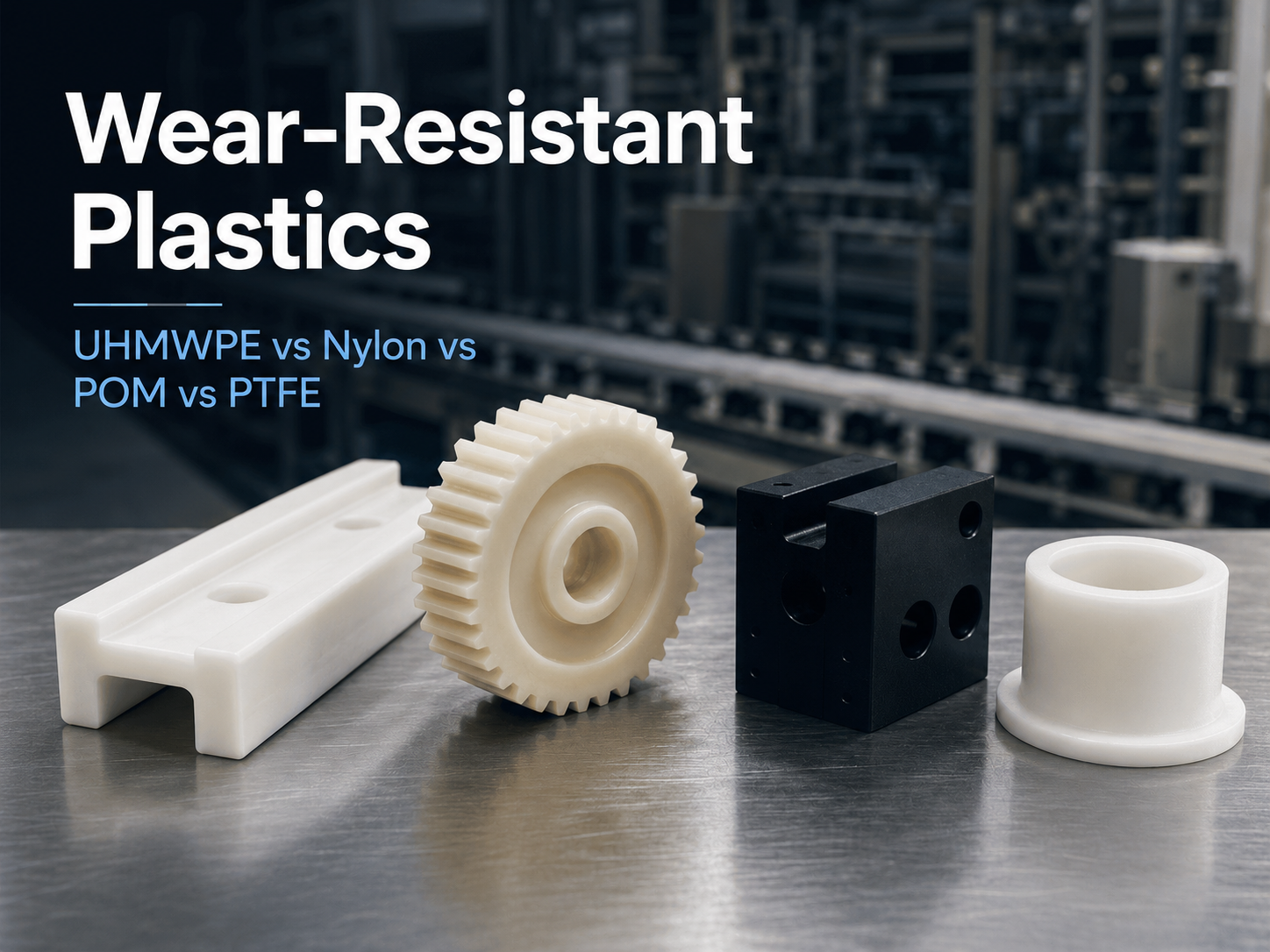
Wear is a common cause of failure in conveyor systems, packaging machinery, automated equipment, mining
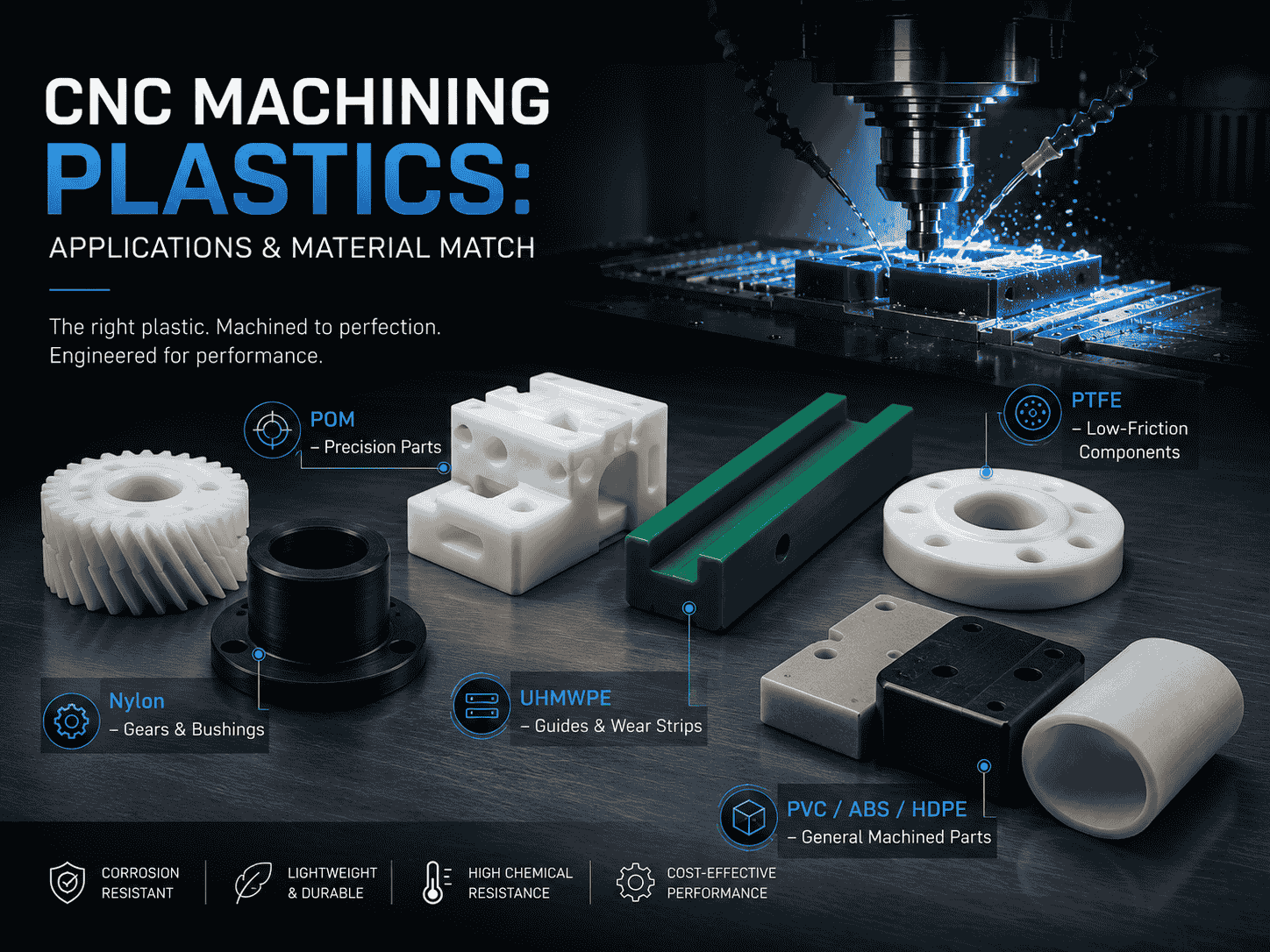
CNC machining is widely used to produce plastic prototypes, low-volume parts, replacement components, jigs, fixtures,
Both are lightweight, corrosion-resistant, wear-resistant, and suitable for CNC machining. However, they perform very differently
Wear is a common cause of failure in conveyor systems, packaging machinery, automated equipment, mining
CNC machining is widely used to produce plastic prototypes, low-volume parts, replacement components, jigs, fixtures,
Need UHMWPE sheets & custom plastic machined/OEM parts?Send specs & material needs, free quote within 24h.