Hockey Shooting Pad with Rebounder for Off-Ice Training
Hockey Shooting Pad with Rebounder is a smooth, low-friction HDPE engineering plastic surface designed for ice hockey shooting, passing, stickhandling and puck-control practice. The integrated elastic rebounder returns the puck after each pass, allowing one player to complete repeated passing and receiving exercises without requiring a second training partner.
The product provides a practical off-ice training surface for homes, garages, basements, hockey clubs, schools and sports training centers. Compared with concrete, asphalt and other rough flooring, the smooth polymer surface helps the puck travel more consistently while reducing direct wear on hockey stick blades and stick tape.
This product is intended mainly for puck training and is not designed as a complete skating floor. For general information about polymer surfaces used to reproduce ice-like sliding conditions, visit the Synthetic Ice overview on Wikipedia.
HDPE Low-Friction Hockey Training Surface
The shooting pad is manufactured from high-density polyethylene, commonly known as HDPE. This engineering plastic provides a smooth surface, good impact performance, low water absorption and resistance to regular puck and stick contact.
The low-friction surface allows a standard hockey puck to move more easily than it would on rough concrete or pavement. This helps players practise passing speed, puck reception, stickhandling movements and shooting technique in a cleaner and more consistent training area.
HDPE does not rust and absorbs very little moisture. These properties make it suitable for indoor training areas and appropriate outdoor environments when the supporting ground is level and stable.
How the Puck Rebounder Works
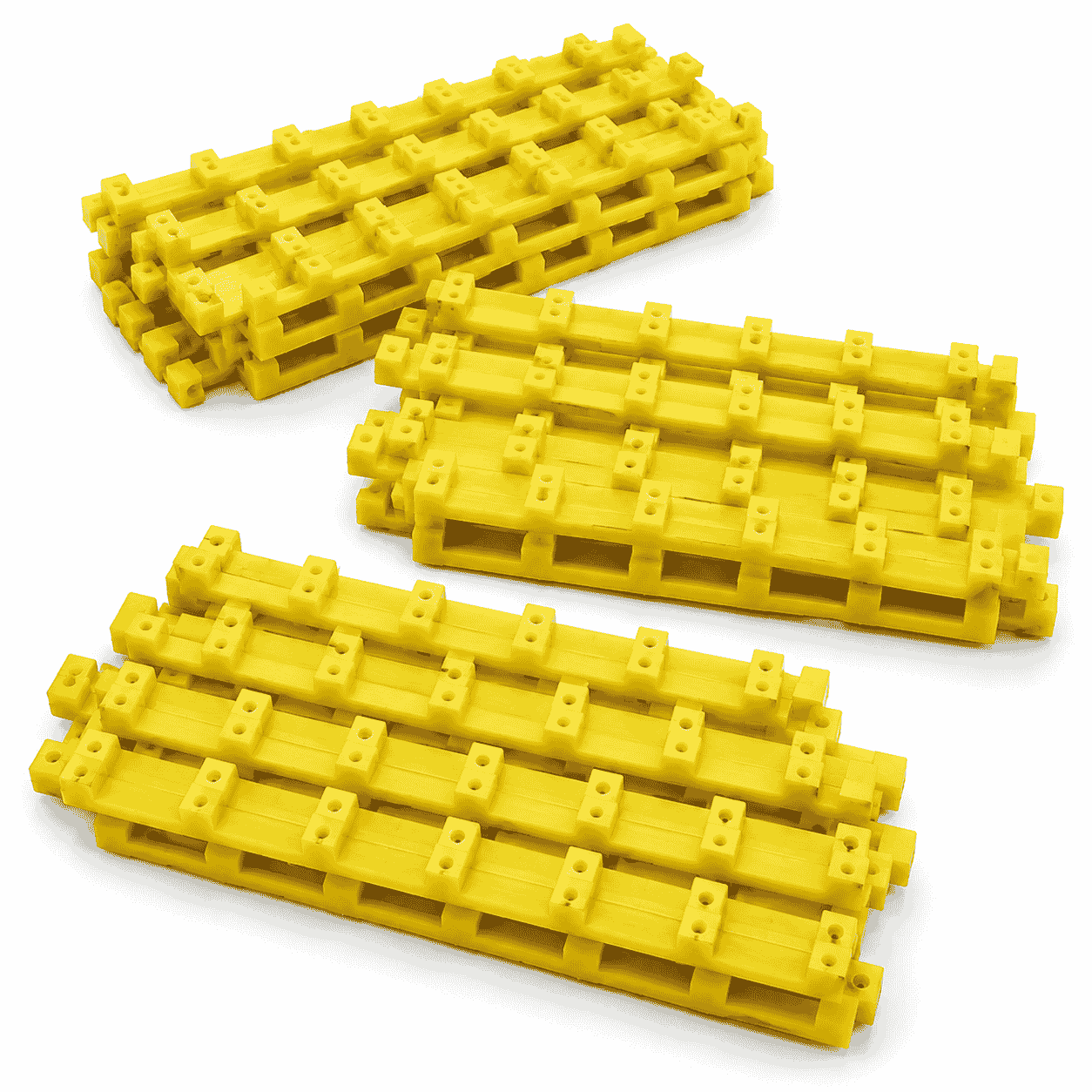
The rebounder normally consists of two support blocks, an elastic cord or elastic passing bar and suitable mounting hardware. When the player passes the puck against the elastic section, the rebounder redirects the puck back across the shooting pad.
This structure allows an individual player to repeat passing, receiving and one-timer preparation exercises. The returned puck can also be used for reaction training, hand-speed exercises and rapid stickhandling drills.
The rebounder position should provide enough open surface for shooting and puck movement. Support blocks and fasteners must remain securely connected so that the rebounder does not move during repeated use.
7 Proven Training Benefits
- Individual passing practice: The elastic rebounder returns the puck without requiring a second player.
- Smoother puck movement: The HDPE surface provides less resistance than concrete, asphalt and many ordinary floors.
- Stick blade protection: The pad separates the hockey stick blade from rough and abrasive ground.
- Repeated puck-control drills: Players can practise passing, receiving, shooting and stickhandling in one training area.
- Portable construction: Selected sizes can include a machined carrying handle for easier movement and storage.
- Indoor and outdoor use: The pad can be used in garages, training rooms and suitable outdoor spaces.
- Low maintenance: The smooth plastic surface can be cleaned using a soft cloth and suitable neutral cleaner.
Hockey Shooting Pad with Rebounder Sizes
The Hockey Shooting Pad with Rebounder can be supplied in several practical dimensions. The suitable size depends on the player’s available training space, required portability and intended exercises.
| Product Name |
HDPE Hockey Shooting Pad with Rebounder |
| Material |
High-density polyethylene |
| Small Size |
24 × 48 inches, approximately 610 × 1220 mm |
| Medium Size |
28 × 52 inches, approximately 711 × 1321 mm |
| Large Size |
30 × 60 inches, approximately 762 × 1524 mm |
| Additional Size Option |
Approximately 750 × 1500 mm |
| Typical Portable Thickness |
Approximately 3.2–4.8 mm |
| Reinforced Thickness Options |
Approximately 5 mm, 8 mm, 10 mm or 12 mm |
| Standard Color |
White |
| Optional Surface Colors |
Blue, yellow, red, green or black |
| Edge Structure |
Rounded corners with beveled or smooth machined edges |
| Rebounder Structure |
Elastic cord or elastic passing bar with support blocks |
| Optional Feature |
Machined carrying handle |
| Suitable Environment |
Indoor and appropriate outdoor hockey training areas |
The dimensions listed above are common reference sizes rather than fixed specifications for every pad. Smaller models are easier to carry and store, while larger models provide more space for shooting, passing and lateral puck-control movements.
Thin portable pads are lightweight and easy to move. Thicker reinforced pads provide greater rigidity and can offer improved stability for rebounder mounting and frequent training.
Smooth Surface for Shooting Practice
The smooth surface of a Hockey Shooting Pad with Rebounder supports wrist shots, snap shots, backhand shots and one-timer exercises. Players can place a net or shooting target in front of the pad and practise shot placement from different puck positions.
Because the puck moves more freely than it does on rough pavement, the player can focus on stick position, weight transfer, release speed and shooting accuracy. The surface also provides a cleaner area for repeating the same movement during structured practice sessions.
The pad does not completely reproduce refrigerated ice. It is an off-ice technical training product designed to support repeated puck and stick exercises when access to an ice rink is limited.
Passing and Puck Reception Training
The rebounder makes the pad suitable for individual passing drills. A player can pass the puck against the elastic section and receive the returned puck on either the forehand or backhand side.
The rebound angle depends on the direction, speed and contact point of the original pass. Players can therefore practise soft puck reception, quick release movements, hand positioning and reaction speed.
The rebounder can also support one-timer preparation. The player sends the puck into the elastic bar, adjusts their body position and shoots the returned puck toward a goal or training target.
Stickhandling and Puck-Control Exercises
The open surface of the shooting pad can be used with hockey pucks, training pucks, stickhandling balls, cones and other compatible training accessories.
Players can practise short lateral movements, forehand-to-backhand transitions, toe drags, quick hand movements and puck protection techniques. Training obstacles can be placed on the pad as long as they do not have sharp edges that could damage the surface.
A larger pad provides more space for wide puck movement. A smaller pad is suitable for compact stickhandling and shooting exercises where portability is the main requirement.
Beveled Edge Design
Beveled edges reduce the height transition between the floor and the training surface. This makes it easier to move the puck onto and off the pad without striking a high vertical edge.
The beveled structure also creates a cleaner appearance and reduces sharp edges around the perimeter. The bevel angle should be selected according to the overall pad thickness and required supporting strength.
Rounded corners help improve handling and reduce pointed sections around the outside of the product.
Portable Carrying Handle
A machined carrying handle can be positioned near one side of the pad. It allows smaller and medium-size models to be moved between garages, training rooms, driveways and storage areas.
The handle opening should include rounded internal edges for more comfortable carrying. Sufficient material should remain around the opening to maintain the strength of the pad.
Larger and thicker pads may require two people to move safely, particularly when the rebounder remains attached.
Indoor Hockey Practice
For indoor use, place the Hockey Shooting Pad with Rebounder on a clean, level and stable floor. Remove stones, metal fragments and sharp particles before positioning the product.
A clean supporting surface helps protect both the underside of the pad and the original flooring. Non-slip supports can be placed underneath when additional positioning stability is required.
Suitable indoor locations include garages, basements, sports halls, hockey clubs, schools, training centers and private practice rooms with enough surrounding clearance for safe shooting.
Outdoor Hockey Practice
For outdoor use, place the pad on a smooth driveway, sports surface or another stable platform. Uneven ground should be avoided because it may cause the pad to bend, rock or move during shooting and rebound drills.
UV-stabilized HDPE can be selected for products exposed to sunlight. However, cleaning and storing the pad away from continuous outdoor exposure when it is not in use can help maintain surface condition.
Standing water, gravel, oil and other contaminants should be removed before training. The surface should also be dried when wet conditions could affect player footing.
Cleaning and Maintenance
Clean the shooting pad regularly to remove dust, dirt, sand and puck marks. Use a soft cloth, mop or non-abrasive cleaning pad with water and a suitable neutral cleaning solution.
Metal scrapers, aggressive abrasive tools and sharp cleaning equipment should be avoided because they may create deep scratches in the surface.
The elastic rebounder, mounting bolts and support blocks should be inspected before use. Loose fasteners should be tightened, and worn elastic components should be replaced before further training.
When storing the pad, keep it flat and provide even support. Long-term uneven storage may cause thin plastic sheets to bend or deform.
Manufacturing and Quality Inspection
The pad can be manufactured from HDPE sheet and processed according to the required product structure. Typical production operations include sheet cutting, surface finishing, corner rounding, edge beveling, handle machining, drilling and rebounder assembly.
Important inspection items include overall length, width, thickness, surface flatness, corner quality, handle position and rebounder mounting-hole accuracy.
The visible training surface should be inspected for deep scratches, contamination and obvious processing defects. The rebounder should also be tested to confirm that its supports remain stable during repeated puck returns.
How to Select the Correct Training Pad
When selecting a Hockey Shooting Pad with Rebounder, consider the available floor area, player age, intended exercises, required portability, pad thickness and rebounder structure.
A 24 × 48-inch pad is suitable for compact home shooting and stickhandling practice. A 28 × 52-inch pad provides additional room for passing and puck-control exercises. A 30 × 60-inch pad offers a larger surface for shooting, wider lateral movements and rebound training.
Players who move the product frequently may prefer a thinner and lighter pad with a carrying handle. Training centers and fixed practice areas may prefer a thicker reinforced structure for increased rigidity.
Learn more about our HDPE, UHMWPE and engineering plastic products on the Honsee engineering plastic manufacturer website.
The Hockey Shooting Pad with Rebounder provides a reusable and easy-to-maintain solution for shooting, passing, stickhandling and individual puck-return practice away from a refrigerated ice rink.


-6.png)
-5.png)
-4.png)
-3.png)