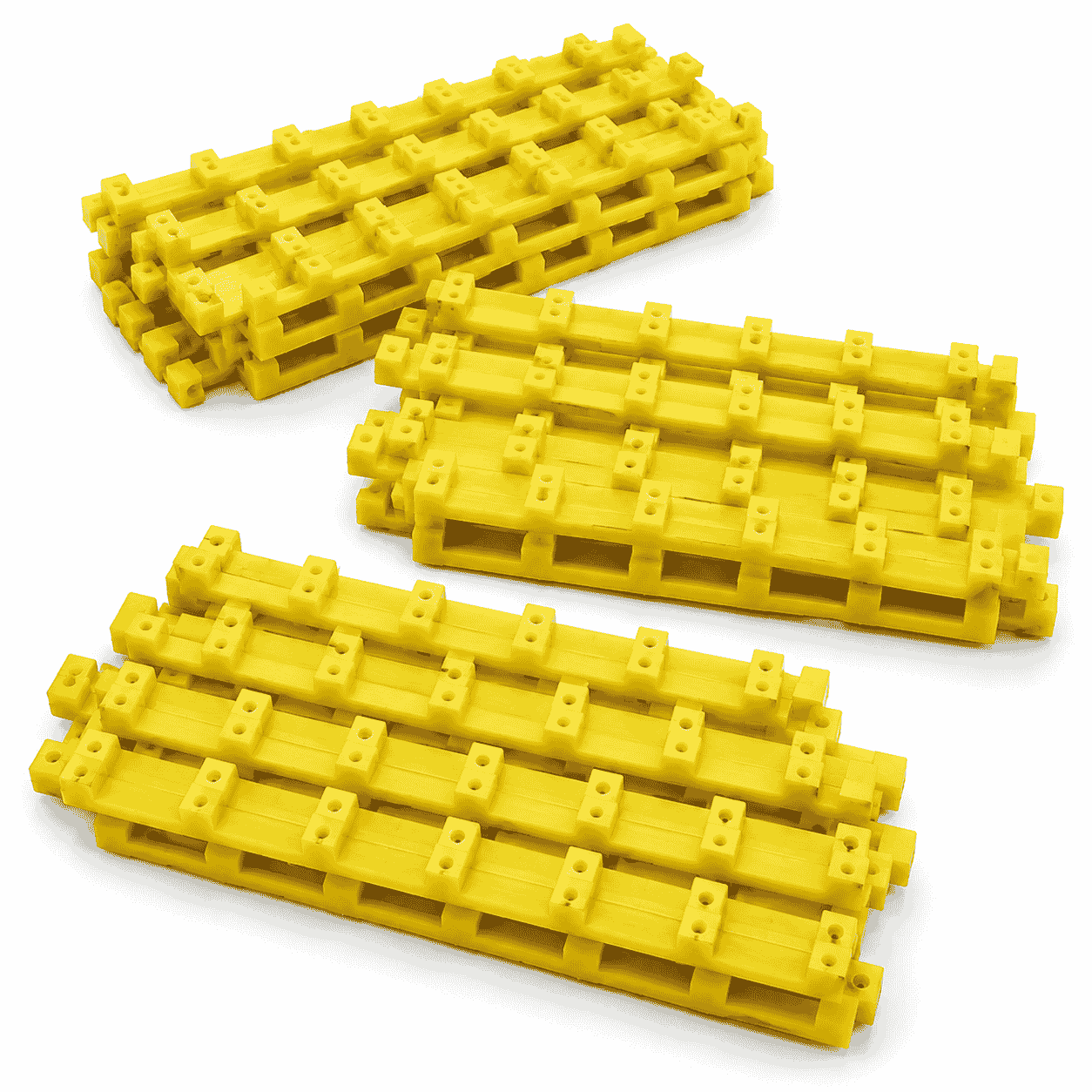


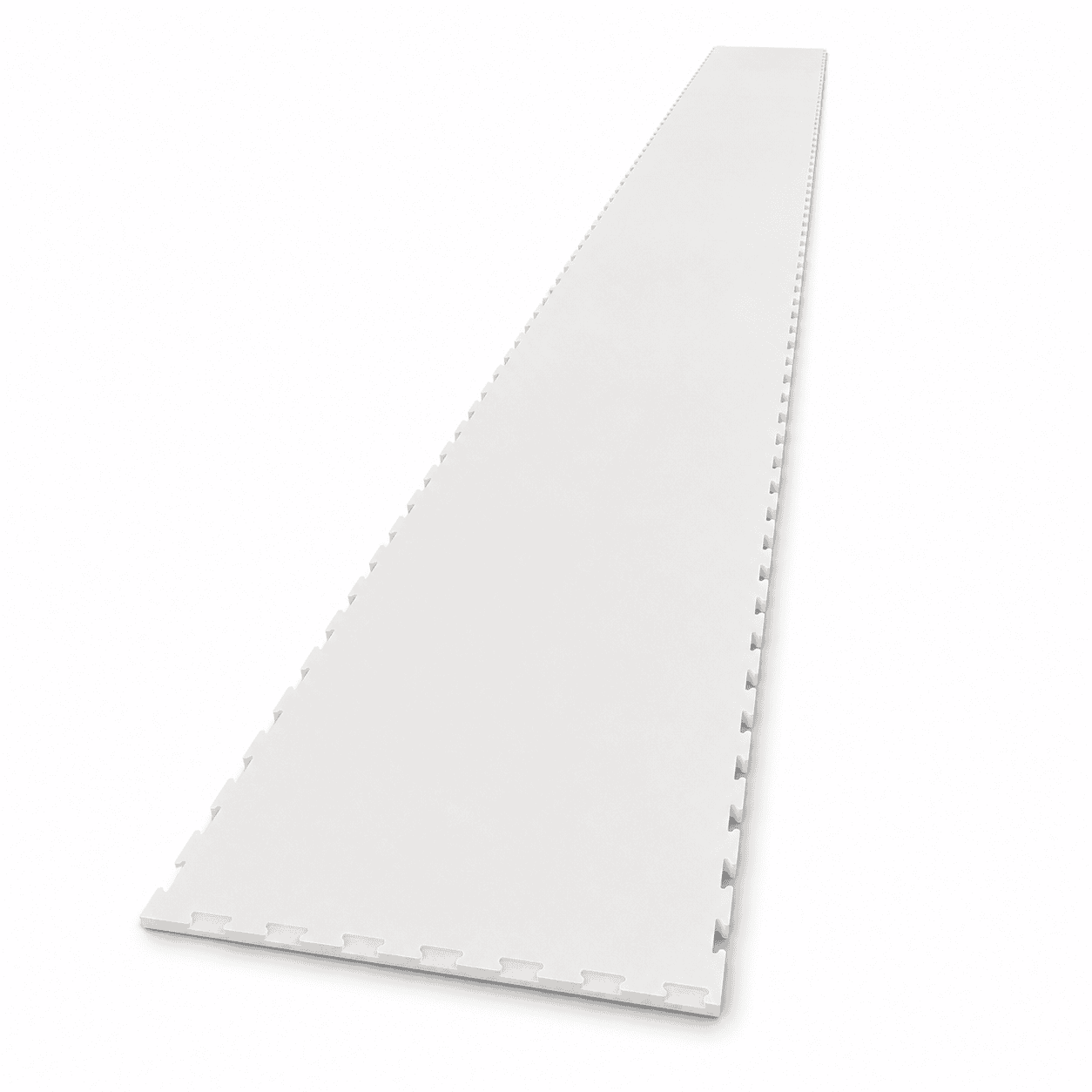
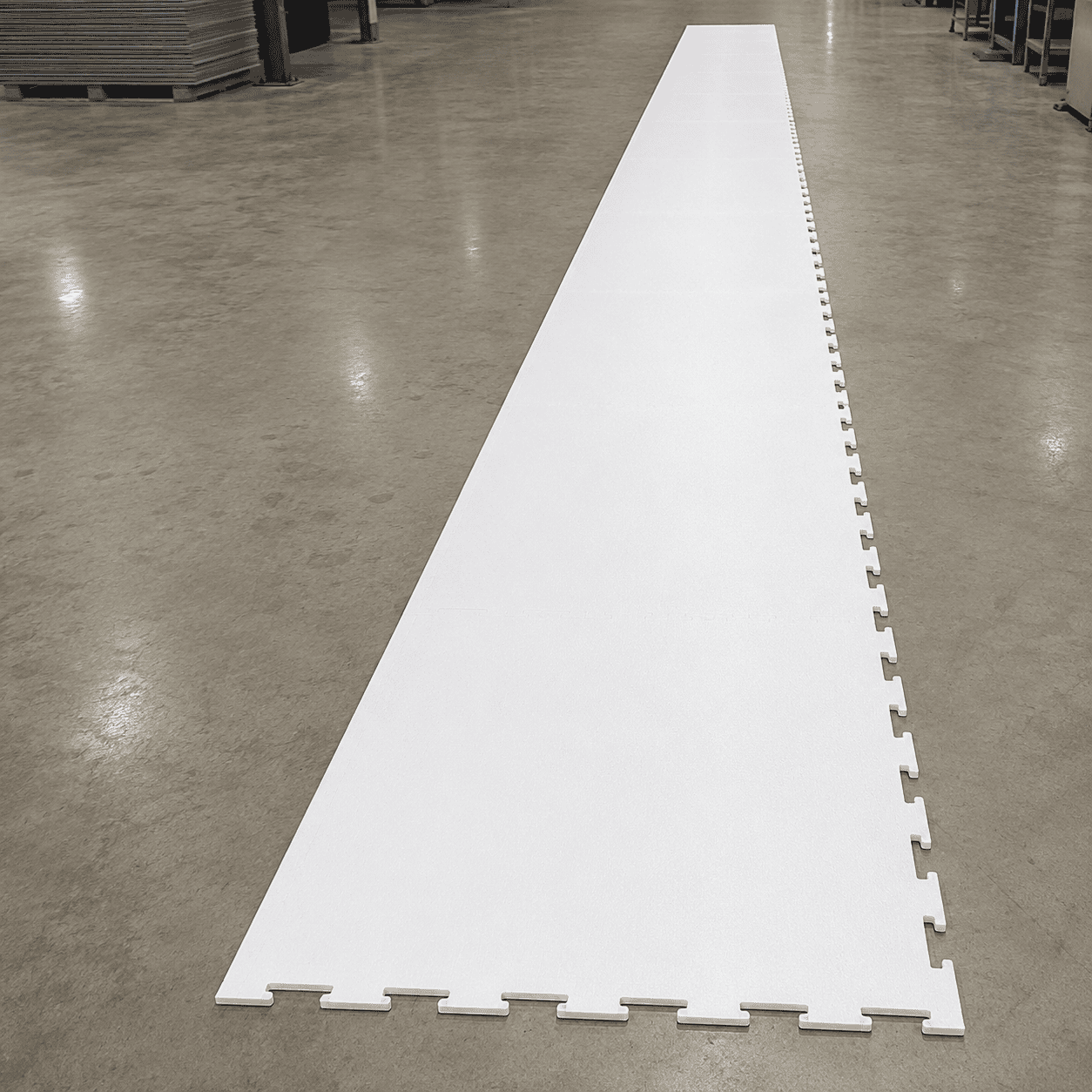
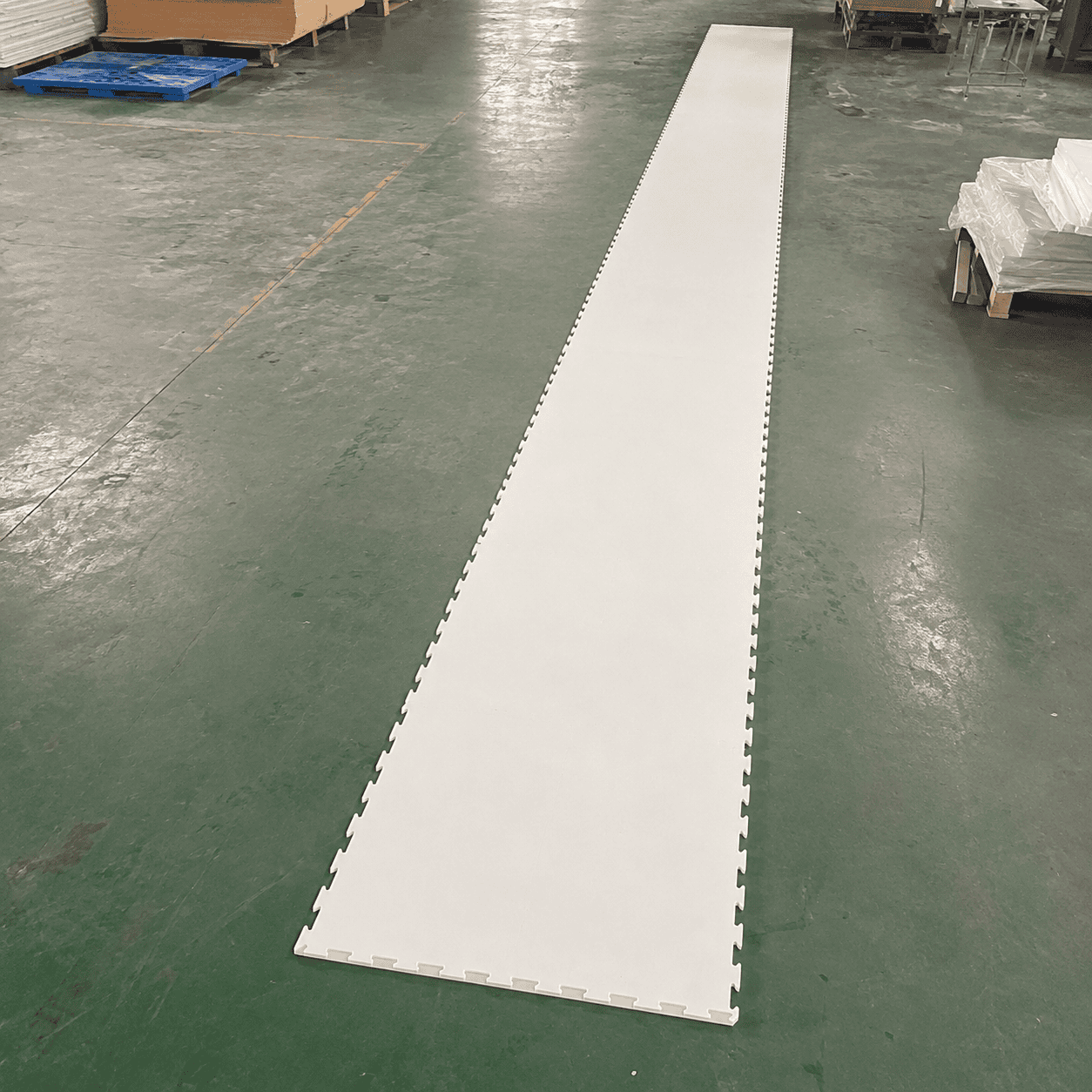
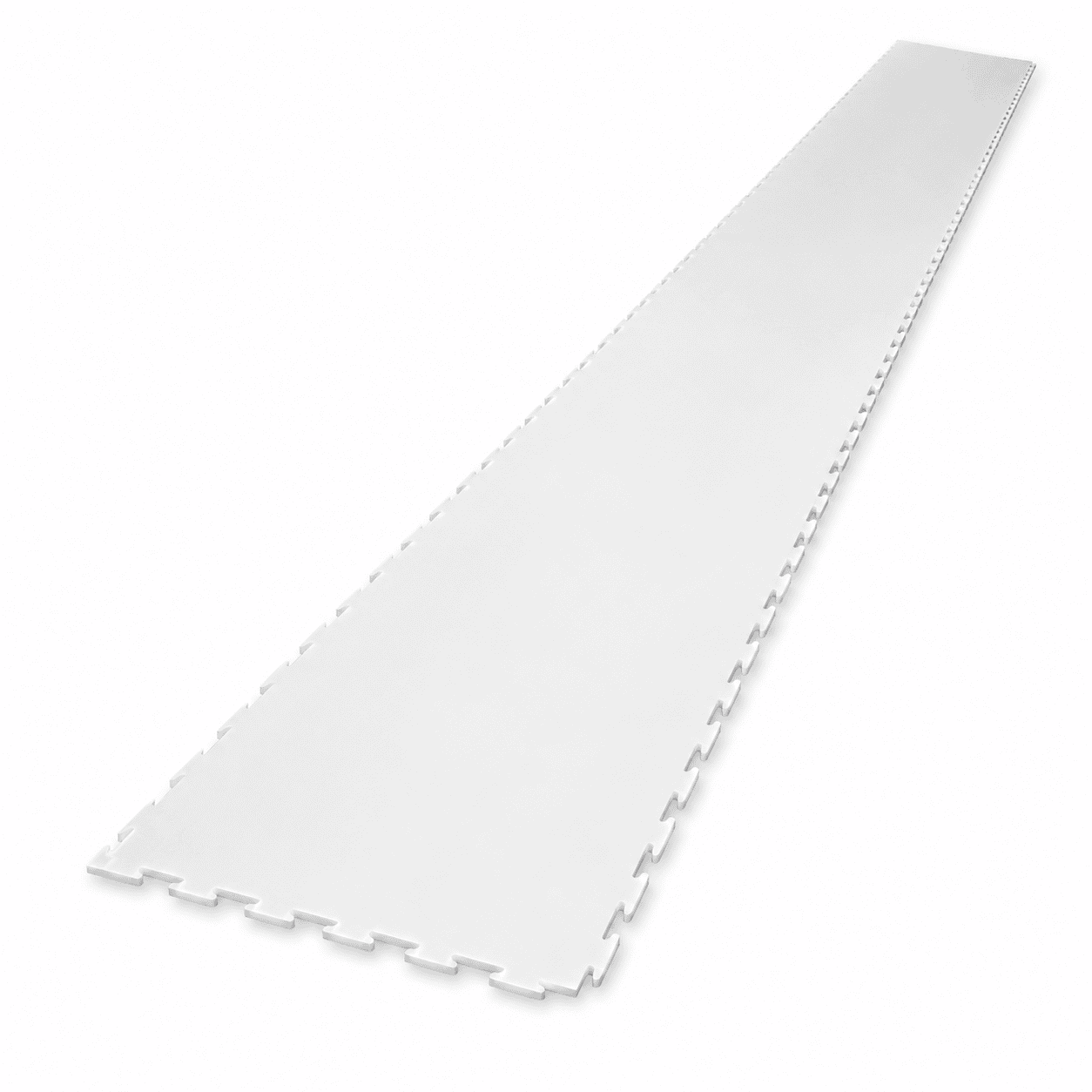
Synthetic Curling Practice Floor is a modular polymer training surface designed for curling delivery practice, aiming exercises, recreational games, sports exhibitions and indoor or properly prepared outdoor activity areas.
The floor can be assembled from interlocking UHMWPE or high-performance polyethylene panels. Typical panel sizes include approximately 1000 × 1000 mm, 1000 × 2000 mm and 1200 × 2000 mm, with common thickness options of 10, 12, 15 and 20 mm.
Compact practice lanes may be arranged in layouts such as 8 × 2 m or 10 × 2 m, while larger project layouts can be planned according to the available venue. Compatible synthetic curling stones or stones with suitable polymer-surface running bands should be selected for reliable training performance.
Synthetic Curling Practice Floor is a modular polymer surface designed for curling delivery practice, aiming exercises, recreational games, sports demonstrations and commercial entertainment activities. Interlocking panels can be assembled to create a straight curling lane, a compact training area or a larger multi-lane layout according to the available venue.
The surface is commonly manufactured from UHMWPE or specially formulated high-performance polyethylene. These engineering plastics provide good wear resistance, impact strength, low water absorption and a smooth surface suitable for use with compatible synthetic curling equipment.
Unlike a conventional refrigerated curling sheet, the polymer floor does not require a permanently frozen layer of water or an underground refrigeration system. The panels can be installed on a solid, level and smooth supporting floor and dismantled when the activity or event has finished.
Curling is traditionally played by sliding stones toward a circular target known as the house. For a general explanation of the sport, playing surface, equipment and scoring method, visit the Curling overview on Wikipedia. Additional information about interlocking polymer skating surfaces is available in the Synthetic Ice overview on Wikipedia.
A Synthetic Curling Practice Floor is an iceless or reduced-infrastructure training surface produced from connected engineering-plastic panels. It can be used to practise delivery direction, release control, aiming, scoring strategy and recreational curling-style games.
The modular structure allows individual panels to be joined through puzzle edges, tongue-and-groove connections or another accurately machined interlocking system. Correctly aligned joints help create a continuous lane and reduce height differences between adjacent sections.
The product is mainly intended for use with curling stones or recreational stones designed for synthetic surfaces. Standard competition granite stones should not automatically be assumed to perform in the same way as they do on prepared curling ice. Stone type, running band and surface compatibility should be confirmed before the final system is selected.
The Synthetic Curling Practice Floor can be produced in several practical panel sizes and assembled into different lane dimensions. The specifications below are typical project references rather than fixed dimensions for every installation.
| Product Name | UHMWPE Synthetic Curling Practice Floor |
| Panel Material | UHMWPE or formulated high-performance polyethylene |
| Square Panel Option | Approximately 1000 × 1000 mm |
| Rectangular Panel Option | Approximately 1000 × 2000 mm |
| Large Panel Option | Approximately 1200 × 2000 mm |
| Common Thicknesses | 10 mm, 12 mm, 15 mm and 20 mm |
| Practical Thickness Range | Approximately 10–25 mm, depending on the structure |
| Connection Type | Puzzle joint, interlocking edge or tongue-and-groove joint |
| Standard Surface Color | White |
| Optional Marking Colors | Red, blue, yellow or project-specific target colors |
| Compact Lane Example | Approximately 8 × 2 m |
| Extended Lane Example | Approximately 10 × 2 m |
| Full Project Layout | Planned according to the venue and training requirements |
| Supporting Base | Level concrete, stable wood floor or another rigid platform |
| Compatible Equipment | Synthetic curling stones or stones designed for polymer surfaces |
| Installation Environment | Indoor and properly prepared outdoor locations |
The final panel thickness should be selected according to the total lane area, expected frequency of use, supporting-floor flatness and transportation requirements. Thicker panels normally provide greater rigidity, while smaller panels are easier to transport and replace.
Compact lanes are suitable for delivery and aiming practice. Larger connected areas can provide more space for recreational games, sports demonstrations and team-building activities.
A traditional curling sheet is a long and narrow prepared ice surface. A competition-style layout is significantly larger than most compact synthetic practice lanes.
Where a customer wants a full-length training installation, the project layout may reference an overall curling-sheet length of approximately 45 metres and a width approaching 5 metres. This does not mean that a polymer practice floor automatically meets competition requirements.
Official competition dimensions, markings, houses, hacks, hog lines, equipment and playing characteristics should be confirmed separately with the relevant sporting authority or facility designer.
The connection system is an important part of the finished curling lane. Accurately machined joints help maintain alignment and reduce visible gaps between the individual panels.
Puzzle-style edges provide mechanical positioning around the panel perimeter. Tongue-and-groove designs use matching male and female edges, while selected systems may use concealed connectors or perimeter fasteners.
Several panels should be trial-assembled before the complete floor is installed. The trial assembly can be used to check joint fit, panel thickness, surface transition and overall dimensional consistency.
UHMWPE is an engineering plastic selected for applications involving repeated sliding, abrasion and impact. Its molecular structure provides good wear resistance and useful toughness.
These properties help the floor withstand repeated contact from compatible curling stones, training accessories and normal user movement. The material also absorbs very little water and does not corrode.
A smooth panel surface can support predictable stone movement when used with the correct synthetic curling equipment. Actual travel distance and curling behaviour depend on the stone design, running surface, panel finish and condition of the lane.
A synthetic curling installation should use stones or recreational curling equipment designed for the selected polymer surface. Compatible stones may use a specially designed running band, low-friction base, bearing structure or another surface-specific sliding system.
The equipment should be tested with the finished panel material before a full rink is installed. This helps confirm stone speed, travel distance, directional control and surface wear.
Standard granite curling stones are developed for specially prepared ice and may not perform correctly on every synthetic panel. Product descriptions should therefore avoid guaranteeing identical movement without equipment testing.
The target area, commonly known as the house, can be added to one or both ends of the practice lane. The house normally includes several concentric rings and a clearly marked centre point.
Markings can be produced using printed films, removable floor graphics, embedded color sections or suitable surface-marking methods. The selected method should maintain a smooth transition and should not interfere with stone movement.
Additional lines may include centre lines, delivery reference lines and recreational scoring zones. Full competition markings should be confirmed according to the intended rules and venue requirements.
The Synthetic Curling Practice Floor can be used for delivery-direction exercises, release control and aiming practice. Players can repeat stone placement movements without requiring a permanently refrigerated curling facility.
Compact lanes are particularly suitable for introductory training, schools, sports clubs and recreational users. Coaches can use target positions and scoring zones to create repeatable exercises.
The system can also support team strategy demonstrations, stone-positioning exercises and basic game instruction where compatible curling equipment is used.
The modular curling floor is suitable for more than technical sports training. It can also be installed for entertainment and promotional activities.
Common applications include:
The lane length and width can be selected according to the available floor area and expected number of users.
Indoor installation is suitable for sports halls, exhibition centers, shopping malls, schools, hotels and private training facilities.
The supporting floor should be solid, clean, level and capable of carrying the complete panel system and users. Stones, metal fragments and other sharp particles should be removed before panel installation.
Indoor use helps protect the lane from rain, direct sunlight and large temperature changes. It also makes regular cleaning and inspection easier.
The Synthetic Curling Practice Floor can be installed outdoors when the supporting platform, drainage and environmental conditions are properly considered.
Polyethylene changes dimensions as the surrounding temperature changes. Suitable expansion clearance should therefore be provided around the lane perimeter and fixed structures.
The installation base should not allow standing water to collect underneath the panels. UV-stabilized material can be considered for applications involving extended sunlight exposure.
Outdoor surfaces require regular cleaning to remove sand, dust, leaves and other contaminants that may affect stone movement.
A flat and stable base is essential for reliable performance. Uneven supporting floors can cause panel movement, visible joint differences and inconsistent stone travel.
Suitable supporting surfaces may include prepared concrete, stable wood flooring or another rigid platform. Soft soil, loose gravel and highly uneven ground should not be used without a suitable subfloor.
Before installation, the base should be inspected for sharp projections, cracks, loose materials, large gaps and moisture problems.
The floor area should first be measured and marked according to the planned lane dimensions. A fixed edge or centre reference line can be used to position the first panels.
Each panel should be connected according to the selected interlocking structure. The joints should be checked continuously to ensure that no foreign materials are trapped between the edges.
After assembly, the complete surface should be inspected for gaps, uneven transitions, loose panels and visible damage. House markings and perimeter trims can then be installed.
The practice surface should be swept or vacuumed regularly to remove dust, loose particles and surface debris. A soft cloth or mop can be used with water and a suitable neutral cleaning agent.
Sharp metal scrapers and aggressive abrasive tools should be avoided because deep scratches may influence stone movement.
The panel joints, target markings and compatible curling stones should be inspected regularly. Worn running bands, damaged stones or loose panels should be repaired or replaced before continued use.
One advantage of the modular construction is that individual sections can be removed when they become damaged or heavily worn.
The replacement panel should have the same thickness and connection design as the surrounding sections. Joint alignment should be checked after replacement.
When the floor is dismantled, the panels should be cleaned and stored on an even supporting surface. Uneven stacking may cause unnecessary bending or deformation during long-term storage.
The panels can be produced through controlled molding, pressing or sheet-manufacturing processes. The connecting edges are then machined according to the required assembly structure.
Important inspection items include:
Accurate dimensions and consistent panel thickness help create smoother transitions between sections. Suitable packaging helps protect the visible surface and connecting edges during transportation.
When selecting a Synthetic Curling Practice Floor, consider the available venue size, intended activity, required lane length, panel thickness, connection method and supporting-floor condition.
Compact lanes are suitable for recreational activities, basic delivery exercises and promotional events. Longer lanes provide more space for stone travel and structured training.
The curling stones and accessories should be confirmed together with the floor material. Testing a small panel area with the intended equipment is recommended before producing a larger installation.
Learn more about our UHMWPE sheets, synthetic ice panels and engineering plastic manufacturing capabilities on the Honsee UHMWPE manufacturer website.
The Synthetic Curling Practice Floor provides a modular and reusable solution for curling training, recreational games, exhibitions and suitable indoor or outdoor activity venues.
Check drawings for full specifications and confirm materials according to service conditions to prevent product defects.
Inspect all key processing steps and fully verify dimensions, holes, grooves and fitting surfaces.
Deburr, chamfer and clean products for easy installation. Ensure uniform quality among batch products.
Choose appropriate packaging solutions based on product features to protect goods from collision, deformation and mixing during transit.
Unlike metal parts, engineering plastic components still require strict control over dimensions, holes, edges, surface, materials and assembly performance for equipment use.
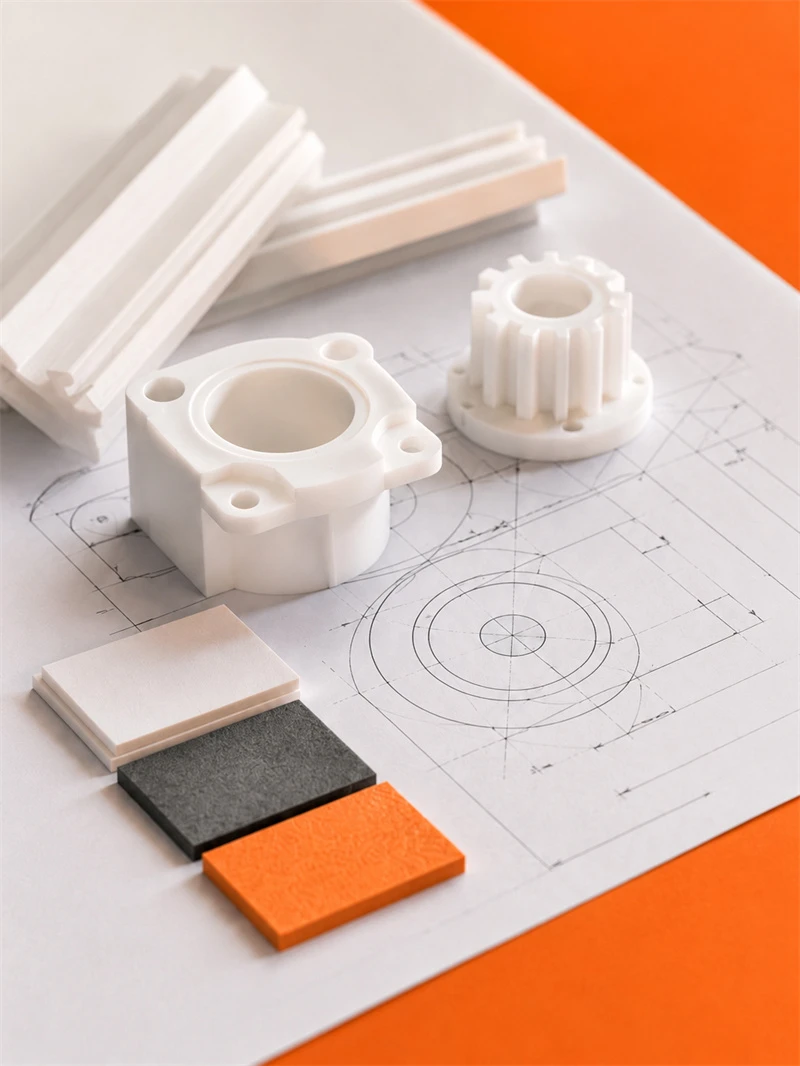
Engineering plastic parts suit friction, guide, support, buffer, anti-corrosion and insulation areas. We supply UHMWPE, POM, PA, PP/PE components for conveyor, food, mining, machinery, chemical and cable systems, with custom OEM service available.
Stay updated with our latest industry insights, company updates and featured articles.

Engineering plastics are increasingly used in industrial machinery, automated production lines, conveyor systems, packaging equipment, and food-processing machines. Materials such as nylon, UHMWPE, POM, and
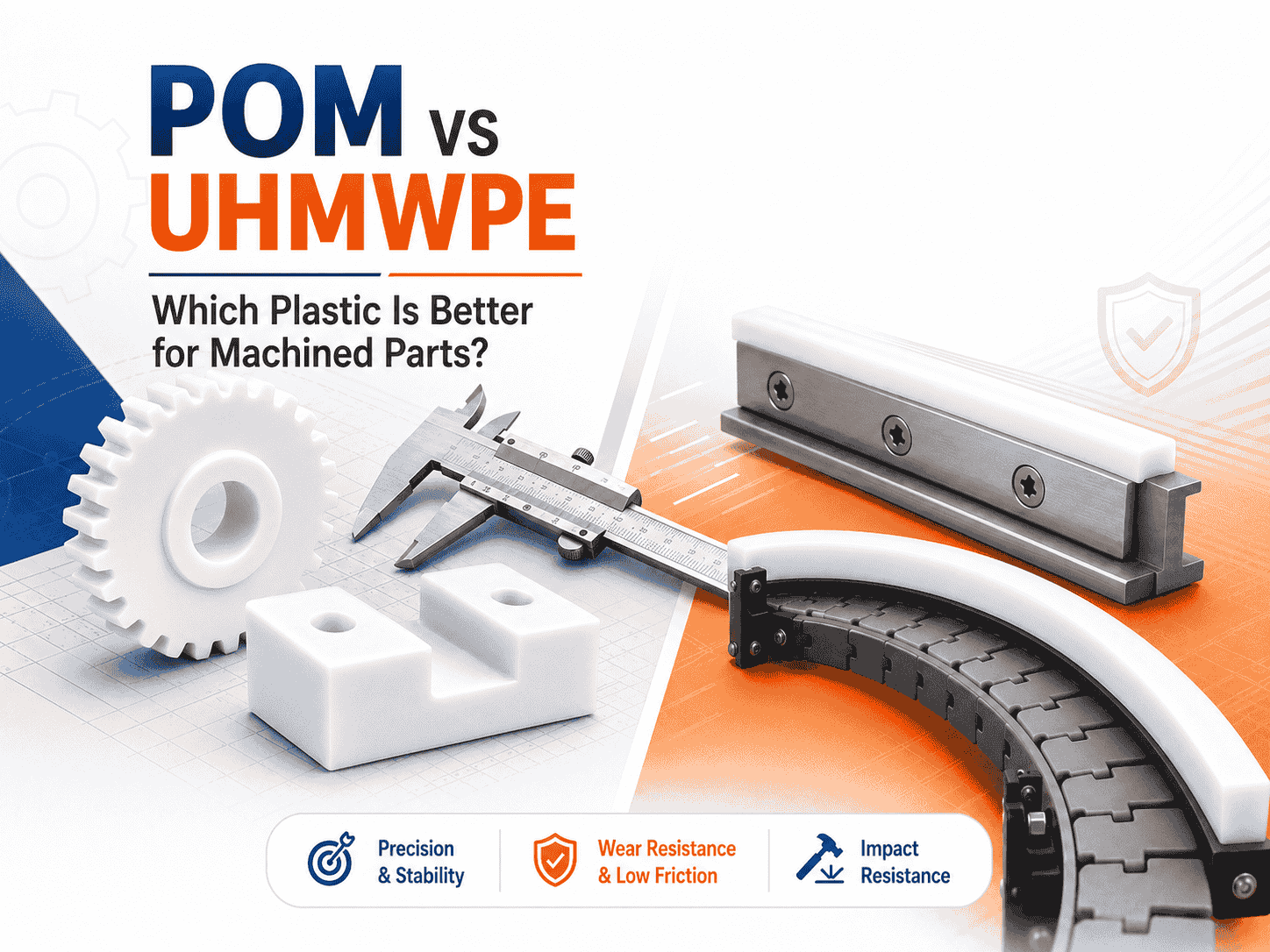
Both are lightweight, corrosion-resistant, wear-resistant, and suitable for CNC machining. However, they perform very differently
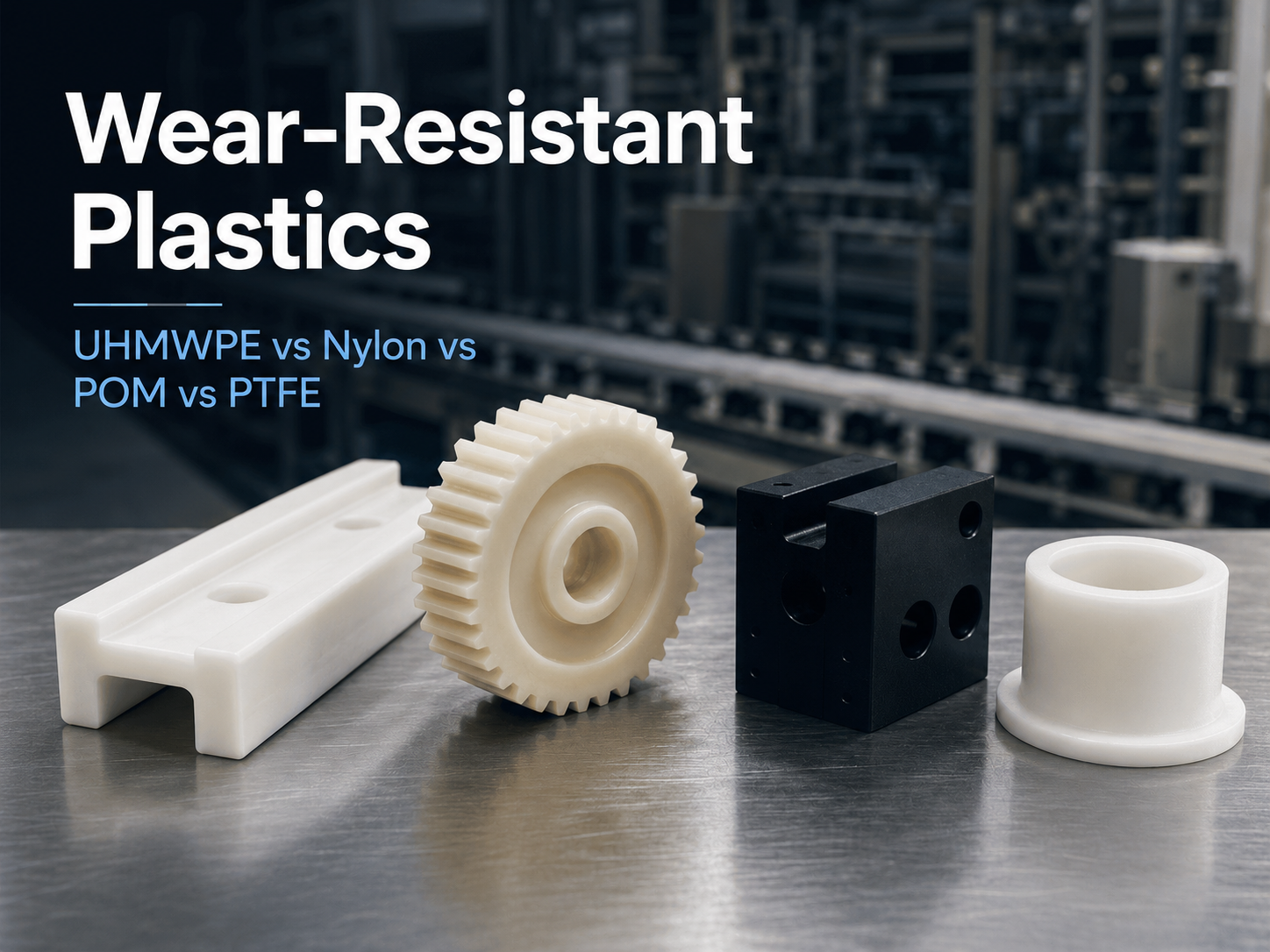
Wear is a common cause of failure in conveyor systems, packaging machinery, automated equipment, mining
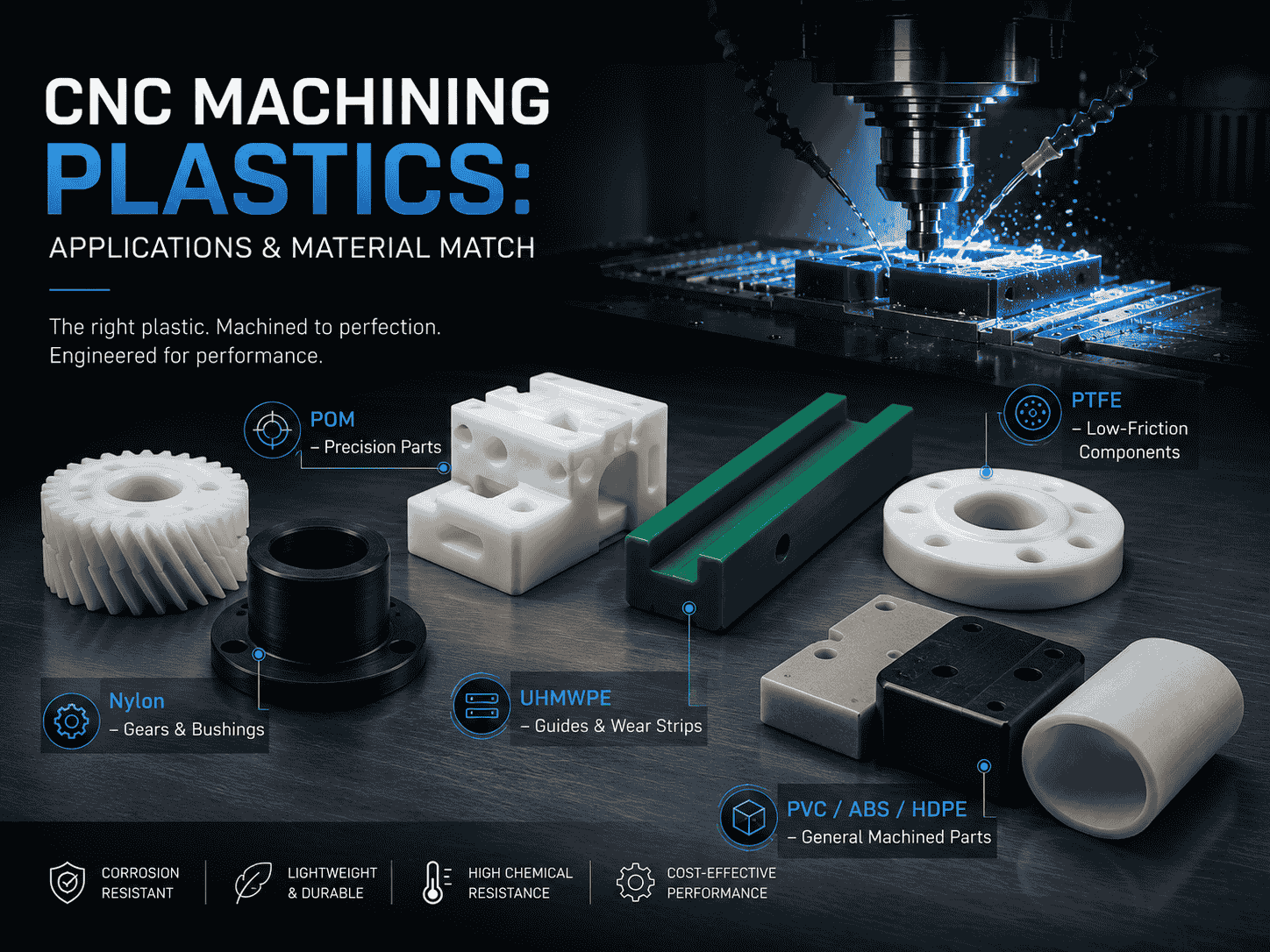
CNC machining is widely used to produce plastic prototypes, low-volume parts, replacement components, jigs, fixtures,
Both are lightweight, corrosion-resistant, wear-resistant, and suitable for CNC machining. However, they perform very differently
Wear is a common cause of failure in conveyor systems, packaging machinery, automated equipment, mining
CNC machining is widely used to produce plastic prototypes, low-volume parts, replacement components, jigs, fixtures,
Need UHMWPE sheets & custom plastic machined/OEM parts?Send specs & material needs, free quote within 24h.