

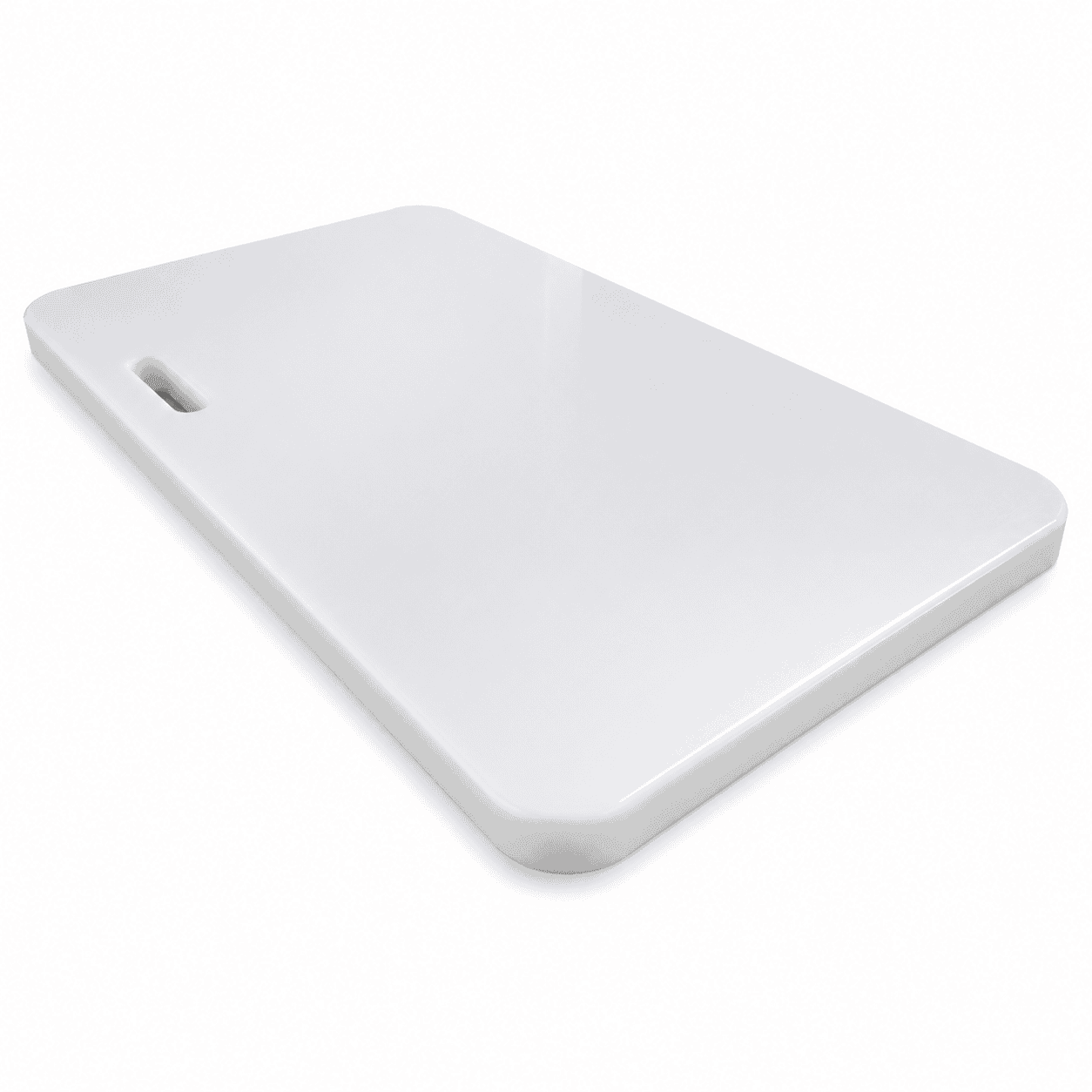
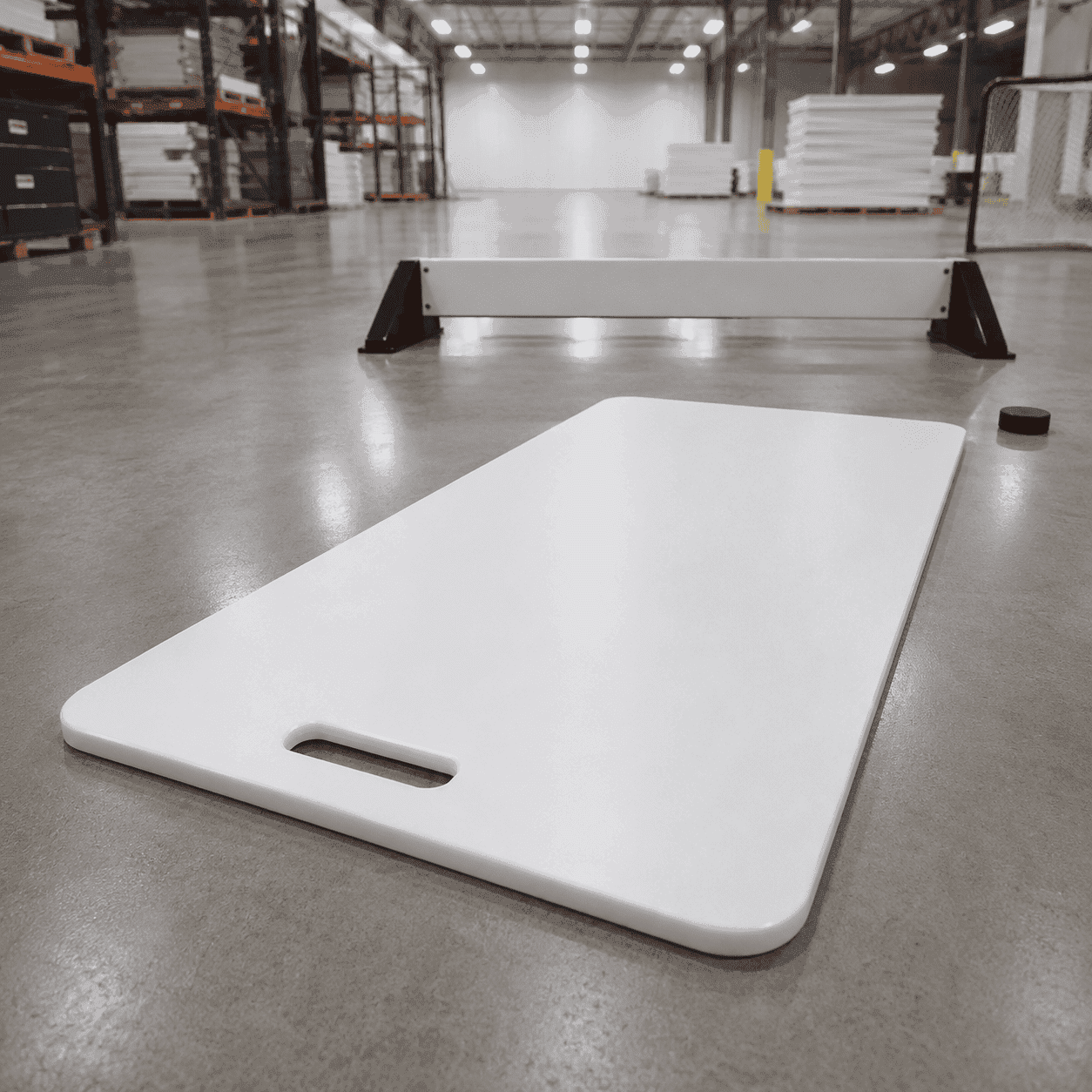
Hockey Shooting Pad Rebounder is a portable off-ice training system designed for passing, receiving, shooting, stickhandling, puck control and one-timer practice.
The reference shooting pad measures approximately 30 × 60 inches, equivalent to about 762 × 1524 mm, with a practical thickness of approximately 5 mm. Its smooth white HDPE surface allows a hockey puck to move more consistently than it does on concrete, asphalt and other rough floors.
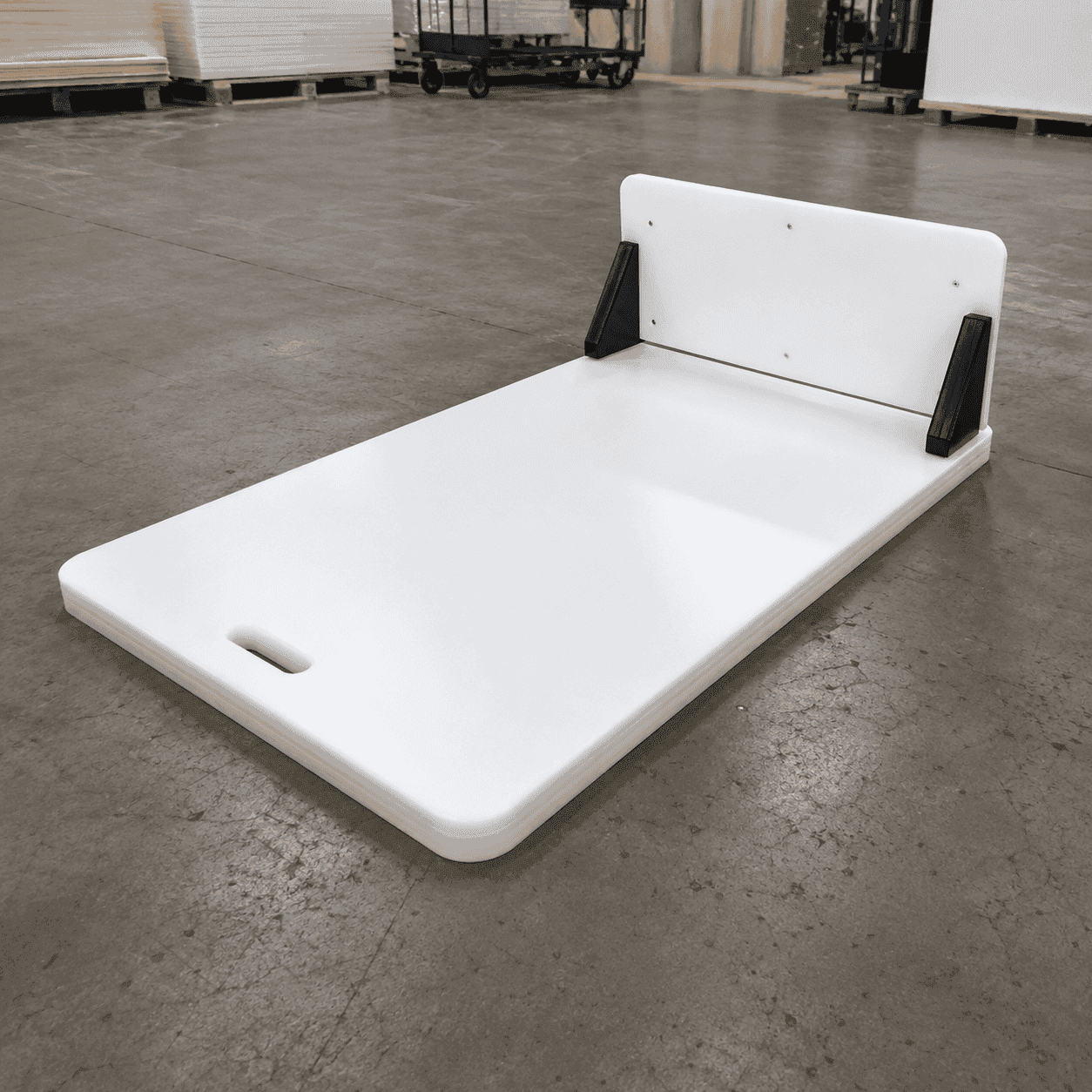
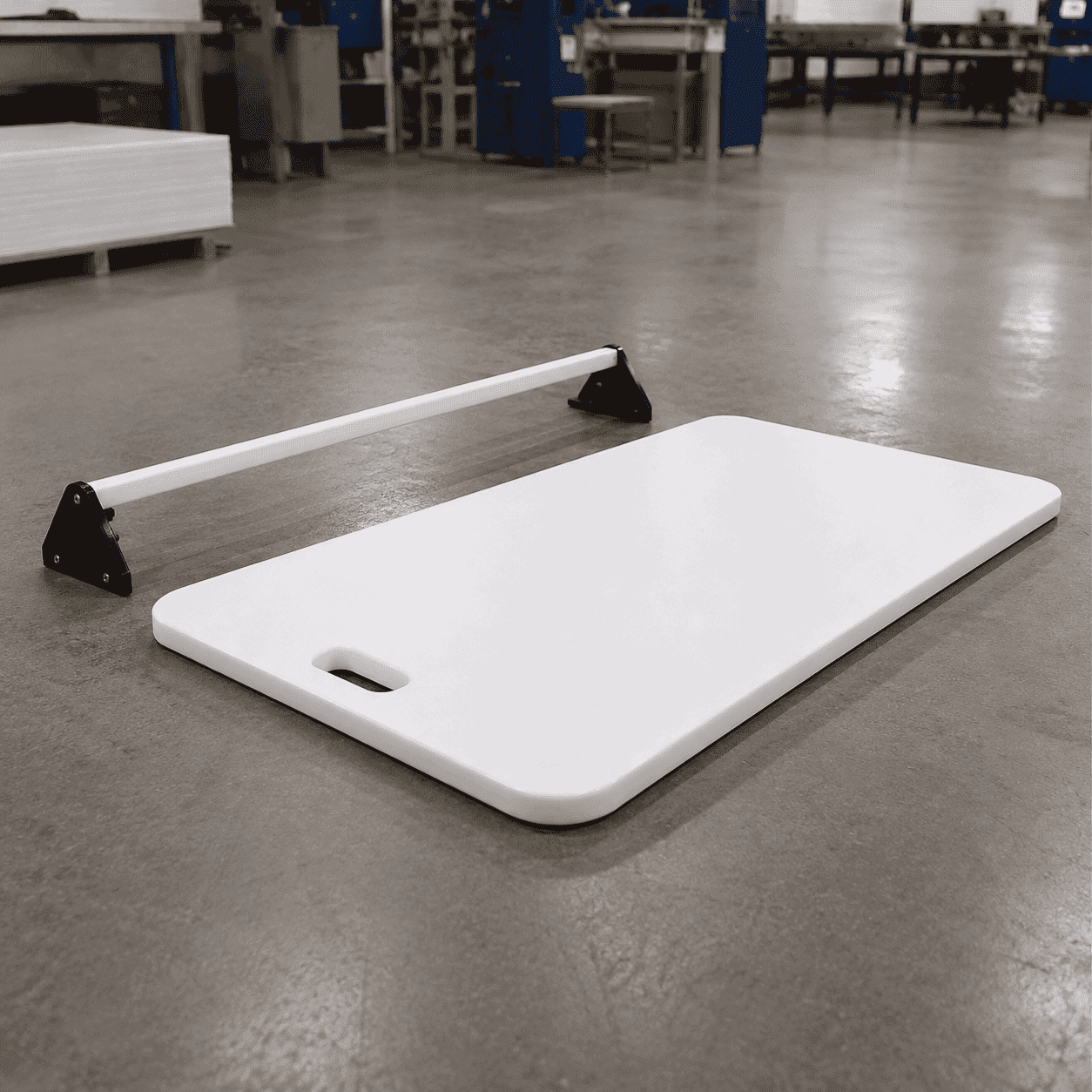
Pre-drilled mounting holes allow a compatible adjustable-tension rebounder to be installed on the pad. The rebounder can use a durable elastic cord, mounting blocks and mechanical fasteners to return the puck toward the player.
The product can be supplied as a pre-drilled shooting pad or as a complete training set according to the selected configuration. It is intended for stick-and-puck practice and must not be used as a synthetic ice skating floor.
Hockey Shooting Pad Rebounder is a portable off-ice training system designed for passing, receiving, shooting, stickhandling, puck control and one-timer exercises.
The system combines a smooth HDPE shooting pad with prepared mounting positions for an adjustable puck rebounder. When the puck strikes the elastic return section, it is redirected toward the player for repeated individual practice.
The smooth plastic surface allows a hockey puck to move more consistently than it normally does on concrete, asphalt, rough wood and other abrasive supporting floors.
The reference shooting pad shown on the product page measures approximately 30 × 60 inches, equivalent to about 762 × 1524 mm, with a practical thickness of approximately 5 mm.
Pre-drilled holes allow the rebounder mounting blocks and fasteners to be positioned accurately. Depending on the selected order, the product can be supplied as a pre-drilled shooting pad only or as a complete pad-and-rebounder training set.
Ice hockey players use sticks to control, pass and shoot a puck toward the opposing goal. For a general explanation of the sport, visit the Ice Hockey overview on Wikipedia.
Additional information about the training object is available from the Hockey Puck overview on Wikipedia.
For general material information, visit the High-Density Polyethylene overview on Wikipedia.
A Hockey Shooting Pad Rebounder is an off-ice training device consisting of a smooth plastic shooting surface and a puck-return component.
The player passes the puck toward the rebounder. The elastic return section redirects the puck across the pad, allowing the player to receive it, control it or shoot it without requiring another training partner.
The system can support forehand passes, backhand passes, quick-release shots, one-timers and repeated puck-reception exercises.
The shooting pad protects the lower edge of the hockey stick from direct contact with rough pavement while providing a cleaner and more predictable puck-training surface.
This product is intended for stick-and-puck exercises. It is not a structural synthetic ice panel and must not be used with metal-bladed ice skates.
The Hockey Shooting Pad Rebounder can be manufactured with different pad dimensions, mounting-hole positions and rebounder structures.
The following specifications are based on the product information shown on the original page. Final dimensions should be confirmed according to the selected rebounder and approved production drawing.
| Product Name | HDPE Hockey Shooting Pad Rebounder System |
| Shooting Pad Material | High-density polyethylene |
| Optional Pad Material | UHMWPE for increased wear resistance |
| Reference Imperial Size | Approximately 30 × 60 inches |
| Reference Metric Size | Approximately 762 × 1524 mm |
| Reference Thickness | Approximately 5 mm |
| Optional Thickness | Approximately 3–10 mm, subject to rigidity requirements |
| Standard Pad Color | White or natural white |
| Surface Finish | Smooth puck-training surface |
| Corner Design | Rounded corners |
| Edge Design | Deburred, rounded or beveled edges |
| Mounting Preparation | Pre-drilled rebounder mounting holes |
| Rebounder Structure | Elastic cord, support blocks and mechanical fasteners |
| Tension Adjustment | Adjustable according to rebounder configuration |
| Supply Options | Pre-drilled pad only or complete rebounder set |
| Main Applications | Passing, receiving, shooting, one-timers and puck control |
| Suitable Locations | Garages, basements, schools, hockey clubs and training centers |
| Supporting Floor | Clean, dry, rigid and level floor |
The approximately 762 × 1524 mm configuration provides a long training direction for passing and shooting while remaining compact enough for portable off-ice use.
A 5 mm HDPE pad is relatively lightweight and convenient to carry, but it requires a particularly flat and rigid supporting floor.
A thicker pad can be selected where increased rigidity is more important than minimum product weight.
Mounting-hole diameter, spacing and distance from the panel edges should be confirmed according to the rebounder structure before machining begins.
HDPE provides a practical combination of impact resistance, useful rigidity, low water absorption and reliable machining performance.
The material can be cut, routed, drilled, countersunk, edge-rounded and machined with accurate rebounder mounting positions.
The smooth upper surface reduces resistance caused by rough flooring. This helps the hockey puck maintain more consistent movement during passing and shooting exercises.
The pad does not reproduce every characteristic of refrigerated ice. Puck speed and friction can vary according to material grade, surface finish, temperature, cleanliness and puck condition.
Dust, sand, oil, water and hard particles should be removed before every training session because contamination can affect puck movement and scratch the surface.
UHMWPE can be selected where increased abrasion resistance, impact performance and lower surface friction are required.
This material option may be suitable for hockey academies, commercial training centers and frequently used practice stations.
UHMWPE normally increases material and machining costs. Thermal movement, hole tolerances and fastener installation should also be considered.
The choice between HDPE and UHMWPE should reflect the expected training frequency, required service life, surface performance and project budget.
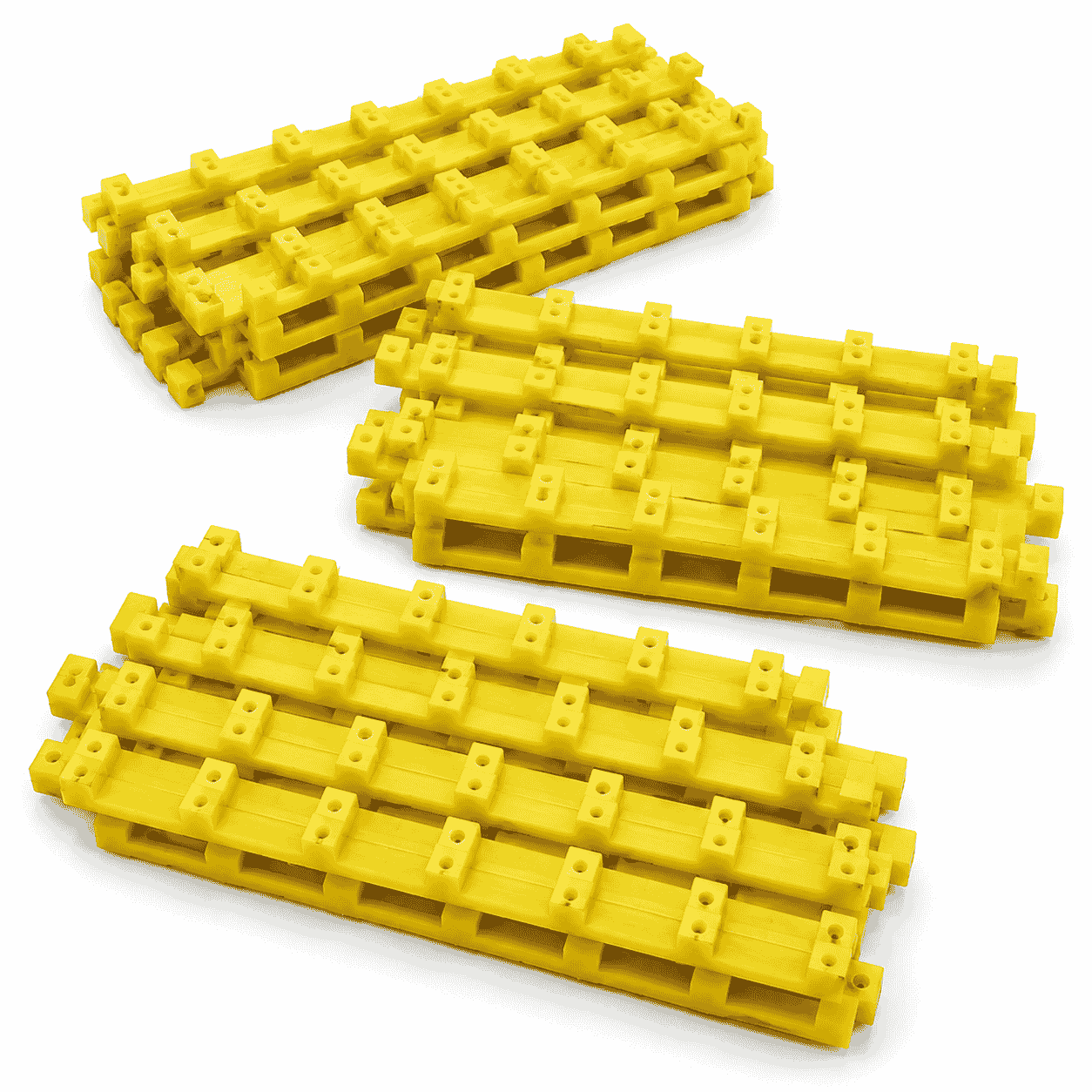
The rebounder normally uses a durable elastic cord positioned between two supporting blocks.
When the puck strikes the elastic section, stored tension redirects it toward the player.
Depending on the rebounder structure, tension can be adjusted to change the speed and strength of the returning puck.
Lower tension can be used for introductory passing and receiving exercises. Increased tension can provide a faster puck return for advanced training.
The selected tension should remain within the intended operating range of the elastic cord and mounting hardware.
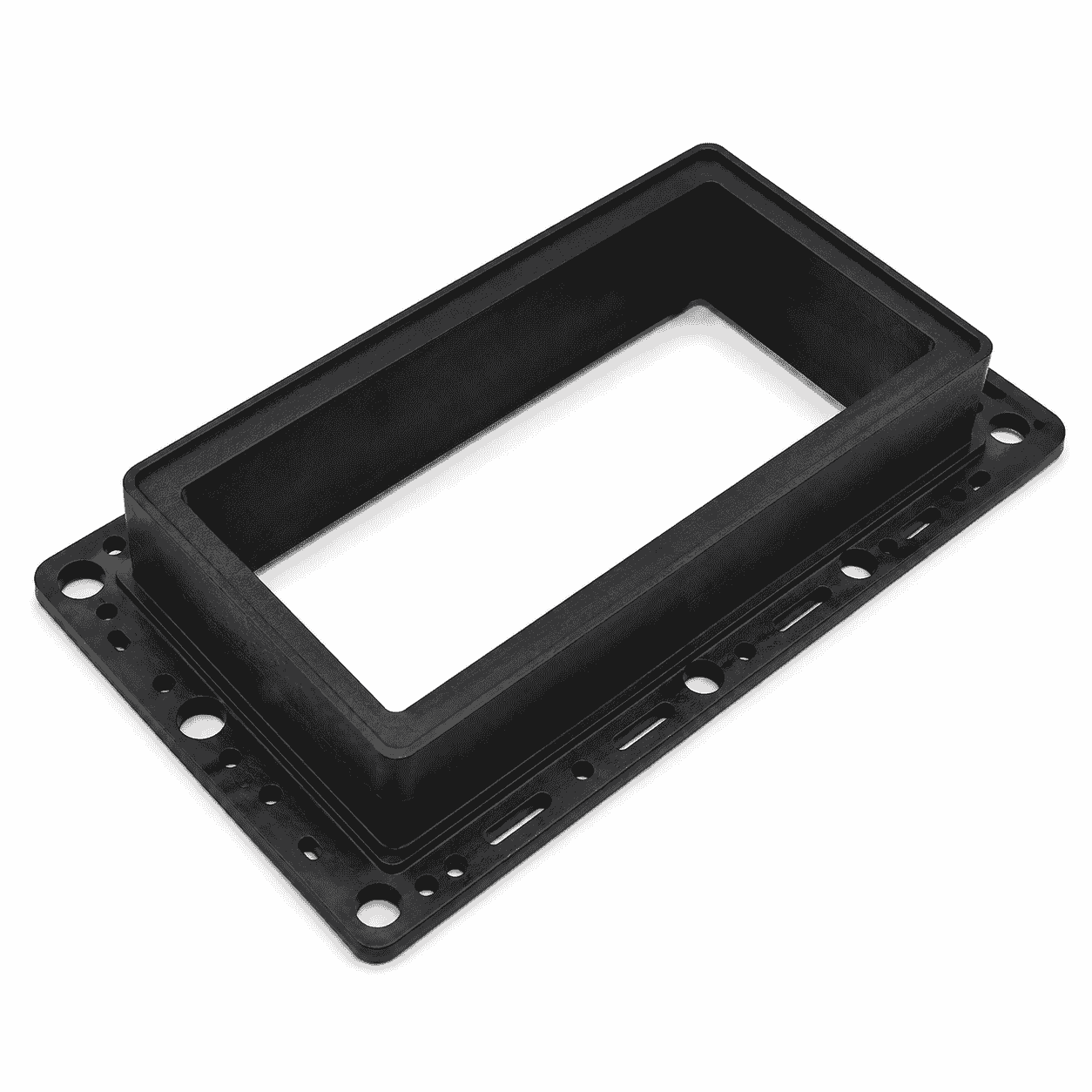
The shooting pads shown include prepared mounting holes for compatible rebounder components.
Pre-drilled positions improve installation consistency and reduce the need for the user to drill the HDPE sheet manually.
The hole diameter, center distance and edge clearance should match the approved rebounder drawing.
Sufficient plastic should remain around every hole to reduce the risk of cracking, elongation or permanent deformation.
Fasteners should not be overtightened because excessive compression can distort a relatively thin HDPE pad.
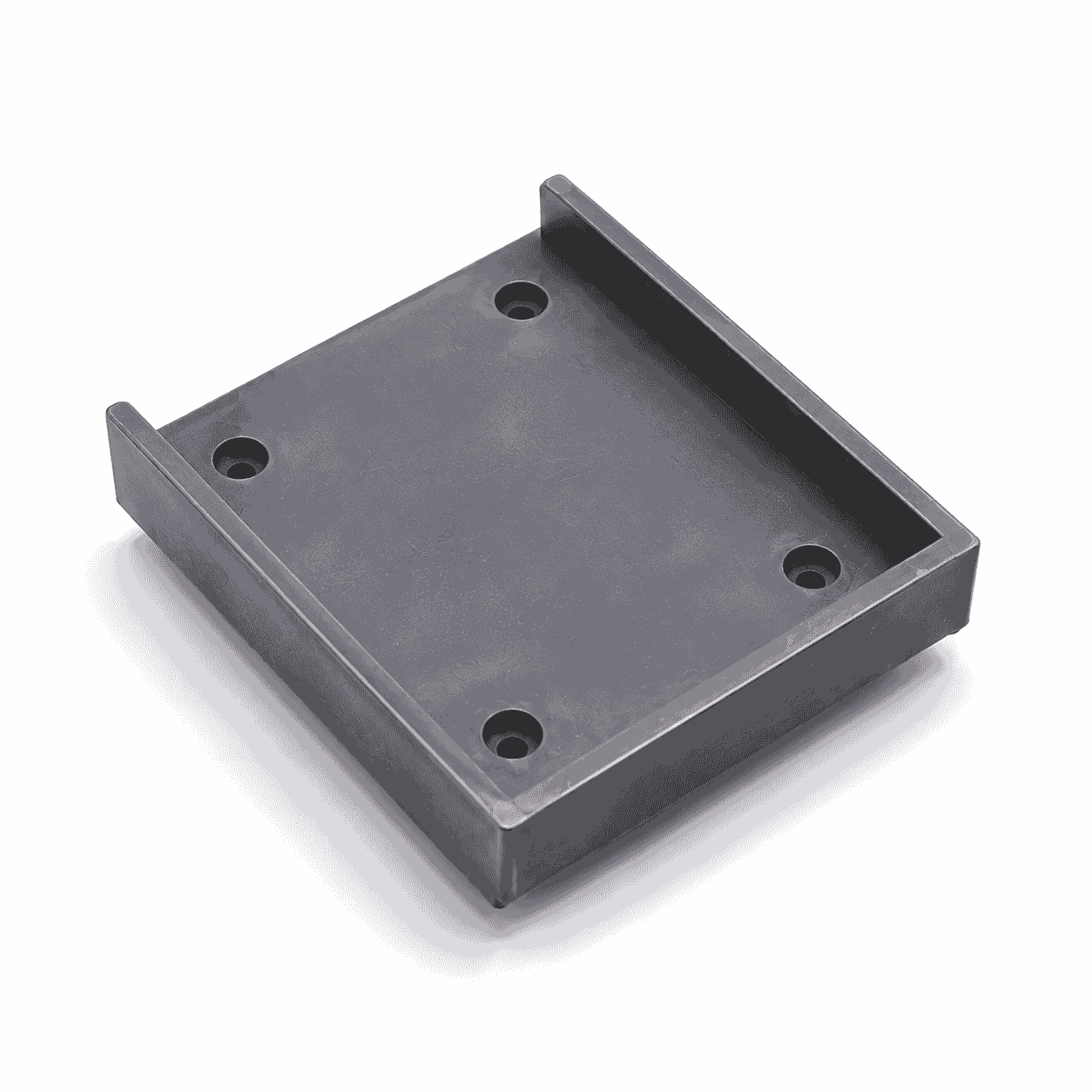
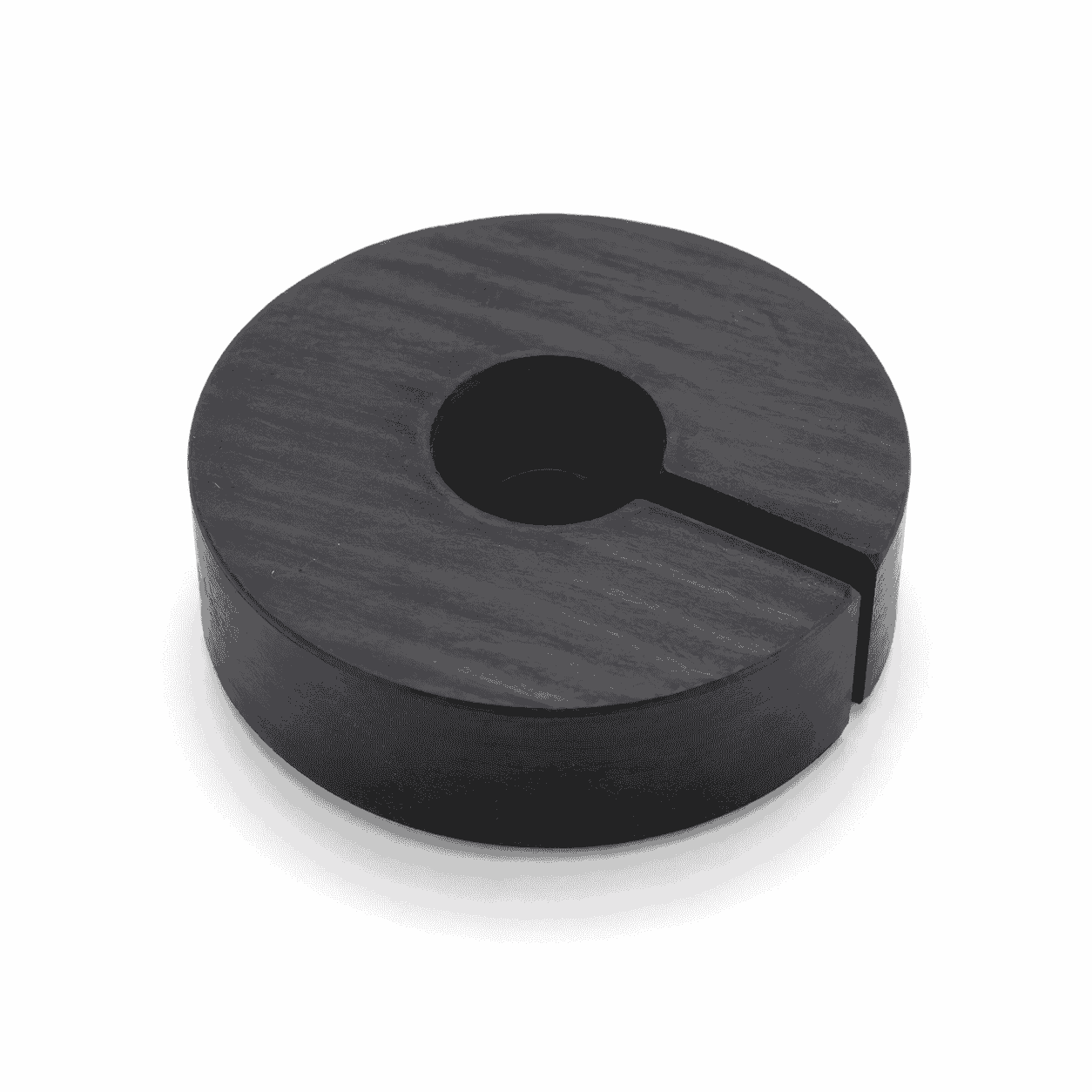
The rebounder support blocks maintain the position and height of the elastic return cord.
They can be manufactured from suitable plastic or another corrosion-resistant material according to the selected structure.
The bottom surfaces should remain flat so that the blocks sit securely against the shooting pad.
Sharp edges and exposed fastener ends should be avoided on the playing side.
Loose or cracked support blocks should be repaired or replaced before continued use.
The elastic cord provides the primary puck-return function.
A thicker cord can provide useful durability and a firm rebound when correctly installed.
The cord should be inspected for cuts, cracking, permanent stretching, surface wear and damaged end connections.
A cord showing significant deterioration should be replaced rather than tightened beyond its intended range.
Replacement cords should match the required length, diameter, elasticity and connection structure.
The Hockey Shooting Pad Rebounder can be used for repeated forehand and backhand passing exercises.
The player passes the puck toward the elastic return section and prepares to receive it at a controlled stick angle.
Training can focus on puck direction, receiving position, hand movement, stick control and the speed of the next pass.
The player can gradually increase passing force after becoming familiar with the rebound direction.
The rebounder should be positioned so that the returning puck remains on the usable pad area.
The system can support one-timer exercises without requiring another person to pass the puck.
The player first directs the puck toward the rebounder and prepares to strike the returning puck without stopping it.
This exercise can help develop hand position, timing, body rotation and quick shooting release.
Training should begin with moderate rebound tension and controlled shots.
A suitable goal, shooting net or protective backstop should be installed to contain missed shots.
Players can receive the returning puck and immediately perform a wrist shot, snap shot or controlled backhand release.
The repeated return movement allows the player to reduce the time between puck reception and shooting.
Targets can be installed inside a suitable hockey goal to develop shot placement.
The training area should provide enough clearance for the stick movement and expected puck path.
The smooth area in front of the rebounder can also be used for stationary stickhandling and puck-control exercises.
Players can practise forehand-to-backhand transitions, toe drags, lateral puck movements and quick-hand drills.
Compatible cones and stickhandling obstacles can be positioned on the shooting pad.
Accessories should have smooth bases without exposed screws or sharp metal parts that could scratch the surface.
The player can approach the rebounder from different angles to practise receiving the puck on both sides of the stick blade.
Forehand exercises can focus on controlled reception and quick forward passing.
Backhand exercises can help develop hand coordination and puck control on the opposite side of the blade.
Changing the passing angle helps create a wider range of return directions and training situations.
The system is suitable for garages, basements and private training rooms with enough surrounding clearance.
Its portable structure allows the pad and rebounder to be removed or stored after each training session.
The goal and protective backstop should be positioned away from windows, vehicles and fragile equipment.
A flat non-slip underlay can be placed beneath the shooting pad when additional positioning stability is required.
The underlay should not create raised or unsupported sections beneath the HDPE panel.
Hockey clubs and academies can use the product for individual passing stations, shooting drills, warm-up exercises and skills-development programs.
Several systems can be positioned in separate training areas for multiple players.
Frequently used facilities may prefer increased pad thickness or a UHMWPE surface for additional rigidity and wear resistance.
Elastic cords, fasteners, mounting holes and support blocks should be inspected regularly in commercial environments.
The Hockey Shooting Pad Rebounder can be used for supervised school activities and youth hockey programs.
Rebound tension, puck type, stick length and shooting distance should be selected according to the age and experience of the player.
Hard shots should only be permitted where suitable goals, protective netting and adult supervision are available.
Players should not sit, stand, jump or skate on the shooting pad.
The pad can be placed on smooth concrete, stable wood flooring, sports-hall flooring or another rigid indoor platform.
The supporting floor should be clean, dry, level and free from stones, screws, metal fragments and sharp debris.
Uneven support can cause a 5 mm panel to flex, rock or develop raised edges during training.
Large cracks, gaps and projecting floor fasteners should be corrected before the product is positioned.
The system can be used on a smooth driveway, outdoor sports platform or another properly prepared surface.
Loose gravel, uneven asphalt, soft soil and grass are not suitable supporting surfaces.
Sand, stones and leaves should be removed before every outdoor training session.
A UV-stabilized HDPE grade can be considered where prolonged sunlight exposure is expected.
Indoor storage after use can help reduce unnecessary weather exposure, contamination and deformation.
The rebounder should remain stable without lifting, twisting or moving excessively during normal puck contact.
Loose fasteners, damaged cords and cracked mounting positions should be corrected before continued use.
A suitable hockey goal, shooting net or protective backstop should be installed in the shooting direction.
Other people should remain outside the expected puck path.
Training should not be performed near unprotected windows, vehicles, machinery or public walkways.
Players should use suitable hockey equipment according to the training environment and exercise intensity.
The product should not be used as a walking platform, workbench or synthetic ice skating panel.
The HDPE surface can be cleaned with water, a soft cloth and a suitable neutral cleaning solution.
Strong solvents, sharp metal scrapers and highly abrasive cleaning tools should be avoided.
Routine inspection should include:
Loose dirt should be removed before every training session.
A cracked panel, enlarged mounting hole, damaged elastic cord or loose support block should be repaired or replaced.
The shooting pad should preferably be stored flat on an evenly supported surface.
Long-term storage against a wall may cause a thin polyethylene panel to bend.
The rebounder can be removed before transportation to protect the mounting blocks and elastic cord.
Fasteners and small components should be stored in a labeled container.
When several pads are stacked, the stack should remain level and evenly supported.
Protective film or soft separators can be placed between finished surfaces to reduce scratching.
The Hockey Shooting Pad Rebounder can be manufactured from HDPE or UHMWPE sheet using cutting, routing, drilling and CNC machining processes.
Typical production operations include:
Important inspection items include overall length, width, thickness, flatness and visible surface condition.
Corner radius, edge finish, mounting-hole diameter, hole spacing and distance from the panel edge should also be checked.
The rebounder can be trial-assembled before packaging to confirm component fit and return-cord alignment.
The smooth training surface should be inspected for deep scratches, contamination, dents and machining defects.
Protective packaging should support the complete panel evenly and prevent rebounder hardware from scratching the surface.
When selecting a Hockey Shooting Pad Rebounder, consider the available training area, player age, expected passing force, required portability and supporting-floor condition.
The approximately 762 × 1524 mm pad provides a practical area for passing, shooting and puck-reception exercises.
A 5 mm pad is suitable for portable use on a particularly flat floor. Increased thickness can be selected where greater rigidity is required.
The rebounder mounting pattern should be confirmed before the pad is drilled.
The elastic cord and support structure should be selected according to the desired return speed and training intensity.
Confirm whether the selected product configuration includes the rebounder. Some configurations may include only the pre-drilled shooting pad, with the rebounder supplied separately.
Learn more about our HDPE sheets, UHMWPE materials and engineering-plastic processing capabilities on the Honsee engineering plastic manufacturer website.
The Hockey Shooting Pad Rebounder provides a portable, reusable and adjustable training solution for passing, receiving, shooting, one-timer and puck-control exercises.
Check drawings for full specifications and confirm materials according to service conditions to prevent product defects.
Inspect all key processing steps and fully verify dimensions, holes, grooves and fitting surfaces.
Deburr, chamfer and clean products for easy installation. Ensure uniform quality among batch products.
Choose appropriate packaging solutions based on product features to protect goods from collision, deformation and mixing during transit.
Unlike metal parts, engineering plastic components still require strict control over dimensions, holes, edges, surface, materials and assembly performance for equipment use.
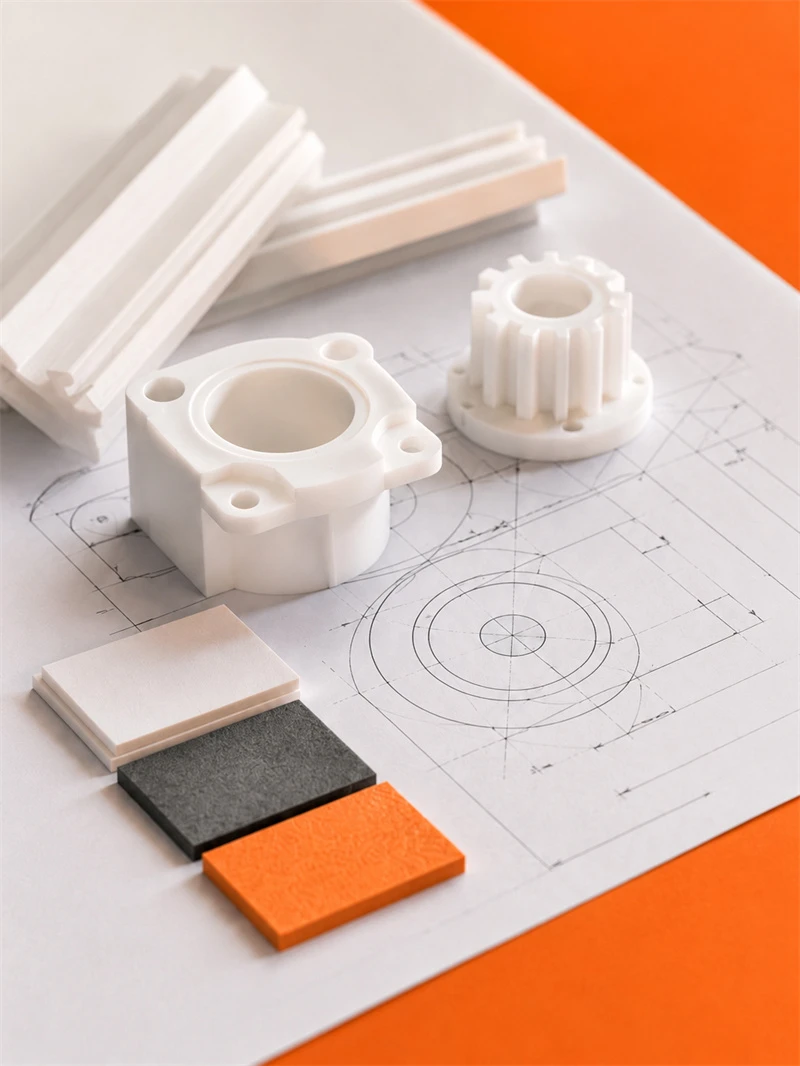
Engineering plastic parts suit friction, guide, support, buffer, anti-corrosion and insulation areas. We supply UHMWPE, POM, PA, PP/PE components for conveyor, food, mining, machinery, chemical and cable systems, with custom OEM service available.
Stay updated with our latest industry insights, company updates and featured articles.
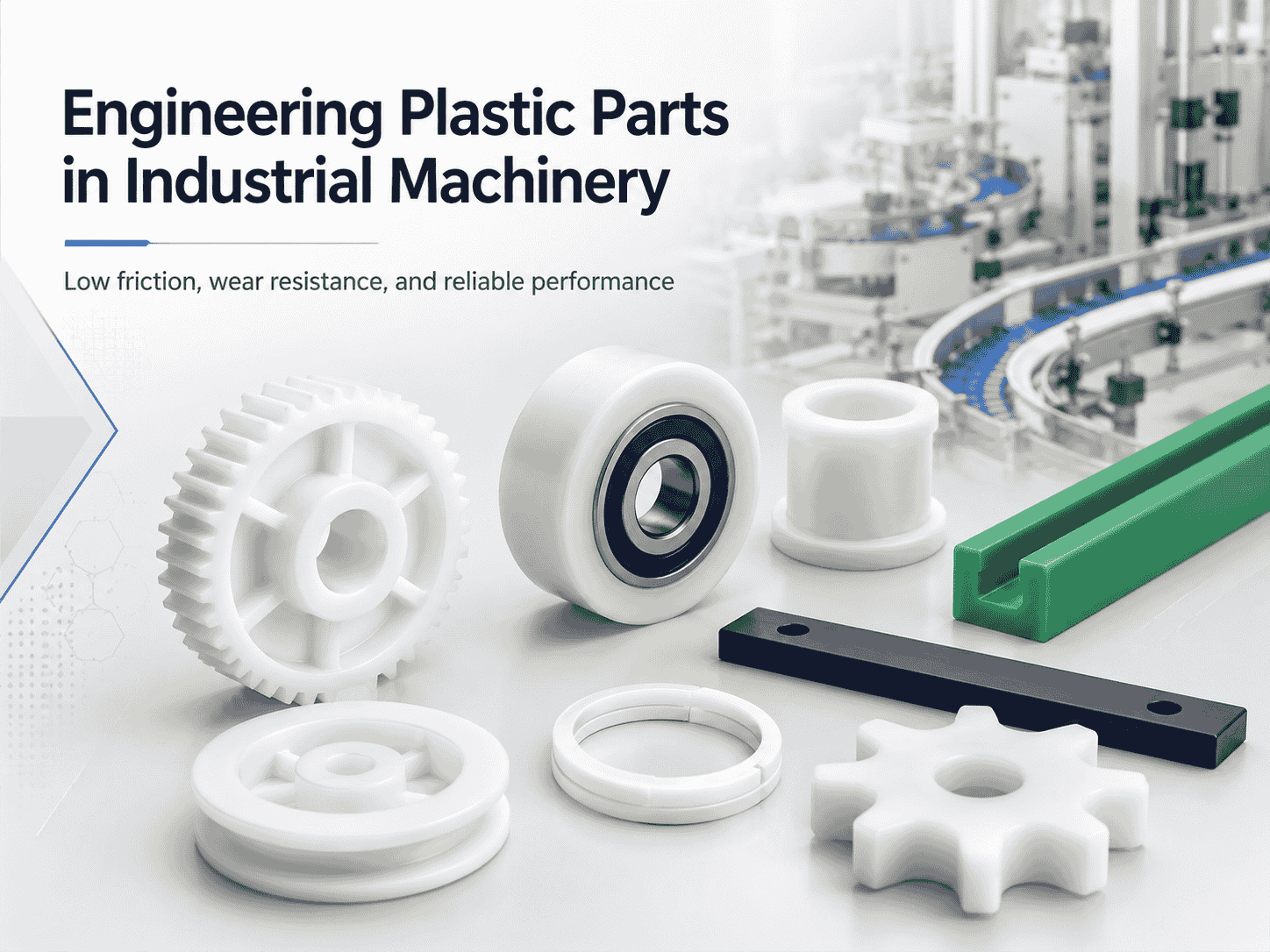
Engineering plastics are increasingly used in industrial machinery, automated production lines, conveyor systems, packaging equipment, and food-processing machines. Materials such as nylon, UHMWPE, POM, and
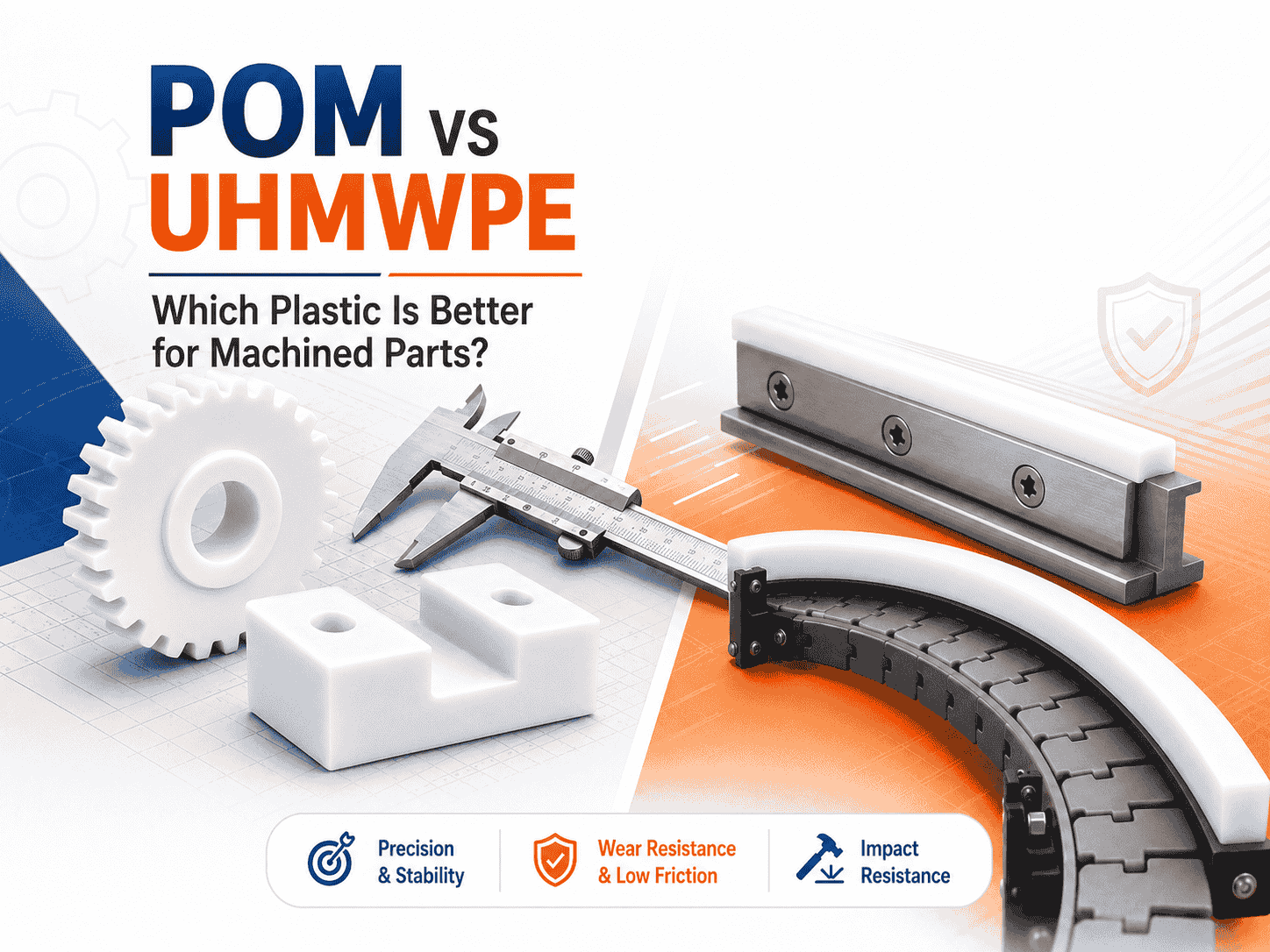
Both are lightweight, corrosion-resistant, wear-resistant, and suitable for CNC machining. However, they perform very differently
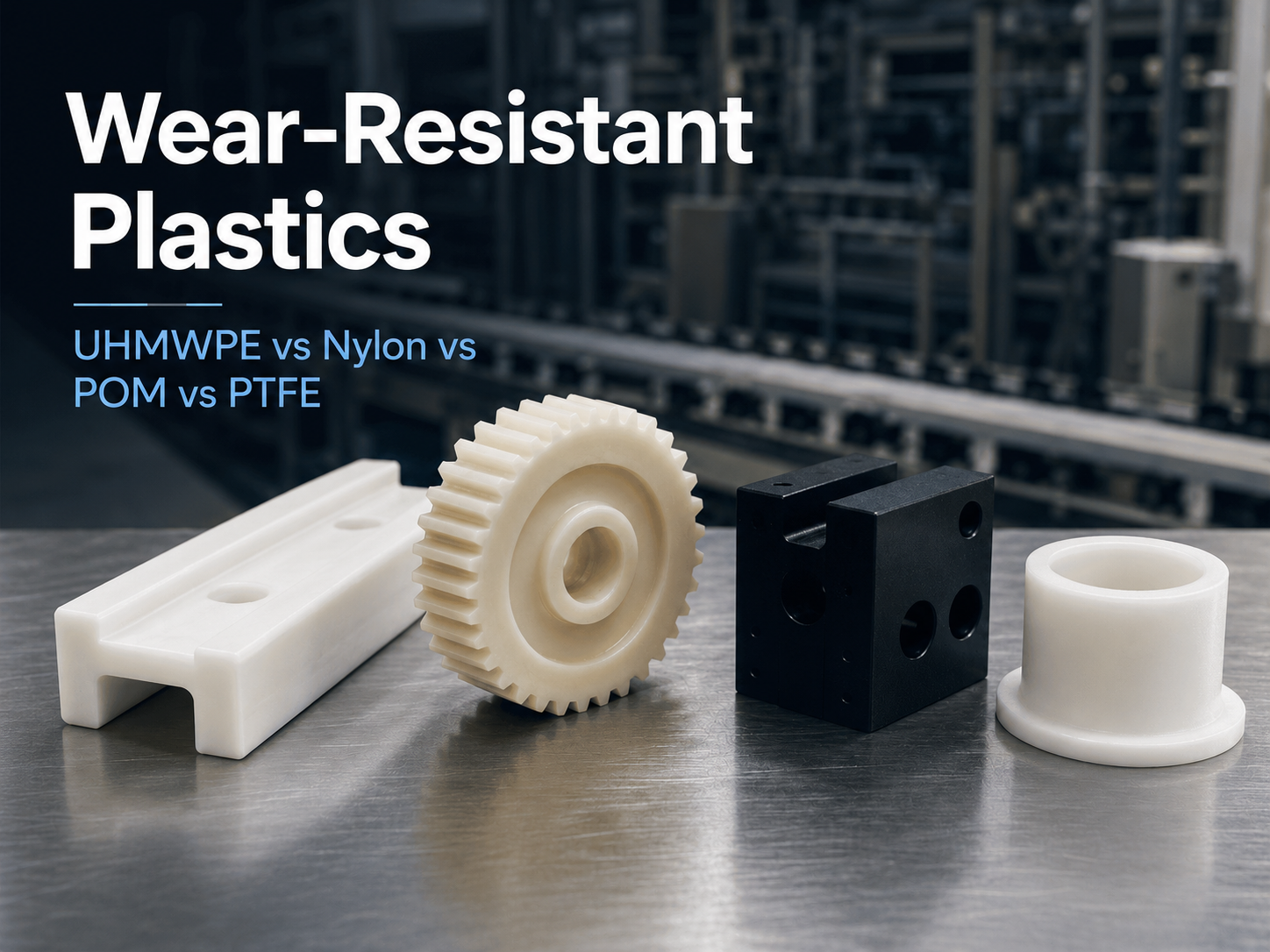
Wear is a common cause of failure in conveyor systems, packaging machinery, automated equipment, mining
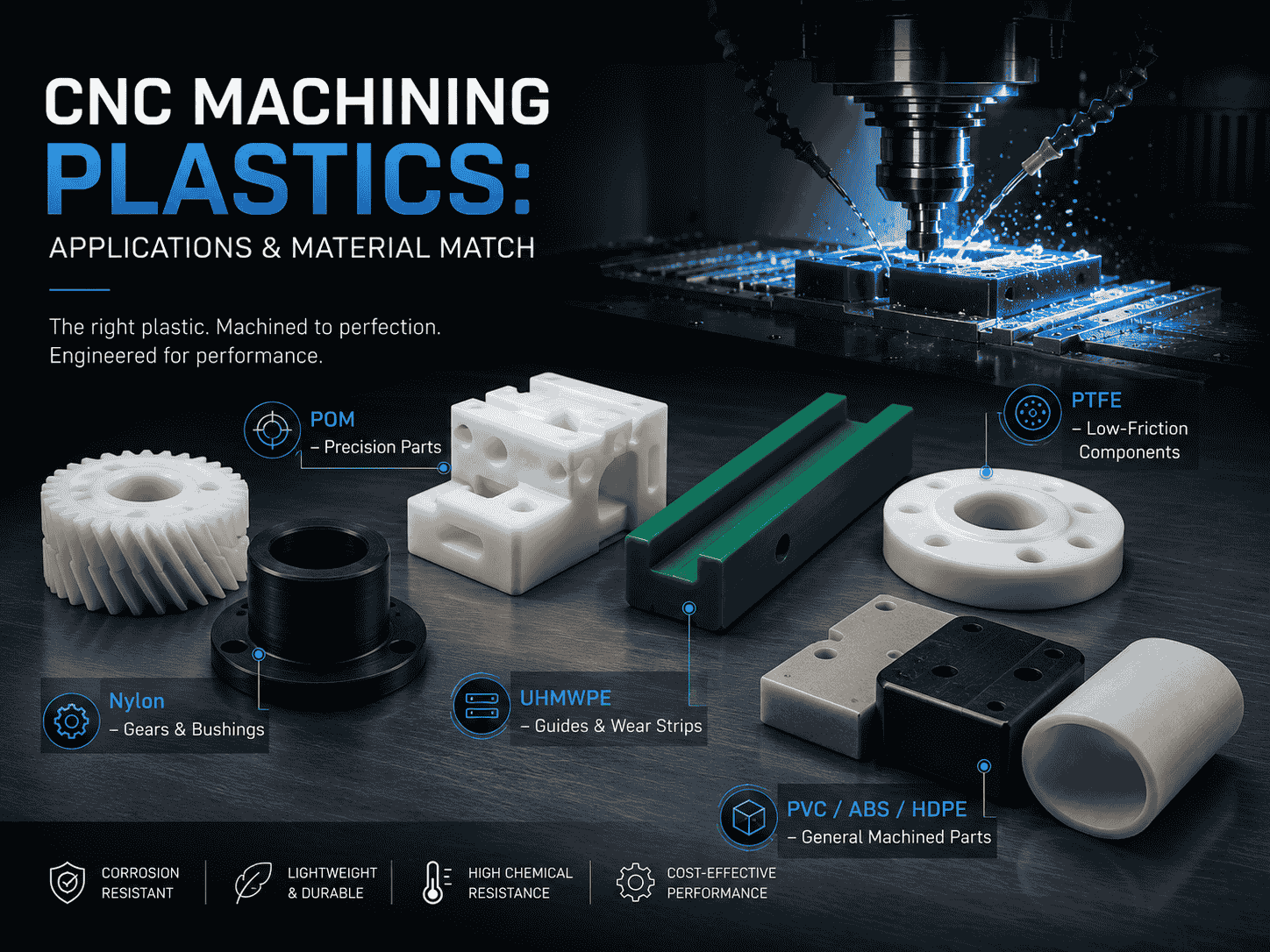
CNC machining is widely used to produce plastic prototypes, low-volume parts, replacement components, jigs, fixtures,
Both are lightweight, corrosion-resistant, wear-resistant, and suitable for CNC machining. However, they perform very differently
Wear is a common cause of failure in conveyor systems, packaging machinery, automated equipment, mining
CNC machining is widely used to produce plastic prototypes, low-volume parts, replacement components, jigs, fixtures,
Need UHMWPE sheets & custom plastic machined/OEM parts?Send specs & material needs, free quote within 24h.