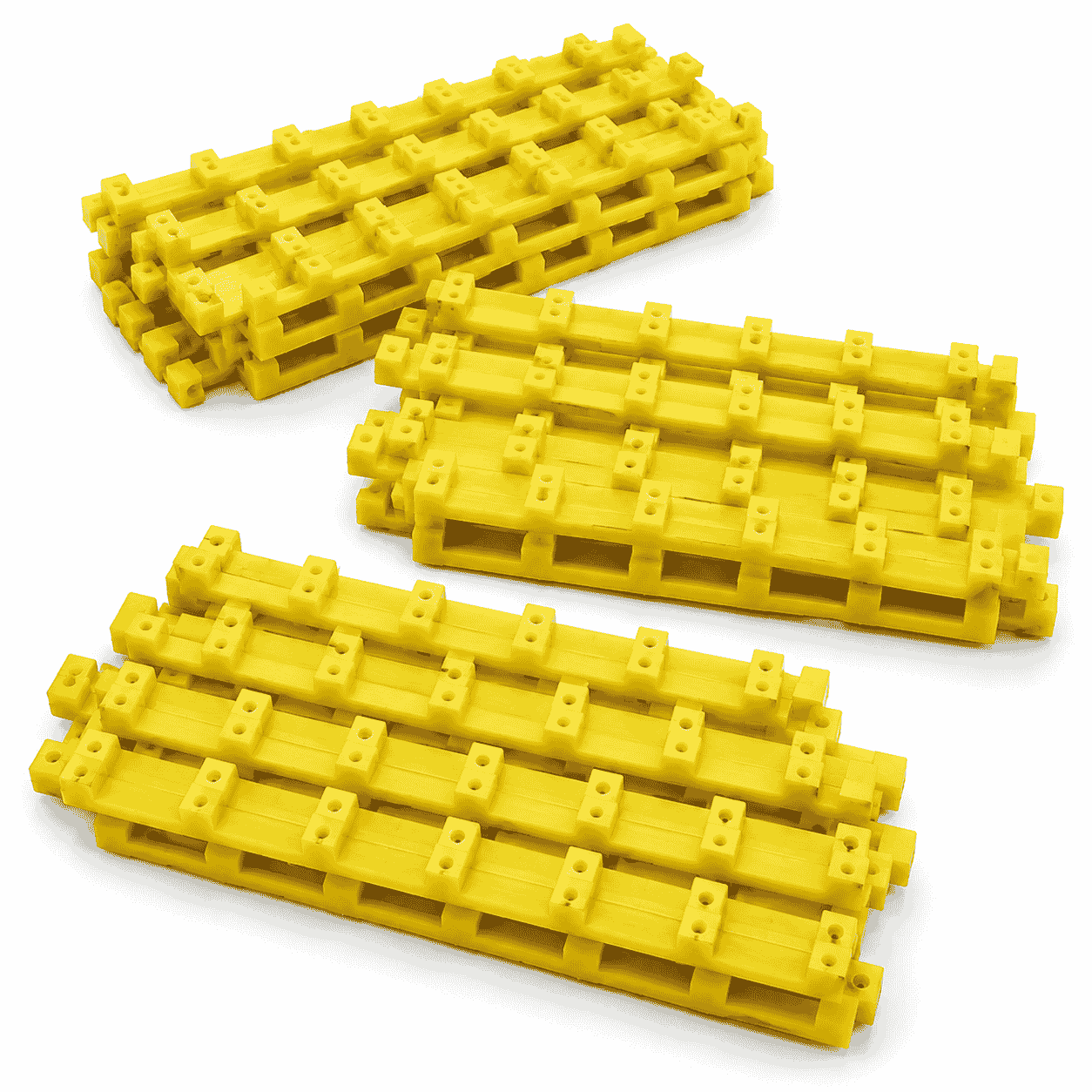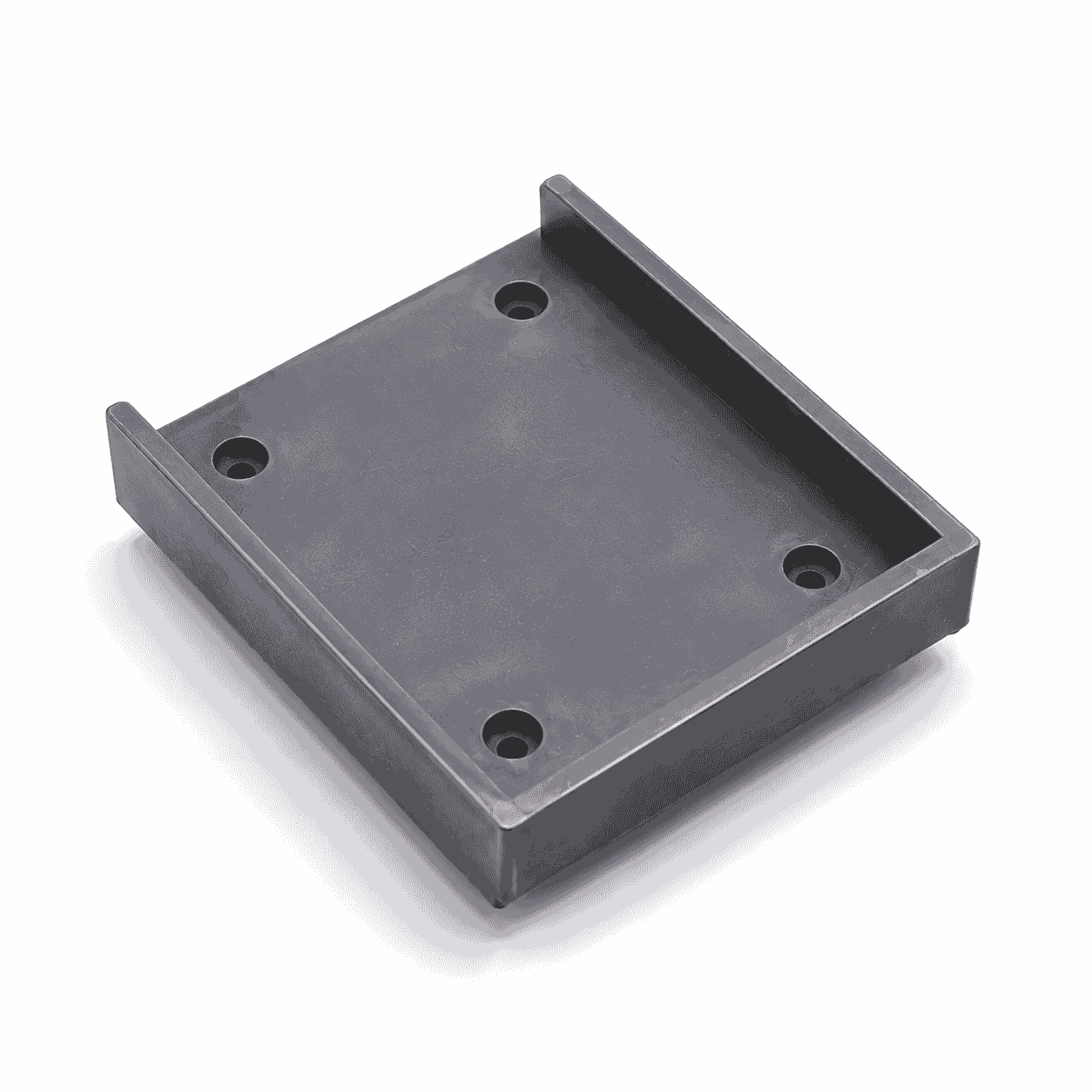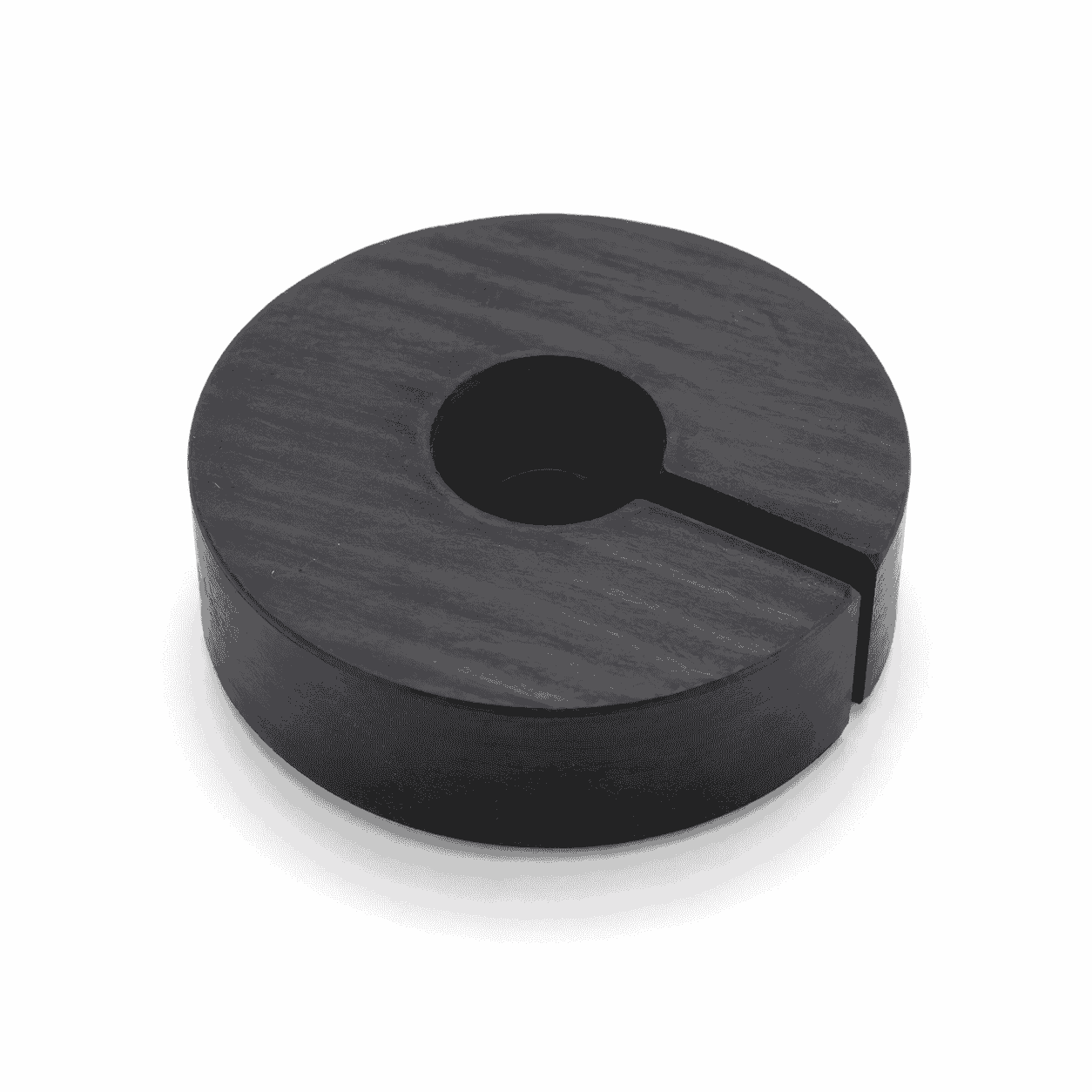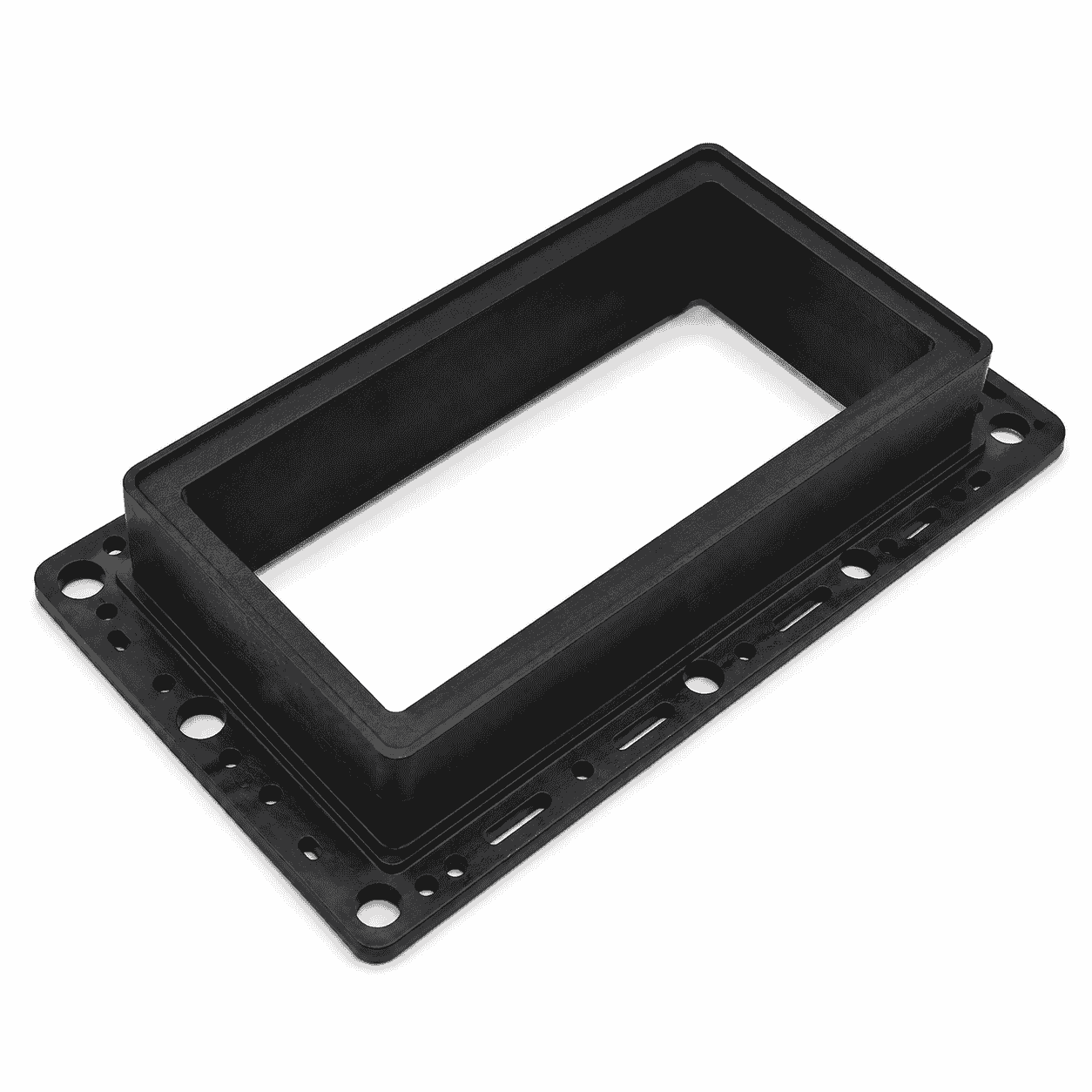


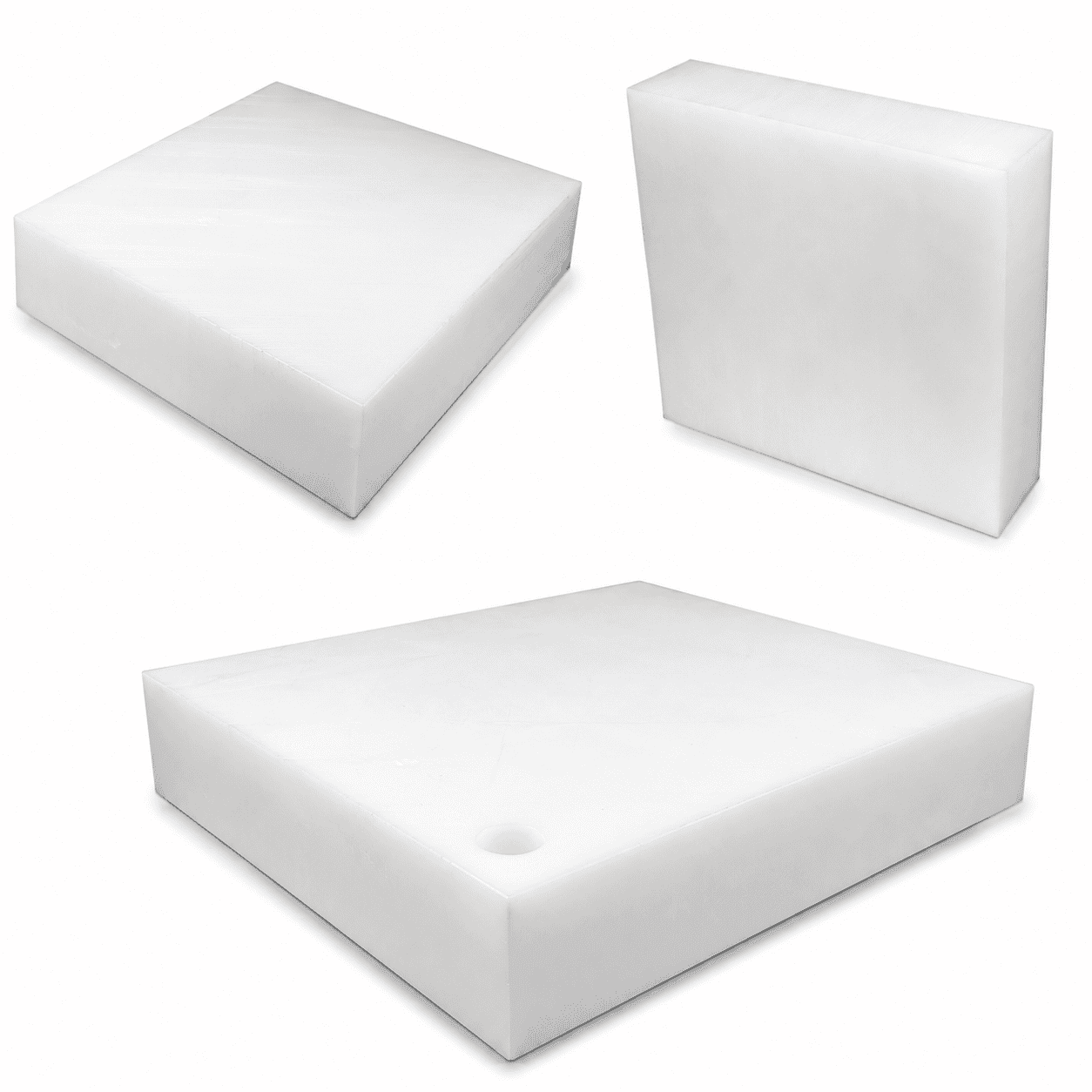
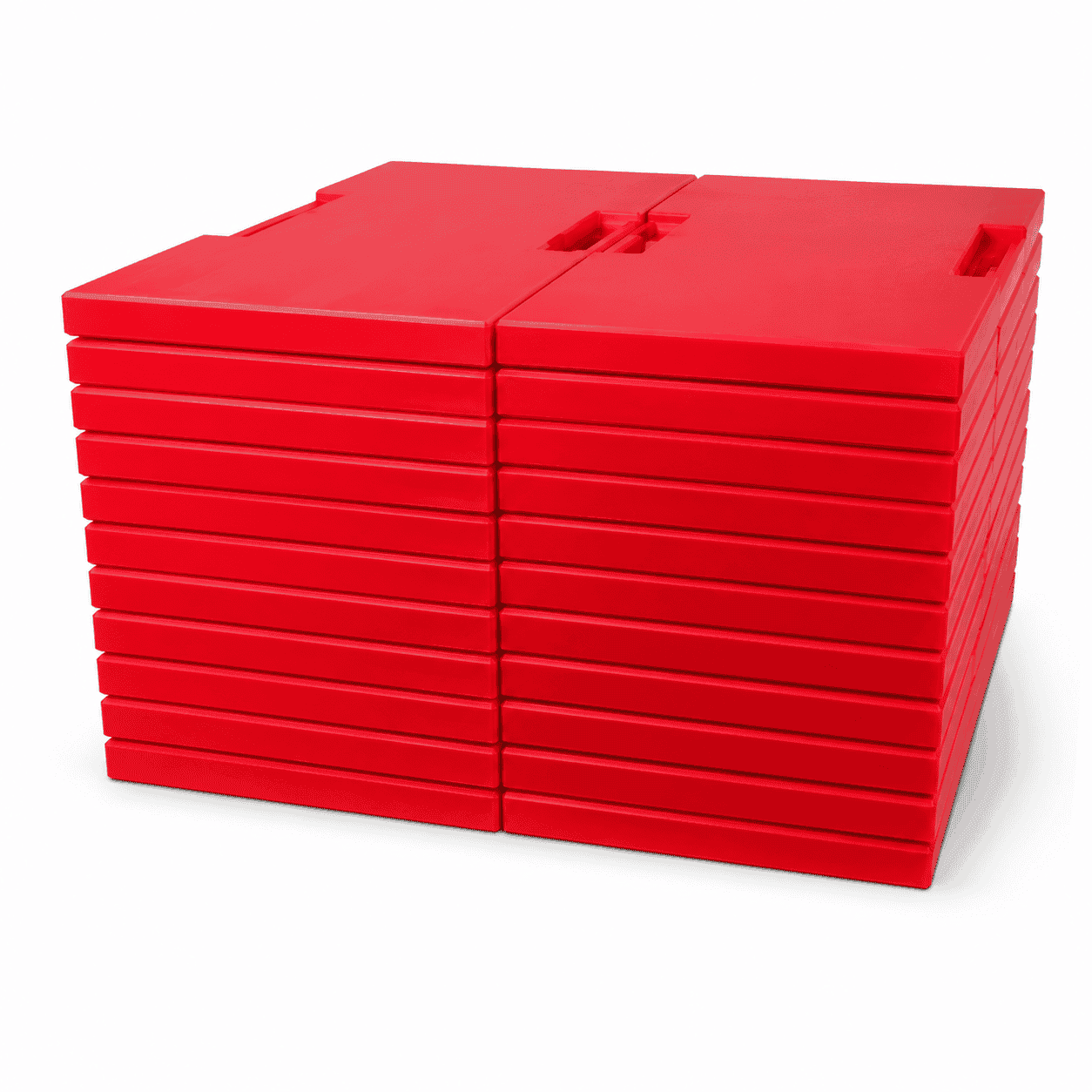
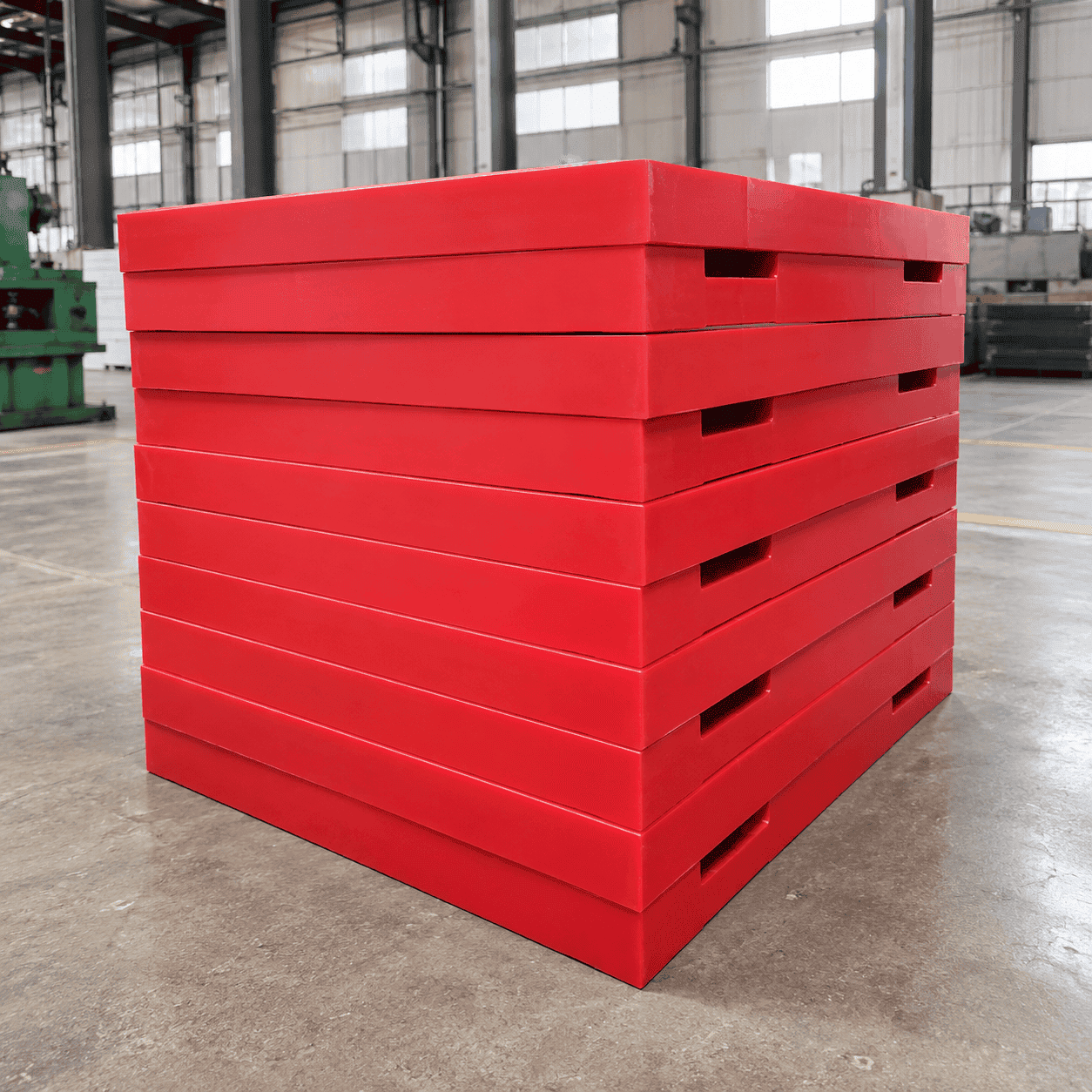
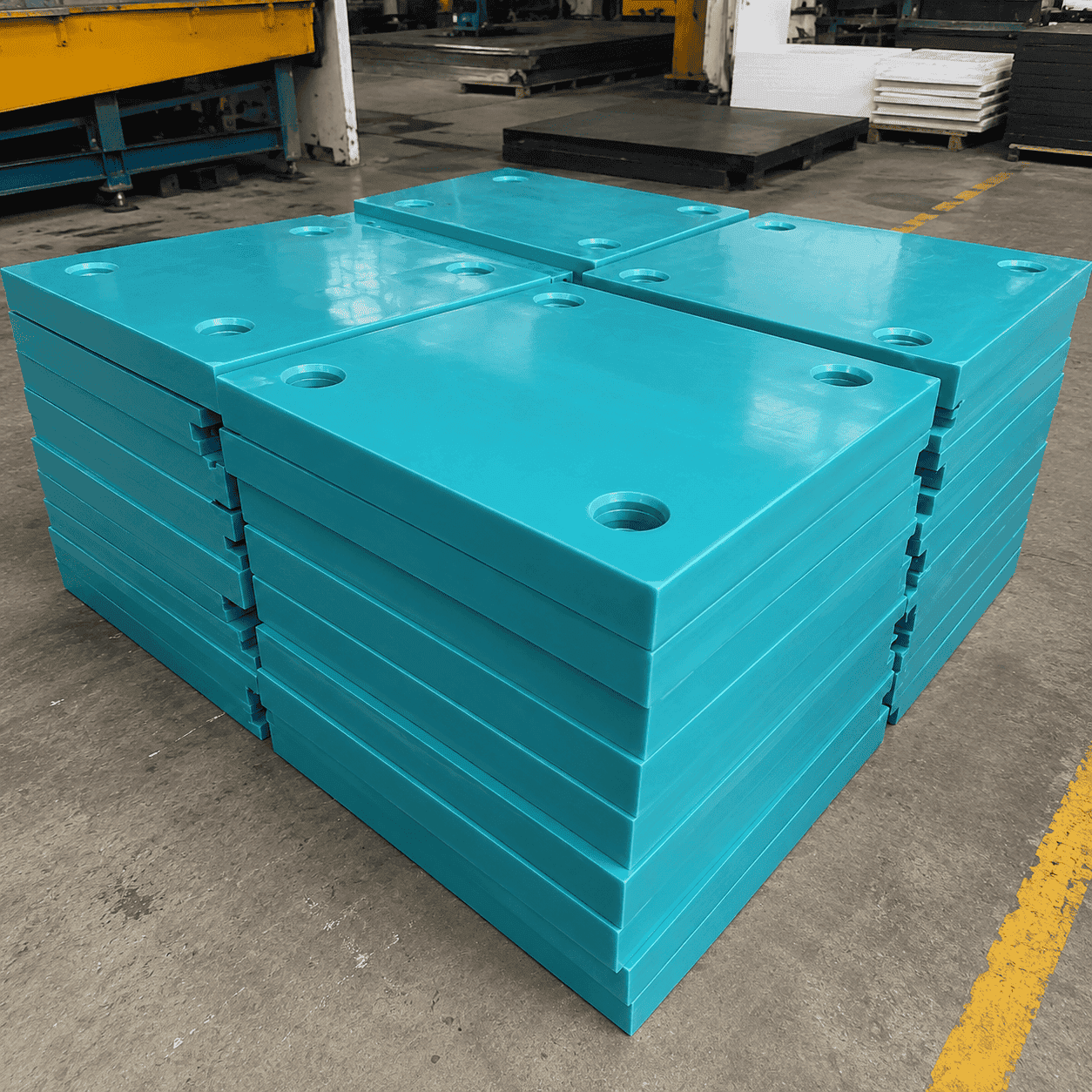
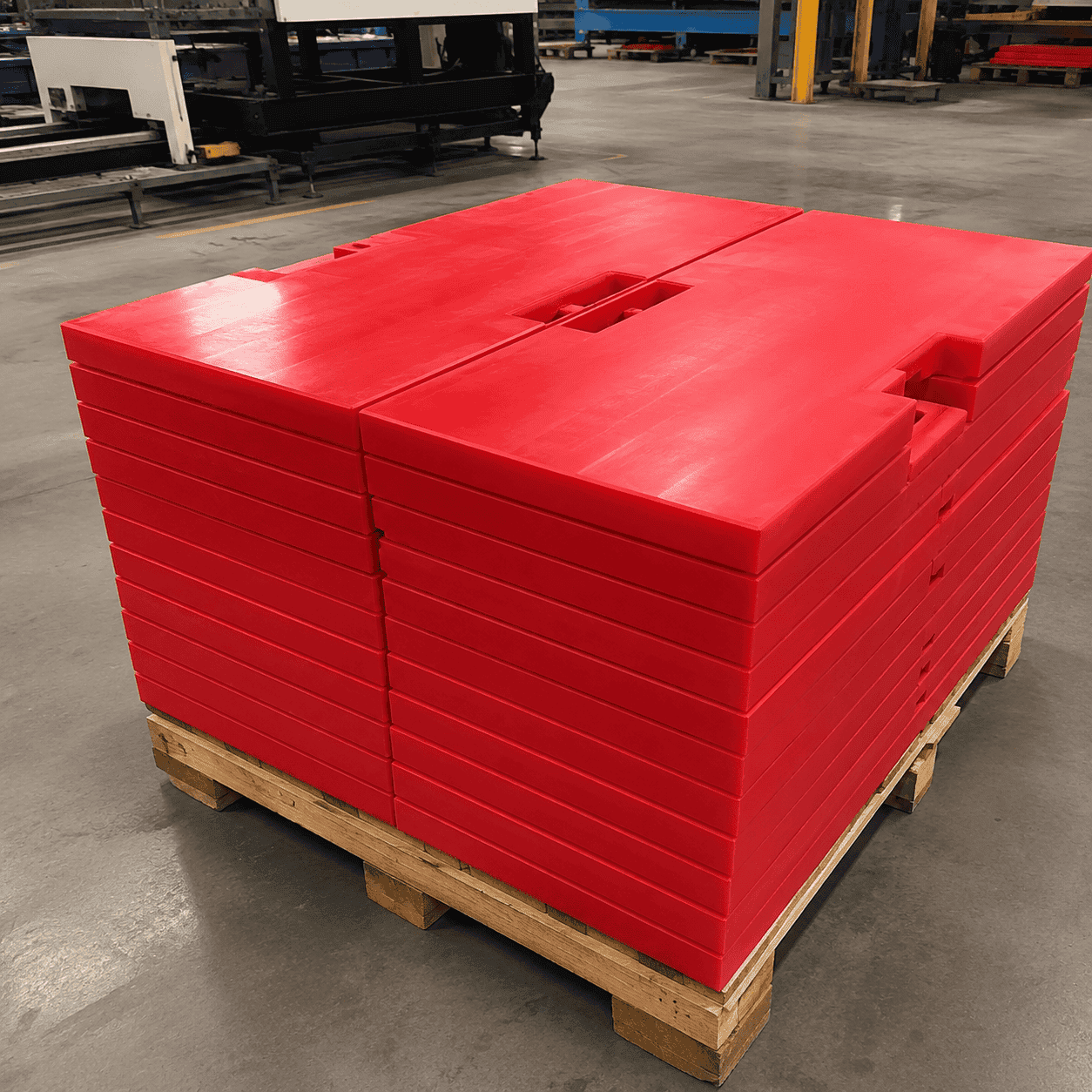
200-300 mm Thick UHMWPE Sheet is a heavy-duty compression-molded engineering plastic panel designed for large wear blocks, impact pads, support blocks, liners, marine components and CNC-machined industrial parts.
The primary thickness range is approximately 200–300 mm. Practical reference sizes include 1000 × 1000 mm, 2000 × 1000 mm and 3000 × 1500 mm. Larger project dimensions such as 4700 × 1200 mm, 5000 × 1300 mm or 4500 × 2000 mm must be evaluated according to thickness, molding capacity, flatness requirements, lifting conditions and transportation limits.
UHMWPE provides useful abrasion resistance, impact performance, low friction and low water absorption. Natural white, black, green, blue, yellow, orange and red material options can be discussed. CNC cutting, drilling, milling, counterboring and shaped machining are available according to approved drawings.
200-300 mm Thick UHMWPE Sheet is a compression-molded engineering plastic panel designed for large wear blocks, impact pads, support components, equipment liners and CNC-machined industrial parts.
The increased thickness provides sufficient machining allowance for components with deep grooves, stepped surfaces, mounting holes, pockets and complex profiles.
Compared with assembling several thin sheets, one thick UHMWPE panel can reduce bonded interfaces and provide a more integrated blank for subsequent machining.
This product is normally manufactured through controlled compression molding. Final dimensions, thickness tolerance, flatness and machining allowance should be confirmed according to the finished-part drawing.
UHMWPE is a polyethylene material known for useful wear resistance, impact performance and sliding characteristics. For a general material explanation, visit the Ultra-High-Molecular-Weight Polyethylene overview on Wikipedia.
Additional information about the polyethylene material family is available from the Polyethylene overview on Wikipedia.
A 200-300 mm Thick UHMWPE Sheet is a solid polyethylene panel or molded blank with a nominal thickness between approximately 200 and 300 mm.
The product can be supplied as a rectangular sheet, square block, machined pad or project-specific component.
Because the material is considerably thicker than a conventional liner sheet, it is suitable for components that require deep machining, concentrated impact absorption or a large supporting section.
The molded panel can be cut into smaller blanks before CNC machining. This approach reduces unnecessary handling of the complete sheet and allows individual components to be processed according to separate drawings.
The 200-300 mm Thick UHMWPE Sheet can be manufactured in different lengths, widths and colors.
The following dimensions are practical product references rather than guaranteed stock sizes. Production feasibility must be confirmed according to panel thickness, total mass, molding-equipment capacity and transportation requirements.
| Product Name | 200-300 mm Thick UHMWPE Sheet |
| Material | Ultra-high-molecular-weight polyethylene |
| Manufacturing Method | Compression molding followed by cutting or CNC machining |
| Primary Thickness Range | Approximately 200–300 mm |
| Additional Thick-Panel Range | Approximately 100–200 mm, subject to production requirements |
| Compact Reference Size | Approximately 1000 × 1000 mm |
| Standard Reference Size | Approximately 2000 × 1000 mm |
| Large Reference Size | Approximately 3000 × 1500 mm |
| Project Reference Size | Approximately 4700 × 1200 mm |
| Project Reference Size | Approximately 5000 × 1300 mm |
| Project Reference Size | Approximately 4500 × 2000 mm |
| Standard Color | Natural white |
| Optional Colors | Black, green, blue, yellow, red or orange |
| Surface Condition | Compression-molded, cut, planed or CNC-finished |
| Machining Services | Cutting, drilling, milling, counterboring, grooving and profile machining |
| Main Applications | Wear blocks, impact pads, support blocks, liners and machined components |
| Supply Form | Full panel, cut blank or finished machined component |
Extra-large dimensions should not automatically be treated as standard inventory.
A panel measuring several metres in length and 200–300 mm in thickness can be extremely heavy. Production, lifting, loading, packaging and transportation methods must therefore be evaluated before an order is confirmed.
For large blocks, the finished component can often be divided into several manageable sections without affecting its intended function.
UHMWPE has a very high molecular weight and extremely high melt viscosity.
For this reason, thick panels and large blanks are commonly produced through a controlled molding process rather than ordinary high-speed injection molding.
During production, UHMWPE powder is placed in a mold and processed under controlled heat, pressure and cooling conditions.
Cooling is particularly important for thick panels. An unsuitable cooling cycle can increase internal stress, deformation or dimensional inconsistency.
The panel should be allowed to stabilize before precision machining begins.
Nominal thickness and finished thickness are not always the same.
A molded blank may require surface planing, stress release and multiple machining operations before reaching the final dimension.
The production drawing should clearly state whether the specified thickness refers to the molded blank or the finished machined component.
Where tight thickness tolerances are required, additional material should be reserved for surface machining.
Deep pockets, holes and slots should retain sufficient material around their edges to avoid creating weak sections.
Very thick UHMWPE panels should not be evaluated using the same tolerance expectations as precision-ground metal plate.
Panel length, width, thickness and flatness are influenced by molding dimensions, material grade, cooling conditions and total panel mass.
General blanks can use commercial molding tolerances. Finished CNC components can be machined to more controlled dimensions according to the drawing.
Critical dimensions, datum surfaces and mounting positions should be clearly marked before production.
Large flat surfaces may require rough machining, stabilization and final machining in separate stages.
Natural white is the standard color for many UHMWPE sheets and machined components.
It provides a clean appearance and makes surface contamination, machining marks and wear easier to inspect.
Natural material is commonly selected for industrial machinery, food-handling equipment, conveying components and general wear parts.
Application-specific compliance requirements should be stated before the raw material is selected.
Black, green, blue, yellow, red and orange panels can be discussed for identification, equipment zoning or appearance requirements.
Color selection may affect the available material grade, minimum order quantity and production schedule.
Outdoor applications may require a material formulation suitable for prolonged environmental exposure.
The final color should be approved using a physical sample or agreed reference where color consistency is important.
A 200-300 mm Thick UHMWPE Sheet can be cut into large wear blocks for conveyors, packaging equipment, mining machinery and material-handling systems.
The thick section allows mounting holes, counterbores, locating steps and guide grooves to be machined directly into the component.
Replaceable UHMWPE blocks can protect more expensive steel structures from direct wear.
The component design should provide secure mechanical fixing while allowing replacement during maintenance.
Thick UHMWPE panels can be used as impact pads or buffer blocks in suitable industrial applications.
The material provides useful toughness and does not behave like a brittle ceramic or rigid thermoset.
Impact pads should be supported over a sufficient area rather than installed across large unsupported spans.
Fastener positions and surrounding material thickness should be selected according to the expected impact direction.
UHMWPE can be machined into facing pads, wear strips and supporting blocks for selected marine or dockside systems.
The material’s low water absorption and sliding characteristics are useful where repeated contact occurs between moving surfaces.
Marine components should be designed according to the complete fender structure, fixing arrangement and expected loading.
The plastic panel should not be treated as the complete load-bearing fender system unless the full assembly has been properly engineered.
Thick UHMWPE blanks can be machined into liners, support blocks and replaceable wear components for bulk-material equipment.
Possible applications include chutes, hoppers, transfer equipment, guide assemblies and impact zones.
The selected design should consider material size, impact direction, operating temperature and mounting method.
Where large abrasive particles are present, replaceable modular blocks may be easier to maintain than one oversized panel.
The product can be machined into support pads, equipment blocks, positioning components and non-metallic spacers.
UHMWPE is lighter than an equivalent solid metal component, which can simplify handling in some applications.
It should not replace a structural steel component without confirming the expected compressive load, deformation and long-term creep.
Large static loads require sufficient contact area and suitable engineering evaluation.
The molded sheet can be supplied as a raw blank or processed into a finished component.
Available operations can include:
The cutting tools, feed rate and clamping method should be selected for UHMWPE.
Excessive clamping force should be avoided because it can temporarily deform the material and affect the final dimensions after release.
Thick UHMWPE components can be processed through roughing, stabilization and finish machining.
Rough machining removes most of the excess material and creates the basic component shape.
The part can then be released from the fixture and allowed to stabilize before the final operation.
Finish machining controls the critical surfaces, mounting locations and final dimensions.
This process is particularly useful for components with large material-removal volumes or tight dimensional requirements.
Mounting holes can be drilled directly into the thick panel.
Through-holes, blind holes, counterbores and recessed fastening positions can be produced according to the drawing.
The distance between a hole and the panel edge should provide sufficient surrounding material.
Fasteners should not be excessively tightened against an unsupported plastic surface.
Large washers, sleeves or metal backing plates can be considered where concentrated fixing pressure must be distributed.
UHMWPE expands and contracts more than metal as the surrounding temperature changes.
This movement should be considered when a large panel is fixed to a steel structure.
Elongated mounting holes, suitable edge clearance or sliding fixing arrangements may be required for long components.
The exact allowance depends on the panel dimensions, temperature range and mounting design.
A large panel should not be rigidly restricted at every point without considering dimensional movement.
A 200–300 mm thick panel requires suitable handling equipment.
The panel should be supported evenly during storage, lifting and transportation.
Narrow lifting points can create concentrated pressure or surface marks.
Approved lifting straps, spreader beams, lifting frames or project-specific handling fixtures should be used where necessary.
Personnel should not stand beneath suspended panels or attempt to move oversized products manually.
The panel should be stored horizontally on a flat and continuously supported base.
Uneven supports can create long-term deformation, particularly on large sheets.
Heavy items should not be placed on unsupported areas of the panel.
Finished surfaces and machined edges should be protected from scratches and impact.
Colored panels intended for outdoor use should be stored according to the agreed material and packaging requirements.
Typical production of a 200-300 mm Thick UHMWPE Sheet includes:
Important inspection items include:
Inspection requirements should distinguish between molded-sheet tolerances and finished CNC-part tolerances.
Critical dimensions should be measured after the final machining operation and after the component has been released from its fixture.
When selecting a 200-300 mm Thick UHMWPE Sheet, first confirm whether the order requires a raw molded panel, a cut blank or a completely machined component.
Provide the required length, width, finished thickness, color, quantity and application environment.
For machined parts, submit a dimensional drawing showing datum surfaces, hole positions, tolerances and surface requirements.
Large-size panels should also be evaluated for total weight, lifting points, packaging method and transportation route.
Where one oversized panel is difficult to produce or transport, a segmented structure may provide a more practical solution.
Learn more about our UHMWPE sheets and engineering-plastic machining capabilities on the Honsee engineering plastic manufacturer website.
The 200-300 mm Thick UHMWPE Sheet provides a thick, machinable and wear-resistant plastic blank for industrial support blocks, impact pads, wear components, liners and project-specific machined parts.
Check drawings for full specifications and confirm materials according to service conditions to prevent product defects.
Inspect all key processing steps and fully verify dimensions, holes, grooves and fitting surfaces.
Deburr, chamfer and clean products for easy installation. Ensure uniform quality among batch products.
Choose appropriate packaging solutions based on product features to protect goods from collision, deformation and mixing during transit.
Unlike metal parts, engineering plastic components still require strict control over dimensions, holes, edges, surface, materials and assembly performance for equipment use.
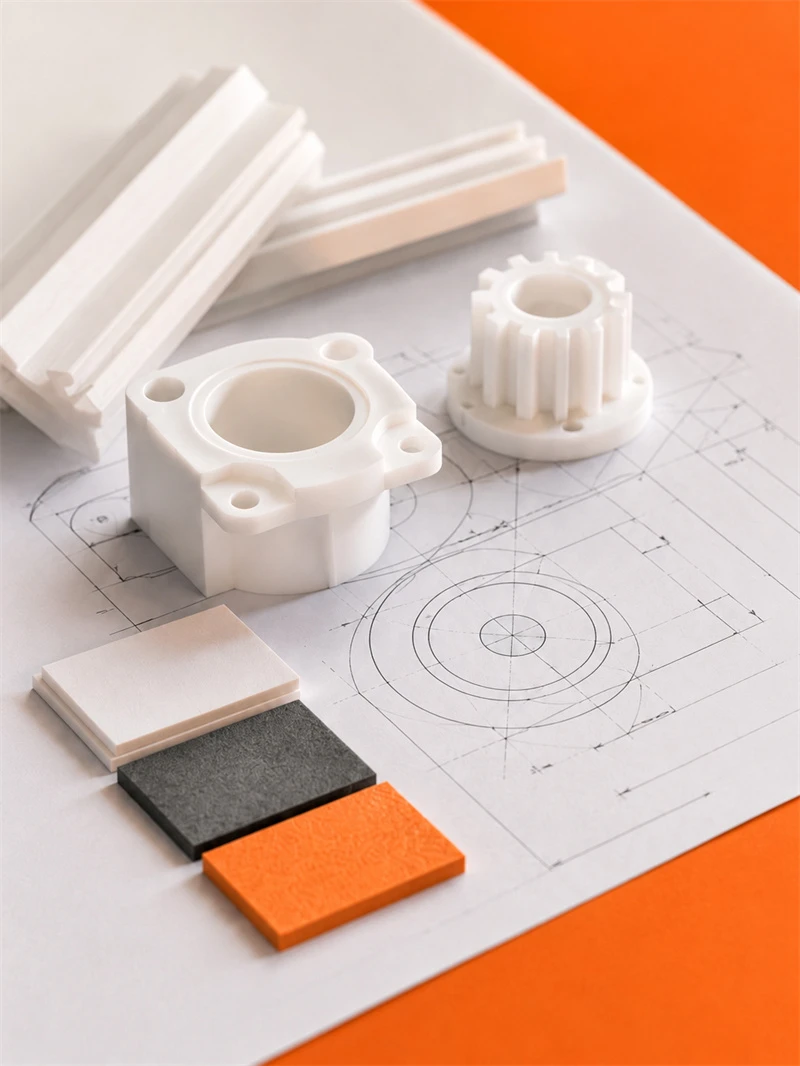
Engineering plastic parts suit friction, guide, support, buffer, anti-corrosion and insulation areas. We supply UHMWPE, POM, PA, PP/PE components for conveyor, food, mining, machinery, chemical and cable systems, with custom OEM service available.
Stay updated with our latest industry insights, company updates and featured articles.
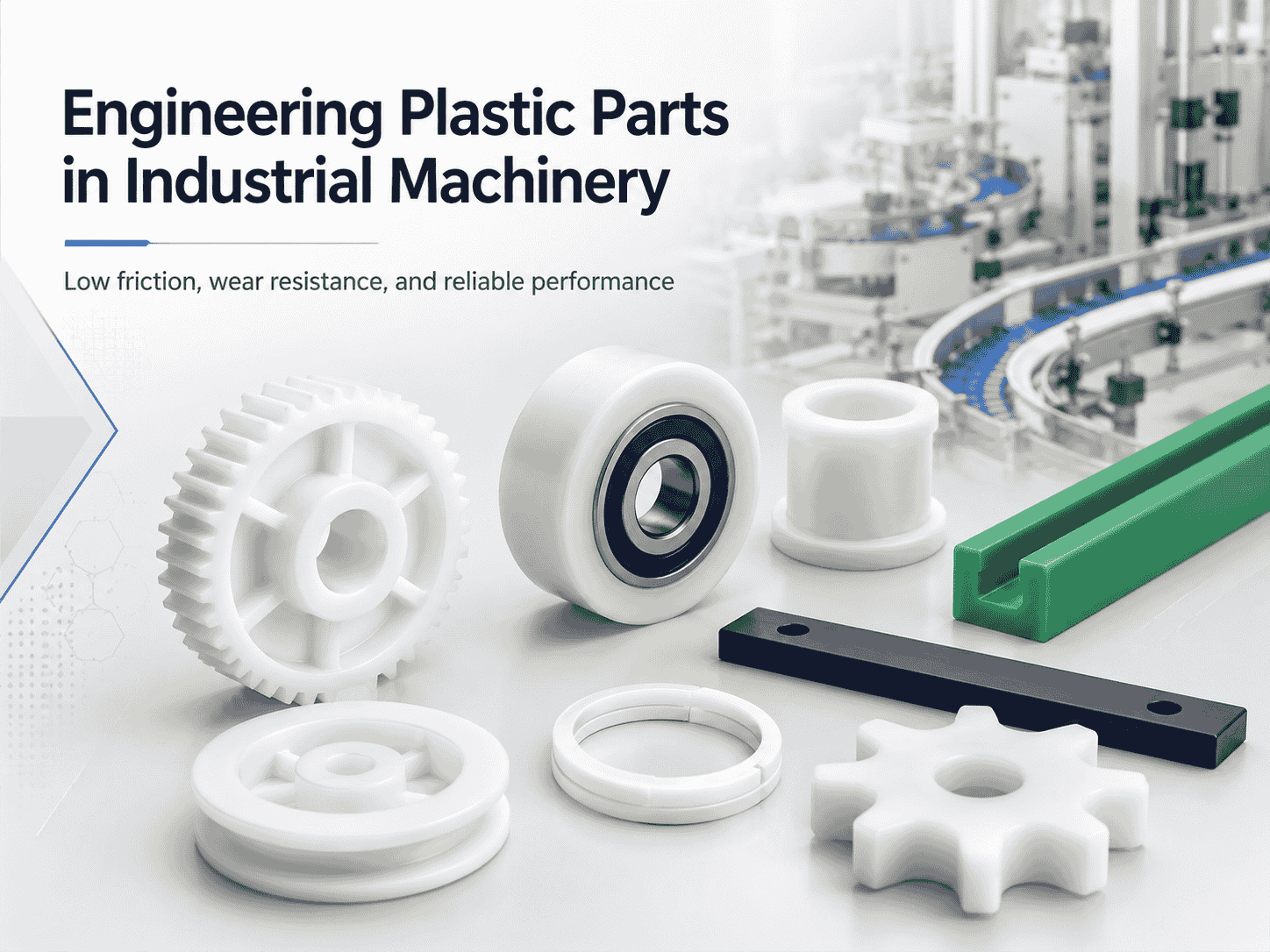
Engineering plastics are increasingly used in industrial machinery, automated production lines, conveyor systems, packaging equipment, and food-processing machines. Materials such as nylon, UHMWPE, POM, and
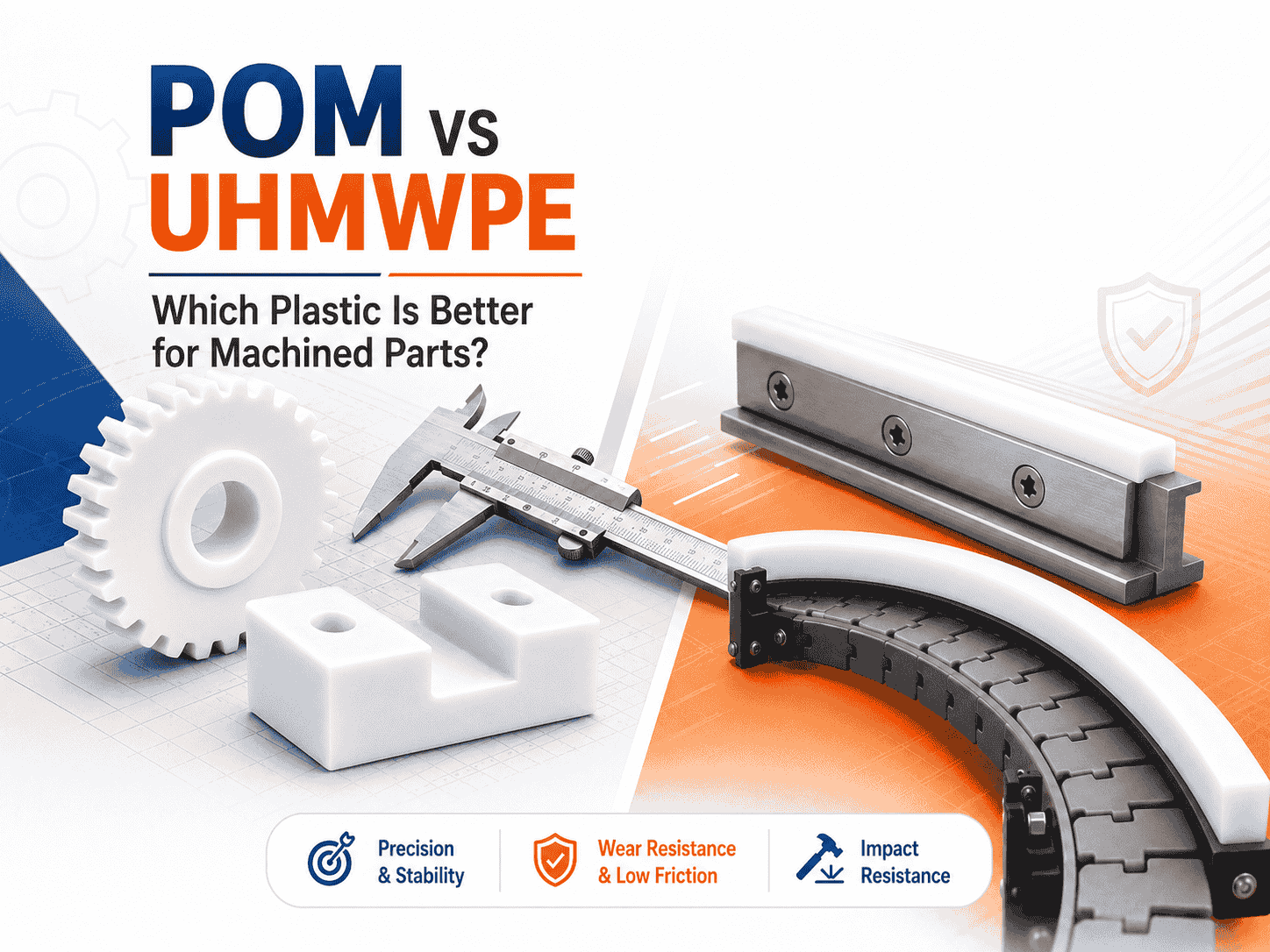
Both are lightweight, corrosion-resistant, wear-resistant, and suitable for CNC machining. However, they perform very differently
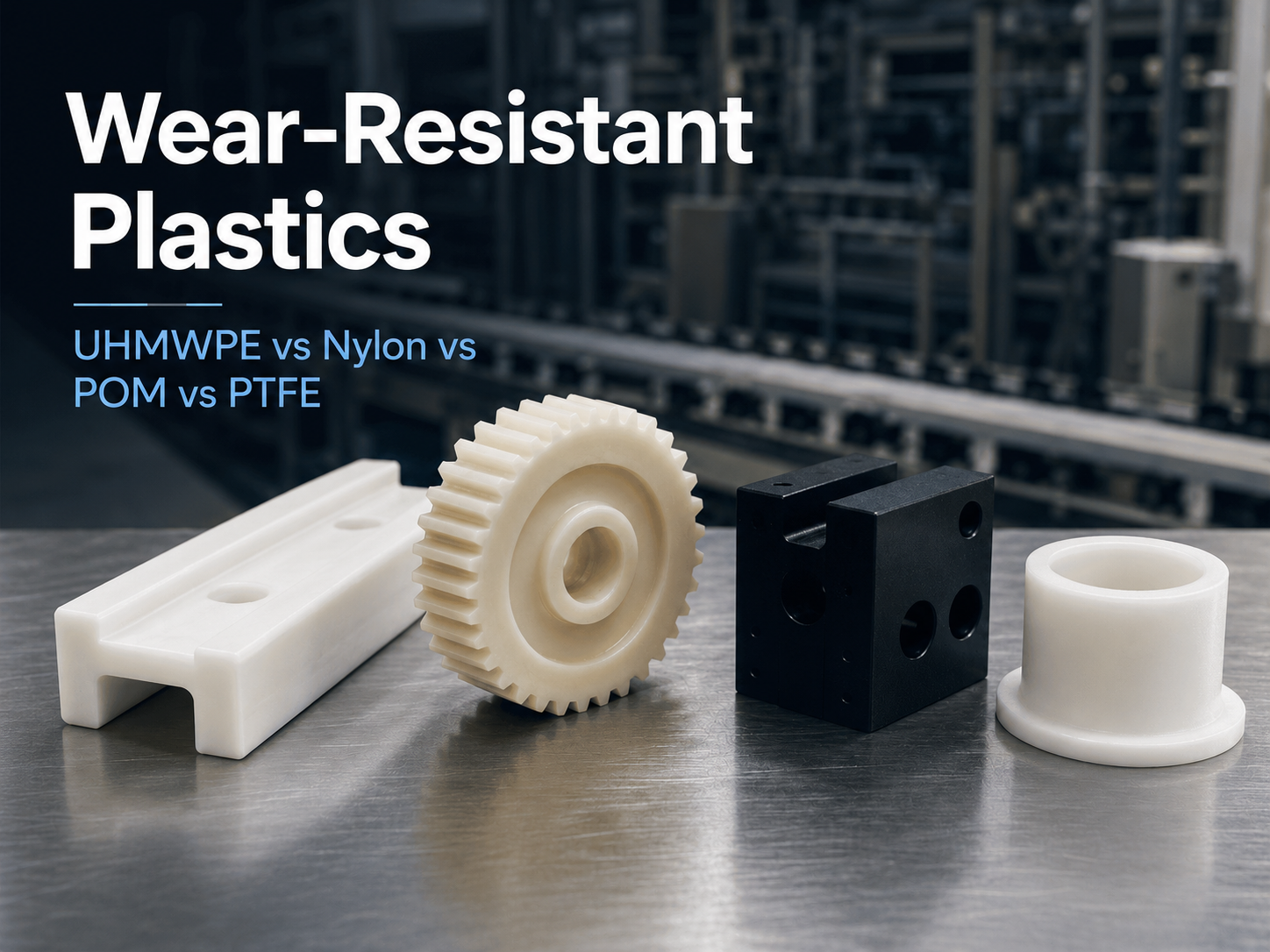
Wear is a common cause of failure in conveyor systems, packaging machinery, automated equipment, mining
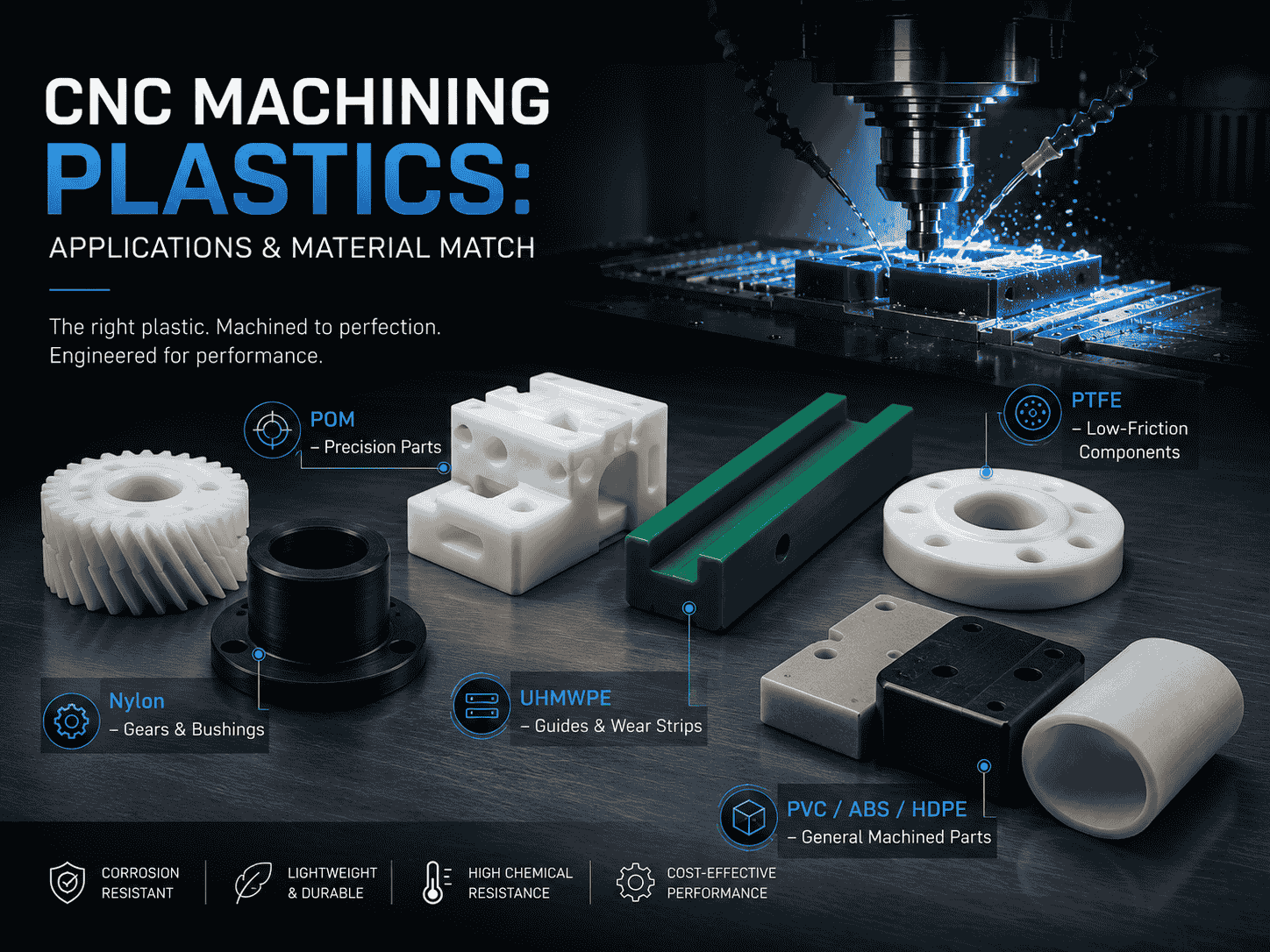
CNC machining is widely used to produce plastic prototypes, low-volume parts, replacement components, jigs, fixtures,
Both are lightweight, corrosion-resistant, wear-resistant, and suitable for CNC machining. However, they perform very differently
Wear is a common cause of failure in conveyor systems, packaging machinery, automated equipment, mining
CNC machining is widely used to produce plastic prototypes, low-volume parts, replacement components, jigs, fixtures,
Need UHMWPE sheets & custom plastic machined/OEM parts?Send specs & material needs, free quote within 24h.