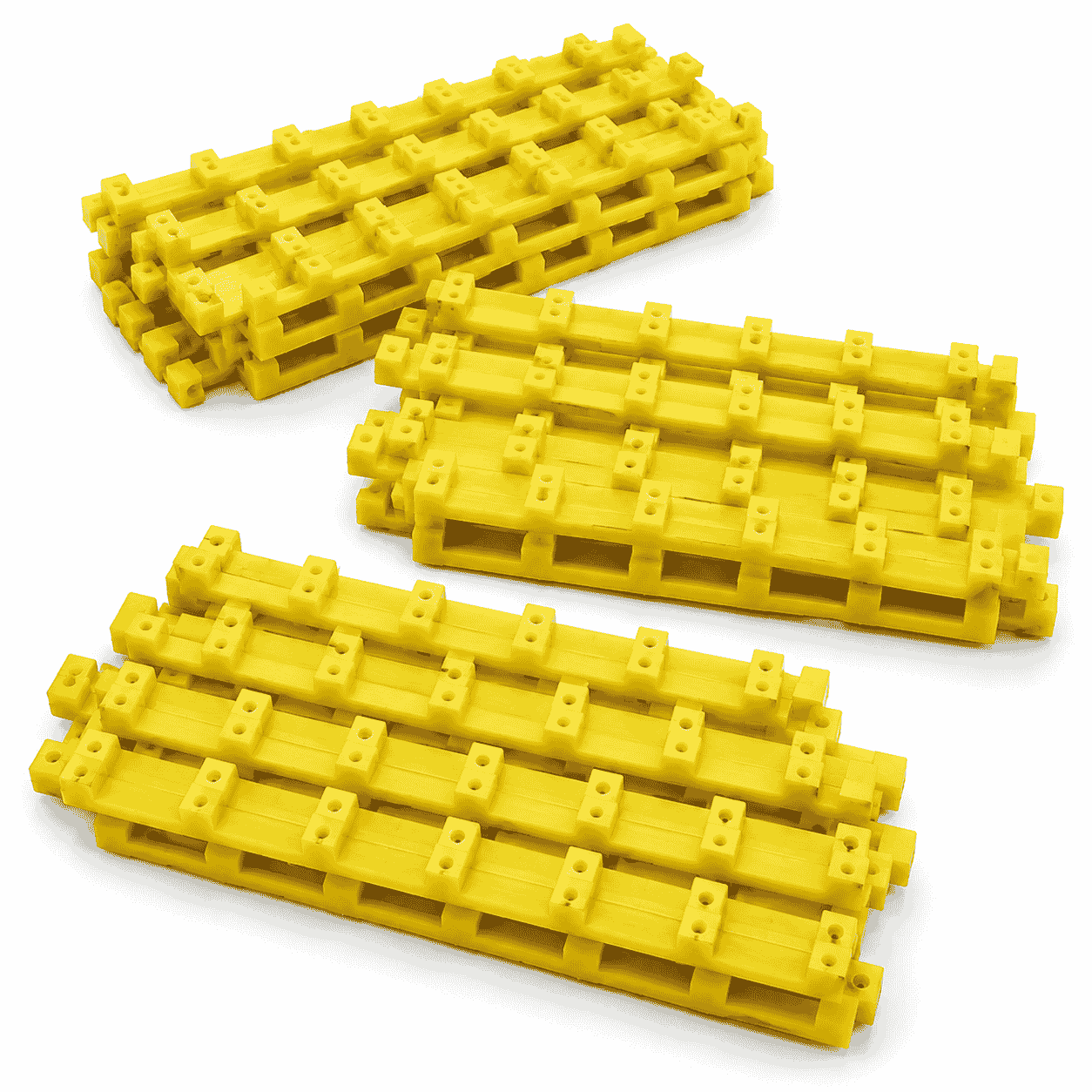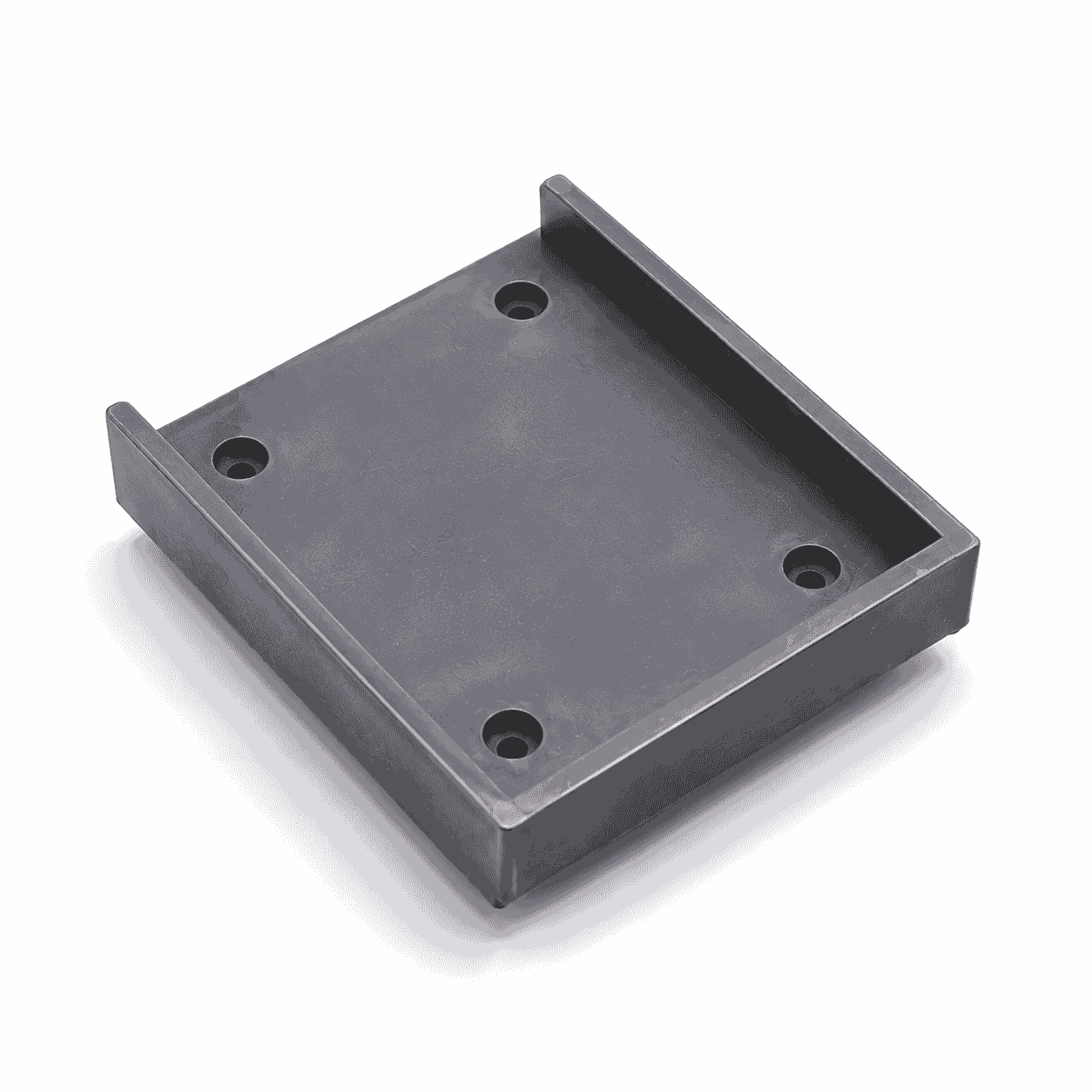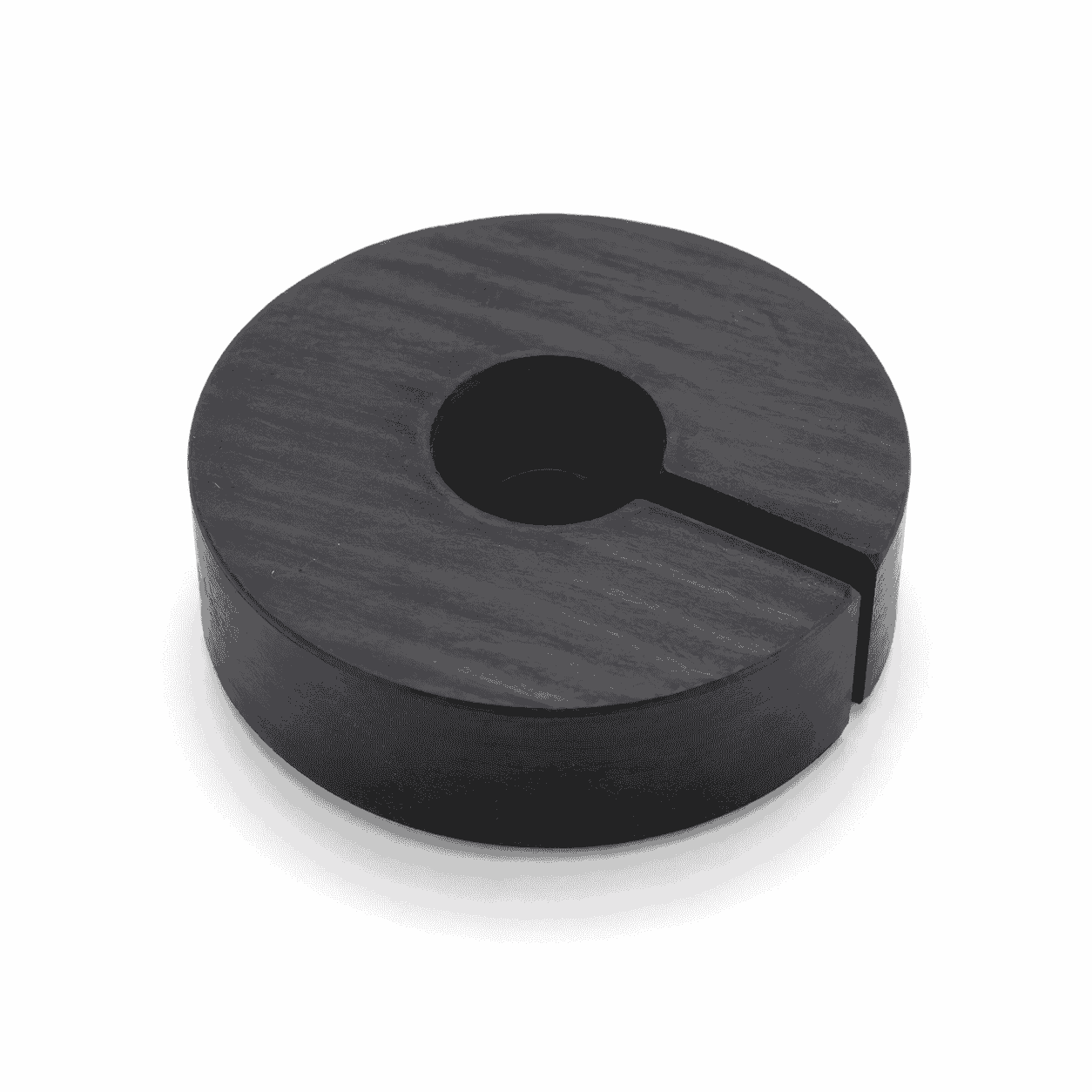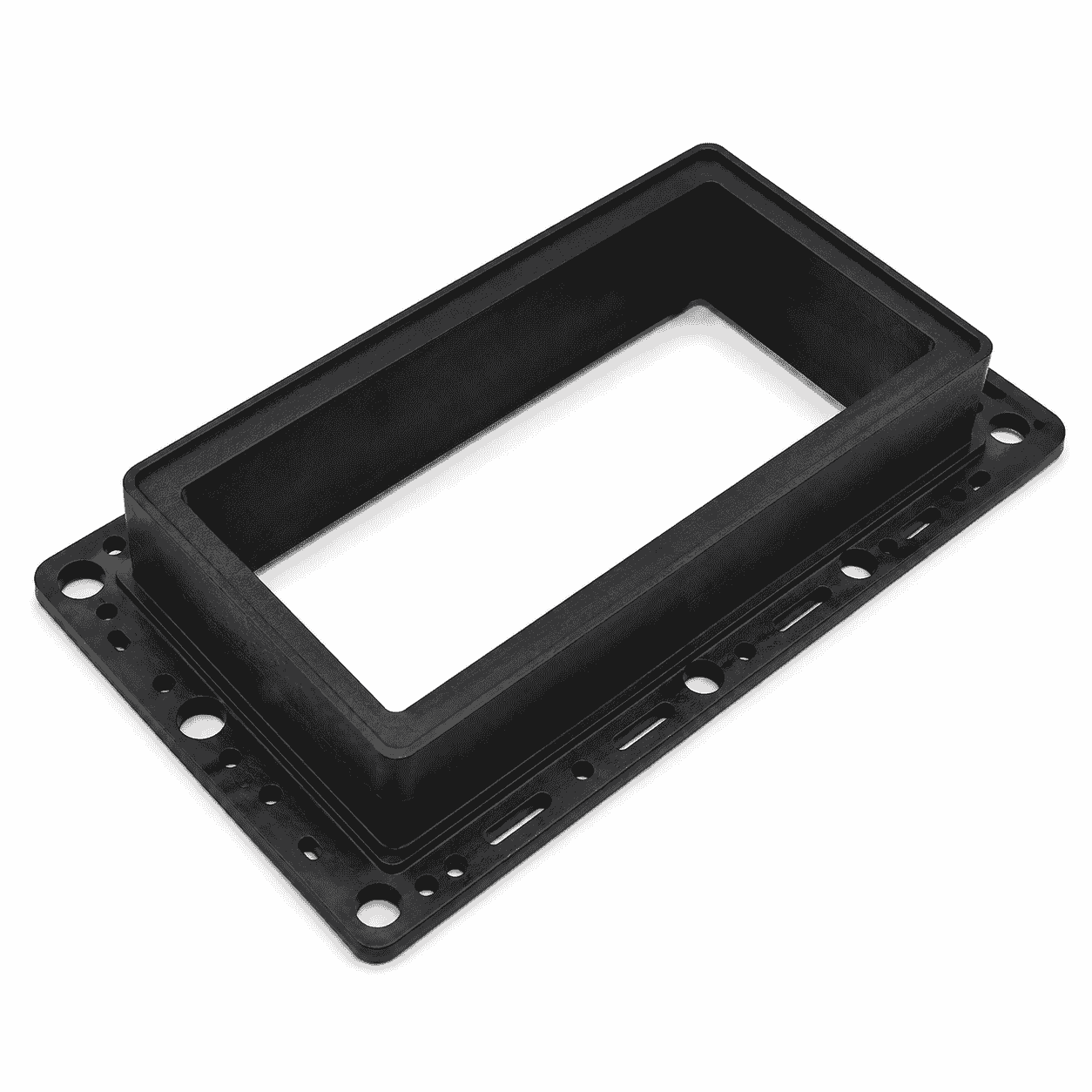


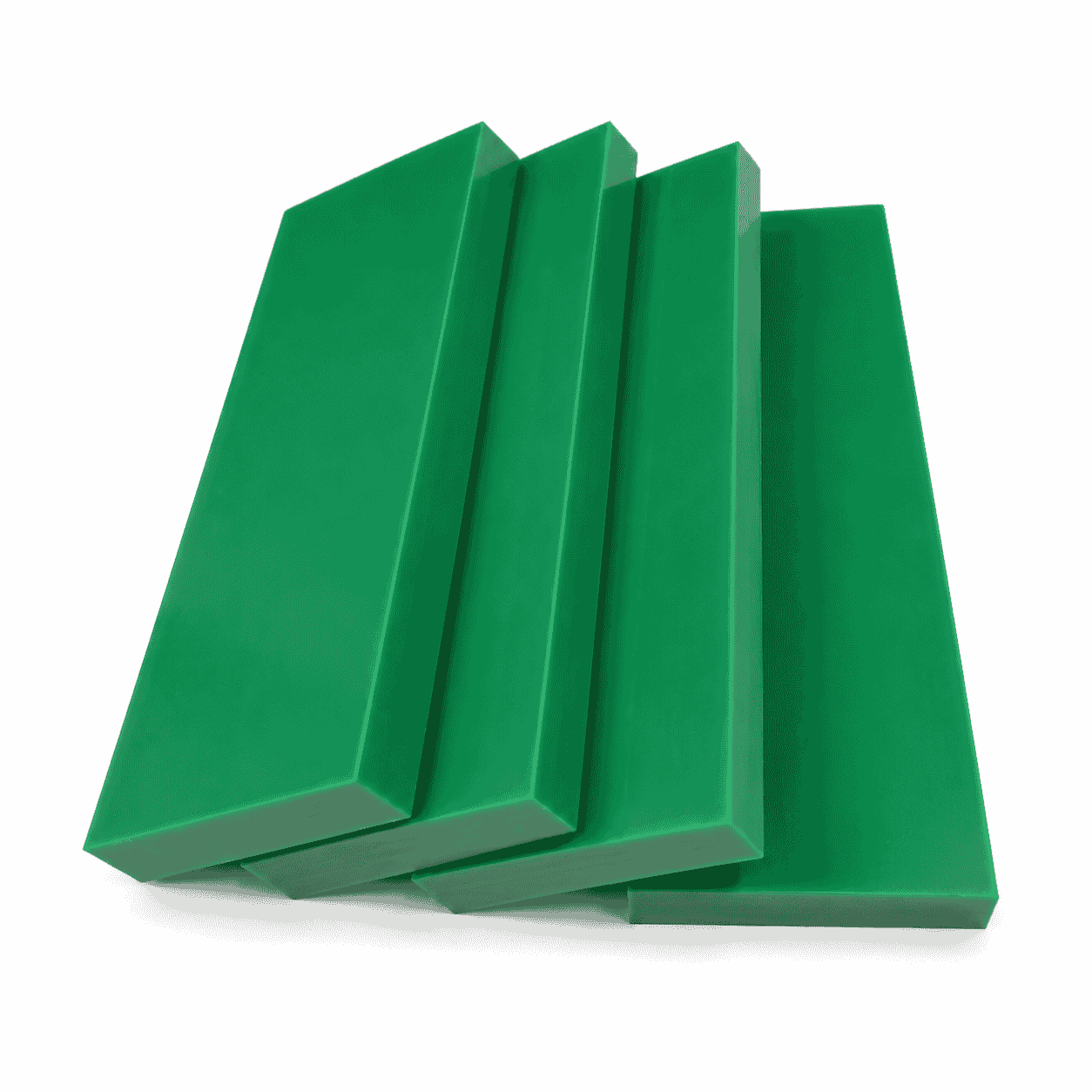
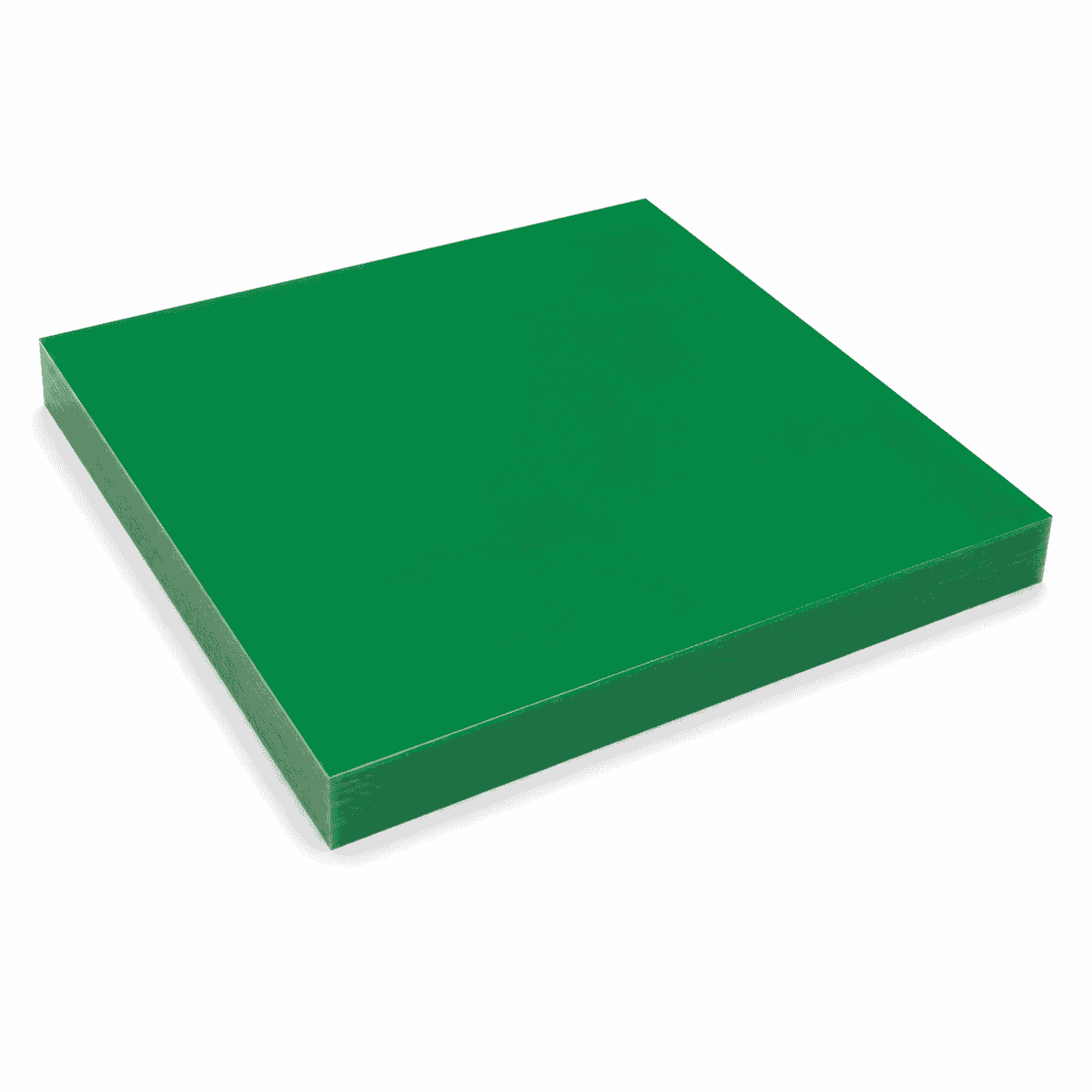
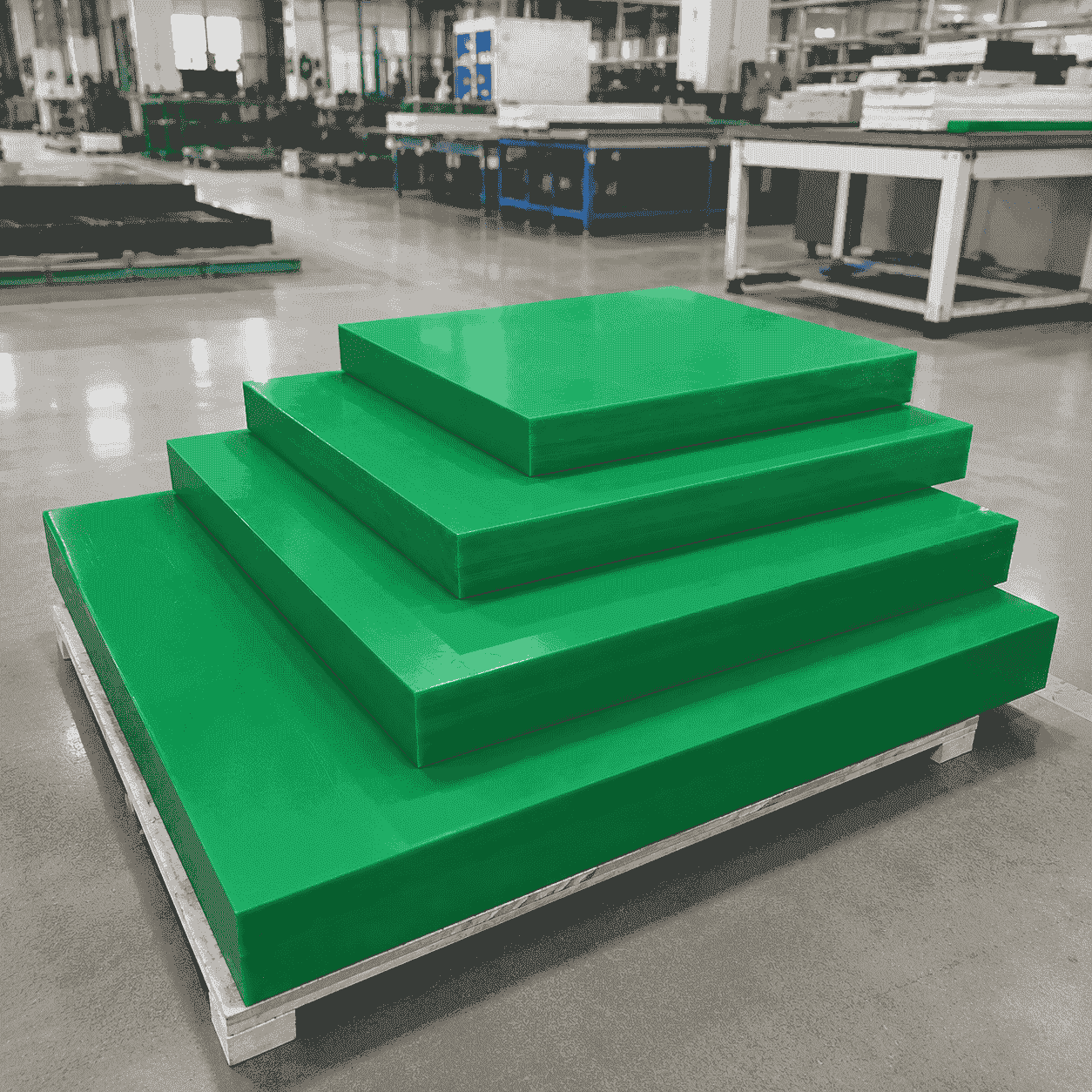
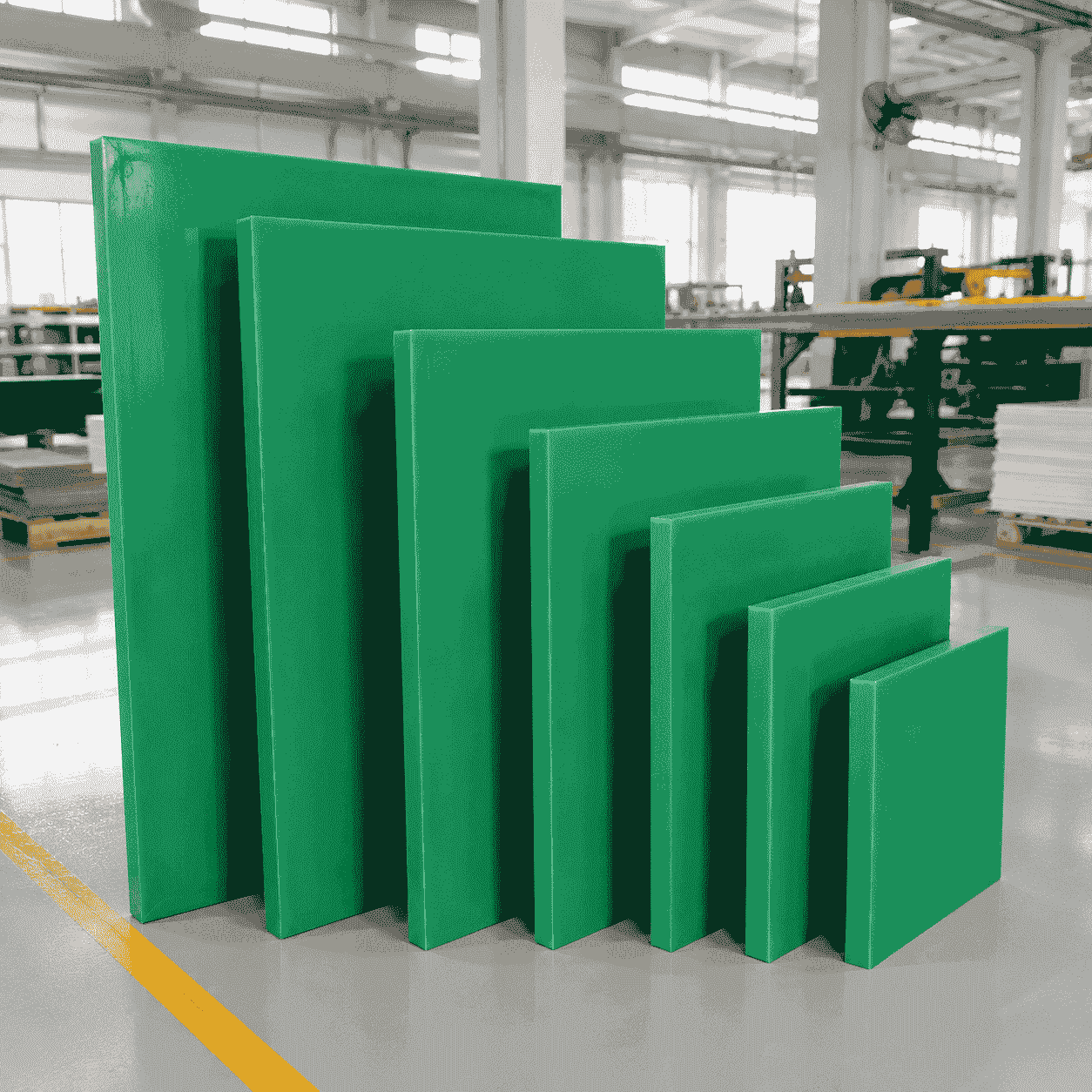
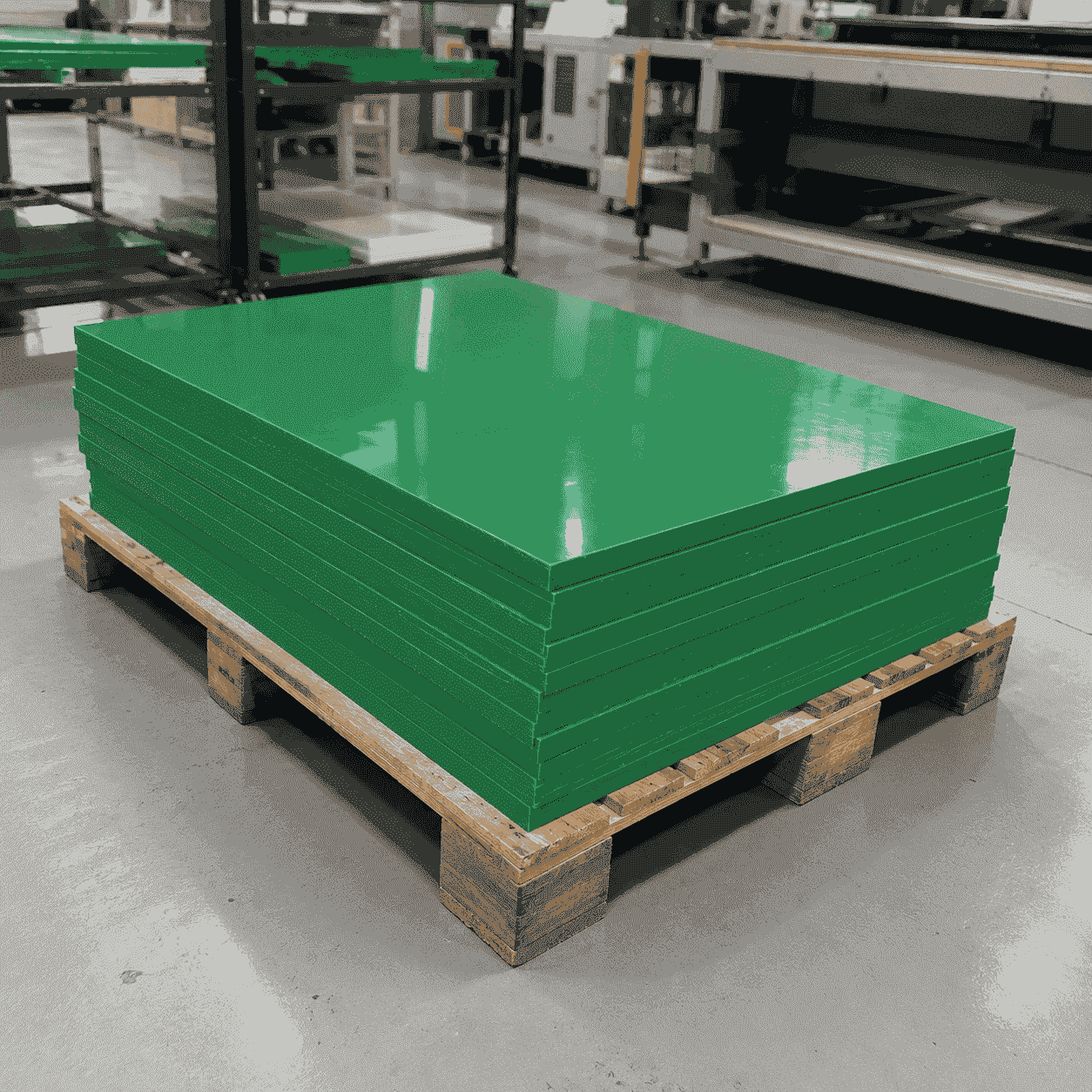
Self-Lubricating Nylon Sheet is a green modified polyamide material developed for sliding, guiding and wear-resistant industrial components. Its friction-reducing formulation helps reduce sliding resistance, operating noise and external lubrication requirements in suitable applications. The supplied size chart contains 23 sheet specifications, including 1000 × 2000 mm panels from 6 mm to 50 mm thick and 600 × 1200 mm panels from 20 mm to 120 mm thick. Full sheets, cut panels and CNC-machined parts can be supplied according to drawings and operating conditions.
Self-Lubricating Nylon Sheet is a green modified polyamide engineering plastic developed for components exposed to sliding, guiding, repeated contact and mechanical wear. It can be supplied as a full-size sheet, cut-to-size panel, machining blank or finished CNC-machined component.
The material is commonly used to manufacture guide plates, sliding blocks, wear strips, chain supports, liners, bearing pads, positioning blocks and other industrial components. Its modified formulation is intended to improve sliding performance and reduce friction compared with ordinary unmodified nylon materials.
Different Self-Lubricating Nylon Sheet grades may use oil additives, solid lubricants or other friction-reducing systems. The exact base polymer, additive type, coefficient of friction, mechanical properties and allowable operating temperature should therefore be confirmed according to the selected material grade.
The green color provides clear visual identification during production, installation and equipment maintenance. However, green color alone does not confirm whether the product is oil-filled, food grade, antistatic, UV resistant or suitable for a particular operating temperature.
Visit our Polyamide PA Nylon Sheet category to learn more about our nylon sheet supply and machining capabilities. You can also review the available Self-Lubricating Nylon Sheet sizes, technical specifications, typical applications and CNC machining services below.
For general material information, visit Wikipedia’s explanation of nylon. Additional background information about this polymer family is available in Wikipedia’s article about polyamide.
The modified formulation of Self-Lubricating Nylon Sheet is designed to improve sliding behavior between the nylon component and a shaft, guide, chain, rail or other mating surface. Reduced friction can support smoother equipment movement and lower operating resistance under suitable conditions.
Actual friction performance depends on the material formulation, mating material, surface finish, applied load, sliding speed, operating temperature and environmental humidity.
Self-Lubricating Nylon Sheet can reduce the amount or frequency of external lubrication required in selected low-speed and medium-speed applications. This is useful for components installed in enclosed positions or areas that are difficult to maintain regularly.
Self-lubricating does not mean that grease or oil is never required. High loads, high speeds, continuous operation or elevated temperatures may still require additional lubrication or a different bearing material.
The material is suitable for components exposed to repeated sliding and mechanical contact. Typical products include wear plates, guides, sliding blocks, chain supports, liners, bearing pads and positioning components.
Correctly designed Self-Lubricating Nylon Sheet parts can reduce direct metal-to-metal contact and help protect rails, shafts, chains and other connected equipment surfaces.
Green Self-Lubricating Nylon Sheet provides a useful balance of mechanical strength, toughness and impact resistance. It is suitable for many industrial components where general-purpose plastics may deform, crack or wear too quickly.
Load capacity depends on sheet thickness, component structure, support spacing, fastening method, operating temperature and whether the load is static, dynamic or intermittent.
Replacing suitable metal guides, wear plates, sliding supports or machine pads with Self-Lubricating Nylon Sheet components can reduce hard contact, operating noise and vibration.
This characteristic is useful in conveyors, packaging machinery, automation equipment, textile machinery and production lines where continuous metal contact creates excessive noise.
Self-Lubricating Nylon Sheet does not rust like ordinary carbon steel. It can therefore be used in humid industrial environments and selected applications where unprotected metal components are affected by moisture.
Chemical compatibility should still be confirmed before the finished component contacts strong acids, strong alkalis, oxidizing chemicals or unusual solvents.
Self-Lubricating Nylon Sheet can be cut, milled, drilled, bored, tapped, slotted, countersunk and machined into complex profiles. It is suitable for individual replacement parts, prototype production and repeat batch orders.
Thick or precision parts may require rough machining, controlled resting, semi-finishing and final precision machining to reduce deformation caused by material removal, clamping force and internal stress.
Dry nylon generally provides useful electrical insulation, allowing selected Self-Lubricating Nylon Sheet grades to be used for insulating supports, separation plates, spacers and mechanical protective components.
Nylon can absorb moisture from the surrounding environment, so electrical and dimensional performance may change under humid conditions. Actual insulation requirements should be confirmed before material selection.
The following specifications are taken from the supplied manufacturable-size chart. The image contains 23 listed Self-Lubricating Nylon Sheet specifications.
The original size labels are written as thickness × width × length. For easier comparison, the tables below have been standardized as length × width × thickness. All dimensions are shown in millimetres.
| Length | Width | Thickness |
|---|---|---|
| 2000 mm | 1000 mm | 6 mm |
| 2000 mm | 1000 mm | 8 mm |
| 2000 mm | 1000 mm | 10 mm |
| 2000 mm | 1000 mm | 12 mm |
| 2000 mm | 1000 mm | 15 mm |
| 2000 mm | 1000 mm | 20 mm |
| 2000 mm | 1000 mm | 25 mm |
| 2000 mm | 1000 mm | 30 mm |
| 2000 mm | 1000 mm | 40 mm |
| 2000 mm | 1000 mm | 50 mm |
| Available Size | Available Size |
|---|---|
| 1200 × 600 × 20 mm | 1200 × 600 × 25 mm |
| 1200 × 600 × 30 mm | 1200 × 600 × 35 mm |
| 1200 × 600 × 40 mm | 1200 × 600 × 50 mm |
| 1200 × 600 × 60 mm | 1200 × 600 × 70 mm |
| 1200 × 600 × 80 mm | 1200 × 600 × 90 mm |
| 1200 × 600 × 100 mm | 1200 × 600 × 110 mm |
| 1200 × 600 × 120 mm | Other dimensions subject to confirmation |
Size summary: The supplied chart includes 10 specifications at 1000 × 2000 mm, with thicknesses of 6, 8, 10, 12, 15, 20, 25, 30, 40 and 50 mm. It also includes 13 specifications at 600 × 1200 mm, with thicknesses of 20, 25, 30, 35, 40, 50, 60, 70, 80, 90, 100, 110 and 120 mm. This gives a total of 23 listed dimensions.
The listed dimensions are manufacturing or cutting references rather than guaranteed inventory. Actual material grade, surface condition, stock status, quantity and production time should be confirmed before ordering.
For finished CNC-machined components, the raw Self-Lubricating Nylon Sheet should normally be larger than the final part. Suitable machining allowance is required for cutting, clamping, surface cleaning, rough machining and final finishing.
| Item | Typical Specification |
|---|---|
| Product name | Green Self-Lubricating Nylon Sheet |
| Material family | Modified polyamide / nylon engineering plastic |
| Color | Green |
| Listed number of sizes | 23 sheet specifications |
| Listed sheet formats | 1000 × 2000 mm and 600 × 1200 mm |
| Overall listed thickness range | 6–120 mm |
| 1000 × 2000 mm thickness range | 6–50 mm |
| 600 × 1200 mm thickness range | 20–120 mm |
| Supply form | Full sheet, cut panel, machining blank or finished CNC-machined component |
| Available processing | Cutting, milling, drilling, boring, tapping, slotting, countersinking and contour machining |
| Surface condition | As-molded, cut or machined surface according to order requirements |
| Special formulation | Self-lubricating additive system confirmed according to the selected material grade |
| Dimensional tolerance | Confirmed according to sheet dimensions, thickness, material condition and machining drawing |
| Final suitability | Depends on load, speed, temperature, humidity, mating material and chemical exposure |
Technical note: The coefficient of friction, wear rate, mechanical strength, density and allowable operating temperature can vary significantly between different Self-Lubricating Nylon Sheet grades. These values should be confirmed through the applicable technical data sheet or agreed material specification.
Self-Lubricating Nylon Sheet can be machined into equipment guide plates, side guides, guide rails and positioning surfaces. Its sliding characteristics help reduce friction between moving components and support smoother equipment movement.
Thick Self-Lubricating Nylon Sheet can be processed into sliders, support blocks, adjustment blocks and reciprocating guide components.
Installation clearance should be selected according to load, movement distance, operating temperature, humidity and the mating surface.
The sheet is suitable for wear plates, pressure pads, support pads and equipment-protection components. Self-Lubricating Nylon Sheet can separate moving metal parts and help reduce wear on the more expensive equipment structure.
Typical conveyor applications include chain supports, chain guides, side guides, wear strips and transfer plates. Reduced sliding friction can help lower chain resistance and operating noise.
Thick Self-Lubricating Nylon Sheet blanks can be machined into square bearing pads, bushings, guide sleeves and support seats. Proper running clearance and wall thickness should be determined according to the shaft, load and operating environment.
Suitable sheet or block material can be machined into rollers, guide wheels and positioning wheels. For predominantly cylindrical parts, nylon rod or cast block may provide a more efficient raw-material form.
Self-Lubricating Nylon Sheet can be used for fixture plates, guide components, positioning blocks, adjustment parts, equipment supports and protective components in packaging and automated production machinery.
The material can be used for guide plates, wear supports, sliders and machine components exposed to repeated movement. Its lower contact noise and corrosion-free structure are useful in continuously operating equipment.
Finished Self-Lubricating Nylon Sheet components can be manufactured when an original metal or ordinary plastic part is worn, noisy, corroded or difficult to obtain. Production can be based on drawings, samples or measured installation dimensions.
Standard nylon already provides useful mechanical strength, wear resistance and sliding performance. Self-Lubricating Nylon Sheet incorporates a friction-reducing additive system intended to improve sliding behavior or reduce external lubrication requirements.
The performance difference depends on the base resin, additive type and additive content. A material should therefore be selected according to its technical grade rather than green color alone.
Modified nylon generally provides good toughness, wear resistance, vibration damping and load-bearing capability for guides, wear plates, rollers and mechanical supports.
POM normally absorbs less moisture and may provide better dimensional stability in some precision sliding, positioning and close-fitting applications. Material selection should consider humidity, tolerance, load, speed, friction and operating temperature.
Self-Lubricating Nylon Sheet is hygroscopic and can absorb moisture from the surrounding environment. Moisture may improve toughness but can also affect dimensions, rigidity and electrical properties.
The following factors should be reviewed for precision-machined parts:
For components requiring close tolerances, the material condition, machining environment and final inspection method should be agreed before production.
Green Self-Lubricating Nylon Sheet can be supplied as a full panel, cut blank or finished component manufactured according to two-dimensional drawings, three-dimensional models, physical samples or installation measurements.
Available machining processes include:
For thick or heavily machined components, production may include blank cutting, rough machining, controlled resting, semi-finishing and final precision machining. This process can help reduce deformation and improve dimensional consistency.
The selected raw sheet should normally be larger and thicker than the finished component. Sufficient allowance is required for cutting, clamping, surface cleaning and finish machining.
Please provide the following information before production:
The supplied chart contains 23 listed specifications. This includes 10 sizes at 1000 × 2000 mm and 13 sizes at 600 × 1200 mm.
The complete chart covers thicknesses from 6 mm to 120 mm. The available thickness range varies according to sheet length and width.
Yes. It can be machined into guide plates, sliders, wear pads, chain supports, bushings, positioning blocks and other industrial components.
No. A self-lubricating material can reduce lubrication requirements, but additional lubrication may still be necessary under high load, high speed, elevated temperature or continuous operation.
No. Green is a visual identifier and does not independently confirm the base polymer, lubricant type, food-contact status, UV resistance or electrical properties.
Yes. Moisture absorption can affect the dimensions, rigidity and electrical performance of finished nylon components.
Yes. Full sheets, cut blanks and CNC-machined components can be supplied according to drawings, models, physical samples or measured installation dimensions.
No. The chart represents manufacturable or selectable dimensions. Actual stock, material grade, quantity and production schedule should be confirmed before ordering.
Other dimensions can be evaluated according to the required material grade, thickness, quantity, machining process and finished-part drawing.
Check drawings for full specifications and confirm materials according to service conditions to prevent product defects.
Inspect all key processing steps and fully verify dimensions, holes, grooves and fitting surfaces.
Deburr, chamfer and clean products for easy installation. Ensure uniform quality among batch products.
Choose appropriate packaging solutions based on product features to protect goods from collision, deformation and mixing during transit.
Unlike metal parts, engineering plastic components still require strict control over dimensions, holes, edges, surface, materials and assembly performance for equipment use.
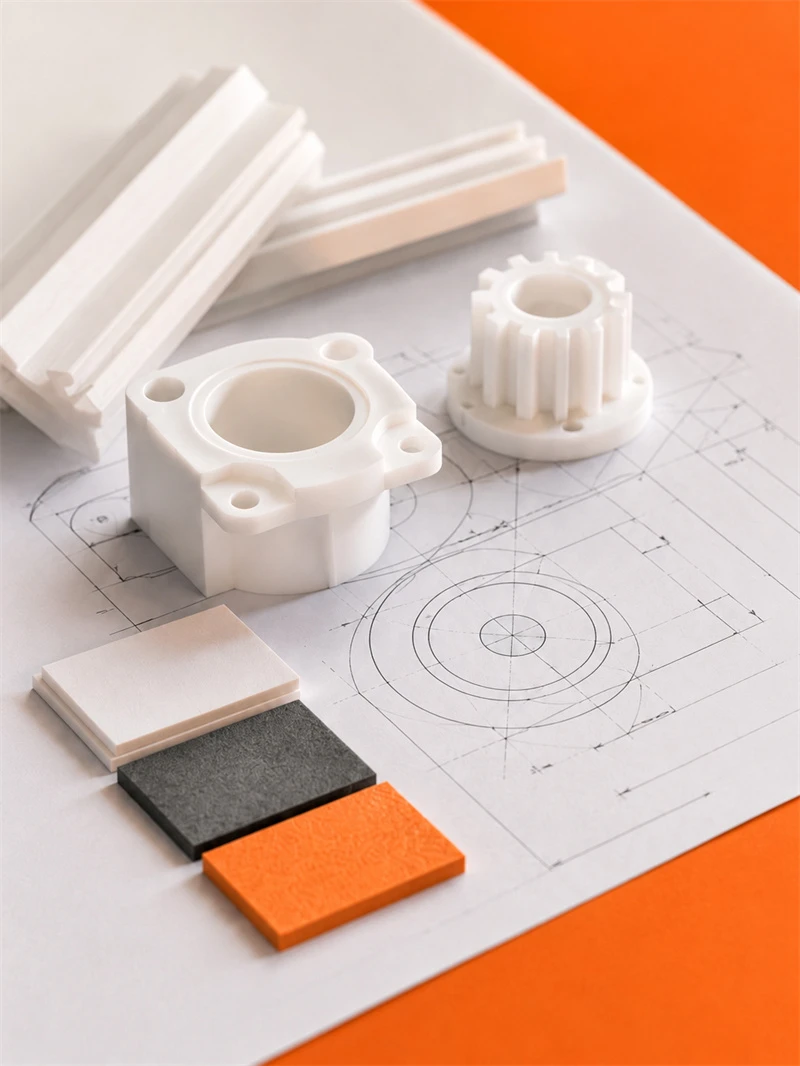
Engineering plastic parts suit friction, guide, support, buffer, anti-corrosion and insulation areas. We supply UHMWPE, POM, PA, PP/PE components for conveyor, food, mining, machinery, chemical and cable systems, with custom OEM service available.
Stay updated with our latest industry insights, company updates and featured articles.
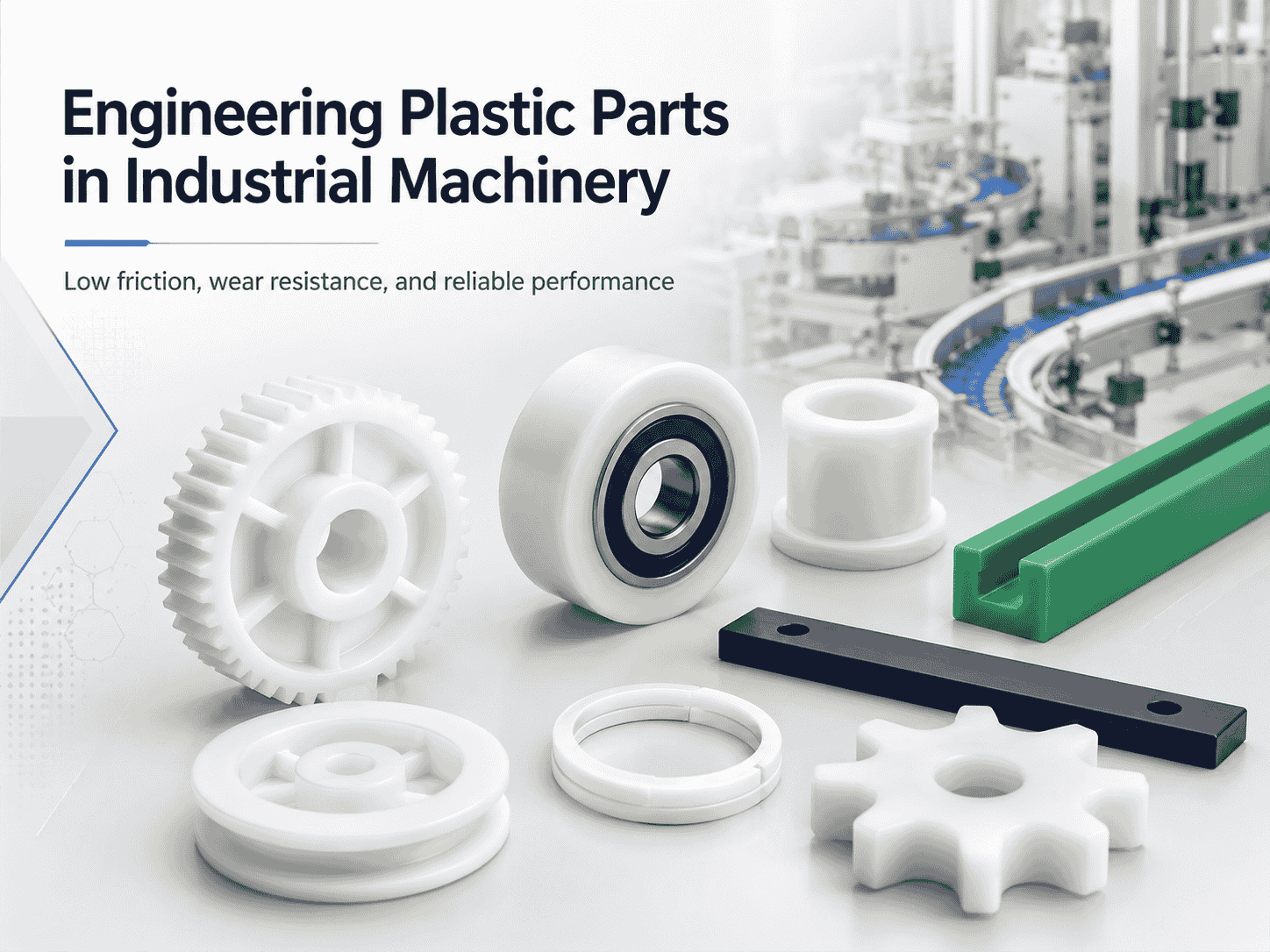
Engineering plastics are increasingly used in industrial machinery, automated production lines, conveyor systems, packaging equipment, and food-processing machines. Materials such as nylon, UHMWPE, POM, and
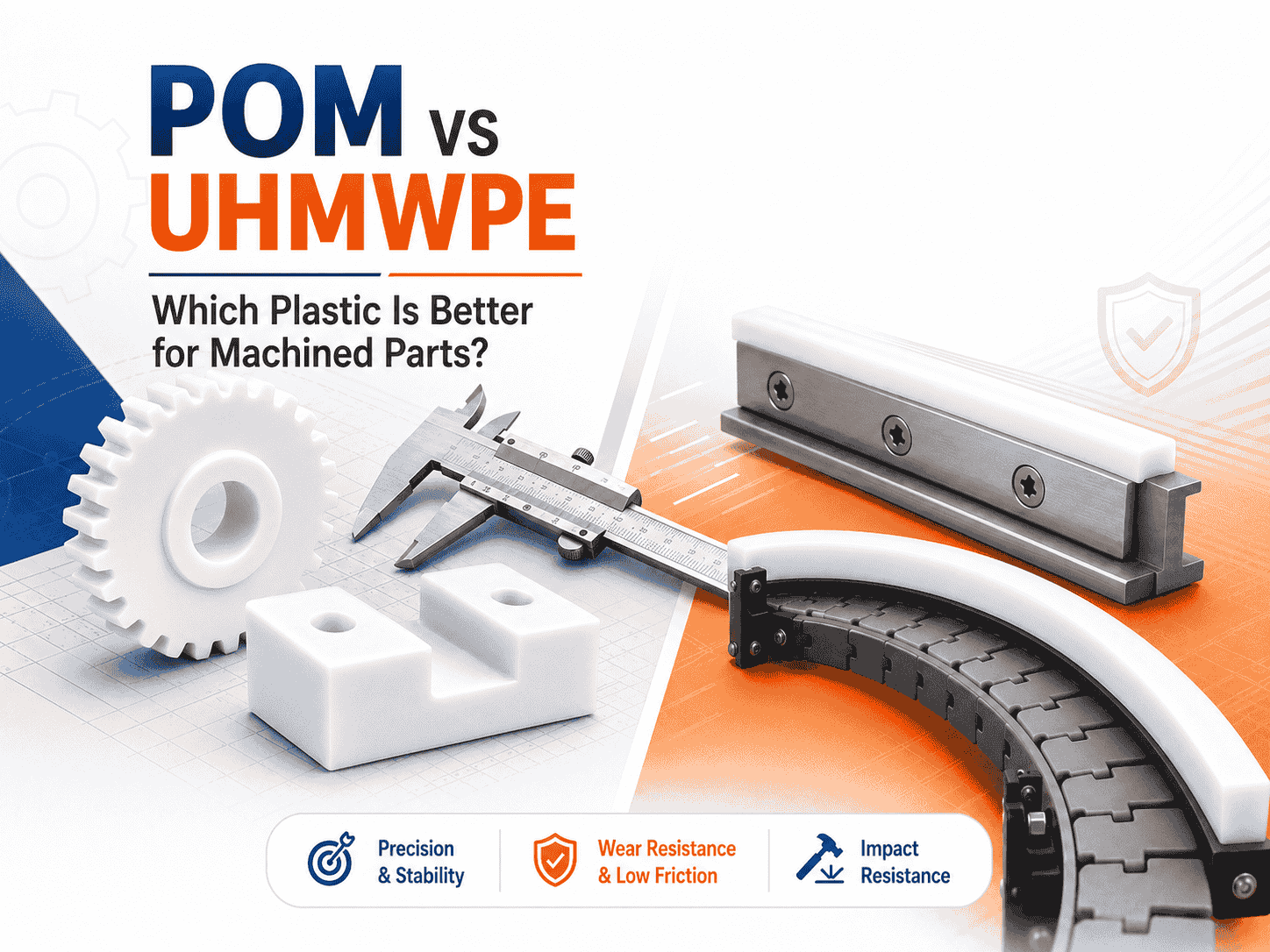
Both are lightweight, corrosion-resistant, wear-resistant, and suitable for CNC machining. However, they perform very differently
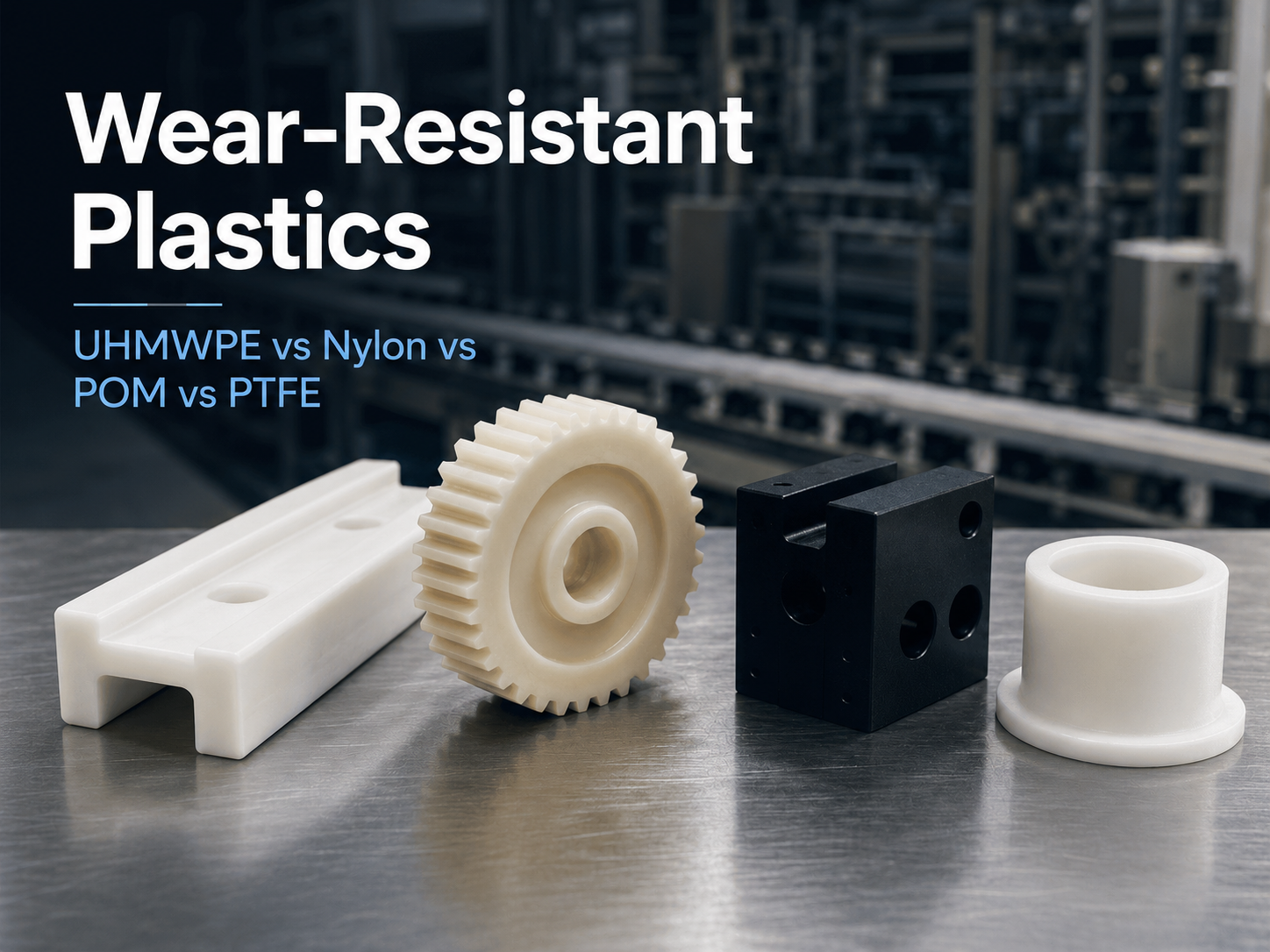
Wear is a common cause of failure in conveyor systems, packaging machinery, automated equipment, mining
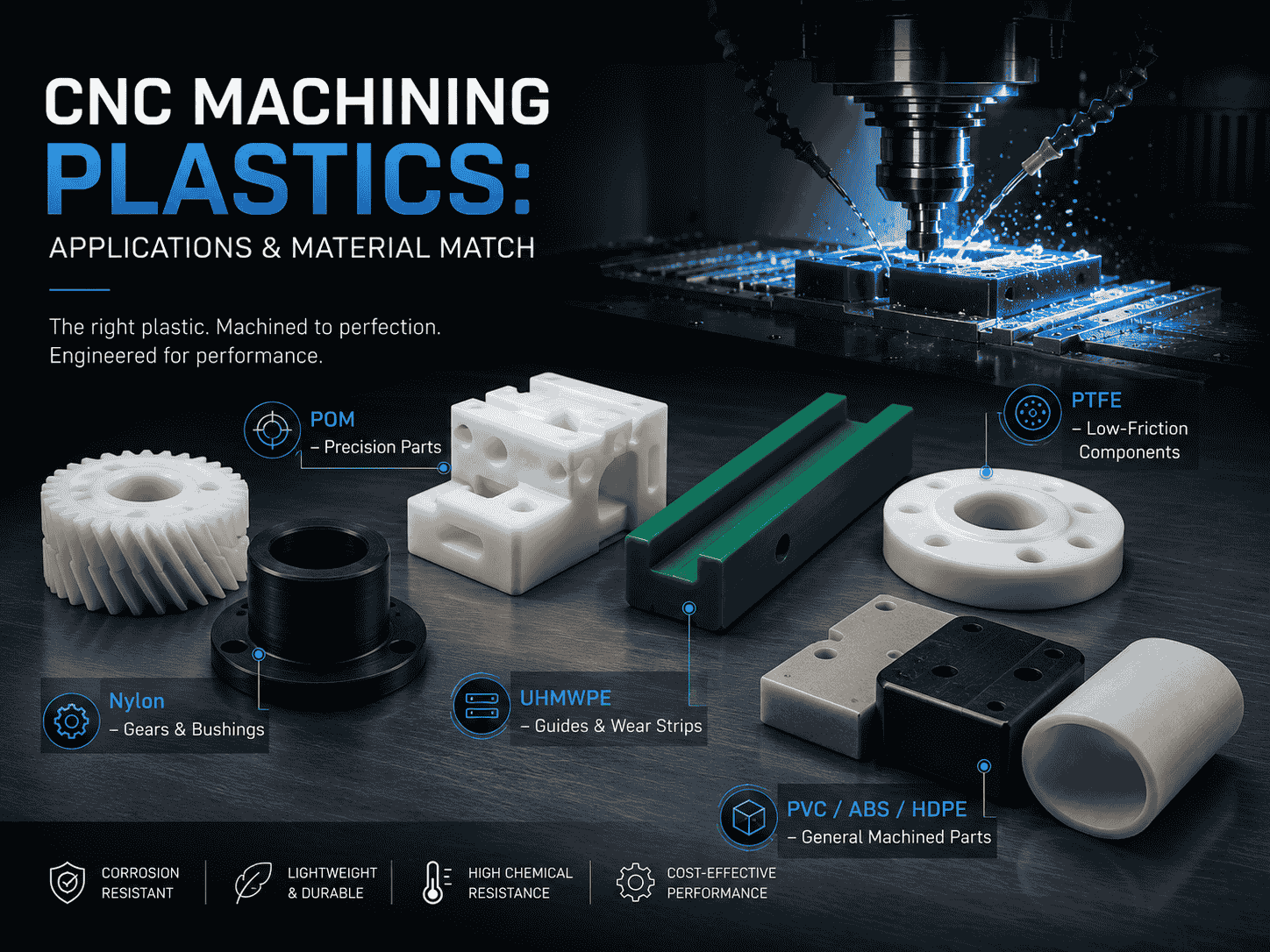
CNC machining is widely used to produce plastic prototypes, low-volume parts, replacement components, jigs, fixtures,
Both are lightweight, corrosion-resistant, wear-resistant, and suitable for CNC machining. However, they perform very differently
Wear is a common cause of failure in conveyor systems, packaging machinery, automated equipment, mining
CNC machining is widely used to produce plastic prototypes, low-volume parts, replacement components, jigs, fixtures,
Need UHMWPE sheets & custom plastic machined/OEM parts?Send specs & material needs, free quote within 24h.