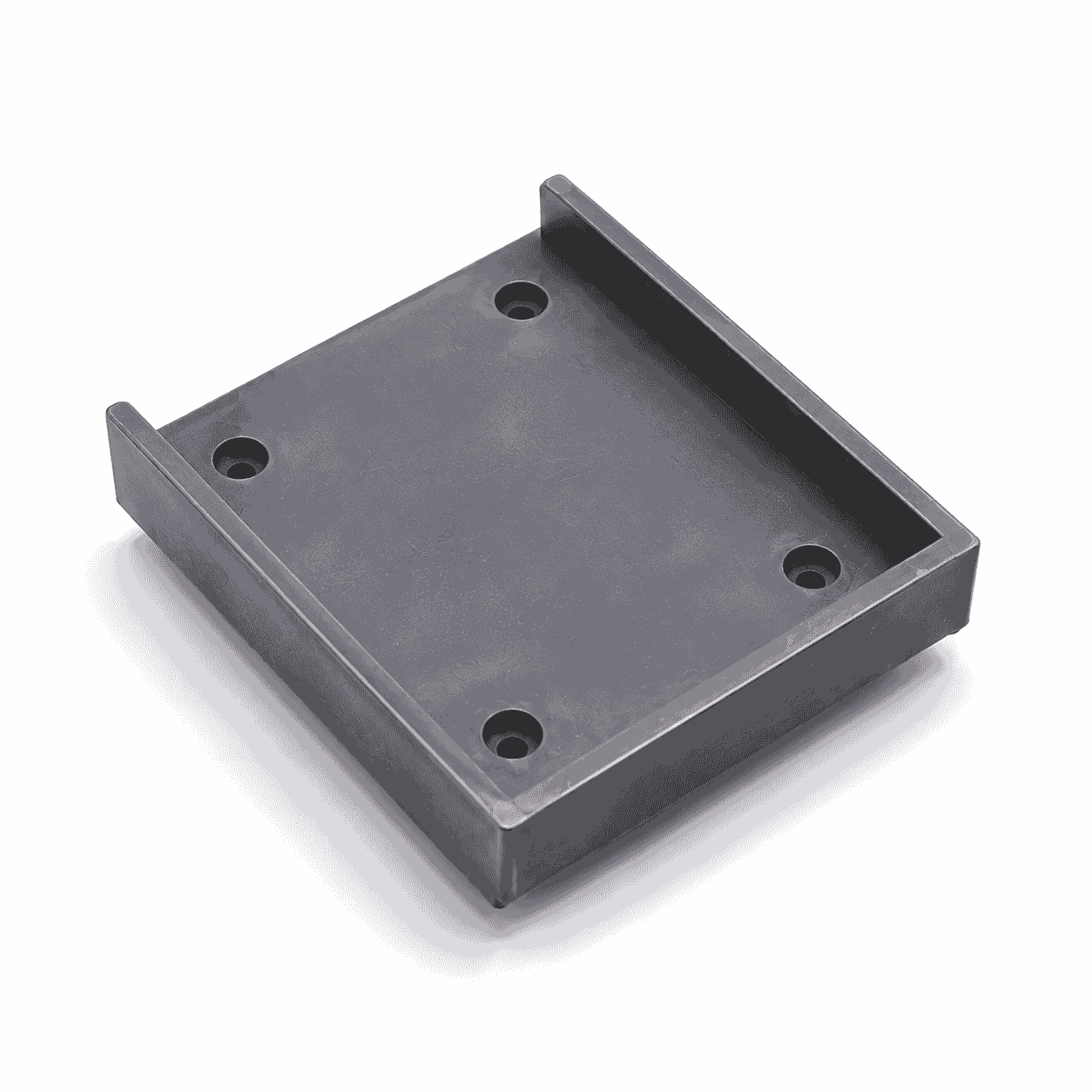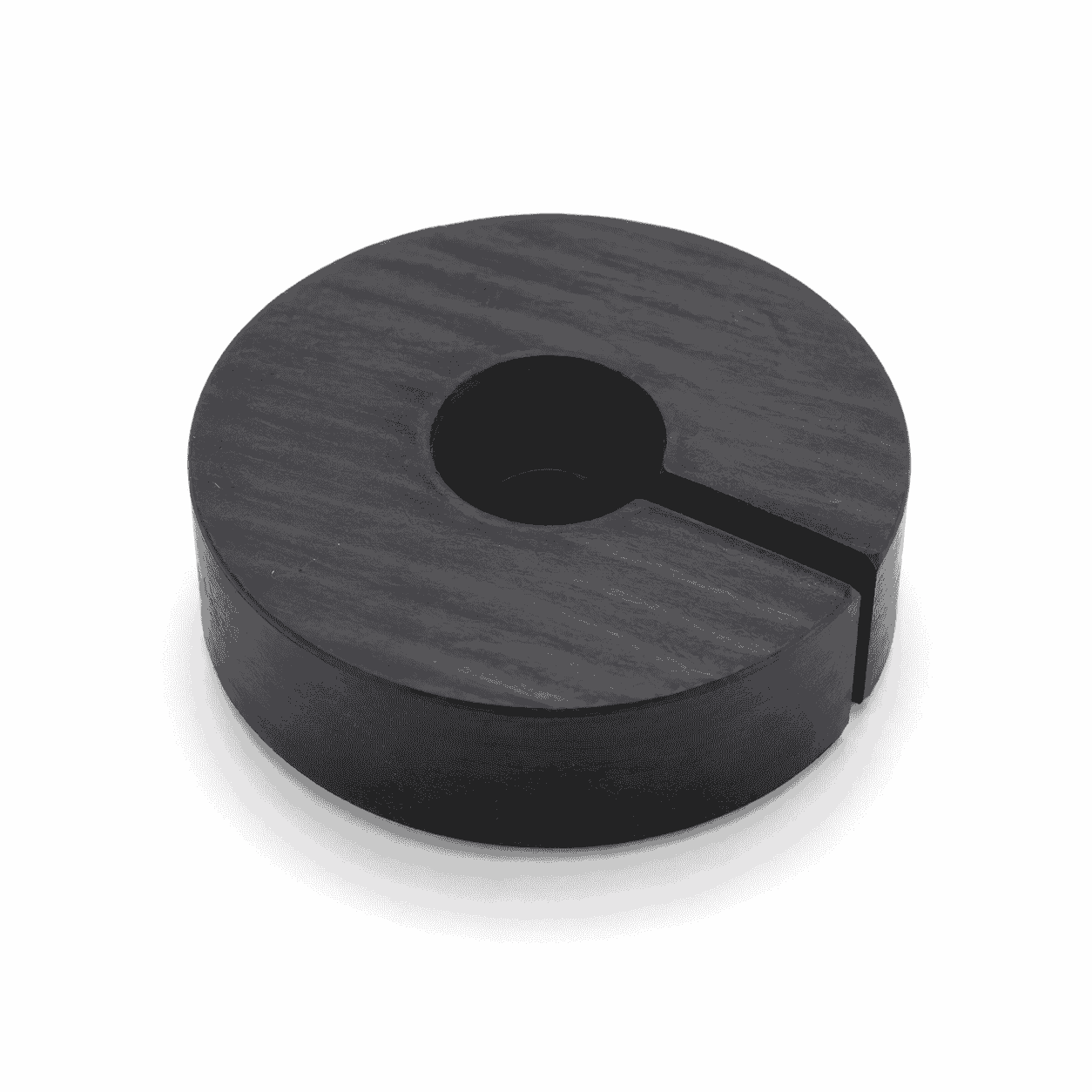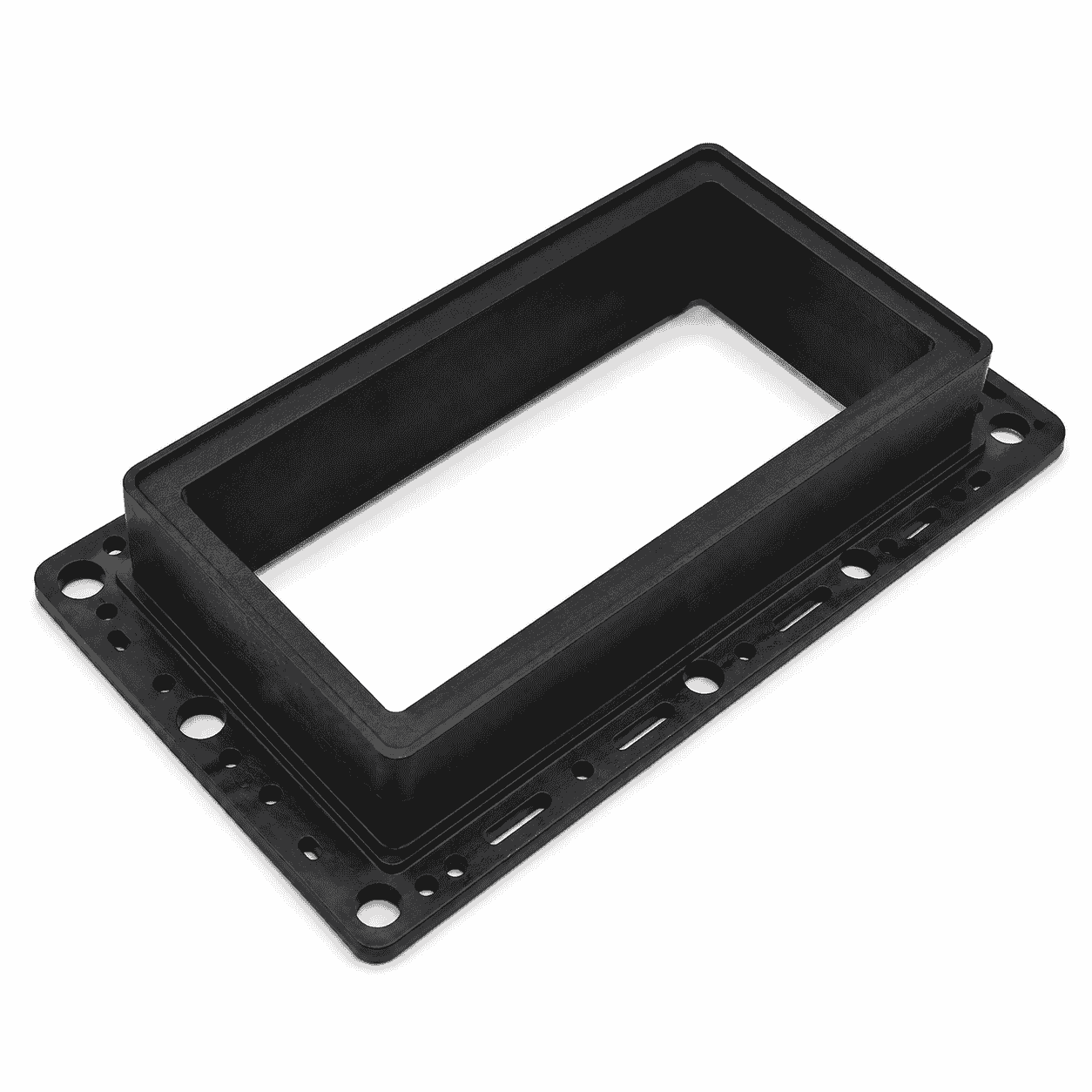


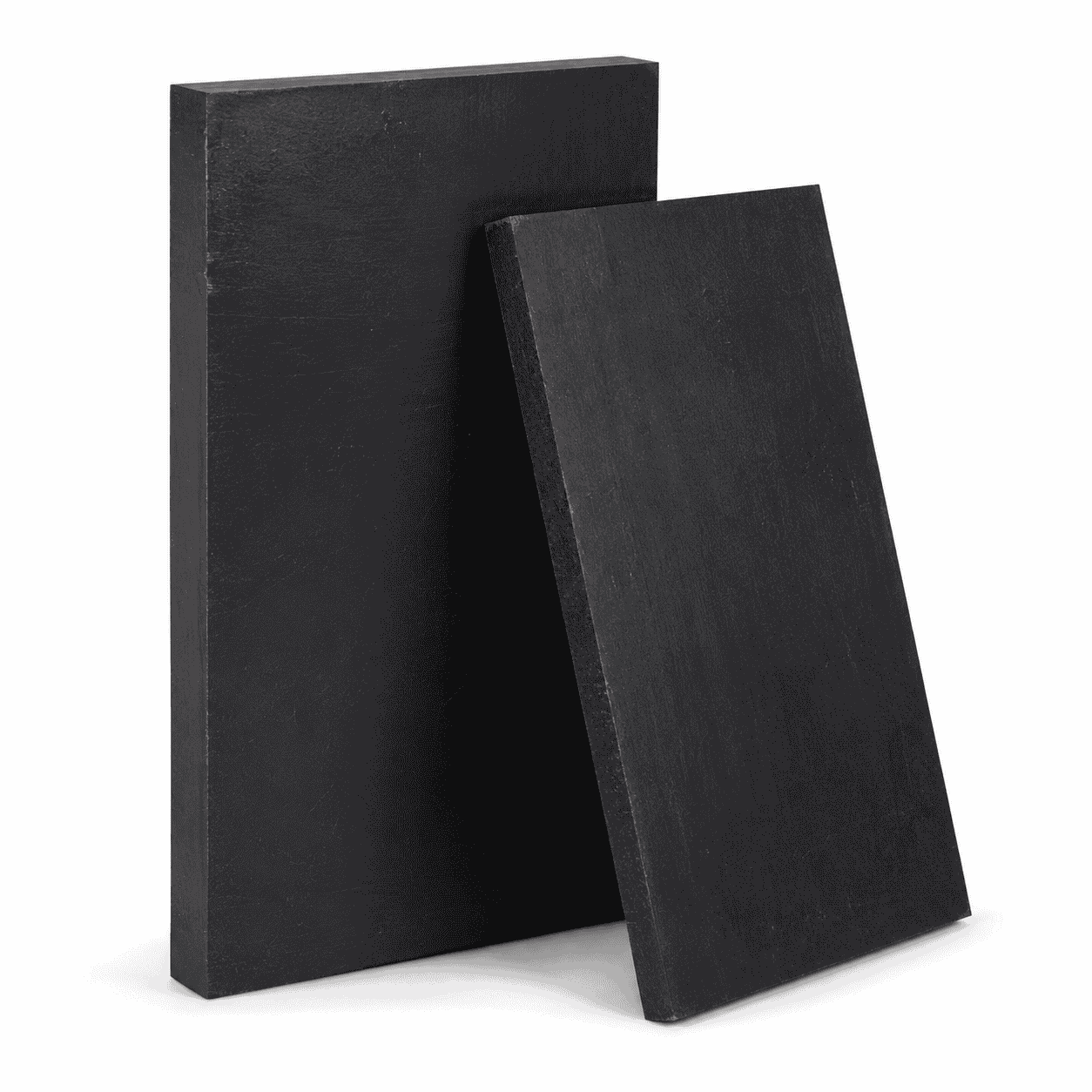
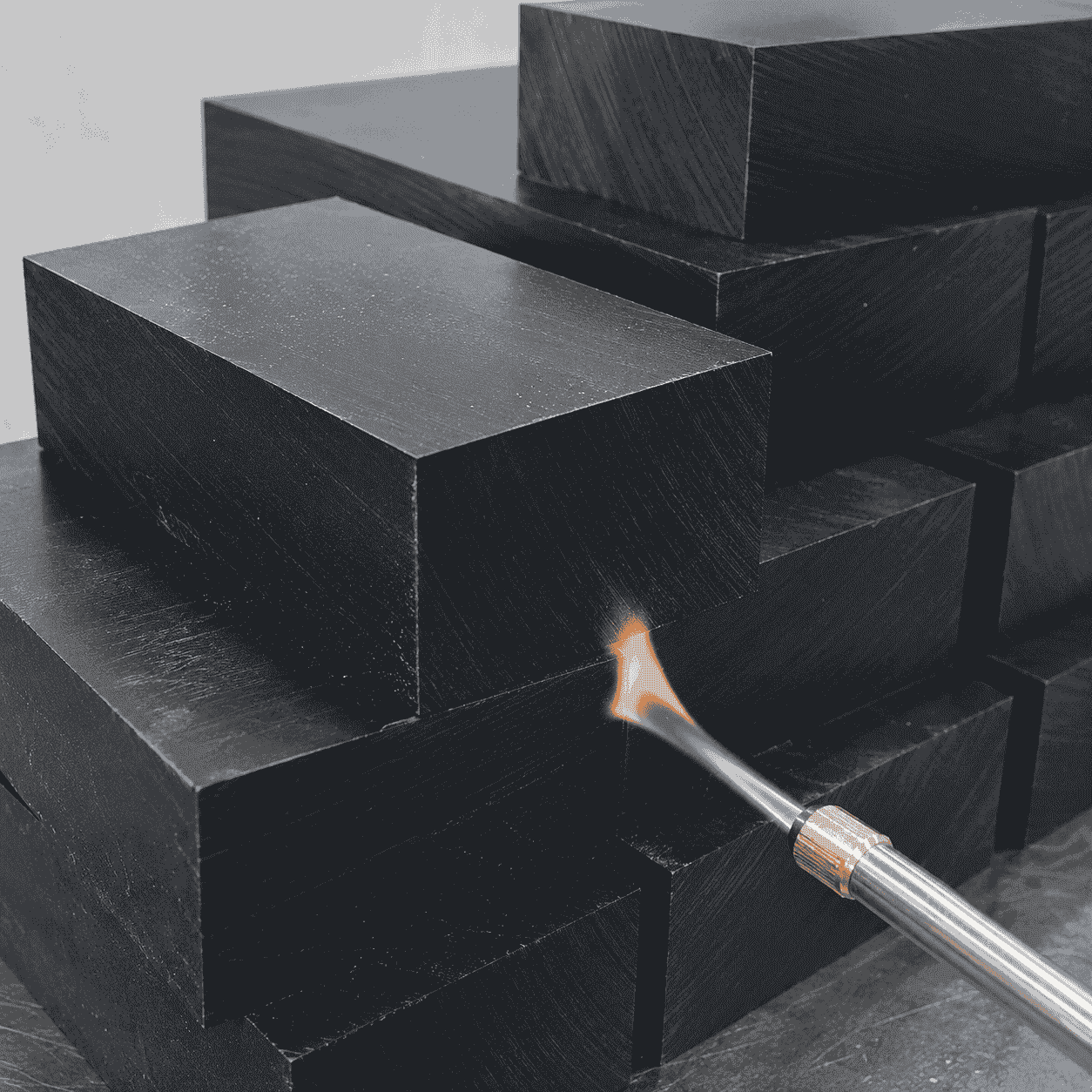
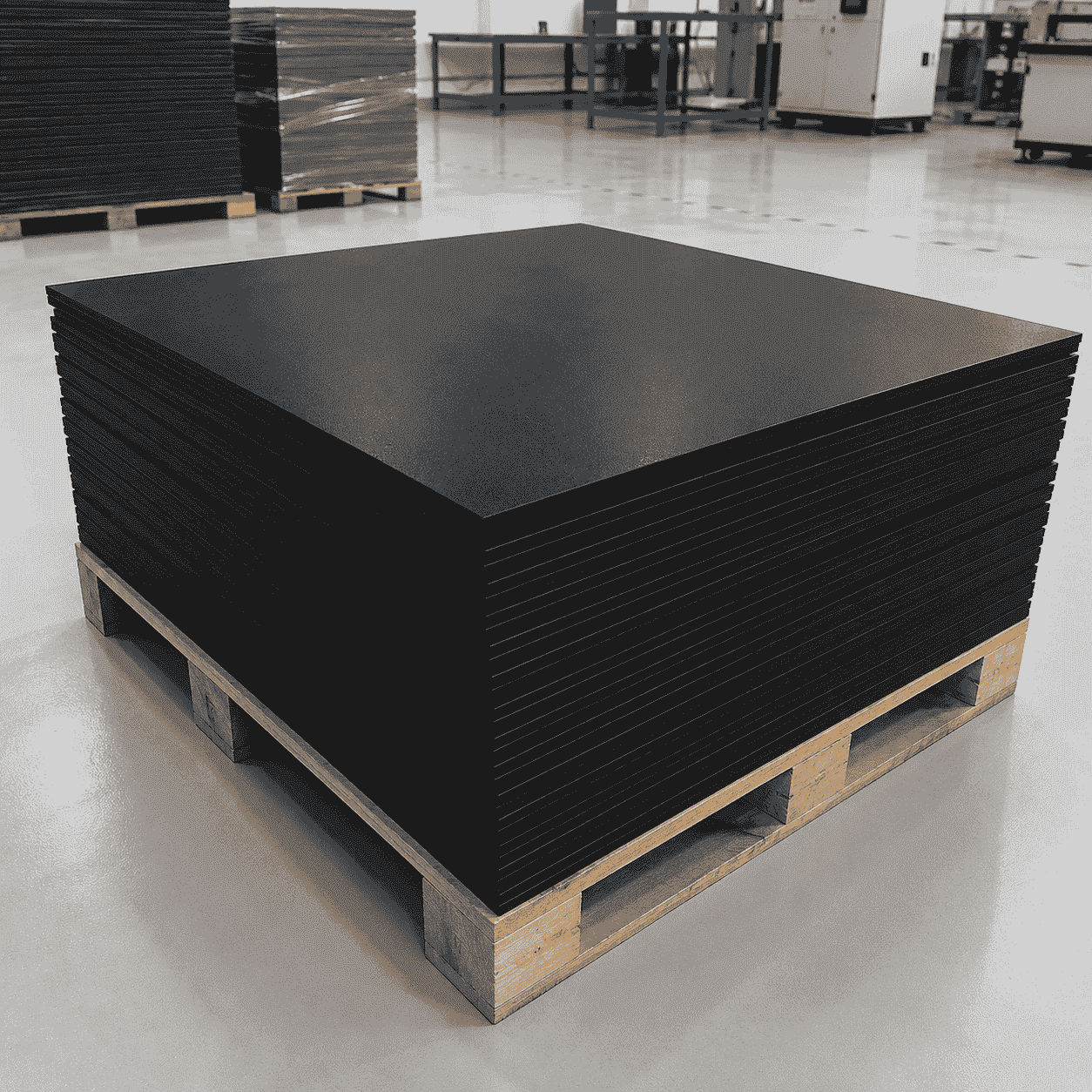
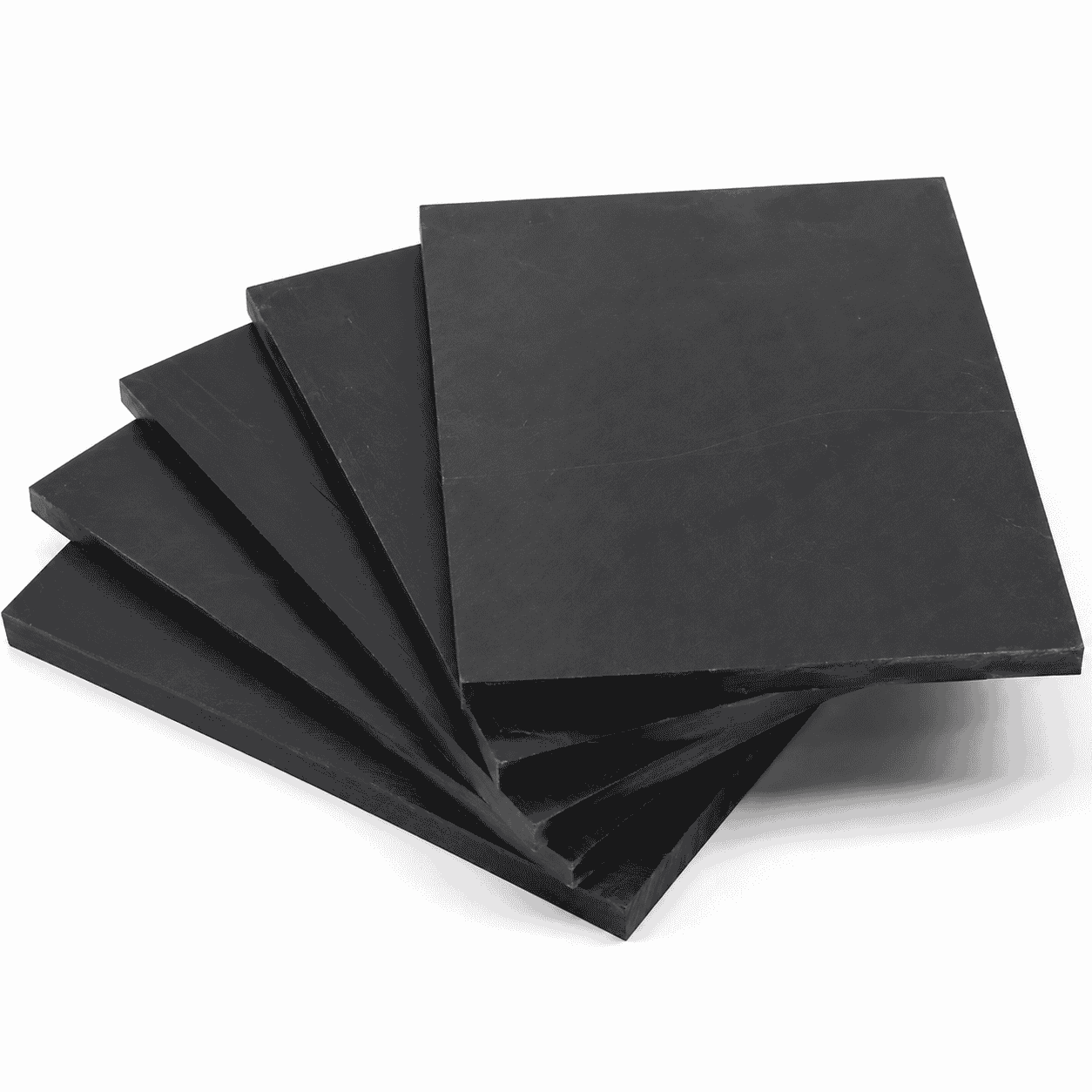
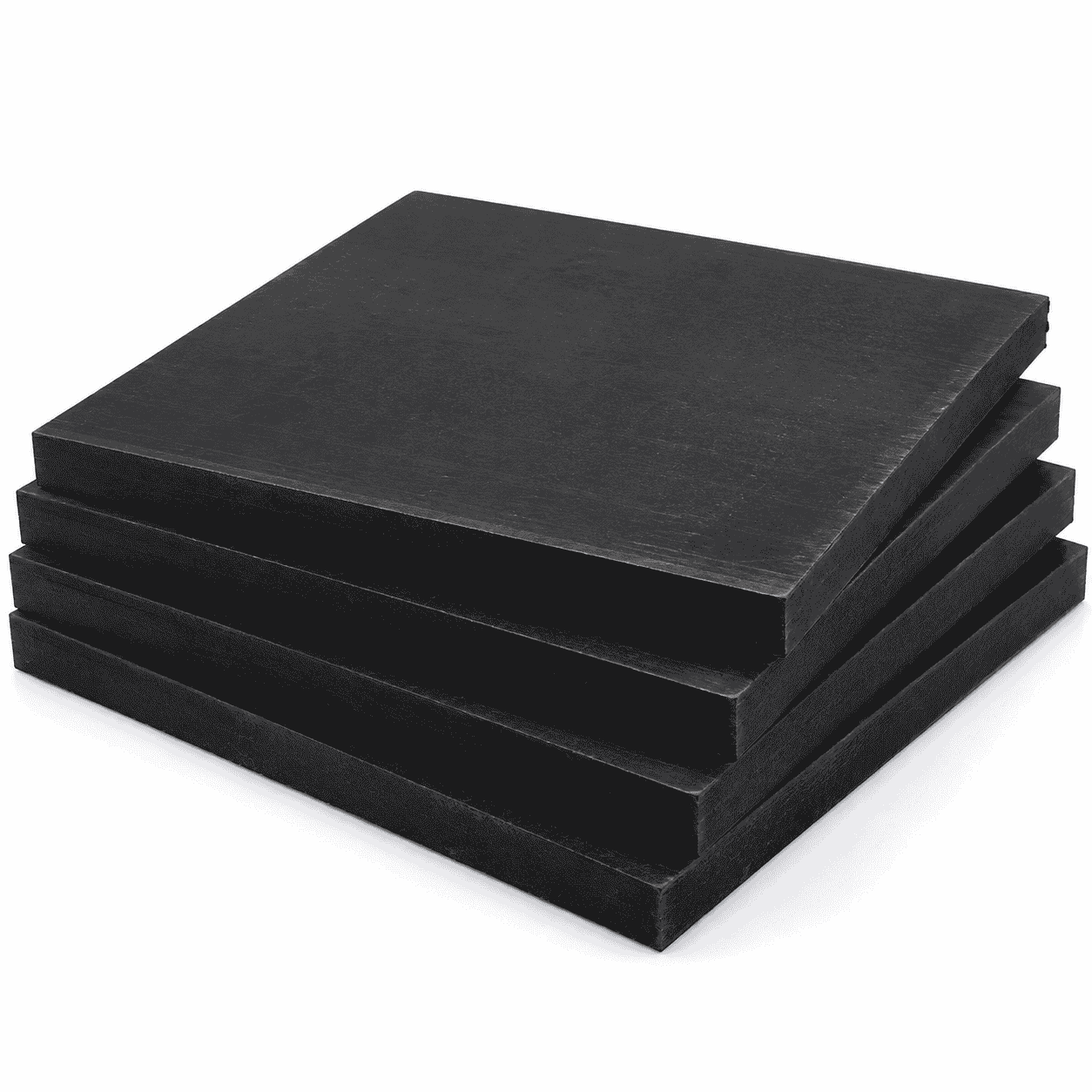
Flame Retardant Nylon Sheet is a black modified polyamide engineering plastic developed for components requiring mechanical strength, electrical insulation, machining performance and controlled flammability. It can be processed into insulating supports, mounting plates, terminal blocks, equipment guards, fixture components and CNC-machined industrial parts. The supplied size chart contains 11 specifications, all with a 1000 × 2000 mm panel format and thicknesses from 10 mm to 100 mm. The base nylon grade, flame-retardant system and required UL 94 classification must be confirmed according to the finished-part thickness and project requirements.
Flame Retardant Nylon Sheet is a modified polyamide engineering plastic developed for components that require the mechanical and machining properties of nylon together with controlled flammability performance.
The material is commonly supplied in black and can be cut or CNC machined into electrical supports, mounting plates, terminal supports, equipment guards, fixture blocks, insulating spacers, protective components and other industrial parts.
Standard nylon is not automatically a flame-retardant material. A flame-retardant nylon grade normally contains a specifically designed additive system intended to reduce flame propagation, shorten burning time or support self-extinguishing behavior under defined test conditions.
The exact performance depends on the base nylon resin, flame-retardant system, additive content, sheet thickness, test direction and applicable testing standard. Black color alone does not confirm flame-retardant performance.
Visit our engineering plastic manufacturing homepage to learn more about our material supply and CNC machining capabilities. You can also review the available sheet sizes, technical specifications, typical applications and CNC machining services below.
For general material information, visit Wikipedia’s explanation of nylon and polyamide. General information about plastic flammability classifications is available in Wikipedia’s article about UL 94.
The modified formulation is designed to improve the burning behavior of the nylon material under defined testing conditions. Depending on the approved material grade, the formulation may help reduce flame spread, shorten after-flame time or promote self-extinguishing behavior.
Flame-retardant performance must be identified by a specific test result rather than by appearance or product name. The applicable rating, test method and minimum tested thickness should be confirmed before production.
UL 94 classifications include different horizontal and vertical burning categories. A material may achieve different classifications at different thicknesses, so a rating obtained on one specimen thickness should not automatically be applied to every sheet thickness or finished component.
Where UL 94 compliance is required, the customer should specify:
Flame Retardant Nylon Sheet provides a useful combination of strength, rigidity and toughness for mounting components, equipment supports, fixtures and protective machine parts.
Actual load-bearing capability depends on the base nylon grade, finished-part dimensions, support spacing, fastening method, temperature and environmental humidity.
The nylon base material can provide useful wear and sliding properties for selected guide components, supports, wear pads and mechanical parts.
Flame-retardant additives may affect friction, impact strength, elongation and wear performance. The final formulation should therefore be selected according to both fire-performance and mechanical requirements.
Selected Flame Retardant Nylon Sheet grades may provide useful electrical insulation and can be machined into insulating supports, mounting plates, spacers, terminal supports and protective separation components.
Electrical performance depends on the base resin, flame-retardant formulation, moisture content, temperature and testing method. Dielectric strength, volume resistivity and other electrical properties should be confirmed through a grade-specific technical data sheet.
Replacing suitable metal brackets, mounting plates or supports with nylon components can reduce component weight and simplify installation.
The material should only replace metal after structural load, fastening strength, creep, operating temperature and safety requirements have been evaluated.
Flame Retardant Nylon Sheet does not rust like ordinary carbon steel. It can be used for selected equipment components in humid industrial environments.
Chemical resistance depends on the base nylon grade, contacting chemical, concentration, temperature and exposure time. Compatibility should be confirmed before contact with strong acids, strong alkalis, oxidizing substances or unusual solvents.
The sheet can be saw cut, milled, drilled, bored, reamed, tapped, slotted, countersunk and machined into complex industrial parts.
Finished components can be produced according to two-dimensional drawings, three-dimensional models, physical samples or measured installation dimensions.
The black appearance provides a consistent industrial appearance and helps distinguish the material from natural or white nylon during storage, assembly and equipment maintenance.
Black color does not independently prove flame retardancy, UV resistance, antistatic performance, conductivity or a particular UL 94 classification. The material grade and supporting documents should be used for verification.
The supplied manufacturable-size chart contains 11 Flame Retardant Nylon Sheet specifications. Every listed option has a nominal panel format of 1000 × 2000 mm, with selectable thicknesses from 10 mm to 100 mm.
The original image lists dimensions as thickness × width × length. The table below has been standardized as length × width × thickness, with all values shown in millimetres.
| Number | Length | Width | Thickness |
|---|---|---|---|
| 1 | 2000 mm | 1000 mm | 10 mm |
| 2 | 2000 mm | 1000 mm | 12 mm |
| 3 | 2000 mm | 1000 mm | 15 mm |
| 4 | 2000 mm | 1000 mm | 20 mm |
| 5 | 2000 mm | 1000 mm | 25 mm |
| 6 | 2000 mm | 1000 mm | 30 mm |
| 7 | 2000 mm | 1000 mm | 40 mm |
| 8 | 2000 mm | 1000 mm | 50 mm |
| 9 | 2000 mm | 1000 mm | 60 mm |
| 10 | 2000 mm | 1000 mm | 80 mm |
| 11 | 2000 mm | 1000 mm | 100 mm |
Size summary: The listed thicknesses are 10, 12, 15, 20, 25, 30, 40, 50, 60, 80 and 100 mm. All eleven specifications use a nominal sheet format of 1000 × 2000 mm.
These dimensions represent selectable or manufacturable specifications rather than guaranteed inventory. Actual stock, black color, flame-retardant grade, sheet tolerance, flatness, surface condition and production time should be confirmed before ordering.
When the sheet will be CNC machined into a finished component, the raw blank should normally be larger and thicker than the final part. Suitable allowance is required for cutting, clamping, surface finishing and final dimensional inspection.
| Item | Typical Specification |
|---|---|
| Product name | Black Flame Retardant Nylon Sheet |
| Focus keyword | Flame Retardant Nylon Sheet |
| Material family | Flame-retardant-modified polyamide engineering plastic |
| Possible base resin | PA6, PA66 or another confirmed nylon grade |
| Color | Black |
| Listed sheet format | 1000 × 2000 mm |
| Listed thickness range | 10–100 mm |
| Listed thicknesses | 10, 12, 15, 20, 25, 30, 40, 50, 60, 80 and 100 mm |
| Total listed sizes | 11 specifications |
| Flammability classification | Confirmed according to the approved grade, test standard and tested thickness |
| UL 94 rating | Not assumed; confirmed through the applicable test report or material certificate |
| Flame-retardant formulation | Confirmed according to the selected material grade |
| Supply form | Full sheet, cut panel, machining blank or finished CNC-machined component |
| Available processing | Cutting, milling, drilling, boring, reaming, tapping, slotting and profile machining |
| Surface condition | As-produced, cut, planed or CNC-machined according to order requirements |
| Dimensional tolerance | Confirmed according to sheet size, thickness, material grade and finished-part drawing |
| Final suitability | Depends on flame rating, load, temperature, humidity, electrical requirements and chemical exposure |
Technical note: Flame classification, mechanical strength, impact resistance, density, moisture absorption, electrical properties and allowable operating temperature can vary according to the base nylon and flame-retardant formulation. Final values should be confirmed through an approved technical data sheet and test report.
Flame Retardant Nylon Sheet can be machined into equipment supports, insulating mounting blocks, terminal supports, separation plates and protective components.
The required flammability classification, dielectric properties, operating voltage, temperature and creepage distance should be confirmed according to the equipment design.
The sheet can be processed into terminal mounting plates, connector supports, equipment spacers and mechanical insulating blocks.
Where the component is installed close to electrical terminals, the material grade should satisfy the applicable flame, electrical and temperature requirements.
Selected grades may be used for mounting components, supports, fixture plates and equipment separation parts in battery-related or energy-storage production equipment.
Flame classification, electrolyte resistance, electrical insulation and operating temperature should be confirmed separately for the specific application.
The material can be machined into internal supports, mounting plates, separation blocks and protective parts used inside selected electrical cabinets and control equipment.
The sheet should not be represented as a complete fire barrier or enclosure certification unless the complete assembled structure has been tested and approved.
Typical components include sensor supports, fixture blocks, positioning plates, insulating spacers, equipment brackets and protective machine parts.
The material can be used for inspection fixtures, positioning components and assembly jigs where mechanical strength, electrical separation and controlled flammability are required.
Flame Retardant Nylon Sheet can be cut into machine guards, protective plates and separation panels for suitable industrial equipment.
The panel structure, fixing method, impact requirements and applicable fire standard should be reviewed before use.
Thick sheet material can be machined into mounting plates, machine supports, structural blocks and equipment bases containing holes, grooves, threads and recessed features.
Selected certified material grades may be considered for mechanical supports, insulating components and equipment parts used in transportation-related applications.
Transportation projects may require standards other than UL 94. The applicable industry, smoke, toxicity and fire-performance requirements should be confirmed before material selection.
Finished parts can be produced when an original component is damaged, worn or difficult to obtain. Manufacturing can be based on drawings, three-dimensional models, samples or measured installation dimensions.
Standard nylon provides useful strength, toughness, wear performance and machinability but may not meet a specified flame classification.
Flame Retardant Nylon Sheet contains a modified additive system intended to improve burning behavior. The modification may affect impact strength, elongation, wear performance, electrical properties and processing characteristics.
Flame-retardant nylon may provide useful mechanical strength, toughness and electrical insulation for supports, mounting components and machine parts.
POM normally absorbs less moisture and may provide greater dimensional stability in selected precision applications. The available flame-retardant grades, electrical properties and processing requirements differ, so material selection should be based on the complete technical specification.
Flame Retardant Nylon Sheet provides thermoplastic machinability, toughness and the ability to produce thicker or more impact-resistant mechanical components.
FR-4 is a glass-reinforced thermoset laminate commonly selected for rigid electrical-insulation structures. The two materials differ in stiffness, moisture response, machining behavior, electrical properties and heat performance.
Selection should be based on voltage, mechanical load, flame classification, temperature, impact, thickness and dimensional requirements.
A flame-retardant plastic can still ignite, soften, melt, produce smoke or lose mechanical strength when exposed to sufficient heat or flame.
The term describes performance under specified test conditions and should not be interpreted as meaning that the material cannot burn or that it provides unlimited fire protection.
UL 94 classifications are established through testing defined specimen dimensions and thicknesses. A rating stated for one thickness may not apply to a thinner sheet or a differently shaped finished component.
Before ordering, confirm:
The nylon matrix is hygroscopic and can absorb moisture from the surrounding environment. Moisture may affect finished-part dimensions, rigidity and electrical properties.
The following conditions should be reviewed for precision and electrical components:
Black Flame Retardant Nylon Sheet can be supplied as a full panel, cut blank or finished component manufactured according to drawings, models, samples or installation measurements.
Available machining processes include:
The selected raw sheet should normally be larger and thicker than the finished part. Allowance is required for edge cleaning, clamping, rough machining and final finishing.
Excessive cutting heat may affect surface condition and dimensional accuracy. Suitable cutting tools, feed rates and machining sequences should be selected according to the approved nylon grade.
Sharp corners may create stress concentration. Appropriate radii and gradual section transitions should be used where the part is exposed to impact, vibration or cyclic loading.
Where flame certification is important, the material batch, grade, certificate and minimum approved thickness should remain traceable throughout cutting and machining.
The material should be selected according to the complete mechanical, electrical and fire-performance requirements rather than black color or product name alone.
Please provide the following information before production:
The supplied chart contains 11 listed specifications. Every option has a nominal 1000 × 2000 mm panel format.
The listed thicknesses are 10, 12, 15, 20, 25, 30, 40, 50, 60, 80 and 100 mm.
No. The image only lists sheet dimensions. The UL 94 classification and approved specimen thickness must be confirmed separately.
No. Black color may result from pigment, carbon black or another additive. Flame-retardant performance must be confirmed through the material specification and test documentation.
No. Flame-retardant material can still ignite, melt, smoke or lose mechanical strength under sufficient heat. Its performance is defined under specific test conditions.
Yes. It can be machined into mounting plates, insulating supports, terminal supports, fixtures, equipment guards and other industrial components.
Machining changes the component geometry and local thickness. The base formulation remains the same, but the published rating may only apply to specified specimen dimensions and thicknesses.
Yes. The nylon matrix may absorb moisture, which can affect dimensions and electrical properties.
Yes. Full sheets, cut blanks and CNC-machined parts can be supplied according to drawings, models, samples or measured installation dimensions.
No. The chart represents selectable or manufacturable sizes. Actual availability depends on the material grade, flame requirement, quantity and production schedule.
Check drawings for full specifications and confirm materials according to service conditions to prevent product defects.
Inspect all key processing steps and fully verify dimensions, holes, grooves and fitting surfaces.
Deburr, chamfer and clean products for easy installation. Ensure uniform quality among batch products.
Choose appropriate packaging solutions based on product features to protect goods from collision, deformation and mixing during transit.
Unlike metal parts, engineering plastic components still require strict control over dimensions, holes, edges, surface, materials and assembly performance for equipment use.
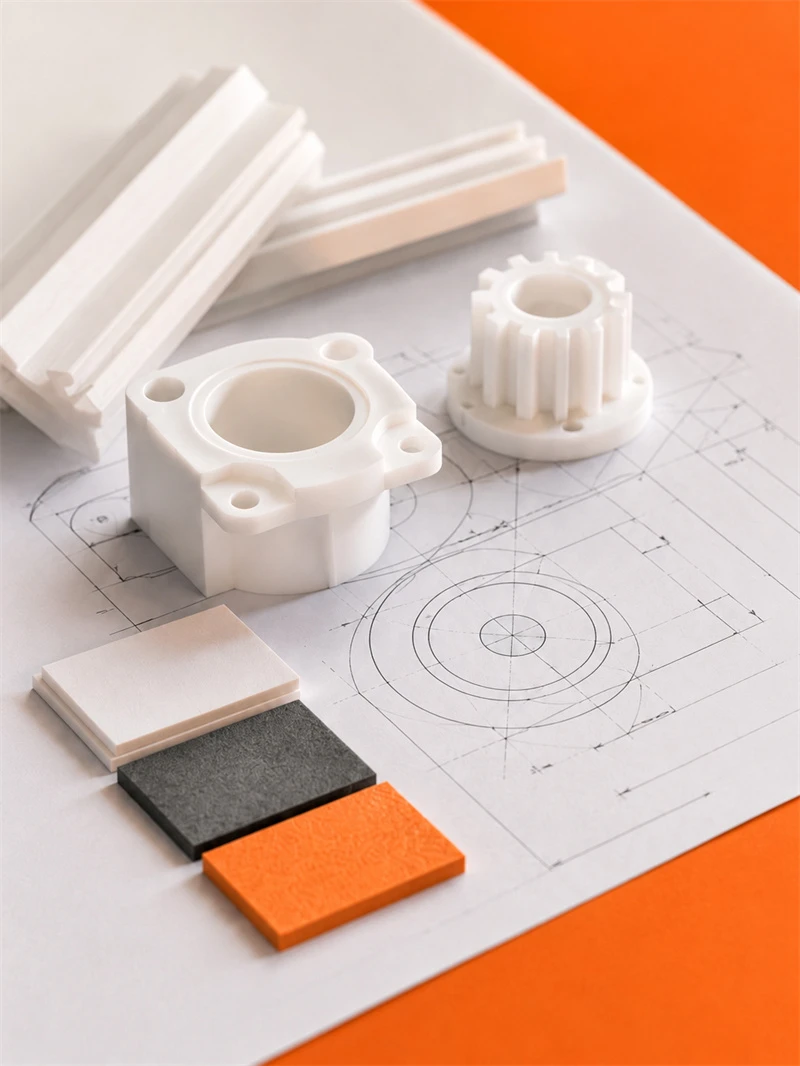
Engineering plastic parts suit friction, guide, support, buffer, anti-corrosion and insulation areas. We supply UHMWPE, POM, PA, PP/PE components for conveyor, food, mining, machinery, chemical and cable systems, with custom OEM service available.
Stay updated with our latest industry insights, company updates and featured articles.
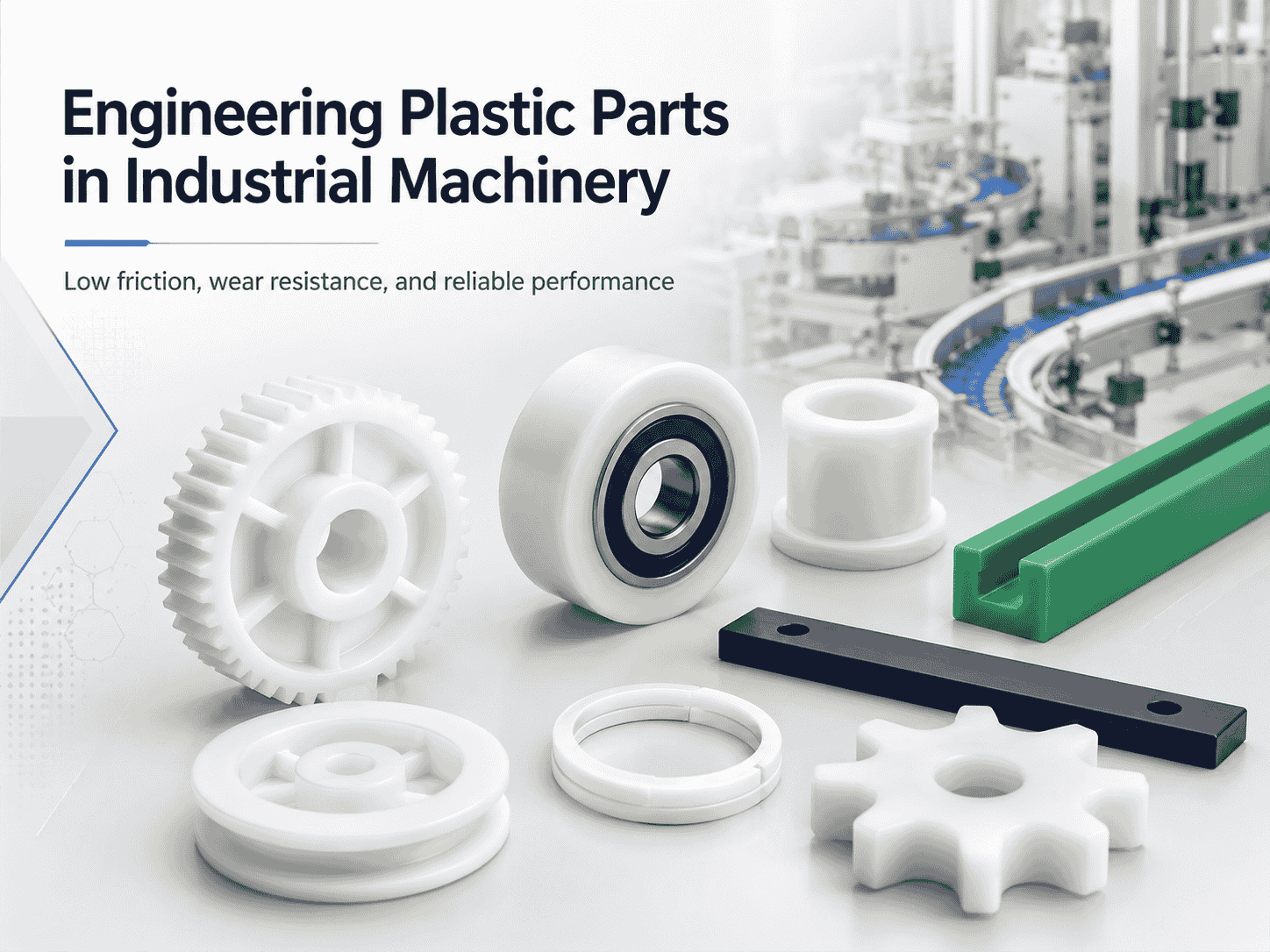
Engineering plastics are increasingly used in industrial machinery, automated production lines, conveyor systems, packaging equipment, and food-processing machines. Materials such as nylon, UHMWPE, POM, and
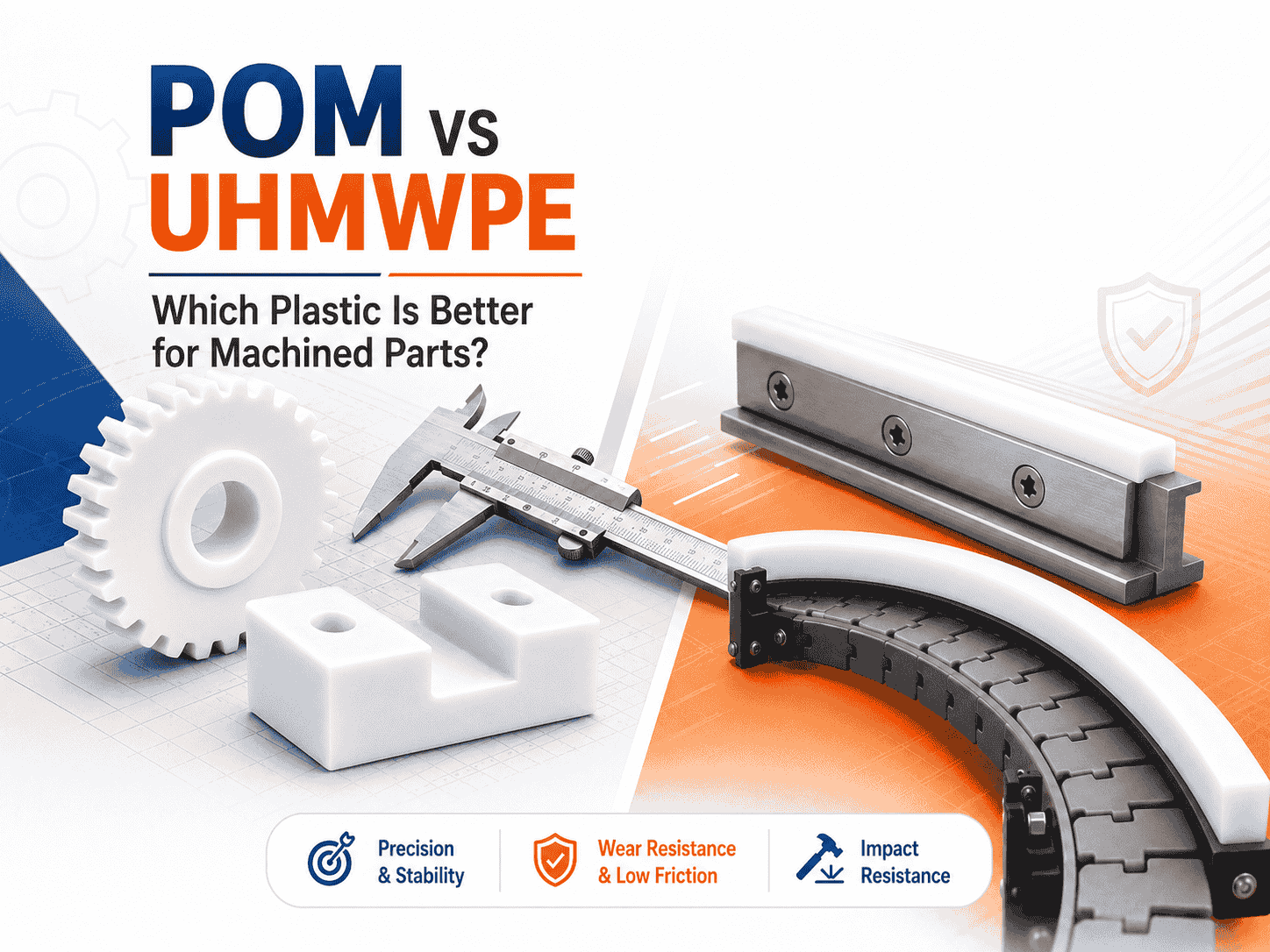
Both are lightweight, corrosion-resistant, wear-resistant, and suitable for CNC machining. However, they perform very differently
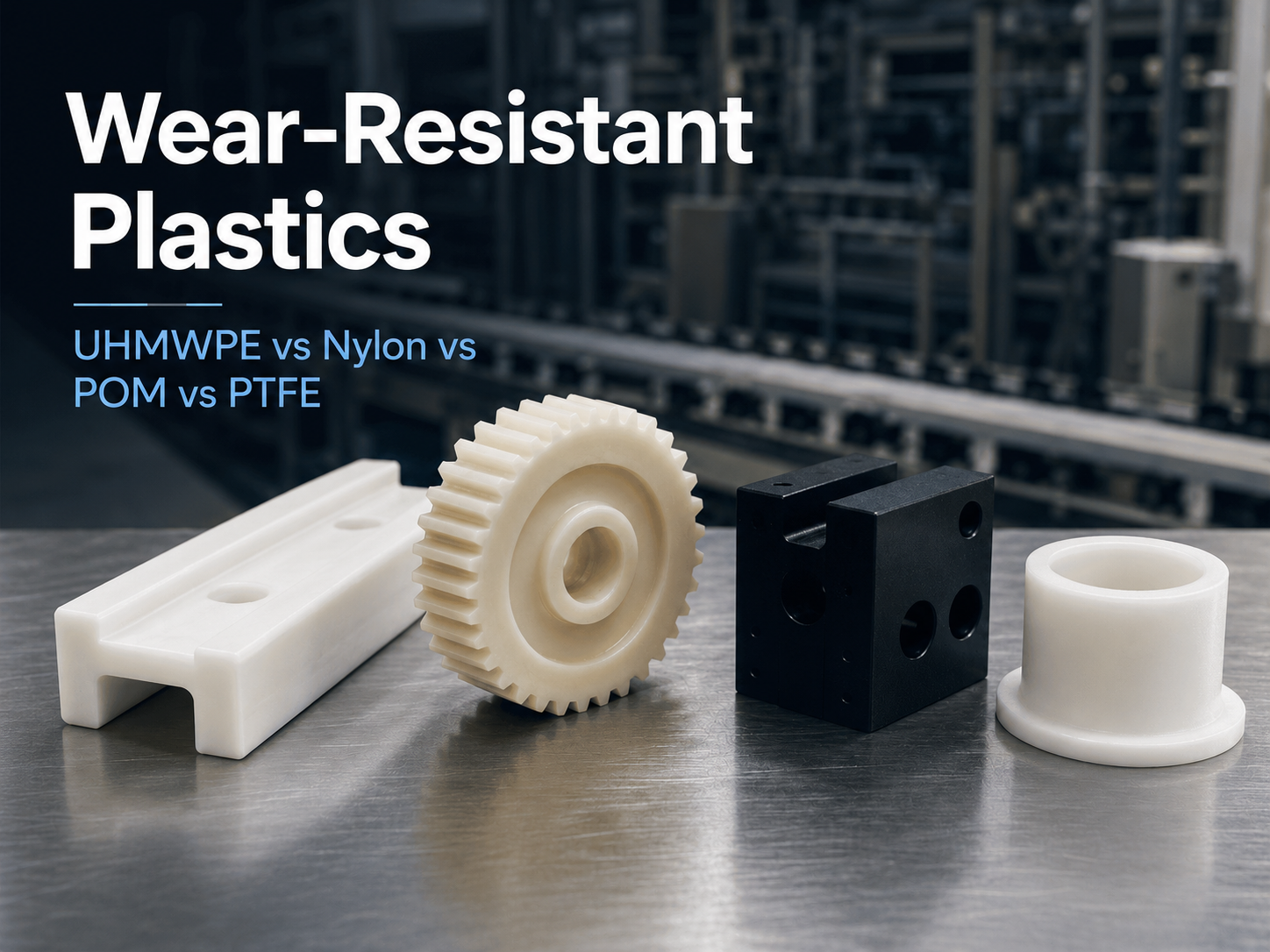
Wear is a common cause of failure in conveyor systems, packaging machinery, automated equipment, mining
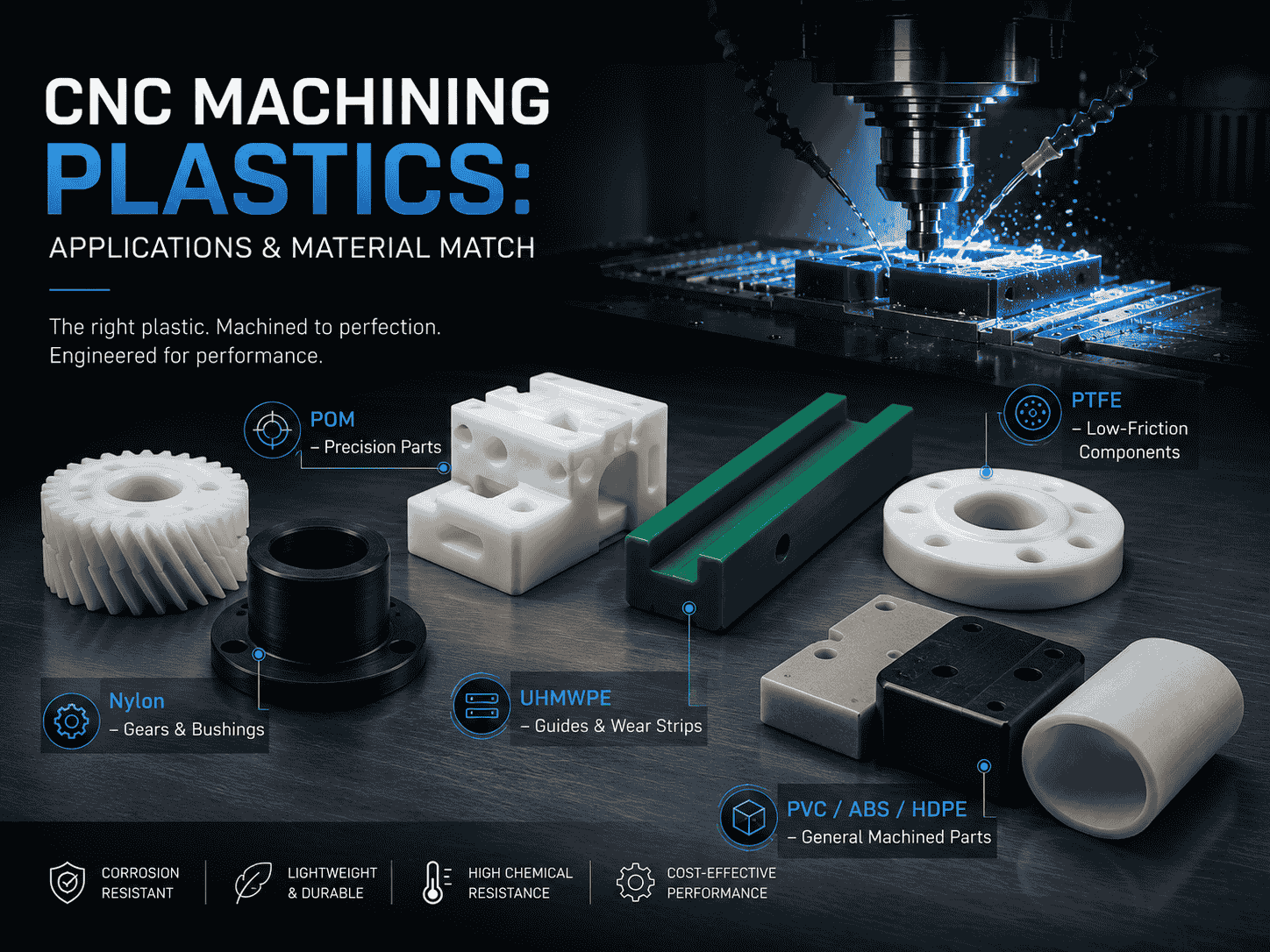
CNC machining is widely used to produce plastic prototypes, low-volume parts, replacement components, jigs, fixtures,
Both are lightweight, corrosion-resistant, wear-resistant, and suitable for CNC machining. However, they perform very differently
Wear is a common cause of failure in conveyor systems, packaging machinery, automated equipment, mining
CNC machining is widely used to produce plastic prototypes, low-volume parts, replacement components, jigs, fixtures,
Need UHMWPE sheets & custom plastic machined/OEM parts?Send specs & material needs, free quote within 24h.