

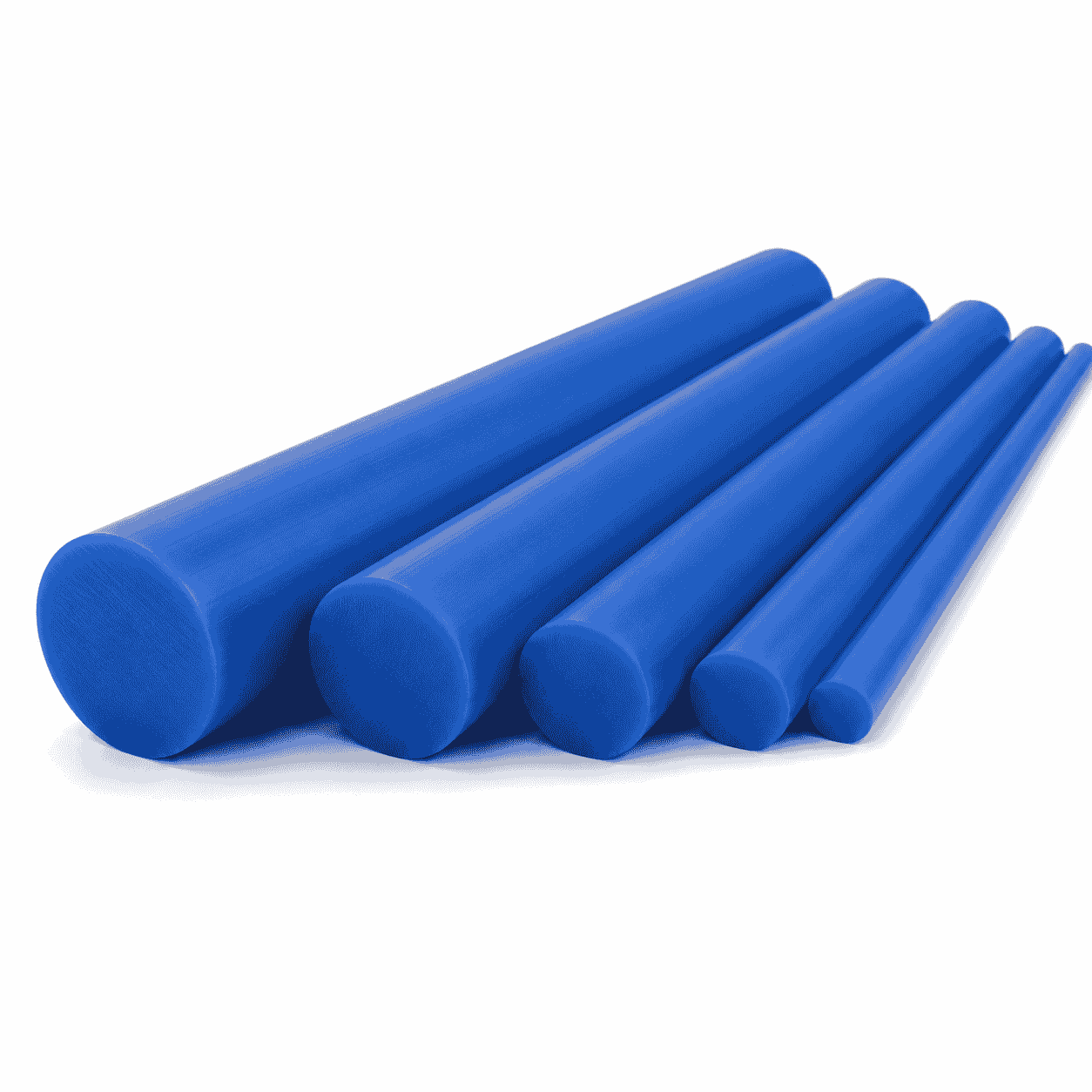
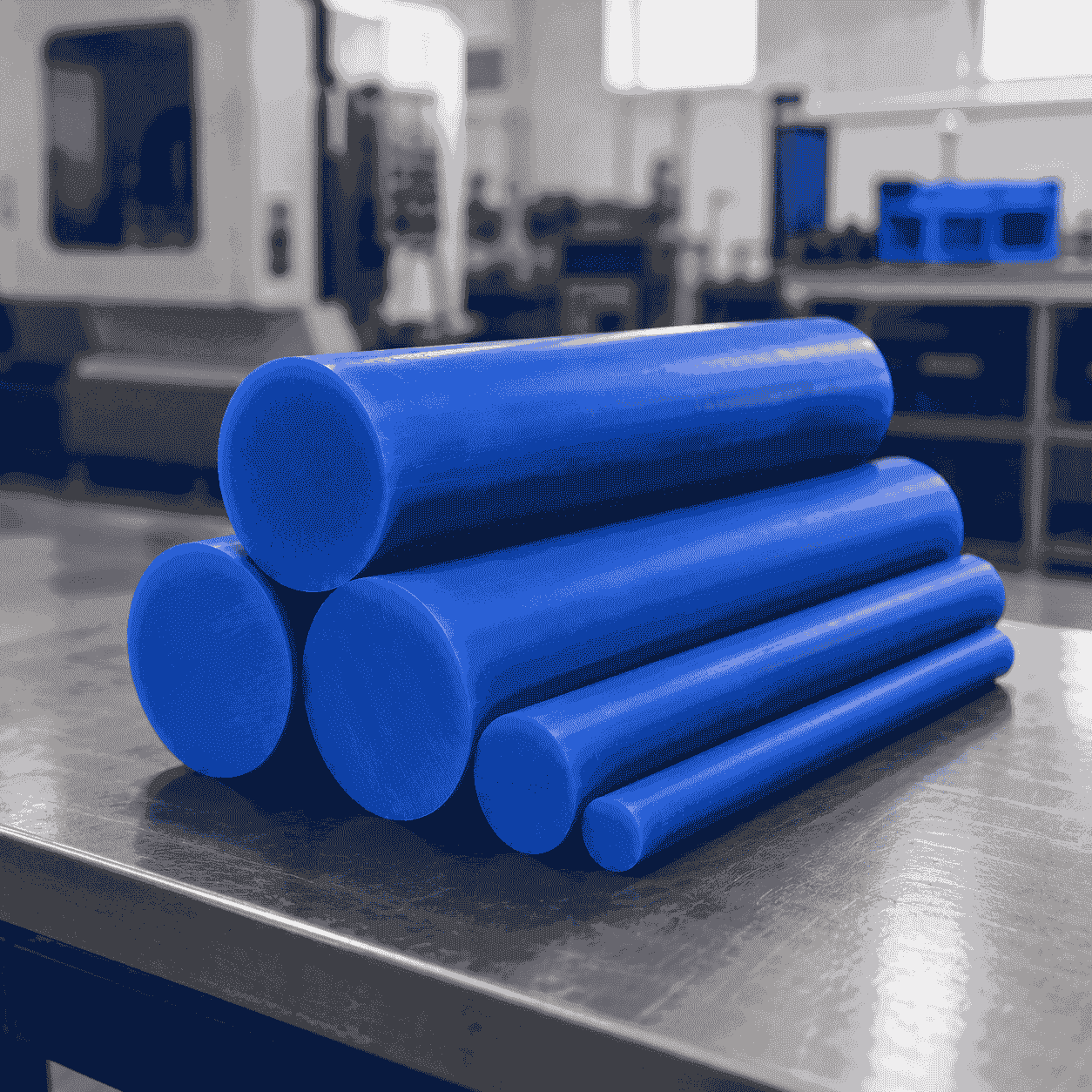
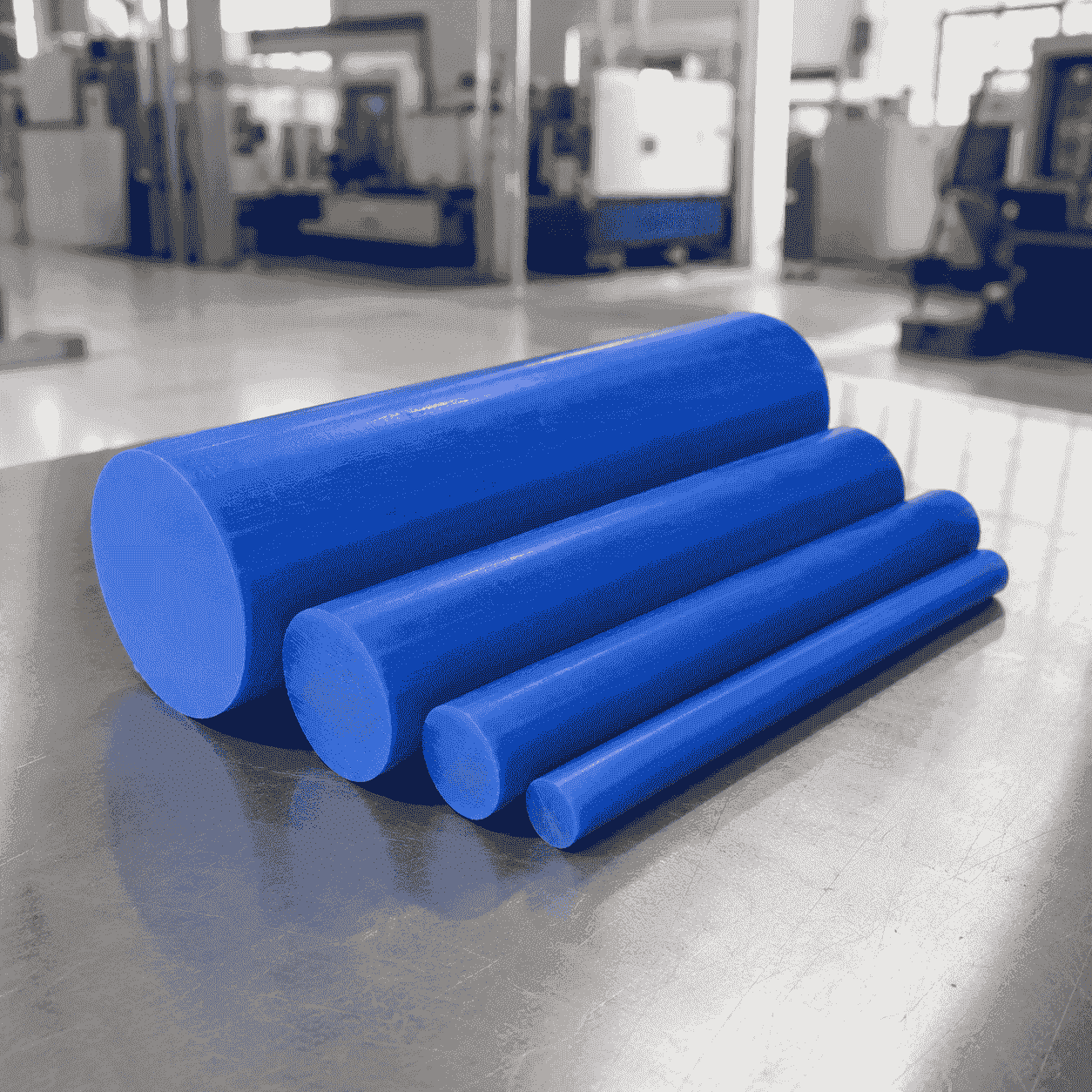
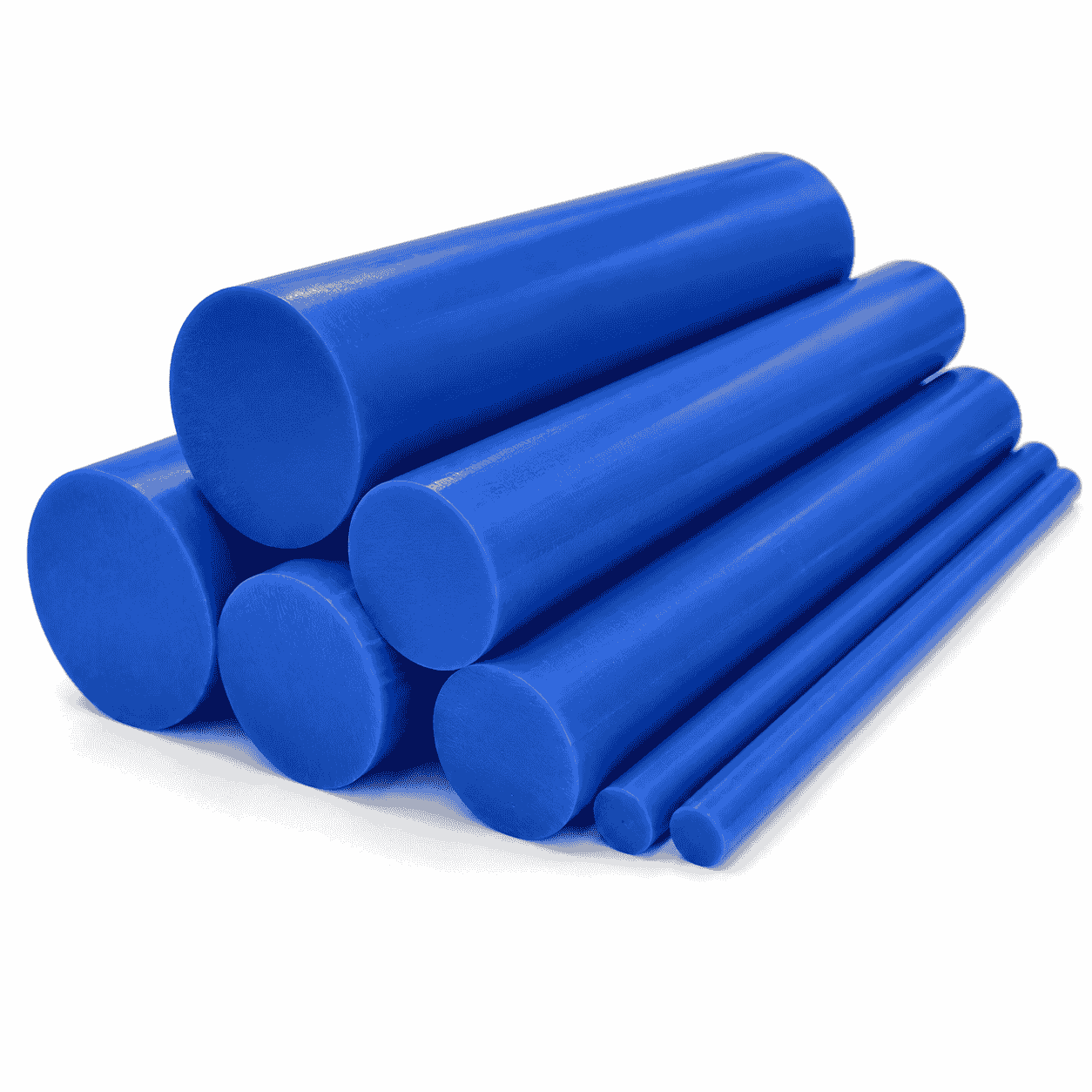
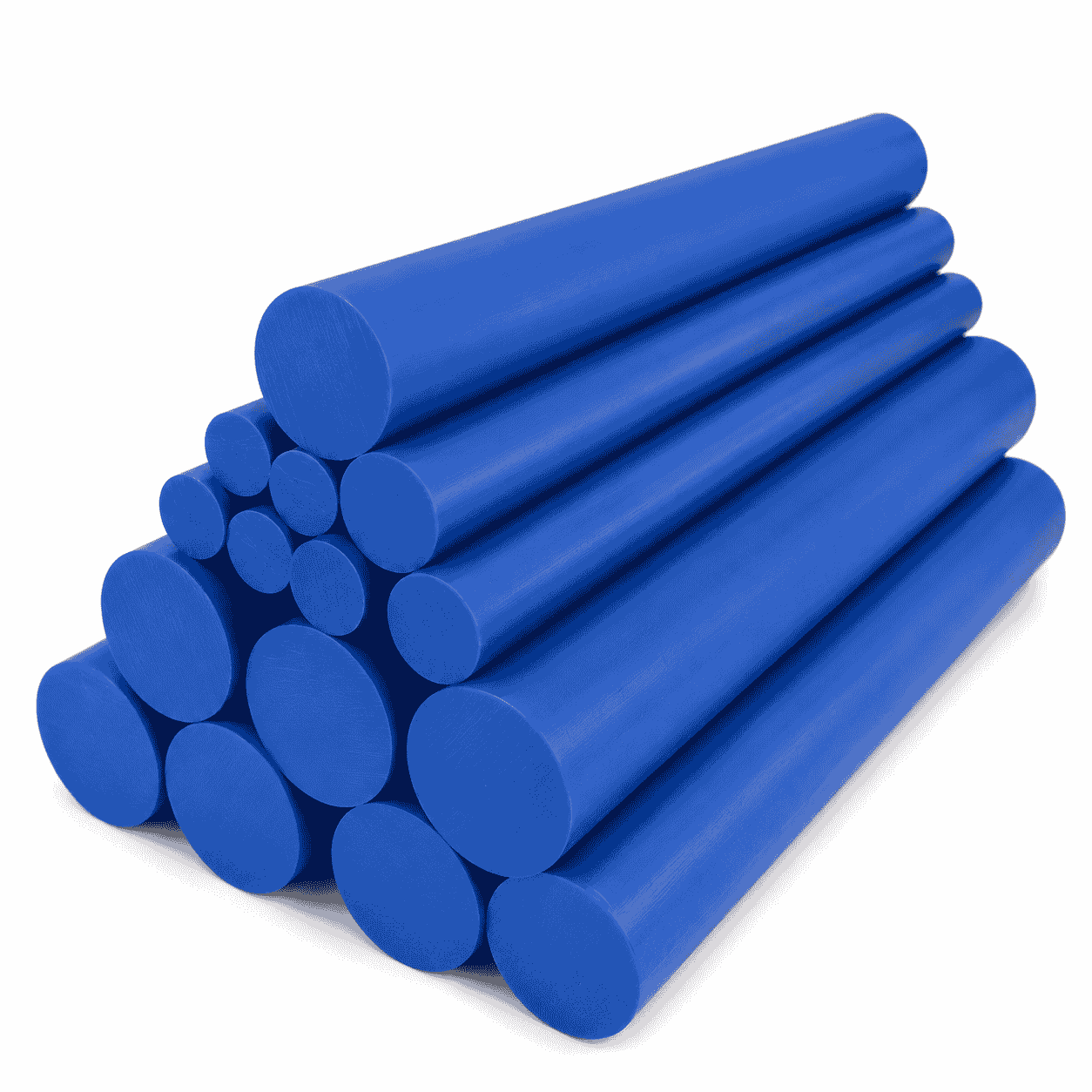
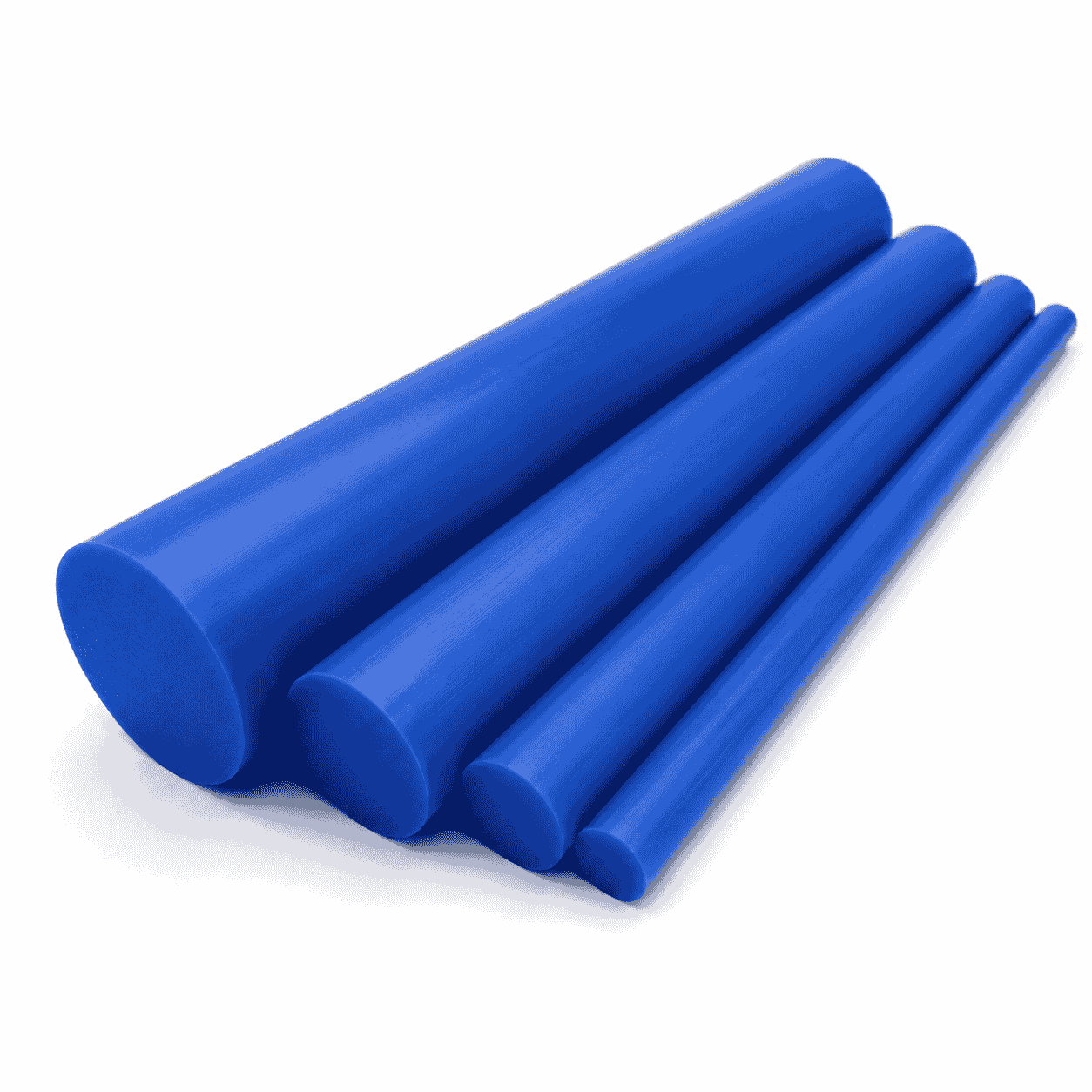
MC Nylon Rod is a strong, wear-resistant cast PA6 round bar used for gears, rollers, pulleys, bushings, sleeves and CNC-machined industrial components. The collected size references include 27 diameters from Φ30 to Φ220 mm, with available reference lengths of 650 and 1000 mm. Cutting, turning, drilling, boring, threading and custom machining are available according to drawings.
MC Nylon Rod is a solid cast engineering plastic round bar used as machining stock for gears, rollers, pulleys, wheels, bushings, bearing sleeves, guide components and other industrial machine parts. It combines good mechanical strength, structural rigidity, wear resistance, impact toughness and reliable machining performance.
MC nylon is commonly known as monomer cast nylon or cast Nylon 6. Unlike conventional extruded nylon rod, the material is polymerized and formed directly in a mould. This production method is particularly suitable for manufacturing large-diameter rods, thick sections, rings, tubes, plates and near-net-shape machining blanks.
The standard material is generally based on PA6. Depending on the selected grade, the finished rod may be natural, ivory, blue, black, green or another identification color. Color alone does not confirm that the material is heat stabilized, oil filled, food grade, anti-static, conductive, flame retardant or reinforced. Special performance must be confirmed through the exact material grade and technical documentation.
Customers can view additional nylon round-bar materials on our
Polyamide PA Nylon Rod
page. Customers requiring finished gears, rollers, pulleys, sleeves or other machined parts can also view our
CNC Plastic Machining
service.
Additional application information is available on our
Industrial Machinery
page. For general information about the polymer family, refer to the
Wikipedia explanation of Nylon 6.
The following specifications have been organized from the supplied product references. After removing repeated listings, the image contains 27 unique diameter options ranging from Φ30 mm to Φ220 mm.
Two reference lengths are shown: 650 mm and 1000 mm. Not every diameter is shown in both lengths. Final stock status, diameter tolerance, rod length, color, material grade and production time should be confirmed before ordering.
| Reference Length | Available Reference Diameters | Number of Diameter Options |
|---|---|---|
| 650 mm | Φ40, Φ45, Φ50, Φ55, Φ60, Φ65, Φ70, Φ75, Φ80, Φ85, Φ90, Φ95, Φ100, Φ110, Φ120, Φ130, Φ140, Φ150, Φ160, Φ170, Φ180 and Φ200 mm | 22 |
| 1000 mm | Φ30, Φ35, Φ40, Φ45, Φ50, Φ55, Φ60, Φ65, Φ70, Φ75, Φ80, Φ85, Φ90, Φ95, Φ100, Φ110, Φ120, Φ130, Φ140, Φ150, Φ160, Φ170, Φ180, Φ190, Φ200, Φ210 and Φ220 mm | 27 |
Available reference diameters: Φ30, Φ35, Φ40, Φ45, Φ50, Φ55, Φ60, Φ65, Φ70, Φ75, Φ80, Φ85, Φ90, Φ95, Φ100, Φ110, Φ120, Φ130, Φ140, Φ150, Φ160, Φ170, Φ180, Φ190, Φ200, Φ210 and Φ220 mm.
Available reference lengths: 650 and 1000 mm.
The specifications above are collected manufacturing and market references rather than a guarantee that every diameter and length is always available from stock. Some large-diameter rods may be produced after confirming the required grade, quantity, dimensional tolerance and delivery schedule.
| Diameter Group | Reference Diameters | Typical Machined Components |
|---|---|---|
| Small-Diameter Rods | Φ30, Φ35, Φ40, Φ45 and Φ50 mm | Small bushings, sleeves, spacers, pins, guide rollers and locating components |
| Medium-Diameter Rods | Φ55, Φ60, Φ65, Φ70, Φ75, Φ80, Φ85, Φ90, Φ95 and Φ100 mm | Rollers, gears, pulleys, bearing sleeves, guide wheels and support components |
| Large-Diameter Rods | Φ110, Φ120, Φ130, Φ140, Φ150, Φ160, Φ170 and Φ180 mm | Large rollers, thick bushings, flanges, wheels, pulleys and gear blanks |
| Extra-Large Rods | Φ190, Φ200, Φ210 and Φ220 mm | Large gears, heavy rollers, pulley blanks, thick rings and special machining components |
| Material Grade | General Characteristics | Typical Selection |
|---|---|---|
| Natural MC Nylon | General-purpose unmodified cast PA6 with balanced strength, toughness and machinability | Gears, rollers, bushings, sleeves and general machine components |
| Blue MC Nylon | Blue cast nylon grade used for material identification; exact performance depends on the formulation | Industrial rollers, gears, wheels and guide components |
| Oil-Filled MC Nylon | Modified with internal lubricant to improve sliding performance and reduce friction | Bearings, guide wheels, sliding blocks and limited-lubrication applications |
| MoS2-Filled MC Nylon | Modified with molybdenum disulfide to improve selected load-bearing and wear characteristics | Gears, sprockets, rollers, bushings and mechanical wear components |
| Heat-Stabilized MC Nylon | Modified to improve long-term performance under elevated-temperature conditions | Warm machinery environments and components exposed to extended heat aging |
| Special Modified MC Nylon | May include impact-modified, anti-static or other application-specific formulations | Special machinery and operating environments requiring confirmed technical properties |
The exact properties of modified MC nylon grades vary between manufacturers and formulations. A blue, black or green rod should not be assigned a special performance only according to its color.
MC Nylon Rod can be supplied as full-length round stock, cut machining blanks or finished CNC-machined components. Typical applications include:
| Raw Rod Diameter | Common Finished Components |
|---|---|
| Φ30–Φ50 mm | Small sleeves, guide pins, spacers, bushings and compact rollers |
| Φ55–Φ100 mm | Medium rollers, wheels, gears, pulleys, bushings and bearing components |
| Φ110–Φ180 mm | Large rollers, thick sleeves, flanges, pulleys, gears and tensioning wheels |
| Φ190–Φ220 mm | Large gear blanks, heavy rollers, thick rings, pulley blanks and special industrial parts |
These applications are general references. The correct rod diameter should be selected according to the finished drawing, machining allowance, load, speed, temperature and required dimensional accuracy.
MC Nylon Rod can be processed using CNC lathes, machining centers, milling machines and drilling equipment. Available operations include:
Appropriate cutting tools, feed rates and cooling methods should be used to prevent excessive machining heat, surface melting, burr formation and dimensional changes.
The nominal raw rod diameter should normally be larger than the final finished diameter. A finished part with an outside diameter of 100 mm should not automatically be produced from a nominal Φ100 mm rod.
Additional machining allowance may be required for:
The required allowance depends on the raw rod diameter, production process, finished component structure and precision requirement. One fixed allowance should not be applied to every diameter.
Large-diameter cast nylon rods may contain residual stress created during polymerization, casting and cooling. Removing a large amount of material from only one side may release stress unevenly and cause bending, ovality or dimensional movement.
For precision components, a suitable machining sequence may include:
The required process depends on the part diameter, wall thickness, material grade and dimensional tolerance. Not every MC nylon component requires the same stabilization procedure.
MC nylon is normally based on PA6, which absorbs moisture from the surrounding environment. Moisture absorption can affect dimensions, stiffness, toughness and finished-part tolerances.
This characteristic should be considered for components used in:
For precision parts, customers should provide the expected operating humidity, working temperature, water exposure, mating dimensions and dimensional tolerance. Metal-part fits and tolerances should not be copied directly to MC nylon without evaluating moisture and temperature effects.
| Comparison Item | MC Cast Nylon Rod | Extruded PA6 Nylon Rod |
|---|---|---|
| Manufacturing Method | Polymerized and formed in a mould | Melt processed through an extrusion die |
| Common Size Range | Well suited to larger diameters and thick machining blanks | Commonly used for small and medium standard rod sizes |
| Typical Applications | Large gears, rollers, pulleys, wheels and thick bushings | Small sleeves, pins, spacers, rollers and general machined parts |
| Material Options | Available in natural, oil-filled, MoS2-filled, heat-stabilized and other cast grades | Available in standard and various modified extrusion grades |
| Machining Considerations | Large sections require attention to machining allowance and residual stress | Long rods require attention to straightness, heat generation and moisture effects |
| Final Selection | Suitable when large size, thick section or cast-grade performance is required | Suitable when standard rod dimensions and economical continuous production are required |
The final material should be selected according to the exact grade and working conditions rather than assuming that every cast rod will outperform every extruded rod.
Standard MC nylon should not automatically be described as food grade, oil filled, anti-static, conductive, flame retardant, UV resistant, heat stabilized or reinforced.
To select the correct rod and machining process, customers should provide:
Raw-material inspection may include material identification, outside diameter, overall length, roundness, straightness, surface condition, color and visible defects.
Finished-part inspection may include:
For batch production, an initial sample can be inspected before processing the remaining quantity. Finished dimensions should be checked according to the confirmed drawing and agreed inspection conditions rather than only the nominal raw rod size.
We supply MC Nylon Rod for raw-material orders, cut machining blanks, maintenance replacements and finished industrial components.
Our factory is equipped with cutting machines, CNC lathes, milling machines, machining centers, drilling equipment and dimensional inspection tools. Available processes include cutting, turning, milling, drilling, boring, threading, slotting, grooving, chamfering and special-shaped machining.
According to the customer’s drawing and operating conditions, we can review the raw rod diameter, machining allowance, material grade, dimensional tolerance and processing sequence before production. This helps reduce problems such as insufficient machining allowance, deformation, unsuitable fits and incorrect material selection.
Products can be supplied as full-length rods, cut blanks, sample parts, individual replacement components or batch-machined finished products. Important dimensions, holes, grooves and fitting surfaces are inspected during production to support consistent quality and scheduled delivery.
MC Nylon Rod is a solid cast engineering plastic round bar commonly manufactured from cast PA6. It is used as raw material for machining gears, rollers, pulleys, bushings, sleeves and other industrial parts.
MC commonly refers to monomer casting or monomer cast nylon. The material is polymerized and formed inside a mould rather than being produced only through conventional extrusion.
The supplied reference sizes include 27 diameters from Φ30 mm to Φ220 mm. Final availability, tolerance and production time should be confirmed before ordering.
The collected product references show lengths of 650 mm and 1000 mm. The 1000 mm range contains more diameter options than the 650 mm range.
Yes. It can be cut, turned, drilled, bored, milled, threaded, grooved and machined into gears, rollers, wheels, bushings, pulleys and other industrial components.
Yes. Standard cast PA6 absorbs moisture, which can affect dimensions and mechanical performance. Humidity and tolerance requirements should be considered for precision components.
Standard MC nylon provides useful sliding performance, but it should not automatically be described as an internally lubricated grade. Oil-filled or specially modified self-lubricating grades must be confirmed separately.
No. Blue is often used as a material-identification color, but the exact performance depends on the formulation and manufacturer. The technical grade must be confirmed before ordering.
Not always. Raw-material tolerance, surface removal, roundness correction and final machining allowance must be considered. A larger rod may be required.
Large-diameter rods may require production confirmation and are not necessarily regular stock items. The grade, color, quantity, tolerance and delivery schedule should be confirmed before ordering.
Check drawings for full specifications and confirm materials according to service conditions to prevent product defects.
Inspect all key processing steps and fully verify dimensions, holes, grooves and fitting surfaces.
Deburr, chamfer and clean products for easy installation. Ensure uniform quality among batch products.
Choose appropriate packaging solutions based on product features to protect goods from collision, deformation and mixing during transit.
Unlike metal parts, engineering plastic components still require strict control over dimensions, holes, edges, surface, materials and assembly performance for equipment use.
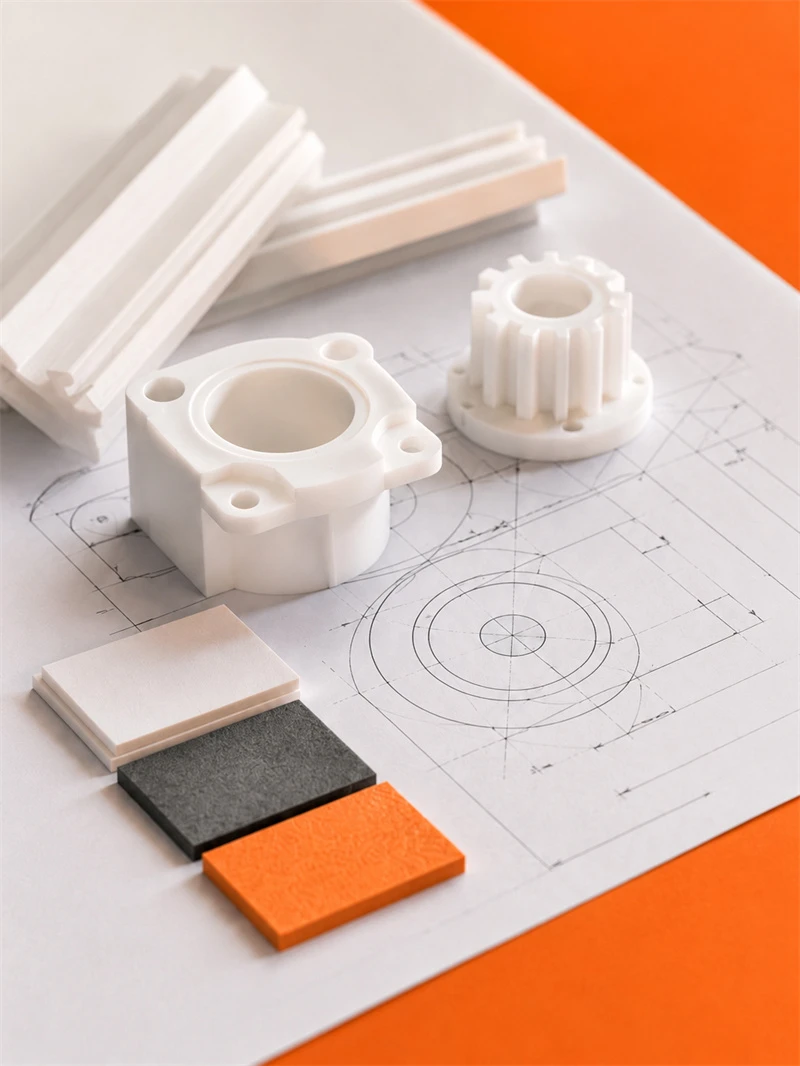
Engineering plastic parts suit friction, guide, support, buffer, anti-corrosion and insulation areas. We supply UHMWPE, POM, PA, PP/PE components for conveyor, food, mining, machinery, chemical and cable systems, with custom OEM service available.
Stay updated with our latest industry insights, company updates and featured articles.
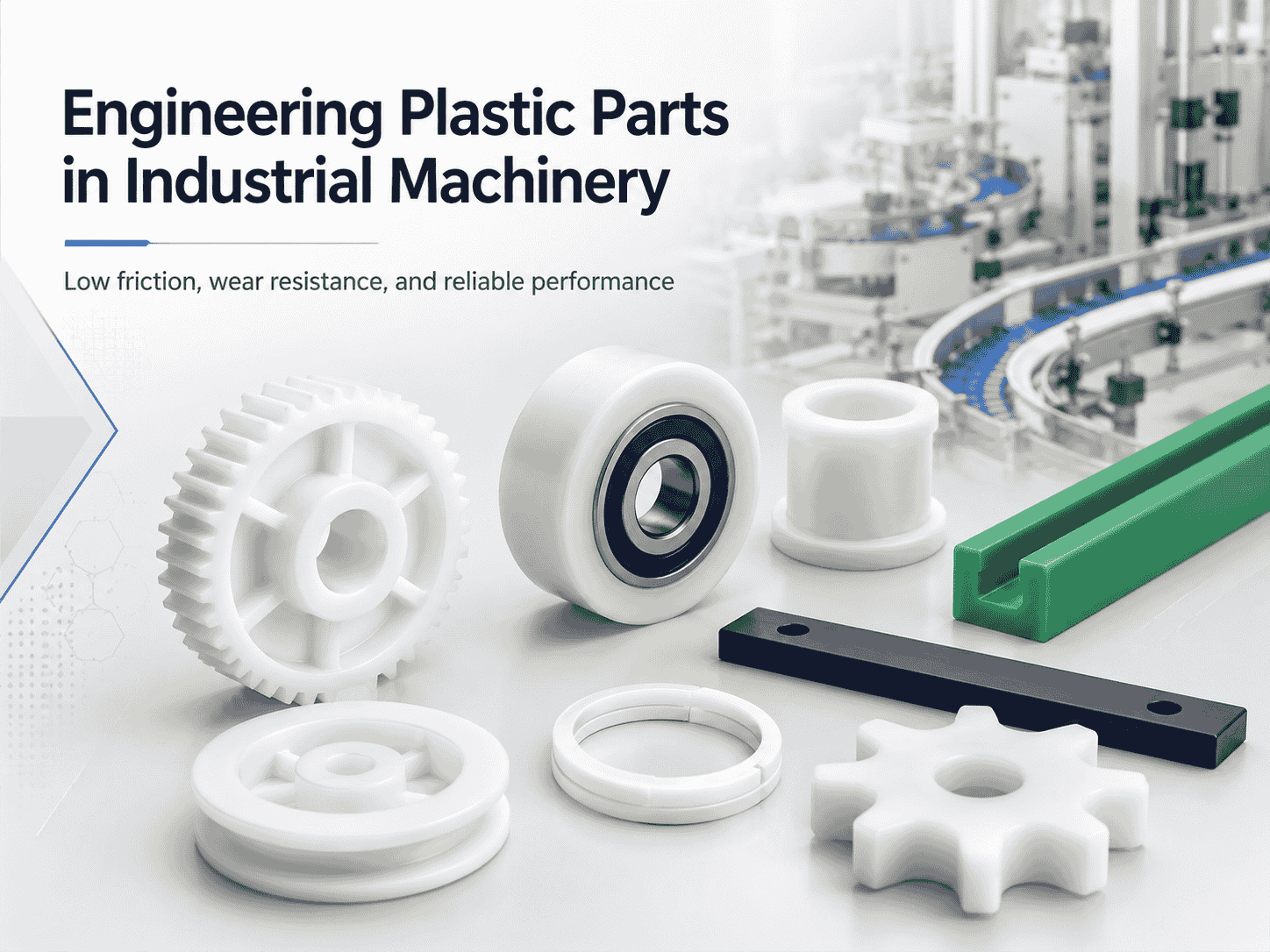
Engineering plastics are increasingly used in industrial machinery, automated production lines, conveyor systems, packaging equipment, and food-processing machines. Materials such as nylon, UHMWPE, POM, and
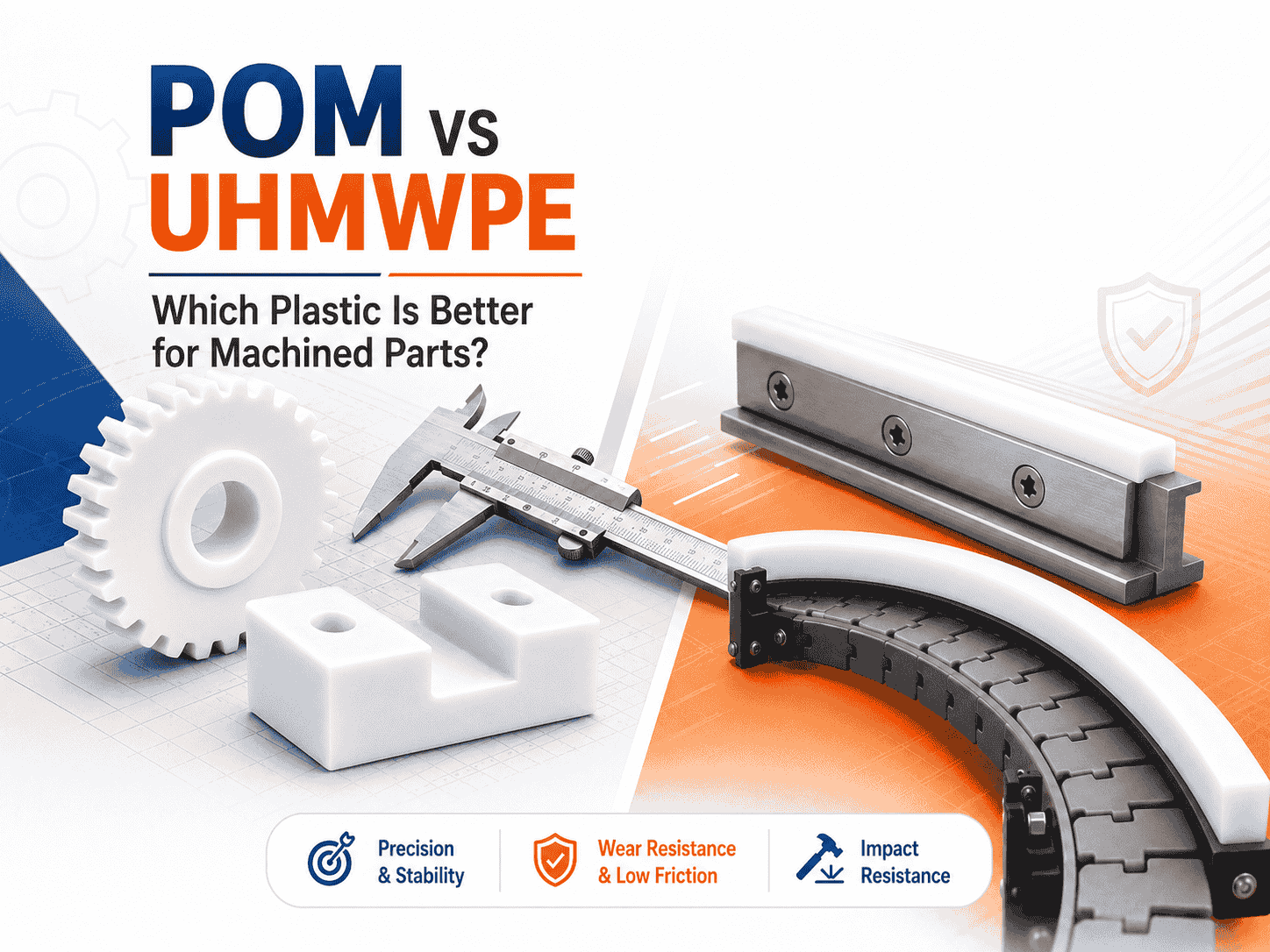
Both are lightweight, corrosion-resistant, wear-resistant, and suitable for CNC machining. However, they perform very differently
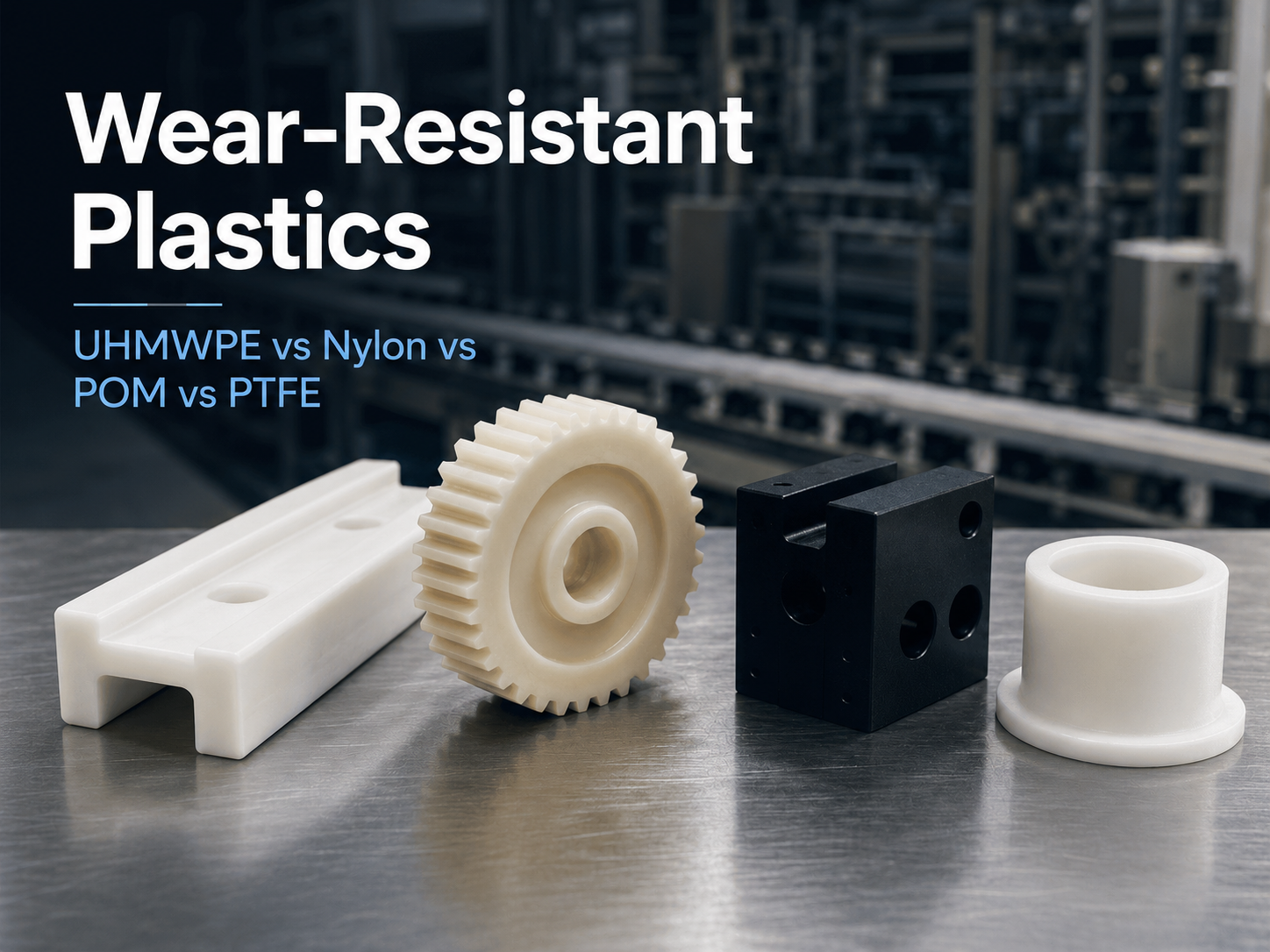
Wear is a common cause of failure in conveyor systems, packaging machinery, automated equipment, mining
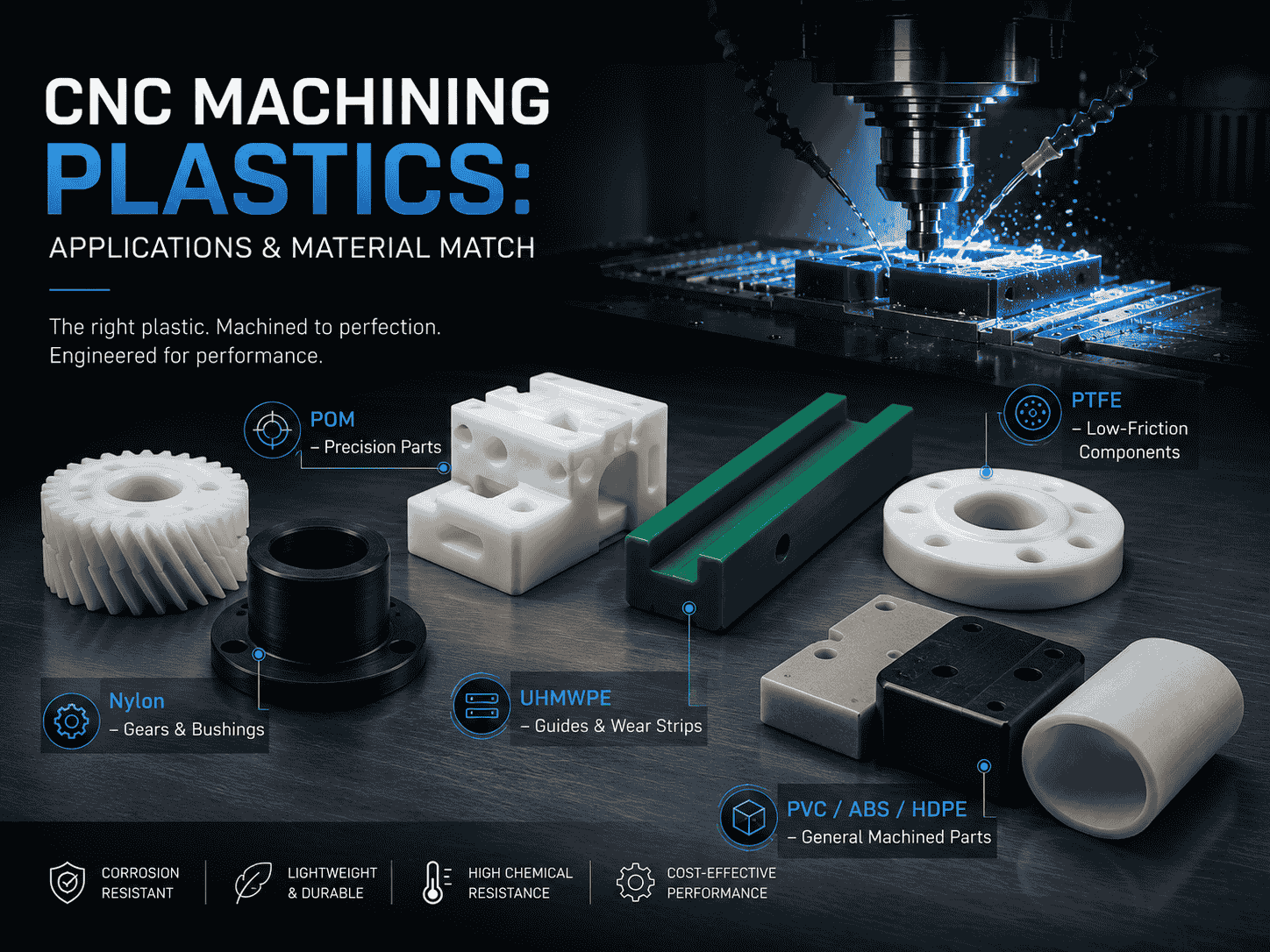
CNC machining is widely used to produce plastic prototypes, low-volume parts, replacement components, jigs, fixtures,
Both are lightweight, corrosion-resistant, wear-resistant, and suitable for CNC machining. However, they perform very differently
Wear is a common cause of failure in conveyor systems, packaging machinery, automated equipment, mining
CNC machining is widely used to produce plastic prototypes, low-volume parts, replacement components, jigs, fixtures,
Need UHMWPE sheets & custom plastic machined/OEM parts?Send specs & material needs, free quote within 24h.