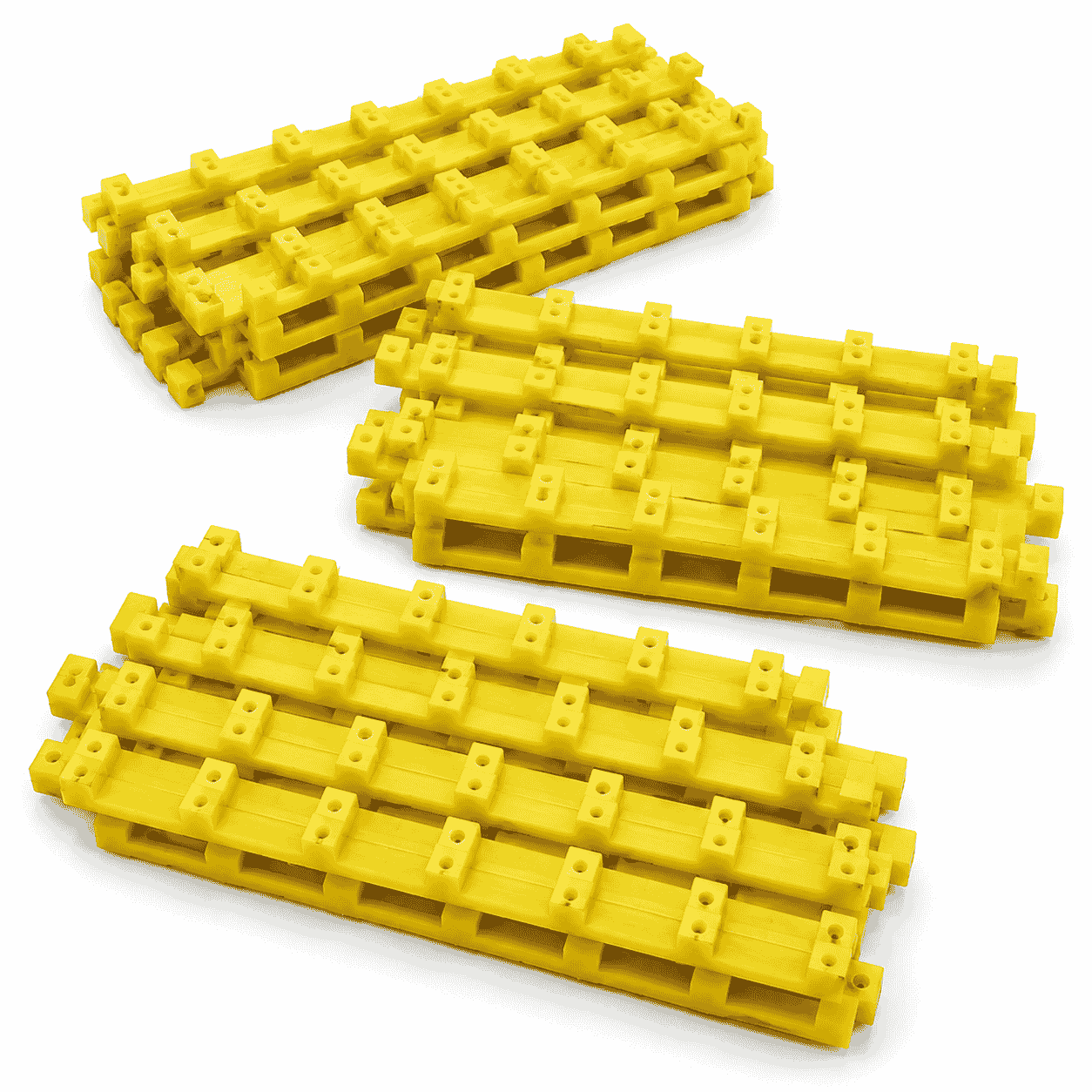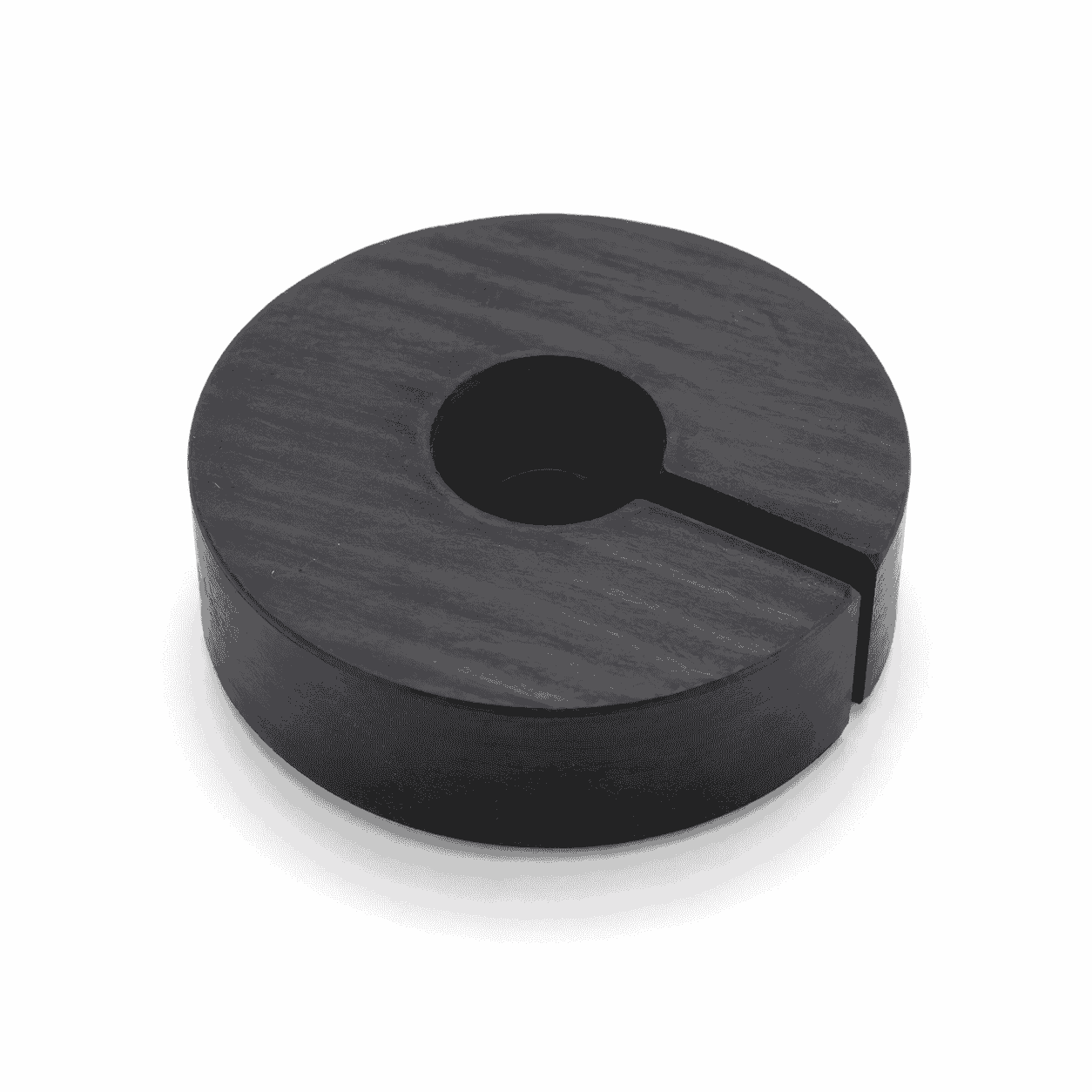
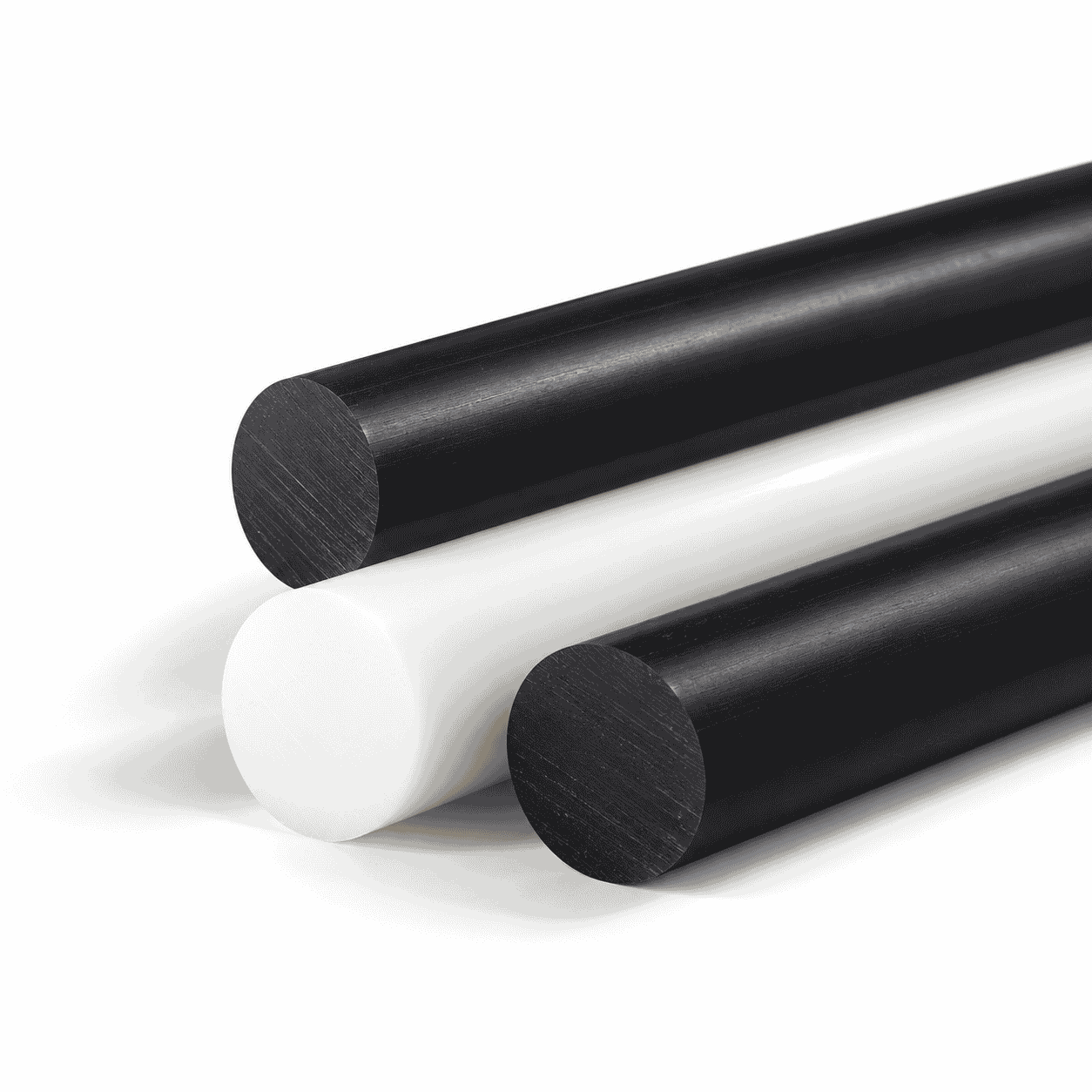
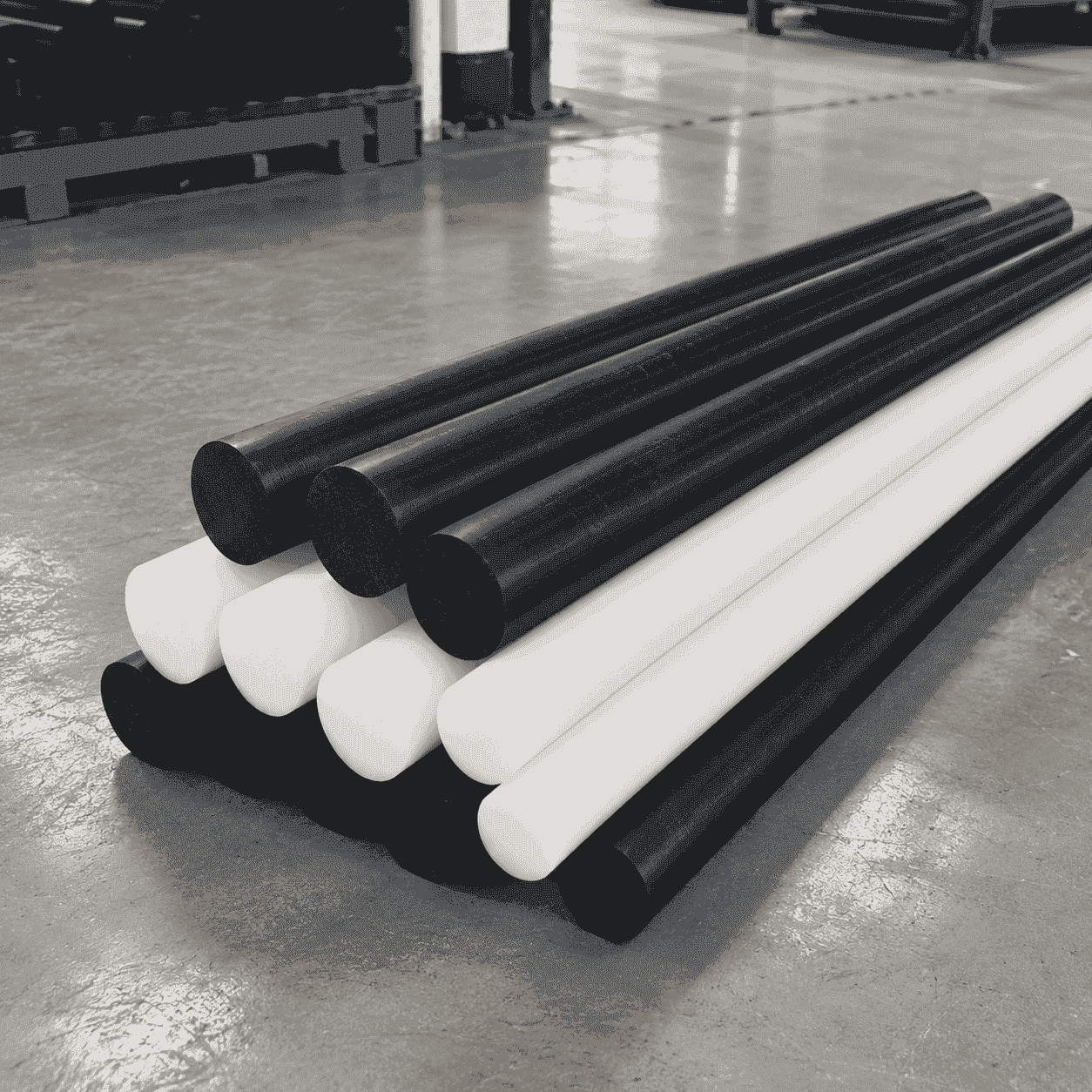
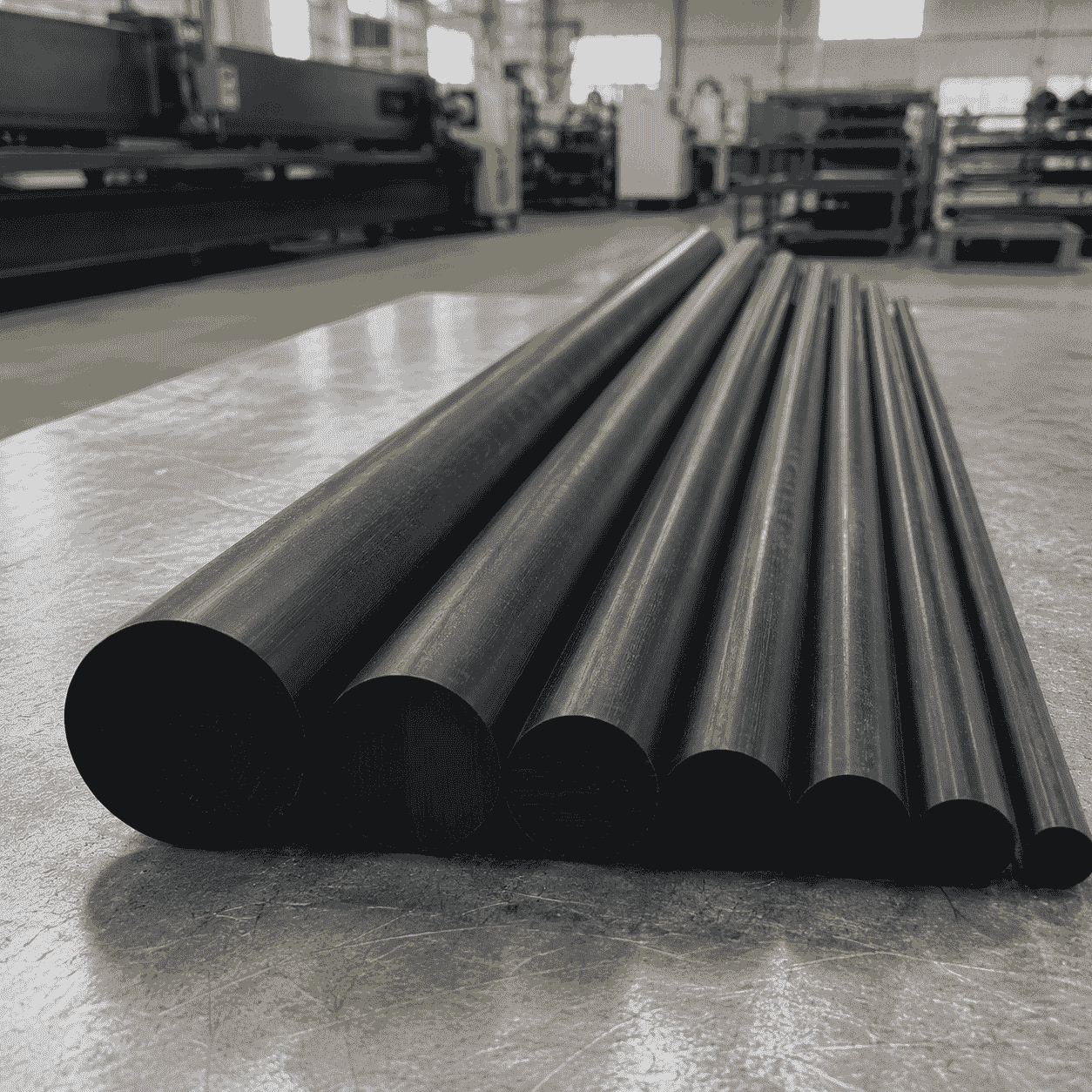
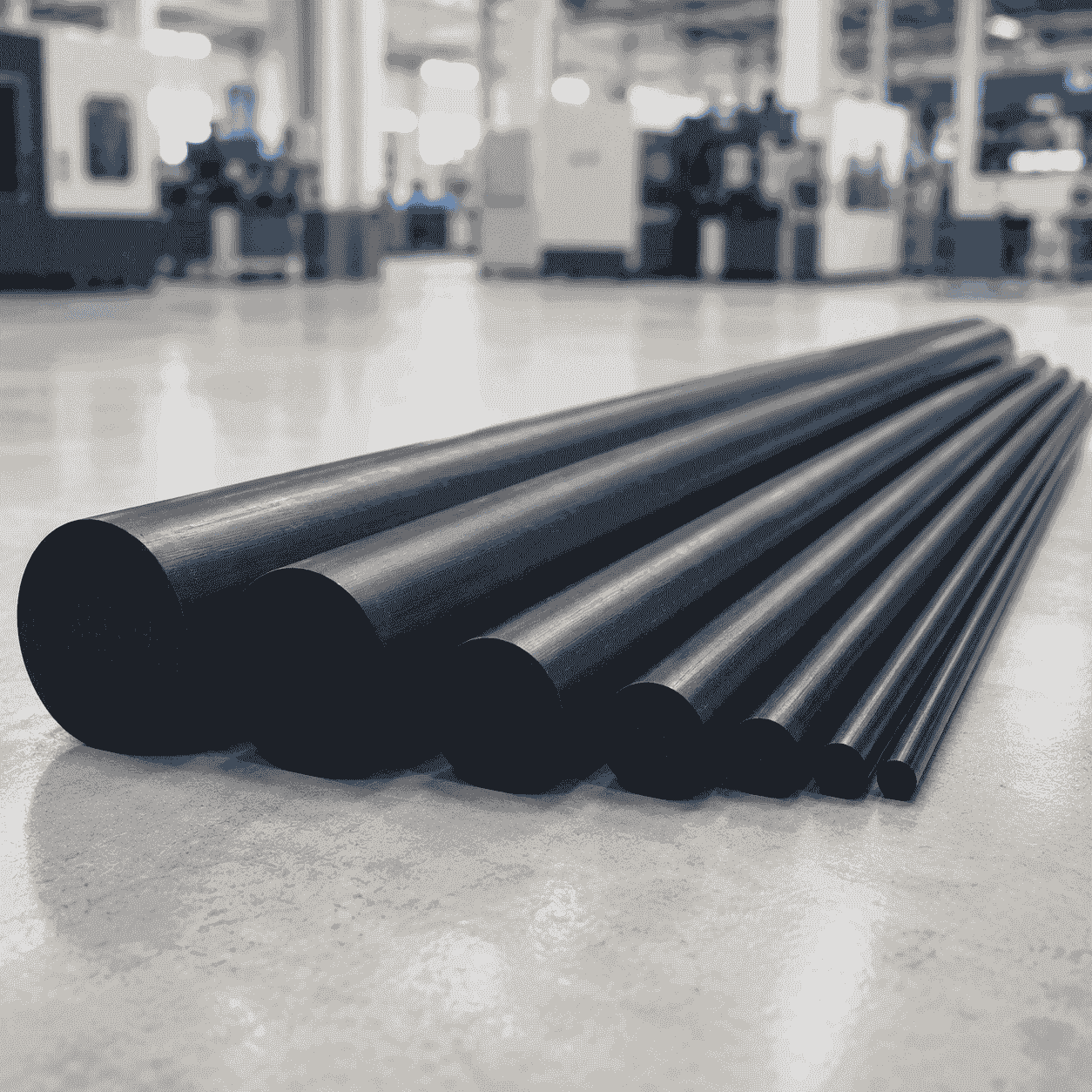
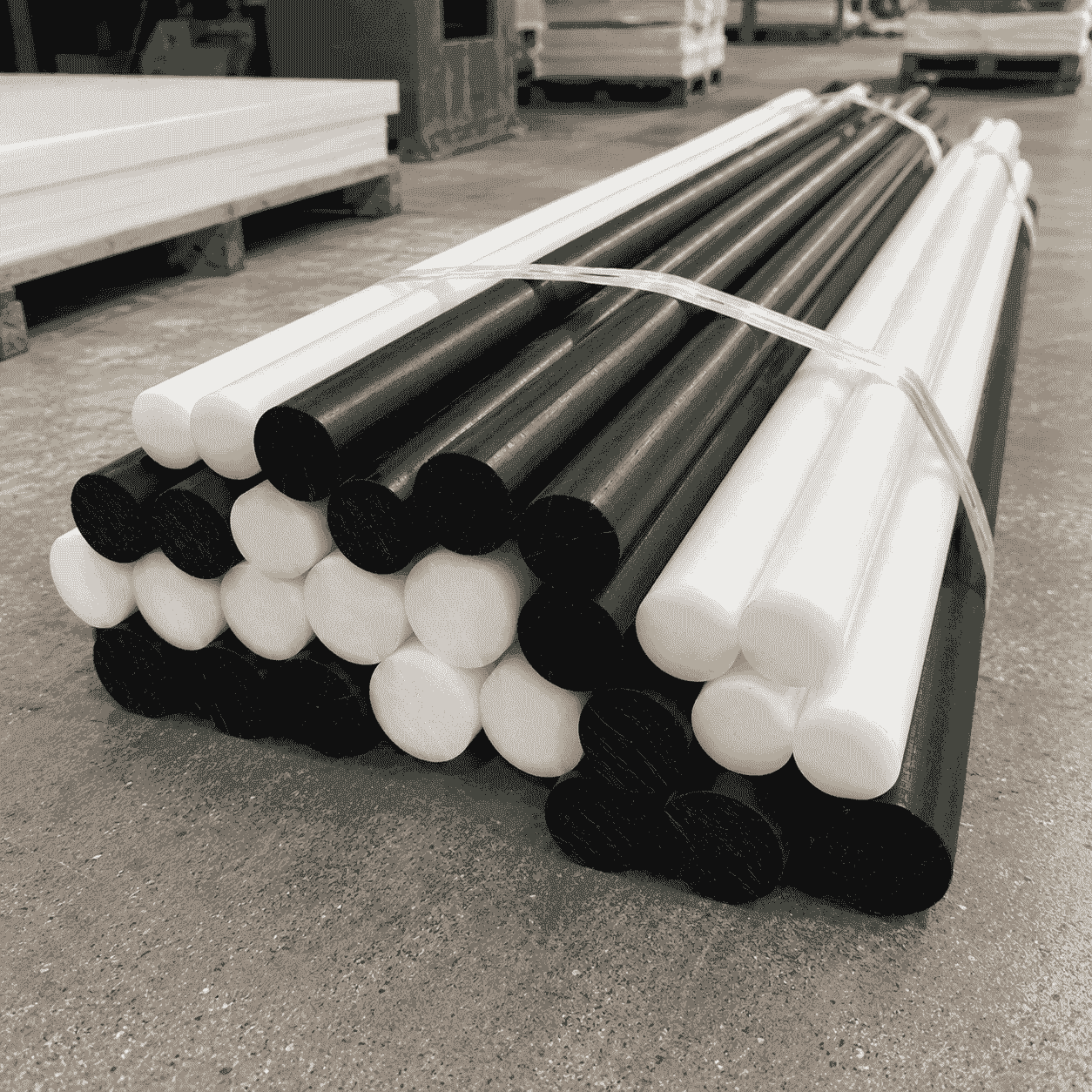
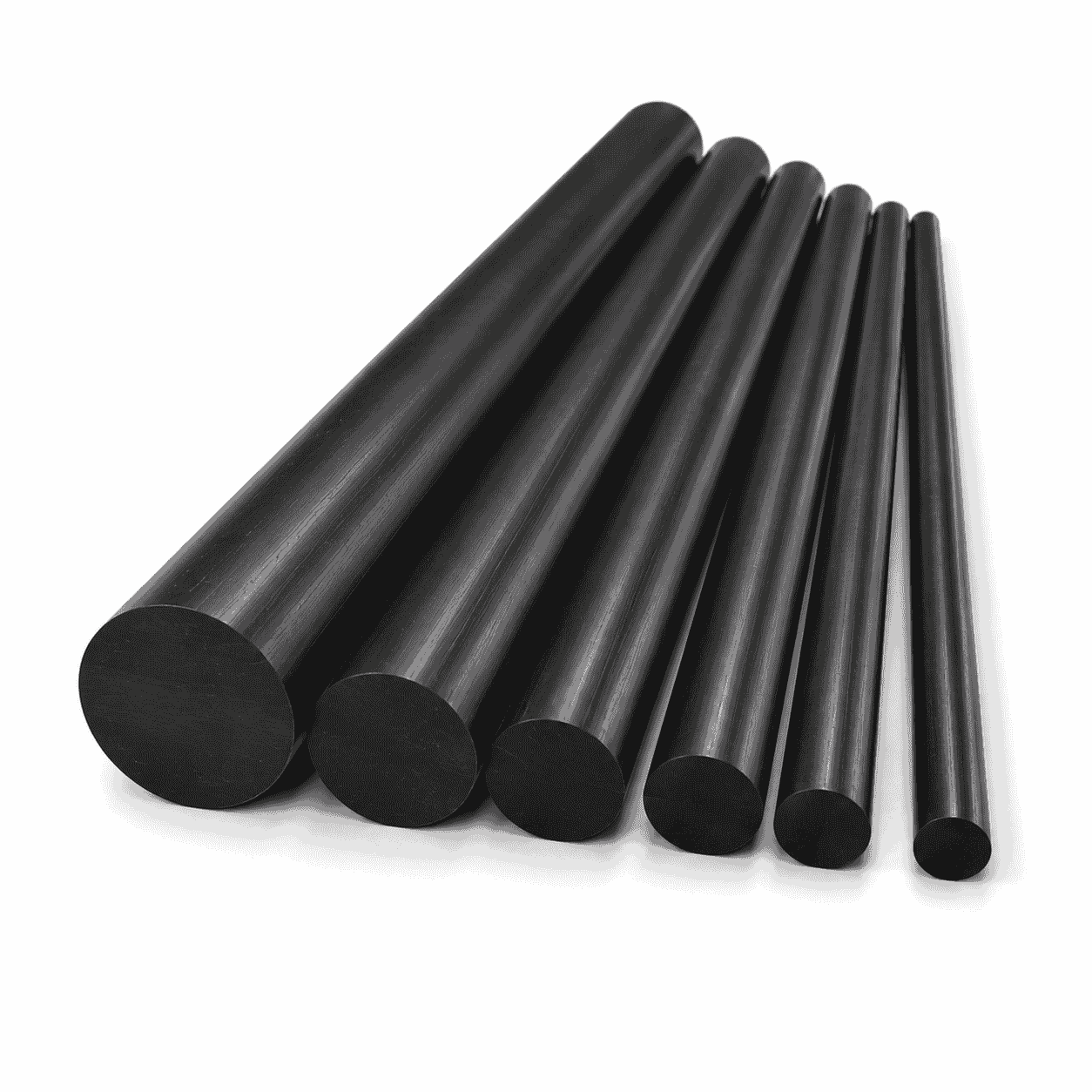
Conductive PE Rod is a black modified polyethylene round bar designed for components requiring controlled electrical conductivity, wear resistance, impact strength and low moisture absorption. It is suitable for conductive bushings, ESD rollers, sliding blocks, fixtures and automation equipment parts. Recommended reference sizes include Ø20–Ø100 mm × 1000 mm, with displayed diameter options extending from Ø15 to Ø200 mm. The exact PE grade and electrical resistance range should be confirmed before production.
Conductive PE Rod is a black modified polyethylene round bar designed for machined components that require controlled electrical conductivity together with the wear resistance, impact strength, chemical resistance and low moisture absorption of polyethylene.
Standard polyethylene is generally an electrical insulating material and may accumulate electrostatic charge during sliding, conveying or repeated contact. Conductive fillers such as carbon black or graphite can be incorporated into the polyethylene matrix to create conductive paths, allowing accumulated electrical charge to dissipate through a correctly designed grounding system.
The base polymer may be conductive UHMWPE, conductive HDPE or another specified polyethylene grade. Conductive, static-dissipative and antistatic polyethylene represent different electrical performance ranges and should not be treated as interchangeable materials. The exact PE grade, surface resistance and volume resistivity must therefore be confirmed before production.
For standard polyethylene rods and related PE materials, visit our Polyethylene PE Rod page. Finished components can also be manufactured through our CNC Plastic Machining service.
General information about the polymer is available from Wikipedia’s Polyethylene explanation. Additional information about conductivity and resistivity is available from Wikipedia’s Electrical Resistivity and Conductivity explanation.
Conductive PE Rod can be machined into static-control components for electronic, automation, packaging, conveying and material-handling equipment, including:
When electrical charge dissipation is required, the finished component should be incorporated into a correctly designed grounding system. Conductive material alone does not guarantee that the complete machine or production line will provide effective ESD protection.
The following dimensions are based on the supplied reference images. They are intended for product presentation and preliminary size selection rather than guaranteed stock specifications.
| Specification | Reference Information |
|---|---|
| Product Name | Conductive PE Rod |
| Material | Conductive polyethylene, conductive UHMWPE or conductive HDPE according to the required grade |
| Recommended Key Sizes | Ø20, Ø25, Ø30, Ø35, Ø40, Ø50, Ø60, Ø70, Ø80, Ø90 and Ø100 mm × 1000 mm |
| Common Reference Range | Ø15–Ø100 mm × 1000 mm |
| Displayed Reference Diameters | Ø15, Ø20, Ø25, Ø30, Ø35, Ø40, Ø45, Ø50, Ø55, Ø60, Ø65, Ø70, Ø80, Ø90, Ø100, Ø110, Ø120, Ø130, Ø140, Ø150, Ø160, Ø170, Ø180 and Ø200 mm |
| Reference Length | 1000 mm / 1 meter |
| Other Sizes | Other diameters and lengths can be produced or cut according to actual requirements |
| Common Color | Black |
| Processing Options | Cutting, turning, milling, drilling, boring, grooving, tapping and chamfering |
Size notice: The images show a common reference range of Ø15–Ø100 mm and expanded displayed options extending to Ø200 mm. These dimensions do not represent guaranteed stock availability. Actual diameter, length, PE grade, conductivity level, machining allowance, straightness, tolerance, minimum order quantity and delivery time should be confirmed before production.
Conductive PE Rod can be processed by CNC turning, milling, drilling, boring, grooving, tapping, cutting and chamfering. Our CNC Plastic Machining service supports prototype production and batch manufacturing according to customer drawings, physical samples and operating conditions.
Sharp cutting tools, controlled cutting temperatures and suitable clamping forces are recommended when machining polyethylene. Excessive heat or clamping pressure may cause local deformation, burr formation or dimensional variation. Long rods and thin-wall components should be adequately supported during machining.
When conductivity is critical, the electrical performance of the finished component should be tested after machining. Surface condition, contamination, part geometry, machining direction and contact with grounding hardware may influence the measured resistance.
The correct Conductive PE Rod grade should be selected according to the required resistance range, mechanical load, sliding speed, operating temperature, chemical medium, mating material and dimensional tolerance.
Conductive UHMWPE may be selected where wear resistance, impact resistance and low friction are important. Conductive HDPE may be considered where greater rigidity or different processing characteristics are required. The exact material selection should be based on the actual operating conditions rather than product color alone.
Conductive PE Rod is suitable for customers requiring a machinable polyethylene material that combines static-charge control with wear resistance, impact strength, low moisture absorption and corrosion resistance. The PE grade, electrical performance, diameter and finished component structure should be confirmed before production.
Check drawings for full specifications and confirm materials according to service conditions to prevent product defects.
Inspect all key processing steps and fully verify dimensions, holes, grooves and fitting surfaces.
Deburr, chamfer and clean products for easy installation. Ensure uniform quality among batch products.
Choose appropriate packaging solutions based on product features to protect goods from collision, deformation and mixing during transit.
Unlike metal parts, engineering plastic components still require strict control over dimensions, holes, edges, surface, materials and assembly performance for equipment use.
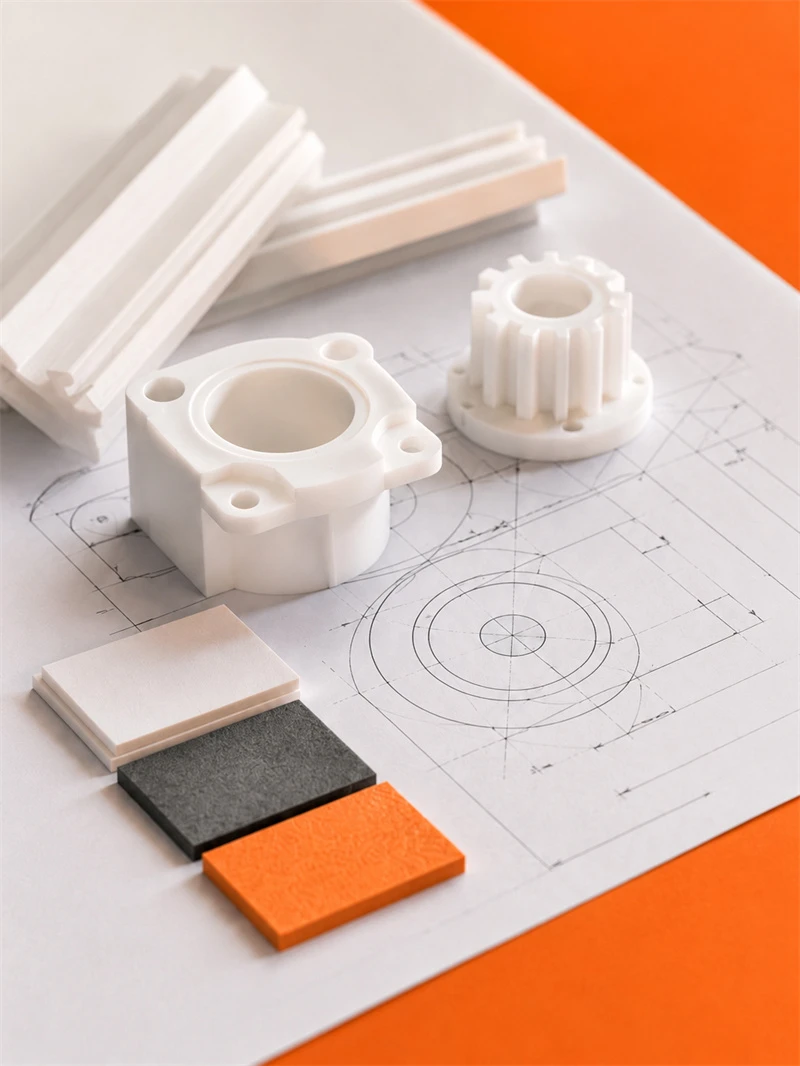
Engineering plastic parts suit friction, guide, support, buffer, anti-corrosion and insulation areas. We supply UHMWPE, POM, PA, PP/PE components for conveyor, food, mining, machinery, chemical and cable systems, with custom OEM service available.
Stay updated with our latest industry insights, company updates and featured articles.
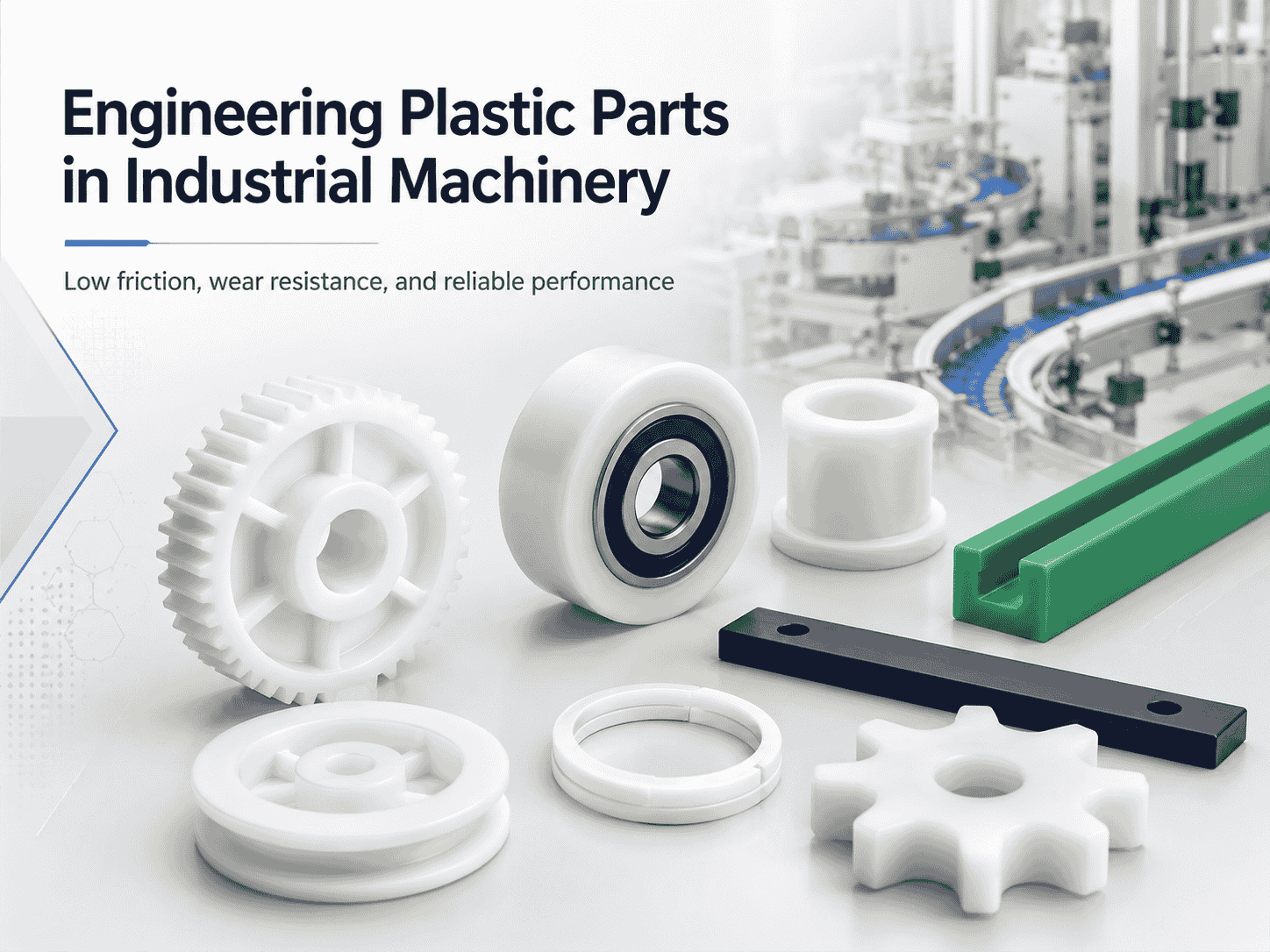
Engineering plastics are increasingly used in industrial machinery, automated production lines, conveyor systems, packaging equipment, and food-processing machines. Materials such as nylon, UHMWPE, POM, and
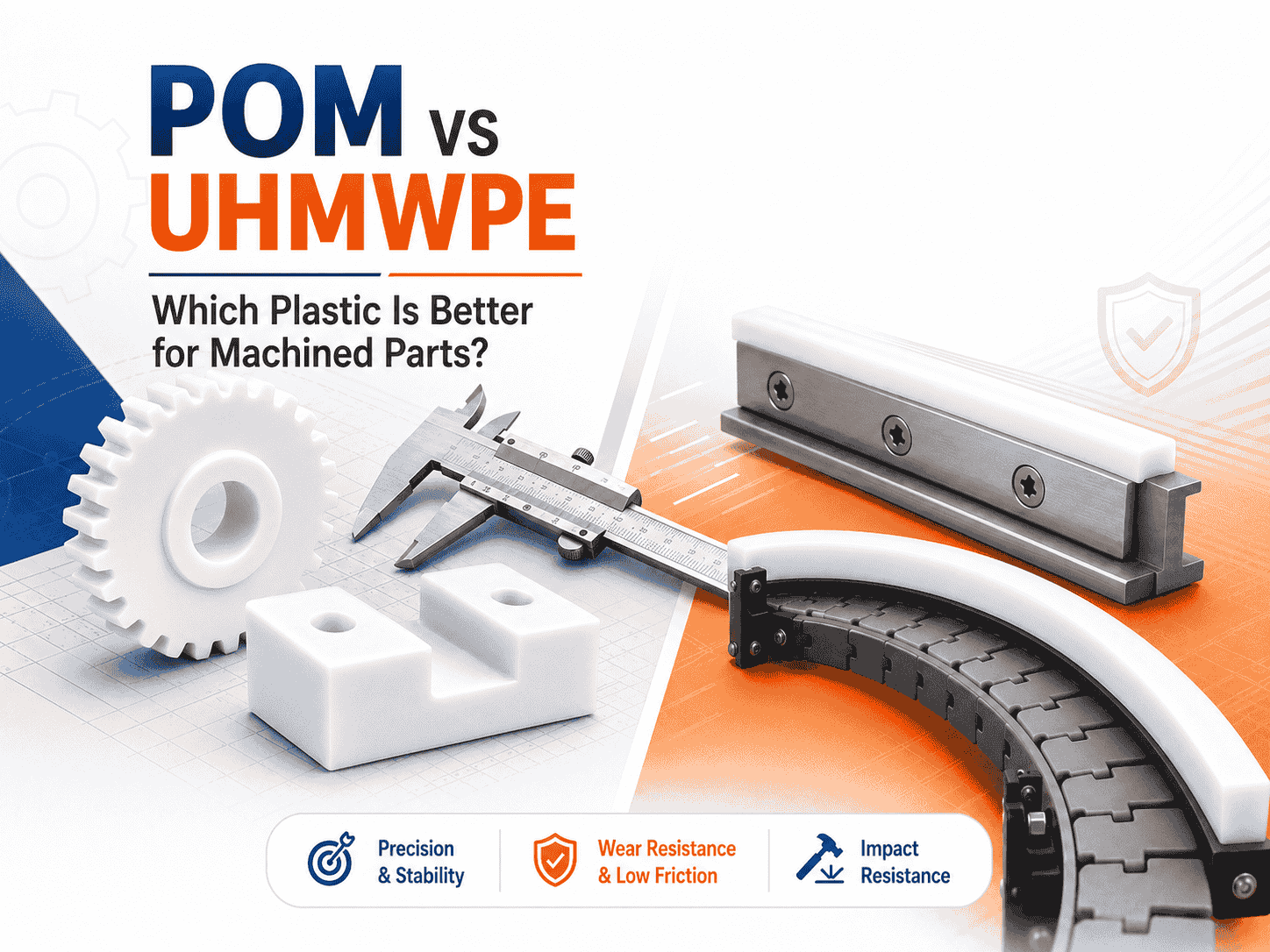
Both are lightweight, corrosion-resistant, wear-resistant, and suitable for CNC machining. However, they perform very differently
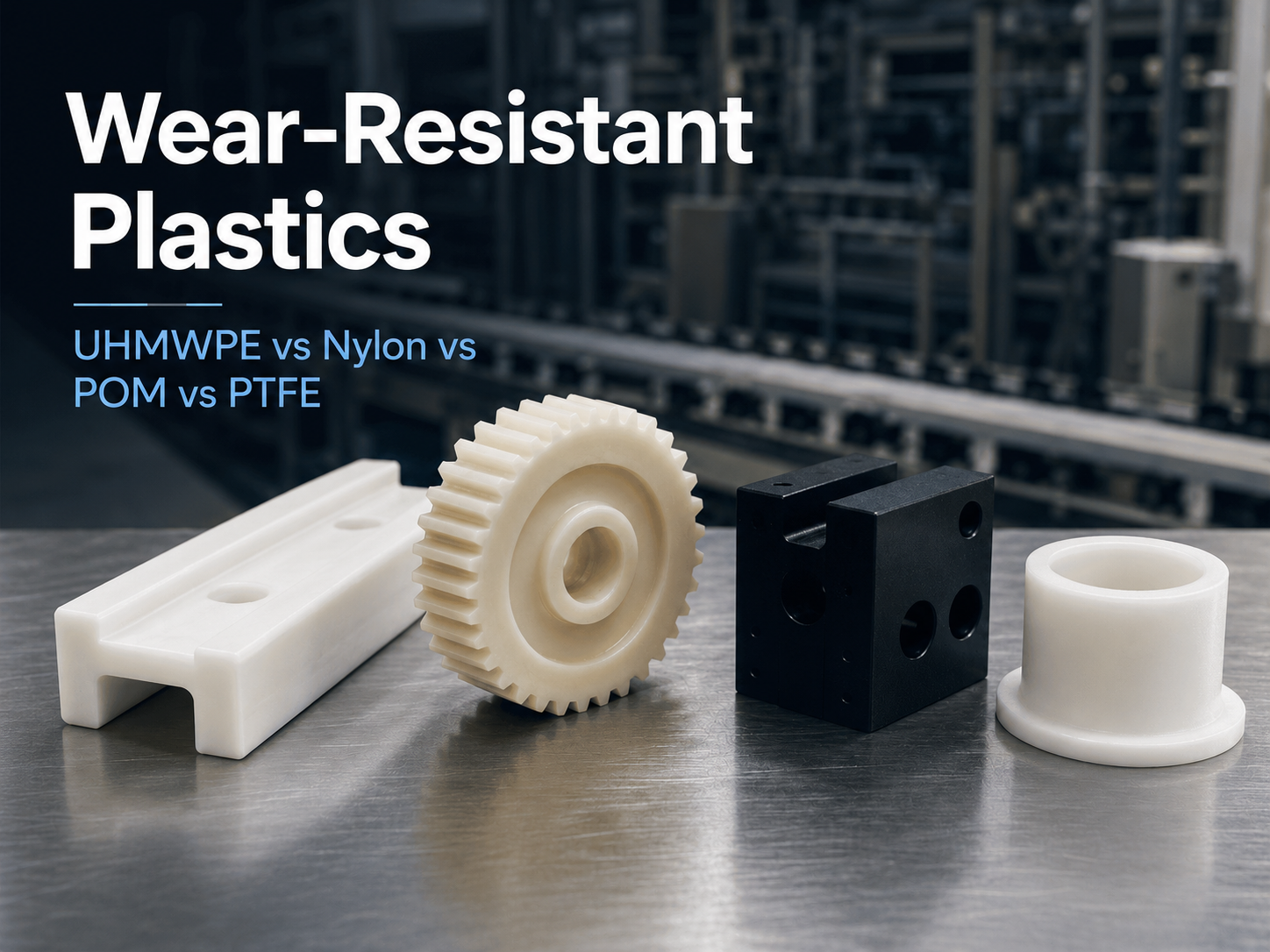
Wear is a common cause of failure in conveyor systems, packaging machinery, automated equipment, mining
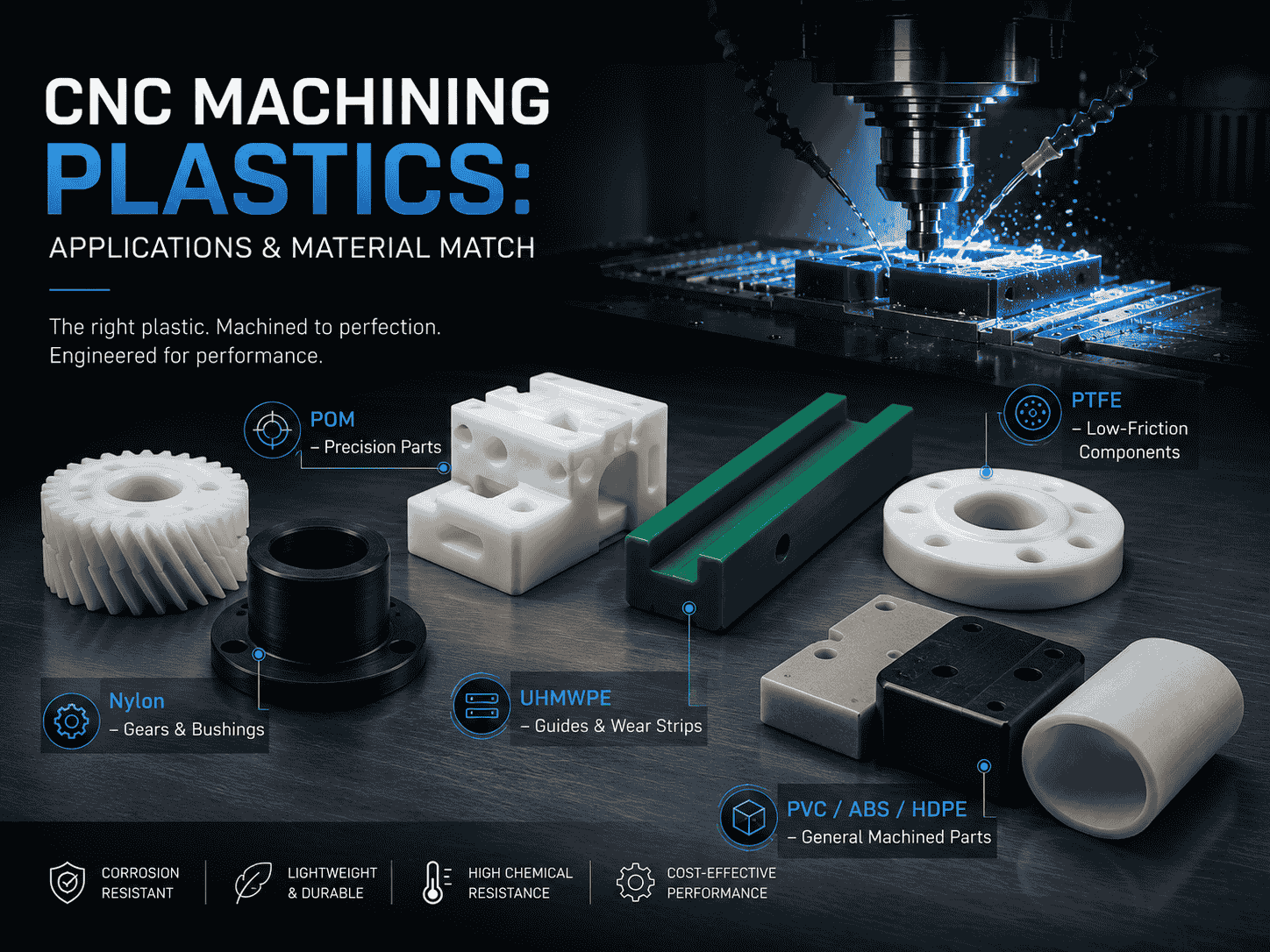
CNC machining is widely used to produce plastic prototypes, low-volume parts, replacement components, jigs, fixtures,
Both are lightweight, corrosion-resistant, wear-resistant, and suitable for CNC machining. However, they perform very differently
Wear is a common cause of failure in conveyor systems, packaging machinery, automated equipment, mining
CNC machining is widely used to produce plastic prototypes, low-volume parts, replacement components, jigs, fixtures,

Need UHMWPE sheets & custom plastic machined/OEM parts?Send specs & material needs, free quote within 24h.