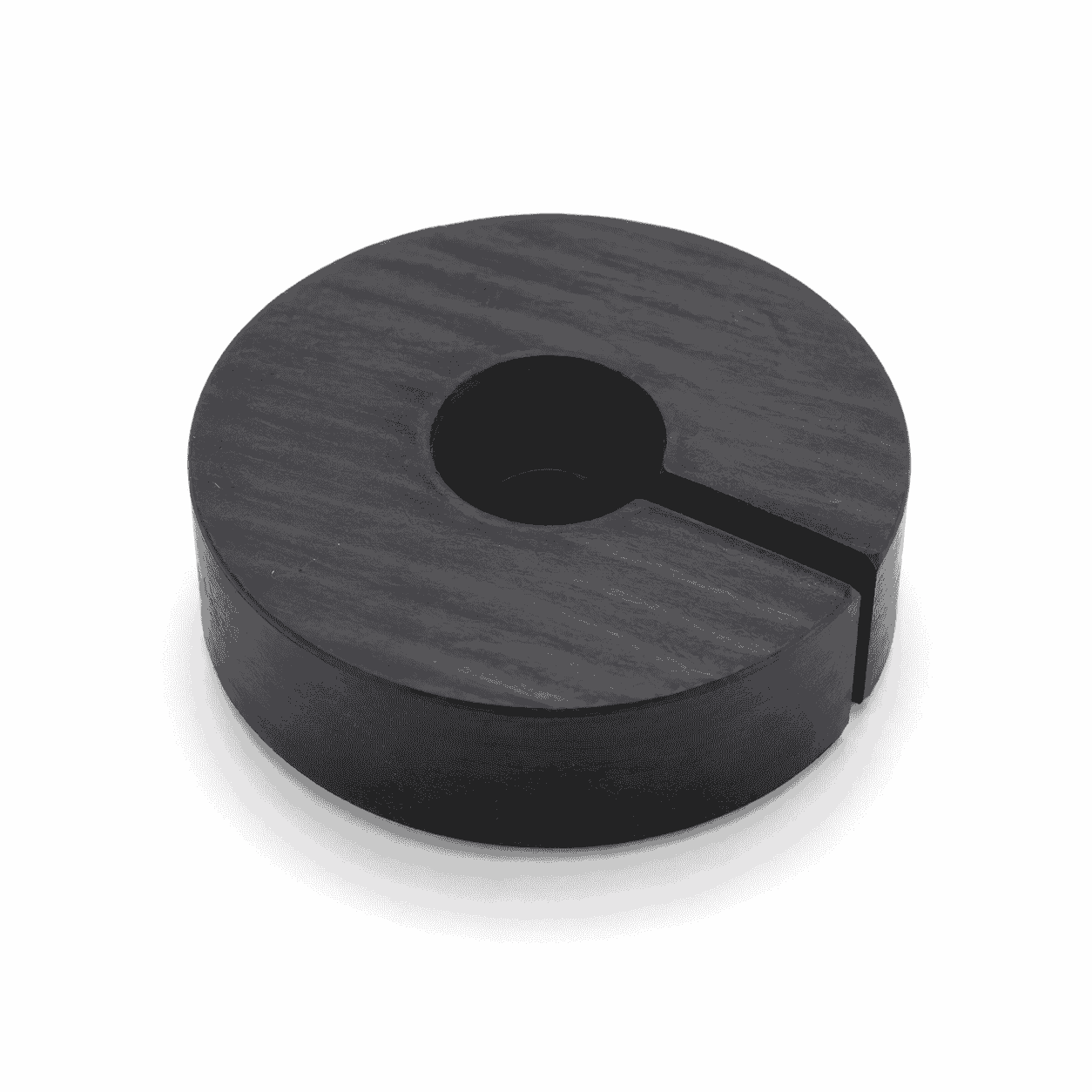
Self-Lubricating PE Rod for Low-Friction Components
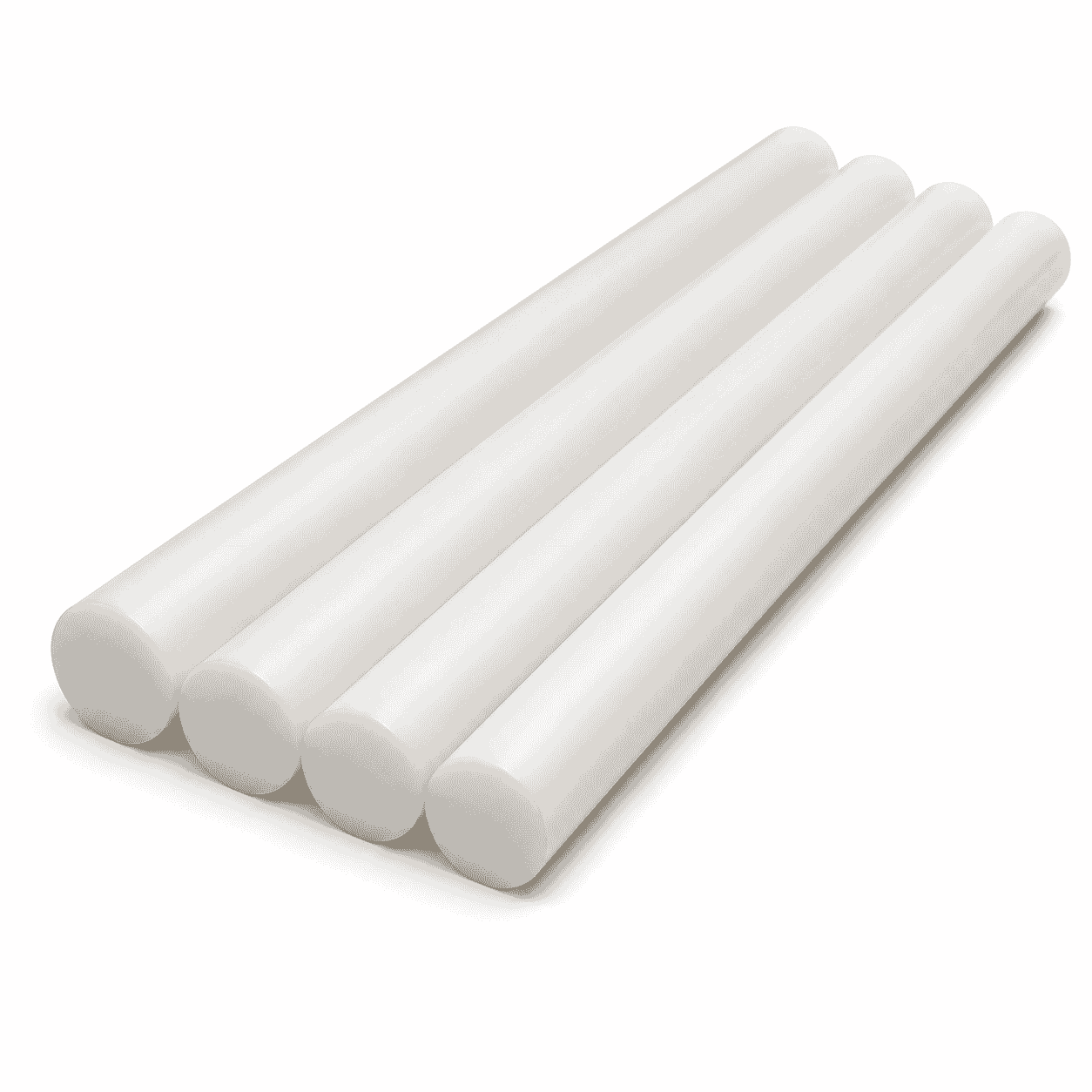
Self-Lubricating PE Rod is a low-friction polyethylene round bar designed for sliding, guiding, supporting and wear-resistant industrial components. Depending on the required wear resistance, impact strength, rigidity and machining performance, the material can be supplied in UHMWPE, HDPE or another specified polyethylene grade.
The term self-lubricating refers to the naturally low-friction surface of the selected polyethylene material. It does not necessarily mean that oil, grease or another liquid lubricant has been added to the rod. Under suitable loads, speeds and operating conditions, machined PE components can operate with reduced external lubrication and help decrease noise, surface wear and maintenance requirements.
For standard polyethylene rods and related material options, visit our Polyethylene PE Rod page. Finished components can also be produced through our CNC Plastic Machining service.
Polyethylene includes several material types with different molecular weights, densities and mechanical properties. General material information is available from Wikipedia’s Polyethylene explanation. More information about the low-friction and self-lubricating characteristics of UHMWPE is available from Wikipedia’s UHMWPE explanation.
Main Features of Self-Lubricating PE Rod
- Low-friction surface for sliding and guiding applications
- Reduced requirement for frequent external lubrication
- Good wear resistance, especially when using UHMWPE grades
- Good impact resistance and mechanical toughness
- Very low moisture absorption
- Resistance to many acids, alkalis and industrial chemicals
- Lower operating noise than many metal-to-metal components
- Does not rust in wet or humid environments
- Lightweight compared with metal components
- Suitable for CNC turning, milling, drilling and boring
- Available in multiple reference diameters
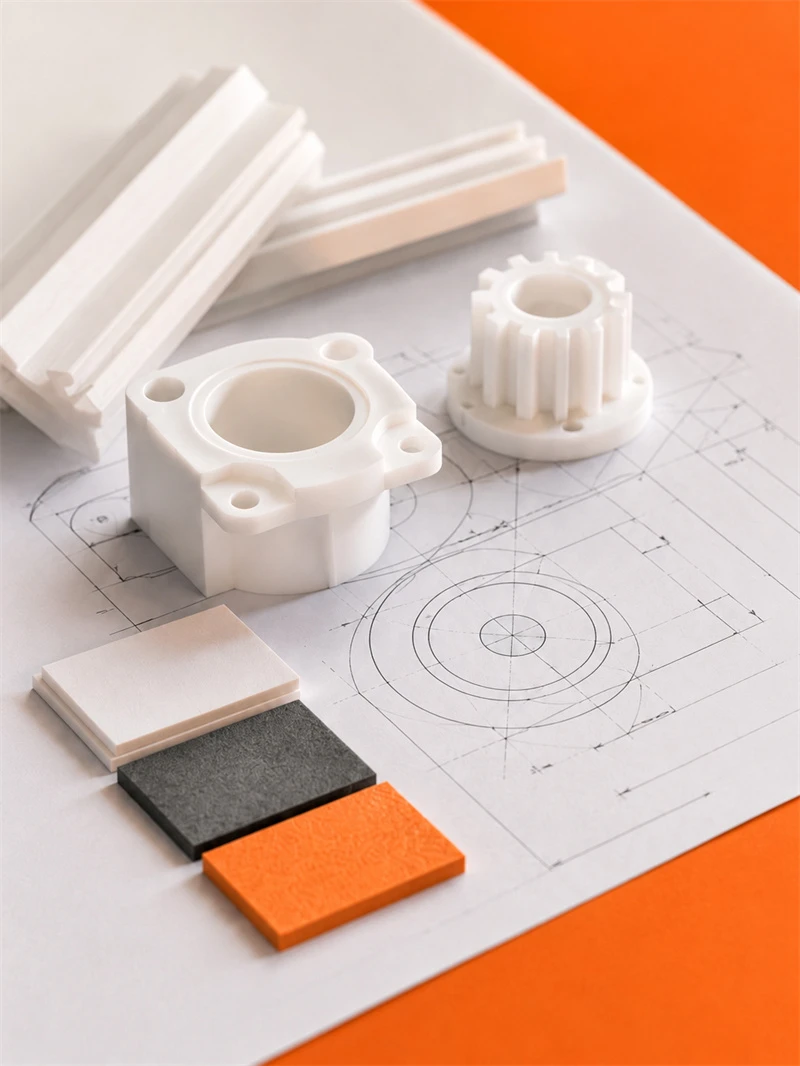
- Finished parts can be machined according to drawings or samples
Typical Applications of Self-Lubricating PE Rod
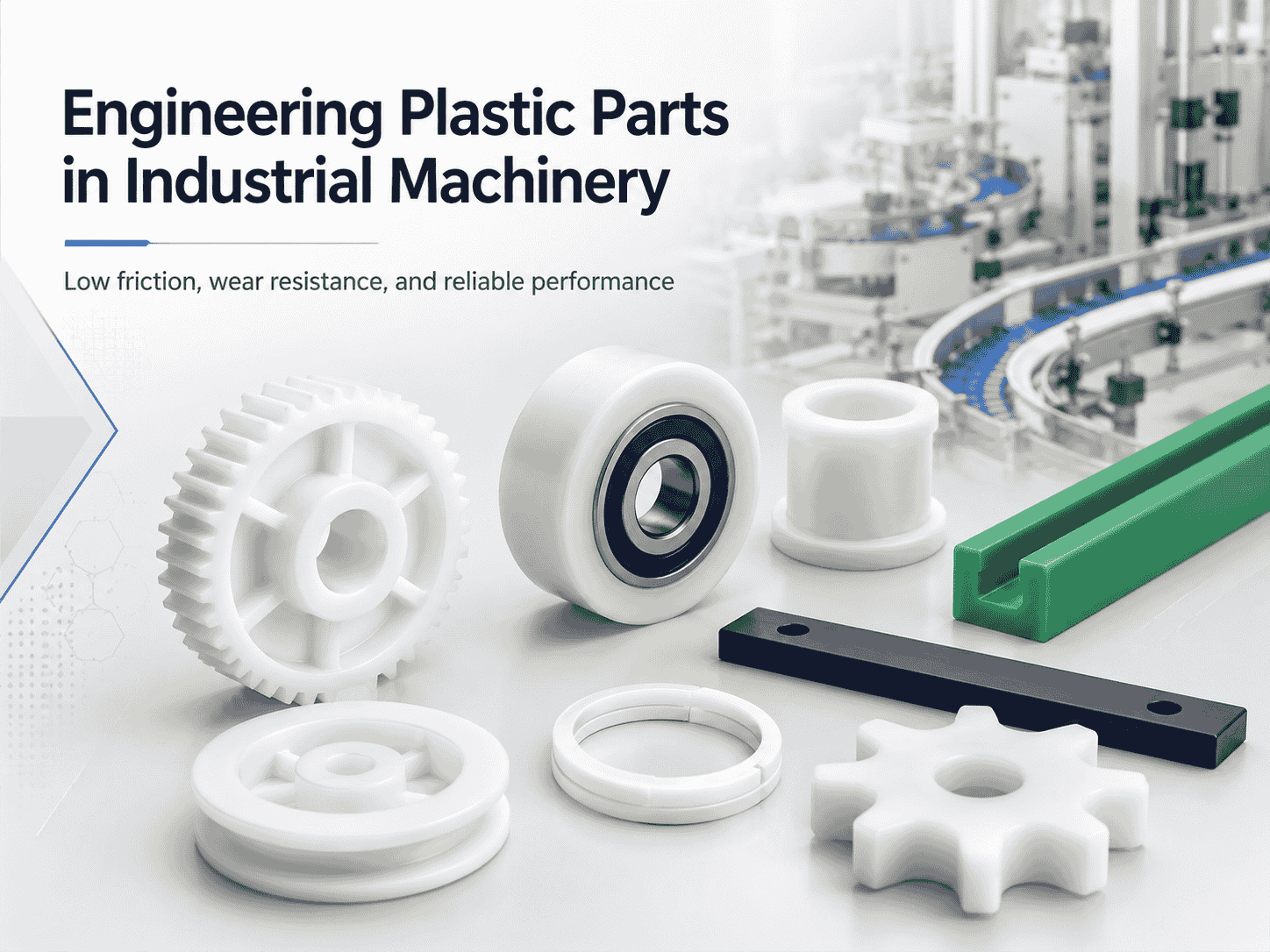
Self-Lubricating PE Rod can be machined into a wide range of moving, sliding and supporting components, including:
- Bushings and plain bearing sleeves
- Guide rollers and support rollers
- Sliding blocks and guide blocks
- Wear pads and thrust washers
- Conveyor guides and transfer components
- Chain guides and guide rail components
- Star wheels and product-handling parts
- Spacer sleeves and distance rings
- Pulleys and low-load wheels
- Packaging machinery change parts
- Food and beverage conveying equipment parts
- Automation and material-handling equipment components
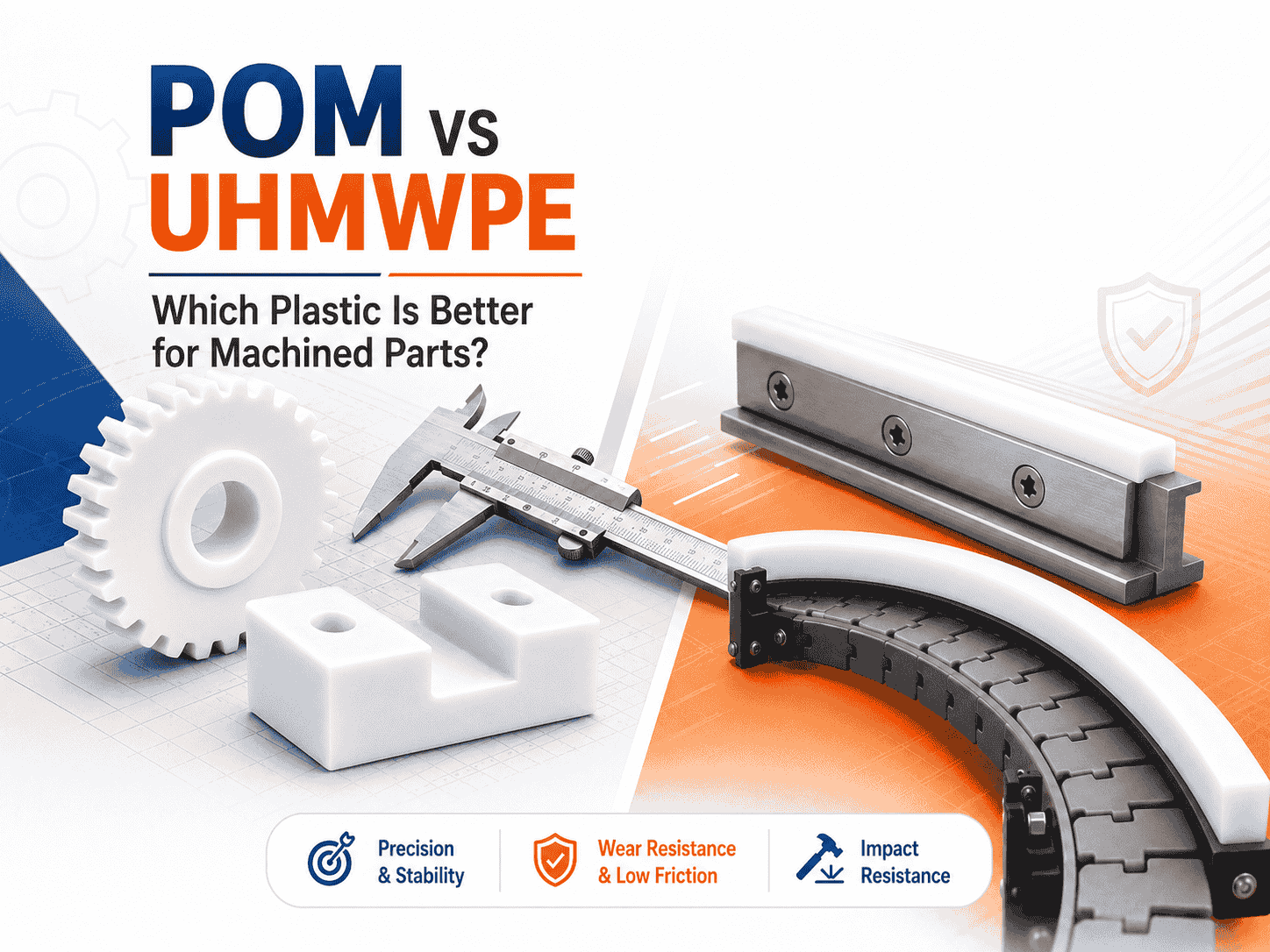
The final material grade should be selected according to mechanical load, sliding speed, operating temperature, mating material, dimensional tolerance and service environment. UHMWPE is generally preferred where wear resistance, impact resistance and low friction are the main requirements, while HDPE may be considered where greater rigidity and easier conventional processing are required.
Reference Sizes of Self-Lubricating PE Rod
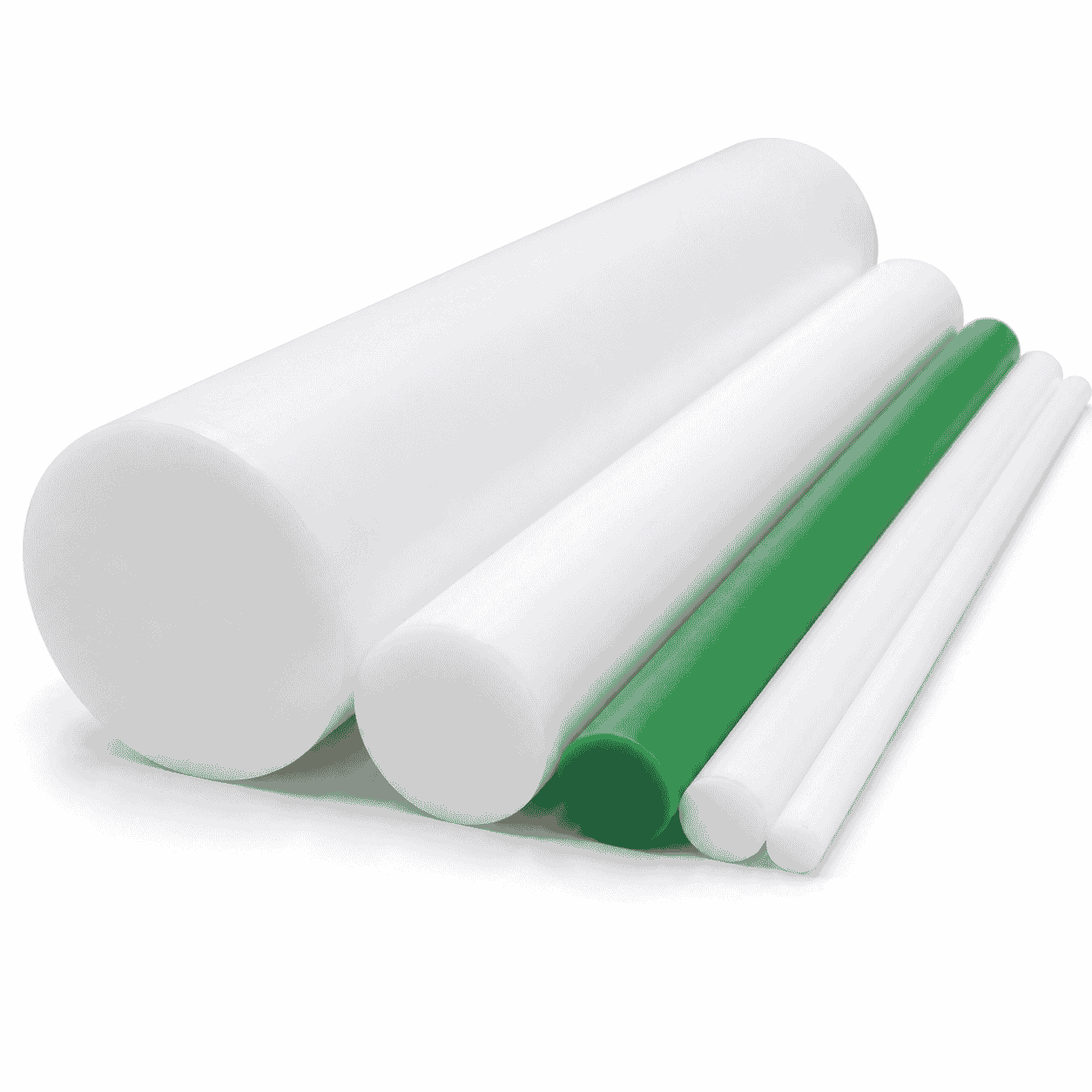
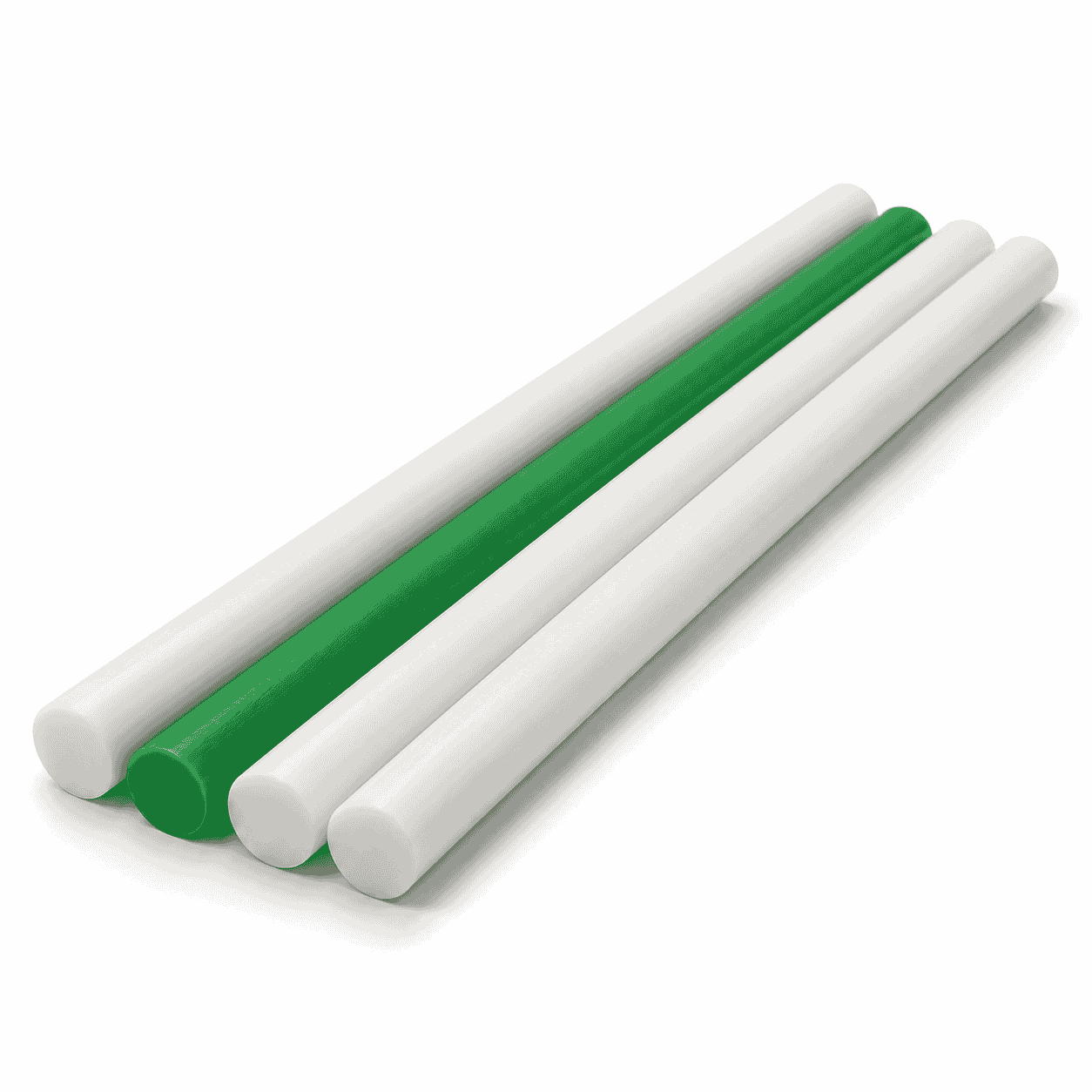
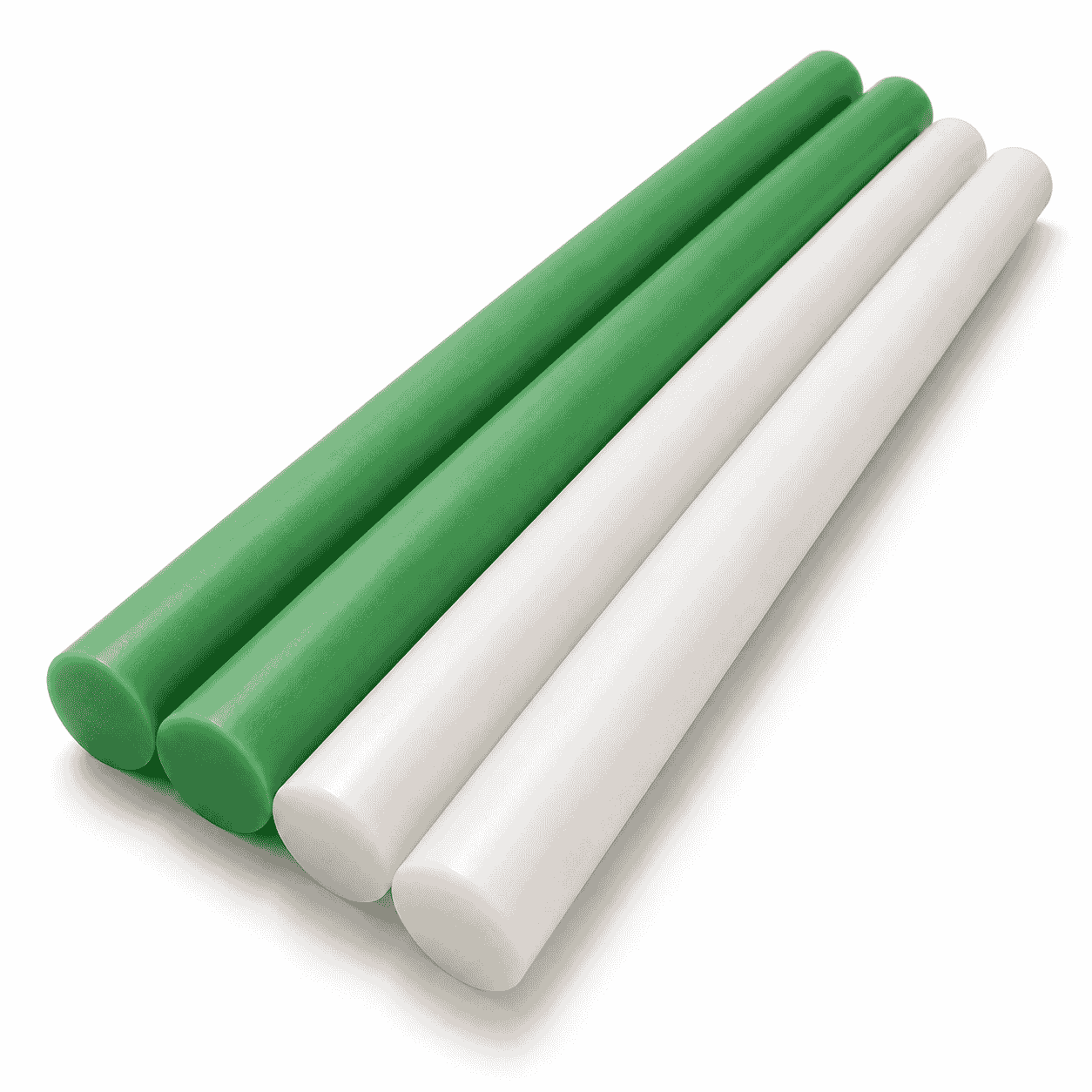
The following dimensions are taken from the supplied reference image. The image shows two groups of polyethylene rods: imported white PE rods and UHMWPE rods. These dimensions should be treated as reference production and sales sizes rather than guaranteed inventory.
| Specification |
Reference Information |
| Product Name |
Self-Lubricating PE Rod |
| Possible Material Grades |
UHMWPE, HDPE or another specified low-friction polyethylene grade |
| Imported White PE Rod Diameters |
Ø6, Ø8, Ø10, Ø12, Ø15, Ø20, Ø25, Ø30, Ø35, Ø40, Ø45, Ø50, Ø55, Ø60, Ø65, Ø70, Ø75, Ø80, Ø85, Ø90, Ø95, Ø100, Ø110, Ø120, Ø130, Ø140, Ø150, Ø160, Ø170, Ø180, Ø190, Ø200, Ø210, Ø220, Ø230, Ø250, Ø280 and Ø300 mm |
| UHMWPE Rod Diameters |
Ø15, Ø20, Ø25, Ø30, Ø35, Ø40, Ø45, Ø50, Ø55, Ø60, Ø65, Ø70, Ø75, Ø80, Ø85, Ø90, Ø100, Ø110, Ø120, Ø130, Ø140, Ø150, Ø160, Ø170, Ø180, Ø200 and Ø210 mm |
| Combined Reference Range |
Ø6–Ø300 mm |
| Reference Length |
1000 mm / 1 meter |
| Common Color |
Natural white or milky white; other colors depend on the selected grade |
| Processing Options |
Cutting, turning, milling, drilling, boring, grooving, tapping and chamfering |
| Finished Components |
Machining according to drawings, samples and operating requirements |
Size notice: The dimensions above are reference specifications taken from the supplied image. They do not represent guaranteed stock availability. Actual diameter, length, material grade, surface condition, machining allowance, straightness, tolerance, minimum order quantity and delivery time should be confirmed before production.
Large-diameter rods may use different manufacturing processes and machining allowances from smaller extruded rods. Other diameters, cut lengths and finished components can be evaluated according to drawings, samples and equipment requirements.
CNC Machining of Self-Lubricating PE Rod
Self-Lubricating PE Rod can be processed by CNC turning, milling, drilling, boring, cutting, grooving, tapping and chamfering. Our CNC Plastic Machining service supports prototype production and batch manufacturing according to customer drawings, physical samples and operating conditions.
Sharp cutting tools, suitable feed rates and controlled cutting temperatures are recommended when machining polyethylene. Excessive cutting heat or clamping pressure may cause deformation, burr formation and dimensional variation. Long rods and thin-wall components should be properly supported during machining.
Because polyethylene has a relatively low elastic modulus, finished components may deform under sustained load. Machining allowance, installation clearance, wall thickness and support structure should therefore be determined according to the actual component design.
Material Selection Notes
- Self-lubricating PE is not necessarily an oil-filled or grease-filled material.
- UHMWPE and HDPE have different wear resistance, rigidity and machining behavior.
- White color alone cannot confirm the exact polyethylene grade.
- Low friction does not guarantee lubrication-free operation under every load and speed.
- The mating material and surface finish can influence wear performance.
- Continuous operating temperature should be confirmed for the selected grade.
- Large or precision parts require suitable dimensional and assembly allowances.
- Food-contact applications require grade-specific compliance documents.
- Critical applications should use material-specific technical data and test reports.
Self-Lubricating PE Rod is suitable for customers requiring a machinable polyethylene material with low friction, good wear resistance, impact strength, low moisture absorption and corrosion resistance. The exact PE grade, rod diameter and finished component structure should be selected according to the actual operating conditions.