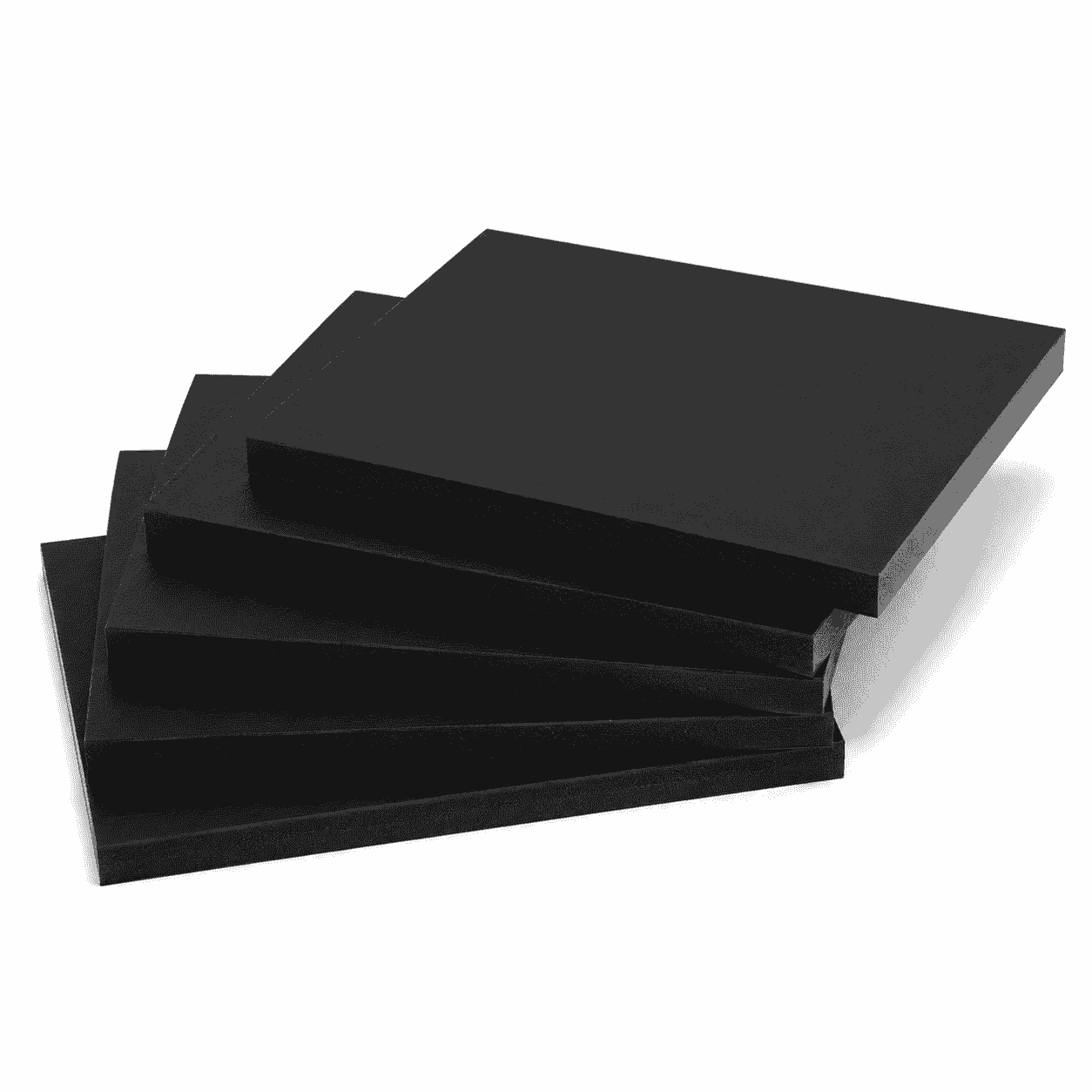
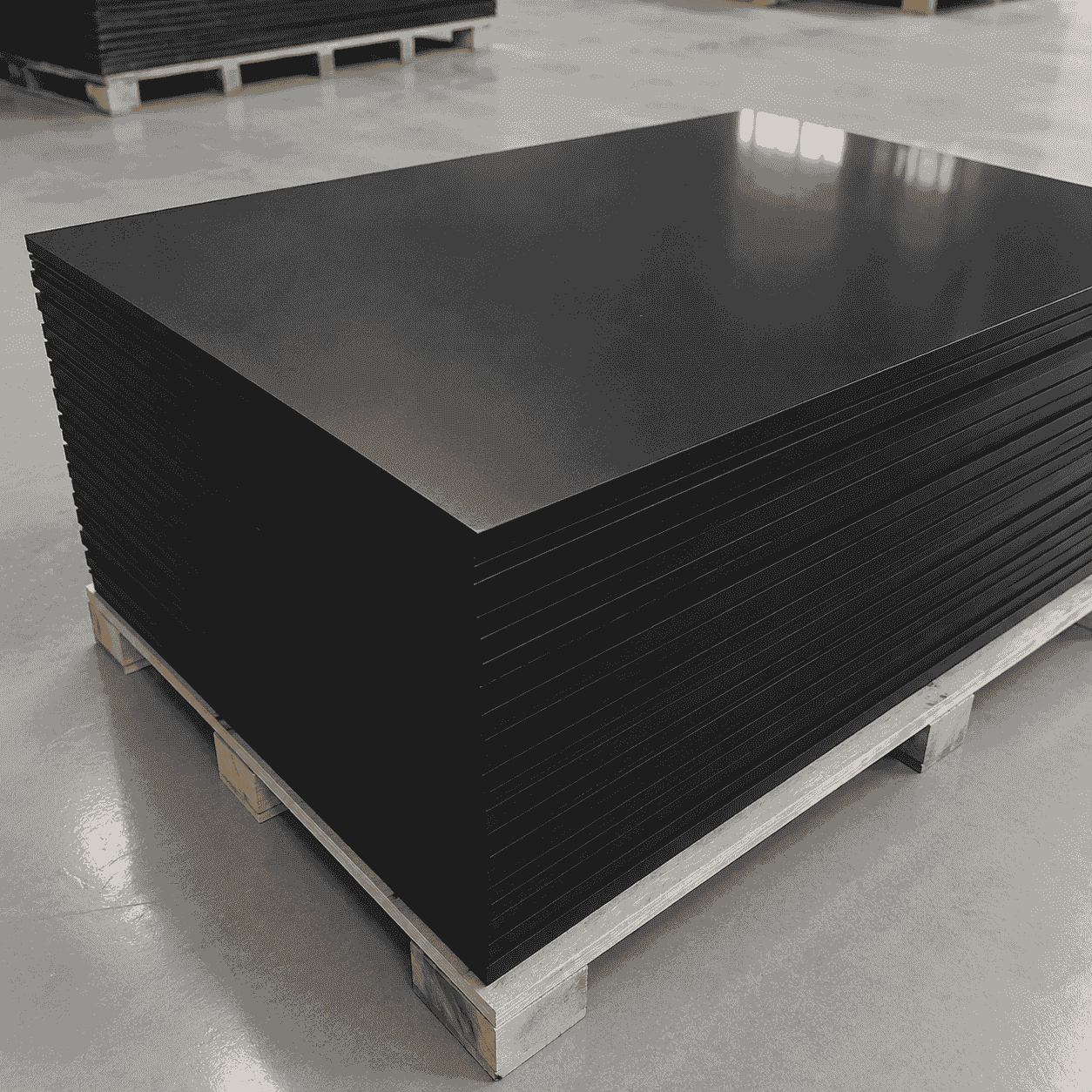
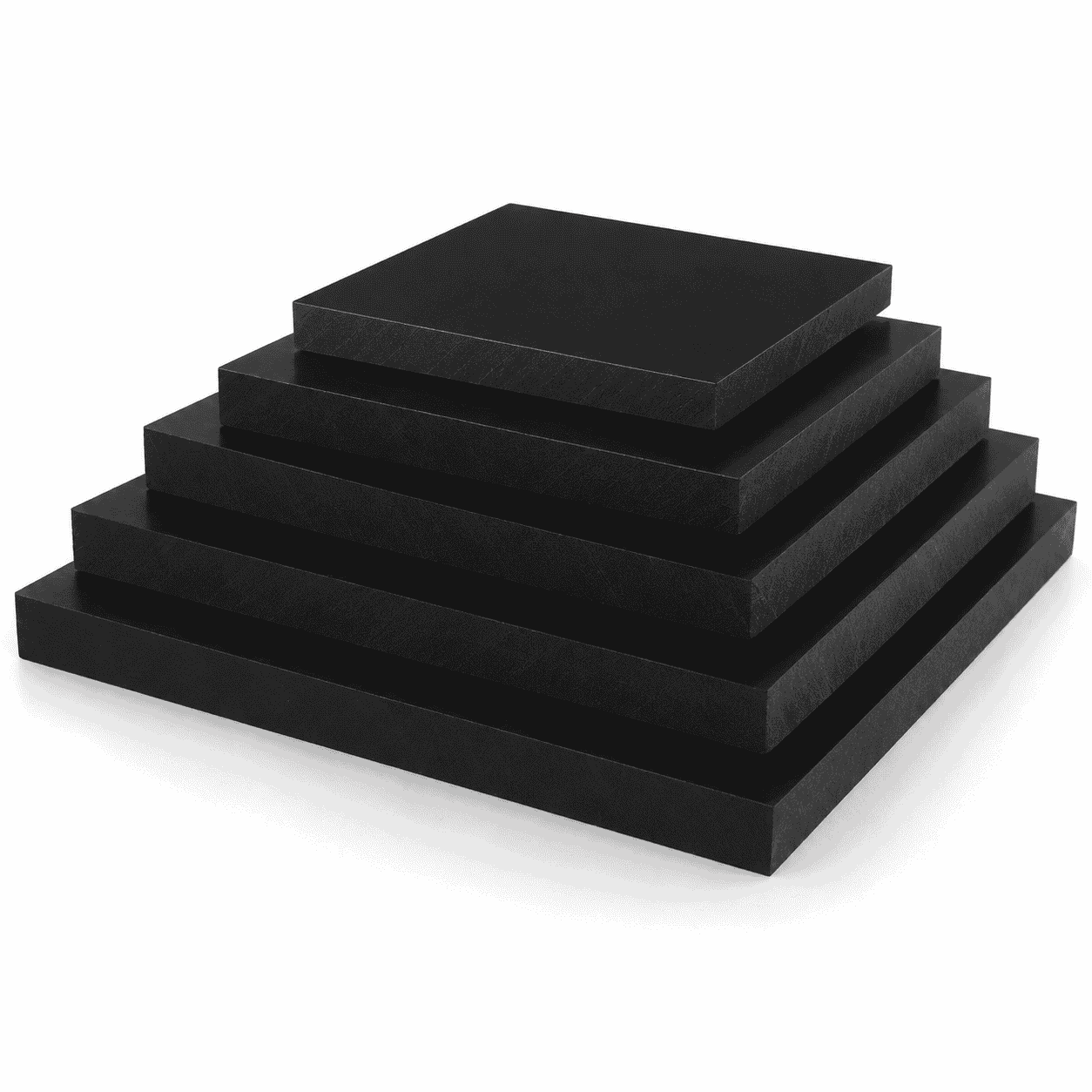
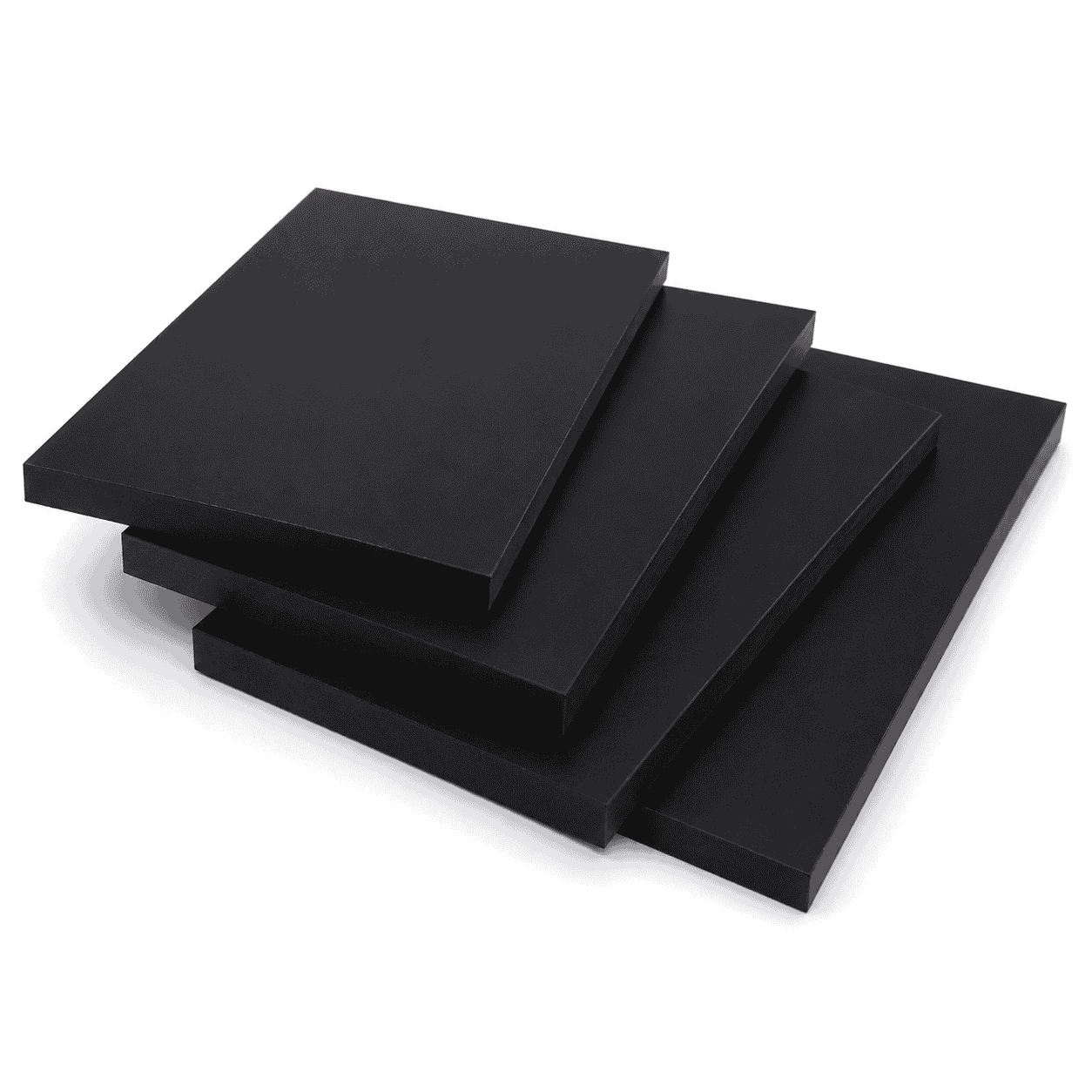
Black PP Sheet is a lightweight and chemical-resistant polypropylene board used for equipment panels, tank components, partitions, protective covers and CNC-machined parts. Reference solid-sheet thicknesses range from 3 to 30 mm, with common formats including 500 × 500 mm, 500 × 1000 mm, 1000 × 1000 mm, 1000 × 2000 mm, 610 × 1220 mm and 1220 × 2440 mm. Frosted black sheet options from 0.3 to 5.0 mm are also shown as reference specifications.
Black PP Sheet is a black polypropylene plastic sheet used for chemical equipment, industrial fabrication, machine panels, tank components, partitions, protective covers and custom-machined plastic parts. It combines the lightweight construction, low moisture absorption, chemical resistance and practical processing performance of polypropylene with a uniform black appearance suitable for industrial equipment and visual colour matching.
The black appearance can help reduce visible staining, improve equipment colour consistency and distinguish components from white, grey, natural or other coloured polypropylene sheets. Black PP Sheet can be supplied as a full sheet, a cut-to-size panel or a CNC-machined component according to drawings and application requirements.
Black colour alone does not confirm that the sheet is anti-static, electrically conductive, flame retardant, UV stabilised, food contact compliant or manufactured from virgin material. These properties require the corresponding polypropylene grade, additive system and supporting technical documentation.
The exact mechanical performance, chemical resistance and service temperature depend on the resin grade, additives, pigment formulation, sheet thickness and production process. Chemical compatibility must be evaluated according to the actual medium, concentration, exposure time, temperature and mechanical load.
Based on the supplied product image, the standard solid Black PP Sheet options are mainly shown in thicknesses from approximately 3 mm to 30 mm. Common reference thicknesses include:
Thinner sheets are generally selected for liners, partitions, covers and light-duty panels. Medium and thicker sheets may be used for equipment boards, support panels, welded structures and CNC-machined parts requiring greater rigidity.
The following dimensions are reference combinations shown in the supplied image. Final size, thickness tolerance, surface finish, quantity and availability should be confirmed before production.
The supplied image also shows several smaller square and rectangular formats. These sizes are suitable as reference options for samples, equipment panels, support pieces and machining blanks.
For the 200 × 300 mm, 300 × 400 mm, 400 × 500 mm and 600 × 800 mm formats, the image shows multiple thickness options between approximately 3 and 30 mm. These combinations should be treated as reference cut-size options rather than guaranteed stock specifications.
The image also includes a thin Frosted Black PP Sheet or matte black polypropylene sheet. This surface has a less reflective appearance than a conventional smooth sheet and may be selected for covers, craft panels, presentation boards, liners and lightweight fabrication.
The frosted surface options and the conventional solid-sheet options may use different production processes, tolerances and minimum order quantities. Their flexibility, rigidity and surface appearance should therefore be confirmed separately.
Black PP Sheet is suitable for general industrial fabrication, chemical equipment, environmental protection systems, water-treatment equipment, machinery manufacturing and custom plastic processing. Typical applications include:
For chemical applications, the selected polypropylene grade should be checked against the actual chemical medium and working temperature. Resistance to one acid or alkali does not guarantee compatibility with every solvent, oxidising agent or process condition.
Black PP Sheet can be processed through sawing, cutting, drilling, milling, routing, grooving, slotting, chamfering, turning and CNC machining. It can also be welded into tanks, covers, housings, ducts and assembled plastic structures using suitable polypropylene welding techniques.
When welding visible black components, a compatible black polypropylene welding rod should be selected. Differences in resin grade, pigment concentration or surface texture may result in a visible colour difference between the weld and the sheet.
For CNC-machined components, drawings should identify the overall dimensions, thickness, holes, slots, tolerances, fitting surfaces and installation structure. Polypropylene has lower stiffness and greater thermal expansion than many metals, so suitable support and installation clearance should be considered.
The shade and gloss of Black PP Sheet may vary slightly between production batches, raw-material grades, pigments, thicknesses and surface treatments. Where colour consistency or surface appearance is important, a physical sample should be approved before batch production.
A black appearance does not automatically mean that the material is electrically conductive or anti-static. It also does not confirm outdoor UV resistance, flame retardancy or food-contact compliance. These requirements must be specified before production and supported by the corresponding material data or test documentation.
For standard polypropylene sheet materials and related machining options, visit our internal page:
Polypropylene PP Sheet.
For general information about the base polymer, refer to the
Polypropylene explanation on Wikipedia.
Check drawings for full specifications and confirm materials according to service conditions to prevent product defects.
Inspect all key processing steps and fully verify dimensions, holes, grooves and fitting surfaces.
Deburr, chamfer and clean products for easy installation. Ensure uniform quality among batch products.
Choose appropriate packaging solutions based on product features to protect goods from collision, deformation and mixing during transit.
Unlike metal parts, engineering plastic components still require strict control over dimensions, holes, edges, surface, materials and assembly performance for equipment use.
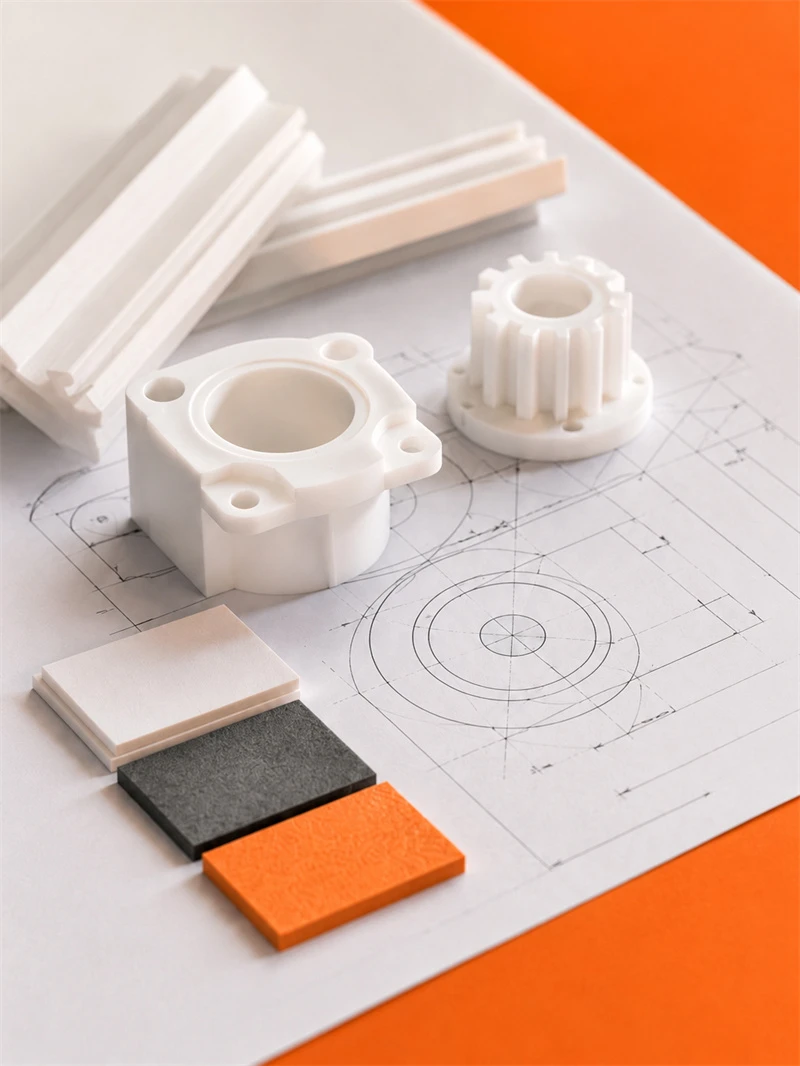
Engineering plastic parts suit friction, guide, support, buffer, anti-corrosion and insulation areas. We supply UHMWPE, POM, PA, PP/PE components for conveyor, food, mining, machinery, chemical and cable systems, with custom OEM service available.
Stay updated with our latest industry insights, company updates and featured articles.
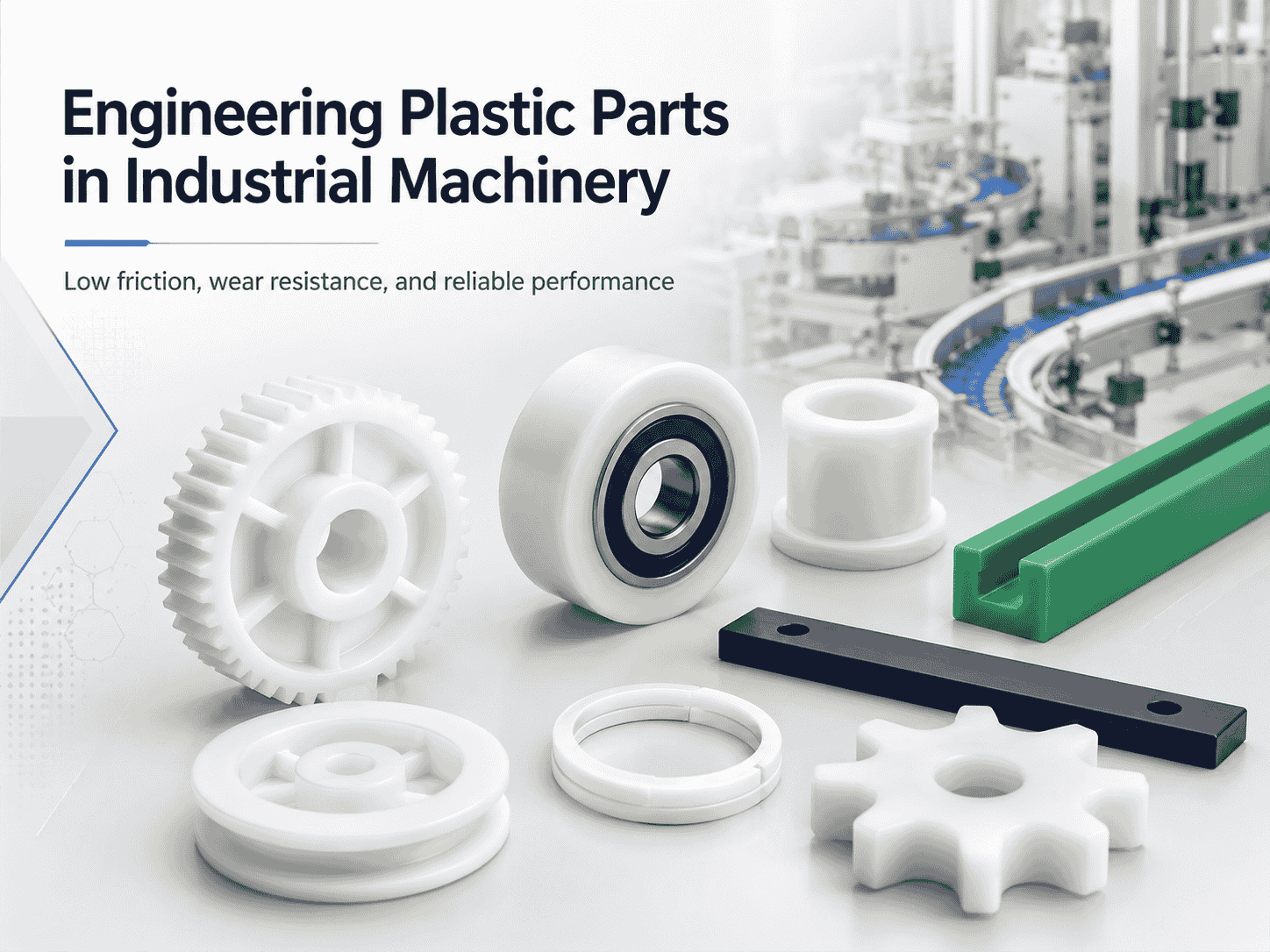
Engineering plastics are increasingly used in industrial machinery, automated production lines, conveyor systems, packaging equipment, and food-processing machines. Materials such as nylon, UHMWPE, POM, and
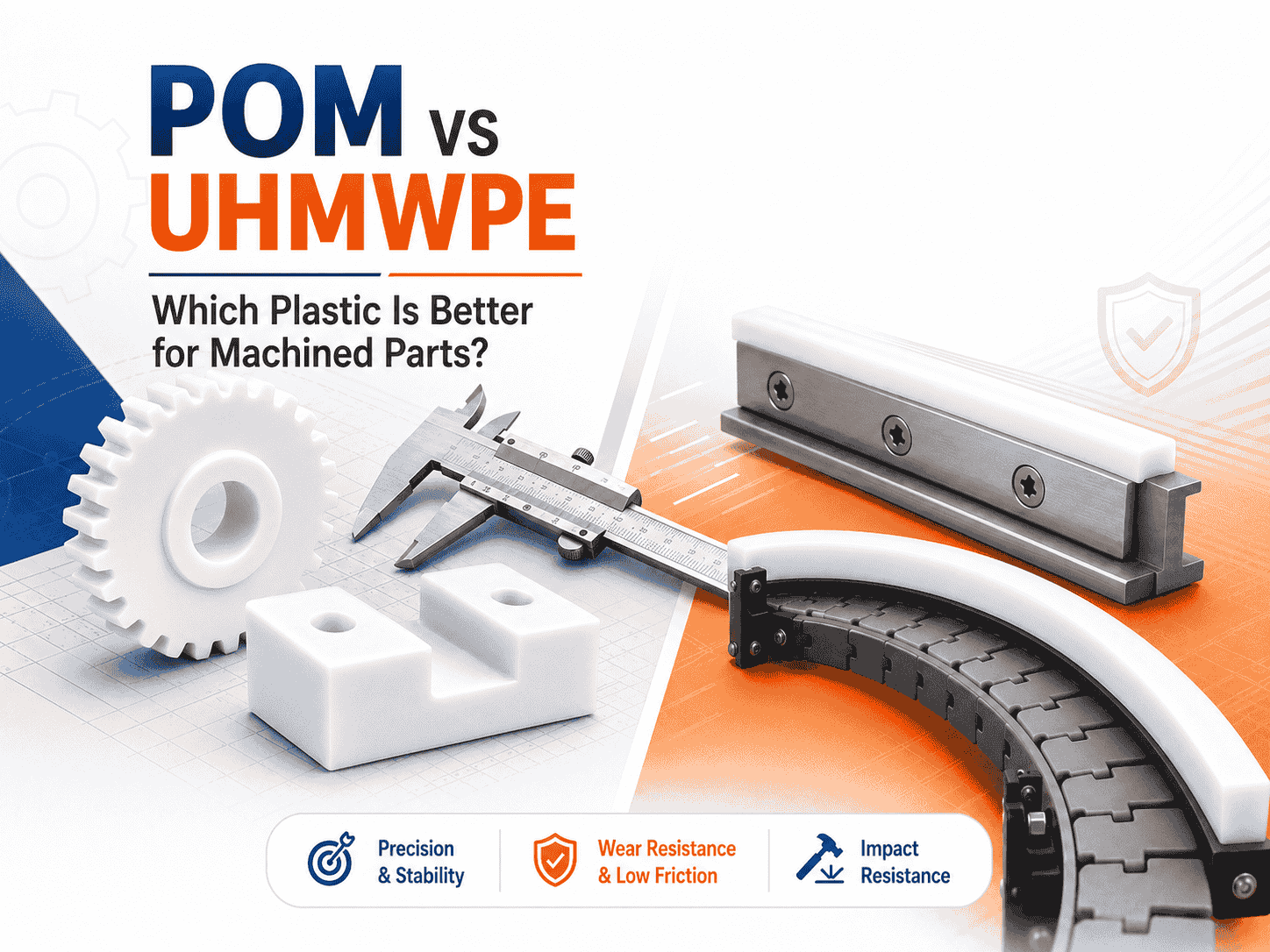
Both are lightweight, corrosion-resistant, wear-resistant, and suitable for CNC machining. However, they perform very differently
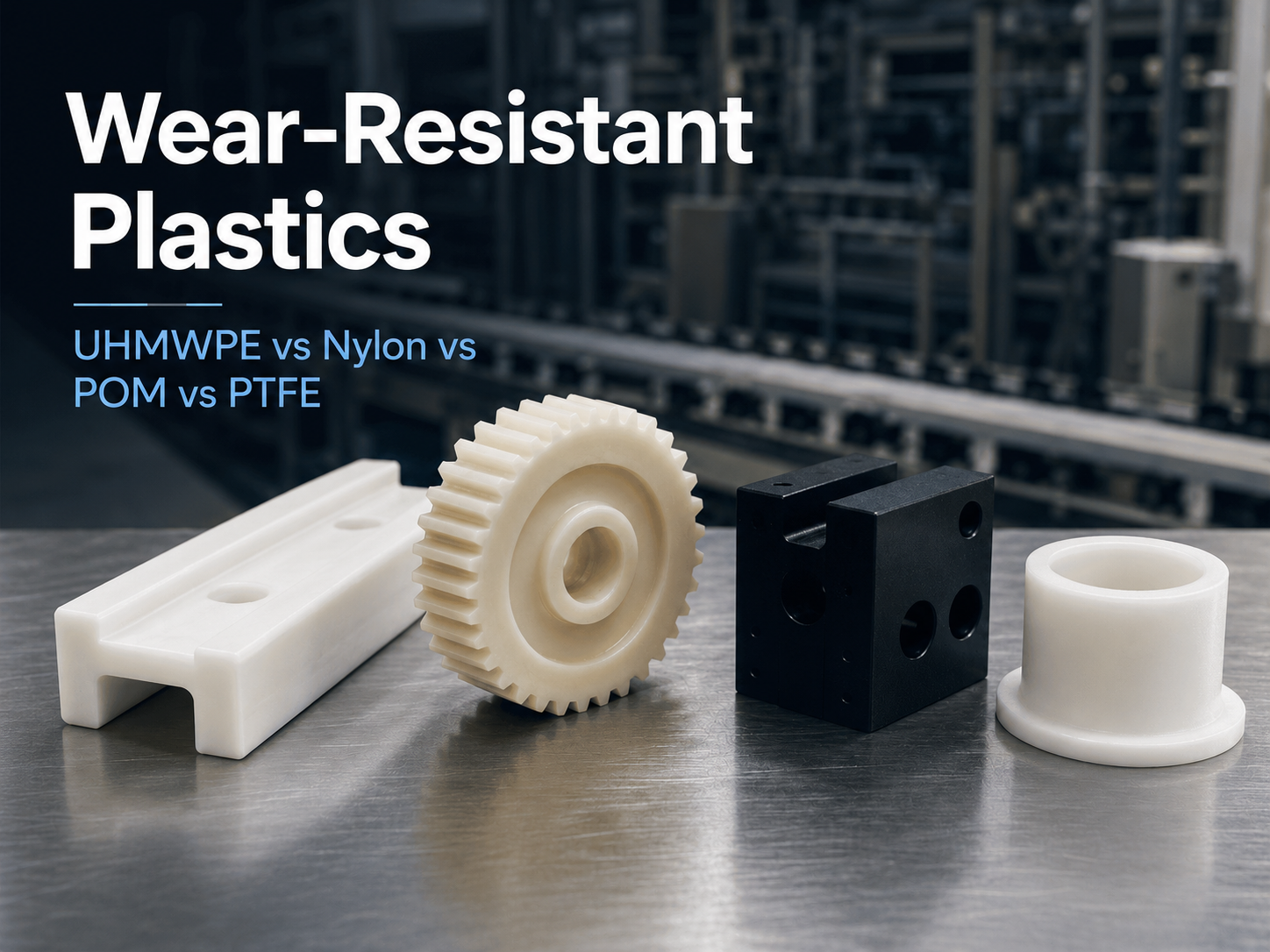
Wear is a common cause of failure in conveyor systems, packaging machinery, automated equipment, mining
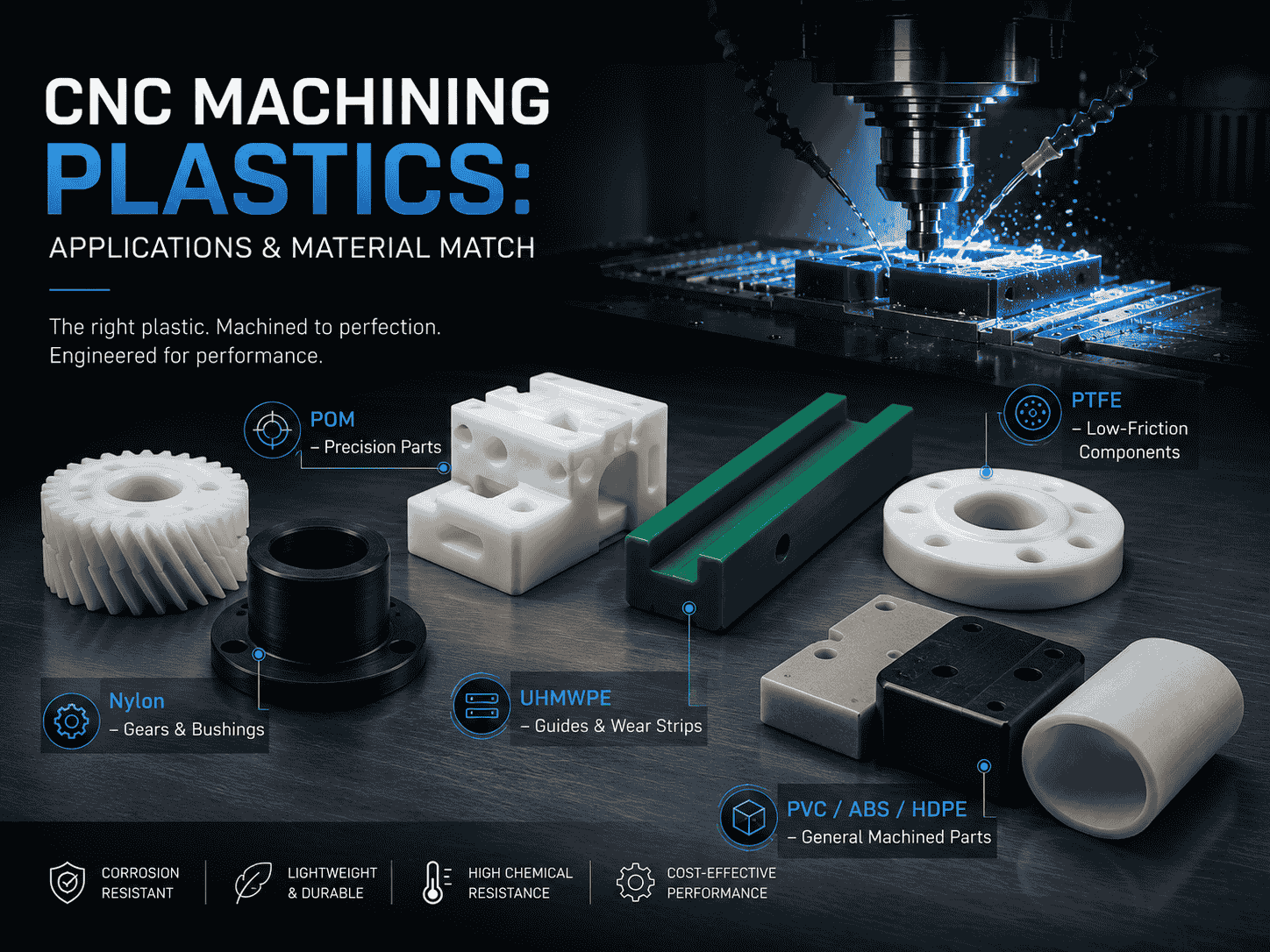
CNC machining is widely used to produce plastic prototypes, low-volume parts, replacement components, jigs, fixtures,
Both are lightweight, corrosion-resistant, wear-resistant, and suitable for CNC machining. However, they perform very differently
Wear is a common cause of failure in conveyor systems, packaging machinery, automated equipment, mining
CNC machining is widely used to produce plastic prototypes, low-volume parts, replacement components, jigs, fixtures,

Need UHMWPE sheets & custom plastic machined/OEM parts?Send specs & material needs, free quote within 24h.