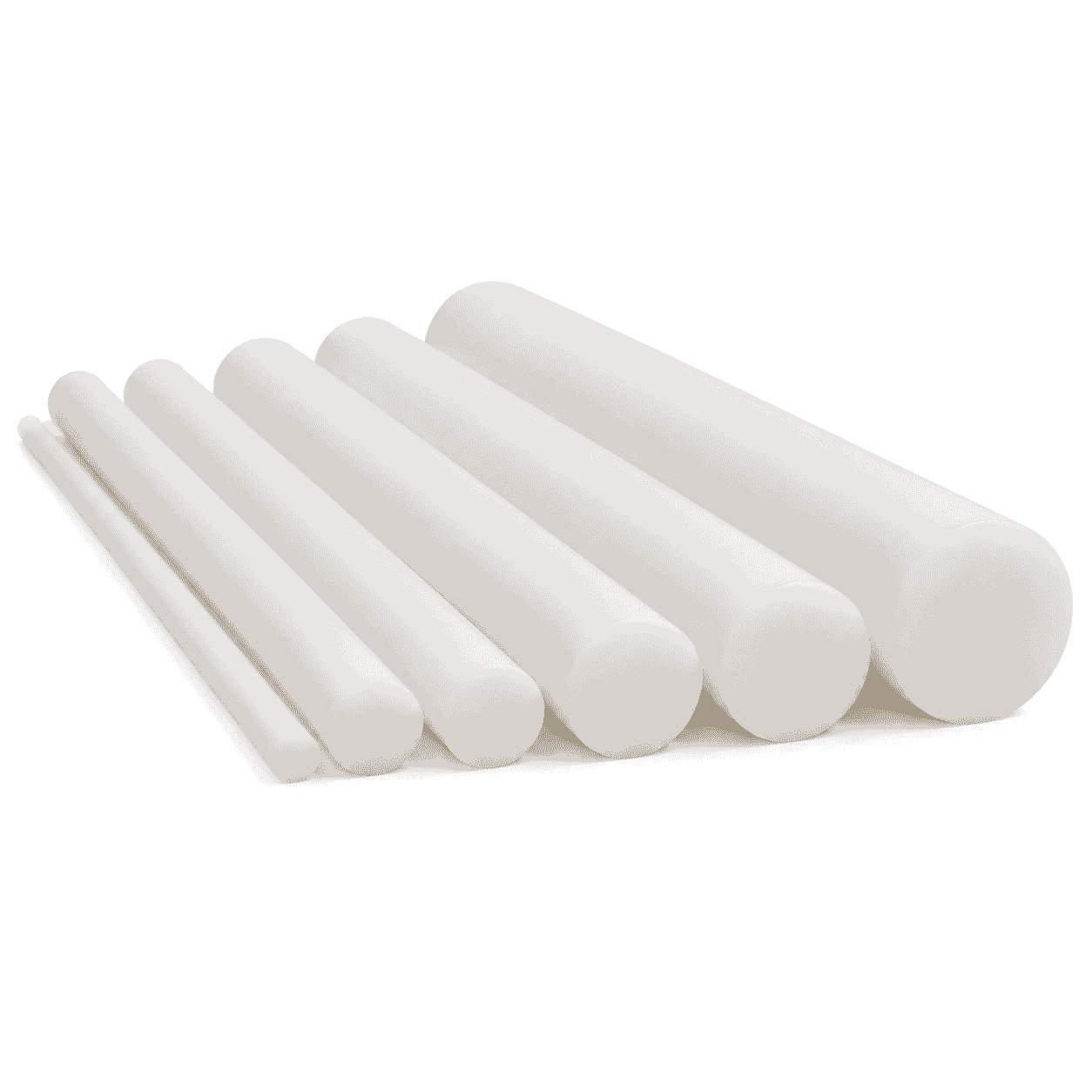
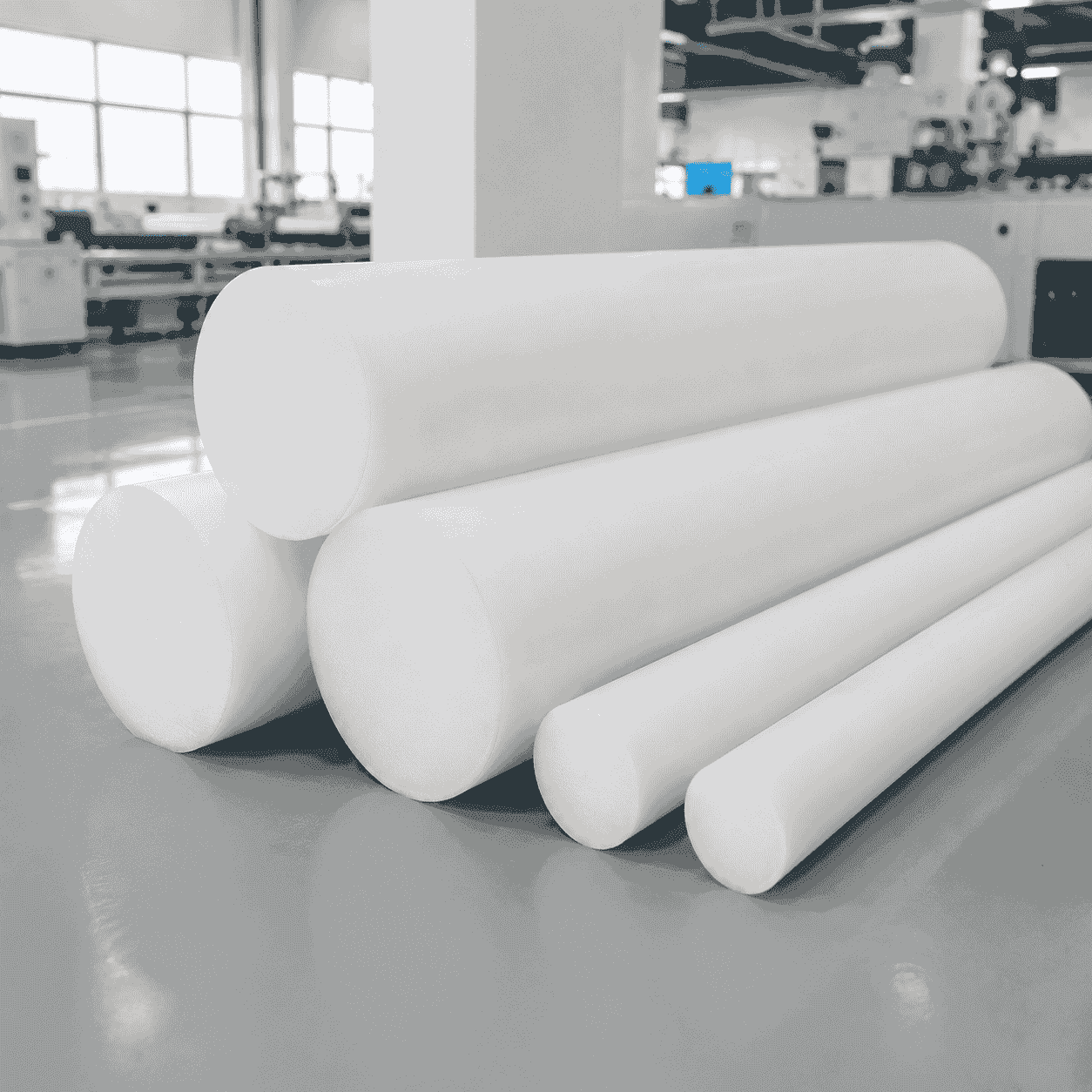
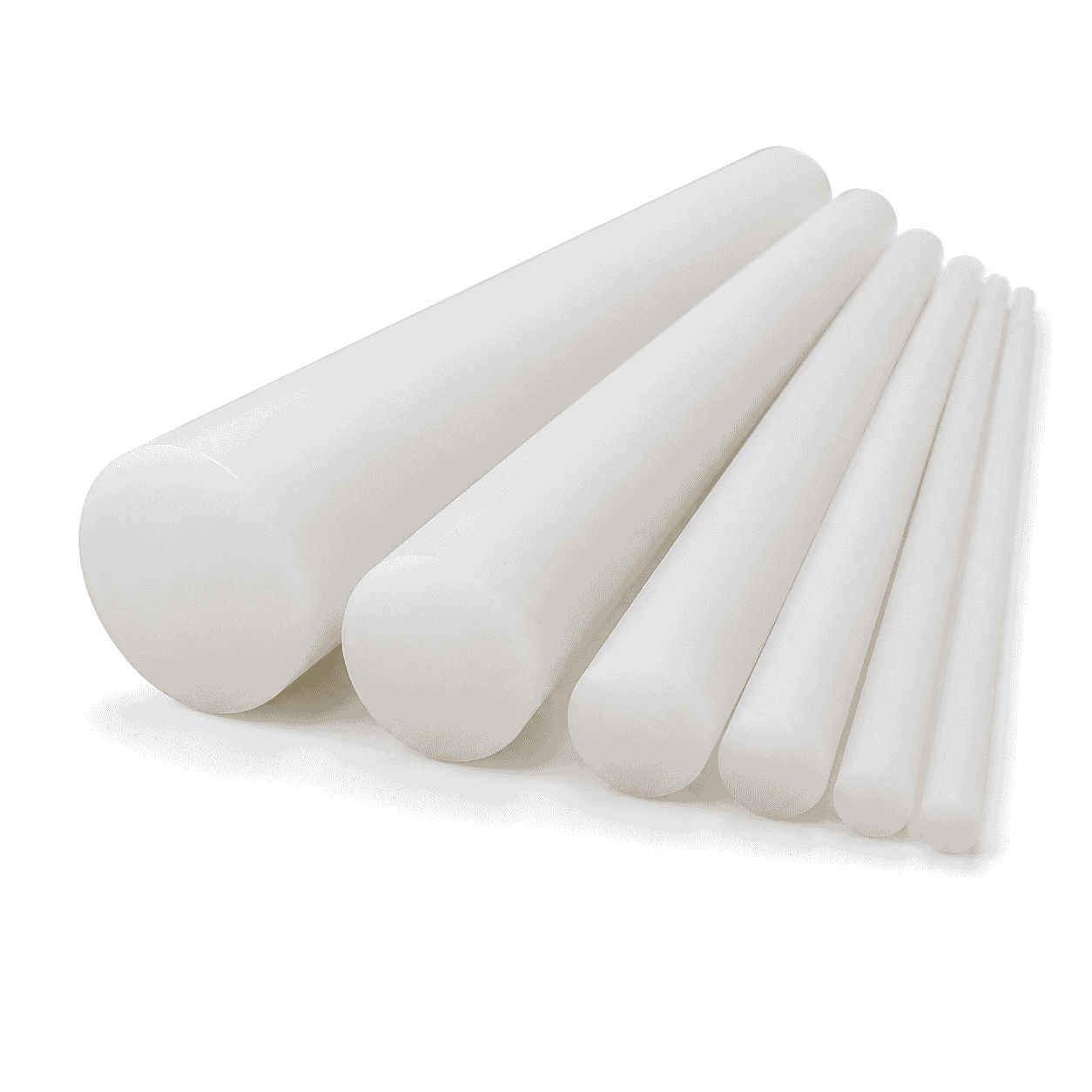
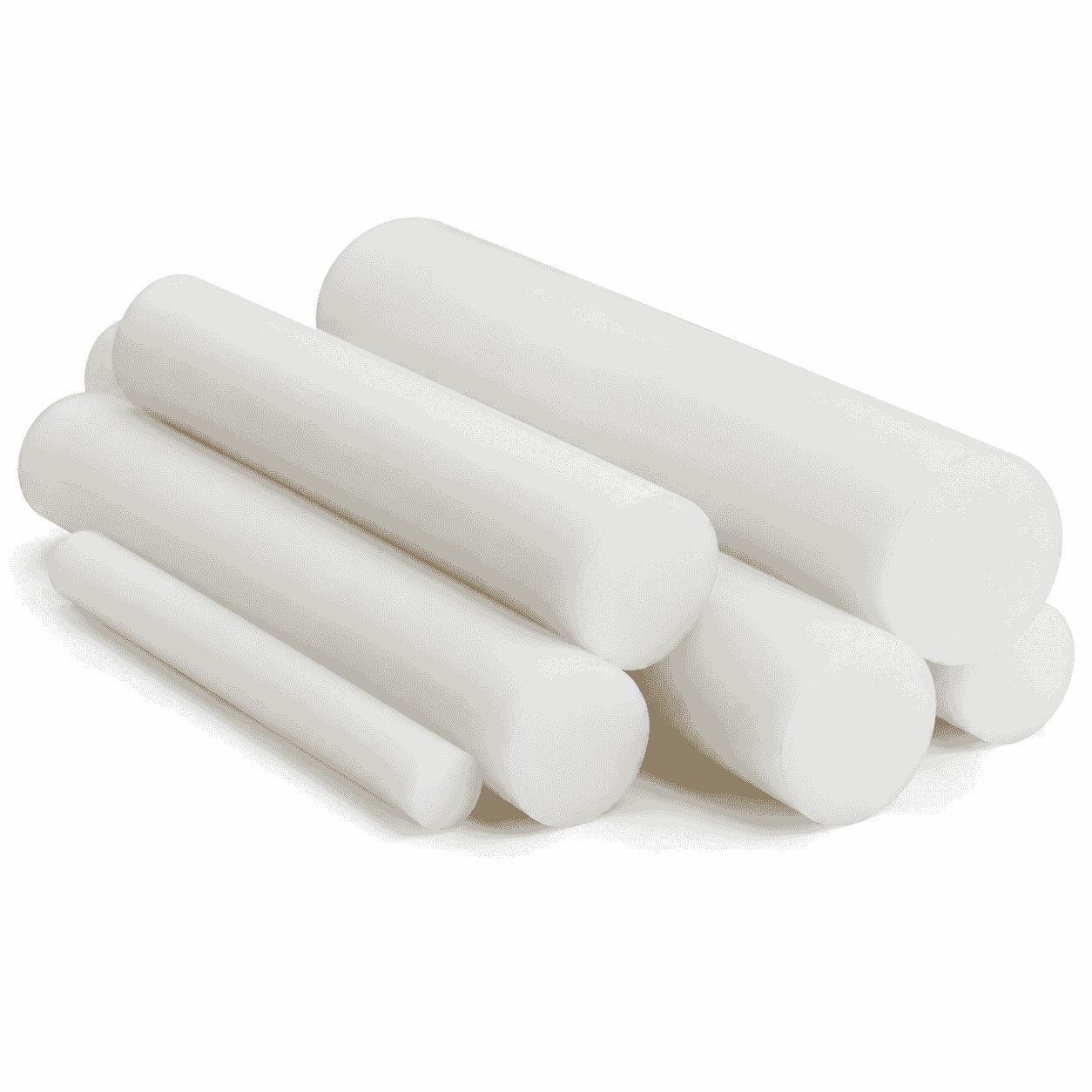
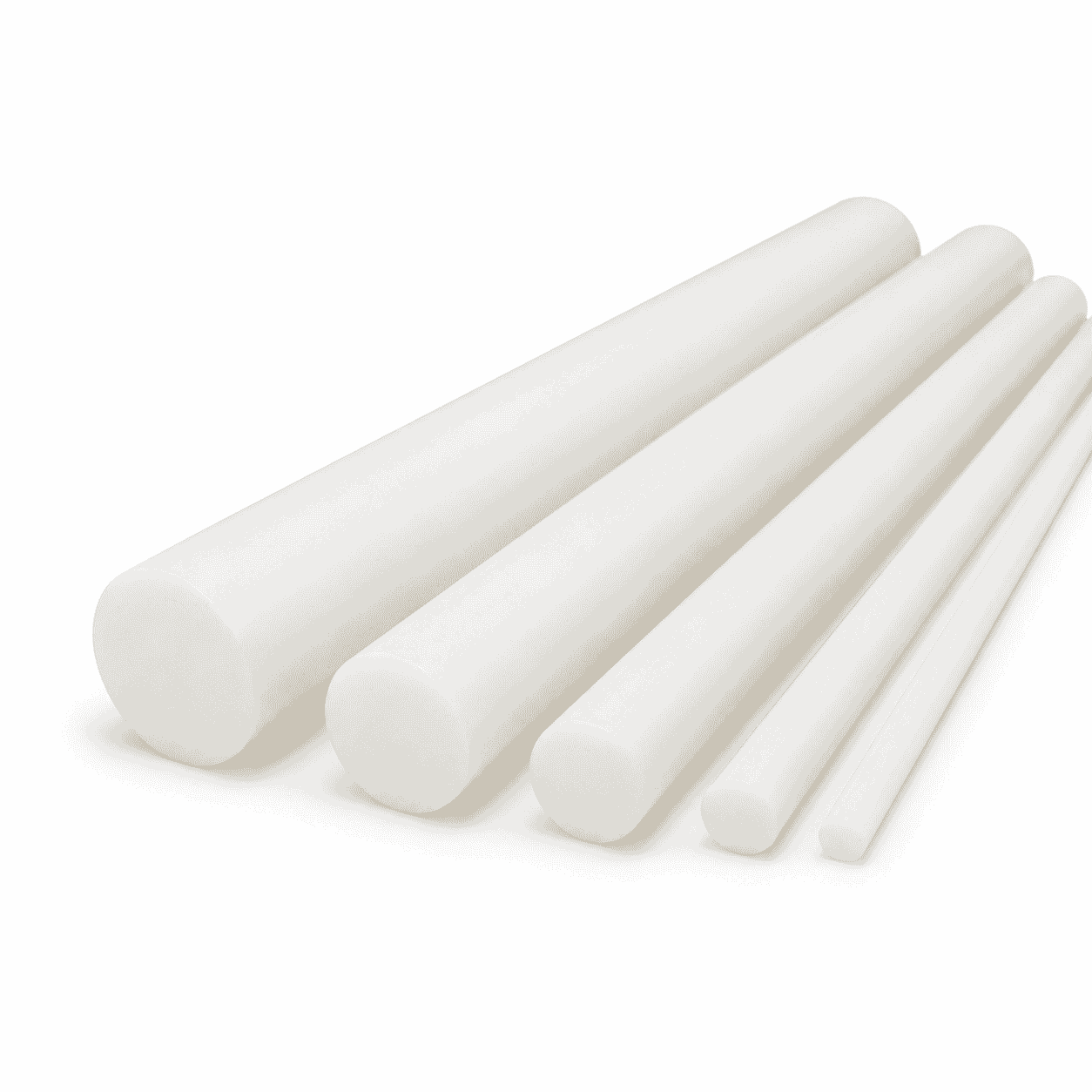
Food Grade PP Rod is a food-contact polypropylene round bar used for machining bushings, sleeves, rollers, spacers and other parts for food processing and packaging equipment. It offers light weight, low moisture absorption, good chemical resistance and practical machining performance. Based on the supplied image, the reference diameter range is approximately Ø8–Ø400 mm, and the common reference length shown is 1 meter. Custom cut lengths and machined parts can be arranged according to drawings and application requirements.
Food Grade PP Rod is a solid polypropylene round bar manufactured from food-contact grade polypropylene material for machining plastic parts used in food processing, beverage equipment, packaging machinery and related industrial applications. It combines the lightweight structure, low moisture absorption, chemical resistance and easy machining performance of polypropylene with the practical requirements of food-contact and clean-production environments.
Food Grade PP Rod is commonly used as a machining stock material for turning, drilling, boring, milling and CNC processing. It can be machined into bushings, sleeves, spacers, rollers, support parts, guide components, washers, sealing support parts and other custom plastic components used in food-related equipment. Compared with some traditional materials, polypropylene does not rust, has low water absorption and is suitable for many humid and frequently cleaned environments.
It should also be noted that a white polypropylene rod is not automatically a food-grade material simply because of its colour. A genuine Food Grade PP Rod should be produced from an appropriate resin formulation and, where required, be supported by the relevant food-contact declaration, compliance documentation or testing information for the target market and intended application.
Compared with some other engineering plastics, Food Grade PP Rod offers a practical balance of corrosion resistance, light weight and cost-effectiveness. It is often selected for parts that require food-contact compatibility, simple machining and resistance to moisture. However, the exact material suitability still depends on the food type, processing temperature, mechanical load, cleaning method and service conditions.
Based on the supplied image, the reference diameter range shown for Food Grade PP Rod is approximately 8 mm to 400 mm. The image shows the following reference diameter options:
From the image, smaller and medium diameters such as Ø8–Ø150 mm are shown more commonly, while larger diameters from Ø160 mm and above should be treated as reference manufacturing sizes that may depend on production conditions, material availability and order quantity.
The supplied image mainly shows a common reference length of 1 meter for Food Grade PP Rod. Some product listings in the image also mention multi-piece packing for smaller diameters, but for product specification purposes the practical reference is mainly 1 m per rod.
Custom cut lengths can usually be arranged according to machining requirements. The final rod length, cutting allowance and machining allowance should be confirmed according to the customer’s drawings and the finished-part dimensions.
The image also includes several listings marked with positive diameter tolerance. This indicates that certain sizes may be supplied with a machining allowance on the rod diameter, which can be useful when the material is intended for turning or precision machining. For finished parts requiring tight dimensional control, the raw rod tolerance and the final machining tolerance should be confirmed separately before production.
Food Grade PP Rod is suitable for machining plastic parts used in food processing, beverage production, packaging systems, kitchen equipment, cleaning systems and related industrial environments. Typical machined parts may include:
Because polypropylene has good resistance to many cleaning chemicals and low moisture absorption, Food Grade PP Rod is often selected for parts that work in wet, washdown or lightly corrosive service conditions. However, the final material selection should still be checked according to the food type, contact time, temperature, cleaning agents and the mechanical demands of the application.
Food Grade PP Rod can be processed by turning, drilling, boring, milling, grooving and CNC machining. It is widely used as a machining blank for making non-standard plastic parts according to drawings or samples. When machining food-related components, the drawing should clearly show the finished dimensions, tolerances, surface finish, holes, grooves, concentricity and installation structure.
Because polypropylene has lower stiffness than metal and may expand under temperature changes, suitable design allowance and machining allowance should be considered during processing. For large-diameter or higher-precision parts, rough machining and finish machining may need to be arranged separately to help improve dimensional stability.
The term Food Grade PP Rod should only be used when the supplied material matches the intended food-contact requirement. The colour white alone does not guarantee food-contact suitability. Pigments, additives, recycled content, processing conditions and batch control may all affect whether a polypropylene rod is suitable for a specific food-contact application.
If the rod will be used in direct food-contact areas, customers should confirm the target market, food type, service temperature, cleaning conditions and any required documentation before ordering. Requirements may differ depending on whether the rod is used in dry food, wet food, fatty food, beverage or repeated-cleaning environments.
For related polypropylene material information, you may also visit our internal page:
Polypropylene PP Rod.
For general material information, please refer to the Wikipedia explanation of
Polypropylene.
Check drawings for full specifications and confirm materials according to service conditions to prevent product defects.
Inspect all key processing steps and fully verify dimensions, holes, grooves and fitting surfaces.
Deburr, chamfer and clean products for easy installation. Ensure uniform quality among batch products.
Choose appropriate packaging solutions based on product features to protect goods from collision, deformation and mixing during transit.
Unlike metal parts, engineering plastic components still require strict control over dimensions, holes, edges, surface, materials and assembly performance for equipment use.
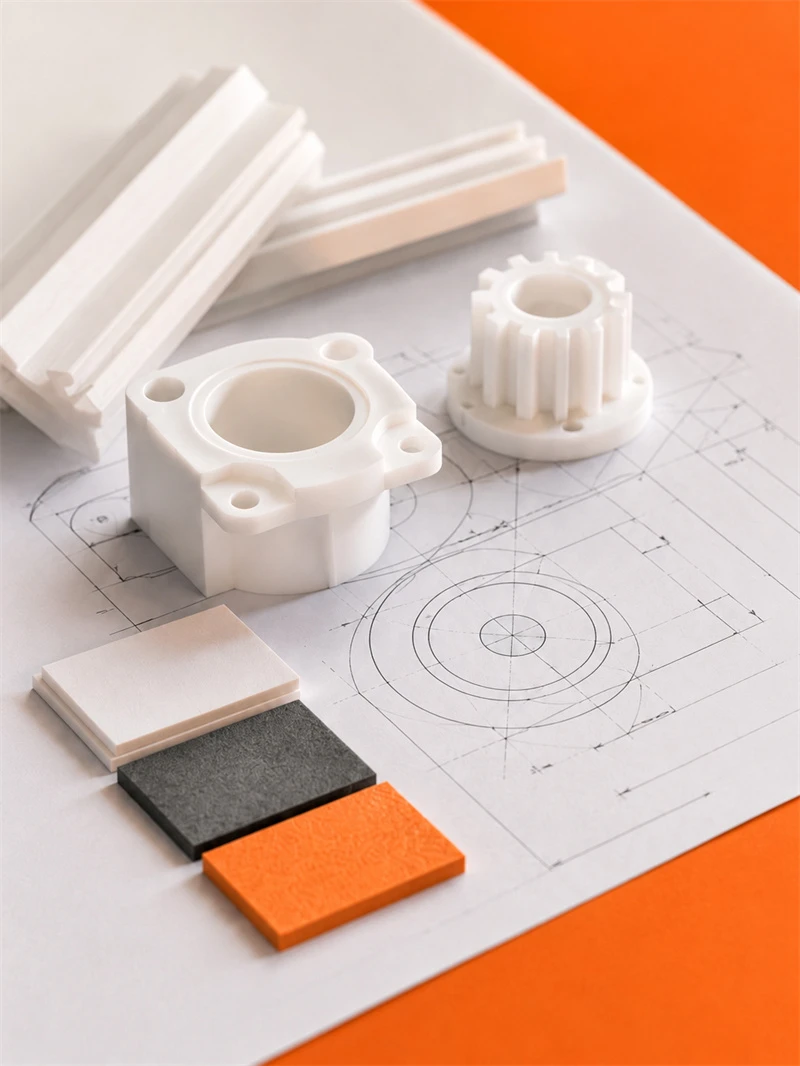
Engineering plastic parts suit friction, guide, support, buffer, anti-corrosion and insulation areas. We supply UHMWPE, POM, PA, PP/PE components for conveyor, food, mining, machinery, chemical and cable systems, with custom OEM service available.
Stay updated with our latest industry insights, company updates and featured articles.
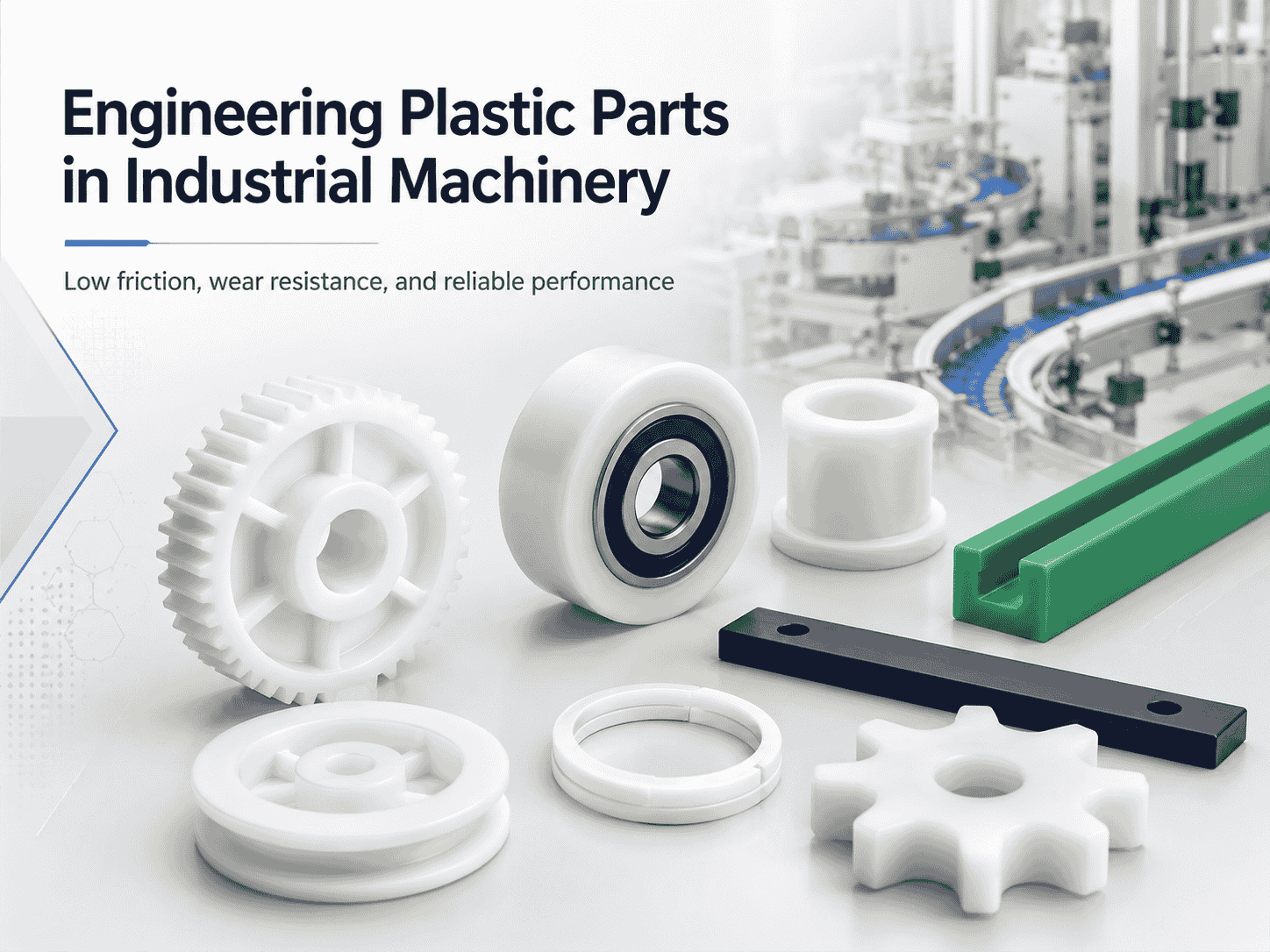
Engineering plastics are increasingly used in industrial machinery, automated production lines, conveyor systems, packaging equipment, and food-processing machines. Materials such as nylon, UHMWPE, POM, and
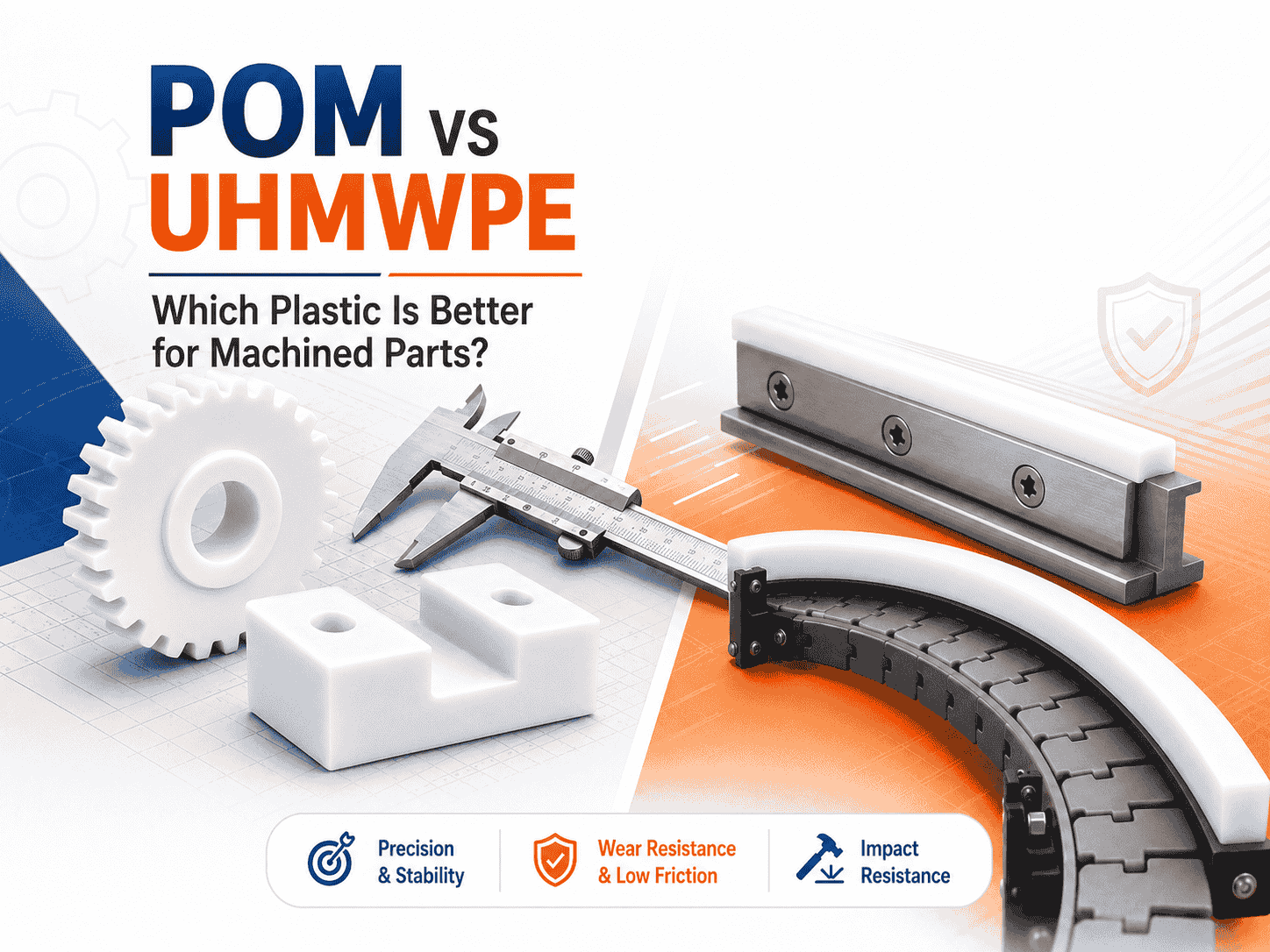
Both are lightweight, corrosion-resistant, wear-resistant, and suitable for CNC machining. However, they perform very differently
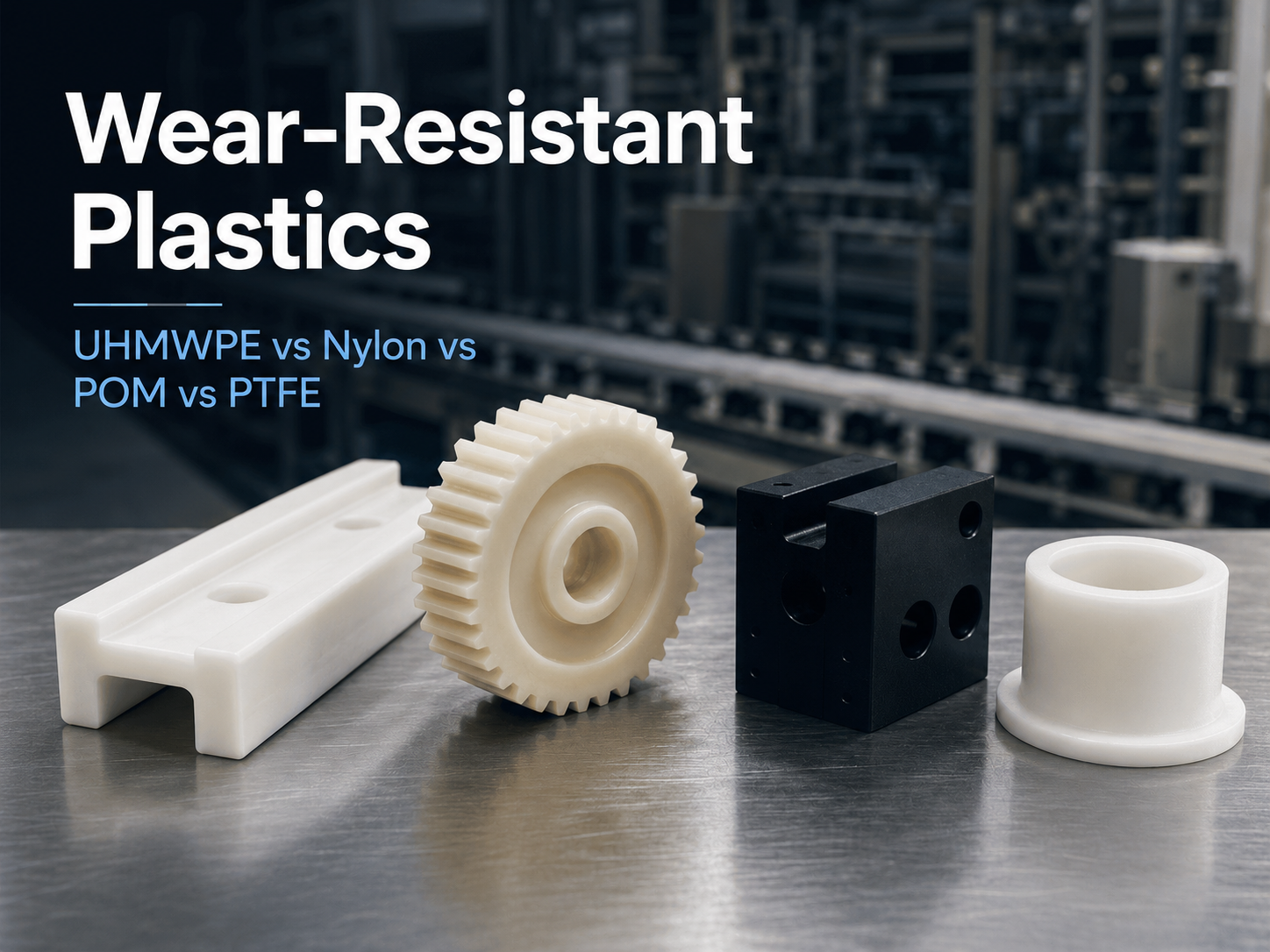
Wear is a common cause of failure in conveyor systems, packaging machinery, automated equipment, mining
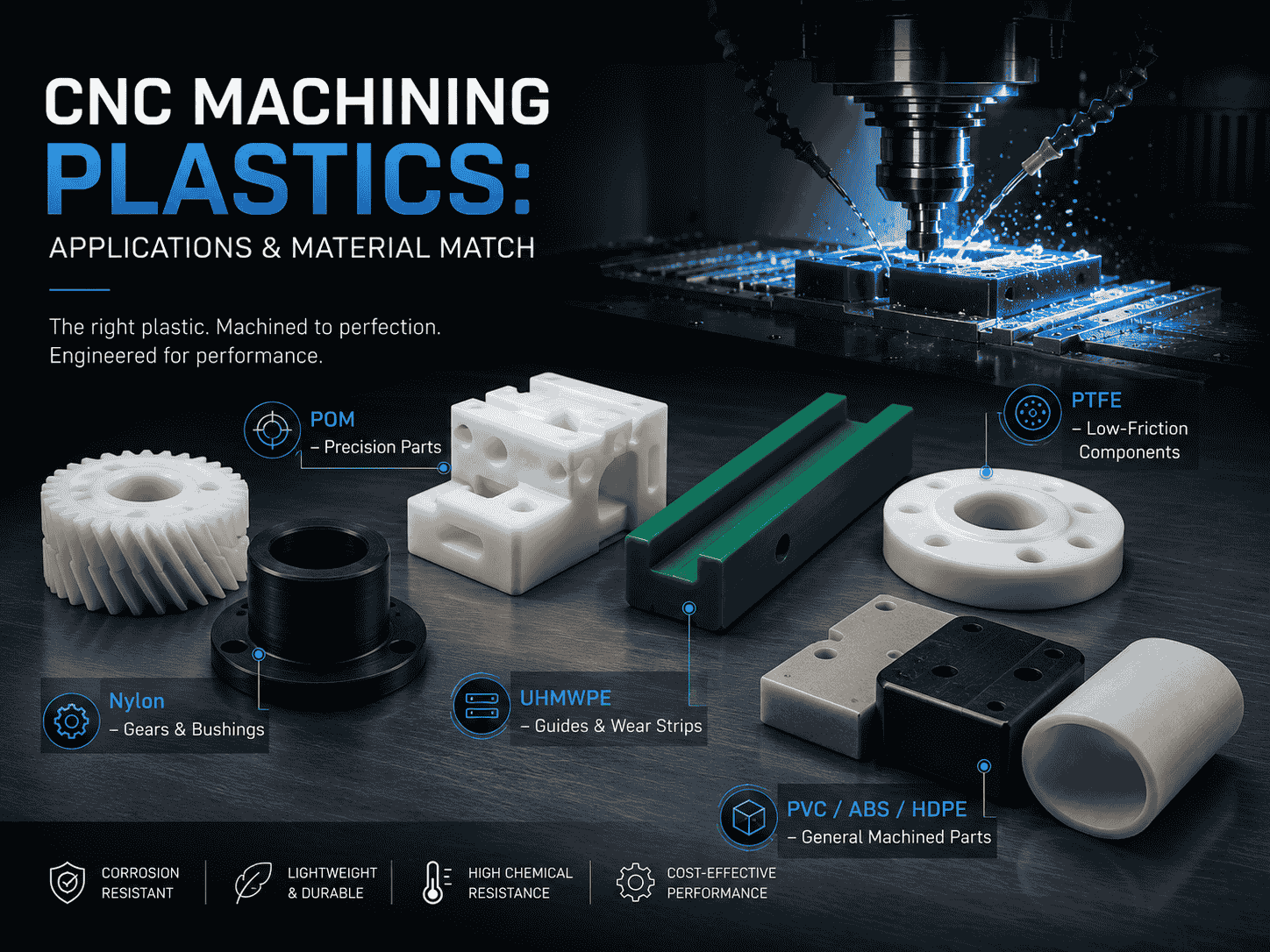
CNC machining is widely used to produce plastic prototypes, low-volume parts, replacement components, jigs, fixtures,
Both are lightweight, corrosion-resistant, wear-resistant, and suitable for CNC machining. However, they perform very differently
Wear is a common cause of failure in conveyor systems, packaging machinery, automated equipment, mining
CNC machining is widely used to produce plastic prototypes, low-volume parts, replacement components, jigs, fixtures,

Need UHMWPE sheets & custom plastic machined/OEM parts?Send specs & material needs, free quote within 24h.