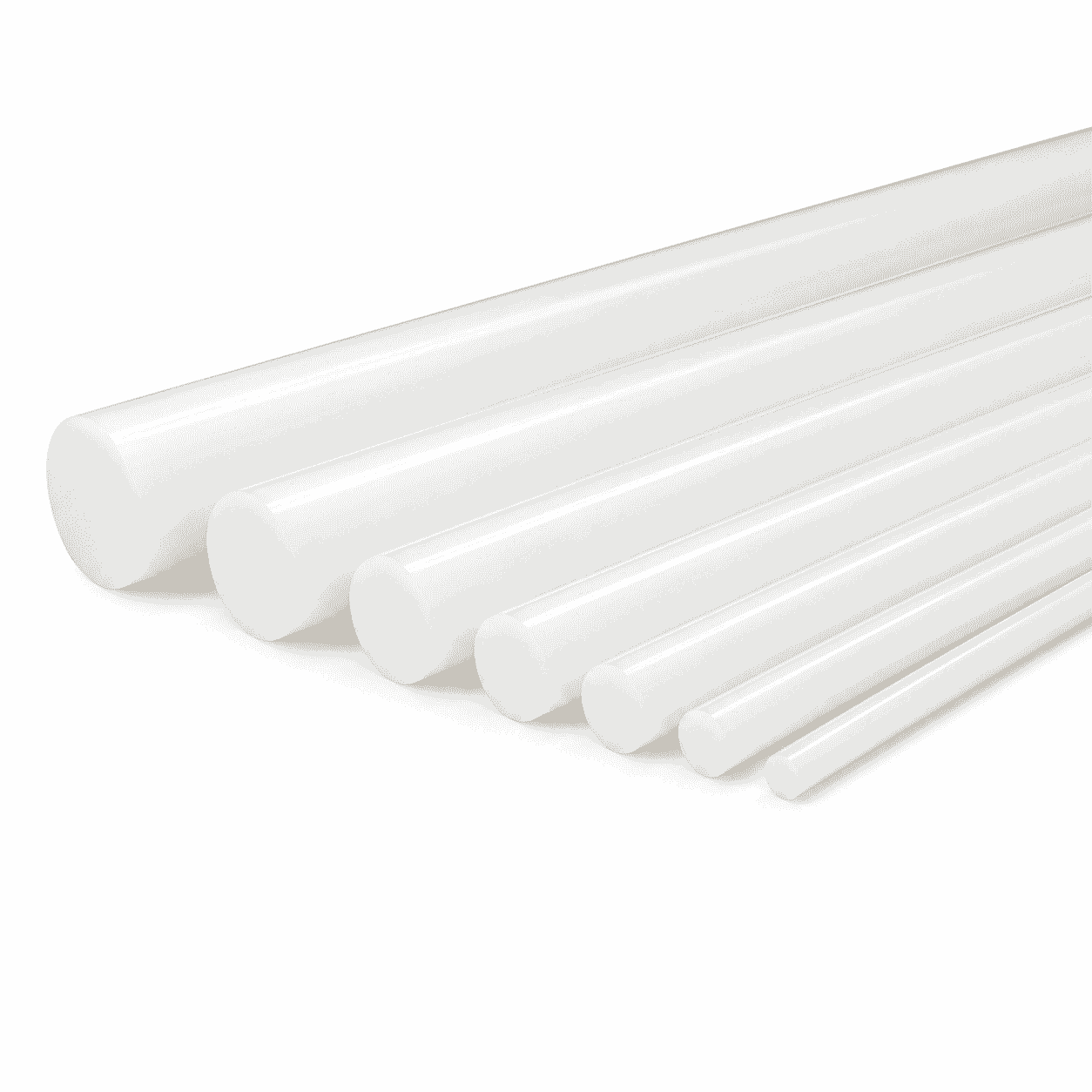
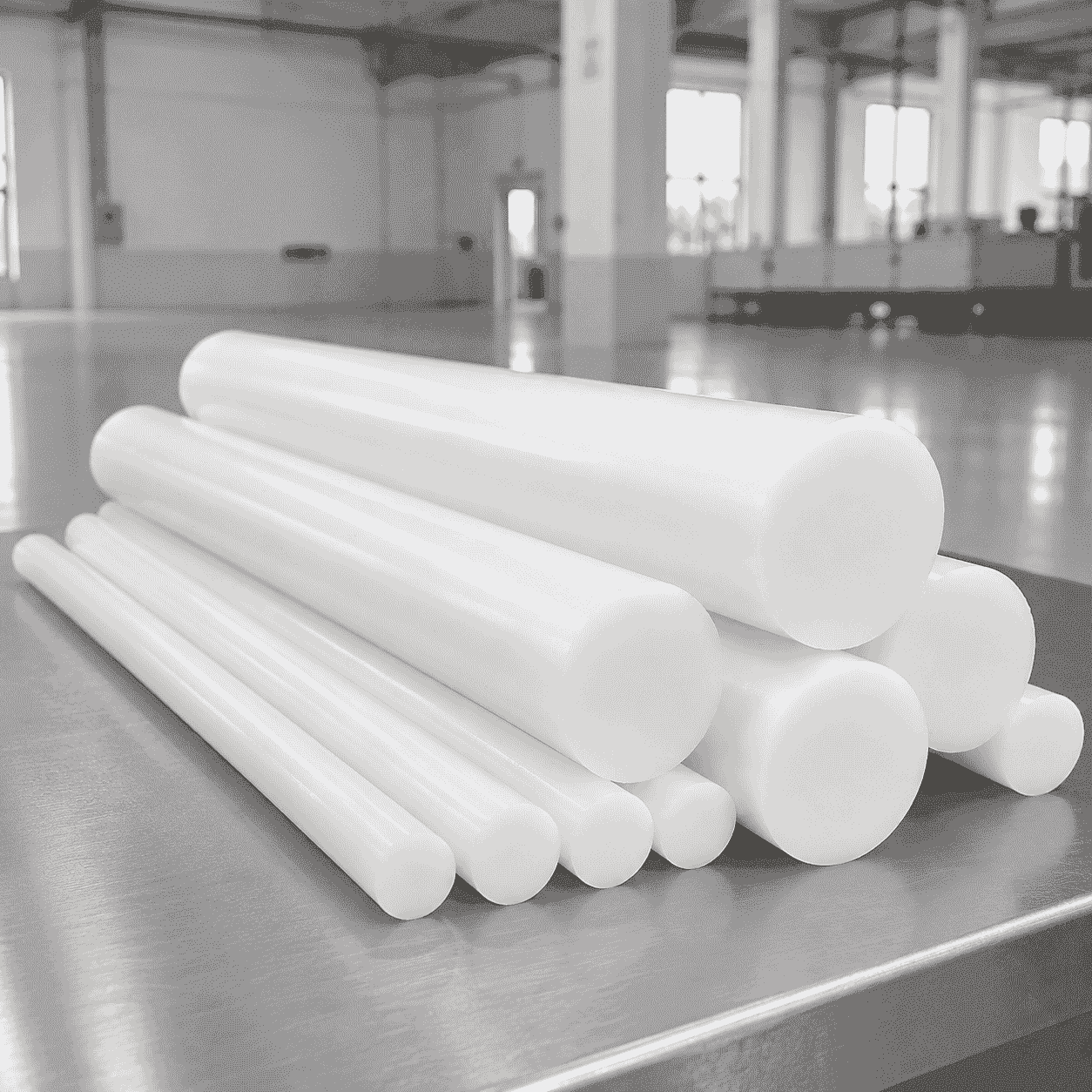
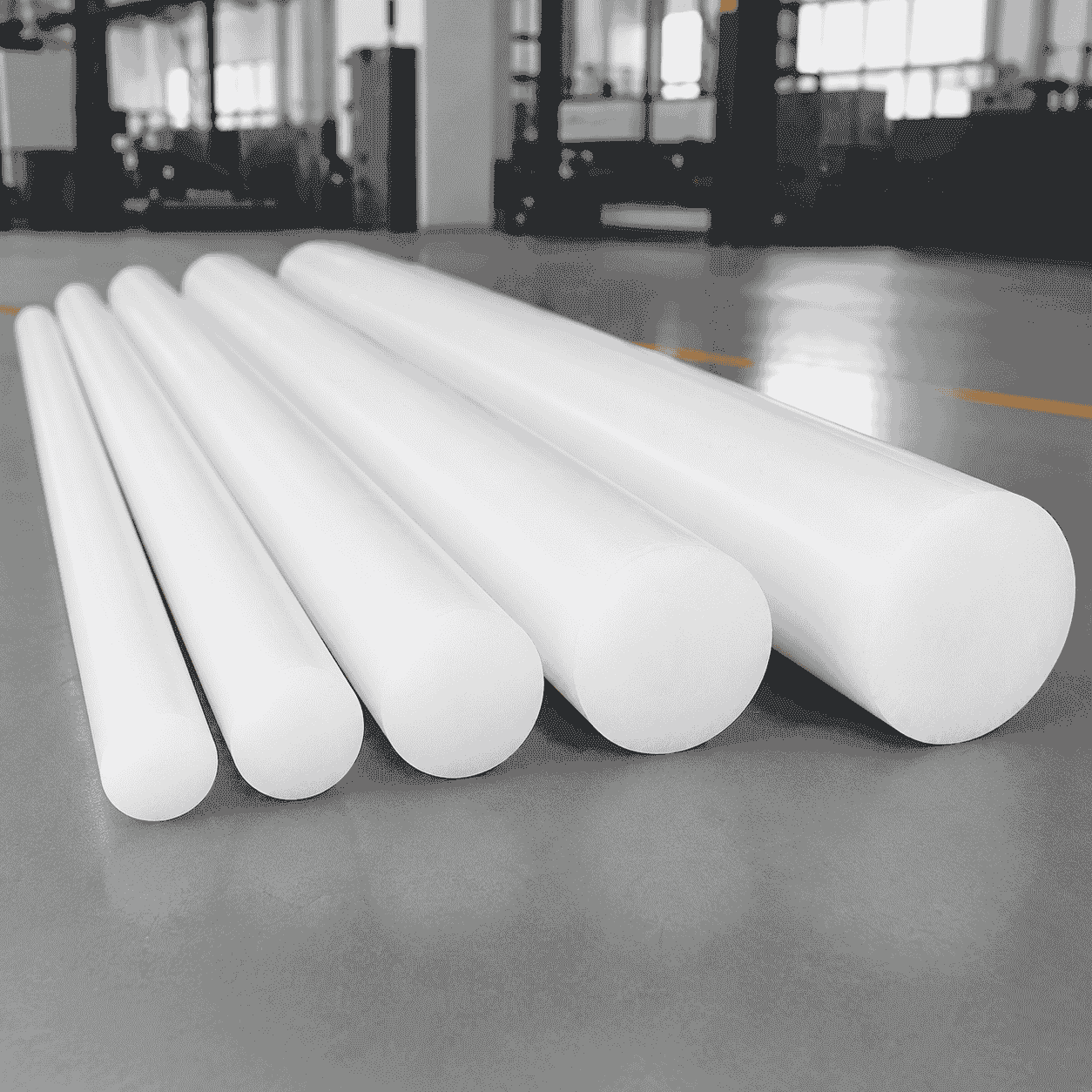
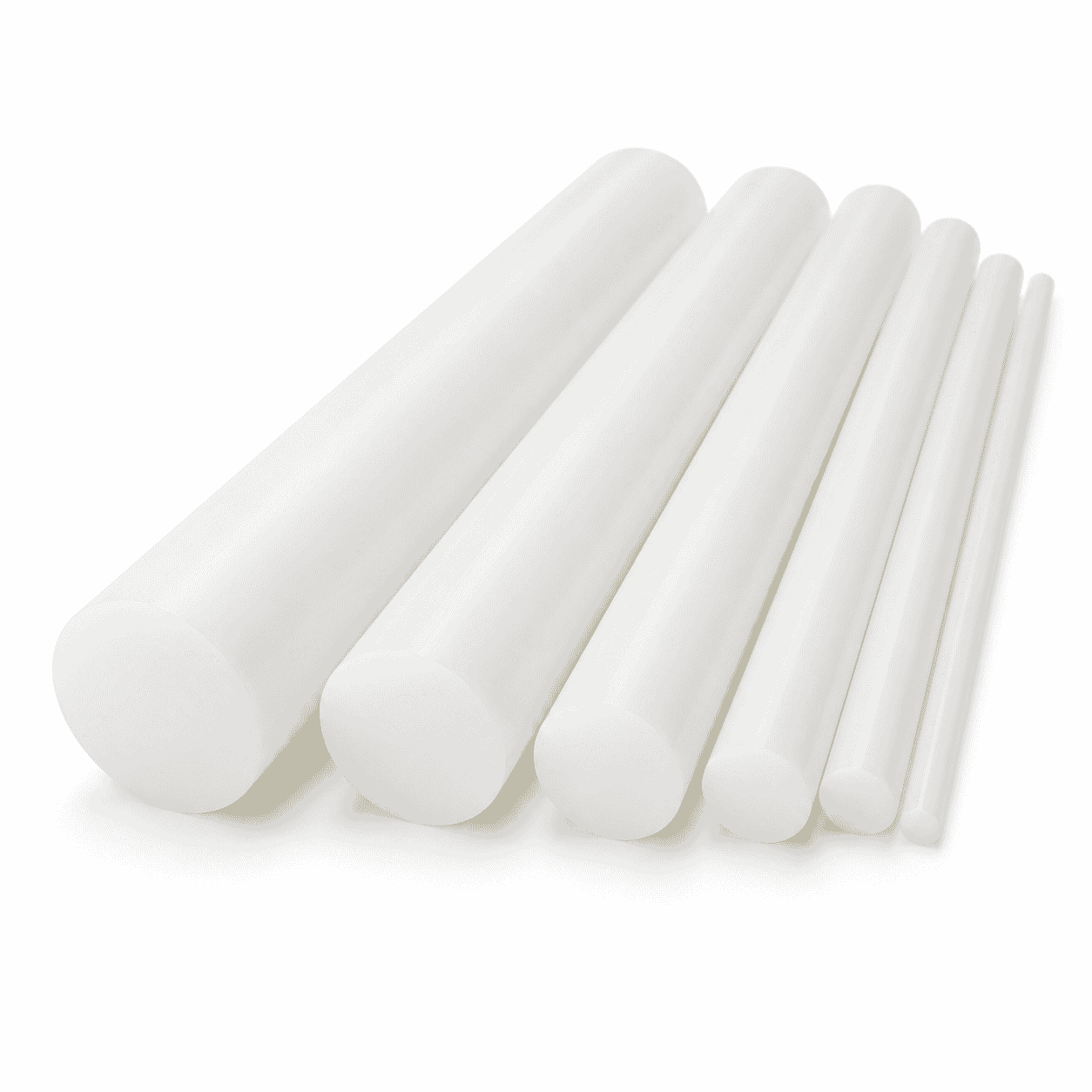
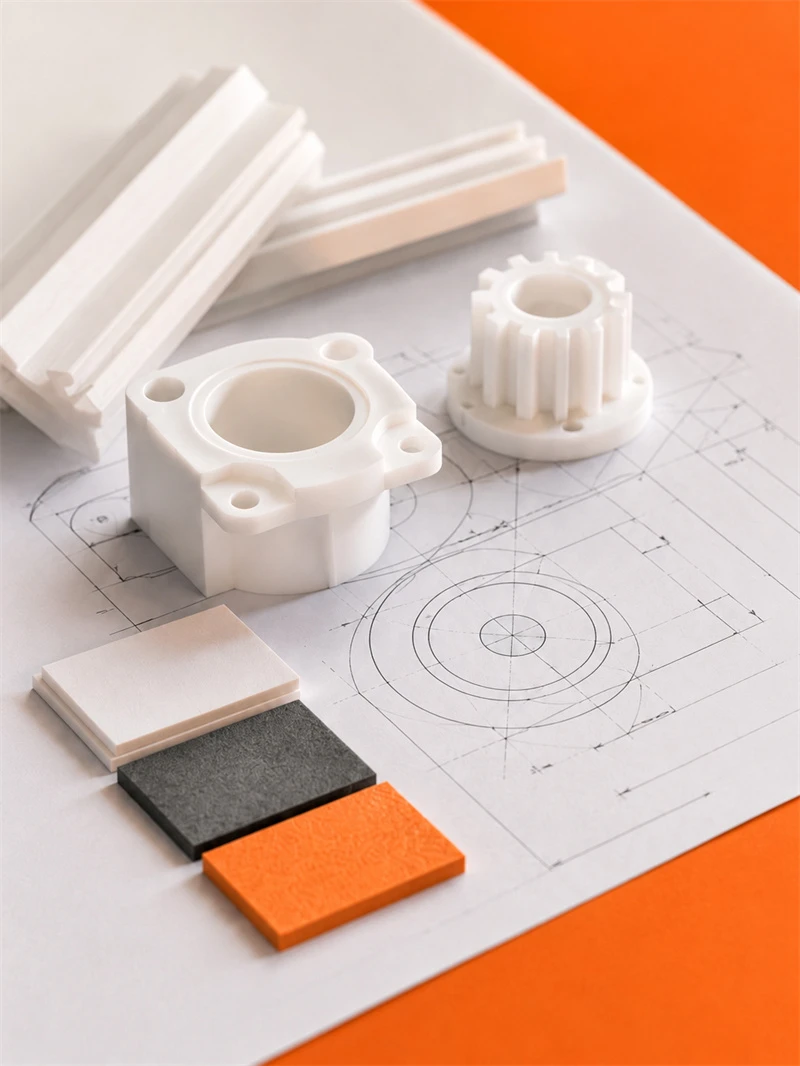
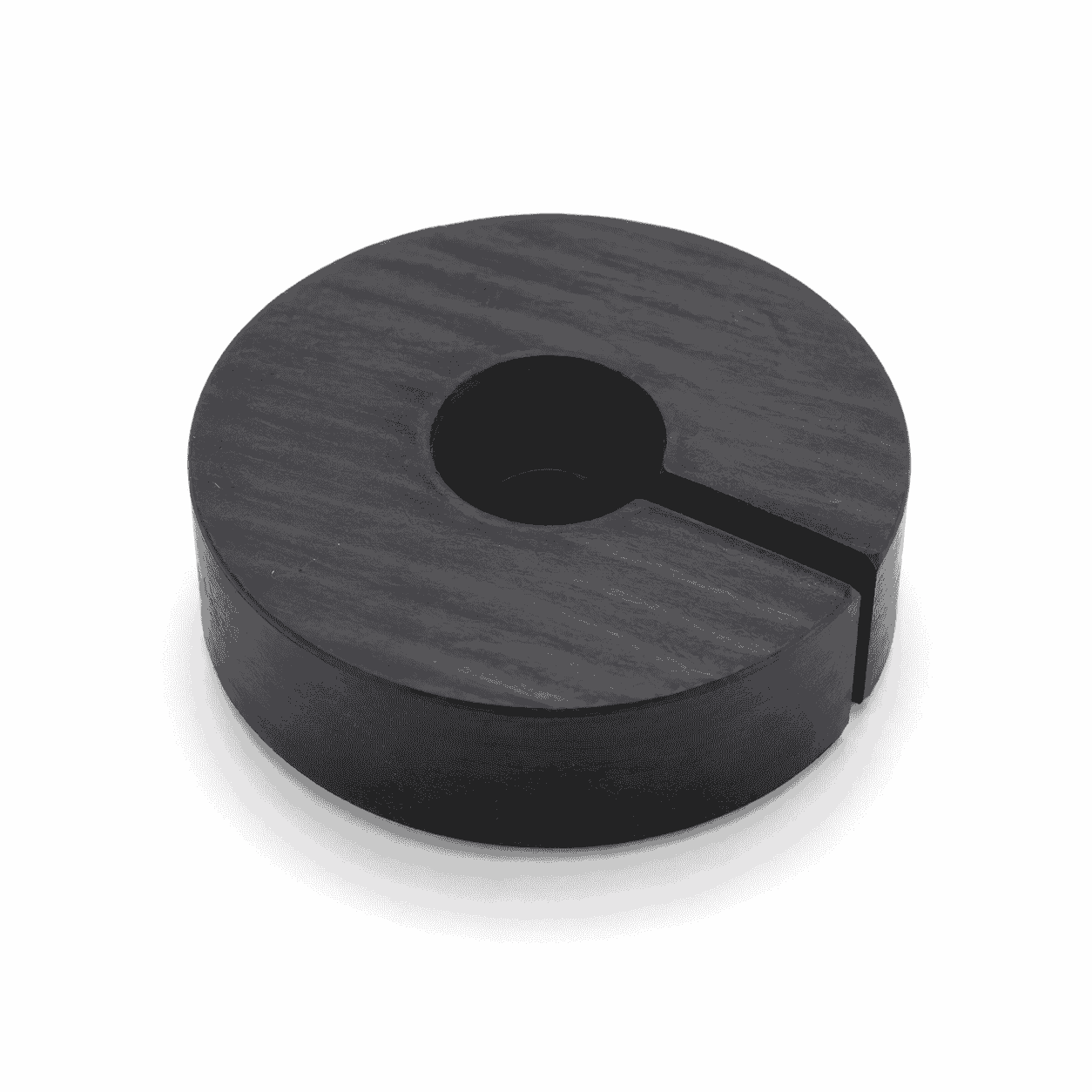
White PP Rod is a solid white polypropylene round bar used as machining stock for industrial plastic components. It combines low weight, low moisture absorption, good resistance to many chemical media and practical machining performance. The material can be turned, drilled, bored, milled and CNC machined into bushings, sleeves, rollers, spacers, washers, flanges, guide components and other non-standard plastic parts.
The white or natural-looking surface provides a clean and easily identifiable appearance for machinery, laboratory equipment, chemical systems and general industrial assemblies. Compared with untreated metal components, White PP Rod does not rust and is suitable for many humid or mildly corrosive working environments.
White colour alone does not demonstrate food-contact compliance, flame retardancy, anti-static performance, electrical conductivity or UV resistance. Where any special property is required, the appropriate polypropylene grade and supporting technical documentation should be confirmed before production.
White PP Rod Features
- Solid polypropylene round bar with a white or natural-white appearance
- Lightweight and easier to handle than many metal materials
- Low moisture absorption and good resistance to humid environments
- Good resistance to many acids, alkalis and chemical solutions
- Suitable for turning, drilling, boring, milling and CNC machining
- Does not rust like untreated steel components
- Available in multiple diameters and cutting lengths
- Suitable for producing custom plastic components from drawings or samples
- Large-diameter rods can be manufactured according to production conditions
The exact mechanical properties and chemical resistance depend on the selected polypropylene grade, production process, diameter, operating temperature and service environment. Chemical compatibility should be evaluated according to the actual medium, concentration, exposure time and mechanical load.
White PP Rod Reference Diameter Range
Based on the supplied product image, the overall reference diameter range of White PP Rod is approximately Ø8–Ø400 mm. The diameter options shown in the image include:
- Ø8 mm
- Ø10 mm
- Ø12 mm
- Ø15 mm
- Ø18 mm
- Ø20 mm
- Ø25 mm
- Ø30 mm
- Ø35 mm
- Ø40 mm
- Ø45 mm
- Ø50 mm
- Ø55 mm
- Ø60 mm
- Ø65 mm
- Ø70 mm
- Ø75 mm
- Ø80 mm
- Ø85 mm
- Ø90 mm
- Ø95 mm
- Ø100 mm
- Ø110 mm
- Ø120 mm
- Ø130 mm
- Ø140 mm
- Ø150 mm
- Ø160 mm
- Ø170 mm
- Ø180 mm
- Ø190 mm
- Ø200 mm
- Ø210 mm
- Ø220 mm
- Ø230 mm
- Ø240 mm
- Ø250 mm
- Ø260 mm
- Ø270 mm
- Ø280 mm
- Ø300 mm
- Ø320 mm
- Ø330 mm
- Ø350 mm
- Ø400 mm
Smaller and medium diameters are generally more suitable for extrusion and conventional machining-stock supply. Large-diameter products may be produced by extrusion, compression moulding or another suitable manufacturing process, depending on the diameter, material grade and required quantity.
White PP Rod Reference Lengths
The supplied image mainly shows the following reference lengths for White PP Rod:
Some smaller-diameter options are displayed as multiple rods per package. For example, certain Ø8 mm and Ø10 mm products are shown as three 1-metre rods, while some Ø12–Ø20 mm options are shown as two rods. These quantities are packaging references rather than universal supply standards.
Custom cutting can be arranged according to the required finished-part length. The raw-material length, cutting allowance, end-face condition and machining allowance should be confirmed before production.
White PP Rod Diameter Tolerance
Some white rod specifications shown in the supplied image are marked with a positive diameter tolerance. This means the supplied raw rod diameter may be slightly larger than its nominal dimension, providing sufficient machining allowance for turning and finishing.
For example, a nominal Ø50 mm rod intended for machining may be supplied with an actual diameter slightly above 50 mm. This should not be treated as the finished-part tolerance. Customers requiring precision components should separately confirm the raw rod tolerance and the final machined-part tolerance.
White PP Rod Reference Size Notes
The dimensions in the supplied image should be treated as reference manufacturing and market sizes rather than guaranteed stock specifications. Not every diameter is necessarily available in both 500 mm and 1000 mm lengths, and not every listed PP rod is necessarily made from the same resin grade.
Final availability depends on the required diameter, length, material grade, colour, quantity, dimensional tolerance and production schedule. Larger diameters such as Ø200 mm and above may require a minimum order quantity and a longer manufacturing period.
White PP Rod Applications
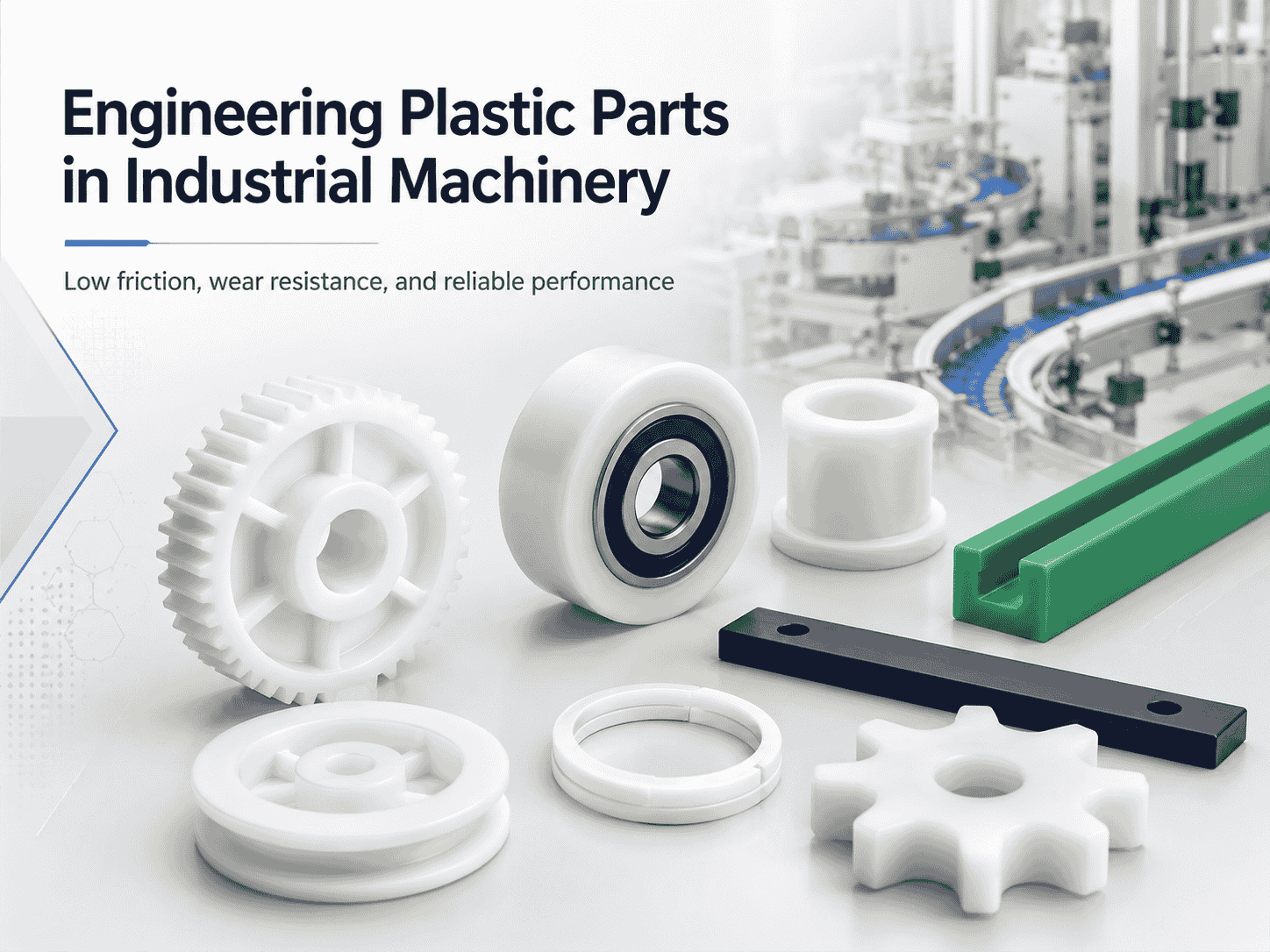
White PP Rod can be machined into components for chemical equipment, water-treatment systems, environmental protection equipment, laboratory devices, packaging machinery and general industrial equipment. Typical products include:
- Bushings and bearing sleeves
- Spacers and positioning components
- Plastic rollers and guide parts
- Washers and sealing support parts
- Flanges and connecting components
- Pump and valve plastic parts
- Tank and pipeline accessories
- Insulating support components
- Custom turned polypropylene parts
- CNC-milled non-standard plastic components
The material is particularly useful where low weight, moisture resistance and chemical resistance are more important than the high stiffness or strength provided by metal. Final material selection should still consider the working temperature, mechanical load, dimensional requirements and chemical environment.
White PP Rod Machining Options
White PP Rod can be processed by conventional turning, CNC turning, drilling, boring, milling, grooving, threading and chamfering. It is suitable for prototypes, replacement components and batch-machined plastic parts.
Polypropylene has lower stiffness and greater thermal expansion than most metals. Excessive cutting heat or clamping force may cause temporary deformation and dimensional variation. Sharp cutting tools, appropriate feed rates and suitable machining allowances should therefore be used.
For large or precision components, rough machining and finish machining may be separated by a stress-relief period. Drawings should clearly identify the finished dimensions, diameter tolerance, concentricity, surface finish, holes, threads, grooves and installation requirements.
White PP Rod Material Selection
A standard White PP Rod should not automatically be promoted as food grade simply because it is white. Direct food-contact applications require the corresponding food-contact resin and relevant compliance documents. The same principle applies to flame-retardant, conductive, anti-static and UV-resistant products.
Colour may vary slightly between different raw-material batches, rod diameters and production processes. Where strict colour consistency is required, a physical sample or agreed colour reference should be confirmed before batch production.
For related polypropylene rods and machining materials, visit our internal
Polypropylene PP Rod
page.
For general information about the base polymer, refer to the
Polypropylene explanation on Wikipedia.