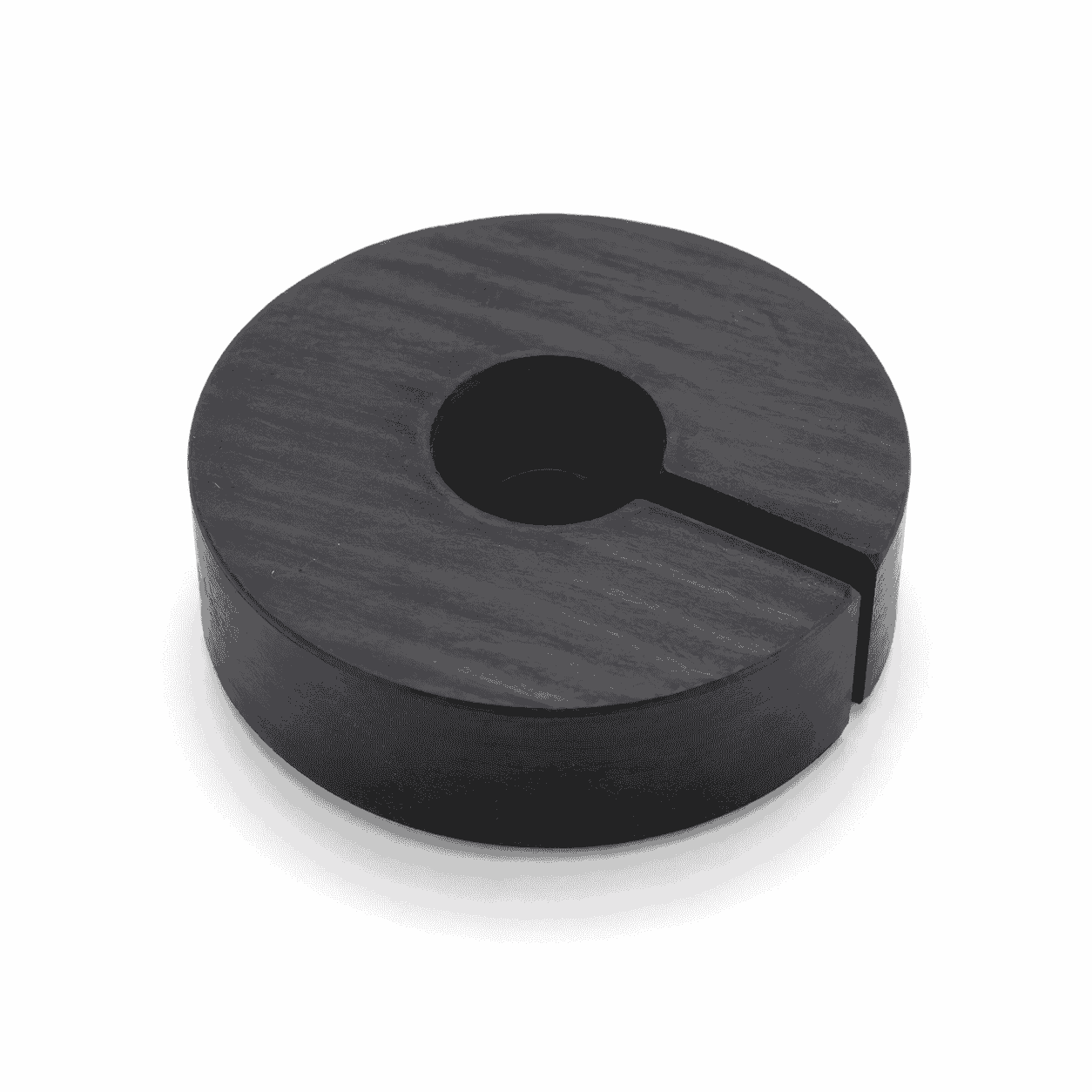
Nylon Eccentric Wheel for Precision Adjustment
The Nylon Eccentric Wheel is a CNC-machined engineering plastic component with an offset inner bore, cylindrical working surface and integrated flange. When installed on a shaft and rotated, the offset bore changes the effective distance between the shaft center and the outer working surface. This controlled eccentric movement can be used for positioning, clearance adjustment, tension compensation, guiding, intermittent feeding or pressure regulation in industrial equipment.
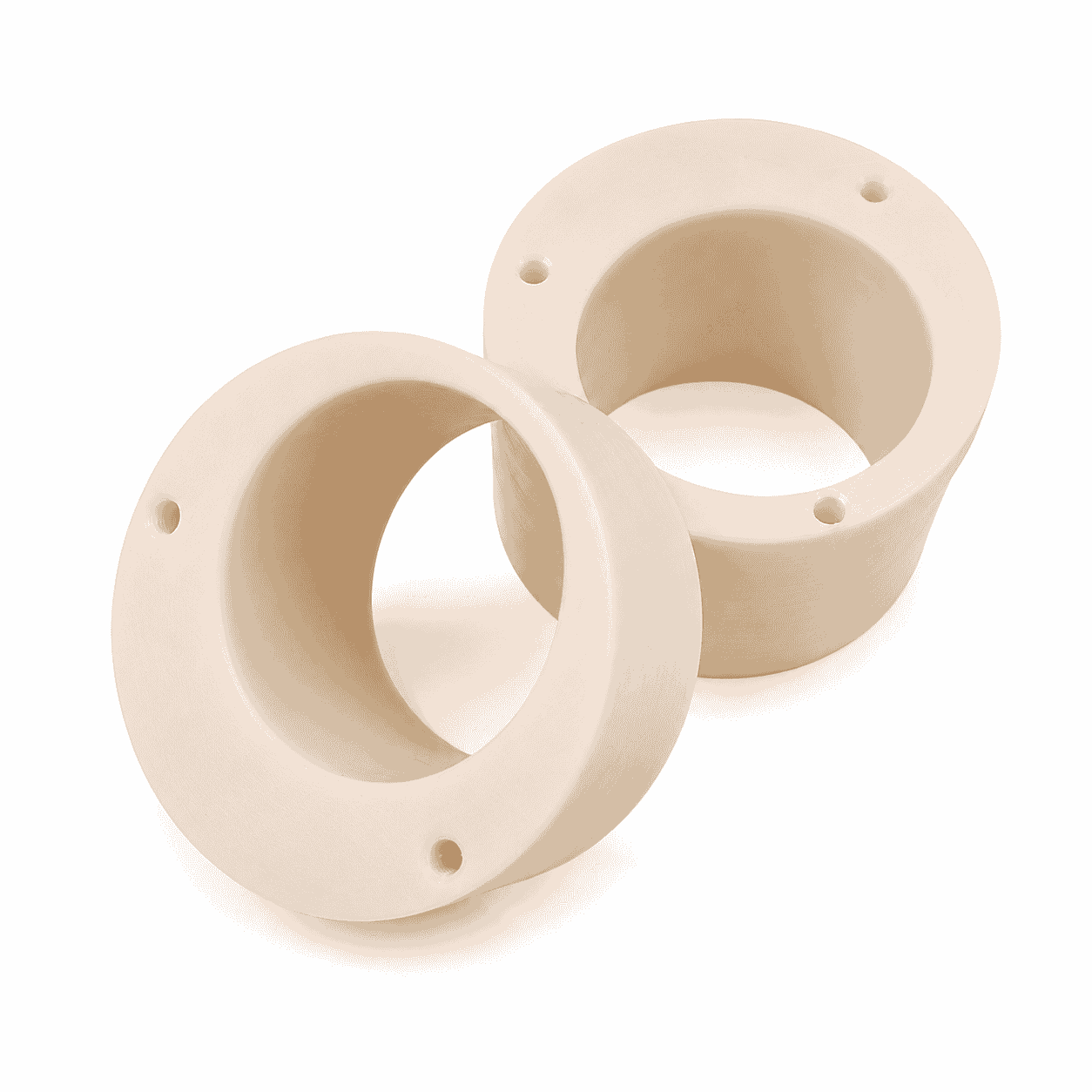
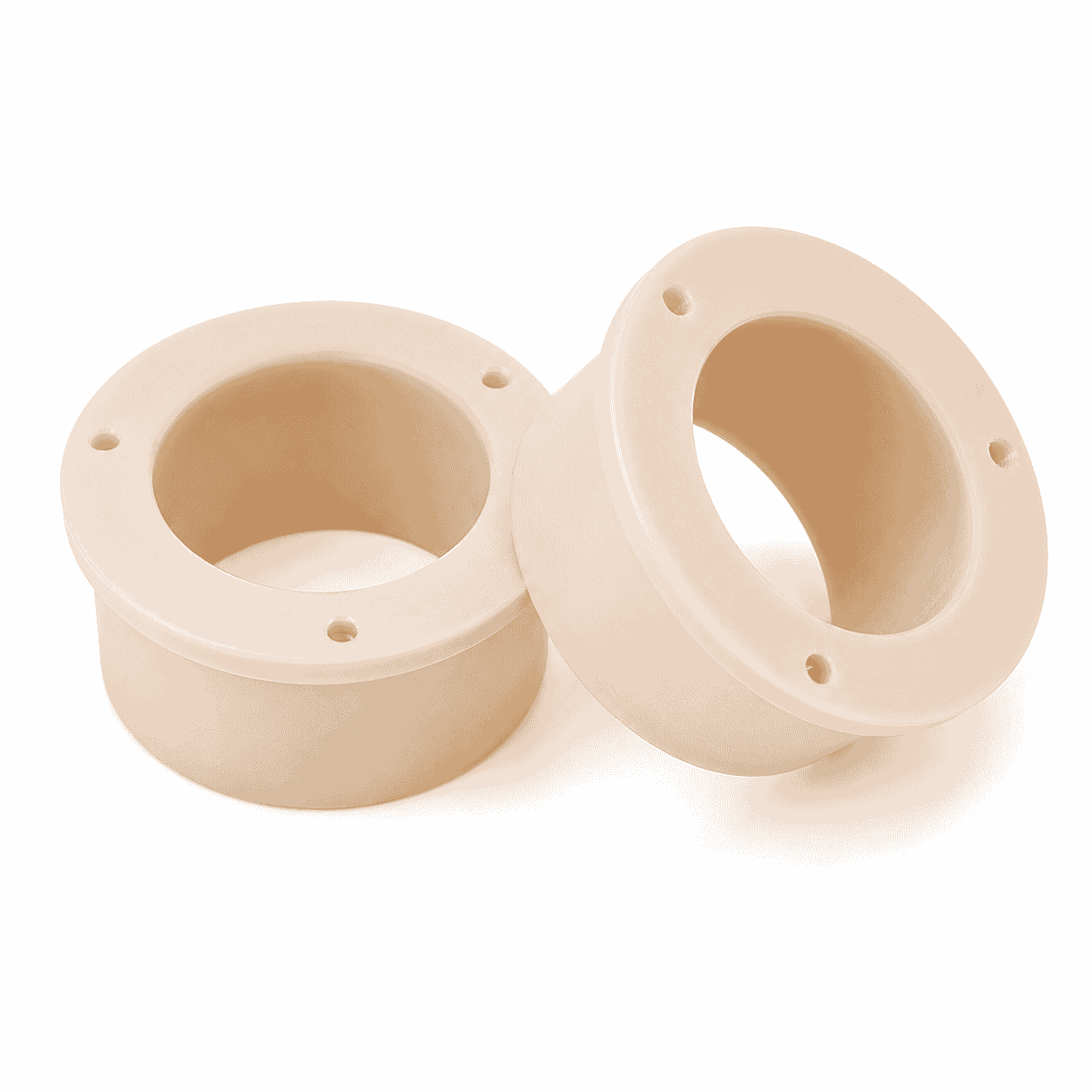
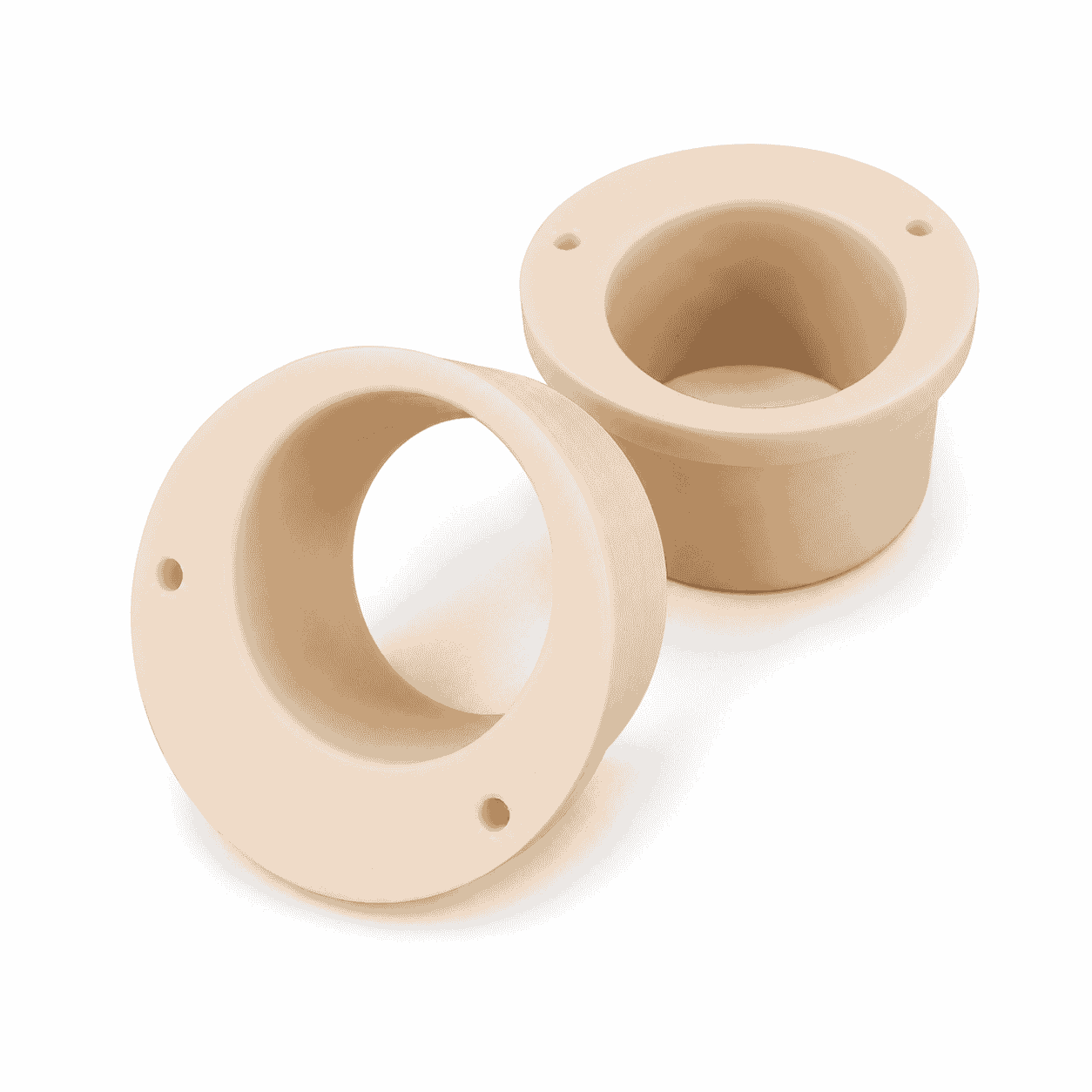
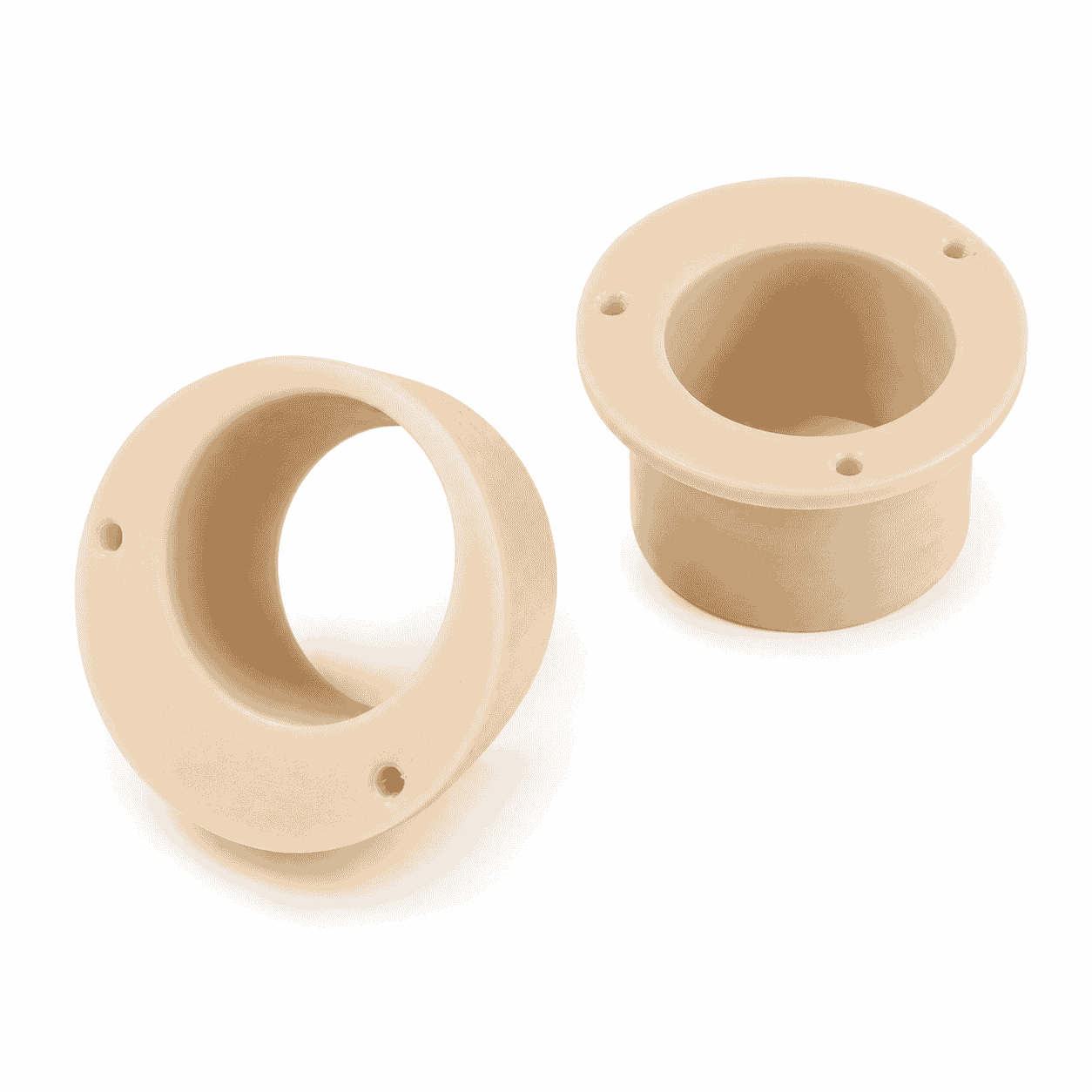
The product shown in the image has a natural-colored machined surface, a large offset center bore and auxiliary holes in the flange. These holes may be used for fastening, alignment, locking or connection, depending on the equipment design. The material grade, eccentric distance, hole positions and tolerances should be confirmed from the customer’s drawing, physical sample or equipment assembly requirements.
How a Nylon Eccentric Wheel Works
A conventional wheel has a bore aligned with the geometric center of its outside diameter. In contrast, the bore of an eccentric wheel is deliberately displaced from the center. As the component rotates, the working radius relative to the shaft changes continuously. This allows a simple rotary action to create an adjustable contact position, variable pressure or limited reciprocating movement.
In practical equipment, the Nylon Eccentric Wheel may be used to tighten a belt or chain, adjust the gap between moving parts, press a workpiece into position, compensate for assembly deviation or control the movement of a guide mechanism. The final operating effect depends on the eccentricity, wheel diameter, flange structure, shaft fit and installation angle.
Material Options and Performance
This component can be machined from Polyamide PA Nylon Rod. Suitable material options may include PA6, cast MC nylon, PA66, oil-filled nylon, MoS₂-filled nylon and other modified polyamide grades. The appropriate material should be selected according to load, rotational speed, friction conditions, impact, working temperature, humidity and dimensional requirements.
Nylon is commonly used for industrial machine components because it combines mechanical strength, wear resistance, impact toughness and machinability. Compared with many metal components, it can reduce component weight and may help lower operating noise under suitable contact conditions. General information about nylon as a family of polyamide polymers is available from Wikipedia’s explanation of nylon.
Because nylon can absorb moisture, dimensional changes should be considered in humid environments, water-contact applications and precision-fit assemblies. The installation clearance and finished dimensions should therefore be specified according to the actual operating environment rather than relying only on a nominal drawing size.
8 Proven Advantages of the Nylon Eccentric Wheel
- Wear resistance: suitable for repeated rolling, guiding, supporting and sliding contact.
- Reduced operating noise: nylon contact can be quieter than direct metal-to-metal contact in suitable mechanisms.
- Lower component weight: useful where reduced rotating mass and easier equipment assembly are required.
- Good impact toughness: capable of absorbing moderate vibration and mechanical shock.
- Machinable eccentricity: the bore offset, outside diameter and flange dimensions can be produced according to drawings.
- Protection of mating parts: the polymer working surface may reduce direct scratching or impact against metal components.
- Corrosion-free surface: nylon does not rust like ordinary carbon steel components.
- Flexible structural design: mounting holes, keyways, grooves, steps and threaded features can be integrated into one component.
Typical Industrial Applications
The Nylon Eccentric Wheel can be applied in conveyor systems, packaging machines, textile equipment, printing machinery, sorting equipment, automated assembly lines and general industrial machinery. Common functions include:
- Belt and chain tension adjustment
- Conveyor guide positioning
- Adjustable support and pressure mechanisms
- Intermittent feeding or indexing assemblies
- Mechanical clearance compensation
- Sliding-door and movable guide systems
- Packaging and labeling machine adjustment
- Low-noise replacement of selected metal wheels
- Fixture positioning and workpiece pressing
- Special transmission and motion-control assemblies
CNC Machining for the Nylon Eccentric Wheel
Through our CNC Plastic Machining service, the Nylon Eccentric Wheel can be manufactured by turning, milling, drilling, boring, tapping, grooving and chamfering. Production can be arranged from technical drawings, physical samples or confirmed equipment installation data.
Available machining details include the outside diameter, overall width, flange diameter, flange thickness, bore diameter, eccentric distance, mounting-hole quantity, hole spacing, counterbores, countersinks, threaded holes, keyways, grooves, steps, positioning surfaces and edge chamfers.
The bore position and eccentric distance are important manufacturing parameters. An incorrect offset may cause insufficient tension, excessive contact pressure, unstable rotation or interference with surrounding components. These dimensions should be checked together with the shaft diameter, operating direction and installation position before batch production.
Available Material Grades
- PA6 nylon: suitable for many general-purpose wear-resistant mechanical components.
- MC nylon: commonly considered for larger machined rollers, wheels, sleeves and structural components.
- PA66 nylon: suitable where increased rigidity and mechanical strength are required.
- Oil-filled nylon: available for selected low-friction and self-lubricating applications.
- MoS₂-filled nylon: may be considered where improved wear performance and dimensional stability are required.
The final grade should not be selected only according to color or appearance. Load, rotational speed, temperature, moisture, chemical contact and required service life should all be considered before confirming the material.
Information Required Before Production
For accurate manufacturing, please provide the outside diameter, bore diameter, overall width, flange dimensions, eccentric distance, mounting-hole positions, fitting tolerance, nylon grade, operating load, rotational speed, working temperature and order quantity.
For replacement components, a clear drawing or physical sample is recommended so that the eccentric relationship, installation interface and operating direction can be checked before machining. Both prototype quantities and repeat batch orders can be produced after the material, dimensions and tolerances are confirmed.
The image is provided as a structural and appearance reference. The pictured component should not be treated as a universal standard size. Final dimensions, material type, color, hole positions and dimensional tolerances must be based on the confirmed project requirements.