Nylon Pulley Wheel for Reliable Guiding and Transmission
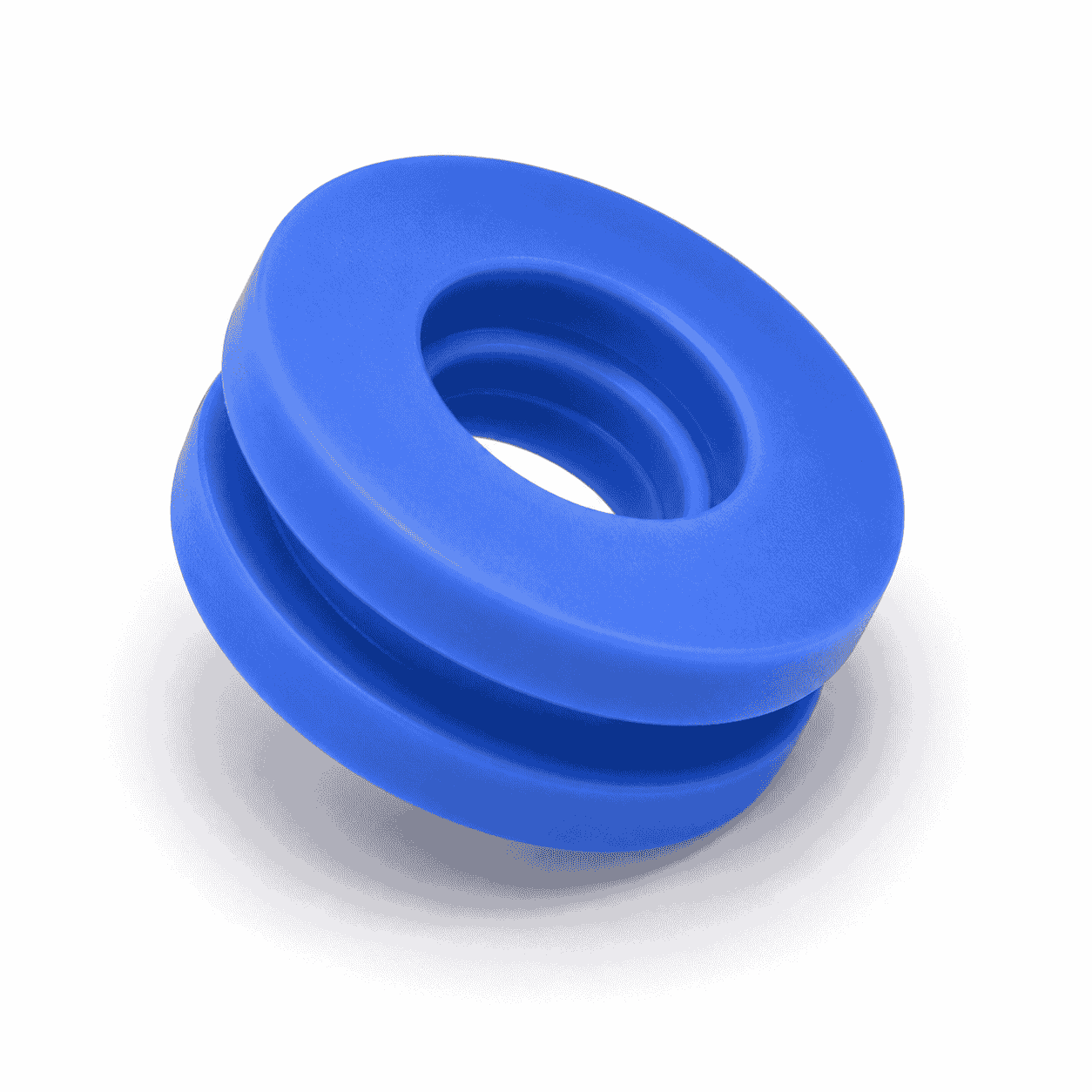
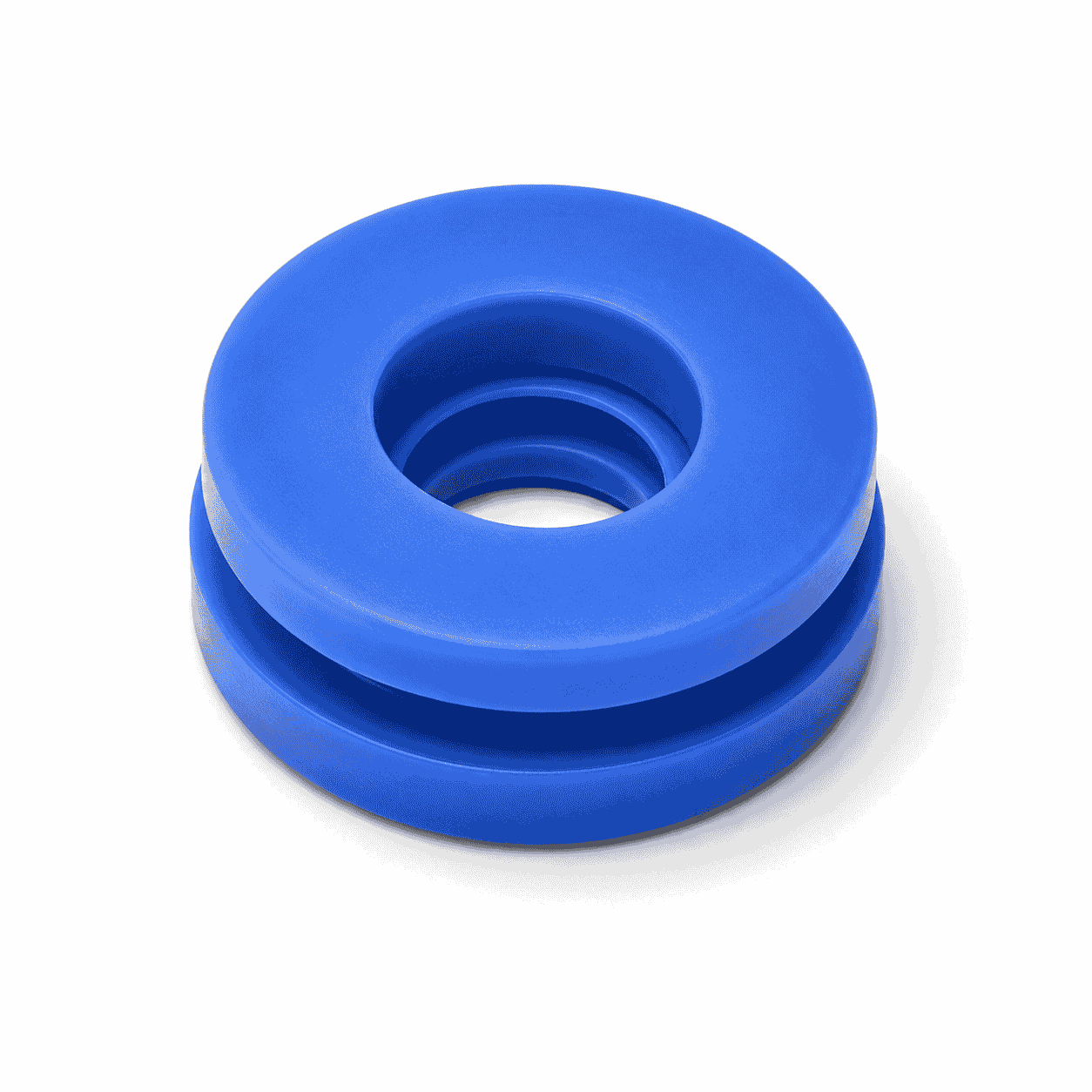
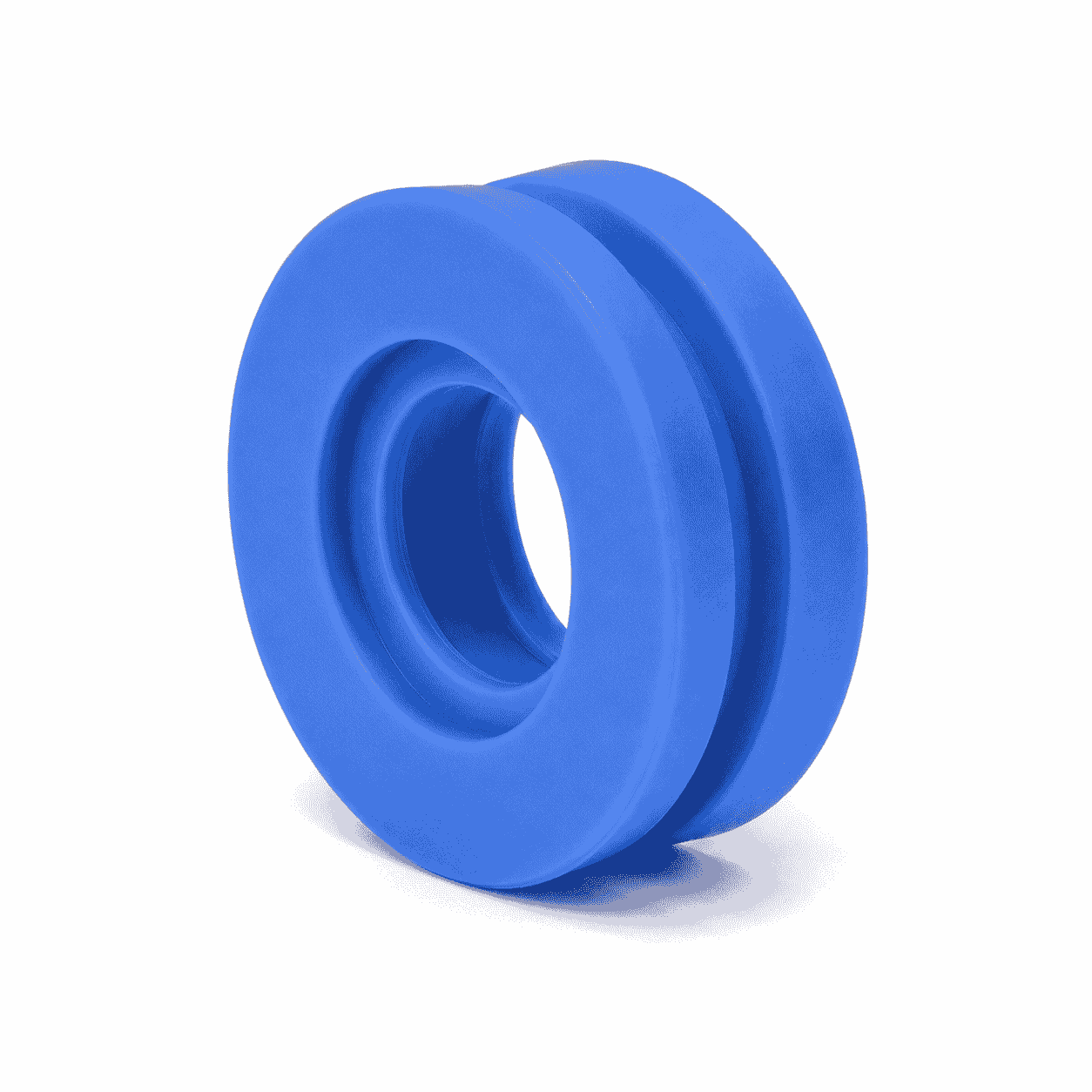
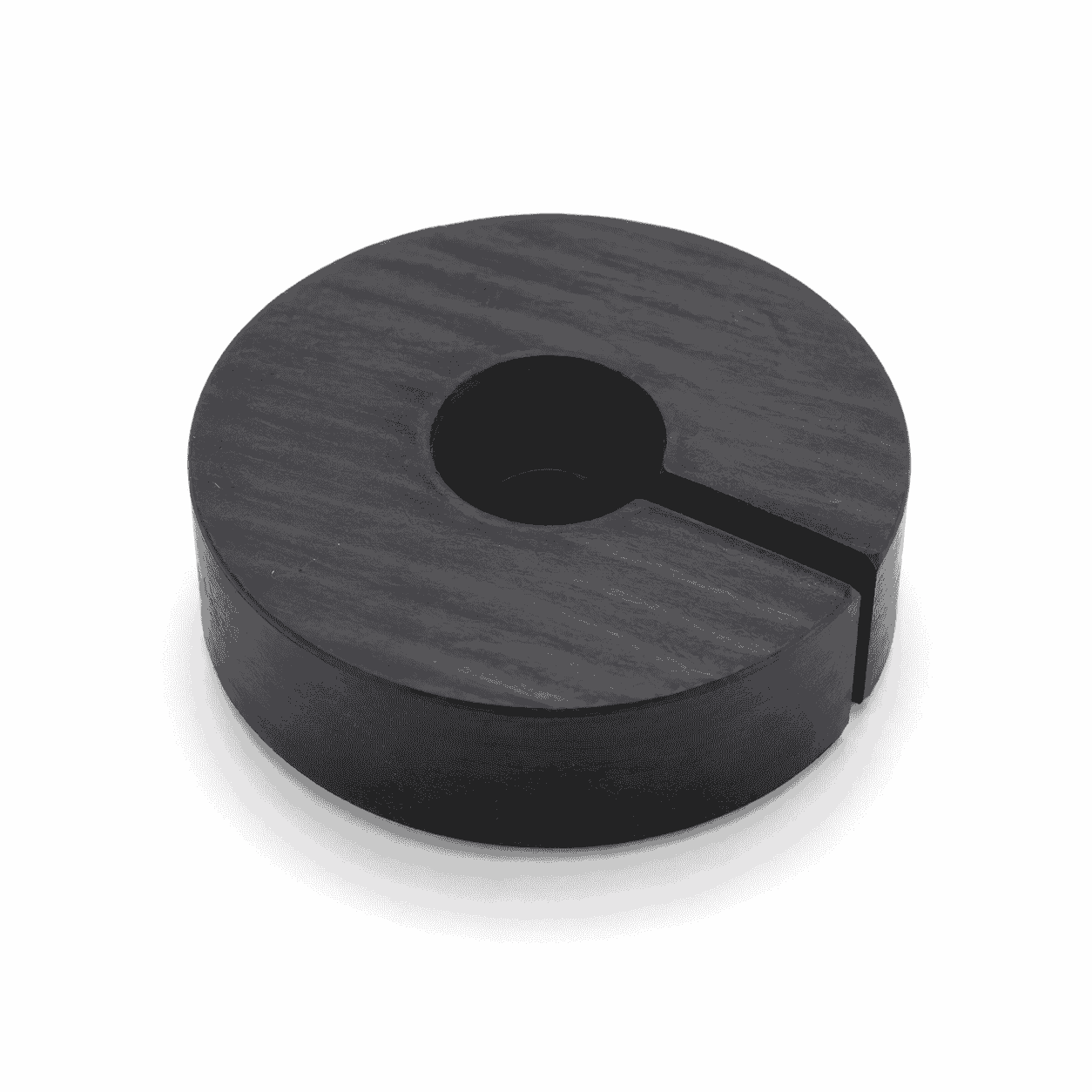
The Nylon Pulley Wheel is a grooved engineering plastic component used to guide, support or redirect belts, ropes, cables and other flexible transmission elements. The product shown in the image features a blue cylindrical body, a central mounting bore and a circumferential groove that helps keep the mating belt, rope or cable in the required running position.
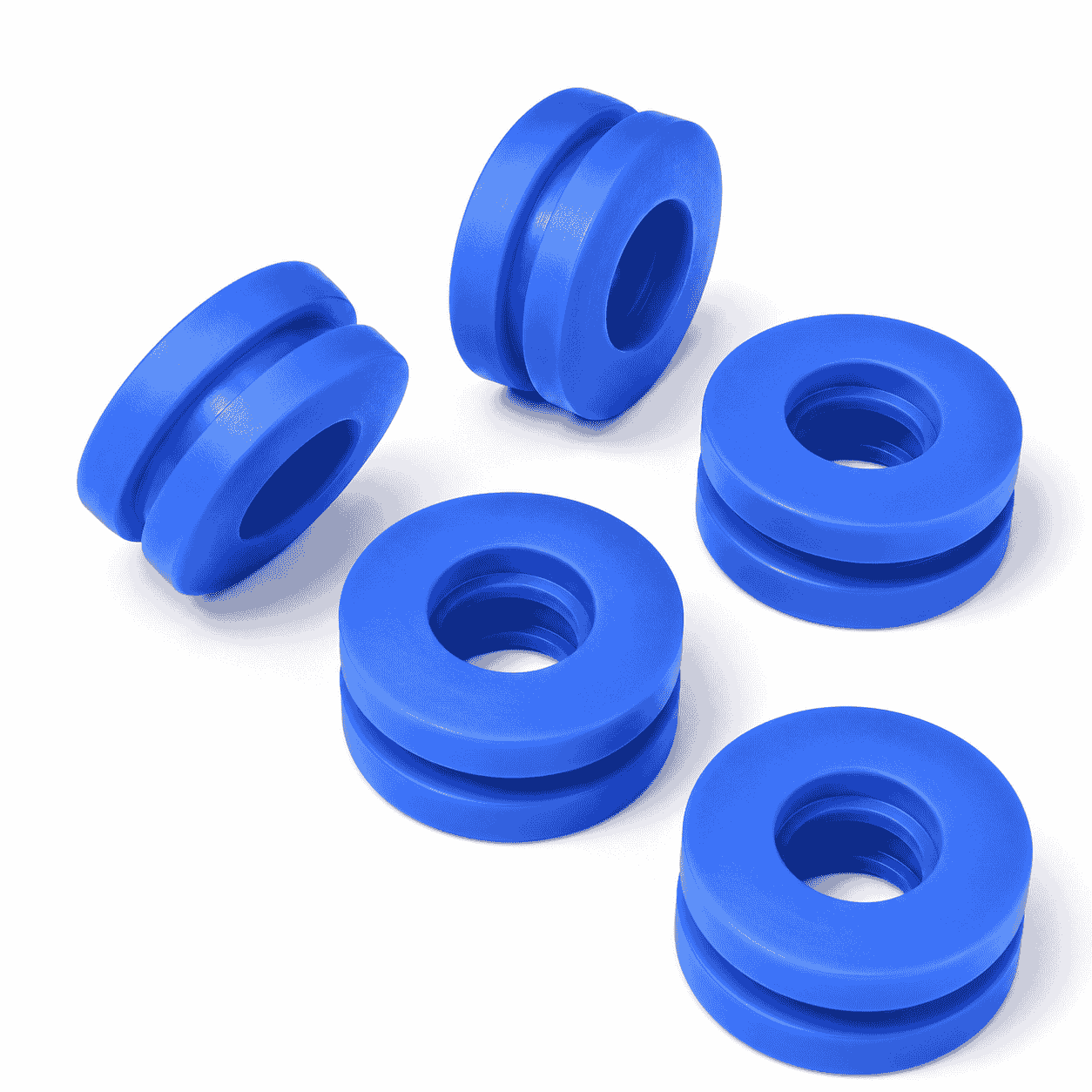
Different pieces in the pictured batch appear to include straight bores, stepped bores and recessed mounting structures. Depending on the equipment design, the center bore may be fitted directly to a shaft, used with a metal bushing or machined as a bearing seat. The final bore structure, groove profile and fitting tolerance must be confirmed according to the approved drawing or physical sample.
The blue color is produced by pigment or a material formulation and does not independently identify the nylon grade. PA6, MC nylon, PA66, oil-filled nylon and other modified polyamide grades may all be produced in different colors. Material selection should therefore be based on load, rotational speed, friction, temperature, humidity and expected service life rather than color alone.
How a Nylon Pulley Wheel Works
A pulley is a wheel installed on an axle or shaft. Its outer groove supports a belt, rope or cable so that the moving element can change direction, remain aligned or transfer movement between mechanical components. Depending on the installation, the pulley may operate as a guide pulley, idler pulley, tension pulley or transmission pulley.
The groove profile is an important part of pulley performance. A U-shaped groove is commonly considered for round ropes and cables, while wider curved or flat-bottom grooves may be used for belts and other flexible elements. The groove width, depth, radius and opening angle should match the mating component to reduce side movement, uneven wear and the risk of disengagement.
The central bore controls how the wheel is installed and rotates. A plain bore may run directly on a shaft or bushing in selected low-speed applications. A stepped bore can provide space for a bearing, spacer, retaining ring or metal insert. The correct arrangement depends on speed, radial load, allowable friction and maintenance requirements.
Material Options for the Nylon Pulley Wheel
This component can be manufactured from Polyamide PA Nylon Rod. Nylon is a family of synthetic polymers containing amide linkages and is widely processed into fibers, molded products and machined engineering components. A general material explanation is available from the Wikipedia overview of nylon.
Natural PA6 is suitable for many general mechanical components requiring a balance of strength, toughness and machinability. Cast MC nylon is often considered for larger pulleys, rollers, sleeves and wear parts. PA66 may be selected where greater rigidity and mechanical strength are required.
Oil-filled nylon and MoS₂-filled nylon can be evaluated for applications involving repeated sliding contact or reduced lubrication. Glass-fiber-reinforced nylon provides increased rigidity but may be less suitable where the groove directly contacts a cable or belt that could be damaged by a harder abrasive surface.
Nylon can absorb moisture, which may cause dimensional changes. For close-fitting bearing seats, precision shaft bores and equipment used in humid or water-contact environments, moisture exposure and installation clearance should be considered before machining.
7 Proven Advantages of the Nylon Pulley Wheel
- Lower operating noise: nylon can reduce impact and running noise compared with direct metal-to-metal contact in suitable equipment.
- Good wear performance: suitable for repeated guiding, rolling and supporting contact under correctly selected loads.
- Reduced component weight: the lower weight of nylon can reduce rotating mass and simplify equipment assembly.
- Corrosion-free surface: nylon does not rust like an ordinary carbon steel pulley when exposed to moisture.
- Protection of mating components: the polymer groove can reduce scratching and direct impact on selected belts, ropes and cables.
- Flexible machining: the groove, bore, bearing seat, shoulder, keyway and retaining structure can be produced according to drawings.
- Batch consistency: CNC machining helps control bore diameter, groove position, outside diameter and overall width across repeat production.
Typical Applications
The Nylon Pulley Wheel may be used in conveyor systems, packaging machinery, textile equipment, cable-guiding assemblies, automated production lines, doors, lifting-assistance mechanisms and general industrial machinery. A pulley normally uses a grooved wheel to guide a belt, cable, rope or chain, although the exact function depends on its structure and installation. General information about pulley mechanisms is available from the Wikipedia explanation of pulleys.
- Conveyor belt guide and tension assemblies
- Packaging and labeling machine guide wheels
- Wire, rope and cable guiding equipment
- Textile and winding machinery
- Sliding-door and movable-panel systems
- Fitness and rehabilitation equipment
- Automated production line guide mechanisms
- Sorting and material-handling equipment
- Low-noise replacement parts for selected metal pulleys
- Industrial idler and positioning mechanisms
These applications are general references rather than confirmation that every nylon pulley is suitable for the same load or speed. Components used for lifting, personnel support or other safety-critical systems require a complete engineering review of the material grade, load capacity, shaft structure, bearing arrangement and safety factor.
CNC Machining Options
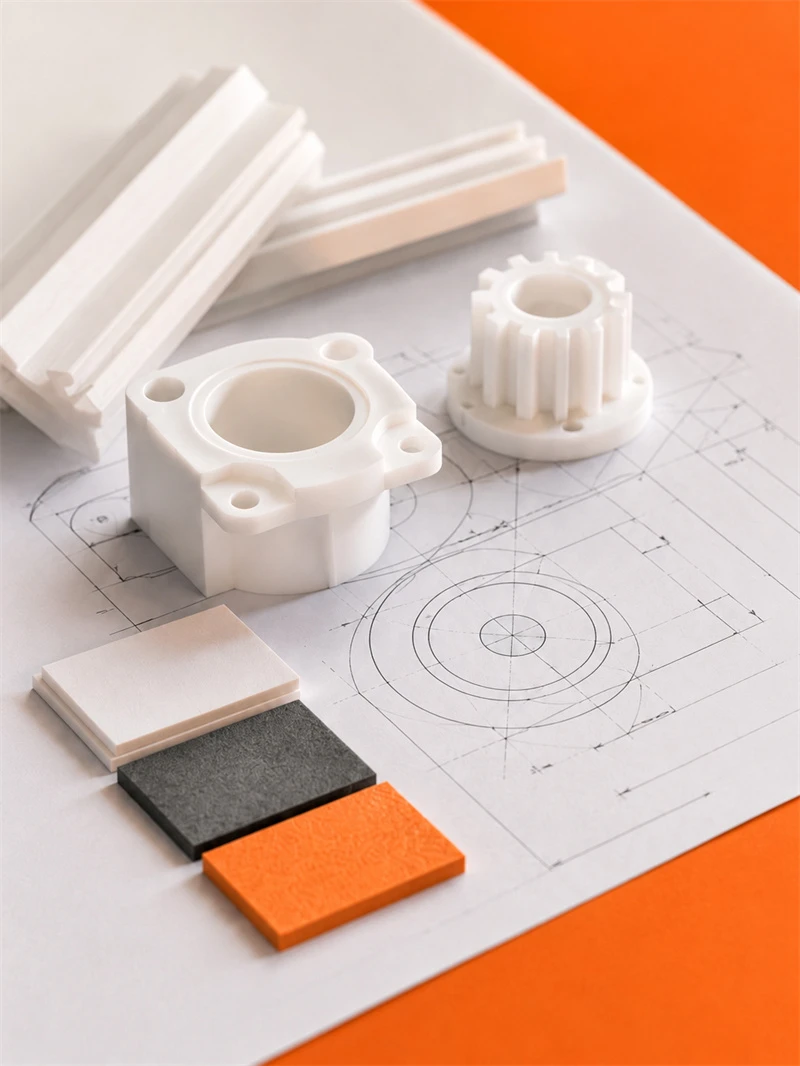
Through our CNC Plastic Machining service, the Nylon Pulley Wheel can be manufactured by turning, boring, drilling, milling, grooving, tapping and chamfering. Production can be based on technical drawings, physical samples or verified equipment installation dimensions.
Available machining details include:
- Outside diameter and overall width
- Center bore diameter and fitting tolerance
- U-shaped, V-shaped or curved groove profiles
- Groove width, depth, radius and position
- Single-groove and multiple-groove structures
- Stepped bores and bearing seats
- Metal bushings and shaft sleeves
- Keyways, retaining-ring grooves and threaded holes
- Shoulders, recesses and positioning surfaces
- Edge chamfers and rounded transitions
Important Dimensional Requirements
The outside diameter affects rotational speed and the movement ratio of the transmission system. The groove diameter determines the effective running diameter of the belt, cable or rope. If this dimension is incorrect, the equipment may operate at the wrong speed or produce excessive tension.
The groove profile should provide sufficient guidance without tightly squeezing the mating component. An undersized groove can create excessive friction and heat, while an oversized groove may allow side movement or unstable tracking.
The center bore, bearing seat and end-face position influence rotational accuracy. Excessive clearance may cause vibration, impact and uneven groove wear. Insufficient clearance may make assembly difficult or cause the wheel to bind after nylon absorbs moisture.
Production and Quality Inspection
For batch production, the first piece should be checked before continuous machining. Important inspection items include outside diameter, bore diameter, groove width, groove depth, overall width, concentricity and end-face runout.
Machining burrs should be removed from the groove and center bore to prevent damage to belts, ropes, cables, shafts or bearings. Sharp groove edges can be rounded or chamfered according to the drawing to improve entry and reduce localized wear.
During batch processing, machining dimensions should be sampled regularly to control variation caused by tool wear, material temperature and stress release. Finished pulleys can be separated and identified according to drawing number, size or production batch.
Information Required Before Production
To manufacture the Nylon Pulley Wheel accurately, please provide the outside diameter, overall width, bore diameter, groove profile, groove dimensions, nylon grade, color, shaft structure, bearing specification, operating speed, radial load and required quantity.
Please also indicate whether the wheel contacts a flat belt, round belt, steel cable, synthetic rope or another moving element. This information helps determine the appropriate groove shape, surface finish, edge radius and dimensional clearance.
The image is provided as an appearance and batch-production reference only. It does not confirm a universal size, nylon grade, bearing model or load rating. Final material, dimensions, tolerances and installation details must follow the approved drawing or measured sample.