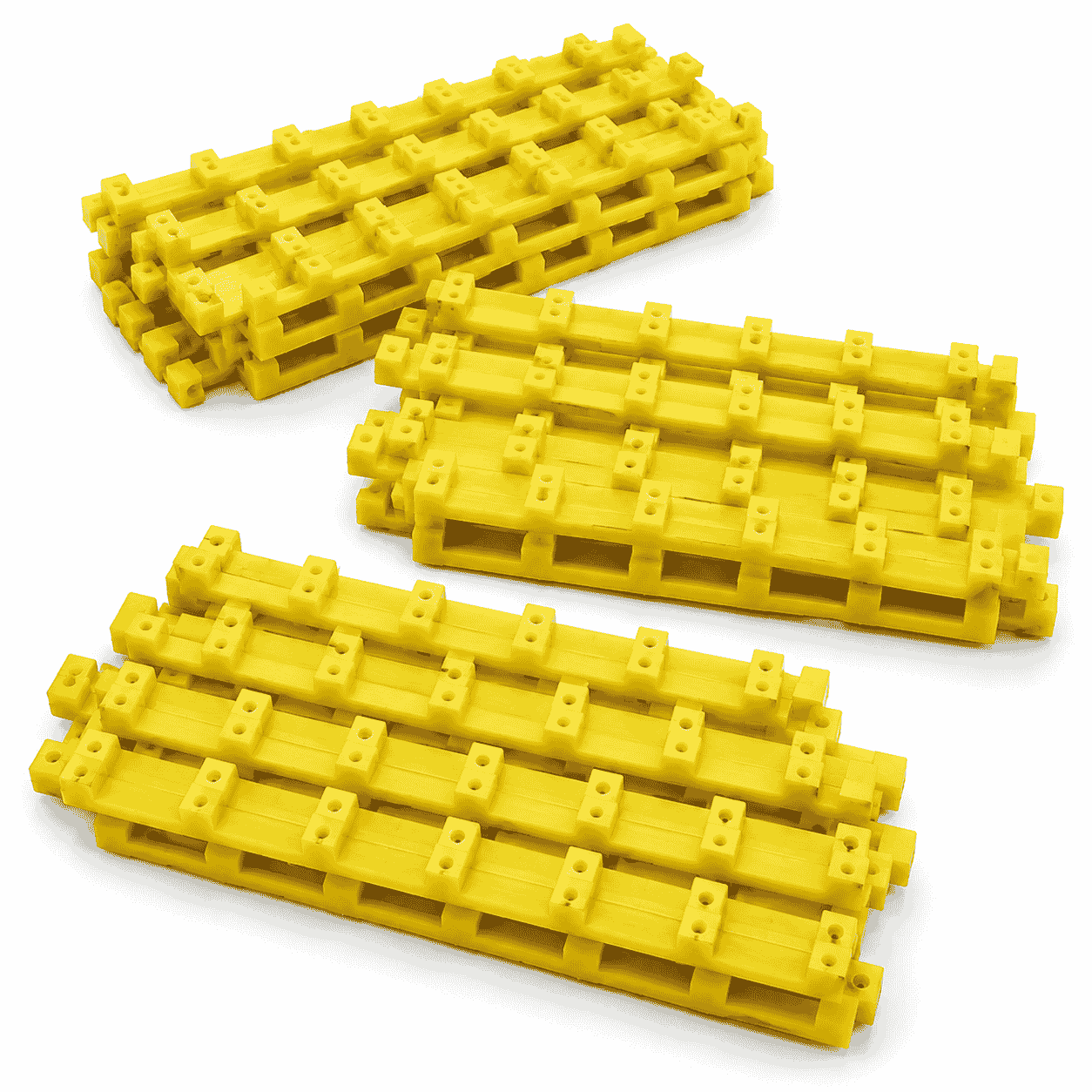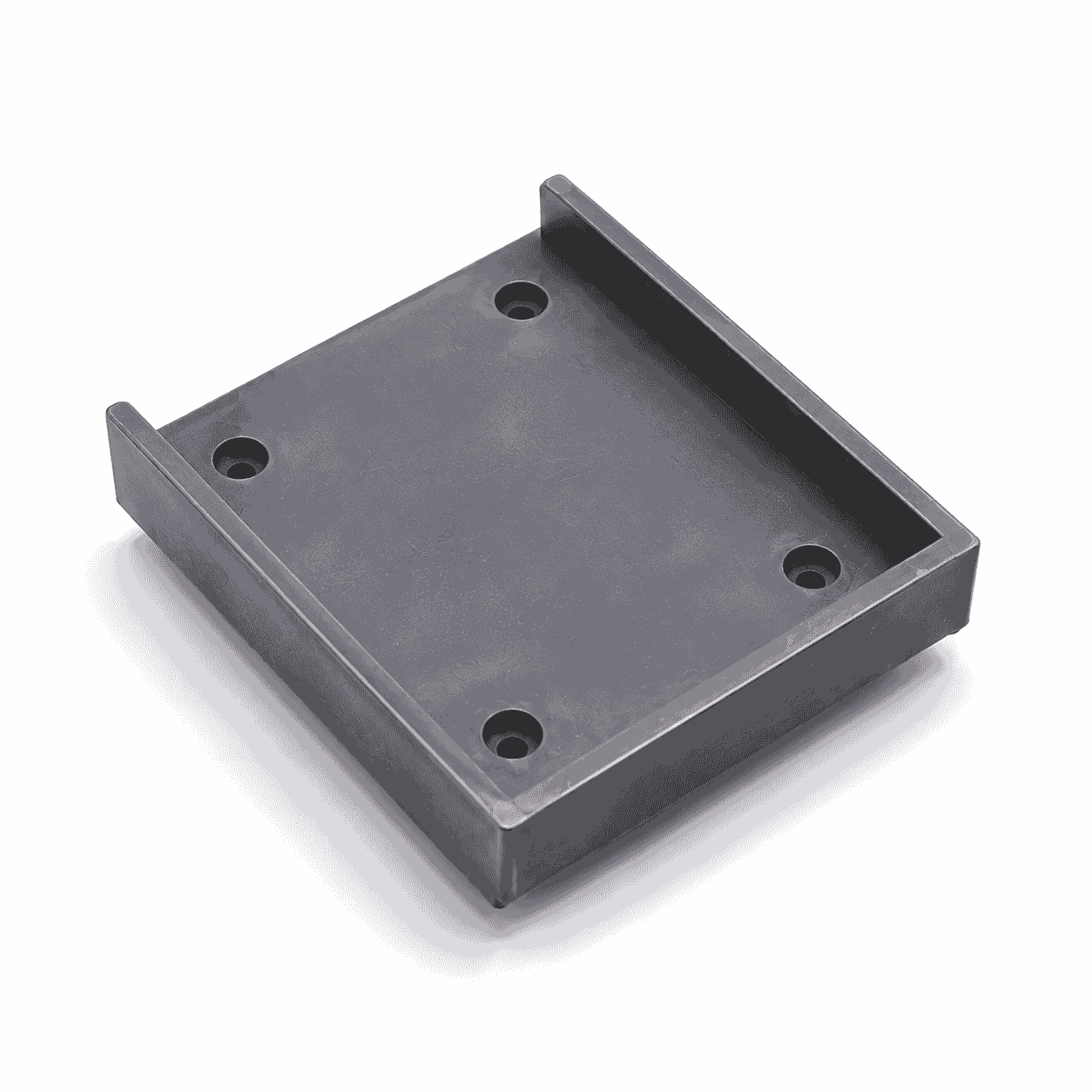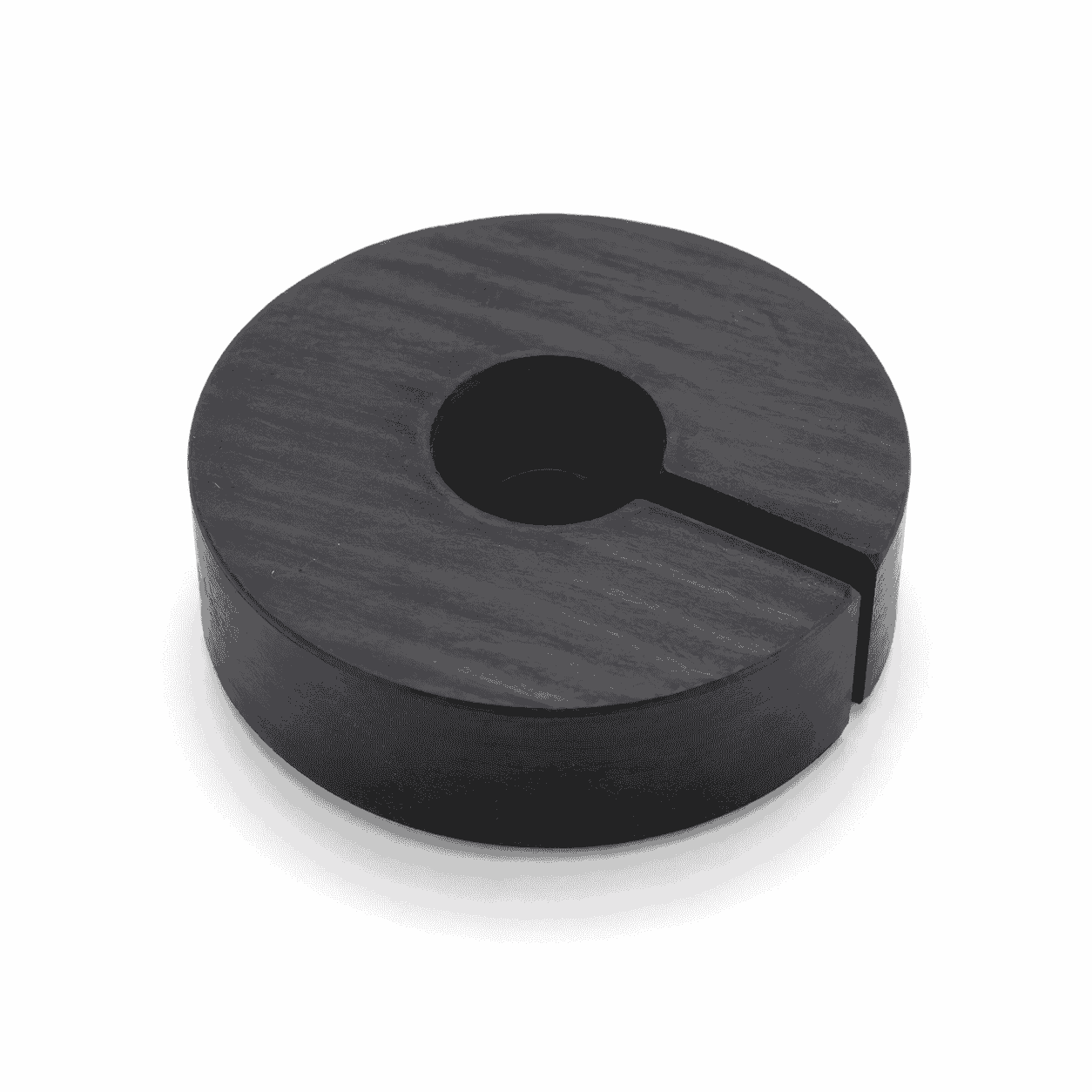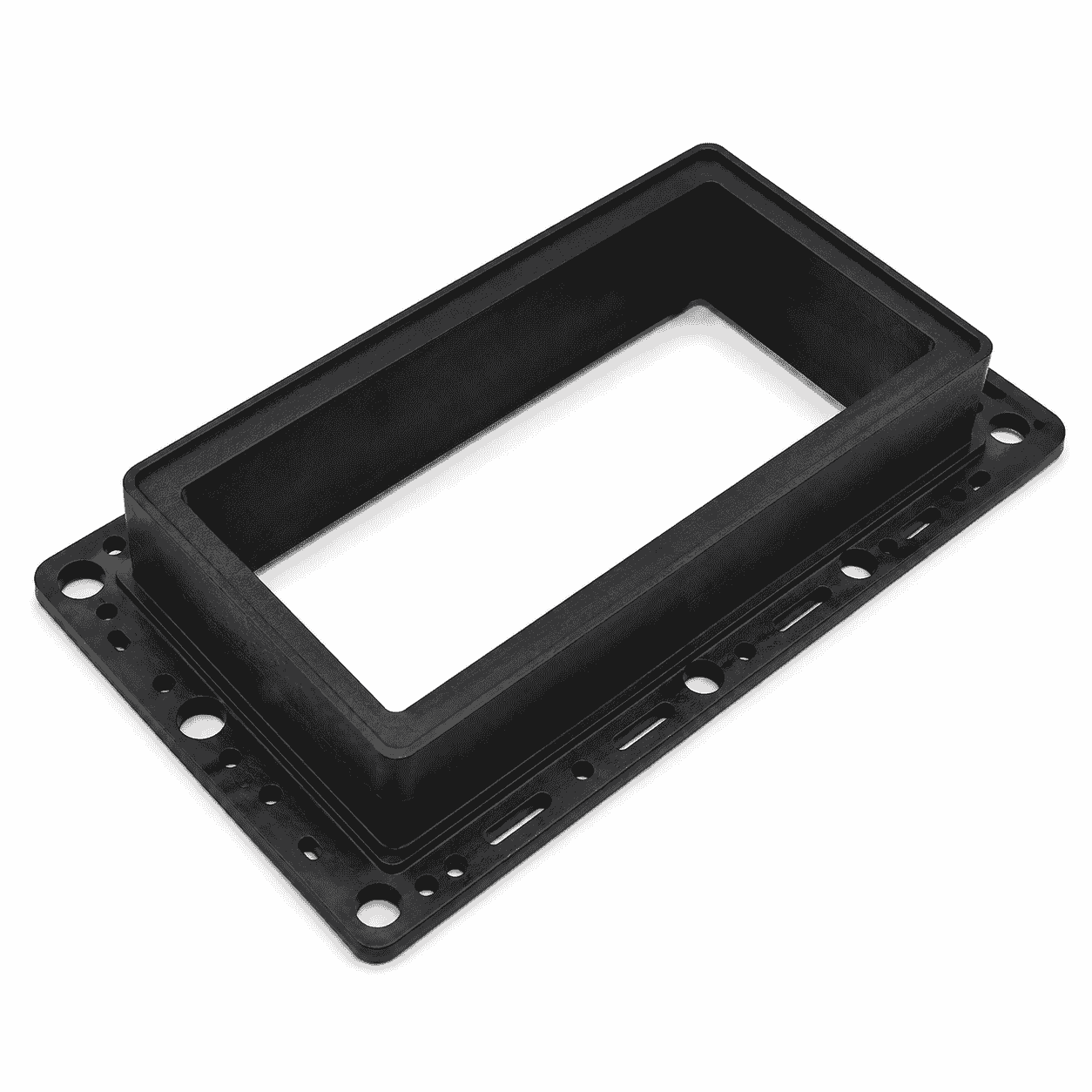


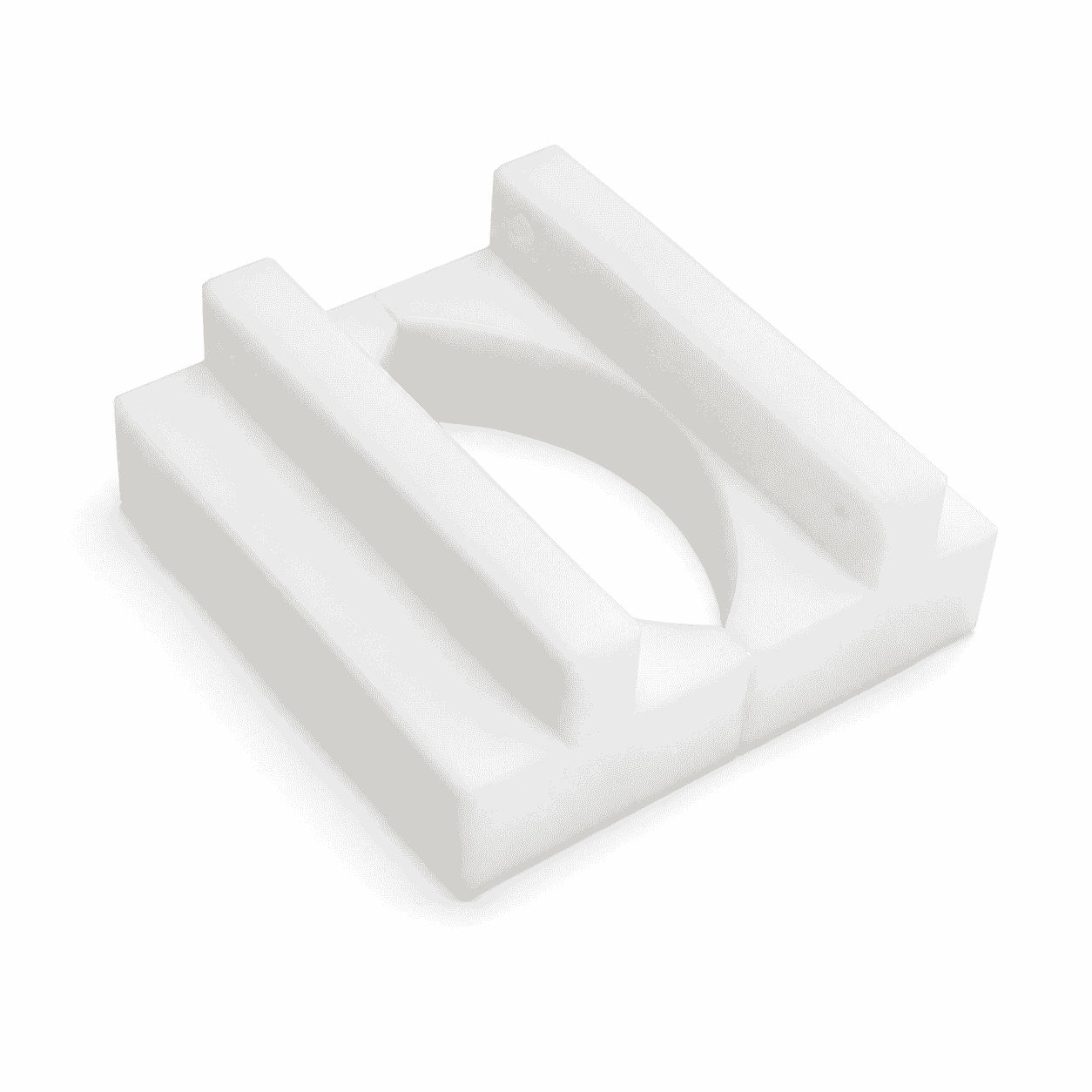
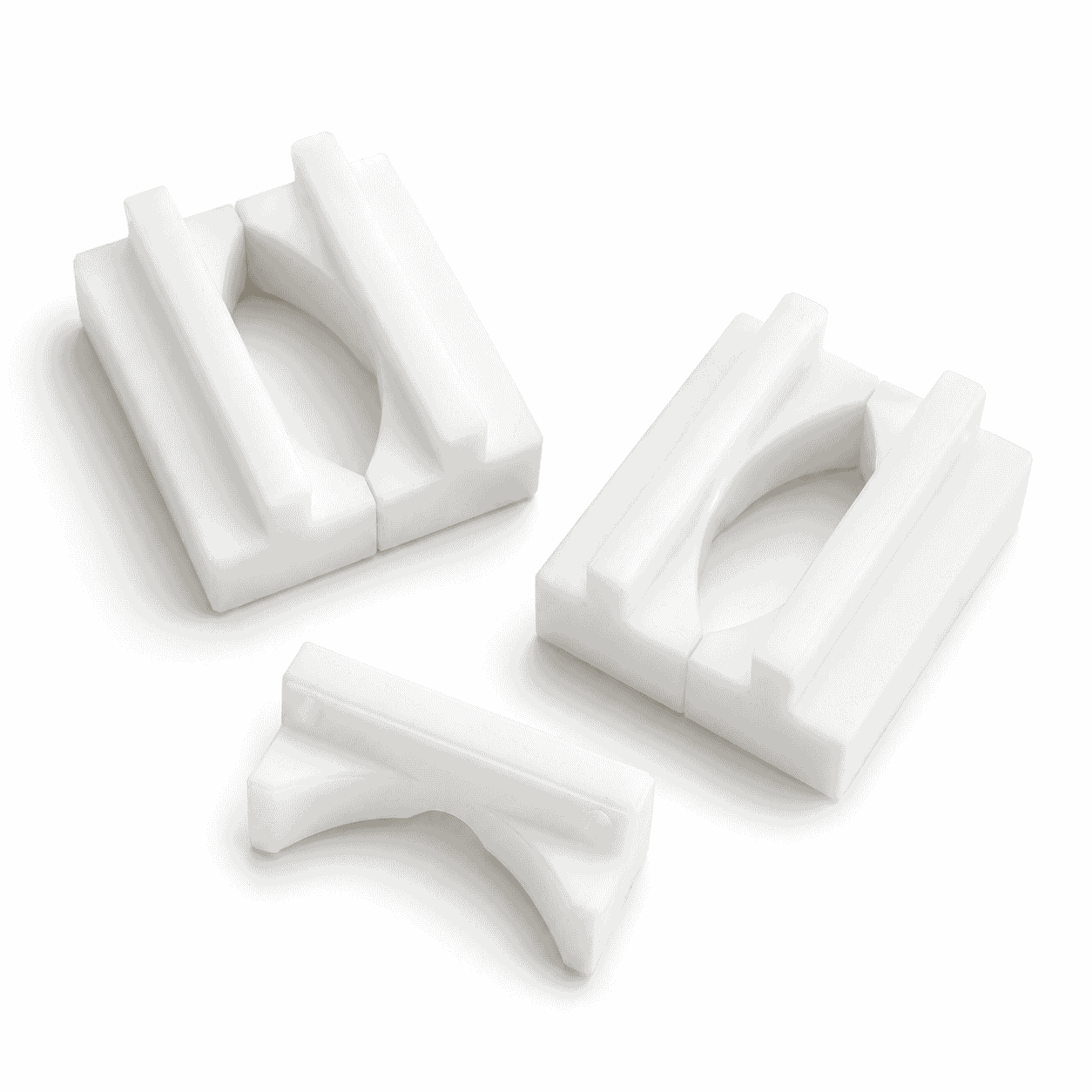
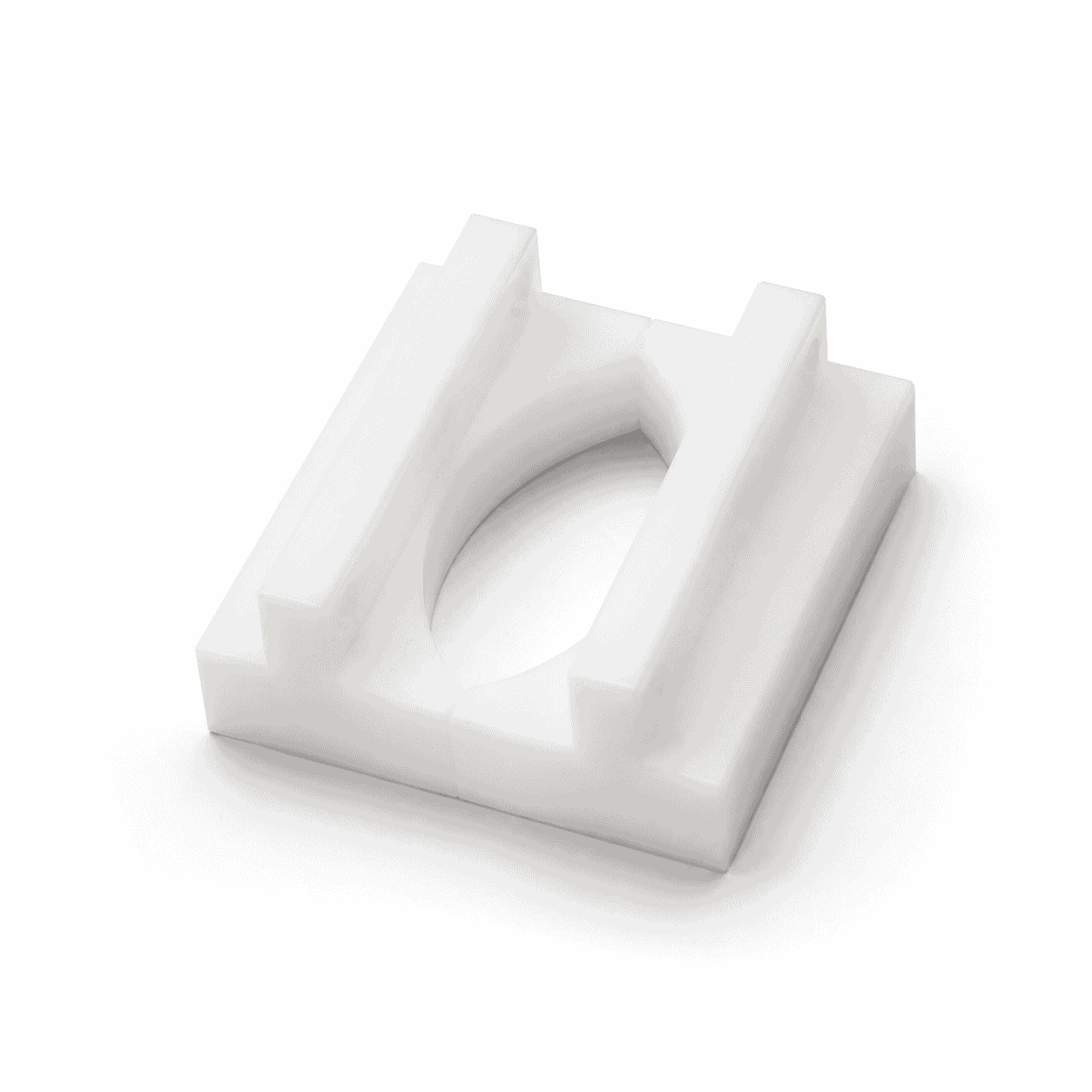
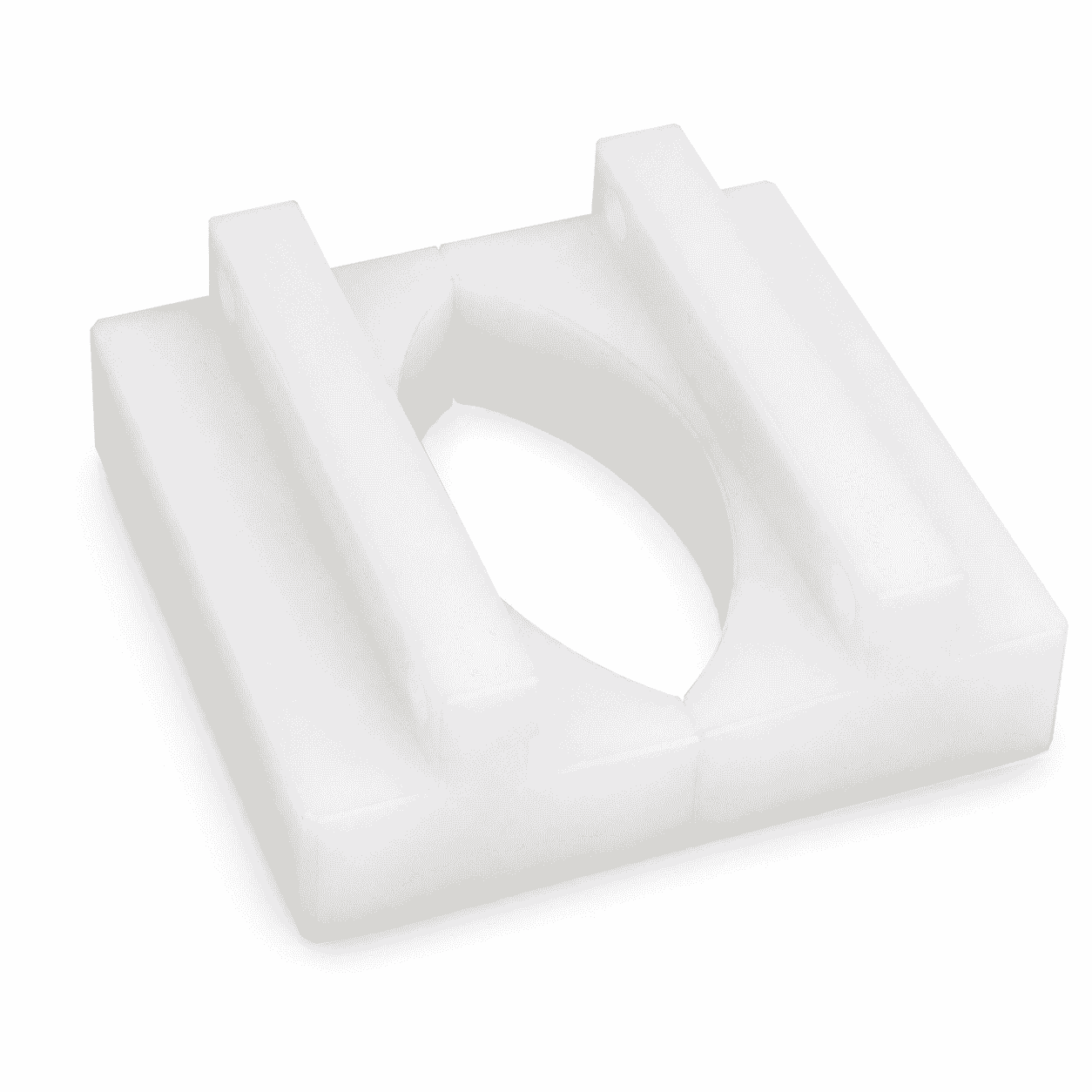
CNC Machined Plastic Housing Clamp Block is a custom engineering plastic component used to support, position, guide and retain circular housings, sleeves, pipes and cylindrical equipment parts.
Available in UHMWPE, POM, nylon and other engineering plastics, with custom internal diameters, arc profiles, locating ribs, mounting holes and matched upper and lower structures manufactured according to drawings or physical samples.
CNC Machined Plastic Housing Clamp Block is a custom engineering plastic component designed to support, position, guide or retain circular housings, sleeves, pipes and other cylindrical equipment parts. Its profiled internal opening matches the outside diameter of the supported component, helping maintain the required installation position while reducing direct contact with the surrounding metal structure.
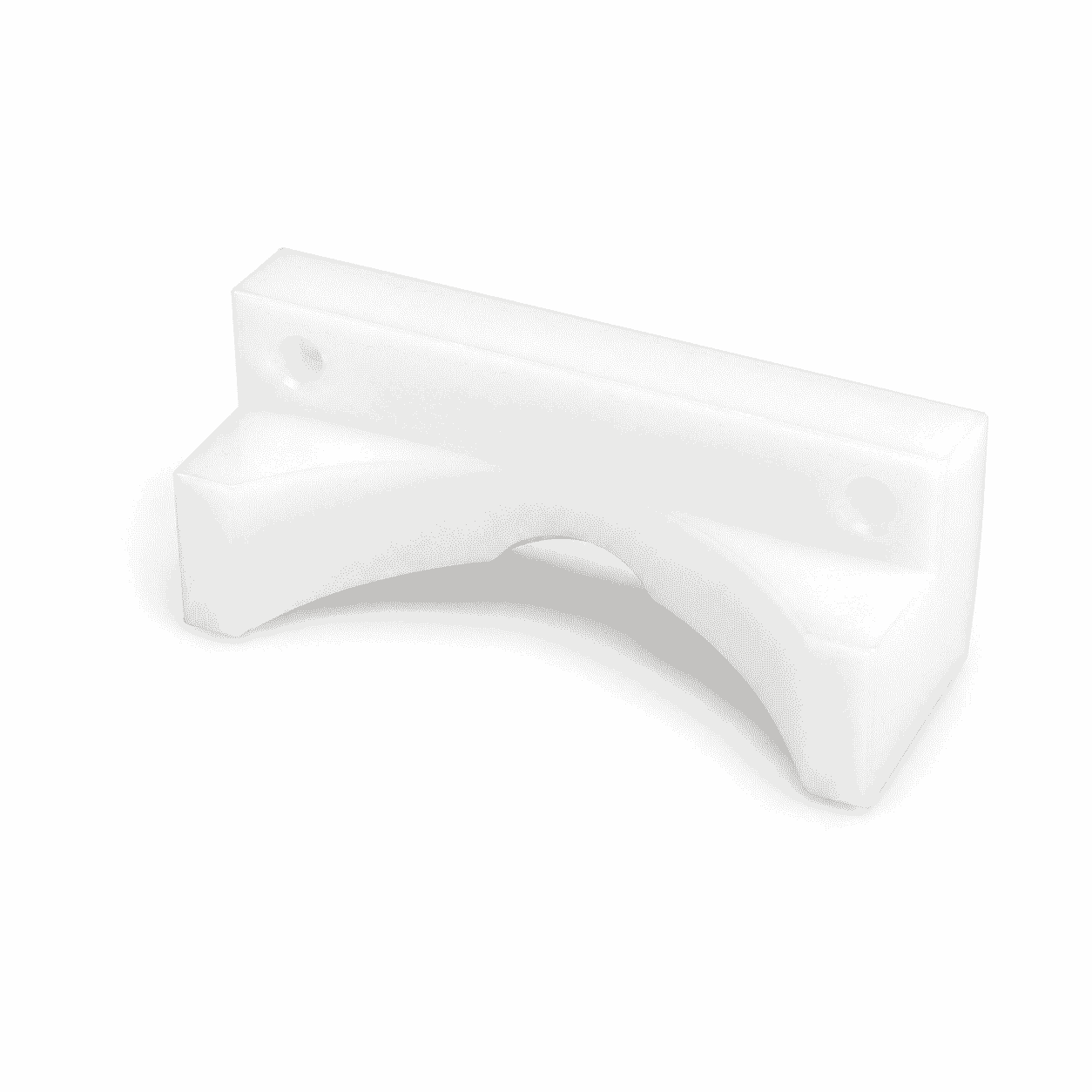
The clamp block can be manufactured as an upper and lower matched set, a split support assembly or an individual replaceable guide component. Its internal diameter, opening profile, overall dimensions, locating surfaces and mounting structure can be produced according to equipment drawings, physical samples and actual operating conditions.
Depending on the assembly design, the component may work as a fixed clamp, a lightly loaded support, a guide block, a retaining block or a replaceable protective insert. The required fastening force and structural load must be confirmed before material selection and machining.
The component uses a rectangular supporting body combined with a circular or partially circular internal profile. When two matching sections are assembled, the internal surfaces form a controlled opening around the supported housing or cylindrical component.
Available structural features include:
The internal opening can be produced with a complete circular profile, a partial arc or a specially relieved shape. Clearance can be added where the component must slide, rotate, expand or be removed regularly.
The profiled opening provides a supporting surface beneath or around a cylindrical housing. It helps distribute contact over a larger area instead of concentrating the load at one point.
The internal arc helps maintain the required center position of the housing, sleeve or pipe. Accurate positioning can reduce movement between adjoining equipment sections.
Raised sides and locating surfaces help limit sideways movement. This is useful when the supported component must remain aligned during equipment operation, assembly or maintenance.
The engineering plastic block separates the supported component from a steel frame, bracket or mounting base. This can reduce scratching, impact marks and direct metal-to-metal contact.
With suitable clearance, the block can guide a cylindrical component while allowing limited axial movement, adjustment or removal. The guide clearance must be matched to the required movement and operating temperature.
Engineering plastic can absorb part of the impact and vibration transmitted between the housing and equipment frame. This may reduce harsh contact noise under suitable operating conditions.
The clamp block can function as a replaceable contact component. When the internal surface becomes worn, the plastic block can be replaced without remachining the main steel frame.
A clamp generally holds or secures an object by applying force. However, not every Plastic Housing Clamp Block is designed to generate a high clamping force.
Depending on the equipment structure, the component may be used in one of the following ways:
The tightening method, bolt preload and operating load should be reviewed carefully. Excessive compression may deform the plastic block or the supported housing.
CNC Machined Plastic Housing Clamp Block components can be used in different types of industrial machinery and automation equipment.
Typical applications include:
The component should not be used as a pressure-pipe fitting, lifting clamp or certified structural support unless the complete assembly has been specifically designed and verified for that purpose.
The material should be selected according to load, required stiffness, impact, movement, humidity, temperature, chemical exposure and dimensional tolerance.
UHMWPE Sheet can be used for support and guide blocks requiring low friction, impact resistance, wear resistance and low moisture absorption.
General information about the material is available from Wikipedia’s explanation of ultra-high-molecular-weight polyethylene.
Typical advantages include:
UHMWPE has relatively low rigidity and may deform gradually under sustained pressure. Adequate wall thickness, support area and fastening structure should therefore be provided.
Polyoxymethylene POM Sheet is suitable for clamp blocks requiring higher rigidity, good dimensional stability and accurate machining of internal profiles.
Wikipedia provides general material information about polyoxymethylene.
Typical advantages include:
POM should be evaluated carefully where severe impact, strong acids, oxidizing chemicals or high-temperature cleaning processes are present.
Polyamide PA Nylon Sheet can be selected where the clamp block requires greater mechanical strength, toughness and load-bearing capacity.
Nylon belongs to the polyamide material family.
Typical advantages include:
Nylon absorbs moisture from the surrounding environment. Moisture-related dimensional changes should be considered when the housing fit or installation clearance is tight.
A properly designed CNC Machined Plastic Housing Clamp Block can help address:
Each CNC Machined Plastic Housing Clamp Block can be manufactured according to its installation position and corresponding equipment component.
Available options include:
Computer numerical control uses programmed machine-tool movements to manufacture repeatable profiles and dimensions. General information is available from Wikipedia’s explanation of computer numerical control.
Available machining operations include:
To manufacture the CNC Machined Plastic Housing Clamp Block correctly, the following information should be confirmed:
When the original drawing is unavailable, a replacement housing clamp block can be produced from an existing sample. Wear, compression and deformation on the used component should be evaluated before the dimensions are reproduced.
Important sample inspection items include:
Providing the matching housing, sleeve or dimensional information can improve profile verification and reduce assembly problems.
Important inspection items include:
Matched upper and lower blocks should be inspected together. Misalignment between the profiles may create uneven pressure, excessive clearance or interference during assembly.
The load capacity of a CNC Machined Plastic Housing Clamp Block cannot be determined from material name or dimensions alone. It is affected by the material grade, supporting area, wall thickness, bolt preload, temperature, vibration and duration of the applied load.
Engineering plastics may creep under continuous pressure. High clamping loads, elevated temperatures or safety-critical applications require a separate structural evaluation.
The internal opening should include appropriate clearance where the housing expands with temperature, moves during operation or must be removed regularly.
CNC Machined Plastic Housing Clamp Block is a custom engineering plastic component used to support, position, guide, retain and protect circular housings, sleeves, pipes and cylindrical machine parts.
UHMWPE, POM, nylon and other engineering plastics can be selected according to friction, impact, stiffness, dimensional accuracy, humidity and operating-load requirements.
The internal diameter, arc profile, locating ribs, mounting holes, overall dimensions and material grade can be manufactured according to equipment drawings, physical samples and actual operating conditions.
Check drawings for full specifications and confirm materials according to service conditions to prevent product defects.
Inspect all key processing steps and fully verify dimensions, holes, grooves and fitting surfaces.
Deburr, chamfer and clean products for easy installation. Ensure uniform quality among batch products.
Choose appropriate packaging solutions based on product features to protect goods from collision, deformation and mixing during transit.
Unlike metal parts, engineering plastic components still require strict control over dimensions, holes, edges, surface, materials and assembly performance for equipment use.
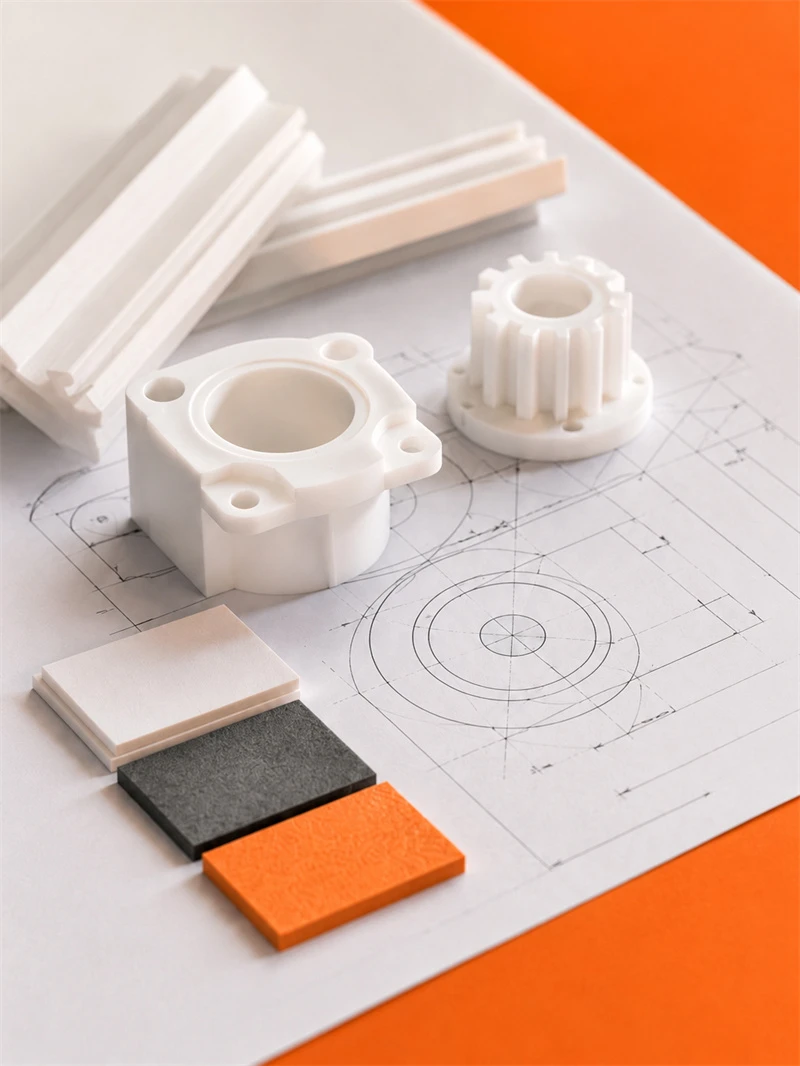
Engineering plastic parts suit friction, guide, support, buffer, anti-corrosion and insulation areas. We supply UHMWPE, POM, PA, PP/PE components for conveyor, food, mining, machinery, chemical and cable systems, with custom OEM service available.
Stay updated with our latest industry insights, company updates and featured articles.
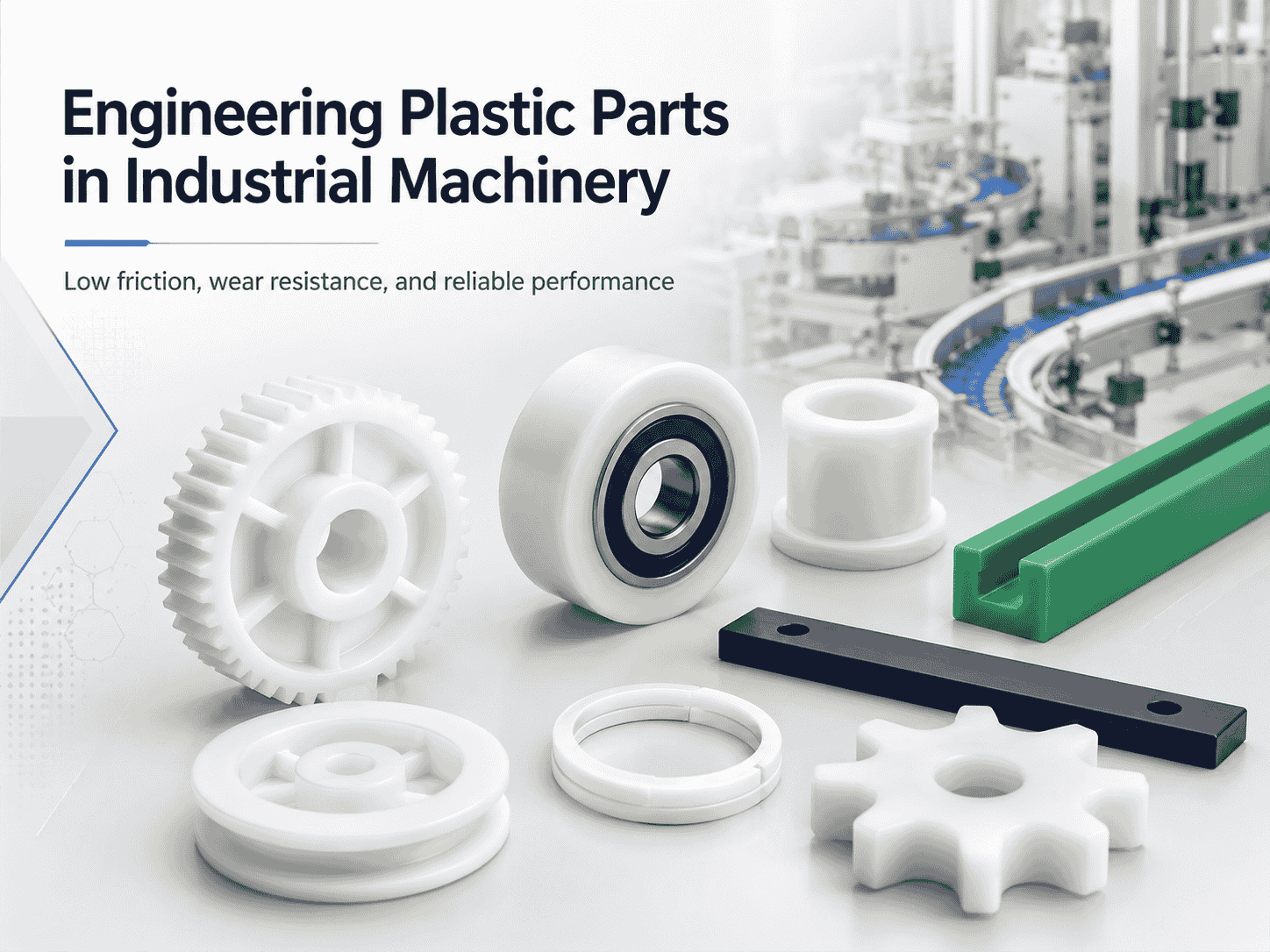
Engineering plastics are increasingly used in industrial machinery, automated production lines, conveyor systems, packaging equipment, and food-processing machines. Materials such as nylon, UHMWPE, POM, and
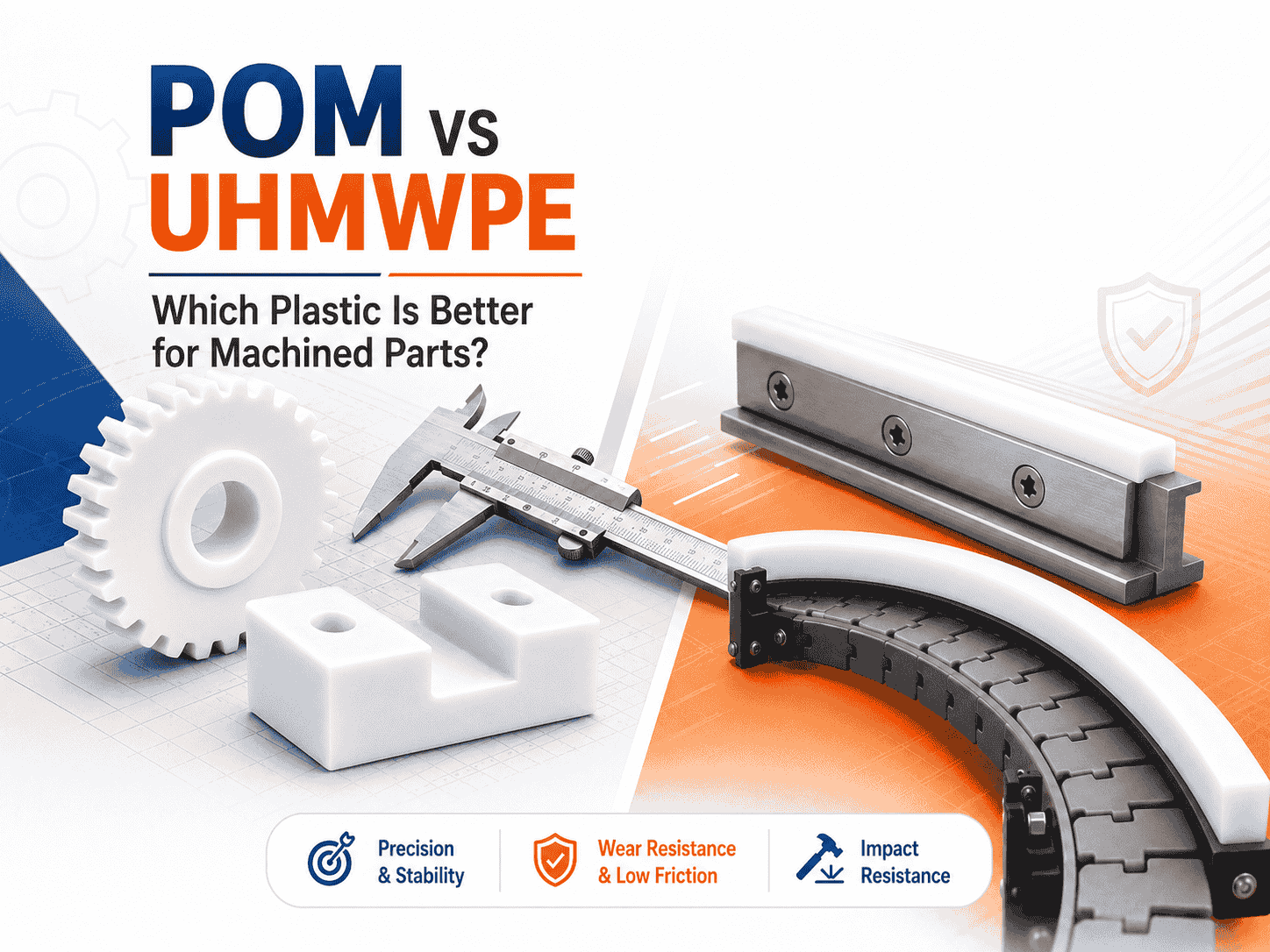
Both are lightweight, corrosion-resistant, wear-resistant, and suitable for CNC machining. However, they perform very differently
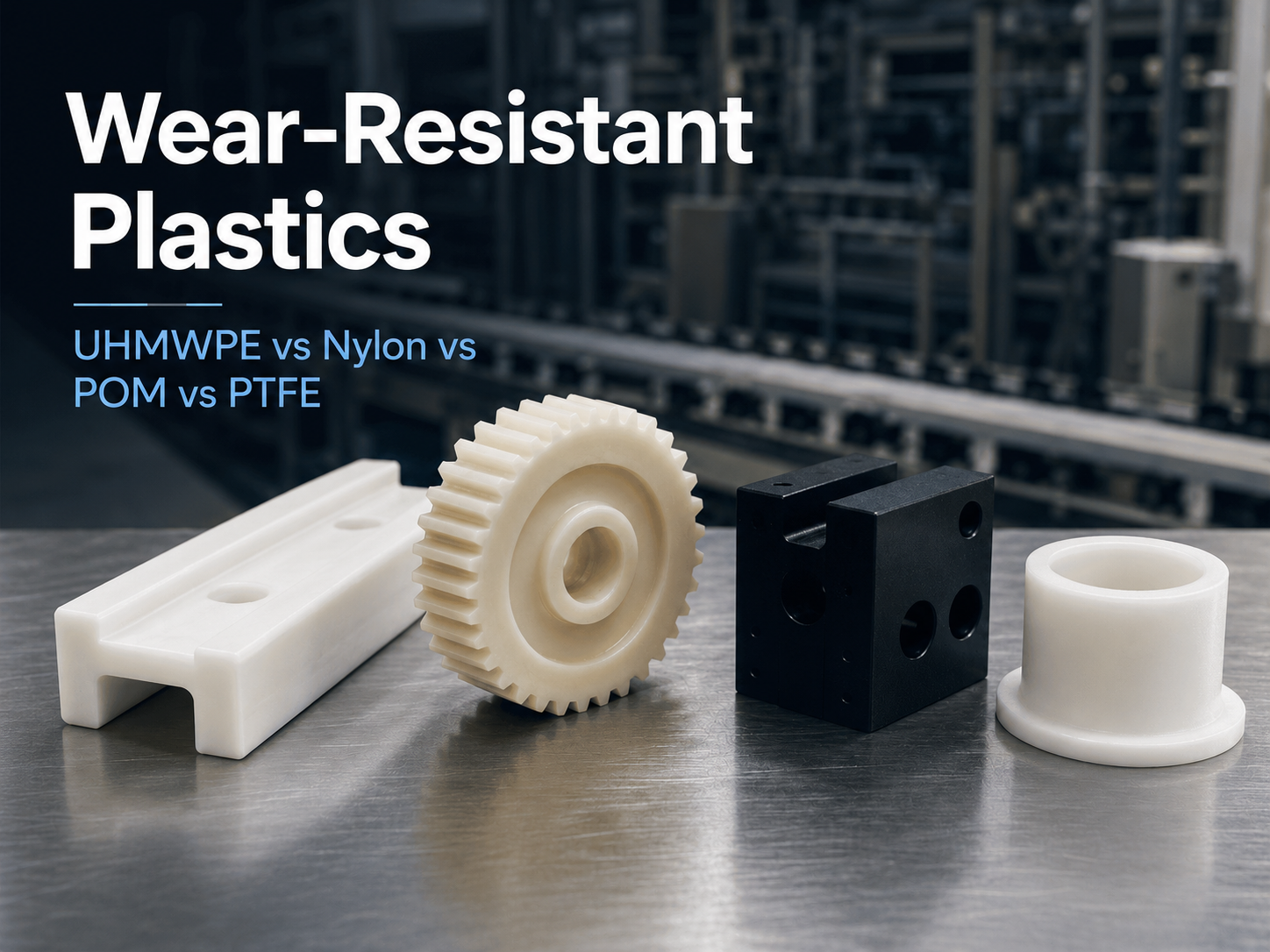
Wear is a common cause of failure in conveyor systems, packaging machinery, automated equipment, mining
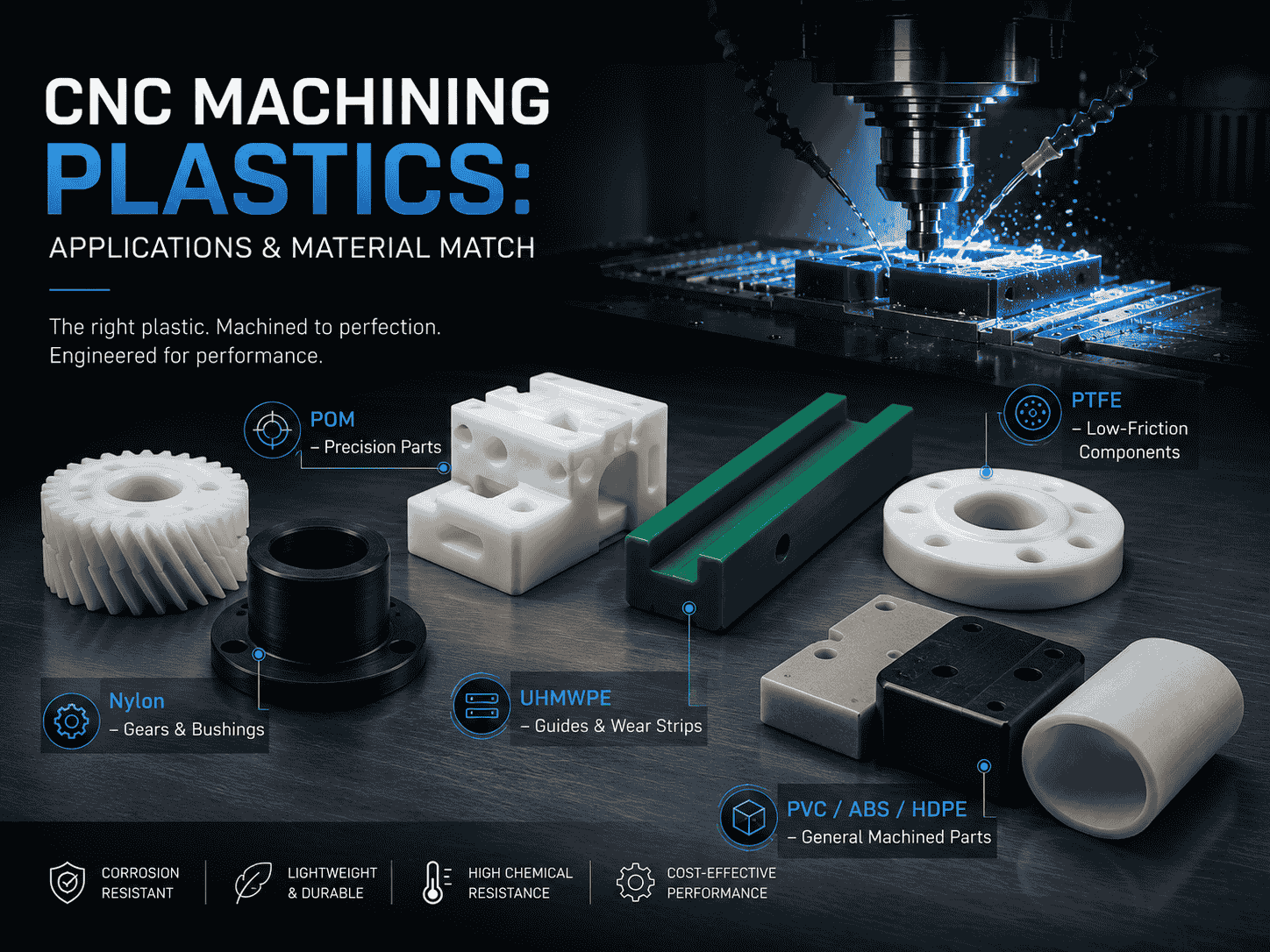
CNC machining is widely used to produce plastic prototypes, low-volume parts, replacement components, jigs, fixtures,
Both are lightweight, corrosion-resistant, wear-resistant, and suitable for CNC machining. However, they perform very differently
Wear is a common cause of failure in conveyor systems, packaging machinery, automated equipment, mining
CNC machining is widely used to produce plastic prototypes, low-volume parts, replacement components, jigs, fixtures,
Need UHMWPE sheets & custom plastic machined/OEM parts?Send specs & material needs, free quote within 24h.