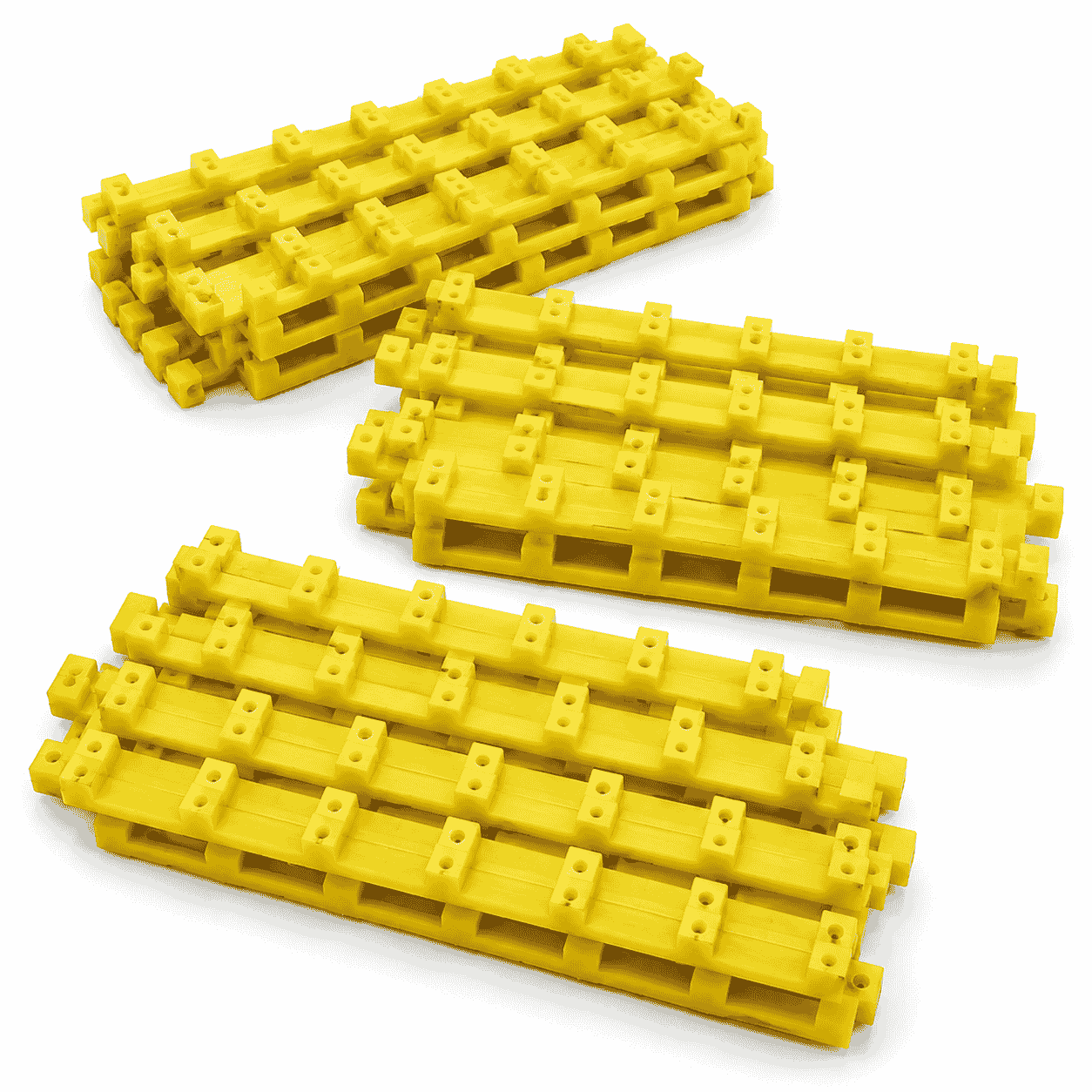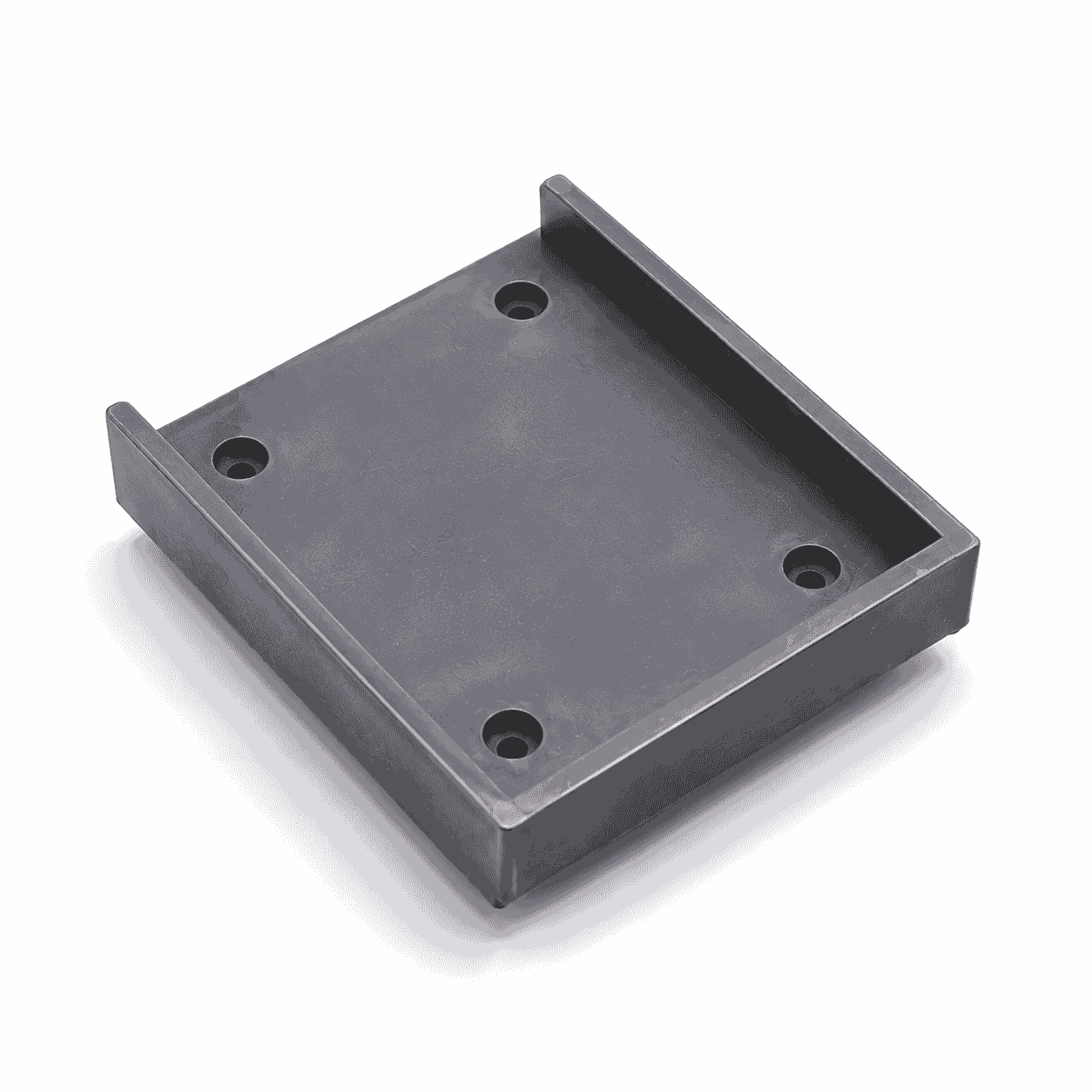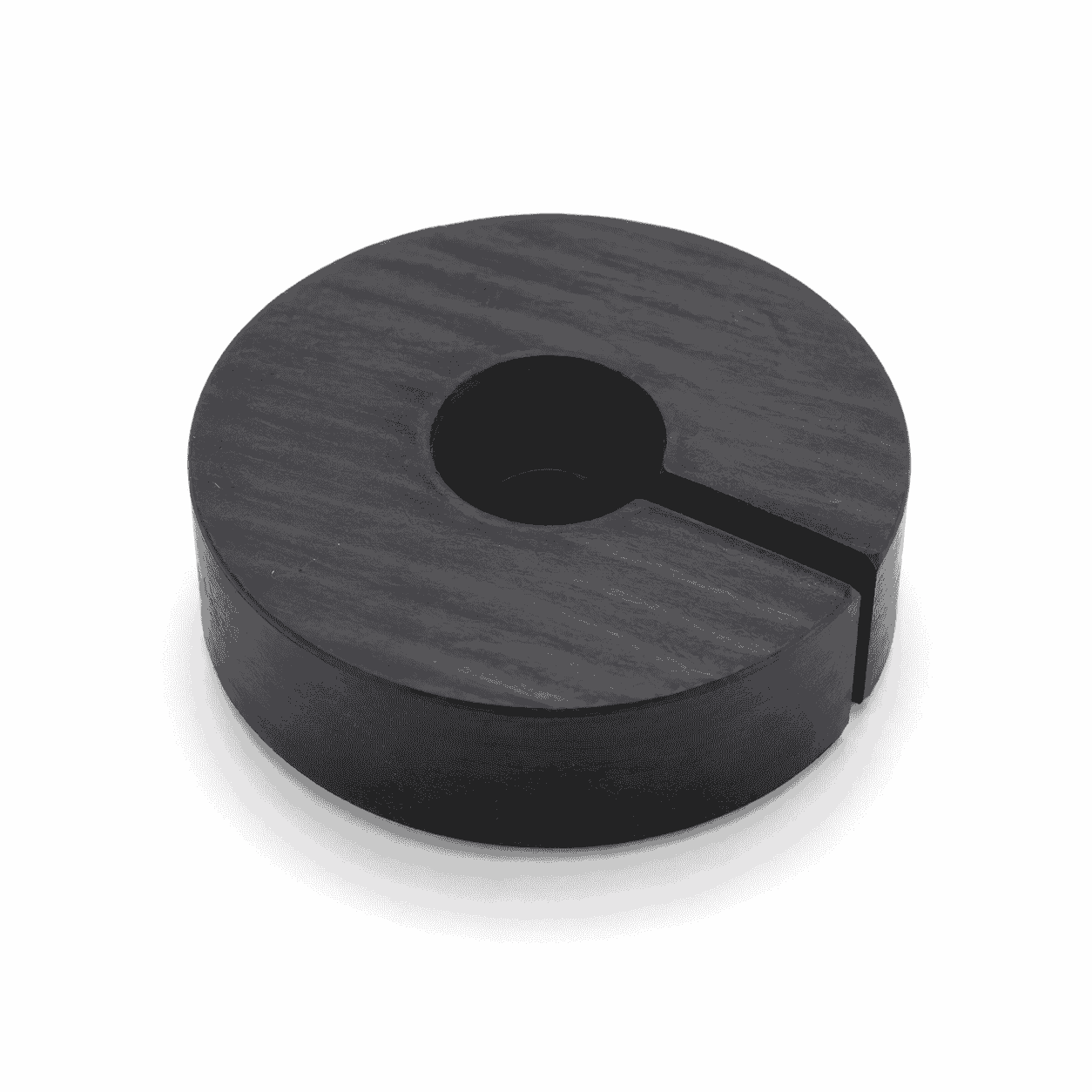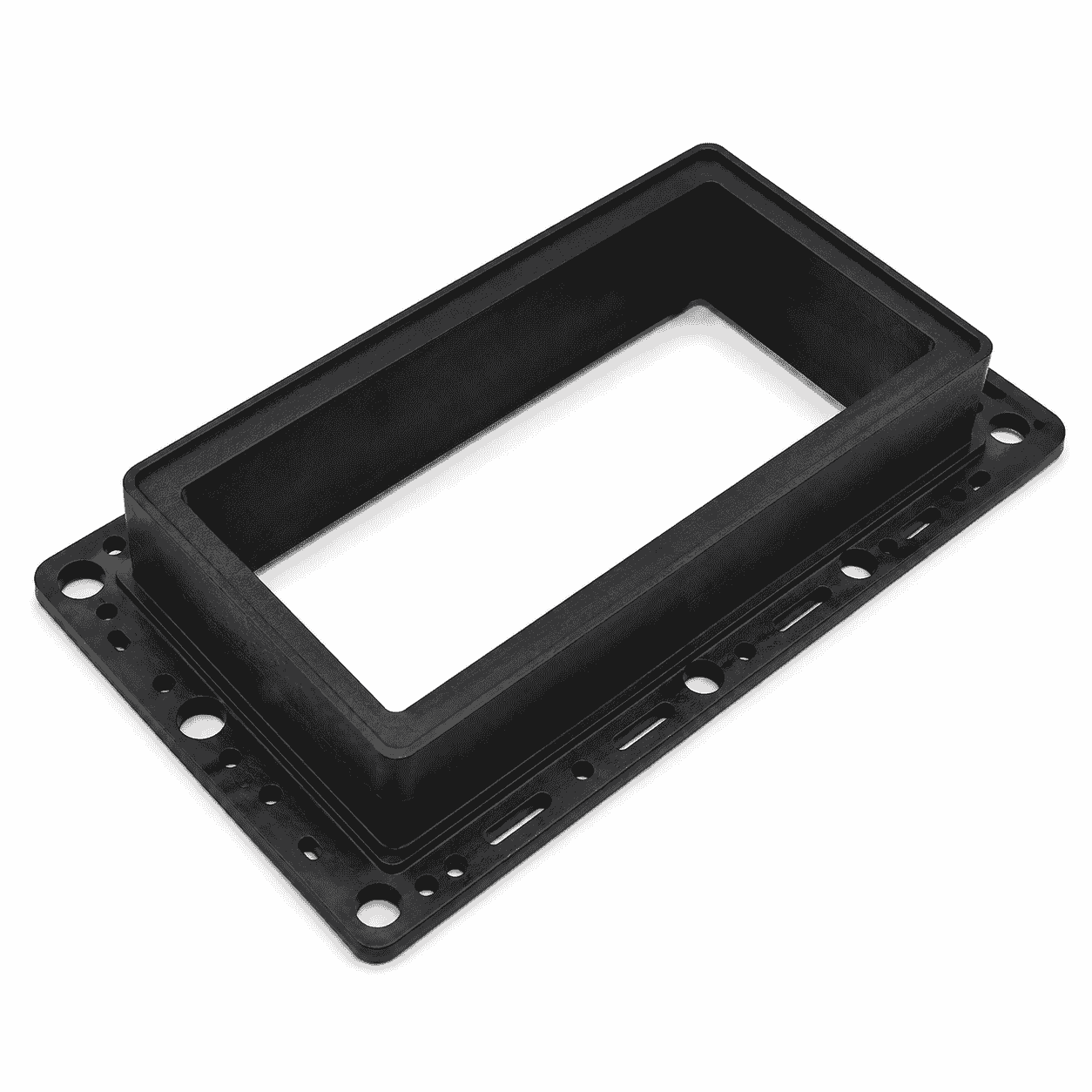


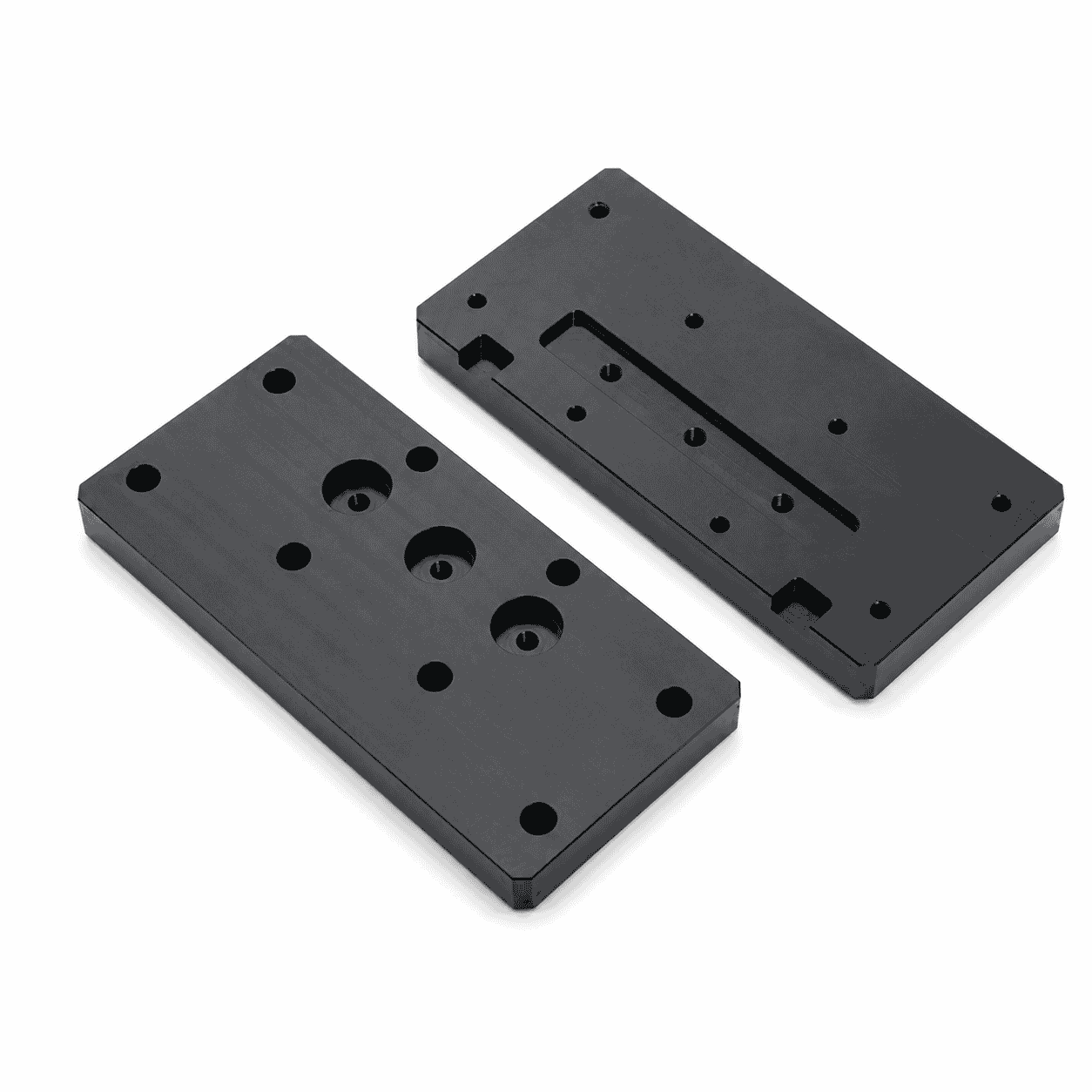
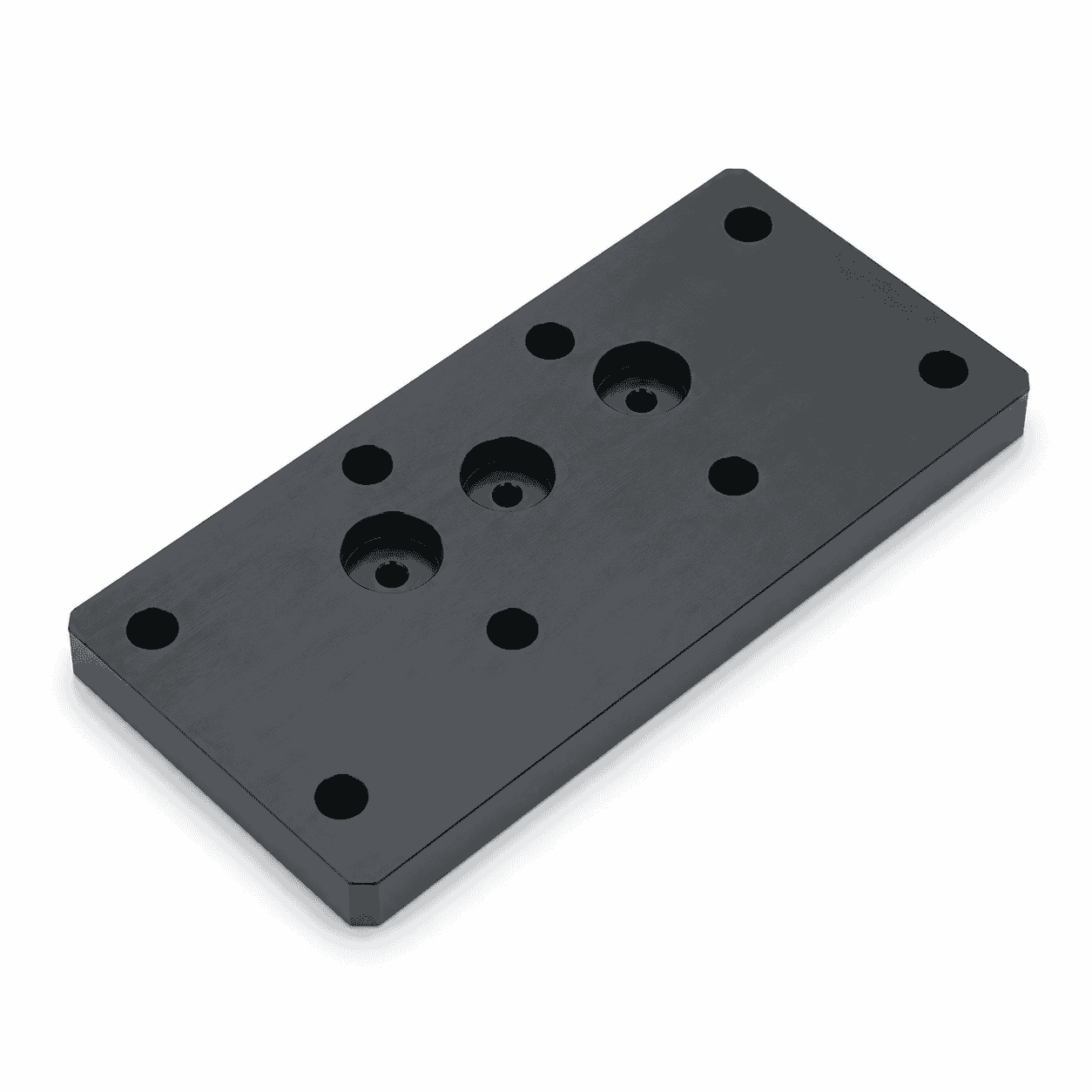
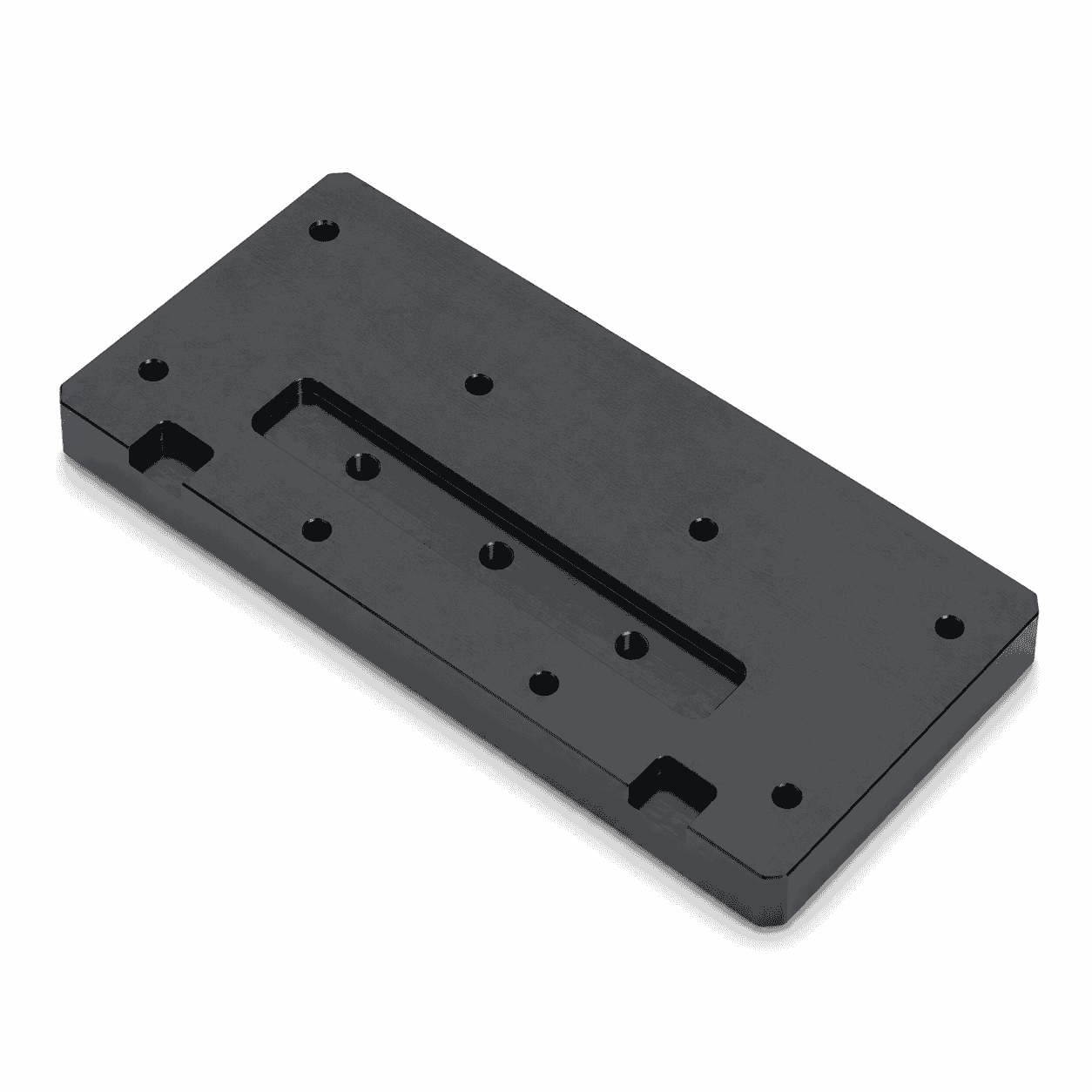
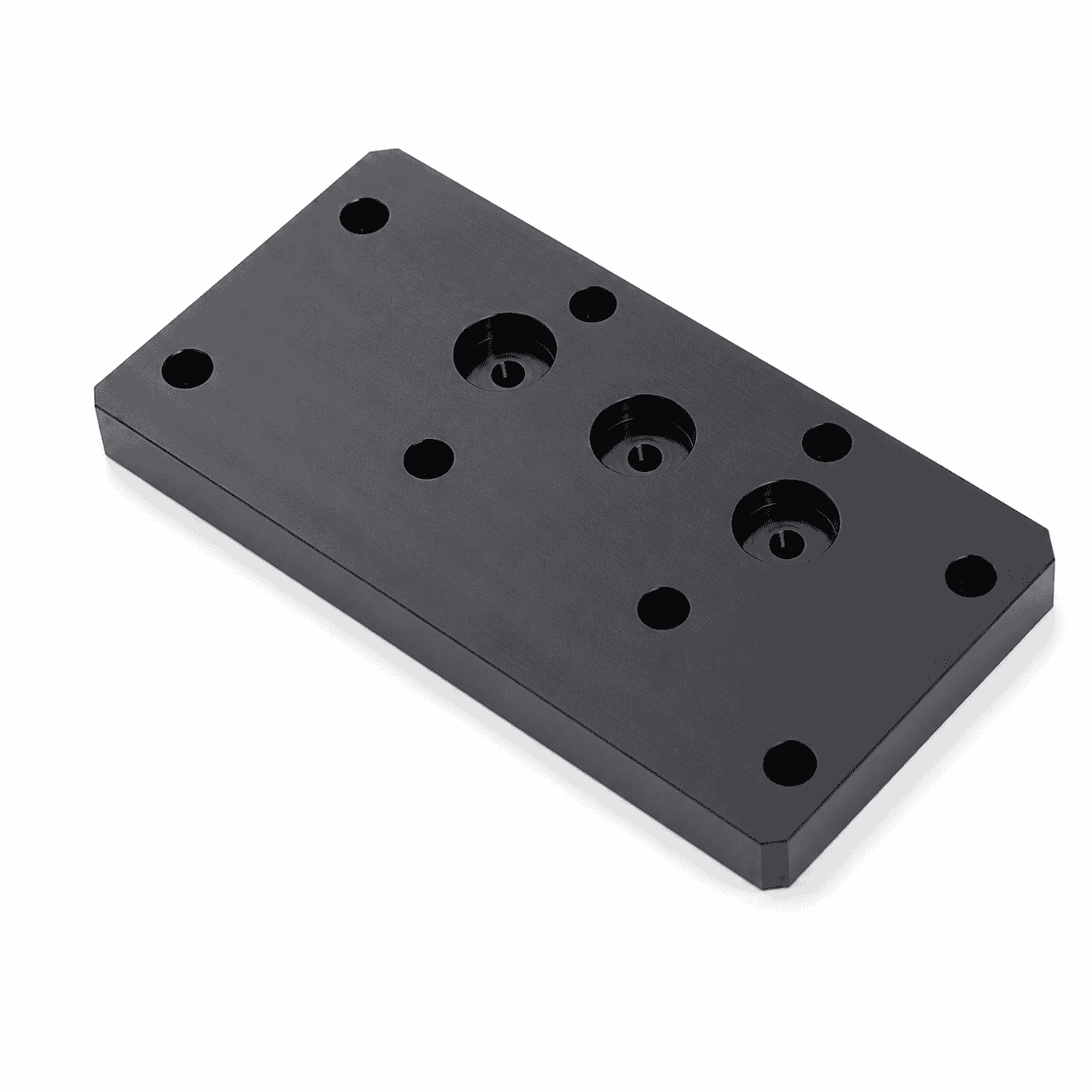
CNC Machined POM Spacer Plate is a custom engineering plastic component used for machine spacing, support, positioning, height adjustment, wear isolation and equipment surface protection.
Available in POM-C, POM-H and modified acetal grades, with custom thicknesses, mounting holes, counterbores, recessed pockets, slots, steps and locating structures manufactured according to drawings or physical samples.
CNC Machined POM Spacer Plate is a custom engineering plastic component used for spacing, supporting, positioning, height adjustment, mounting and wear isolation in industrial machinery and automation equipment.
The plate can be installed between machine frames, tooling assemblies, guide structures, mounting bases and mechanical components. It helps maintain the required installation distance while providing a stable and accurately machined contact surface.
Through holes, counterbores, recessed pockets, locating holes, adjustment slots, mounting grooves and clearance areas can be machined according to the equipment drawing. Overall length, width, thickness, hole positions and fitting tolerances can also be produced according to the required assembly structure.
A spacer is a component used to maintain separation between two parts in an assembly. General information about mechanical spacers is available from Wikipedia’s explanation of spacers and standoffs.
A CNC Machined POM Spacer Plate performs this spacing function while also providing support, positioning, fastening and equipment protection. Unlike a simple flat shim, it can contain complex machined structures that correspond to the surrounding mechanical components.
Depending on the equipment design, the plate may function as:
The CNC Machined POM Spacer Plate can combine several installation and positioning features in one component.
Available structural options include:
Recessed bolt holes allow fastener heads to remain below or level with the plate surface. This prevents the bolts from interfering with adjacent machine components and creates a cleaner assembly surface.
The plate maintains a specified distance between two equipment components. Its thickness can be adjusted according to the required installation height, working clearance or alignment position.
The broad plate surface distributes contact over a larger area and supports the connected component. This can reduce concentrated pressure on a smaller mounting point.
Different plate thicknesses can be used to raise or lower a machine component. This is useful when adjusting the position of guide rails, sensors, brackets, fixtures or mounting bases.
Locating holes, pockets, steps and shoulders help maintain the required position of the connected component. Accurate positioning is important for repeatable equipment assembly.
The POM plate separates two mechanical surfaces and prevents direct metal-to-metal contact. The replaceable plastic component can absorb surface wear while protecting the main equipment structure.
A smooth POM contact surface helps reduce scratching and impact marks on painted, anodized, polished or accurately machined equipment surfaces.
Standard unfilled POM is electrically insulating. A POM spacer plate can therefore provide mechanical separation and electrical isolation in suitable equipment assemblies.
The engineering plastic layer can reduce hard contact between metal components and absorb part of the transmitted vibration, helping reduce abnormal impact noise.
POM, also known as polyoxymethylene or acetal, is an engineering thermoplastic used for precision mechanical components requiring stiffness, low friction and dimensional stability.
General material information is available from Wikipedia’s explanation of polyoxymethylene.
Related machining material is available from our Polyoxymethylene POM Acetal Sheet category.
POM provides relatively stable dimensions under normal industrial operating conditions. This is useful for spacer plates that must maintain controlled thicknesses, hole positions and assembly clearances.
POM has greater rigidity than many softer general-purpose plastics. Properly designed plates can maintain flat supporting and locating surfaces under suitable mechanical loads.
The material can be machined into detailed holes, recesses, slots, steps and mounting profiles. This allows the spacer plate to match non-standard equipment structures.
Suitable cutting tools and machining parameters produce smooth contact surfaces. This is useful for positioning, supporting and protecting precision equipment components.
POM generally experiences less moisture-related dimensional change than nylon, making it suitable for plates requiring controlled thickness and hole alignment.
POM can withstand repeated contact and limited sliding movement in suitable applications. Actual service life depends on pressure, movement frequency, temperature and mating-surface condition.
A POM spacer plate is lighter than a comparable solid steel plate, simplifying installation, handling and equipment changeover.
POM does not rust like ordinary carbon steel and can be used in many general industrial environments involving humidity, lubricants and routine equipment contamination.
POM-C is commonly selected for industrial spacer plates, positioning blocks, fixtures and machined equipment components. It provides a balanced combination of machining performance, dimensional stability and mechanical properties.
POM-H can be considered where greater rigidity, mechanical strength or fatigue performance is required. Final selection should consider plate dimensions, load, temperature and chemical exposure.
The exact POM grade cannot be determined from color alone. Black, white and other colored materials should be confirmed through the material specification or production documentation.
CNC Machined POM Spacer Plate components can be used in different types of automation equipment and industrial machinery.
Typical applications include:
A properly designed CNC Machined POM Spacer Plate can help address:
Each CNC Machined POM Spacer Plate can be manufactured according to the corresponding machine assembly.
Available custom options include:
Our CNC Plastic Machining service supports POM spacer plates manufactured according to 2D drawings, 3D models and physical samples.
General information about programmed machine-tool operation is available from Wikipedia’s explanation of computer numerical control.
Available machining operations include:
POM is suitable for precision machining, but the machining sequence and clamping method should be selected according to the plate thickness and structural design.
Important machining considerations include:
Large recessed areas or uneven material removal can release internal stress and affect flatness. Rough machining and finishing may therefore be separated when strict flatness or parallelism is required.
To manufacture a CNC Machined POM Spacer Plate correctly, the following information should be provided or confirmed:
When the original drawing is unavailable, a replacement POM spacer plate can be manufactured from an existing sample. Wear, permanent compression and deformation should be evaluated before reproducing the dimensions.
Important sample inspection items include:
Providing the corresponding machine base, mounting component or assembly dimensions can help restore the original design dimensions instead of copying worn measurements.
Important inspection items for a CNC Machined POM Spacer Plate include:
Where possible, the completed plate should be checked with the corresponding assembly component, inspection gauge or dimensional model before delivery.
The load capacity of a CNC Machined POM Spacer Plate cannot be determined from the material name or thickness alone. It is affected by supporting area, hole arrangement, recessed-pocket depth, bolt preload, temperature and duration of loading.
POM can deform gradually under excessive continuous pressure, particularly at elevated temperatures. Heavily loaded structures may require increased plate thickness, larger supporting areas, metal inserts or additional structural reinforcement.
POM should also be evaluated carefully in environments involving strong mineral acids, oxidizing chemicals, chlorine-based media or continuous high-temperature exposure.
CNC Machined POM Spacer Plate is a custom engineering plastic component used for machine spacing, support, positioning, height adjustment, mounting, wear isolation and surface protection.
POM-C, POM-H and modified acetal grades can be selected according to rigidity, dimensional accuracy, wear, temperature and environmental requirements.
Overall dimensions, finished thickness, mounting holes, counterbores, recessed pockets, slots, locating structures and identification marks can be manufactured according to equipment drawings, physical samples and actual operating conditions.
Check drawings for full specifications and confirm materials according to service conditions to prevent product defects.
Inspect all key processing steps and fully verify dimensions, holes, grooves and fitting surfaces.
Deburr, chamfer and clean products for easy installation. Ensure uniform quality among batch products.
Choose appropriate packaging solutions based on product features to protect goods from collision, deformation and mixing during transit.
Unlike metal parts, engineering plastic components still require strict control over dimensions, holes, edges, surface, materials and assembly performance for equipment use.
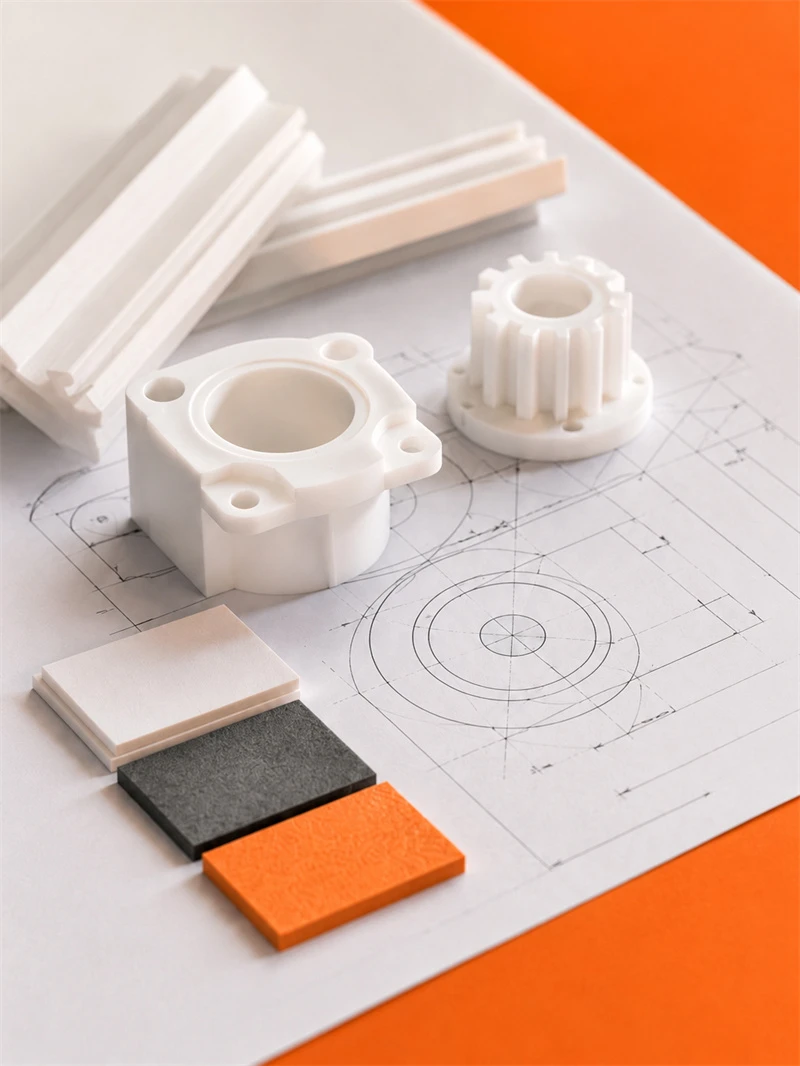
Engineering plastic parts suit friction, guide, support, buffer, anti-corrosion and insulation areas. We supply UHMWPE, POM, PA, PP/PE components for conveyor, food, mining, machinery, chemical and cable systems, with custom OEM service available.
Stay updated with our latest industry insights, company updates and featured articles.
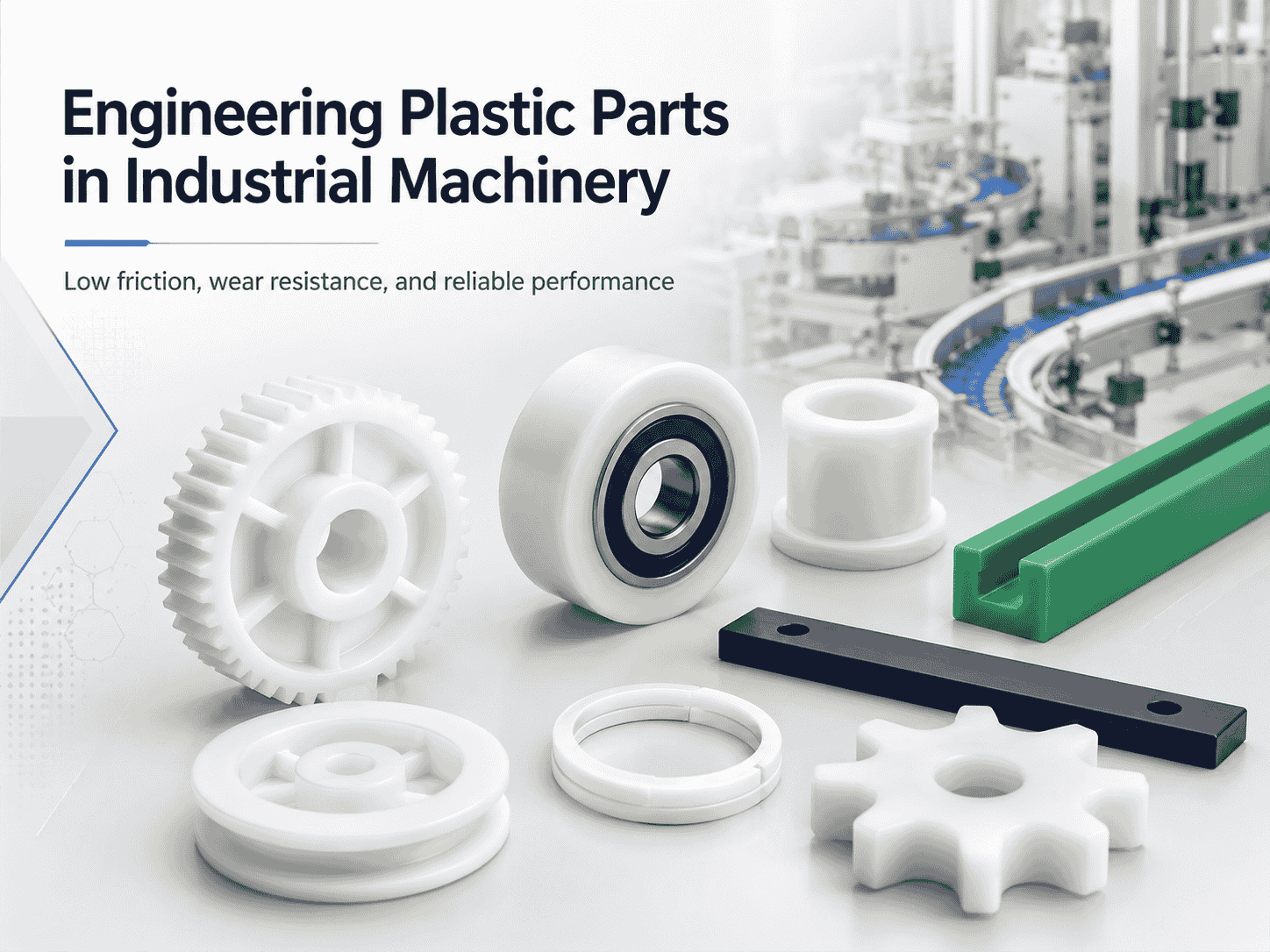
Engineering plastics are increasingly used in industrial machinery, automated production lines, conveyor systems, packaging equipment, and food-processing machines. Materials such as nylon, UHMWPE, POM, and
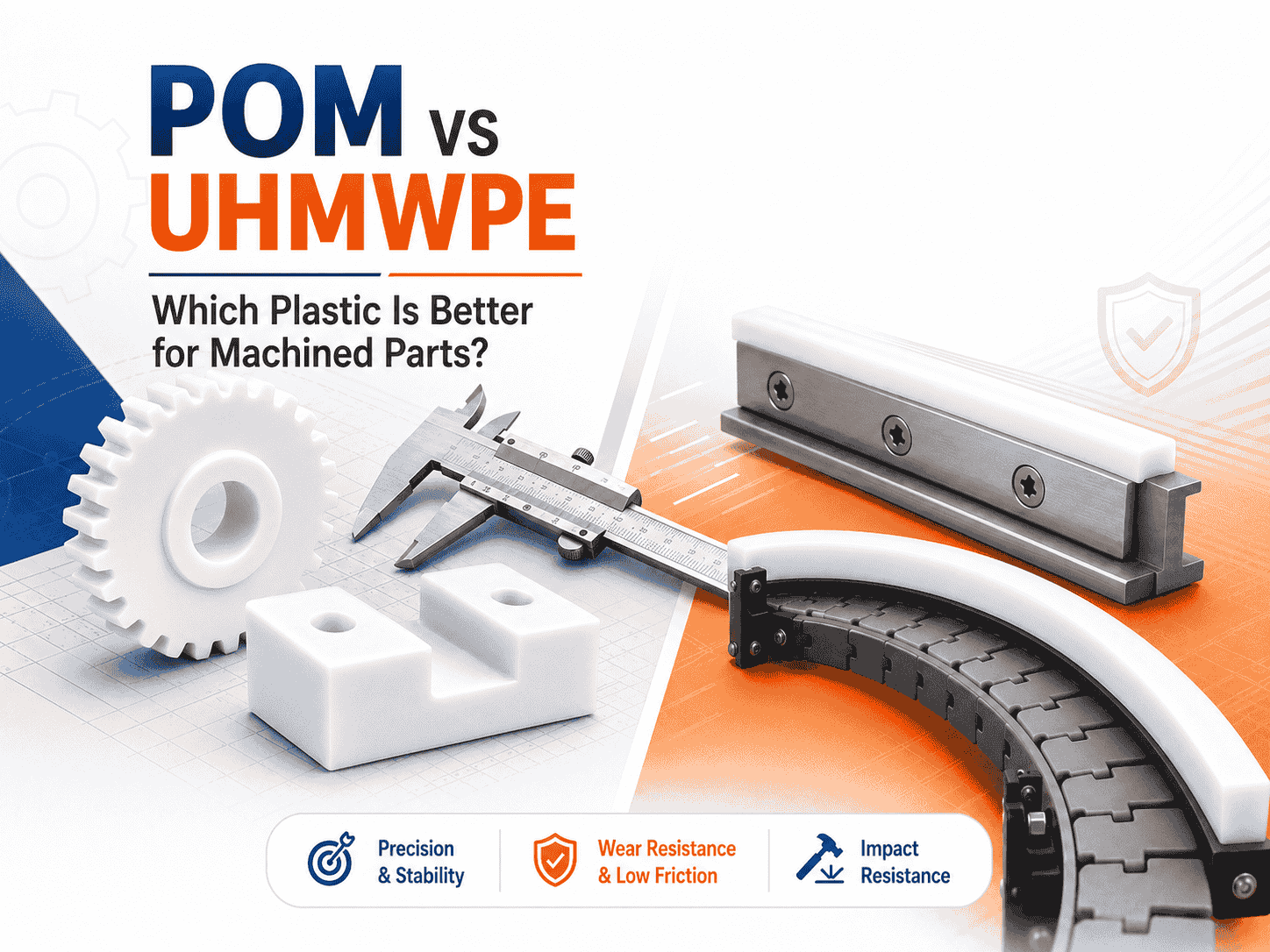
Both are lightweight, corrosion-resistant, wear-resistant, and suitable for CNC machining. However, they perform very differently
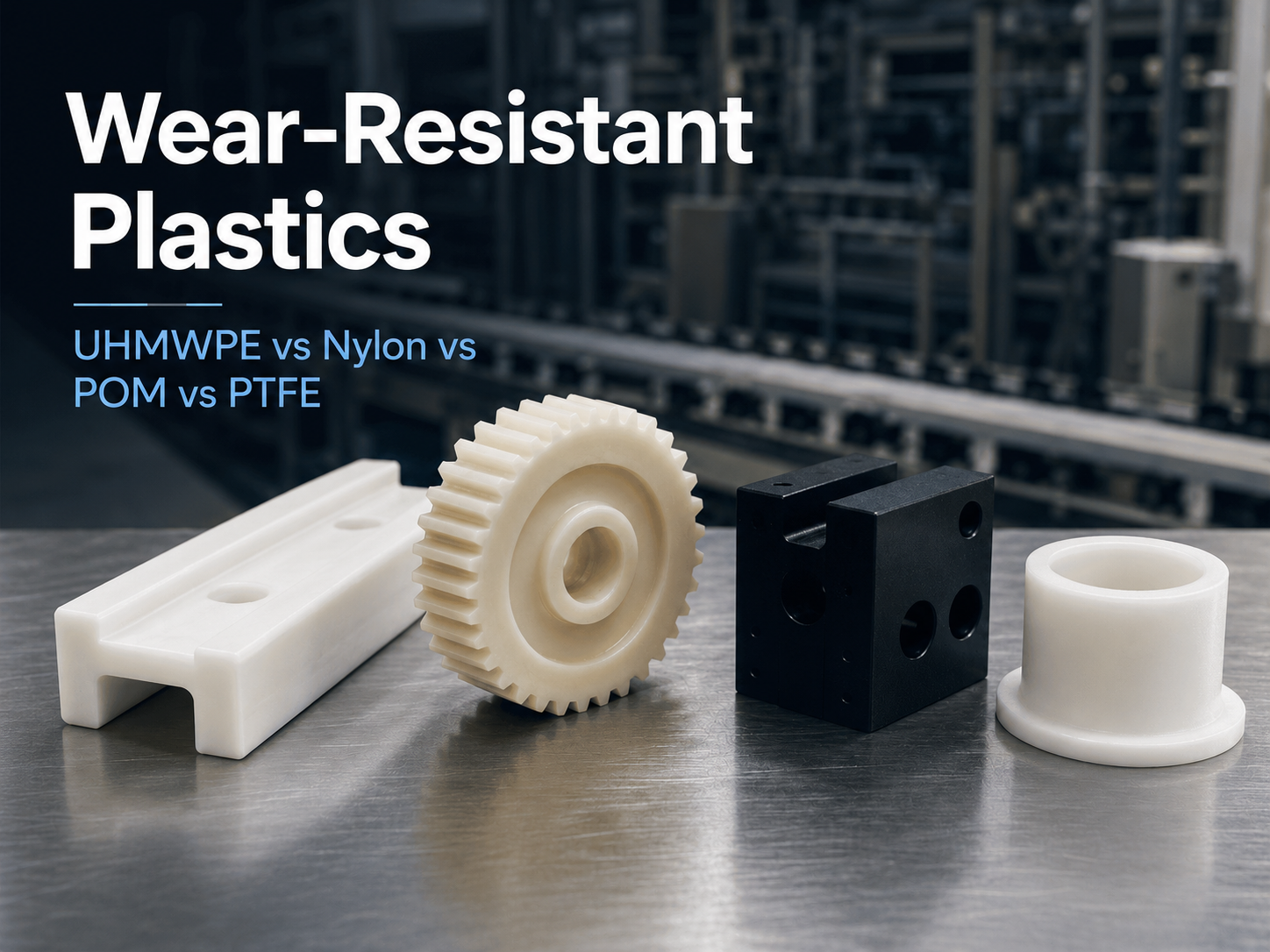
Wear is a common cause of failure in conveyor systems, packaging machinery, automated equipment, mining
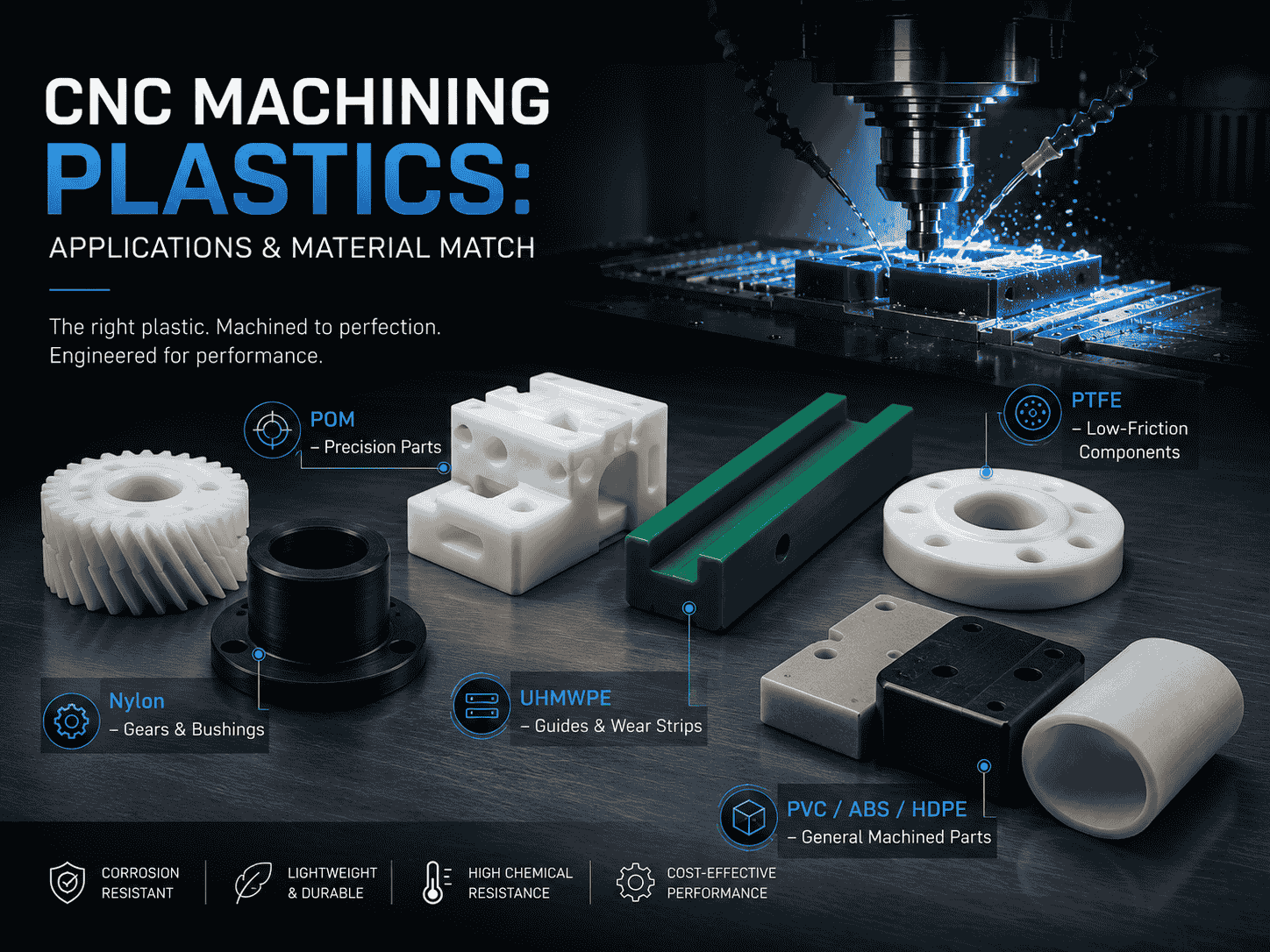
CNC machining is widely used to produce plastic prototypes, low-volume parts, replacement components, jigs, fixtures,
Both are lightweight, corrosion-resistant, wear-resistant, and suitable for CNC machining. However, they perform very differently
Wear is a common cause of failure in conveyor systems, packaging machinery, automated equipment, mining
CNC machining is widely used to produce plastic prototypes, low-volume parts, replacement components, jigs, fixtures,
Need UHMWPE sheets & custom plastic machined/OEM parts?Send specs & material needs, free quote within 24h.