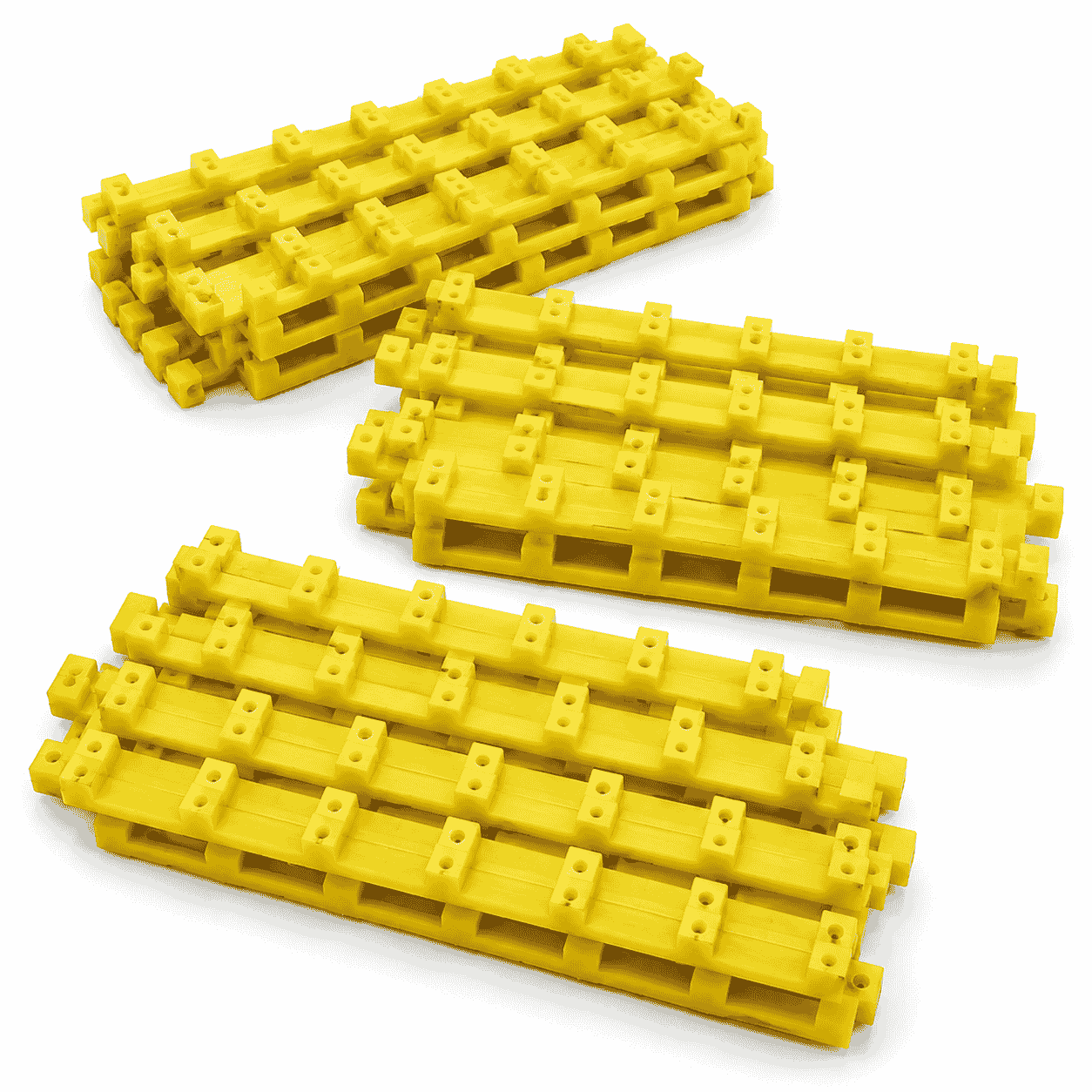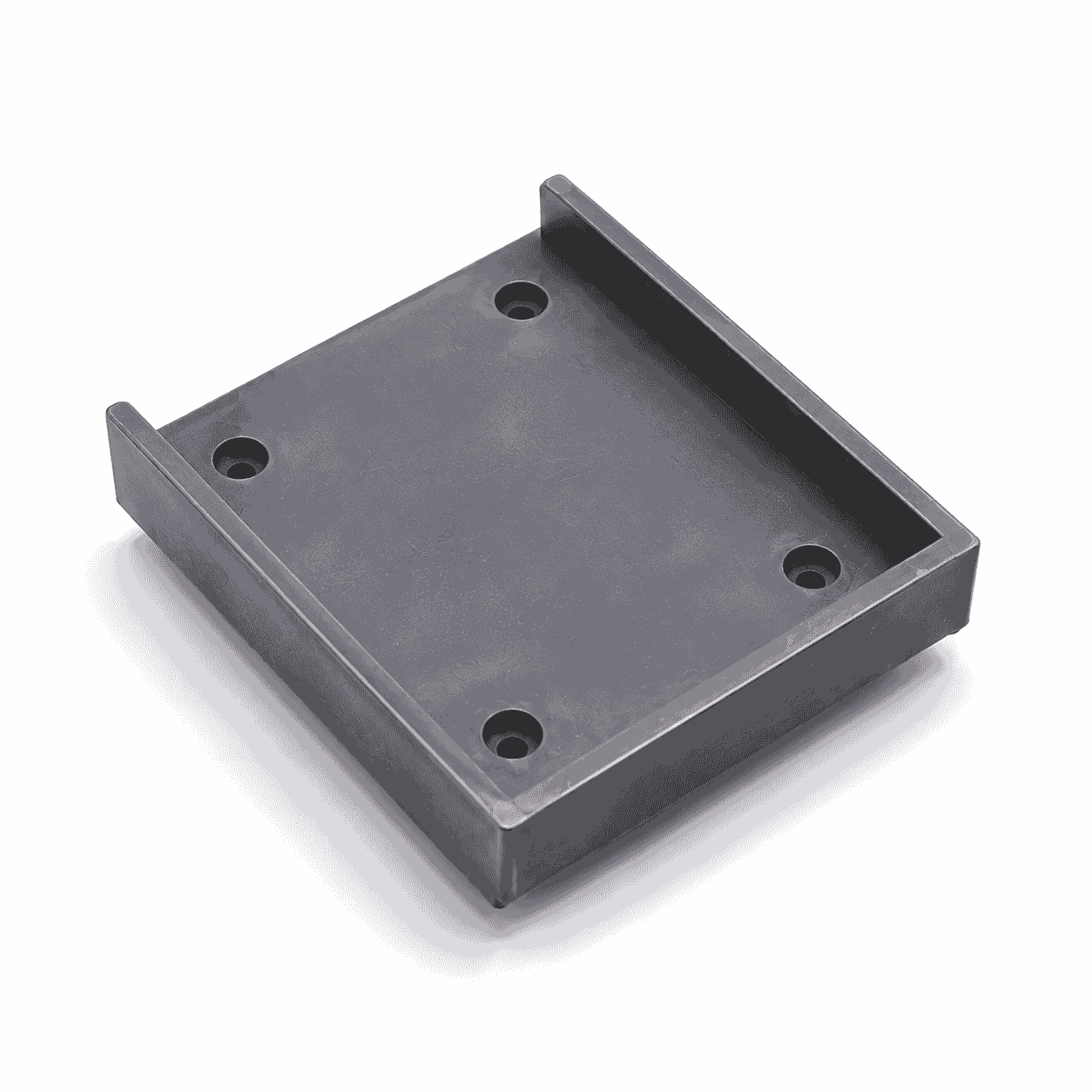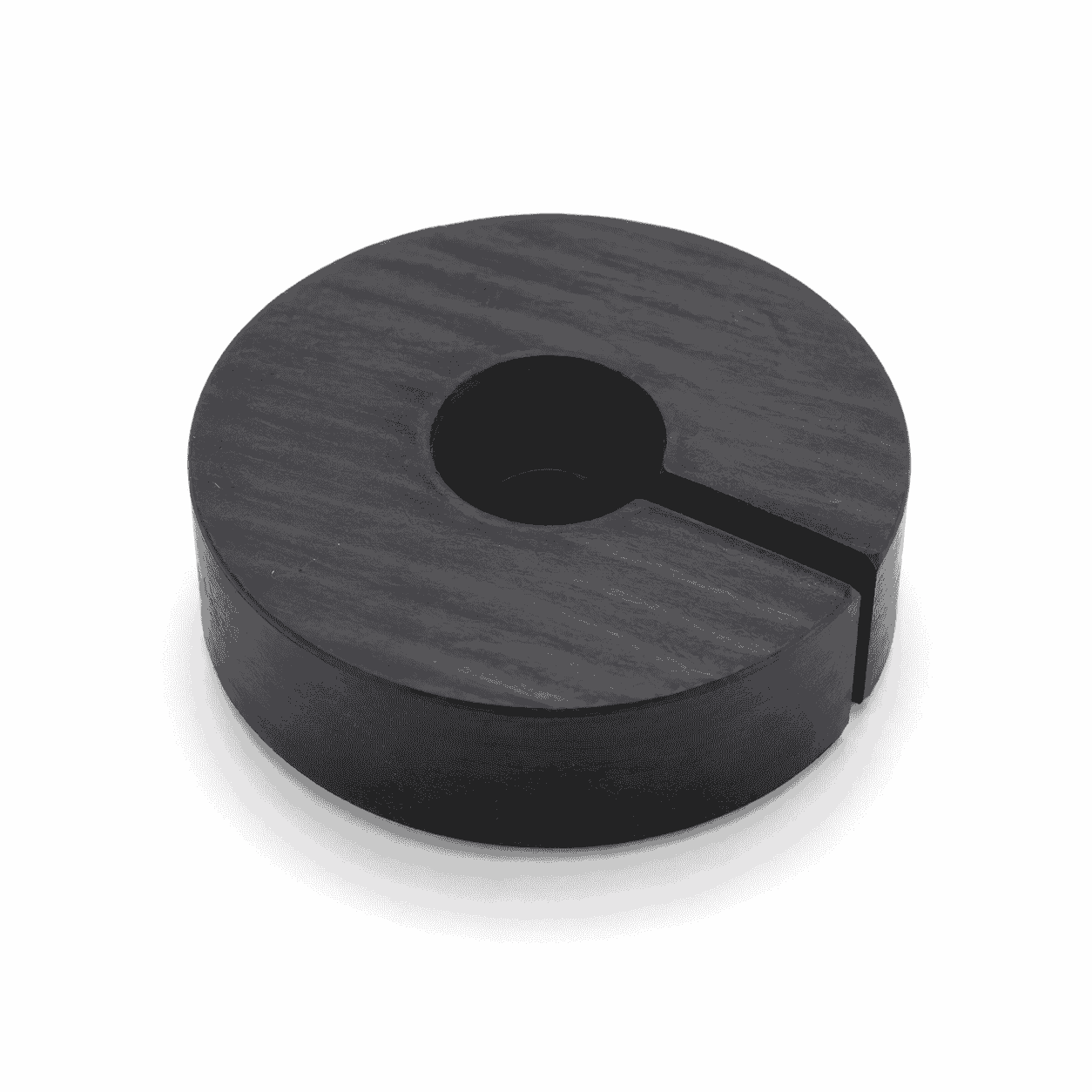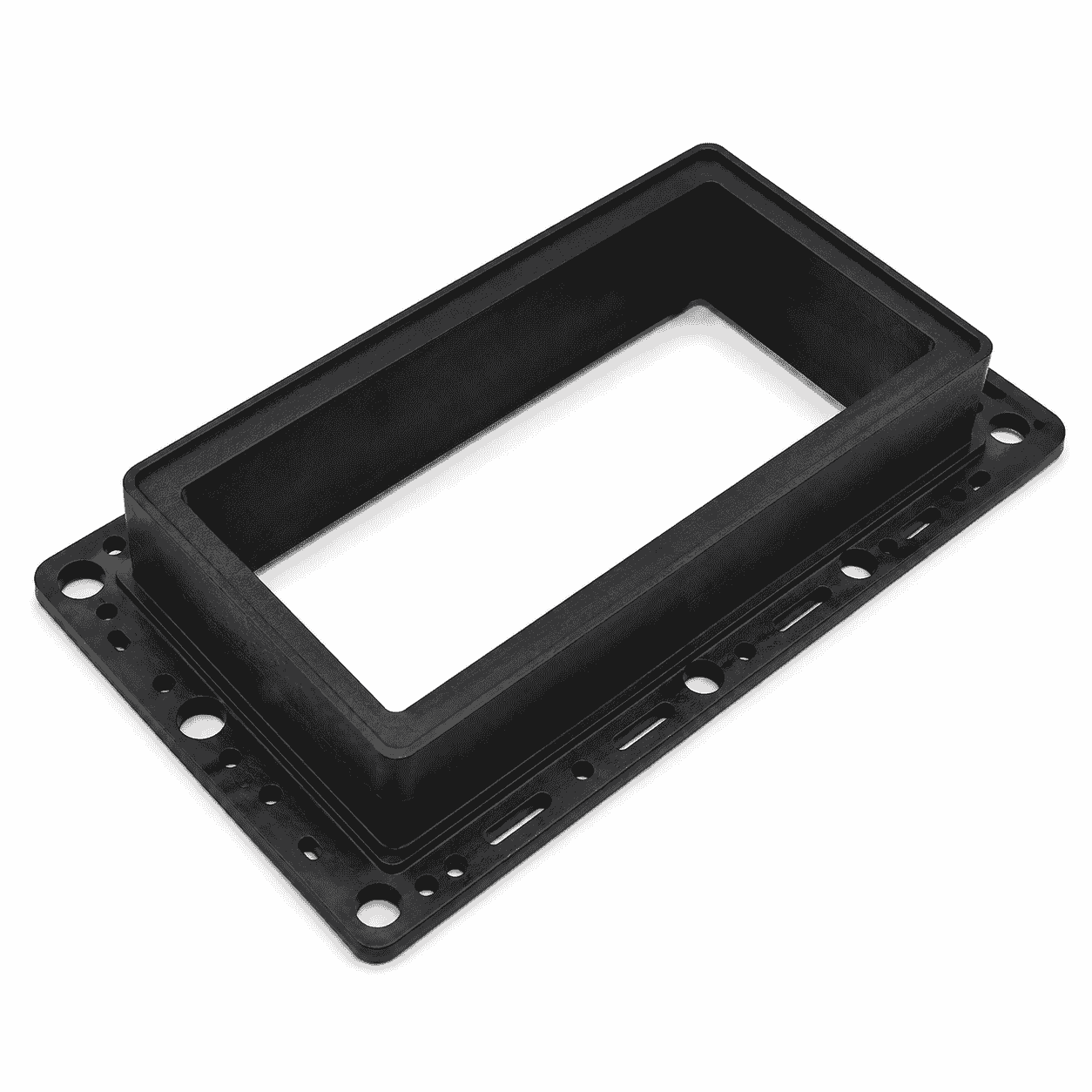


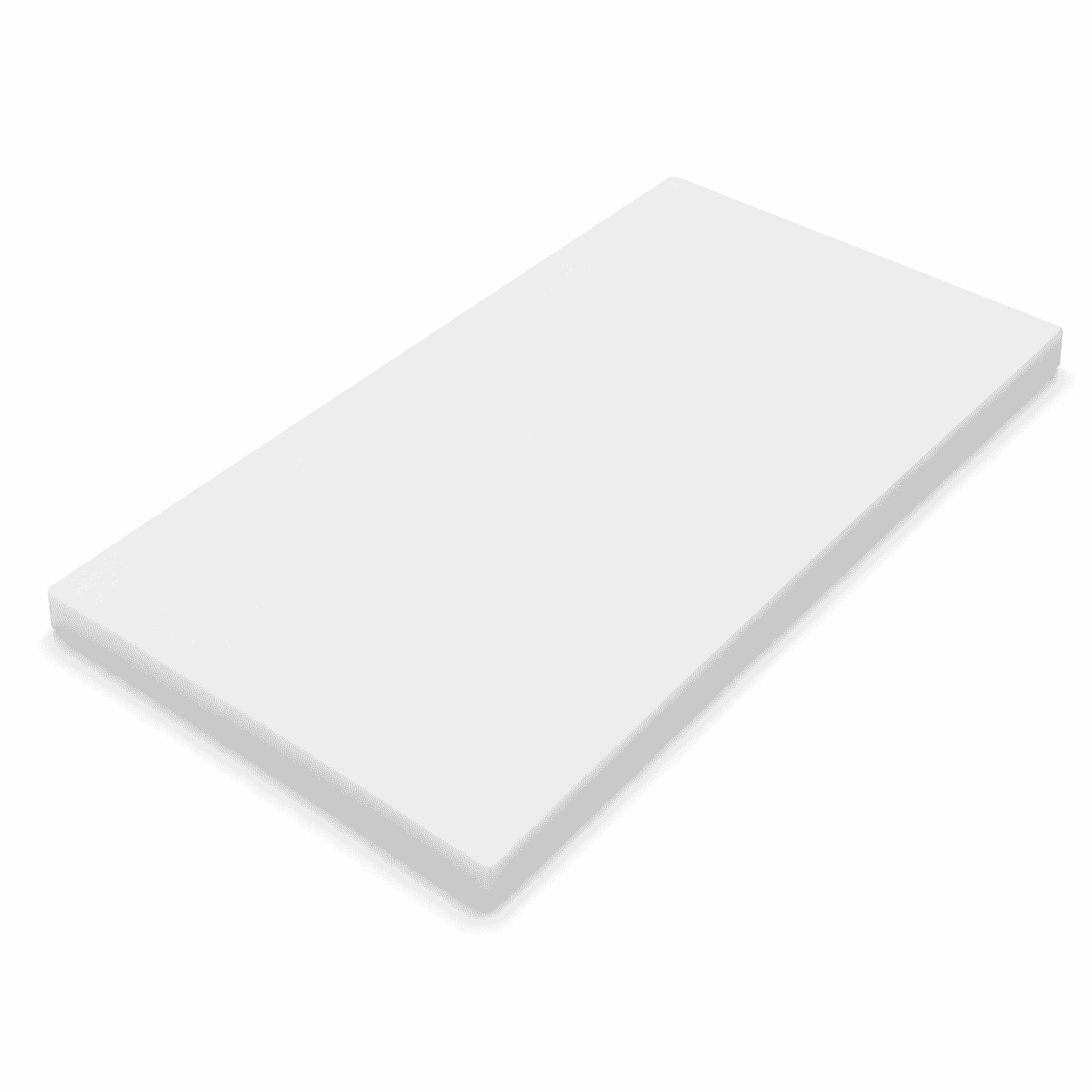
CNC Machined PTFE Spacer Plate is a custom engineering plastic component used for equipment spacing, support, low-friction separation, chemical isolation, electrical insulation and surface protection.
Available in virgin and filled PTFE grades, with custom thicknesses, mounting holes, counterbores, slots, grooves, recessed pockets and stepped profiles manufactured according to drawings or physical samples.
CNC Machined PTFE Spacer Plate is a custom engineering plastic component used for equipment spacing, support, positioning, low-friction separation, chemical isolation, electrical insulation and surface protection.
The plate can be installed between machine frames, flanges, guide structures, equipment housings, tooling assemblies and other mechanical components. It provides a replaceable contact layer while maintaining the required installation distance between adjoining parts.
Length, width, thickness, mounting holes, locating holes, grooves, recessed areas, steps and custom external profiles can be manufactured according to technical drawings, physical samples and actual operating conditions.
A spacer is a mechanical component used to maintain a controlled distance between adjoining parts. General information about this type of component is available from Wikipedia’s explanation of spacers and standoffs.
A CNC Machined PTFE Spacer Plate provides more functions than a simple flat shim. Depending on its design, it can also act as a support pad, insulating plate, chemical barrier, low-friction wear surface or replaceable equipment liner.
Typical functions include:
The CNC Machined PTFE Spacer Plate can be produced as a simple rectangular pad or as a fully machined component containing several functional structures.
Available design options include:
Counterbored or countersunk holes can keep fastener heads below the working surface, preventing interference with adjoining equipment components.
The plate maintains a specified distance between two mechanical parts. Its finished thickness can be adjusted according to the required installation height, assembly clearance or equipment alignment.
PTFE provides a low-friction contact surface between suitable moving or fixed components. It can reduce sliding resistance compared with many dry metal-to-metal contact arrangements.
The plate separates the supporting metal structure from many corrosive process materials. The exact chemical, concentration, temperature and exposure duration should be confirmed before use.
Standard unfilled PTFE is electrically insulating. A PTFE spacer plate can provide mechanical separation and electrical isolation between conductive machine parts.
The PTFE contact layer helps protect polished, coated, painted or accurately machined equipment surfaces from scratching and hard contact.
The broad plate surface distributes contact pressure over a larger area. This can reduce localized pressure on flanges, brackets, machine frames and mounting bases.
The replaceable PTFE plate prevents direct contact between more expensive equipment components. When the working surface becomes worn, the plate can be replaced separately.
The plastic layer can reduce hard contact between adjoining metal components and absorb part of the transmitted vibration.
PTFE, or polytetrafluoroethylene, is a fluoropolymer used in mechanical, chemical and electrical applications. General material information is available from Wikipedia’s explanation of polytetrafluoroethylene.
Related raw material is available from our Polytetrafluoroethylene PTFE Sheet category.
PTFE provides a low-friction contact surface, making it suitable for selected sliding supports, isolation pads and guide-contact applications.
PTFE is resistant to many acids, alkalis, solvents and industrial chemicals. Chemical compatibility must still be confirmed for the actual medium and operating temperature.
PTFE absorbs very little moisture, making it suitable for many wet, humid and frequently cleaned environments.
PTFE can be used across a wider temperature range than many common engineering plastics. Actual limits depend on load, material grade, plate thickness and equipment design.
Unfilled PTFE provides strong electrical-insulation properties for suitable mechanical and electrical assemblies.
The low-surface-energy characteristics of PTFE can reduce the adhesion of many compatible process materials and simplify cleaning.
The PTFE plate does not rust like ordinary carbon steel and can protect the underlying equipment surface in corrosive or moisture-exposed environments.
PTFE sheets and blocks can be machined into non-standard profiles, holes, slots, recesses and locating structures without developing a dedicated molding tool.
Virgin PTFE provides low friction, broad chemical resistance, low moisture absorption and electrical insulation. It is suitable for many lightly loaded spacer, isolation and protective applications.
Pure PTFE is relatively soft and may deform gradually under sustained pressure. Adequate thickness, supporting area and fastening distribution should therefore be provided.
Glass-filled PTFE can provide improved rigidity, wear resistance and creep resistance. The filler may increase contact-surface abrasiveness, so the adjoining component must be evaluated.
Carbon-filled PTFE can provide improved wear performance, dimensional stability and selected thermal or electrical properties.
Bronze-filled PTFE can provide greater hardness, compressive strength and thermal conductivity. Chemical compatibility and electrical-insulation requirements must be reviewed before selection.
Graphite-filled PTFE may be considered for applications requiring improved sliding and wear performance under suitable operating conditions.
The white color of a PTFE plate does not independently confirm that it is virgin PTFE or a food-contact-compliant grade. The material specification and supporting documents should be checked before production.
CNC Machined PTFE Spacer Plate components can be used in different types of chemical equipment and industrial machinery.
Typical applications include:
The final application should be confirmed according to load, temperature, chemical exposure, movement, supporting area and required dimensional accuracy.
A properly designed CNC Machined PTFE Spacer Plate can help address:
Each CNC Machined PTFE Spacer Plate can be manufactured according to the corresponding equipment and installation structure.
Available options include:
Our CNC Plastic Machining service supports PTFE spacer plates manufactured according to 2D drawings, 3D models and physical samples.
General information about programmed machine-tool processing is available from Wikipedia’s explanation of computer numerical control.
Available machining operations include:
PTFE is softer and more flexible than POM, nylon and most metals. Excessive clamping pressure or uneven material removal may affect the finished dimensions and plate flatness.
Important machining considerations include:
Thin plates, deep pockets and large differences in wall thickness may require additional support or a revised machining sequence to control deformation.
To manufacture a CNC Machined PTFE Spacer Plate correctly, the following information should be provided or confirmed:
When the original drawing is unavailable, replacement PTFE spacer plates can be manufactured from existing samples. Wear, compression, creep and permanent deformation should be evaluated before dimensions are reproduced.
Important sample inspection items include:
Providing the corresponding equipment dimensions helps restore the intended design rather than copying worn measurements directly.
Important inspection items for a CNC Machined PTFE Spacer Plate include:
Where possible, the completed plate should be checked with the corresponding equipment component, inspection gauge or dimensional model before delivery.
Virgin PTFE has lower rigidity and greater creep tendency than metals, POM and many filled engineering plastics. The load capacity of a CNC Machined PTFE Spacer Plate cannot be determined from material name or thickness alone.
Supporting area, continuous pressure, temperature, bolt preload, plate span and loading duration must all be considered. High-load structures may require thicker plates, shorter unsupported spans, metal backing plates or filled PTFE materials.
Applications involving abrasive particles, high-speed movement, heavy impact or very tight dimensional tolerances require separate material and structural evaluation.
General friction, lubrication and wear principles are explained in Wikipedia’s article about tribology.
The white appearance of a PTFE spacer plate does not prove that it is food-contact compliant. Suitability depends on the resin grade, fillers, pigments, production records and applicable compliance documentation.
For food, beverage or pharmaceutical equipment, the following should be confirmed:
CNC Machined PTFE Spacer Plate is a custom engineering plastic component used for equipment spacing, support, low-friction separation, chemical isolation, electrical insulation, wear protection and surface protection.
Virgin PTFE, glass-filled PTFE, carbon-filled PTFE, graphite-filled PTFE and other modified grades can be selected according to pressure, friction, wear, temperature and chemical exposure.
Plate dimensions, thickness, holes, slots, grooves, recessed pockets, steps and installation markings can be manufactured according to technical drawings, physical samples and actual operating conditions.
Check drawings for full specifications and confirm materials according to service conditions to prevent product defects.
Inspect all key processing steps and fully verify dimensions, holes, grooves and fitting surfaces.
Deburr, chamfer and clean products for easy installation. Ensure uniform quality among batch products.
Choose appropriate packaging solutions based on product features to protect goods from collision, deformation and mixing during transit.
Unlike metal parts, engineering plastic components still require strict control over dimensions, holes, edges, surface, materials and assembly performance for equipment use.
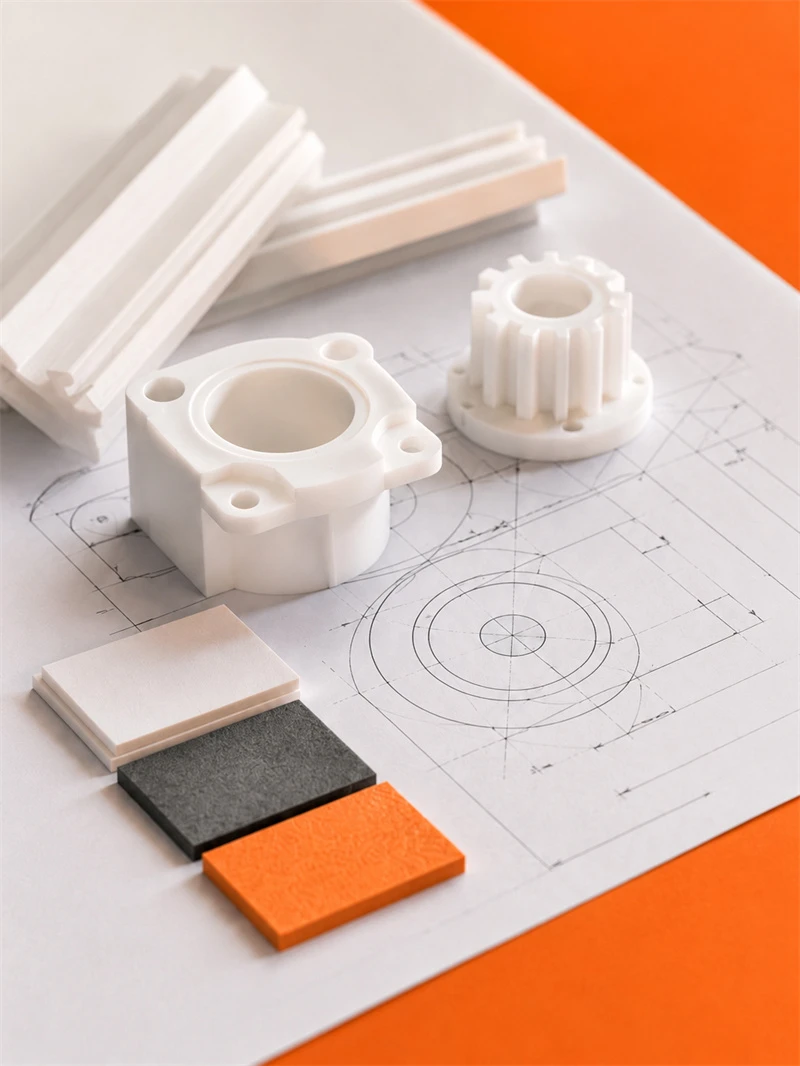
Engineering plastic parts suit friction, guide, support, buffer, anti-corrosion and insulation areas. We supply UHMWPE, POM, PA, PP/PE components for conveyor, food, mining, machinery, chemical and cable systems, with custom OEM service available.
Stay updated with our latest industry insights, company updates and featured articles.
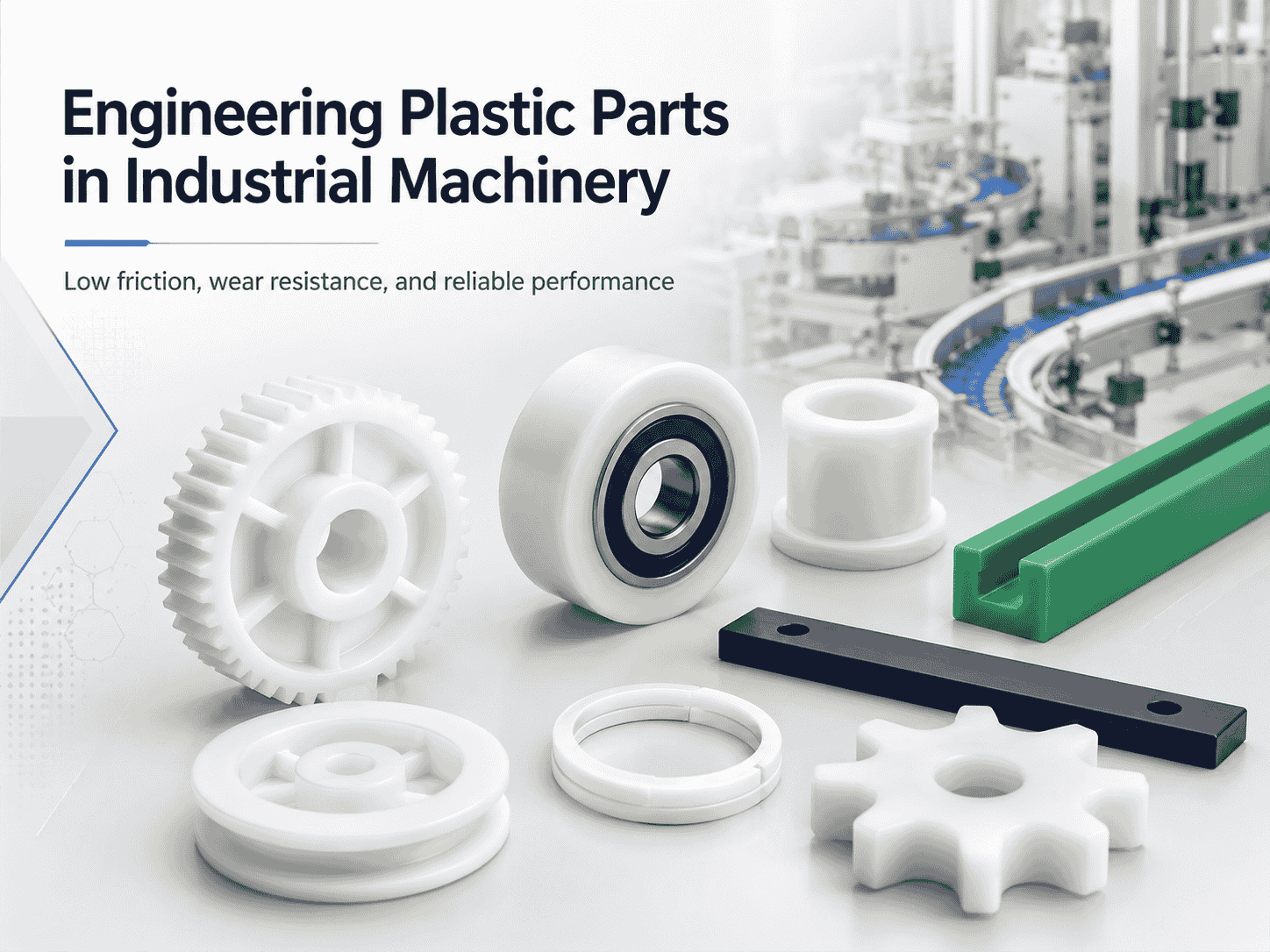
Engineering plastics are increasingly used in industrial machinery, automated production lines, conveyor systems, packaging equipment, and food-processing machines. Materials such as nylon, UHMWPE, POM, and
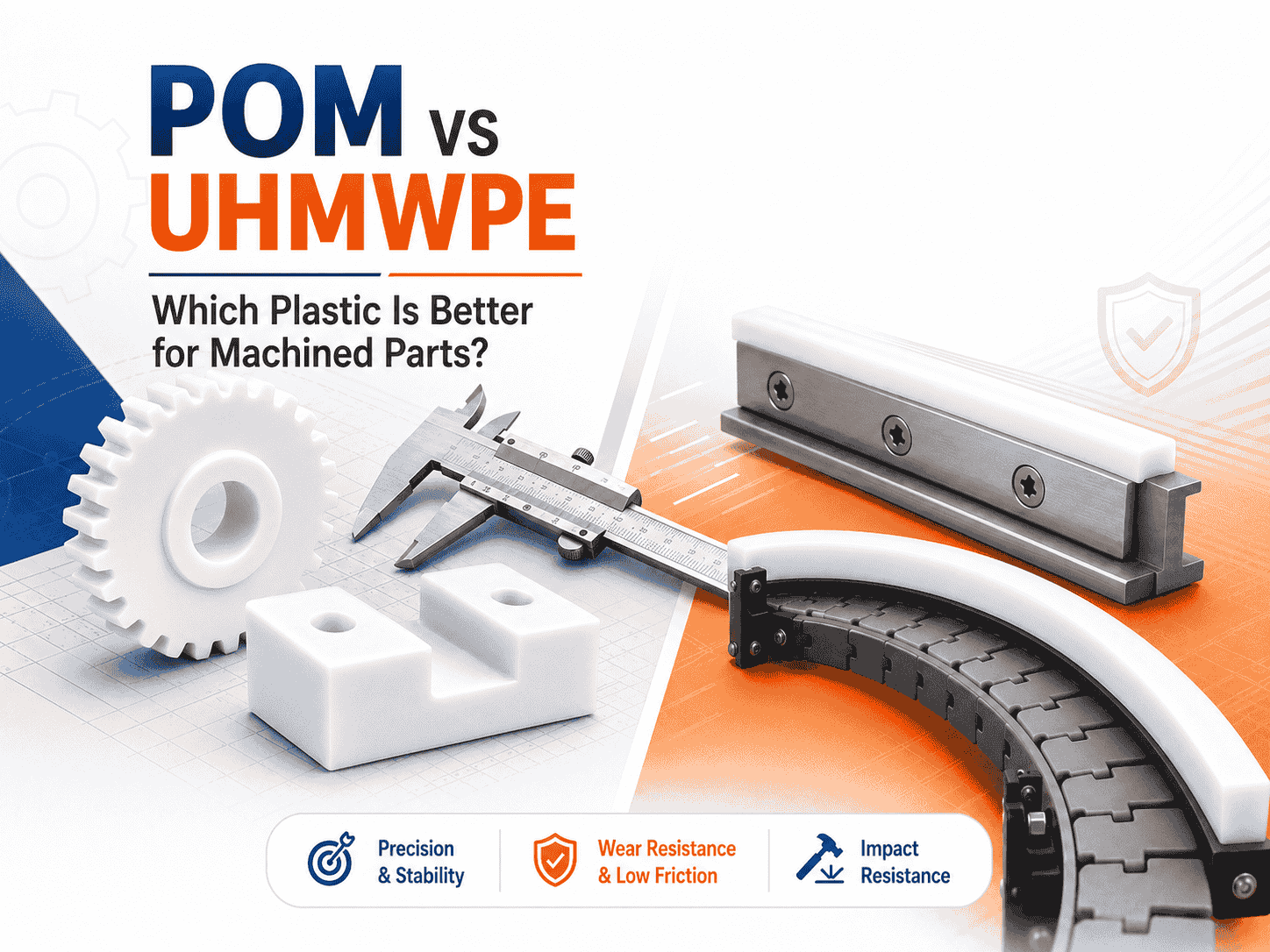
Both are lightweight, corrosion-resistant, wear-resistant, and suitable for CNC machining. However, they perform very differently
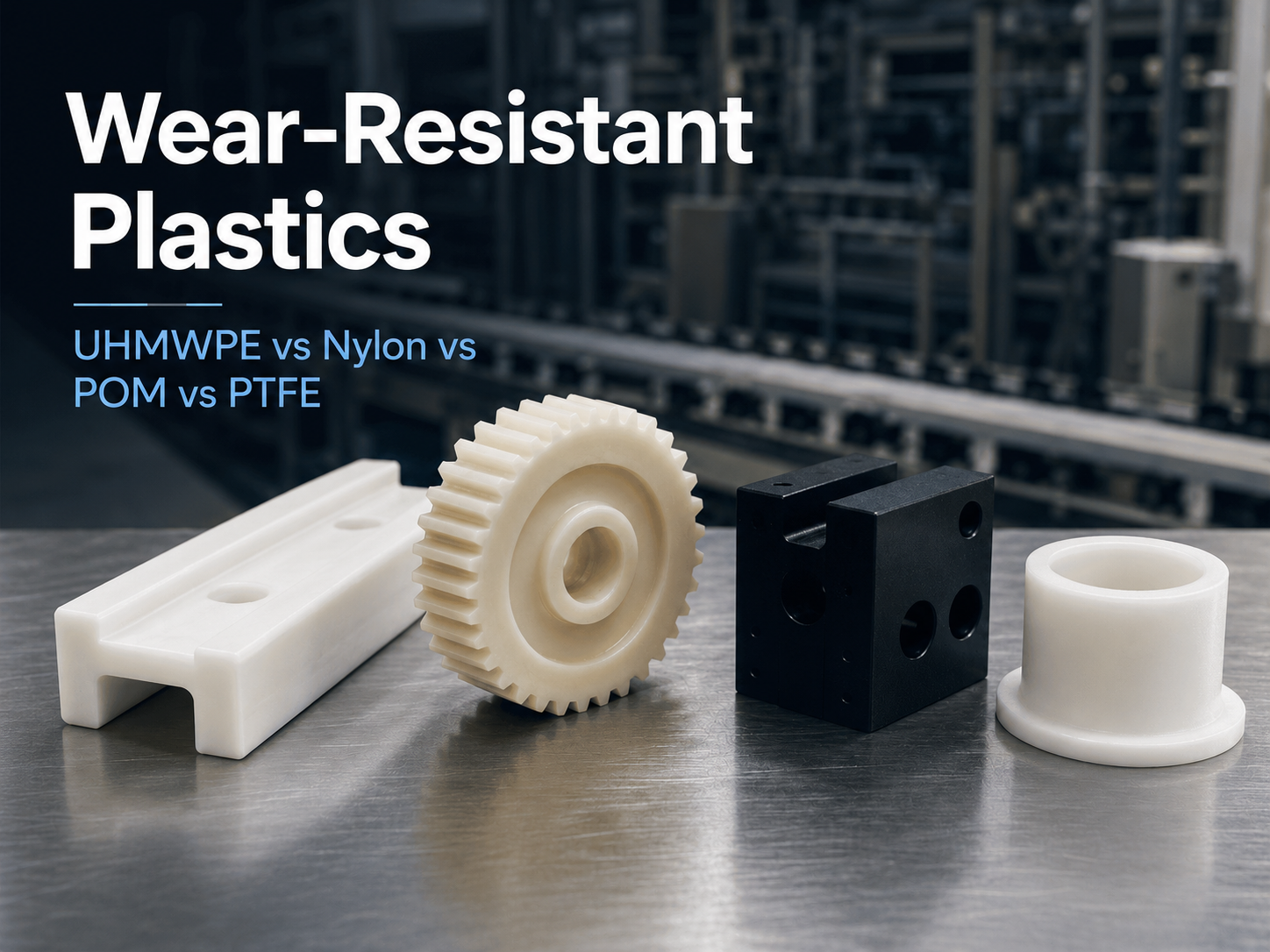
Wear is a common cause of failure in conveyor systems, packaging machinery, automated equipment, mining
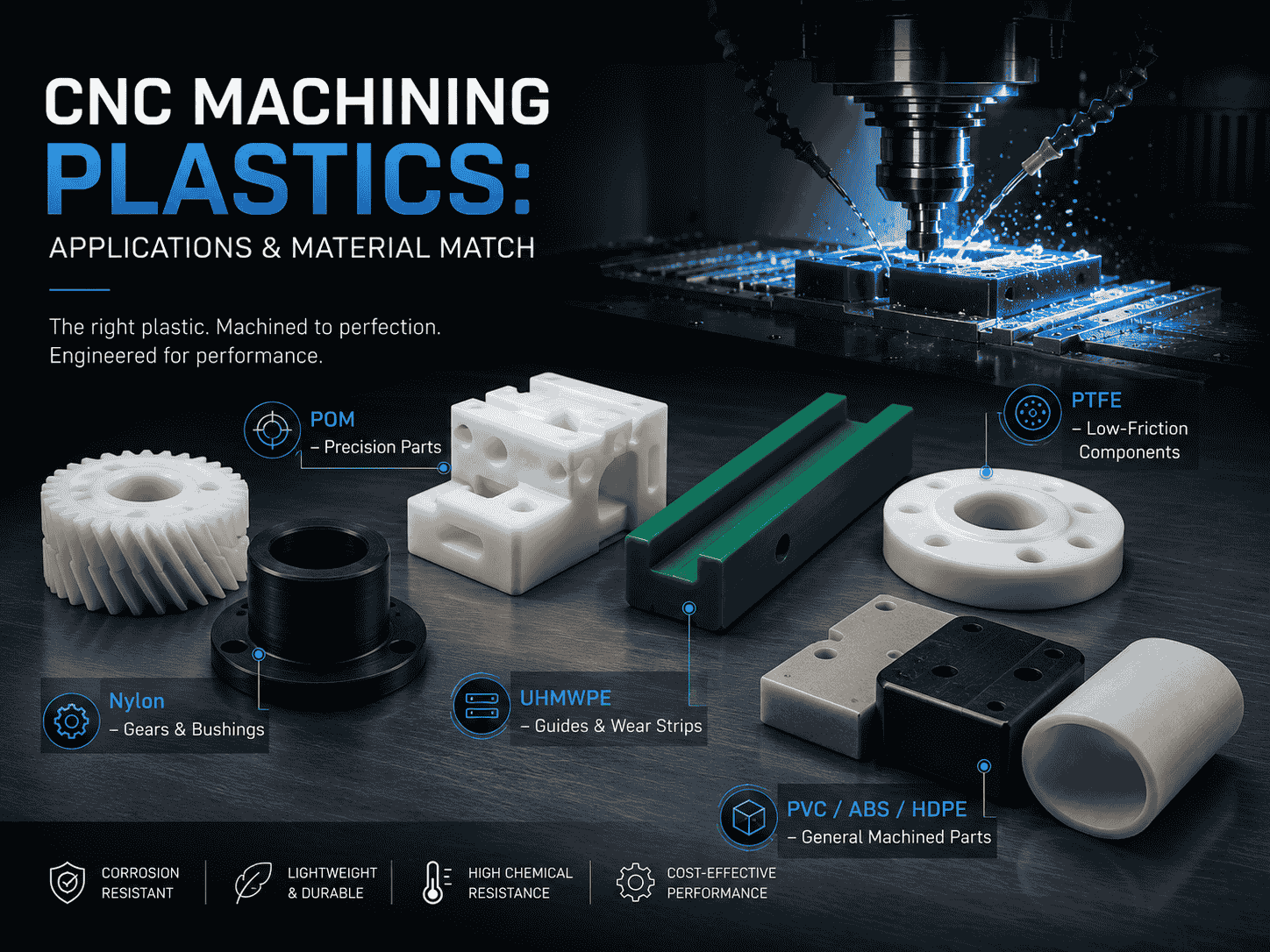
CNC machining is widely used to produce plastic prototypes, low-volume parts, replacement components, jigs, fixtures,
Both are lightweight, corrosion-resistant, wear-resistant, and suitable for CNC machining. However, they perform very differently
Wear is a common cause of failure in conveyor systems, packaging machinery, automated equipment, mining
CNC machining is widely used to produce plastic prototypes, low-volume parts, replacement components, jigs, fixtures,
Need UHMWPE sheets & custom plastic machined/OEM parts?Send specs & material needs, free quote within 24h.