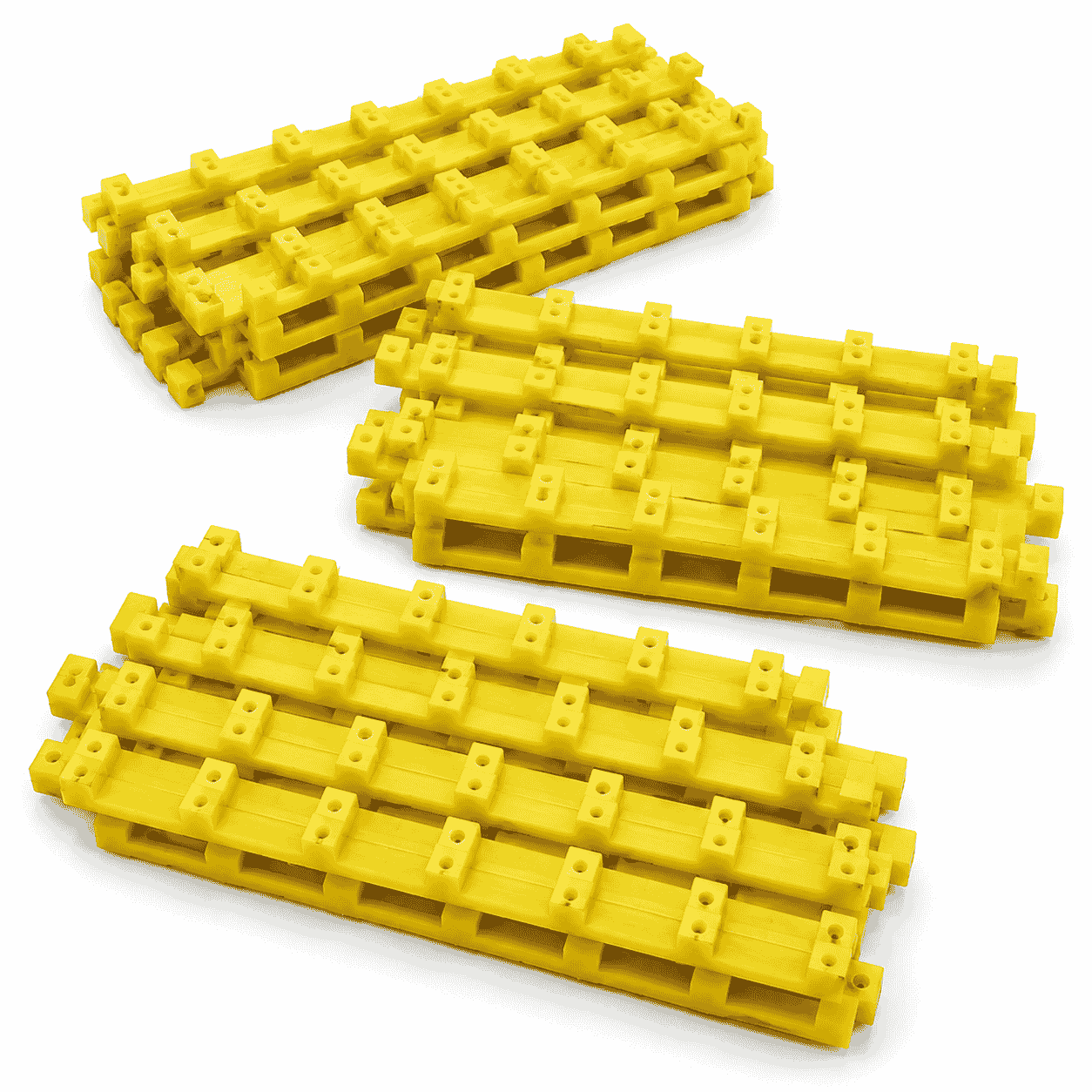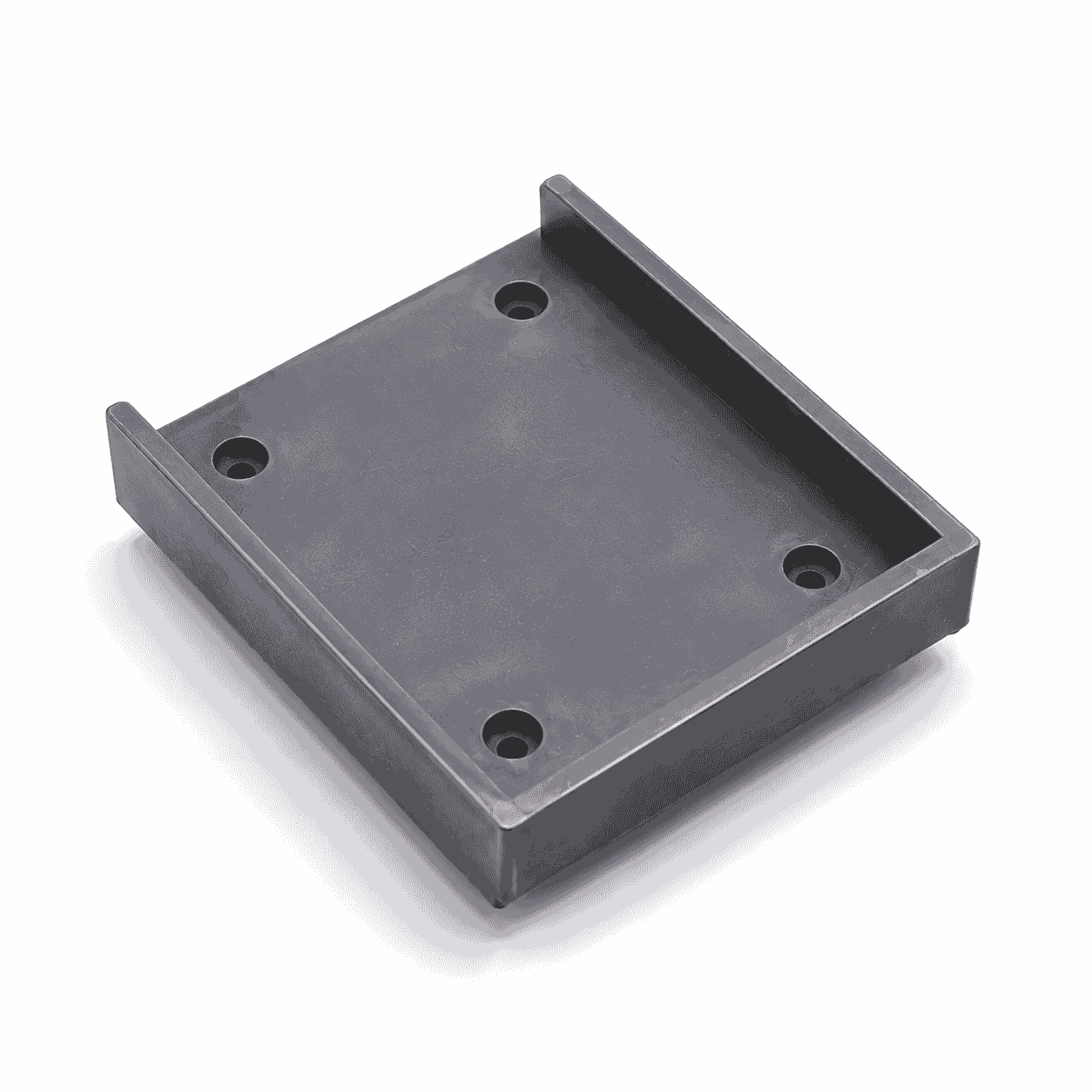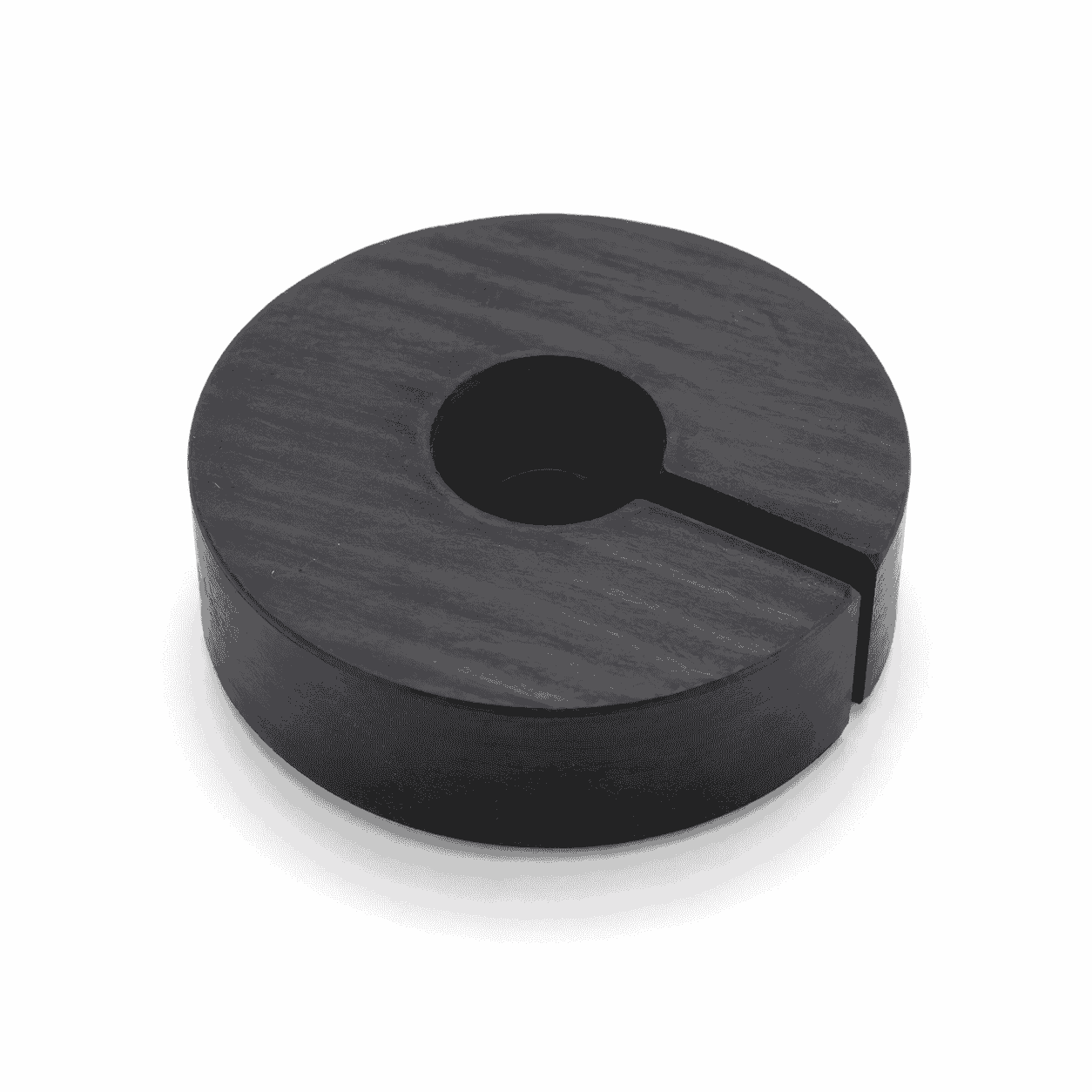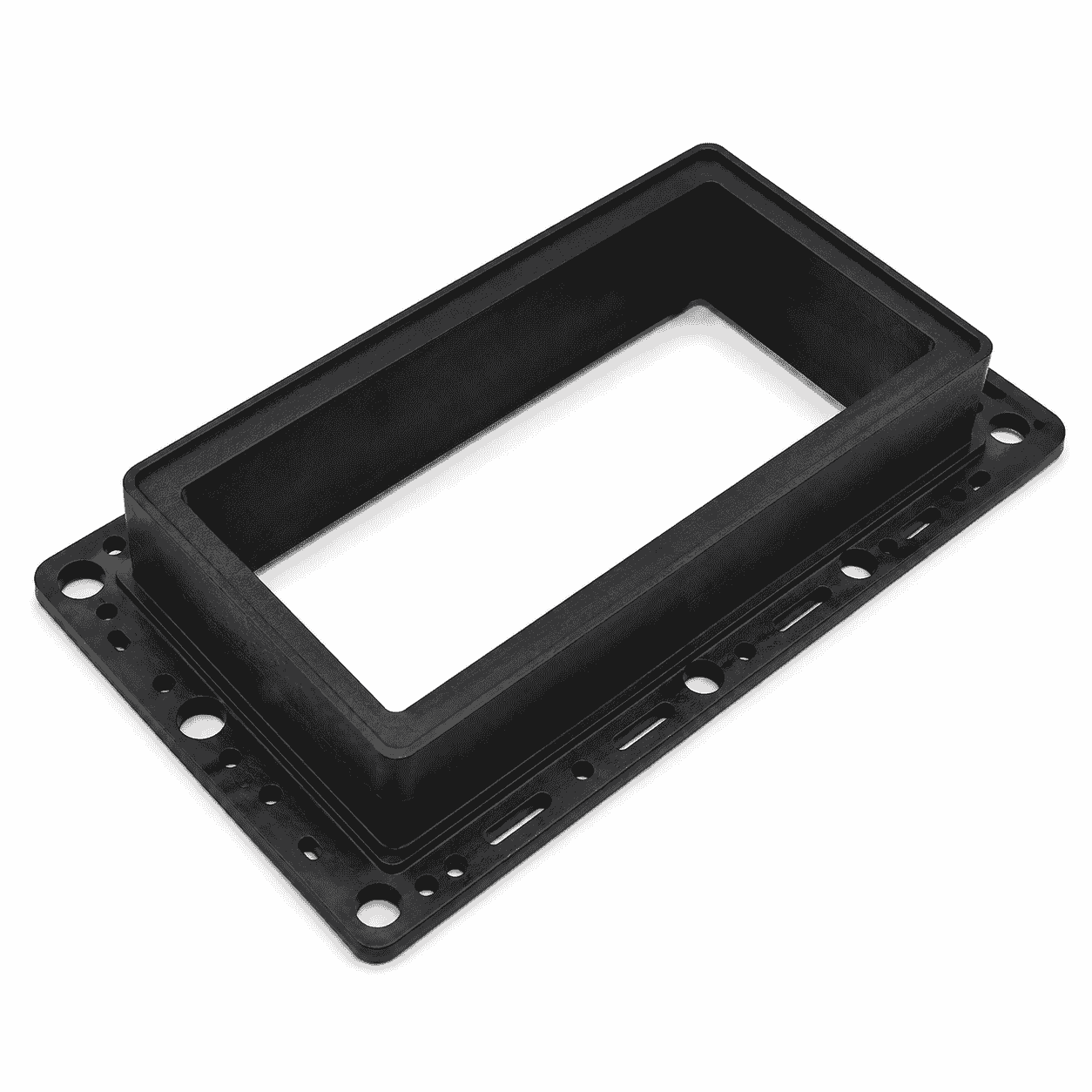


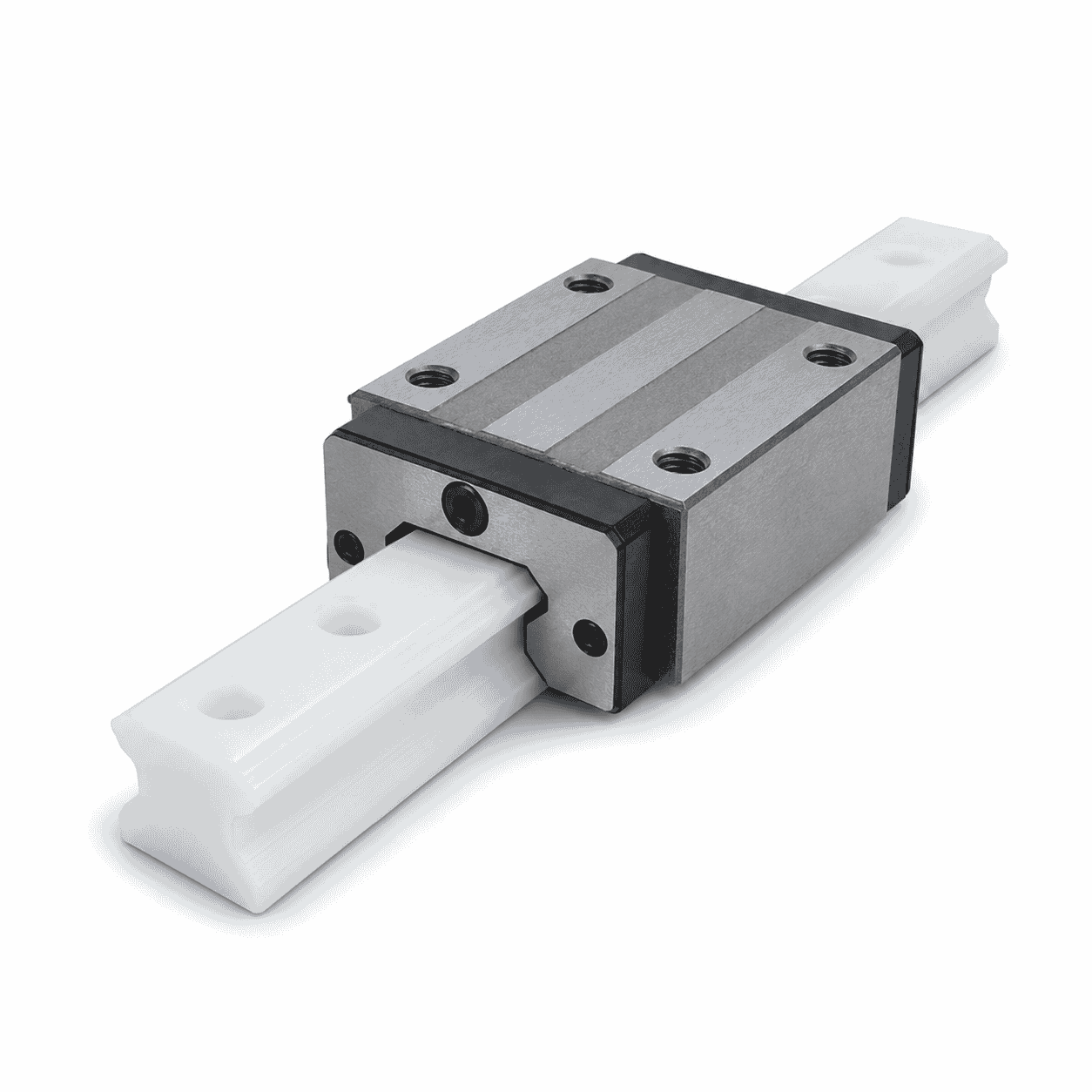
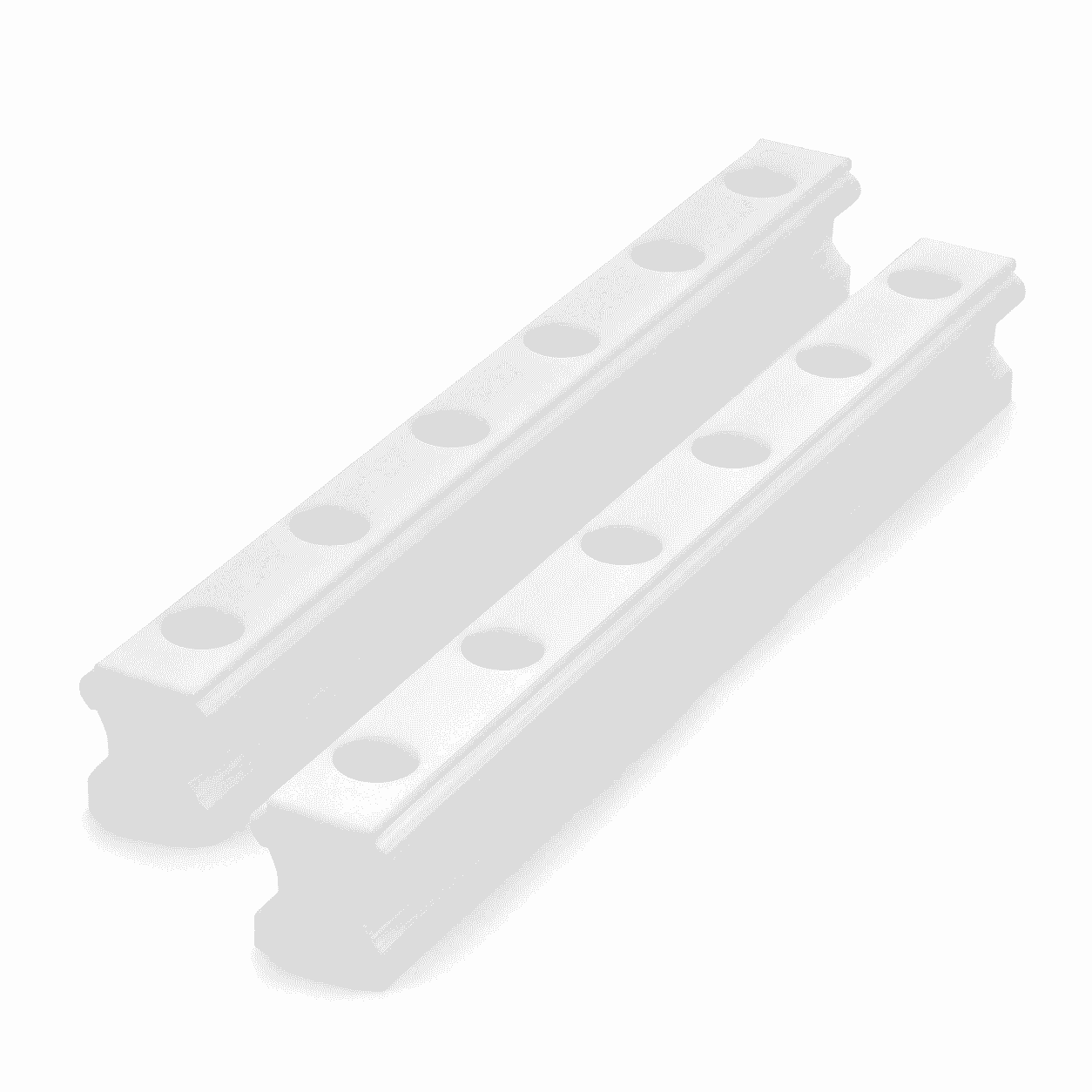
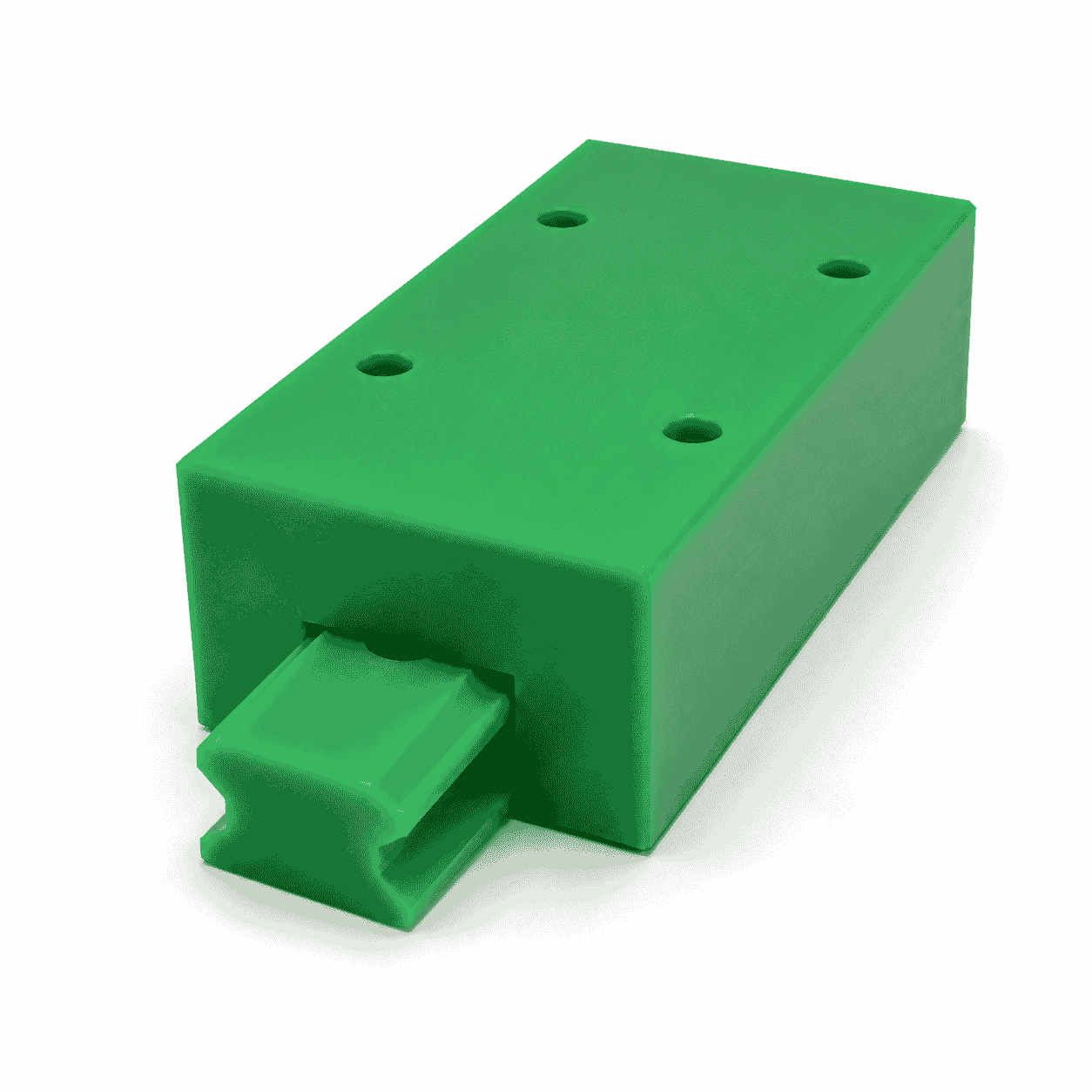
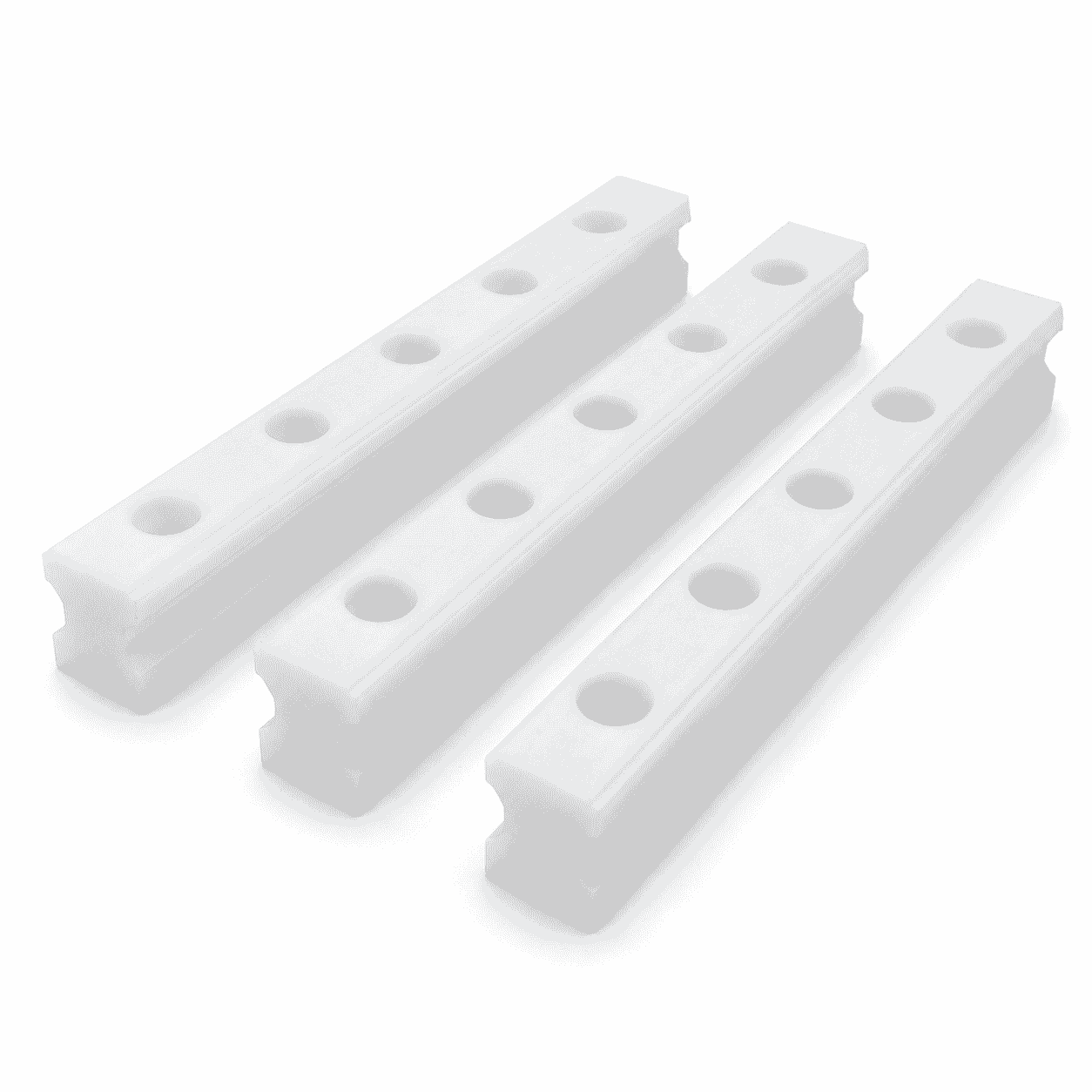
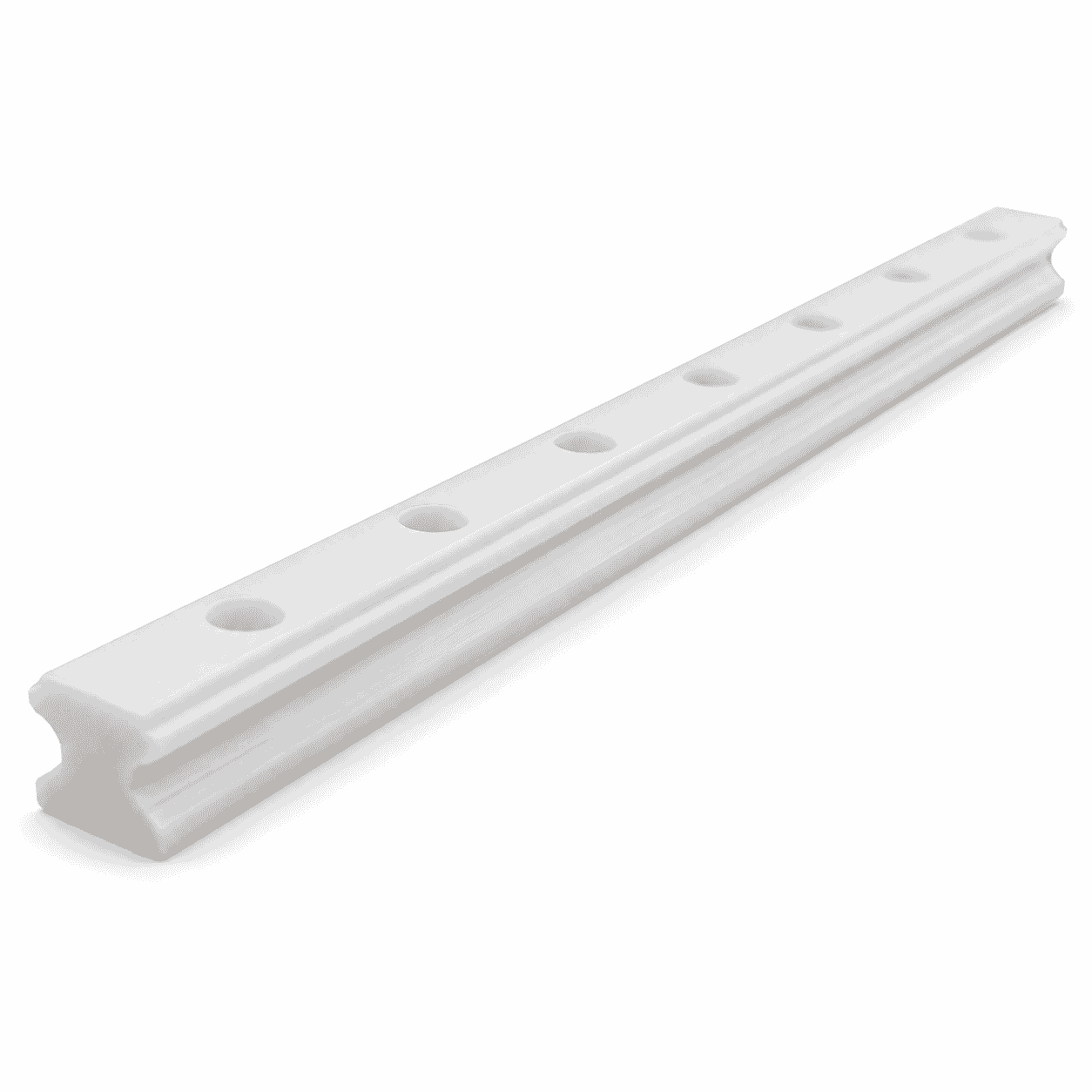
UHMWPE Linear Guide Rail is a lightweight, low-friction plastic transfer and protection rail for linear guide blocks. Common reference sizes include 15, 20, 25, 30, 35, 45, 55 and 65 types. It can be used for slider transfer, storage, assembly support, maintenance protection and selected low-load sliding applications. Final compatibility must be confirmed using the complete slider model, drawing or physical sample.
UHMWPE Linear Guide Rail is a low-friction engineering plastic profile used as a temporary transfer rail, protective dummy rail, assembly guide or lightweight sliding guide for linear guide blocks and industrial automation components.
In the Chinese market, this type of product is sometimes called a “UHMWPE HIWIN guide rail” or “plastic HIWIN guide rail” because its nominal sizes are selected with reference to commonly used linear guide series such as 15, 20, 25, 30, 35, 45, 55 and 65. The name describes a compatibility reference and does not mean that the plastic guide is manufactured or authorized by HIWIN.
The product is normally machined from ultra-high-molecular-weight polyethylene, also known as UHMWPE, PE1000 or UPE. The material provides a smooth contact surface, excellent abrasion resistance, good impact toughness and very low moisture absorption. These characteristics make it suitable for protecting linear guide blocks during handling, storage, installation, transfer and equipment assembly.
An UHMWPE Linear Guide Rail must not be confused with a precision steel linear motion rail. A steel linear guide system uses accurately ground raceways, recirculating balls or rollers and matched slider blocks to support machine loads and provide precision linear movement. A plastic dummy rail is generally used for assembly assistance, slider retention, transportation protection or low-load sliding applications. It is not intended to replace a precision steel rail in high-load machine tools or positioning systems.
Customers can view additional UHMWPE material options on our
UHMWPE Sheet Products
page. Examples of machined sliding and positioning components are also available in our
UHMWPE Coding Machine Slider
application article.
For general material information, refer to the
Wikipedia explanation of ultra-high-molecular-weight polyethylene.
General information about linear bearing systems is available in the
Wikipedia explanation of linear-motion bearings.
The primary function of an UHMWPE Linear Guide Rail depends on its cross-sectional design and matching slider structure. Common functions include transferring a linear guide block from one rail to another, retaining the slider during storage, supporting the block during equipment assembly and providing a temporary running profile during maintenance.
When a recirculating-ball linear guide block is removed from its steel rail, incorrect handling may allow internal rolling elements or retaining components to move out of position. A correctly matched plastic transfer rail can be inserted into the block before it is completely removed from the original steel rail. The block can then be stored or transferred while remaining supported by the plastic profile.
The product may also be manufactured as a low-load wear rail or sliding guide for packaging equipment, assembly fixtures, inspection devices and conveyor accessories. Whether it can be used as a continuously operating guide depends on the actual load, speed, temperature, precision requirement and mating structure.
The following table is organized from the product information supplied by the customer. The model number represents an approximate nominal guide specification commonly used in the domestic market. It does not represent the complete finished dimensions of the plastic profile.
| Common Model | Reference Nominal Size | Domestic Availability | Typical Selection |
|---|---|---|---|
| 15 Type | Approximately 15 mm guide specification | Commonly available | Small automation equipment, compact sliders, lightweight assembly and maintenance tools |
| 20 Type | Approximately 20 mm guide specification | Very commonly used | General automation equipment, packaging machines and common linear guide block assembly |
| 25 Type | Approximately 25 mm guide specification | Very commonly used | Medium-sized equipment, standard industrial sliders and frequently used assembly tooling |
| 30 Type | Approximately 30 mm guide specification | Commonly used | Medium-sized machines, automation frames and larger linear guide blocks |
| 35 Type | Approximately 35 mm guide specification | Commonly used | Larger slider sections, equipment with increased bearing size and heavy assembly components |
| 45 Type | Approximately 45 mm guide specification | Common in large equipment | Large conveying equipment, industrial sliding mechanisms and heavy linear guide block handling |
| 55 Type | Approximately 55 mm guide specification | Less commonly stocked | Large linear guide systems, maintenance tooling and drawing-based production |
| 65 Type | Approximately 65 mm guide specification | Mainly produced to order | Large-size equipment, heavy slider handling and non-standard industrial assembly tools |
Available reference models include 15, 20, 25, 30, 35, 45, 55 and 65 types. Among these specifications, 20, 25, 30, 35 and 45 types are generally used more frequently in domestic industrial equipment. The 55 and 65 types are less commonly stocked and are normally manufactured after confirming a drawing or physical sample.
The number alone is not sufficient for production. Linear guide systems with the same nominal number may use different rail widths, rail heights, raceway positions, slider structures and assembly clearances. Differences may also exist between high-assembly, low-assembly, square-block, flange-block, ball-type and roller-type series.
HIWIN and 上银 are brand and company references associated with precision linear motion products. Our UHMWPE Linear Guide Rail is an independently manufactured engineering plastic component.
The use of terms such as “HIWIN-compatible,” “上银型” or a nominal number such as 25 or 35 is intended only to help identify a possible dimensional application. It does not indicate that the product is an original HIWIN rail, an authorized replacement rail or a precision load-bearing linear guide.
Before production, the actual slider brand, product series and dimensional drawing must be checked. Compatibility should be confirmed by measurement or sample fitting rather than relying only on a brand name or nominal model.
The plastic guide can be manufactured in several structures according to the intended function:
UHMWPE Linear Guide Rail products may be used in the following industries and equipment:
When transferring a linear guide block, the plastic rail and the steel rail should be aligned carefully. The two end faces must be positioned as closely as possible to avoid a step, gap or angular misalignment.
The guide block should then be moved slowly from the steel rail onto the plastic profile. Excessive force should not be used. If resistance increases suddenly, the operator should stop and check the profile dimensions, rail alignment, seal position and internal rolling components.
The correct plastic profile should support the block without excessive looseness or interference. A profile that is too small may not retain the internal components correctly. A profile that is too large may damage seals, retaining parts or the internal raceway structure.
To manufacture a correctly matched UHMWPE Linear Guide Rail, customers should provide as much of the following information as possible:
A complete slider model is more useful than a simple nominal size. For example, two products both described as “25 type” may use different profile dimensions when they belong to different product series or manufacturers.
The product can be produced from moulded UHMWPE sheet, block, bar or a preformed plastic profile. The manufacturing method is selected according to the cross-section, required length, order quantity and dimensional tolerance.
Available processing operations include:
The transfer end is one of the most important machining areas. Sharp edges, burrs, raised steps or an incorrect entry angle may interfere with the slider seal or internal rolling elements. The finished transfer end should therefore be deburred and inspected before use.
Natural white, green, black and other UHMWPE colors may be evaluated according to production availability. Color is primarily used for visual identification and does not independently confirm food-grade, anti-static, conductive, flame-retardant or UV-resistant performance.
For ordinary assembly and maintenance tools, virgin or suitable industrial-grade UHMWPE is generally selected. Special operating environments may require additional material confirmation:
UHMWPE provides excellent sliding and wear performance, but it is not a high-rigidity structural material. Its elastic modulus is much lower than that of steel, so a long and thin plastic rail may bend under its own weight or under concentrated load.
The material also expands more than steel when the temperature changes. Long profiles should therefore be measured and used within the confirmed temperature range. Very tight metal tolerances should not be copied directly onto a plastic part without evaluating the installation clearance.
UHMWPE may gradually deform under continuous static pressure, which is known as creep. It should not be used as the main structural rail for a heavily loaded machine axis unless the complete design has been evaluated and validated.
| Comparison | UHMWPE Plastic Rail | Precision Steel Linear Rail |
|---|---|---|
| Main function | Transfer, retention, protection, assembly assistance or low-load guidance | Precision load-bearing linear motion |
| Material | UHMWPE engineering plastic | Hardened and precision-ground steel |
| Motion principle | Sliding contact or temporary block support | Recirculating ball or roller motion |
| Positioning accuracy | Suitable for assembly and general guidance | Suitable for precision positioning systems |
| Load capacity | Limited and structure-dependent | Specified according to the linear guide series |
| Weight | Very lightweight | Relatively heavy |
| Corrosion resistance | Good resistance to water and many chemicals | Depends on steel grade, coating and lubrication |
| Machining flexibility | Profiles, chamfers, holes and special lengths can be machined | Requires precision grinding and specialized manufacturing |
Important inspection items include the overall width, height, guide-contact surfaces, groove dimensions, entry chamfer, straightness, overall length and fit with the supplied slider sample.
For batch production, an initial sample should be checked before the remaining quantity is processed. When practical, trial fitting with an actual guide block is recommended because dimensional drawings may not fully describe seals, retainers and internal clearance.
The finished surface should be free from obvious burrs, sharp corners, contamination and loose machining chips. Product labels can identify the compatible customer model, nominal size, production batch and quantity.
We have experience manufacturing UHMWPE guide strips, sliding rails, plastic dummy rails, wear-resistant profiles, positioning blocks and other engineering plastic components. Products can be processed according to customer drawings, physical samples and actual installation requirements.
Our factory is equipped with cutting machines, CNC machining centers, milling equipment, drilling equipment and dimensional inspection tools. We can process standard nominal sizes as well as non-standard cross-sections, entry chamfers, mounting holes, locating grooves and special lengths.
Before production, we can review the guide brand, slider model, nominal size, profile cross-section, operating function and required clearance. This helps reduce problems such as incorrect fitting, excessive looseness, interference with slider seals and unsuitable transfer-end dimensions.
Individual replacement tools, sample verification, small batches and continuous production orders can be arranged according to the confirmed requirements. During production, important profile dimensions and fitting surfaces are checked to support consistent quality and scheduled delivery.
It is an engineering plastic guide profile commonly used as a transfer rail, dummy rail, protective rail, storage rail or low-load sliding guide for linear guide blocks and industrial equipment.
No. It is an independently manufactured UHMWPE plastic component. HIWIN or 上银 terminology is used only as a possible size and compatibility reference.
No. It cannot replace a precision steel rail in a load-bearing machine axis. Its primary uses are slider transfer, protection, storage, assembly assistance and selected low-load sliding applications.
Common reference sizes include 15, 20, 25, 30, 35, 45, 55 and 65 types. Final dimensions must be confirmed according to the actual slider model, drawing or physical sample.
Not necessarily. Different brands and product series may use different rail heights, widths, raceway positions and retaining structures even when they share the same nominal number.
Yes. Overall length, guide profile, transfer chamfer, mounting holes, grooves, slots and identification marks can be processed according to the confirmed drawing or sample.
Yes. A physical slider or an original steel rail sample can be used to check the required cross-section and transfer fit. The sample should be identified with the complete brand and model whenever possible.
UHMWPE provides low friction, good wear resistance, high impact toughness, low moisture absorption and lightweight handling, making it suitable for reusable plastic assembly and protection tools.
Check drawings for full specifications and confirm materials according to service conditions to prevent product defects.
Inspect all key processing steps and fully verify dimensions, holes, grooves and fitting surfaces.
Deburr, chamfer and clean products for easy installation. Ensure uniform quality among batch products.
Choose appropriate packaging solutions based on product features to protect goods from collision, deformation and mixing during transit.
Unlike metal parts, engineering plastic components still require strict control over dimensions, holes, edges, surface, materials and assembly performance for equipment use.
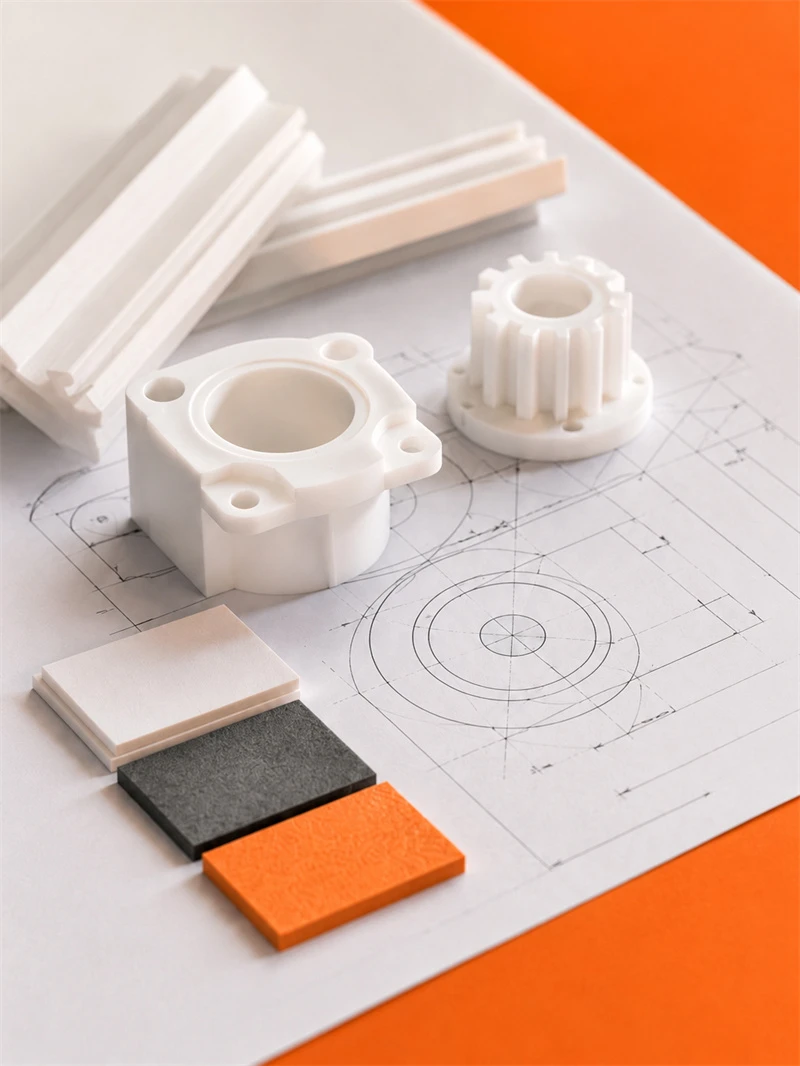
Engineering plastic parts suit friction, guide, support, buffer, anti-corrosion and insulation areas. We supply UHMWPE, POM, PA, PP/PE components for conveyor, food, mining, machinery, chemical and cable systems, with custom OEM service available.
Stay updated with our latest industry insights, company updates and featured articles.
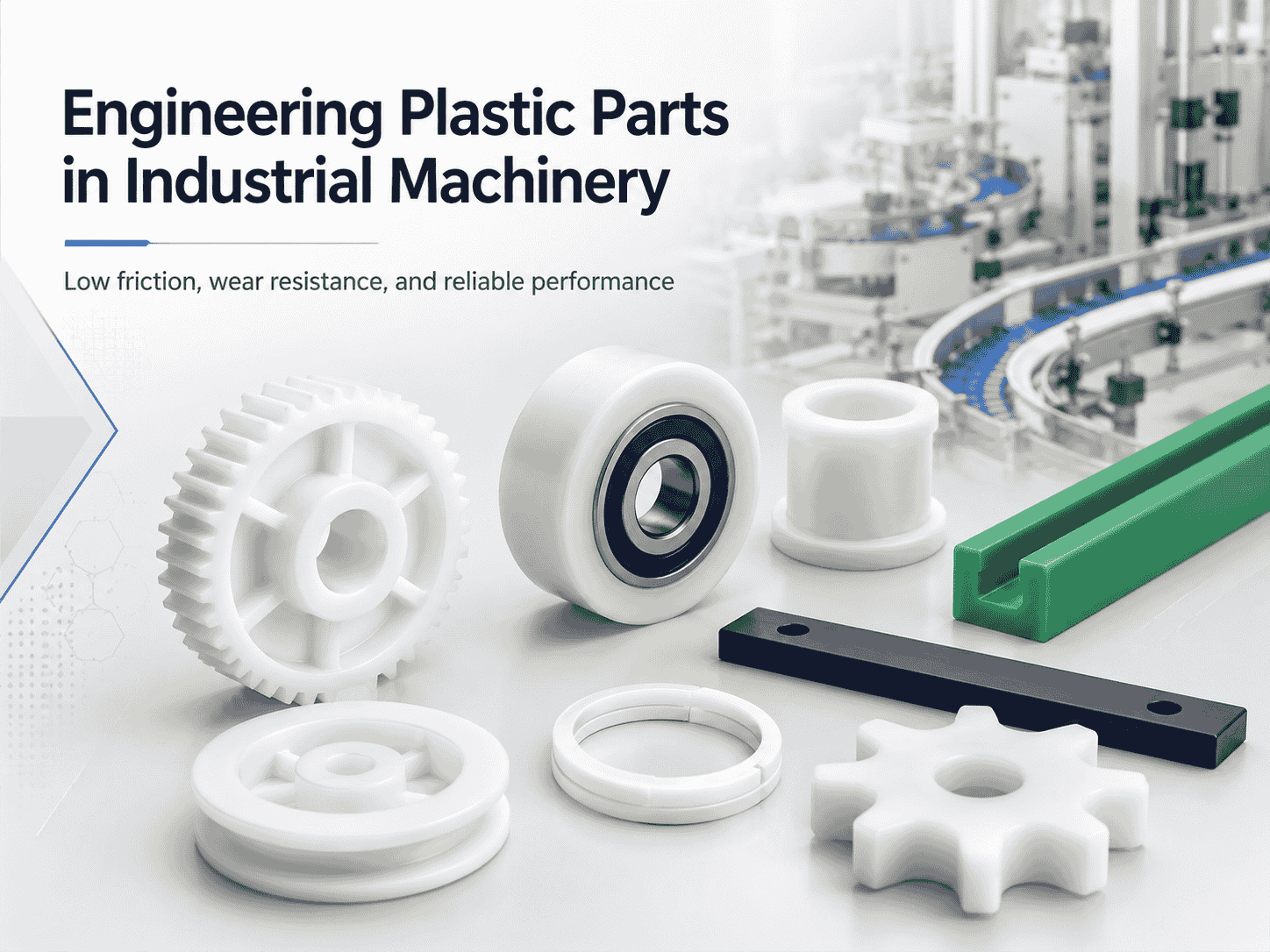
Engineering plastics are increasingly used in industrial machinery, automated production lines, conveyor systems, packaging equipment, and food-processing machines. Materials such as nylon, UHMWPE, POM, and
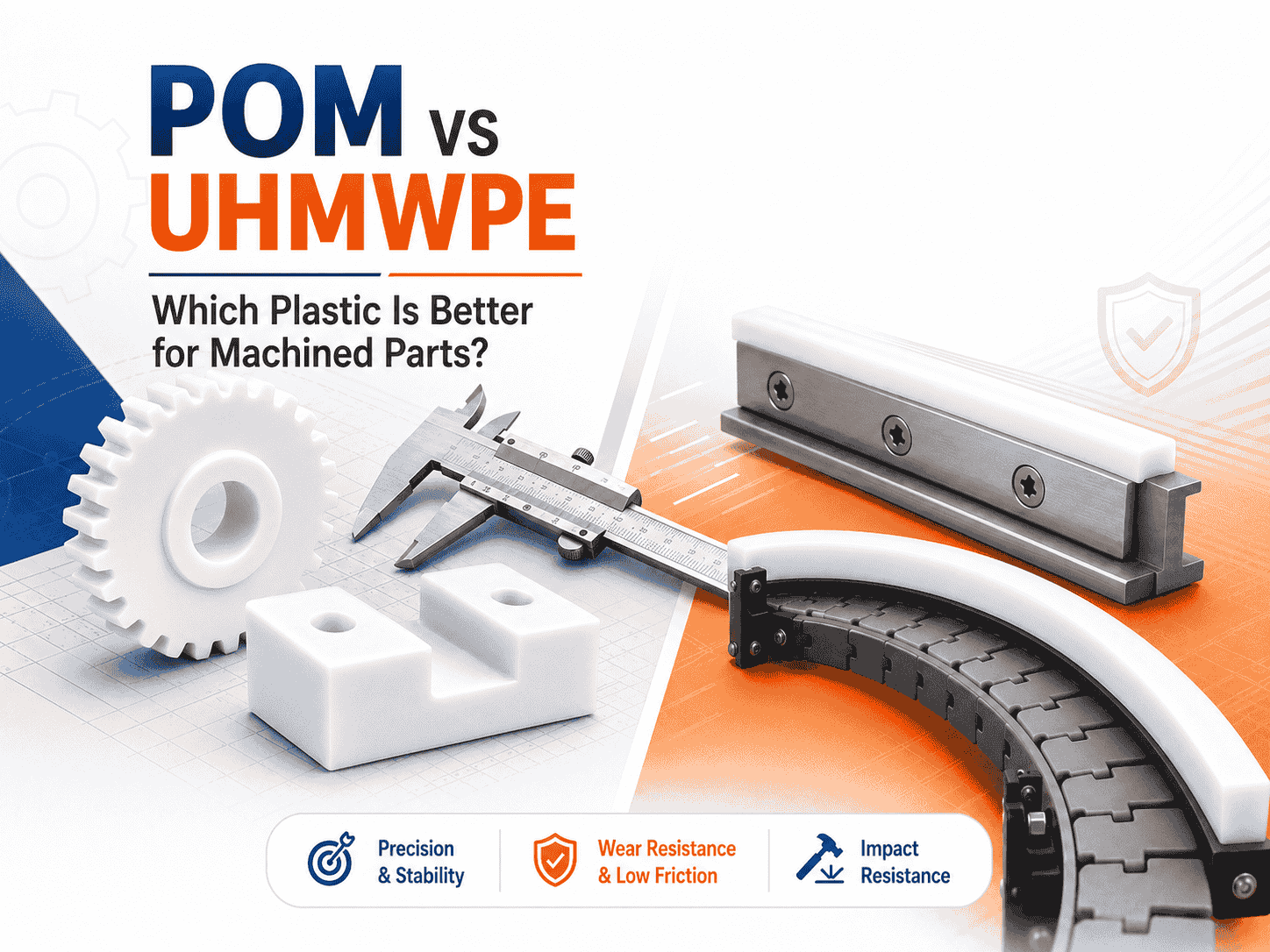
Both are lightweight, corrosion-resistant, wear-resistant, and suitable for CNC machining. However, they perform very differently
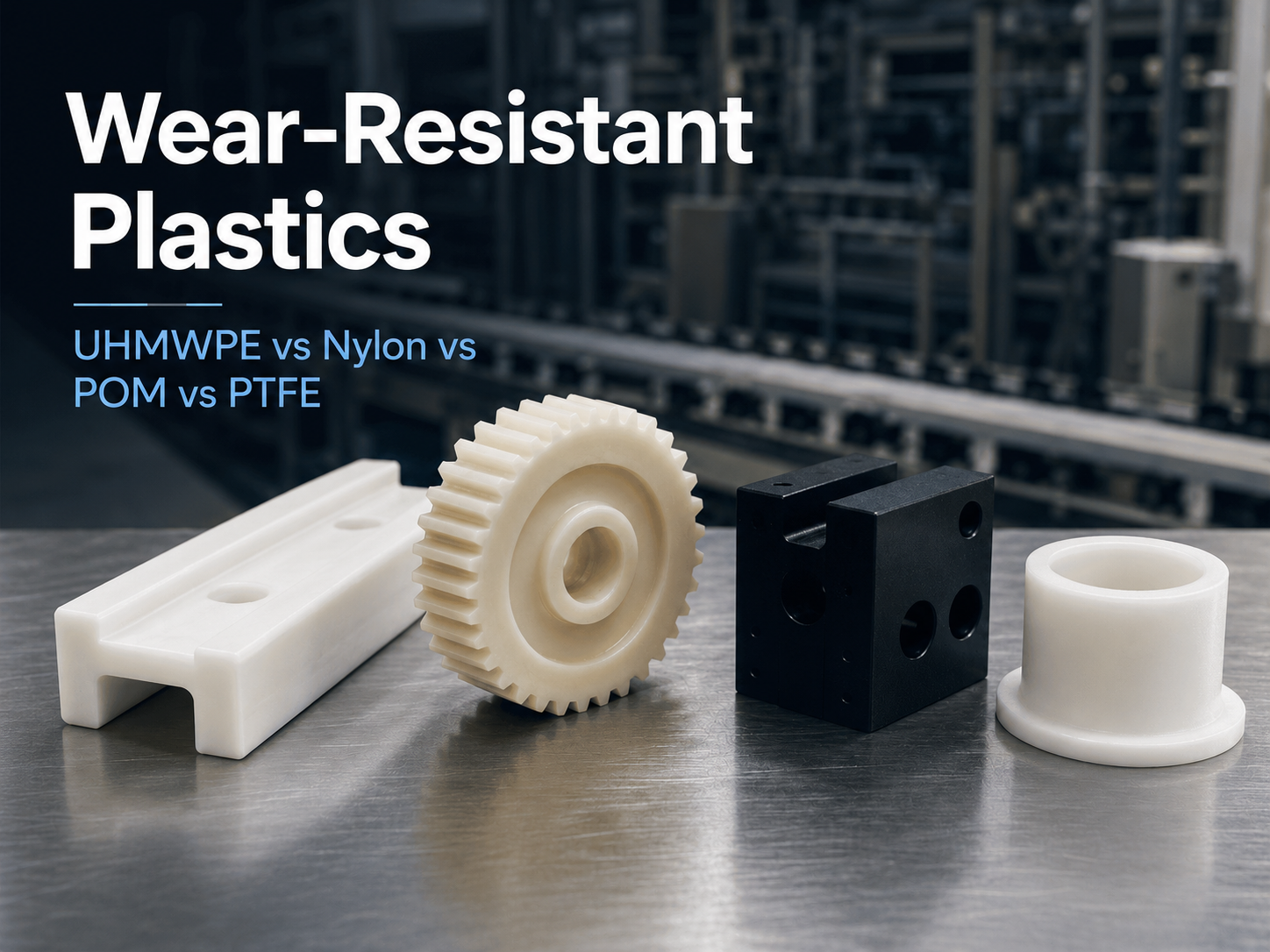
Wear is a common cause of failure in conveyor systems, packaging machinery, automated equipment, mining
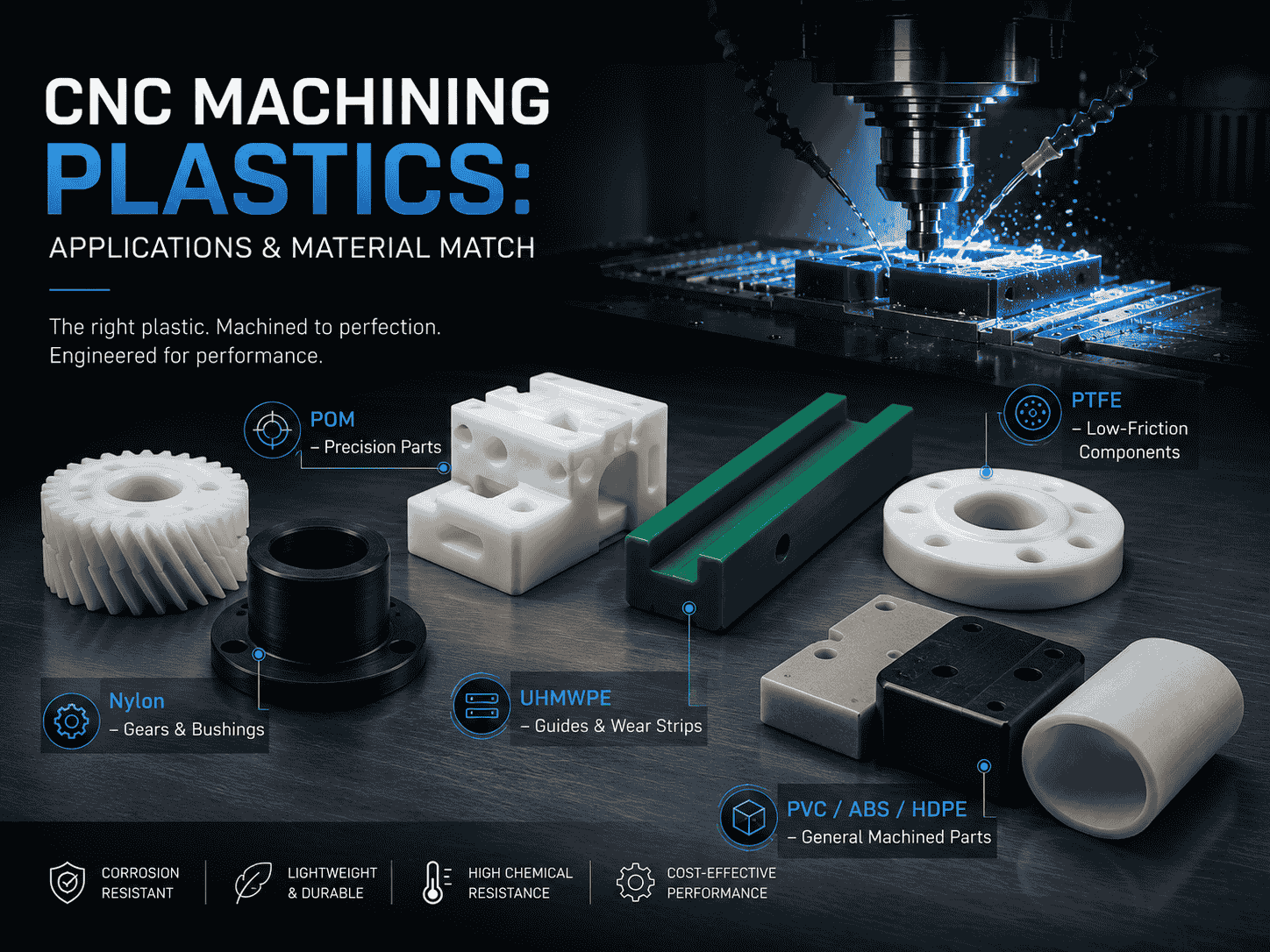
CNC machining is widely used to produce plastic prototypes, low-volume parts, replacement components, jigs, fixtures,
Both are lightweight, corrosion-resistant, wear-resistant, and suitable for CNC machining. However, they perform very differently
Wear is a common cause of failure in conveyor systems, packaging machinery, automated equipment, mining
CNC machining is widely used to produce plastic prototypes, low-volume parts, replacement components, jigs, fixtures,
Need UHMWPE sheets & custom plastic machined/OEM parts?Send specs & material needs, free quote within 24h.